Quote:
Originally Posted by Luisito

How many of those stations on your map would be underground?
|
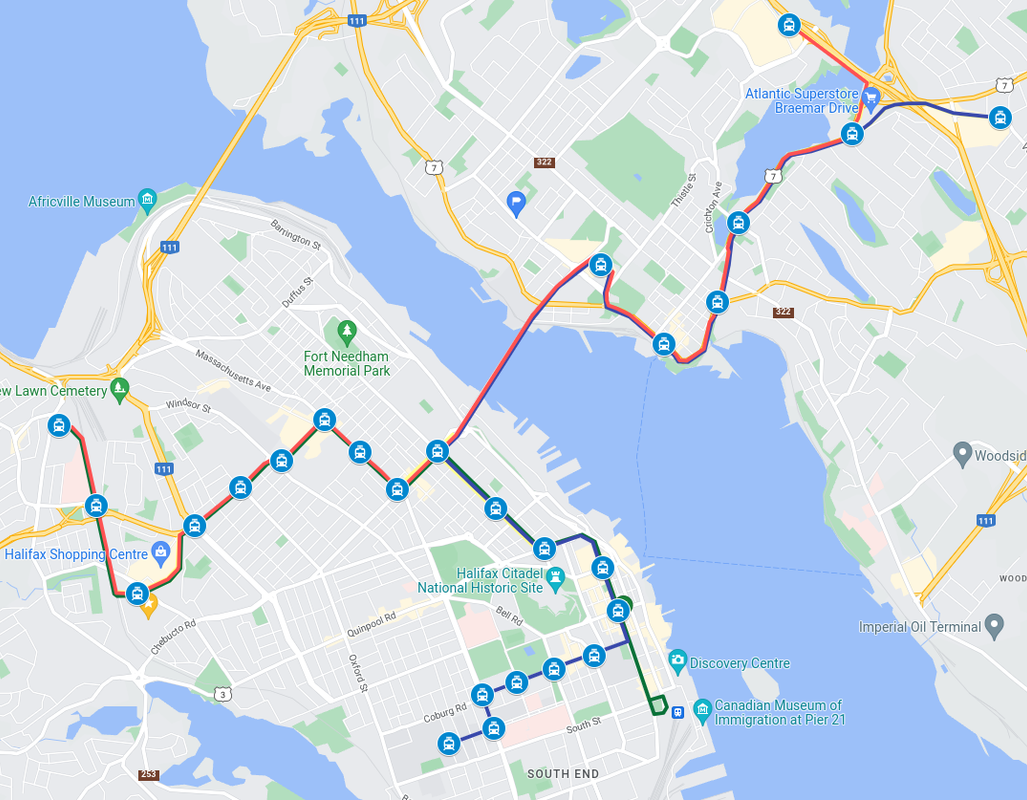
There would be 8, but they'd be very small and simple since it would be for 30m long LRVs. Similar to the Queen Quay streetcar stop if you're familiar with Toronto. Much cheaper than a metro station.
Quote:
Originally Posted by Arrdeeharharharbour
One thing I note is that Burnside, inspite of being one of the largest employment areas of the city, is perpetually left out of any musings on where rail should go. Also, in my reading of this thread and the Halifax Transit thread I haven't seen much talk or agreement on what issue/problem/whatever a rail solution in Halifax would provide. My personal perspective is that traffic congestion mainly caused by commutors is the primary issue and those commuters come from primarily off peninsula. Services, shopping and tourism by off peninsula folks factors in too. And then there are those who simply want to get around their city.
|
I find that Burnside's problems are more related to built form than a lack of transit. Burnside Dr. is basically a highway with nothing built directly on it requiring circuitous routing. Plus there are areas without sidewalks (or sidewalks on only one side) and intersections where there are overly long waits for walk signals. But there's plenty of room if the city ever wanted to build bus lanes. Both Windmill Rd through Burnside and Burnside Dr are already 6 lanes wide and have room on the sides to allow further widening if desired. Without the built form issues being addressed, I can't see higher order transit attracting much additional ridership.
In terms of the peninsula, the goals I personally consider most important are:
1) Allowing people to bypass congestion (which I agree largely comes from off peninsula) thus reducing travel times.
2) Reducing demand for in town parking (particularly surface parking) which would free up space for housing and other developments while making the city more attractive.
3) Making transit more comfortable and attractive to more people, many of whom dislike the slowness, unreliability and the rough ride of buses. This, along with the reduced travel times from goal #1, would increase transit usage helping to also achieve goal #2.
If a service that was faster, more comfortable, more frequent and more reliable served the peninsula, that would allow suburbanites to bypass central city congestion and eliminate the cost of driving and parking in town. So it would absolutely get a lot of usage.
These goals could also be supplemented by a central city congestion charge, perhaps something small like the $1.20 bridge toll equivalent when entering the peninsula from any direction. But I'd hesitate to support a congestion toll unless a transit alternative like I described existed out of fear it would drive retail and employment into the suburbs.





 Prev
Prev




 Linear Mode
