Would that be why housing that has traditionally been lower than most of the other larger cities?
Montreal has a lot of older multi-family housing. The older Vancouver housing stock is mostly single family. Now that is under pressure to be redeveloped.
Generally older housing is cheaper. Which is a good thing.
Sure but my point was that long term renters are currently paying way under market rent. They could have landlords getting hit with higher interest costs and no way to increase their rent to market levels.
I'm in this boat except not worried about payments. Profit dropping every year, my tenant is paying about 60% of the current market rate.
And what was your coast when you bought that unit? Unless there has been a vast increase in the cost of maintaining you building, landlords shouldn't be whining about how they can't gouge loyal tenants the way they do new ones.
Sure but my point was that long term renters are currently paying way under market rent. They could have landlords getting hit with higher interest costs and no way to increase their rent to market levels.
I'm in this boat except not worried about payments. Profit dropping every year, my tenant is paying about 60% of the current market rate.
And what was your cost when you bought that unit? Unless there has been a vast increase in the cost of maintaining your building, landlords shouldn't be whining about how they can't gouge loyal tenants the way they do new ones. Next thing you know, you'll be joining Honveer and his asinine Home Owners Outcry group trying to secure sympathy for landlords of multiple investment unit due to rising interest rates.
And what was your cost when you bought that unit? Unless there has been a vast increase in the cost of maintaining your building, landlords shouldn't be whining about how they can't gouge loyal tenants the way they do new ones. Next thing you know, you'll be joining Honveer and his asinine Home Owners Outcry group trying to secure sympathy for landlords of multiple investment unit due to rising interest rates.
The cap on rent increases in BC is 2%. Perhaps that should be slightly higher. Maybe 3%.
And what was your cost when you bought that unit? Unless there has been a vast increase in the cost of maintaining your building, landlords shouldn't be whining about how they can't gouge loyal tenants the way they do new ones. Next thing you know, you'll be joining Honveer and his asinine Home Owners Outcry group trying to secure sympathy for landlords of multiple investment unit due to rising interest rates.
If Warren bought during the recent period of record low interest rates (any point in the last decade), it is entirely possible that his cashflow will become negative at his next mortgage renewal and that would be 100% the fault of the fact that the tenant still pays nearly the same rent as he did 5-10 years ago, and that Warren isn’t close enough to him to be able to invite him for Russian tea without it being suspect.
Now, I’m fully with you whatnext on having no sympathy for landlords suffering from higher interest rates and strict rent controls: you knew the rules of the game and you still chose to play. There was one program on the BBC lately, they interviewed a schmuck who had been personally absolutely certain this recent period of unprecedented record low interest rates was here to stay forever and who was now whining. He said something like “interest rates have now reached insane, previously unseen levels!” I wanted to slap him, I’m barely older than him and current rates aren’t even anywhere near as high as what I’ve paid in my own adult lifetime (pre-2008 GFC). What an idiot.
__________________
"The destructive effects of automobiles are much less a cause than a symptom of our incompetence at city building" - Jane Jacobs 1961ish
And what was your coast when you bought that unit? Unless there has been a vast increase in the cost of maintaining you building, landlords shouldn't be whining about how they can't gouge loyal tenants the way they do new ones.
Doesn't matter what my cost was. Units get sold and resold all the time. Why does somebody renting the exact same unit today have to pay 60% more?
If Warren bought during the recent period of record low interest rates (any point in the last decade), it is entirely possible that his cashflow will become negative at his next mortgage renewal and that would be 100% the fault of the fact that the tenant still pays nearly the same rent as he did 5-10 years ago, and that Warren isn’t close enough to him to be able to invite him for Russian tea without it being suspect.
My tenant takes international vacations about 3x a year (and yes, during COVID as well). I haven't been on a plane since 2019, but I'm not jealous at all.
Consider that in BC we had a rent freeze (0% increase) from March 2020 to Dec 2021. In 2022 the limit is 1.5% (I didn't bother), and in 2023 it's 2%.
Consider that compared to inflation, maintenance costs, insurance, and so on. Clearly I can't keep pace (profit declining).
Uninformed layman POV here, but isn't landlording mostly a capital appreciation play? (I think you mentioned this lio) It's all and nice one grinds out a profit at the end of the day, but mostly the benefit is having someone else pay the mortgage on a place you own.
Admittedly, locking in at rock-bottom rates for as long as one can would be just as good a benefit for a landlord as a resident homeowner, and one runs the same risk with respect to increasing interest rates.
Unless the angle was the rapid appreciation flip and just renting in the meantime to keep the bills paid, but rising rates have nuked that option for the time being. I foresee many AirBnbs/attempted flips entering the rental market soon, given how fast rents are rising and how little rental construction (relatively speaking) has happened.
Uninformed layman POV here, but isn't landlording mostly a capital appreciation play? (I think you mentioned this lio) It's all and nice one grinds out a profit at the end of the day, but mostly the benefit is having someone else pay the mortgage on a place you own.
Admittedly, locking in at rock-bottom rates for as long as one can would be just as good a benefit for a landlord as a resident homeowner, and one runs the same risk with respect to increasing interest rates.
Unless the angle was the rapid appreciation flip and just renting in the meantime to keep the bills paid, but rising rates have nuked that option for the time being. I foresee many AirBnbs/attempted flips entering the rental market soon, given how fast rents are rising and how little rental construction (relatively speaking) has happened.
I think it has been capital appreciation recently because everyone has watched prices skyrocket and wants to get in on the game.
Longer term investors would be more interested in cashflow (like buying bank stocks or other steady dividend payers).
But to circle back to purpose built rental, the motivation for them to build has to be the ability to make their money back on rent, and have that escalate over time (ideally more than inflation).
I think it has been capital appreciation recently because everyone has watched prices skyrocket and wants to get in on the game.
Longer term investors would be more interested in cashflow (like buying bank stocks or other steady dividend payers).
But to circle back to purpose built rental, the motivation for them to build has to be the ability to make their money back on rent, and have that escalate over time (ideally more than inflation).
You’ve just made the perfect argument for purpose built rentals and for squeezing small time condo landlords out. When you own a 20 unit building your mix of old and new tenants balance out. New tenants paying higher rates offset the older tenants. We need a federal government with the guts to tax penny ante landlords and incentivize companies that run rental buildings as a business.
Is it any wonder Canada is a productivity laggard when investment in stocks that fuel innovation is given short shrift in favour of buying some dumpy condo to rent.
Another major problem with nearly all cities is parking minimums. Parking minimums are so bad it's hard to know where to start but I will give you the 4 main problems:
1} They discourage transit usage and active mobility.
2} They take much longer to build as so much of the time of construction is getting the building to grade but then construction on the floors soars after that.
3} They are more expensive to build. An average underground parking spot can add $50 to$70k to the cost of every single unit. At grade parking adds to the expense by requiring more land to build the number of units and that extra land saved could go towards building even more units on the same size lot.
4} NIMBYs often use the excuse to stop development by saying that higher densities will bring more car traffic and buildings with no parking blows that excuse right out of the water making the development more politically palatable.
Thankfully this is starting to change. London recently totally revamped her parking requirements. They have gotten rid of ALL parking requirements around transit corridors and villages within 4 blocks of either side of regular routes ie all routes that run 7 days a week so not including areas that are served strictly by community shuttles or rushhour-only buses. That takes up basically every area of the city pre-2000. For other areas parking minimums have been reduced 40% city wide for not only residential use by all commercial and industrial and major developments must have expanded bike parking.
Federal and provincial funds for low income housing should be MANDATED to be parking free in all cities with regular transit service that operates 7 days per week. If you can afford the expense of buying a car and paying for insurance, gas, and maintenance then you don't need subsidized rent.
Another major problem with nearly all cities is parking minimums. Parking minimums are so bad it's hard to know where to start but I will give you the 4 main problems:
1} They discourage transit usage and active mobility.
2} They take much longer to build as so much of the time of construction is getting the building to grade but then construction on the floors soars after that.
3} They are more expensive to build. An average underground parking spot can add $50 to$70k to the cost of every single unit. At grade parking adds to the expense by requiring more land to build the number of units and that extra land saved could go towards building even more units on the same size lot.
4} NIMBYs often use the excuse to stop development by saying that higher densities will bring more car traffic and buildings with no parking blows that excuse right out of the water making the development more politically palatable.
Thankfully this is starting to change. London recently totally revamped her parking requirements. They have gotten rid of ALL parking requirements around transit corridors and villages within 4 blocks of either side of regular routes ie all routes that run 7 days a week so not including areas that are served strictly by community shuttles or rushhour-only buses. That takes up basically every area of the city pre-2000. For other areas parking minimums have been reduced 40% city wide for not only residential use by all commercial and industrial and major developments must have expanded bike parking.
Federal and provincial funds for low income housing should be MANDATED to be parking free in all cities with regular transit service that operates 7 days per week. If you can afford the expense of buying a car and paying for insurance, gas, and maintenance then you don't need subsidized rent.
That's a rubbish take. If you're talking London England it is not anamolous to a North American city. Ask anybody who lives near a multifamily building where parking has been underbuilt, the cars merely go onto choking all the nearby neighbourhood streets. It is clear to anybody that commutes by car that private vehicle use is way up since Covid. If people can afford not to catch their death on the Loser Cruiser, they're avoiding it.
You’ve just made the perfect argument for purpose built rentals and for squeezing small time condo landlords out. When you own a 20 unit building your mix of old and new tenants balance out. New tenants paying higher rates offset the older tenants. We need a federal government with the guts to tax penny ante landlords and incentivize companies that run rental buildings as a business.
Why would anybody finance a rental building when the government crushes your ability to make a profit?
They don't "balance out", you get 1 tenant moving out every few years if you're lucky, and the rest are on heavily subsidized rent control.
Why would anybody finance a rental building when the government crushes your ability to make a profit?
They don't "balance out", you get 1 tenant moving out every few years if you're lucky, and the rest are on heavily subsidized rent control.
My understanding is that newer buildings are not rent-controlled in Ontario. Not sure about BC.
So, one would price rent ambitiously to cover construction costs, plus stay ahead of maintenance and weed out the…less desirable tenants.
Then once the building construction cost is amortized, appreciate the profit margin more.
Admittedly, larger buildings are more corporate-driven owners concerned about long-term renting/profits, not mom-and-pop affairs that are more small-scale.
Another major problem with nearly all cities is parking minimums. Parking minimums are so bad it's hard to know where to start but I will give you the 4 main problems:
1} They discourage transit usage and active mobility.
2} They take much longer to build as so much of the time of construction is getting the building to grade but then construction on the floors soars after that.
3} They are more expensive to build. An average underground parking spot can add $50 to$70k to the cost of every single unit. At grade parking adds to the expense by requiring more land to build the number of units and that extra land saved could go towards building even more units on the same size lot.
4} NIMBYs often use the excuse to stop development by saying that higher densities will bring more car traffic and buildings with no parking blows that excuse right out of the water making the development more politically palatable.
Thankfully this is starting to change. London recently totally revamped her parking requirements. They have gotten rid of ALL parking requirements around transit corridors and villages within 4 blocks of either side of regular routes ie all routes that run 7 days a week so not including areas that are served strictly by community shuttles or rushhour-only buses. That takes up basically every area of the city pre-2000. For other areas parking minimums have been reduced 40% city wide for not only residential use by all commercial and industrial and major developments must have expanded bike parking.
Federal and provincial funds for low income housing should be MANDATED to be parking free in all cities with regular transit service that operates 7 days per week. If you can afford the expense of buying a car and paying for insurance, gas, and maintenance then you don't need subsidized rent.
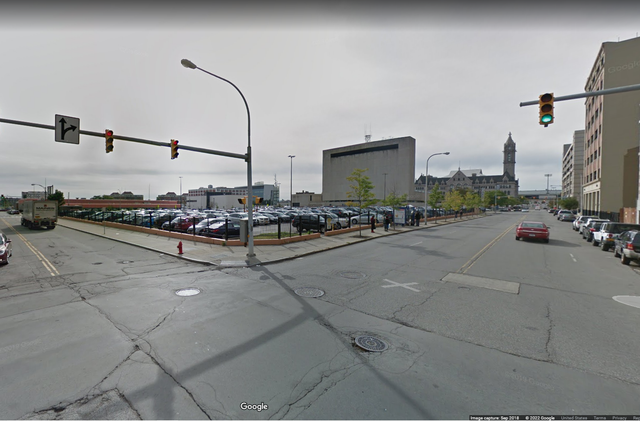
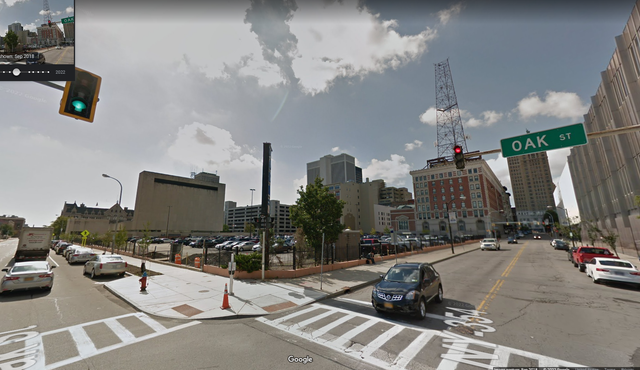
Buffalo is one of the first American cities I've heard of to get rid of parking minimums. They got rid of the grossly outdated 1950s zoning codes and created a new "Buffalo Green Code" in 2017 that was years in the making.
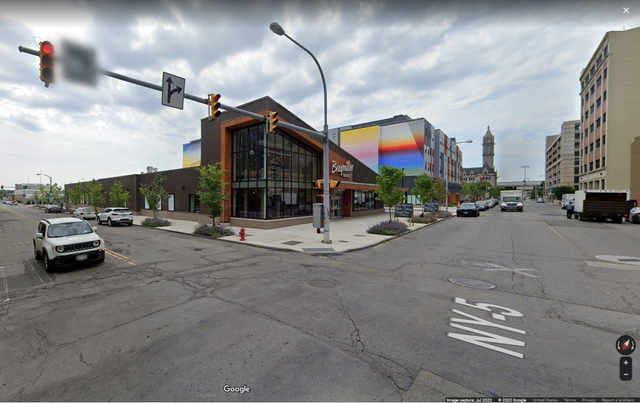
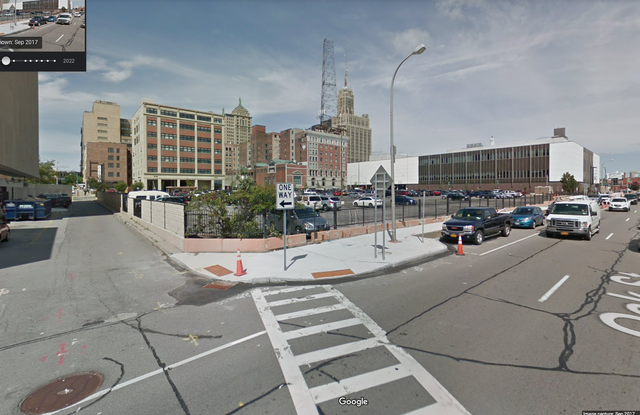
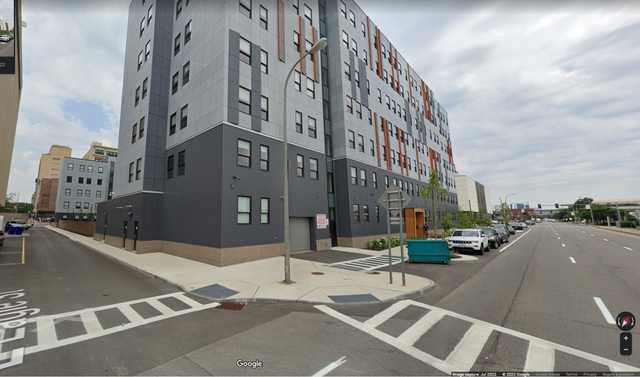
The first development example post 2017 is a 8-storey, 201 unit affordable housing building downtown on a former parking lot adjacent to the first downtown grocer to open up in what was previously considered a "food desert". This grocer, Braymiller, focuses on fresh produce and sourcing as much locally or within NY State as possible.
The building even features a huge colourful mural paid for by the Albright-Knox-Gundlach museum's Public art initiative to commission murals by local and well known artists all over downtown Buffalo and the near east side.
BEFORE (2018) (the ugly concrete wall is the headquarters of the transit agency NFTA-attached to the downtown bus terminal)
AFTER (2022)
BEFORE (2017)
AFTER (2022)
BEFORE (2018)
AFTER (2022)
Buffalo grew for the first time in 7 decades per 2020 census. current population ~280k (1950 peak ~580k in 40 sq miles/104.5 km2). Discouraging parking is aiding development and encouraging transit. If Buffalo can come back, any North American city can.
The building needs to be younger than 5 years old for rents not to be frozen (in Quebec). Needless to say, you cannot amortize a brand new build on a <5 year period. You couldn’t even if it were built with slave labor. (Slave labor + stolen materials, then okay, doable *if* you bought the land a long time ago )
But to circle back to purpose built rental, the motivation for them to build has to be the ability to make their money back on rent, and have that escalate over time (ideally more than inflation).
Maybe 50 years ago. It stopped making sense sometime in the 1970s. Few purpose built, private funded, rental units were built between then and when building values started skyrocketing about 10 years ago. The big pension funds that divested of almost all of their rental portfolios decades earlier renewed their interest in rental housing investment at that time. In most markets, these rental buildings are registered as condos as another means for an exit.
A new, fully leased building even at the inflated rental rates has an average cap rate of 4 in Toronto. That's not sustainable long term.
My tenant takes international vacations about 3x a year (and yes, during COVID as well). I haven't been on a plane since 2019, but I'm not jealous at all.
Consider that in BC we had a rent freeze (0% increase) from March 2020 to Dec 2021. In 2022 the limit is 1.5% (I didn't bother), and in 2023 it's 2%.
Consider that compared to inflation, maintenance costs, insurance, and so on. Clearly I can't keep pace (profit declining).
I gather you have a congenial, dependable tenant, else you wouldn't be so magnanimous.





 Prev
Prev



 )
)


 Linear Mode
