HomeDiagramsDatabaseMapsForum About
     

Go Back   SkyscraperPage Forum > Regional Sections > United States > Mountain West


Reply

 
Thread Tools Display Modes
     
     
  #13541  
Old Posted Oct 12, 2022, 5:39 AM
Ndj Ndj is offline
Registered User
 
Join Date: Dec 2019
Posts: 44
Quote:
Originally Posted by wong21fr View Post
Once the city starts to impose liens for failure to upkeep and forecloses on the homes maybe then we can get city residents to take notice of the issue.
You want to foreclose on people's homes in order to maintain sidewalks? Jesus christ, get a grip.
Reply With Quote
     
     
  #13542  
Old Posted Oct 12, 2022, 3:36 PM
Robert.hampton Robert.hampton is offline
Registered User
 
Join Date: Jul 2015
Posts: 491
Quote:
Originally Posted by wong21fr View Post
But isn't the property owner on the corner on the hook for that much more to repair their sidewalk under the current system or responsibility for one's property? It does feel proportional given the fee is based on linear feet of sidewalk and I do get the analogy. It's not by potential use, but rather by cost of maintenance/replacement.
The proposed fee is very loosely relative to the liability a property owner carries, but doesn't carry any relationship with the cost of replacement or repair and punishes property owners that have been keeping their sidewalks up to date. Homeowner that don't have any sidewalks (much higher costs to install new rather than repair) pay the same fee as homeowners with well maintained sidewalks. Same for residents with flagstone sidewalks. And developers in opportunity zones, for a completely inexplicable reason, get a discount on their contribution to the fee structure. And apartment owners as a whole are practically completely off the hook despite the fact they have a much more proportionate impact on sidewalk use (10,0000 people in an apartment building obviously use sidewalks more than 1 person in a SFH).

Perhaps the most asinine example of how poorly thought out this fee structure is - homeowners on residential arterials pay the same fee as Mixed use streets which is 40% more (3.58 per linear foot) than residents on residential collectors. However, Denver's Complete Street Guidelines show the width of residential collectors as the exact same as residential arterials. So why are they feed at such a higher rate?

This is a half baked proposal - just super lame and disheartening. I would love to vote for more sidewalks, but basing this on the stormwater fee structure was just — stupid.

Last edited by Robert.hampton; Oct 12, 2022 at 4:23 PM.
Reply With Quote
     
     
  #13543  
Old Posted Oct 12, 2022, 4:30 PM
mishko27 mishko27 is offline
Registered User
 
Join Date: Jan 2015
Posts: 136
Quote:
Originally Posted by rds70 View Post
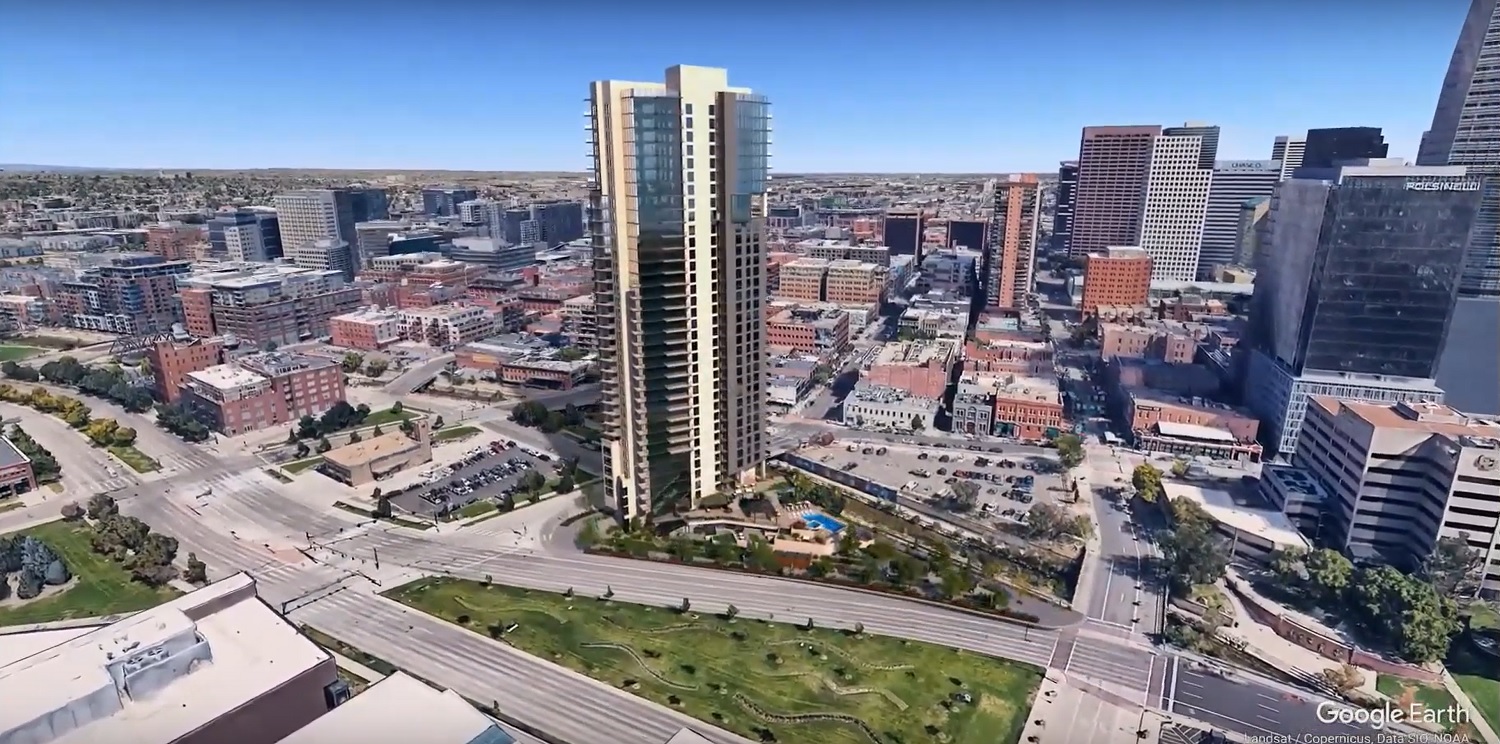
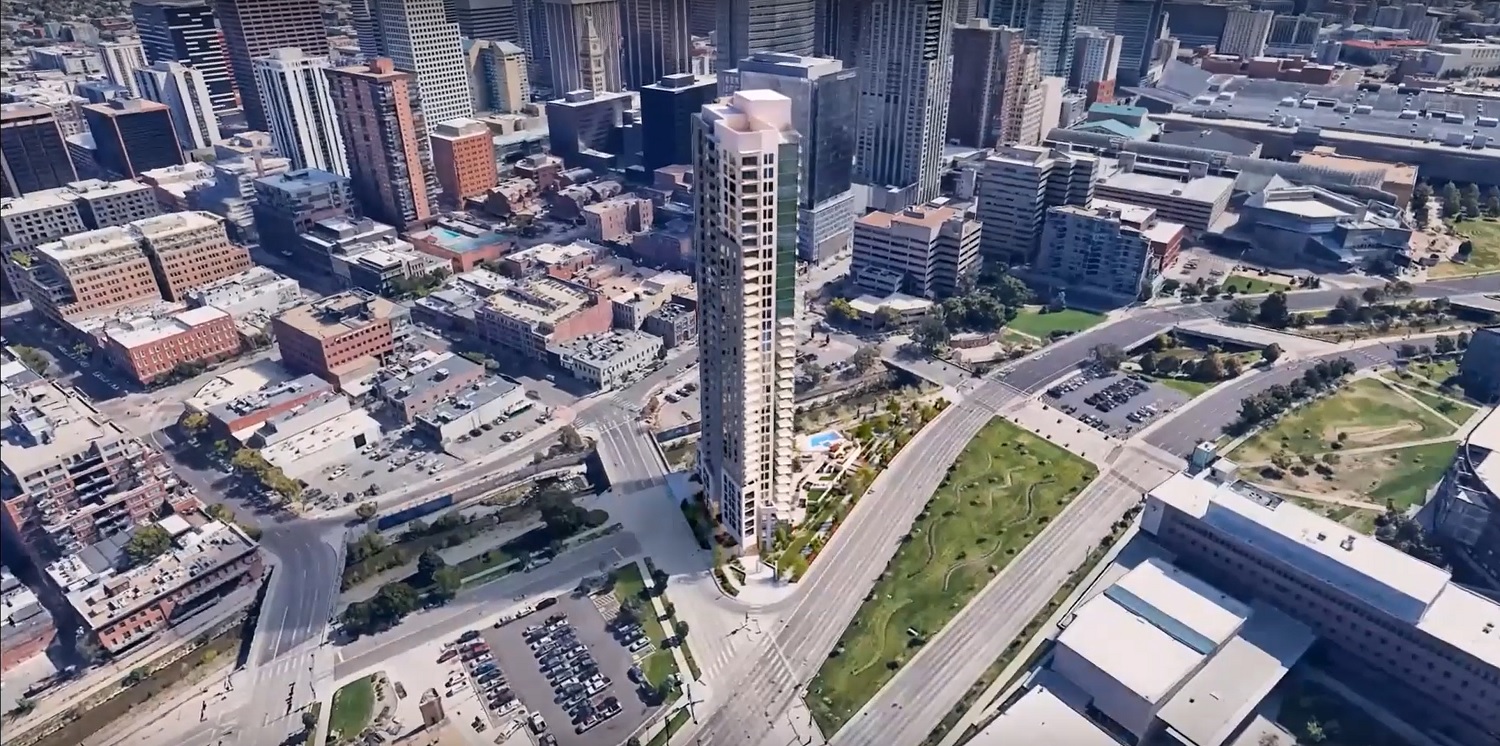
A couple of additional renderings of the Bell Park Tower from the developer’s presentation to the LDDRC (the project was approved, BTW):


I hope that the surrounding parking lots get similar projects to develop a cluster of height in that area.
Reply With Quote
     
     
  #13544  
Old Posted Oct 13, 2022, 12:53 AM
TakeFive's Avatar
TakeFive TakeFive is offline
Registered User
 
Join Date: Jun 2010
Posts: 8,448
Where's EngiNerd when we need him?

Denver Deserves Sidewalks’ plan may actually take almost 30 years to complete, according to city’s analysis
Oct 12, 2022 By Nathaniel Minor/Denverite

It appears we have a clash of cultures, that of DOTI and the Denver Streets Partnership.
Quote:
But the city’s analysis of the measure (pg 32), produced for its official voter guide, casts doubt on the campaign’s claims. It predicts the timeline to plan, repair and construct sidewalks would take approximately 27.5 years — triple the estimate of advocates.

“The timeline of nine years established by this initiative cannot be achieved due to the capacity requirements that would be placed on both the City and County of Denver’s resources as well as those of the various industries involved, such as limited concrete availability,” the analysis reads.
As one who loves to ask "What could possibly go wrong" but lacking an engineering or sidewalk construction background I didn't know what questions to ask.
Quote:
It predicts a shortfall of $2.8 billion after nine years and $7.3 billion after including the cost of acquiring the land necessary for sidewalk widening and new sidewalk construction.

“It is unclear how this gap will be addressed and if there will be any cost to constituents,” the analysis says.
One can certainly respect the time and effort put forward by the "renegade" We Deserve Sidewalks initiative but the lack of any coordination with DOTI is concerning. I can only imagine various engineering and Right-of-Way challenges becoming more than a small headache. Read the article for yourself; it's relatively well written.
Reply With Quote
     
     
  #13545  
Old Posted Oct 13, 2022, 1:22 AM
TakeFive's Avatar
TakeFive TakeFive is offline
Registered User
 
Join Date: Jun 2010
Posts: 8,448
One of These


Image courtesy of Choice Markets

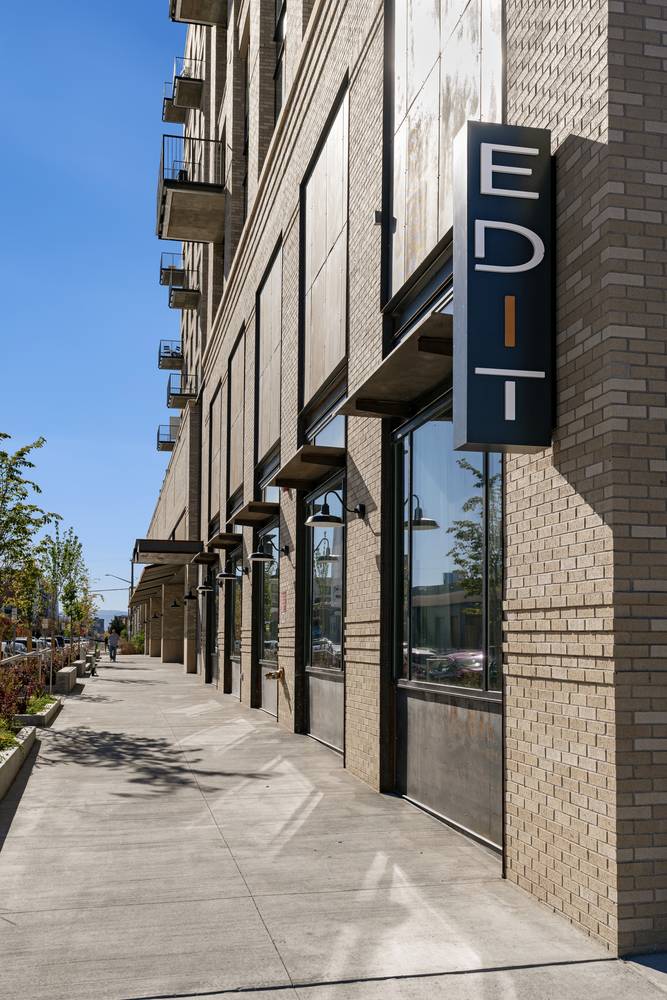
Is going to go Here

EDIT at RiNo - 3463 Walnut St.


Photo courtesy Zocalo Communities
Reply With Quote
     
     
  #13546  
Old Posted Oct 13, 2022, 1:13 PM
Robert.hampton Robert.hampton is offline
Registered User
 
Join Date: Jul 2015
Posts: 491
Quote:
Originally Posted by TakeFive View Post
Where's EngiNerd when we need him?

Denver Deserves Sidewalks’ plan may actually take almost 30 years to complete, according to city’s analysis
Oct 12, 2022 By Nathaniel Minor/Denverite

It appears we have a clash of cultures, that of DOTI and the Denver Streets Partnership.

As one who loves to ask "What could possibly go wrong" but lacking an engineering or sidewalk construction background I didn't know what questions to ask.

One can certainly respect the time and effort put forward by the "renegade" We Deserve Sidewalks initiative but the lack of any coordination with DOTI is concerning. I can only imagine various engineering and Right-of-Way challenges becoming more than a small headache. Read the article for yourself; it's relatively well written.
DOTI also suggests the fees need to be nearly 5x higher to build out the infrastructure proposed. What a joke - I find it incredibly disingenuous to suggest ‘substantial thought and effort’ went into this measure.

They put about as much thought and effort into this as they did into their roundabouts on 16th.
Reply With Quote
     
     
  #13547  
Old Posted Oct 13, 2022, 2:01 PM
bunt_q's Avatar
bunt_q bunt_q is offline
Provincial Bumpkin
 
Join Date: Aug 2002
Location: Denver, CO
Posts: 13,203
Quote:
Originally Posted by Robert.hampton View Post
DOTI also suggests the fees need to be nearly 5x higher to build out the infrastructure proposed. What a joke - I find it incredibly disingenuous to suggest ‘substantial thought and effort’ went into this measure.

They put about as much thought and effort into this as they did into their roundabouts on 16th.
Would you like me to send you the cost estimating and financial model? A lot of thought and effort did go into it. More than the City has ever done on the topic.

DOTI is wrong. And they don’t want to do it. Which is totally their prerogative, for now.
Reply With Quote
     
     
  #13548  
Old Posted Oct 13, 2022, 2:02 PM
bunt_q's Avatar
bunt_q bunt_q is offline
Provincial Bumpkin
 
Join Date: Aug 2002
Location: Denver, CO
Posts: 13,203
Quote:
Originally Posted by TakeFive View Post
Where's EngiNerd when we need him?

Denver Deserves Sidewalks’ plan may actually take almost 30 years to complete, according to city’s analysis
Oct 12, 2022 By Nathaniel Minor/Denverite

It appears we have a clash of cultures, that of DOTI and the Denver Streets Partnership.

As one who loves to ask "What could possibly go wrong" but lacking an engineering or sidewalk construction background I didn't know what questions to ask.

One can certainly respect the time and effort put forward by the "renegade" We Deserve Sidewalks initiative but the lack of any coordination with DOTI is concerning. I can only imagine various engineering and Right-of-Way challenges becoming more than a small headache. Read the article for yourself; it's relatively well written.
There was coordination with DOTI. “It’s impossible” isn’t a satisfying answer though, and that’s DOTI’s answer.
Reply With Quote
     
     
  #13549  
Old Posted Oct 13, 2022, 2:22 PM
bunt_q's Avatar
bunt_q bunt_q is offline
Provincial Bumpkin
 
Join Date: Aug 2002
Location: Denver, CO
Posts: 13,203
Quote:
Originally Posted by Robert.hampton View Post
The proposed fee is very loosely relative to the liability a property owner carries, but doesn't carry any relationship with the cost of replacement or repair .
The fee is not loosely proportionate to the liability - it is directly proportionate.

It is also directly proportionate to the cost of replacement or repair. Not loosely - directly.

Quote:
Originally Posted by Robert.hampton View Post
Homeowner that don't have any sidewalks (much higher costs to install new rather than repair) pay the same fee as homeowners with well maintained sidewalks.
In time, even today's currently well-maintained sidewalks will have to be repaired or replaced too. It is true that missing sidewalks come first, so the direct benefit people experience will not come all at once. That was a policy choice - and is true of every government service. This one is actually different, arguably, in that every property that pays will eventually benefit. There are plenty of things I pay for that I will never use at all.

Quote:
Originally Posted by Robert.hampton View Post
And developers in opportunity zones, for a completely inexplicable reason, get a discount on their contribution to the fee structure.
This is inaccurate. Property owners in NEST areas get a discount. That is how the City identifies neighborhoods that have been historically underinvested in. Many different approaches for lessening the burden somewhat in these areas were considered - this was the one chosen. (And NEST areas are not the same as opportunity zones.)

The ordinance makes no changes to developer's obligations to improve sidewalks. Developers have to do everything they have to do today.

Quote:
Originally Posted by Robert.hampton View Post
And apartment owners as a whole are practically completely off the hook despite the fact they have a much more proportionate impact on sidewalk use (10,0000 people in an apartment building obviously use sidewalks more than 1 person in a SFH).
This is a good point - and was heavily discussed in crafting the measure. In the end, doing it by property ownership/frontage was selected because the amount of concrete is what drives cost, and the sidewalk needs of large lot single family homes are greater. The goal was to create a sustainable long-term program for first constructing, and then maintaining, sidewalks citywide.

Unlike roads, sidewalk usage doesn't really drive sidewalk deterioration. A sidewalk with 1,000 pedestrians doesn't really wear faster than one with 10 pedestrians on it.

You could argue that more efficient users of infrastructure - dense apartment dwellers - shouldn't be "punished" (a word you are fond of using) relative to the less efficient, and more costly, users of the same type of infrastructure.

Quote:
Originally Posted by Robert.hampton View Post
homeowners on residential arterials pay the same fee as Mixed use streets which is 40% more (3.58 per linear foot) than residents on residential collectors. However, Denver's Complete Street Guidelines show the width of residential collectors as the exact same as residential arterials. So why are they feed at such a higher rate?
This is not exactly correct - you have to look at which streets are categorized in which way. Which was done - poring over DOTI GIS maps categorizing streets, because the street classifications do not perfectly align with the street classifications in the planning documents. And some very large streets are inexplicably categorized as collectors; and some other streets that are not what any of us would think of as arterials are categorized that way for traffic purposes. The categories you flag are the ones that mismatch the most - but that's not a product of the proposal - it's a product of the City's classifications, and the proposal attempts to correct for ground truth as much as possible. The fees by category are intended to align with intended sidewalk width - plain and simple.

Is it possible there are some streets where a resident is charged as if there's a 10' sidewalk and it'll only ever be a 6'? Yes, quite possibly. But that is a very small number and is not intentional. It's inherent in any citywide program. Most importantly, it can be fixed.

It is an ordinance, not the — constitution. Do I expect a clean-up ordinance in a few years? I hope so. The City doesn't actually do that as often as it should, with nearly every other program that has similar mismatches.

But we should work to improve these things. Not find the one or two imperfections, and then as a result, trash the whole endeavor. Which you seem keen to do. If you can do better, offer concrete (pun intended) suggestions. I doubt you will come up with much that was not already discussed robustly in crafting this proposal. But would love to hear areas for improvement. Trying to categorize 18,187,845 linear feet of sidewalk (which the City's data does not track by width) into a fee structure that can be administered, understood, and is somewhat equitable, is not easy.

It would be great if the City's leaders had actually taken it upon themselves to have the hard conversations, and perhaps they could have crafted a more equitable approach; although I think this is probably not wildly different from where they'd come out. It's much easier to poke holes than to create. But to say something can't be done - assuming a person thinks the thing should be done - just because it is difficult... that I'll never personally accept.


Last edited by bunt_q; Oct 13, 2022 at 3:40 PM.
Reply With Quote
     
     
  #13550  
Old Posted Oct 13, 2022, 6:10 PM
Robert.hampton Robert.hampton is offline
Registered User
 
Join Date: Jul 2015
Posts: 491
Quote:
Originally Posted by bunt_q View Post
The fee is not loosely proportionate to the liability - it is directly proportionate.
That is simply false. 50' of sidewalk is 50' of liability. Your liability isn't 40% higher if you sidewalk is designated by the city as an arterial vs a collector.

Quote:
It is also directly proportionate to the cost of replacement or repair. Not loosely - directly.
Again, not true. Putting new sidewalks in where they don't exist is far more expensive than repairing a single slab. Repairing a heavily damaged 50' section of sidewalk is far more expensive than repairing sidewalk which doesn't need repairs (cost: 0). Repairing a flagstone sidewalk is exponentially more expensive than concrete. None of this is reflected in the fees.
Reply With Quote
     
     
  #13551  
Old Posted Oct 13, 2022, 6:11 PM
Robert.hampton Robert.hampton is offline
Registered User
 
Join Date: Jul 2015
Posts: 491
Quote:
Originally Posted by bunt_q View Post
Would you like me to send you the cost estimating and financial model? A lot of thought and effort did go into it. More than the City has ever done on the topic.

DOTI is wrong. And they don’t want to do it. Which is totally their prerogative, for now.
Did your financial model include developing new concrete batch plants and removing trees from the city's of right of way for new sidewalks, as was suggested is 'part of the plan' to rebut DOTI in the article?
Reply With Quote
     
     
  #13552  
Old Posted Oct 13, 2022, 6:14 PM
Robert.hampton Robert.hampton is offline
Registered User
 
Join Date: Jul 2015
Posts: 491
Quote:
Originally Posted by bunt_q View Post


This is a good point - and was heavily discussed in crafting the measure. In the end, doing it by property ownership/frontage was selected because the amount of concrete is what drives cost, and the sidewalk needs of large lot single family homes are greater. The goal was to create a sustainable long-term program for first constructing, and then maintaining, sidewalks citywide.

Unlike roads, sidewalk usage doesn't really drive sidewalk deterioration. A sidewalk with 1,000 pedestrians doesn't really wear faster than one with 10 pedestrians on it.
This is the fundamental problem with your approach - everyone uses sidewalks, everyone should pay for them. The per-household fees would be FAR more manageable if the fee was spread out for all sidewalk users (i.e. EVERYONE) rather than focusing the burden on a small number of SFH owners. Have you done an analysis of how much of the fee would be carried by the top 10% relative to the bottom 10% based on your fee structure proposal?
Reply With Quote
     
     
  #13553  
Old Posted Oct 13, 2022, 6:26 PM
TakeFive's Avatar
TakeFive TakeFive is offline
Registered User
 
Join Date: Jun 2010
Posts: 8,448
FWIW, I always respect the rights of voters to decide
Quote:
Originally Posted by bunt_q View Post
It would be great if the City's leaders had actually taken it upon themselves to have the hard conversations...
If I make a guess it would be that DOTI is already seriously challenged in trying to execute on nearly $1.3 billion in already voter approved infrastructure projects. I understand the ability to 'staff up' although not sure what exactly that entails - budget wise.

https://denverite.com/2022/10/12/denver-deserves-sidewalks-city-analysis/
Quote:
The city’s own estimate for a sidewalk buildout from 2019 ranged from $800 million to $1.4 billion — in the same ballpark as Denver Deserves Sidewalks’ cost projections. The city, in its new analysis, does not explain why its latest estimate has risen to $3.2 billion, Locantore noted.
Any pre-pandemic estimates are now seriously outdated perhaps by as much as 40-50% higher. Presumably 'sidewalks' would be less impacted than other types of construction projects.

Additionally, I'll assume DOTI took a closer look at additional complexity added by this initiative than were previously envisioned.
Quote:
Locantore also took issue with the city’s assumption that costly land acquisition would be necessary on a large scale. She said her campaign envisions the city would widen sidewalks into the street — which it owns — rather than onto private property when that is more feasible.
This would seem to open a philosophical debate for defining streets including curb & gutter and drainage issues - which could be interesting as well as problematic.

Quote:
Originally Posted by bunt_q View Post
It is an ordinance, not the — constitution. Do I expect a clean-up ordinance in a few years? I hope so.
Fair enough! If voters approve the initiative then various 'process' challenges could be worked out as they move to implement the will of the voters.
Reply With Quote
     
     
  #13554  
Old Posted Oct 13, 2022, 6:35 PM
TakeFive's Avatar
TakeFive TakeFive is offline
Registered User
 
Join Date: Jun 2010
Posts: 8,448
Quote:
Originally Posted by Robert.hampton View Post
Did your financial model include developing new concrete batch plants and removing trees from the city's of right of way for new sidewalks, as was suggested is 'part of the plan' to rebut DOTI in the article?
That did cause a double-take bit of hubris.

I wasn't sure if she was referring to a city-owned concrete plant or just assuming this would be a result of the private sector? The idea of 'manufacturing' efficiencies a bit hilarious especially since I can envision many different engineering challenges as they go, not to mention neighborhood objections.
Reply With Quote
     
     
  #13555  
Old Posted Oct 13, 2022, 8:34 PM
TakeFive's Avatar
TakeFive TakeFive is offline
Registered User
 
Join Date: Jun 2010
Posts: 8,448
Does anybody still buy groceries

It does seem like younger people eat out a lot or do pickup.

Does Denver even have many Albertson's/Safeway stores?

Albertsons merger with Kroger could be announced this week
OCT 13 2022 - CNBC
Quote:
The all-cash acquisition may be announced as soon as Friday morning, sources told Faber.
Walmart is now the top grocer in the U.S. by revenue. Costco does substantial business.

Sam Hill will still have Trader Joe's which a lot people like. Whole Foods has its fans. I shop Sprouts Farmers Market on occasion. A few Natural Grocers scattered around. That's about it, I guess.
Reply With Quote
     
     
  #13556  
Old Posted Oct 13, 2022, 8:37 PM
wong21fr's Avatar
wong21fr wong21fr is offline
Reluctant Hobbesian
 
Join Date: Feb 2002
Location: Denver
Posts: 13,126
Quote:
Originally Posted by Robert.hampton View Post
Did your financial model include developing new concrete batch plants and removing trees from the city's of right of way for new sidewalks, as was suggested is 'part of the plan' to rebut DOTI in the article?
Sounds like you need to go through the model and then start challenging assumptions.
Reply With Quote
     
     
  #13557  
Old Posted Oct 13, 2022, 9:00 PM
wwmiv wwmiv is offline
Registered User
 
Join Date: Sep 2009
Location: Austin -> San Antonio -> Columbia -> San Antonio -> Chicago -> Austin -> Denver -> Austin
Posts: 5,846
Quote:
Originally Posted by Robert.hampton View Post
This is the fundamental problem with your approach - everyone uses sidewalks, everyone should pay for them. The per-household fees would be FAR more manageable if the fee was spread out for all sidewalk users (i.e. EVERYONE) rather than focusing the burden on a small number of SFH owners. Have you done an analysis of how much of the fee would be carried by the top 10% relative to the bottom 10% based on your fee structure proposal?
It would be far LESS manageable, because you’d have to hire a significant number more mailing and compliance staff to interface with the entire population of Denver, rather than the subset of only property owners—and they’d be interfacing with a highly transient rental population from whom they are relatively unlikely of ever recouping fees. In other words, it would he fiscally irresponsible; it sinks money into a larger enforcement apparatus that likely wouldn’t even be able to pay for itself let alone the infrastructure it aims to finance. And that wouldn’t be fair to anybody.

Far better to place a fee on property owners and let those property owners pass that fee on to their renters (if they have them), because that is a manageable scale.

Let us not get lost in the trees and miss the forest, nor let the perfect be the enemy of the good; we can always amend this proposal later to charge multi-family properties more, account for the width of sidewalks, and the other inadequacies mentioned by people here. The reality is that this proposed system is, despite the faults, similar to the way most cities handle their sidewalk infrastructure and it is far superior to the current system here in Denver.

Personally, I would argue against an increase on multi-family for the following reasons:

1. People generally only use the sidewalks in their area, not city-wide. Therefore, residents in apartment and multifamily districts are not likely to be using the sidewalks in single family home neighborhoods on the fringe. On the other hand, residents of single family districts are more likely to be using the infrastructure in the urban core, because of the distribution of non-residential uses. The urban core is financing localized infrastructure to allow for regional use, and shouldn’t also be expected to pick up an extra tab for suburban fringe neighborhoods where the sidewalks will disproportionately be used only by those homeowners and the people to whom they rent their homes. Those neighborhoods should be paying for their own infrastructure, rather than the urban core subsidize them.

2. It would marginally disincentive multifamily development insofar as it does increase the fees and bureaucracy a property owners has to deal with, which has the potential for making Denver’s housing cost crisis worse.

3. A higher fee on existing multifamily will be passed along to renters by those property owners in the form of rent, which will also not help Denver’s housing cost crisis.

Counterargument:

A. A higher relative fee imposed on property owners of single family homes also raises the cost of living for those living in owner occupied homes, which is likely to marginally raise property values beyond just what the infrastructure would produce. That would raise barriers of entry to middle class single family homeowners.

B. These fees being disproportionate on single family homeowners might slightly accelerate redevelopment from single family homes to multifamily (where zoning would allow), as the underlying property values dictate a more economically viable use.

Rebuttal:

1. Generally, homeowners are able to afford these fees, being of more means than the average renter, and mortgages in Denver tend to be less as a share of the average homeowner’s income than rent is of the average renter’s. Placing a fee on all people, whether directly or through the market, but higher on people who can afford it is not only administratively easier to manage, but also equitable.

2. We should want more multi-family properties. It will lower cost of living for all.

Those are my reasons, but I am open to hearing alternative opinions. As it stands, I will be voting for this.

Last edited by wwmiv; Oct 13, 2022 at 9:18 PM.
Reply With Quote
     
     
  #13558  
Old Posted Oct 13, 2022, 9:01 PM
wong21fr's Avatar
wong21fr wong21fr is offline
Reluctant Hobbesian
 
Join Date: Feb 2002
Location: Denver
Posts: 13,126
Quote:
Originally Posted by TakeFive View Post
Walmart is now the top grocer in the U.S. by revenue. Costco does substantial business.
You know that metric is based upon total revenue for all Walmart and Sam's Club Stores? It's a bit of BS though Walmart is still the largest retailer by grocery related sales.

Costco is still the shining beacon on the hill. It's revenue per store is huuuuuuge.
Reply With Quote
     
     
  #13559  
Old Posted Oct 14, 2022, 12:27 AM
bunt_q's Avatar
bunt_q bunt_q is offline
Provincial Bumpkin
 
Join Date: Aug 2002
Location: Denver, CO
Posts: 13,203
Quote:
Originally Posted by Robert.hampton View Post
This is the fundamental problem with your approach - everyone uses sidewalks, everyone should pay for them. The per-household fees would be FAR more manageable if the fee was spread out for all sidewalk users (i.e. EVERYONE) rather than focusing the burden on a small number of SFH owners. Have you done an analysis of how much of the fee would be carried by the top 10% relative to the bottom 10% based on your fee structure proposal?
Top 10% of what? I can probably figure that out for you if I understand better what breakdown you’re looking for.

What would be a better approach do you think, to better reach the users? A sales tax? If that’s your proposal I think we will have to agree to disagree.
Reply With Quote
     
     
  #13560  
Old Posted Oct 14, 2022, 12:33 AM
bunt_q's Avatar
bunt_q bunt_q is offline
Provincial Bumpkin
 
Join Date: Aug 2002
Location: Denver, CO
Posts: 13,203
Quote:
Originally Posted by Robert.hampton View Post
That is simply false. 50' of sidewalk is 50' of liability. Your liability isn't 40% higher if you sidewalk is designated by the city as an arterial vs a collector.
Concrete is priced by the cubic yard. Arterials have wider sidewalks, hence more concrete, hence more cost.
Reply With Quote
     
     
This discussion thread continues

Use the page links to the lower-right to go to the next page for additional posts
 
 
Reply

Go Back   SkyscraperPage Forum > Regional Sections > United States > Mountain West
Forum Jump


Forum Jump


All times are GMT. The time now is 8:06 PM.


Powered by vBulletin® Version 3.8.7
Copyright ©2000 - 2026, vBulletin Solutions, Inc.