HomeDiagramsDatabaseMapsForum About
     

Go Back   SkyscraperPage Forum > Regional Sections > Canada


Closed Thread

 
Thread Tools Display Modes
     
     
  #16481  
Old Posted Mar 28, 2022, 12:00 AM
GeneralLea's Avatar
GeneralLea GeneralLea is offline
Midtowner since 2K
 
Join Date: Aug 2015
Location: Midtown Toronto
Posts: 5,954
Well, the stations for the above ground section are rather ugly, almost reminding me of the eastern Line 2 stations. I hope they ensure this will be a full subway, at least, I think it's supposed to be based on what I hear from what they've described. That to me is one of the most important elements of this project. A full capacity line for transit is very important to eleviate pressure on the Yonge line, and is something I think the city will regret not pushing for with the Eglinton LRT in the future, say 20 years down the line.

That being said, if this transit line is happeneing, which it seems to be, that's good. Even though some parts of it are problematic and rather unfortunate. ( mostly the elevated sections and evicting businesses in Thorncliffe Parke for a train maintenance facility.)
__________________
"Living life on the edge"
     
     
  #16482  
Old Posted Mar 28, 2022, 1:54 PM
MonkeyRonin's Avatar
MonkeyRonin MonkeyRonin is offline
¥ ¥ ¥
 
Join Date: Sep 2006
Location: Vancouver
Posts: 10,593
That's exciting to see. Gerrard station looks cool, and I like that they're turning Exhibition into a proper transit hub.

Anyone know what the Ontario Line's rolling stock is intended to be? The renderings seem to indicate LRVs with overhead catenary?
__________________
     
     
  #16483  
Old Posted Mar 28, 2022, 2:21 PM
Airboy Airboy is offline
Registered User
 
Join Date: Sep 2008
Location: Edmonton/St Albert
Posts: 9,721
Quote:
Originally Posted by Coldrsx View Post
Capital Line South Extension

Riding the LRT to the Ellerslie area in south Edmonton is closer to becoming a reality. With full construction set to begin in 2023, work is taking place to prepare for the LRT extension from Century Park to Ellerslie Road.

The 4.5-km extension will connect to the newly built Heritage Valley Park & Ride, feature stations at Twin Brooks and Ellerslie and improve mobility and access to neighbourhoods in south Edmonton.


https://transforming.edmonton.ca/on-trac...south-lrt-extension-in-edmonton-in-2022/
The NW still should have bee a priority.
__________________
Why complain about the weather? Its always going to be here. You on the other hand will not.
     
     
  #16484  
Old Posted Mar 28, 2022, 2:27 PM
WhipperSnapper's Avatar
WhipperSnapper WhipperSnapper is offline
I am the law!
 
Join Date: Sep 2002
Location: Toronto+
Posts: 22,889
The above ground stations are expansive which just makes the corridor underpasses even longer to pass under
     
     
  #16485  
Old Posted Mar 28, 2022, 2:31 PM
JHikka's Avatar
JHikka JHikka is offline
ハルウララ
 
Join Date: Jul 2009
Location: Toronto
Posts: 12,853
Gerrard Station looks great. Exhibition Station should be a good hub.
     
     
  #16486  
Old Posted Mar 28, 2022, 3:14 PM
Mister F Mister F is offline
Registered User
 
Join Date: Jun 2004
Posts: 2,982
Quote:
Originally Posted by yaletown_fella View Post
I think the western part of the Ontario Line seems a bit contrived especially where it dips south of King down to Ontario Place. Liberty Village is already serviced fairly decently by the 501 line.

I think it'd almost be better to priortize extending the eastern portion of the line further north to Shops at Don Mills , York Mills Rd, and Fairview Mall [quite a dense highrise cluster around here ] and put the entire western part of the line on hold until more funding is secured.

With the current iteration, it seems they'll be a lot of congestion of people getting off to catch buses and express buses at Science Center to venture further north.
The 501 is a mixed traffic streetcar on Queen that gets stuck in traffic jams and moves at a snail's pace. The 504 on King is better since car traffic is a lot more restricted (something that should be done on a lot more streetcar lines), but it's no substitute for proper rapid transit. The dip south creates an interchange at Exhibition Station, which will distribute ridership to different areas of downtown and provide vastly improved service to Liberty Village and the west end.

A second phase up to Sheppard was being planned but that stopped a few years ago. The first phase was expanded to go to Exhibition and Science Centre but the second phase to Sheppard was cancelled.

Quote:
Originally Posted by J.OT13 View Post
Impressive how quickly they got this project off the ground. Love those new renderings.
Not really, it started appearing on planning maps as a subway back in the 1960s. The current line is a continuation of planning that goes back over a decade, with the Downtown Rapid Transit Expansion Study being approved in 2012. Phase 1 was approved in 2018 and then rebranded and redesigned by the new government the following year. It's been a long time in the making.
     
     
  #16487  
Old Posted Mar 28, 2022, 4:00 PM
Innsertnamehere's Avatar
Innsertnamehere Innsertnamehere is offline
Registered User
 
Join Date: Jan 2010
Location: Hamilton
Posts: 12,809
Quote:
Originally Posted by MonkeyRonin View Post
That's exciting to see. Gerrard station looks cool, and I like that they're turning Exhibition into a proper transit hub.

Anyone know what the Ontario Line's rolling stock is intended to be? The renderings seem to indicate LRVs with overhead catenary?
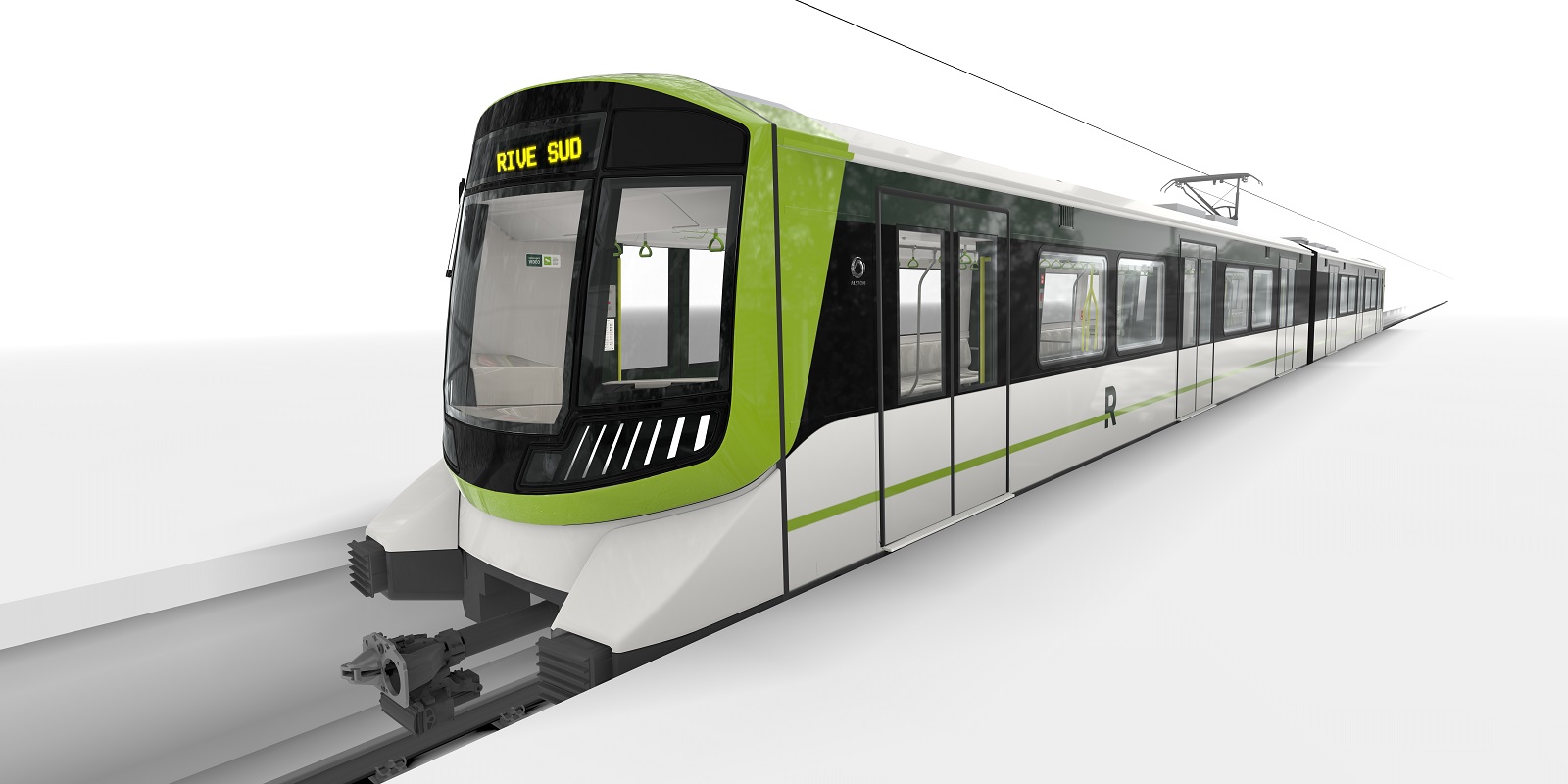
They haven't specified specific trains but the early specifications indicate something similar to Montreal's REM trains:


They may use overhead catenary, they may not. We'll have to see.

What they won't be is LRVs. It will be high platform, full metro trains with platform screen doors.

The capacity of the line will theoretically be slightly smaller than what the existing subway system is capable of with upgraded signal systems, but is still generally very high (higher than what the existing subway network can handle as of today). There is no doubt it qualifies as a full blown subway line.
     
     
  #16488  
Old Posted Mar 28, 2022, 4:03 PM
Innsertnamehere's Avatar
Innsertnamehere Innsertnamehere is offline
Registered User
 
Join Date: Jan 2010
Location: Hamilton
Posts: 12,809
Quote:
Originally Posted by WhipperSnapper View Post
The above ground stations are expansive which just makes the corridor underpasses even longer to pass under
The Leslieville and Gerrard stations also have 4 tracks of GO Train lines to pass under which is why the underpasses are so long.
     
     
  #16489  
Old Posted Mar 28, 2022, 10:55 PM
WhipperSnapper's Avatar
WhipperSnapper WhipperSnapper is offline
I am the law!
 
Join Date: Sep 2002
Location: Toronto+
Posts: 22,889
Exactly. These new stations just make them longer.
     
     
  #16490  
Old Posted Mar 29, 2022, 3:12 PM
TorontoDrew's Avatar
TorontoDrew TorontoDrew is offline
Registered User
 
Join Date: Nov 2014
Posts: 10,626
edited my post, saw more renders/
     
     
  #16491  
Old Posted Mar 29, 2022, 4:10 PM
J.OT13's Avatar
J.OT13 J.OT13 is offline
Moderator
 
Join Date: Mar 2012
Location: Ottawa
Posts: 28,354
Quote:
Originally Posted by Mister F View Post
Not really, it started appearing on planning maps as a subway back in the 1960s. The current line is a continuation of planning that goes back over a decade, with the Downtown Rapid Transit Expansion Study being approved in 2012. Phase 1 was approved in 2018 and then rebranded and redesigned by the new government the following year. It's been a long time in the making.
The idea of a DRL has been discussed for over a half century sure, but the Ontario Line has little in common with previous plans. Different routing, light-metro trains as opposed to heavy subway trains of the past, above ground for much of the length.
     
     
  #16492  
Old Posted Mar 29, 2022, 5:06 PM
Innsertnamehere's Avatar
Innsertnamehere Innsertnamehere is offline
Registered User
 
Join Date: Jan 2010
Location: Hamilton
Posts: 12,809
Quote:
Originally Posted by J.OT13 View Post
The idea of a DRL has been discussed for over a half century sure, but the Ontario Line has little in common with previous plans. Different routing, light-metro trains as opposed to heavy subway trains of the past, above ground for much of the length.
again - they are not light metro trains. They are full heavy metro trains, just not Toronto metro trains. The specific model has not been selected, but the Alstom Metropolis fits perfectly with the specs, and is in use today on metro networks including:

Amsterdam Metro
Athens Metro (starting from 2027)
Barcelona Metro
Bucharest Metro (starting from Q4 2022)
Budapest Metro
Buenos Aires Underground
Brasília Metro
Caracas Metro
Chennai Metro
Dubai Metro
Guadalajara light rail system
Hanoi Metro
İstanbul Metro
Kochi Metro
Lima Metro
Los Teques Metro
Lucknow Metro
Montreal REM (Starting from 2022)
Mumbai Metro
Nanjing Metro
Panama Metro
Paris Metro
Riyadh Metro
Santiago Metro
Santo Domingo Metro
São Paulo Metro
Shanghai Metro
Singapore MRT
Sydney Metro
Taipei Metro (starting from 2023)
Xiamen Metro
     
     
  #16493  
Old Posted Mar 29, 2022, 5:24 PM
J.OT13's Avatar
J.OT13 J.OT13 is offline
Moderator
 
Join Date: Mar 2012
Location: Ottawa
Posts: 28,354
Quote:
Originally Posted by Innsertnamehere View Post
again - they are not light metro trains. They are full heavy metro trains, just not Toronto metro trains. The specific model has not been selected, but the Alstom Metropolis fits perfectly with the specs, and is in use today on metro networks including:
What separates metro from light-metro. I thought it was capacity. Why are are all three Vancouver Skytrain lines light-metro while the REM and Ontario Line are not? I was always under the impression REM was a light-metro.
     
     
  #16494  
Old Posted Mar 29, 2022, 5:41 PM
Nouvellecosse's Avatar
Nouvellecosse Nouvellecosse is offline
Volatile Pacivist
 
Join Date: Aug 2005
Location: Nova Scotia
Posts: 11,107
I don't think there's an exact cut off since it's more of an informal vernacular term. Many of the Paris metro lines have trains with 75m long and cars, narrower than the Skytrain, while Berlin u-bahn and Madrid Metro has some trains that are even smaller. Yet they're not considered "light" by most. There's definitely some overlap but I don't think Ontario line or REM should be called light though since the former is planned with 100m long trains, which is similar to many metro systems globally. REM's 4 car consists would only be about 76m long, but they'll be wider than many metro trains at 3m.
__________________
"The reasonable man adapts himself to the world; the unreasonable one persists in trying to adapt the world to himself. Therefore all progress depends on the unreasonable man." - George Bernard Shaw
Don't ask people not to debate a topic. Just stop making debatable assertions. Problem solved.
     
     
  #16495  
Old Posted Mar 29, 2022, 6:19 PM
jamincan jamincan is offline
Registered User
 
Join Date: Jul 2020
Location: KW
Posts: 1,892
Transit wonks get far too excited about terminology in my view.

I think the light vs. heavy distinction was originally supposed to be in regards to the construction of the rolling stock, which initially corresponded well to higher-frequency and capacity heavy rail and lower frequency and capacity light rail. I think that light metro arose as modern metro systems were being built using lighter rolling stock, but with operational patterns and features that were more similar to traditional heavy-rail metro systems.

Ultimately, I think we're better off being more specific in what we're talking about instead of trying to develop some sort of taxonomy for transit systems. Frequency, capacity, and reliability/consistency pretty much cover the bases in terms of meaningful qualities of a transit system or line. In that sense, the Ontario Line will have more in common with the existing subway system.
     
     
  #16496  
Old Posted Mar 29, 2022, 6:29 PM
Innsertnamehere's Avatar
Innsertnamehere Innsertnamehere is offline
Registered User
 
Join Date: Jan 2010
Location: Hamilton
Posts: 12,809
Quote:
Originally Posted by J.OT13 View Post
What separates metro from light-metro. I thought it was capacity. Why are are all three Vancouver Skytrain lines light-metro while the REM and Ontario Line are not? I was always under the impression REM was a light-metro.
It is capacity and the OL has been designed with a relatively high capacity - much higher than the skytrain.

The OL's design capacity is 30,000 PPHD - which is actually higher than what the Toronto subway system can handle today. It uses slightly smaller, standardized, trains than the existing subway, but makes up for it with higher frequencies.

Once the Toronto subway completes signal upgrades, it will be capable of slightly higher passenger loads (theoretically up to 34,000 PPHD).

Light metro is more in the sub-20k capacity range, which aligns with systems like the Ottawa LRT or the Skytrain (which can currently handle in the 17,000 PPHD range on the Expo Line).

REM has been deemed a light metro by some due to shorter trains (76m) and lower frequencies (150 seconds), resulting in a capacity of around 15,000 PPHD. The trains themselves being used are standard metro trains used globally.

     
     
  #16497  
Old Posted Mar 29, 2022, 6:53 PM
jigglysquishy's Avatar
jigglysquishy jigglysquishy is offline
Registered User
 
Join Date: Jul 2010
Location: Saskatchewan
Posts: 3,326
Quote:
Originally Posted by jamincan View Post
Transit wonks get far too excited about terminology in my view.

I think the light vs. heavy distinction was originally supposed to be in regards to the construction of the rolling stock, which initially corresponded well to higher-frequency and capacity heavy rail and lower frequency and capacity light rail. I think that light metro arose as modern metro systems were being built using lighter rolling stock, but with operational patterns and features that were more similar to traditional heavy-rail metro systems.

Ultimately, I think we're better off being more specific in what we're talking about instead of trying to develop some sort of taxonomy for transit systems. Frequency, capacity, and reliability/consistency pretty much cover the bases in terms of meaningful qualities of a transit system or line. In that sense, the Ontario Line will have more in common with the existing subway system.

I agree.

More most normal people, any urban train is a subway. I've heard many people talk about taking the subway in Calgary or Edmonton.
     
     
  #16498  
Old Posted Mar 29, 2022, 9:18 PM
ssiguy ssiguy is offline
Registered User
 
Join Date: Mar 2006
Location: White Rock BC
Posts: 11,878
Light Metro is just a made up word, there is no such thing.

A subway/Metro is a bi-directional, urban, electrified, grade separated rail system. Full stop.

Ottawa LRT is a Metro, Eglinton LRT isn't.
REM is a Metro, CTrain isn't.
SkyTrain is a Metro, LA LRT isn't.
Chongquing Monorail is a Metro, Seattle LINK isn't.

The technology, whether it's at-grade, elevated, underground, or a combination of the 3 doesn't make a hoot of difference.

The easiest way to differentiate a Metro from other systems is whether it can be {at least hypothetically} automated or not.
     
     
  #16499  
Old Posted Mar 29, 2022, 9:27 PM
Doady Doady is offline
SUSPENDED
 
Join Date: Apr 2004
Posts: 5,166
Grade separation allows for higher frequencies and longer trains, and thus higher capacity, and so heavy rail. Even if trains a bit shorter and narrower, it is still higher capacity.

Building light rail is about higher capacity too. When the articulated buses get too crowded, when the frequencies get too high for signal priority, then you need all-door boarding and even longer vehicles, namely LRVs, maybe even combined into 2 or 3-car trains.

Where you want to cut off light rail and heavy rail, I think it is not that important, even from just technical standpoint and not talking branding. But it is important to remember that building BRT, light rail, and heavy rail really is about higher capacity. Maybe we can talk about medium rail or intermediate rail as well (e.g. Scarborough RT). It is important not to forget that the reason to build these things to solve the problem of high ridership, not the problem of low ridership. And that is easy to forget, and the consequences of forgetting that can be huge.

You can see all over the US in places like Dallas and St. Louis how spending so much money to build light rail doesn't increase ridership. What a waste. You can see in Canada also, York Region spent huge amount to build a BRT system with high frequencies, all-door boarding scheme, and even some transitways, and the ridership didn't increase. These places built for higher capacity that they didn't need. They needed to increase the ridership first.

When we forget that BRT, light rail, medium rail, and heavy rail is all about increasing capacity, then we will make these mistakes again. Even for basic bus system, higher frequencies follows ridership, not the other way around. The most important thing for high ridership is a complete system, a bus route in every neighbourhood, along every major road, at every hour, every day. Transit systems in their infancy need to focus on filling in the gaps in their networks, not worry about frequent bus service or BRT or rail.

I see it here in Mississauga, they simply extended 39 Britannia along Matheson Blvd to Renforth, further into industrial area, connecting to the Toronto border, and the ridership skyrocketed. Even with 35 minute frequencies, the overcrowding was getting out of control, and articulated buses were put onto the route. Even in the midst of pandemic, the frequencies were gradually increased, now 20 minutes during rush hour, and 25 minutes during midday. Rail, grade separation, all-door boarding scheme, high frequencies, all that stuff is not what gives systems high ridership. It is the high ridership, the need for high capacity, that gives systems all those things, and we cannot forget that.
     
     
  #16500  
Old Posted Mar 29, 2022, 10:25 PM
ssiguy ssiguy is offline
Registered User
 
Join Date: Mar 2006
Location: White Rock BC
Posts: 11,878
Some of these cities would have been better off with little Personal Rapid Transit systems.

LRT advocates and corporations hate PRT because they often work too well. Look at the posterchild of PRT...................Morgantown W.Virgina. It's a university town with campuses spread out over the city so they tried something new in the 1970s........PRT. It has worked incredible well with a 98% reliability rate and no accidents. It had fallen off so now they are replacing the entire software and fleet to modernize it. The line has 5 stations so is also used for general transit by the citizens of the city.

Over it's 12km length it carries 16,000 passengers a day in a little city of 40,000 with a metro pop of just 150,000. In terms of passenger per km, it blows many of these huge city LRT systems right out of the water and takes you directly from your station to the one you are going to.................it's incredibly fast. You never really wait for the cabs at your station because the little 12km system has 70 cabs.
     
     
This discussion thread continues

Use the page links to the lower-right to go to the next page for additional posts
 
 
Closed Thread

Go Back   SkyscraperPage Forum > Regional Sections > Canada
Forum Jump


Forum Jump


All times are GMT. The time now is 12:00 PM.

     
SkyscraperPage.com - Privacy Statement - Top

Powered by vBulletin® Version 3.8.7
Copyright ©2000 - 2026, vBulletin Solutions, Inc.