HomeDiagramsDatabaseMapsForum About
     

Go Back   SkyscraperPage Forum > Regional Sections > Canada


Closed Thread

 
Thread Tools Display Modes
     
     
  #13301  
Old Posted Dec 1, 2021, 10:00 PM
ssiguy ssiguy is offline
Registered User
 
Join Date: Mar 2006
Location: White Rock BC
Posts: 11,978
Housing purchases for Canadians only would be exceptionally easy to implement as it is for CMHC. In terms of real estate housing on government land, as I stated it would be for first-time homebuyers of Canadian citizenship. To say it would be difficult is laughable.
     
     
  #13302  
Old Posted Dec 1, 2021, 11:10 PM
thebasketballgeek's Avatar
thebasketballgeek thebasketballgeek is offline
Registered User
 
Join Date: Nov 2013
Location: Rimouski, Québec
Posts: 1,672
Quote:
Originally Posted by someone123 View Post
I'm waiting for this inflation to continue and for Saskatoon to be replaced by somewhere in northern Saskatchewan. Even if we do think these places are affordable today they're clearly not a "solution" for Canada since it's not possible for significant numbers of Ontarians to move to these much smaller places without driving up prices. And anyway I would argue that Canada is not a very good place to live if most people can't afford to stay within hundreds of kilometers of where they were born. I don't think it's humane to expect that people should have to min-max their location within millions of square kilometers to have a middle class standard of living, and that is a big step down from the norm in Canada in past decades.
Humans are beings that also have migratory patterns. Just look how often Americans move from one city to the other. Your ancestors probably immigrated from somewhere to Canada just like mine. If there is an opportunity to improve quality of living people will make the sacrifice of moving away from friends and family to accumulate wealth.

In fact from what I’ve noticed in my 21 years in Winnipeg is people will immigrate here, buy a house at a very affordable price, accumulate wealth and then move to Vancouver or Toronto once they’ve ensured enough money for a down payment. Conversely homeowners from Toronto or Vancouver can easily move to Winnipeg or Edmonton once they sell their house and put down a 50% downpayment for a bigger property or in some cases go mortgage free. With the rest of the money they will now have available they can have a much larger disposable income and can essentially vacation to their hometown whenever they want. Nobody is forcing people to leave but when there’s such a massive opportunity to improve your quality of life why shackle yourself to those insane real estate prices.

For the argument about people moving driving up house prices later on that doesn’t effect the individual that moves there when house prices are low. In cases like Edmonton who have already relaxed zoning to ban single-family housing and parking minimums I’m sure they can easily take as many people as Toronto and Vancouver are willing to throw at them. If other prairie cities like Winnipeg and Saskatoon implement similar policies we might finally see a population shift to the prairies and finally have a viable primary city akin to Vancouver, Toronto, and Montreal in the geographical centre of the country
     
     
  #13303  
Old Posted Dec 1, 2021, 11:29 PM
FarmerHaight's Avatar
FarmerHaight FarmerHaight is offline
Peddling to progress
 
Join Date: Jul 2019
Location: Vancouver's West End
Posts: 1,631
Quote:
Originally Posted by someone123 View Post
Toronto + Montreal + Vancouver are around 1/3 of the population of Canada and the list of unaffordable markets keep expanding... And anyway I would argue that Canada is not a very good place to live if most people can't afford to stay within hundreds of kilometers of where they were born.
I am aware of the population in those three markets. I am also aware that the footprint is expanding as people extend their commuting patterns and more people are working remotely full-time. However, the other two-thirds of the country live in completely different worlds. $10 a day childcare is not as valuable for someone living in Saskatchewan as the need for two incomes is lower, childcare is not as expensive, and many people on the prairies have support networks that can help with childcare. Yet the support for it in urban Ontario and BC is very strong. I have a feeling you would see a similar split among foreign investment in the housing market, because locals have yet to be priced out of entry-level homes.

As for the point of staying where you are born, it is a very simple math problem if your goal is to own a SFH. BC's population has grown by 1 million in the last 20 years. If half of those people want to purchase homes in metro Van and you need a new SFH for every two of them, you will end up having to expand outwards like crazy. Based on the BC government's data, only 73,636 building permits for single dwelling units have been issued since 2001. I see four potential solutions for this shortfall:
  • Move somewhere else like the prairies where the dream of owning a SFH is still alive and well (for now)
  • Build more SFH by building on commercial land, parkland, agricultural land, and sensitive ecological areas (doesn't seem sustainable)
  • Give up on buying all together and resign yourself to a lifetime of renting a basement suite or home in the sky
  • Adjust your expectations and demand that the government change zoning restrictions so we can build more density without wasting space on parking minimums and front yards no one uses

Everyone in my generation who is mad because they can't buy a 1,500 square foot home within an hour's drive of downtown TO, Montreal, or Vancouver for $500k obviously can't comprehend population growth or scarce resources. This isn't a decline in quality of life; this is what happens when millions of other Canadians want the same thing as you and some of them have deeper pockets.

Quote:
Originally Posted by whatnext View Post
That's BS. If you want foreign investment put it into something that grows the economy. Housing already has a disproportionately high share of Canada's economy and that has never been a recipe for success.
I don't disagree that Canada's economy needs to be diversified, but this is not a zero-sum game. Foreign funds that are kept out of the housing market will not be re-allocated to other industries.

__________________
“Nothing compares to the simple pleasure of riding a bike” – John F Kennedy
     
     
  #13304  
Old Posted Dec 2, 2021, 12:18 AM
someone123's Avatar
someone123 someone123 is offline
hähnchenbrüstfiletstüc
 
Join Date: Nov 2001
Location: Vancouver
Posts: 35,958
Quote:
Originally Posted by FarmerHaight View Post
Everyone in my generation who is mad because they can't buy a 1,500 square foot home within an hour's drive of downtown TO, Montreal, or Vancouver for $500k obviously can't comprehend population growth or scarce resources.
Maybe some people are like this but there are also people who want basic non-precarious housing that lets them put down roots and maybe have 1-2 kids without having to move 1,000+ km away from their family. This could take the form of multi-unit, and is completely possible given geographical and technological constraints.

I think high housing costs here in Vancouver are really dragging the economy down relative to what it could be like. It's inherently a much better functioning and much more livable city than the other West Coast cities but housing prices counterbalance a lot of that.

Quote:
Originally Posted by thebasketballgeek View Post
Humans are beings that also have migratory patterns. Just look how often Americans move from one city to the other.
You are conflating opportunities, which are good, with quality of life problems that push people away, which are bad. While it may be true that a Canadian economy that is overall a house of cards with out of control borrowing running on real estate will lead to more population growth on the Prairies while it lasts, it is not a laudable situation.
     
     
  #13305  
Old Posted Dec 2, 2021, 2:43 AM
thebasketballgeek's Avatar
thebasketballgeek thebasketballgeek is offline
Registered User
 
Join Date: Nov 2013
Location: Rimouski, Québec
Posts: 1,672
Quote:
Originally Posted by someone123 View Post


You are conflating opportunities, which are good, with quality of life problems that push people away, which are bad. While it may be true that a Canadian economy that is overall a house of cards with out of control borrowing running on real estate will lead to more population growth on the Prairies while it lasts, it is not a laudable situation.
If you look at intermigration patterns for many years the two prairie provinces have generally seen a net negative on that front. If the City of Toronto or Vancouver have no intention of improving their home affordability, what's wrong with the trends reversing in favor of areas that need more people so that density of these cities can increase and with that more amenities are available for these mid sized cities? I mean how many people from Winnipeg and Saskatoon have moved to Toronto and Vancouver while positively contributing to their economies? Spoiler alert, lots of people.

People moved to Alberta for Oil, people moved to Toronto and Vancouver for specialized jobs, and now people have the opportunity to move to Manitoba, Saskatchewan, and the Atlantic Provinces for affordability.
     
     
  #13306  
Old Posted Dec 2, 2021, 2:15 PM
MolsonExport's Avatar
MolsonExport MolsonExport is offline
Touching grass everyday.
 
Join Date: Oct 2003
Location: Otisburgh
Posts: 51,595
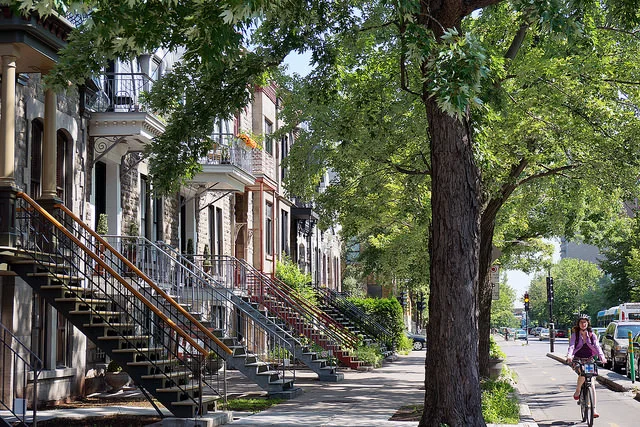
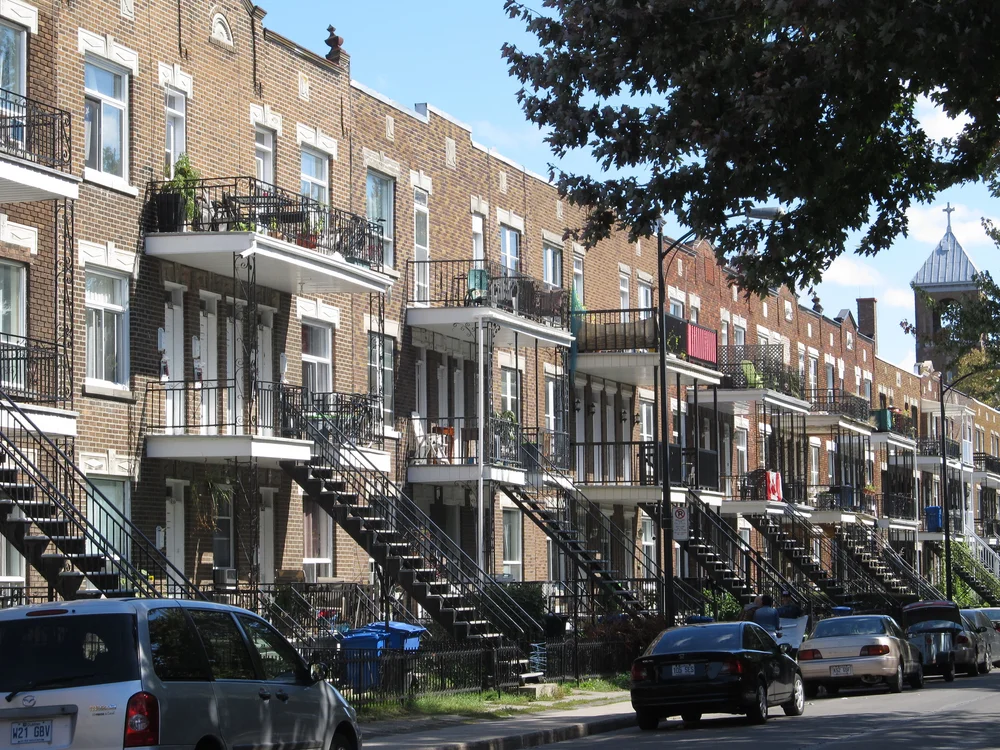
This is the sort of housing that needs to be encouraged in our biggest cities. Not condo towers. Not SFH. But stacked housing. It worked well for Montreal for decades. It continues to work well in Brooklyn. You would be surprised just how spacious many of them are.


squarespace

Quote:
Montreal’s residential urban environment is quite different from those of the others big cities.
It is difficult indeed to walk in the streets, made of row upon row of three storey houses, without noticing the typical outdoor staircases that shape the identity and the image of the city.

These three storey houses, also called ‘triplex’ or ‘plex’, are subdivided in three flats, one per storey, and also exist in two storey version or more.

Introduced by British colonists, these row houses were mainly erected in the thirty years before the twentieth century when the attractive employment opportunities in the city caused a boom of population.

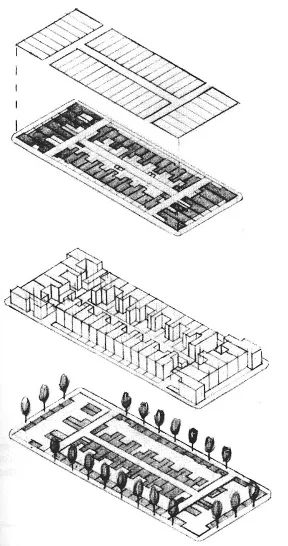
According to the research report ""PLEX" Housing: A Renewed Tradition" from CMHC, the typical model of Montreal’s urban environment is one longitudinal lane with two crossing lanes serving the rear of the buildings.

This organization promotes social interaction rather than isolation and contributes to limited urban sprawl with the high occupation density of 350 persons per hectare.

For a Triplex, the average dwelling plot size is 14.3 to 15.2 meters by 26.5 to 29 meters with two dwelling units on each plot.

The typical floor area ratio is 1.4 and the site coverage is 0.6.

Triplexes organization allows flexible housing compartmentalization. Each floor is able to welcome one family, which makes three in total.
For a more comfortable place, the two upper floors can gather into two apartments of two stories. This organization makes a lengthwise distribution into narrow apartments.

In a typical one story flat, the living room and bedrooms are located on the street side with the kitchen and other utility rooms facing the backyard or lane.

An advantage of these houses is their organization. In fact the stacked units conserve heat and warmth is shared between apartments, there is no lost to the outside concerning two façades. Added to this minimal heat loss, the openings front and back provide effective ventilation and abundant natural light.
https://dynamiccities.org/inspirations
__________________
The whole problem with the world is that fools and fanatics are always so certain of themselves, and wiser people so full of doubts. (Bertrand Russell). Sweet Loretta fart thought she was a cleaner, but she was a frying pan. (John Lennon)
     
     
  #13307  
Old Posted Dec 2, 2021, 2:37 PM
esquire's Avatar
esquire esquire is offline
Registered User
 
Join Date: Oct 2001
Posts: 37,480
^ It is amazing how resistant Canadian cities generally are to new development of that type of 'missing middle' housing stock.
     
     
  #13308  
Old Posted Dec 2, 2021, 3:50 PM
suburbanite's Avatar
suburbanite suburbanite is offline
Registered User
 
Join Date: Apr 2011
Location: Toronto & NYC
Posts: 5,652
The issue here at least is that acquiring enough land to build something like that at scale larger than 6-10 units is pretty cost prohibitive. It's not the 1930's when you could gobble up city blocks for cheap and make an FAR of only 2.0-3.0 feasible. If you're acquiring existing SFH or commercial businesses and competing with every developer in the city, your cost base is going to be high enough that you need to push for density. On the flip side, if you want to try it on a greenfield development you don't have any of the walkable commercial areas that make actually living in that housing type desirable. We do build stacked towns out in the burbs, but all the owners still have cars because they're not living off of Queen West, they're near the 407 in Brampton.

I think the biggest issue facing modern city building is our inability to organically create desirable commercial streets like the prewar ones that we all know and love. If you could build something akin to any of the main commercial arterials in Toronto (Queen, College, Dundas, Bloor, etc.) from scratch, than you could make that Montreal vernacular a desirable housing type even in a far-flung suburb. Urban development has moved from a cottage industry to an industrial one that requires economies of scale. We can't create fine-grained commercial corridors when one developer owns the entire block. No altruistic developer has the appetite to try and lease up 10 units of carefully-curated retail, waiting for an independent grocer, a flower store, a cafe, a fine dining establishment, etc. When you need to provide returns to investors, you sign a 10-year lease with Shoppers, the LCBO, and one of the banks and walk away. If I had $100 million to blow, I would attempt to the aforementioned, and almost certainly lose money lol.
__________________
Discontented suburbanite since 1994
     
     
  #13309  
Old Posted Dec 2, 2021, 3:54 PM
esquire's Avatar
esquire esquire is offline
Registered User
 
Join Date: Oct 2001
Posts: 37,480
^ Another good observation. I have often wondered why the old model of development, i.e. municipality builds a grid, developers fill it in, can't be resurrected?

Why do we constantly let developers build unwalkable cul-de-sac spaghetti all over the suburbs and never, ever build the kinds of normal, traditional grids that have proven their effectiveness and appeal as neighbourhood destinations for over 100 years?
     
     
  #13310  
Old Posted Dec 2, 2021, 4:03 PM
niwell's Avatar
niwell niwell is offline
sick transit, gloria
 
Join Date: Nov 2004
Location: Roncesvalles, Toronto
Posts: 11,650
Generally municipalities aren't the ones who build neighbourhood level infrastructure, but rather the developers which then turn it over the the municipality. Regulations aside, it's a lot cheaper to have things like unconnected streets, no single-loaded streets facing parks, etc. Most of the GTA is building in a modified grid right now but the end result isn't much better. At the end of the day while economical, having a single developer build large tracts of land doesn't really lead to aesthetic results.

Cost issues aside it would be interesting to see the results if we had developers building stuff more piecemeal. I'm fully onboard with Monkeyronin's post about about investment driven price increases so maybe it wouldn't have much effect on that end but lead to more interesting places.
__________________
Check out my pics of Johannesburg
     
     
  #13311  
Old Posted Dec 2, 2021, 4:07 PM
rofina rofina is offline
Registered User
 
Join Date: Nov 2013
Posts: 5,149
Great ideas here.

But this thread is cyclical.

We collectively discuss the same problems, the same solutions, and things go nowhere. That begs the question; why?

None of this will ever change until housing is no longer treated as a commodity.

Every single one of these issues and inactions can be traced back to a simple fact; housing has been financialized.

Housing is a financial asset first, shelter second. This is the paradigm shift that's central to the global housing crisis.

When you start to view decisions through the lens of an asset manager who unemotionally is trying to extract a maximum value out of a portfolio (that happens to be only the second most important human need) the whole situation makes much more sense.

Think about it; over the last 2 decades we have driven more humans to Cities than in any other time in our species history.

What better way to profit than to own the financial asset that underpins humans ability to migrate?

What better way to profit than to regulate that market and only release enough supply to ensure no collapse in asset values?

Until the conversation is principally around financialization of housing, nothing changes.

The boogeyman here, the same as with most hot button issues today is class warfare; this is the rich vs everyone.
     
     
  #13312  
Old Posted Dec 2, 2021, 4:15 PM
esquire's Avatar
esquire esquire is offline
Registered User
 
Join Date: Oct 2001
Posts: 37,480
Quote:
Originally Posted by niwell View Post
Generally municipalities aren't the ones who build neighbourhood level infrastructure, but rather the developers which then turn it over the the municipality. Regulations aside, it's a lot cheaper to have things like unconnected streets, no single-loaded streets facing parks, etc. Most of the GTA is building in a modified grid right now but the end result isn't much better. At the end of the day while economical, having a single developer build large tracts of land doesn't really lead to aesthetic results.

Cost issues aside it would be interesting to see the results if we had developers building stuff more piecemeal. I'm fully onboard with Monkeyronin's post about about investment driven price increases so maybe it wouldn't have much effect on that end but lead to more interesting places.
Yes, I can appreciate the financial driver behind letting developers build subdivisions to their specifications. It's an easy, hands-off, low-cost way to get it done, even if the results are less than stellar.

But hear me out... what if cities set a small amount of land aside just to do things differently? Build a 50 to 100 hectare grid, service and zone it appropriately, and sell individual parcels to developers? If the the results are good, perhaps it could be expanded? If it doesn't work, that could be the end of the experiment.
     
     
  #13313  
Old Posted Dec 2, 2021, 4:25 PM
Acajack's Avatar
Acajack Acajack is offline
Gros Méchant Loup
 
Join Date: Aug 2006
Location: Province 2, Canadian Empire
Posts: 72,949
Cities do have to approve what developers do - and do approve, decline or ask for changes for XYZ all the time.

It's a bit of cop out (on their part) to say they have no choice in the matter.
__________________
Loin des yeux, loin du coeur.
     
     
  #13314  
Old Posted Dec 2, 2021, 4:27 PM
niwell's Avatar
niwell niwell is offline
sick transit, gloria
 
Join Date: Nov 2004
Location: Roncesvalles, Toronto
Posts: 11,650
Quote:
Originally Posted by esquire View Post
Yes, I can appreciate the financial driver behind letting developers build subdivisions to their specifications. It's an easy, hands-off, low-cost way to get it done, even if the results are less than stellar.

But hear me out... what if cities set a small amount of land aside just to do things differently? Build a 50 to 100 hectare grid, service and zone it appropriately, and sell individual parcels to developers? If the the results are good, perhaps it could be expanded? If it doesn't work, that could be the end of the experiment.

Oh I'm fully behind it and would love to see something like that done. It would be interesting to see how loudly certain groups (that are *totally* non-biased and advocating for the average person) would come out staunchly in opposition.
__________________
Check out my pics of Johannesburg
     
     
  #13315  
Old Posted Dec 2, 2021, 4:38 PM
esquire's Avatar
esquire esquire is offline
Registered User
 
Join Date: Oct 2001
Posts: 37,480
Quote:
Originally Posted by niwell View Post
Oh I'm fully behind it and would love to see something like that done. It would be interesting to see how loudly certain groups (that are *totally* non-biased and advocating for the average person) would come out staunchly in opposition.
Yes, of course, I'm sure many of the individuals in the development industry that coincidentally happen to among be the biggest campaign donors to municipal candidates would come out and tell us how this would completely ruin the finances of our cities and give all of our pets cancer.
     
     
  #13316  
Old Posted Dec 2, 2021, 5:02 PM
travis3000's Avatar
travis3000 travis3000 is offline
Registered User
 
Join Date: Dec 2012
Location: Simcoe County, ON
Posts: 6,506
In 2021, a total of 401k new immigrants will have come to Canada an all time record high. For 2022 that number will rise to 411k.

That's 812k new people in two years. These people have to live somewhere...
     
     
  #13317  
Old Posted Dec 2, 2021, 5:08 PM
SignalHillHiker's Avatar
SignalHillHiker SignalHillHiker is online now
I ♣ Baby Seals
 
Join Date: Jul 2012
Location: Sin Jaaawnz, Newf'nland
Posts: 36,315
Force them to come here, please. Our attraction rate is abysmal (but increasing tremendously - were up from a few hundred just a few years ago to a target of 5,000 annually), but our retention rates are fantastic (especially for family class immigrants).
__________________
Note to self: "The plural of anecdote is not evidence."
     
     
  #13318  
Old Posted Dec 2, 2021, 5:10 PM
rofina rofina is offline
Registered User
 
Join Date: Nov 2013
Posts: 5,149
Quote:
Originally Posted by travis3000 View Post
In 2021, a total of 401k new immigrants will have come to Canada an all time record high. For 2022 that number will rise to 411k.

That's 812k new people in two years. These people have to live somewhere...
And how often does Canada spring up a new major City?

812k in 2 years is bigger than the City of Vancouver added every 2 years.

I doubt too many really think of the scale of this.
     
     
  #13319  
Old Posted Dec 2, 2021, 5:10 PM
FarmerHaight's Avatar
FarmerHaight FarmerHaight is offline
Peddling to progress
 
Join Date: Jul 2019
Location: Vancouver's West End
Posts: 1,631
Quote:
Originally Posted by suburbanite View Post
The issue here at least is that acquiring enough land to build something like that at scale larger than 6-10 units is pretty cost prohibitive. It's not the 1930's when you could gobble up city blocks for cheap and make an FAR of only 2.0-3.0 feasible.
How much downward pressure would removing zoning restrictions apply to land prices? The reason parcels of land that can be developed densely are so expensive is because they are a scarce resource, and are priced as such. If you allow three- or four-storey multi-unit dwellings to be built on every plot of land across the city, you suddenly introduce a lot more supply of land that is zoned for greater density.

The other thing removing zoning restrictions would do is allow smaller developers into the multi-unit construction business. As it currently stands, the incentives all point to building large towers and only the big developers have the financial backing and the expertise to build these. These developers also have investors and the mandate to maximize returns. However, a smaller developer with a few shareholders could likely pull off building stacked homes, and it may also only have access to bank loans. The required IRR for these developers would therefore only be the interest rate plus a little extra for the proprietors.
__________________
“Nothing compares to the simple pleasure of riding a bike” – John F Kennedy
     
     
  #13320  
Old Posted Dec 2, 2021, 5:15 PM
WarrenC12's Avatar
WarrenC12 WarrenC12 is online now
Registered User
 
Join Date: May 2007
Location: East OV!
Posts: 24,683
Quote:
Originally Posted by someone123 View Post
Maybe some people are like this but there are also people who want basic non-precarious housing that lets them put down roots and maybe have 1-2 kids without having to move 1,000+ km away from their family. This could take the form of multi-unit, and is completely possible given geographical and technological constraints.
Increasing population, density, and demand means you can't live the lifestyle you grew up in, unless you have been able to move up into a different socio-economic bracket as compared to your parents.

I think this is the reality in big Canadian cities and a tough mental pill to swallow.
     
     
This discussion thread continues

Use the page links to the lower-right to go to the next page for additional posts
 
 
Closed Thread

Go Back   SkyscraperPage Forum > Regional Sections > Canada
Forum Jump


Forum Jump


All times are GMT. The time now is 9:43 PM.


Powered by vBulletin® Version 3.8.7
Copyright ©2000 - 2026, vBulletin Solutions, Inc.