| |
 Posted Nov 23, 2021, 9:12 PM
|
 |
Moderator
|
|
Join Date: Oct 2011
Location: Philadelphia
Posts: 18,474
|
|
One high-tech Philly industry that is creating lots of jobs
Quote:
First came decades of research, full of setbacks. Then lab work slowly resumed, culminating in the first drug approval in 2017, followed by two more.
Now more than 40 companies in the Philadelphia region are working in cell and gene therapy, producing a stream of new jobs and even a run on lab space.
Gene therapy, a technology to replace defective genes that cause incurable diseases with new ones, is having its moment in medicine. And Philadelphia, birthplace of many firsts in health care, has been the cradle of this one, as well.
The city’s gene therapy sector is “firing on all cylinders in virtually every area,” said Christopher Molineaux, president and CEO of Life Sciences Pennsylvania, the lobbying group for biotech firms.
But for the moment, there’s a bit of an adrenalin rush in a field that was largely born here. “If you had told me in 2013 there would be more than 40 cell and gene therapy companies in Philadelphia in eight years, I wouldn’t have believed it,” said Jeff Marrazzo, CEO of University City-based Spark Therapeutics, whose firm is a leading example of the sector’s advance. Its sale to Novartis in 2018 for $4.3 billion was a bellwether event, signaling that Big Pharma was willing to pay big bucks for the technology.
In 2020, the cell and gene therapy sector, called CGT, attracted $4.4 billion in investment funding to the region, out of just under $20 billion invested nationally.
Philadelphia’s CEO Council for Growth counts more than 40 companies in the region currently developing CGT products. It expects the sector to grow from 35% to 94% in the next 10 years, using midrange projections.
Four area companies have gone public since 2019, namely Cabaletta Bio, Century Therapeutics, and Passage Bio in Philadelphia and Exton-based Castle Creek Biosciences.
While the number of people in the region working in the field is still relatively small, about 5,000 in 2020, it has been growing rapidly. Last year saw a 56 percent increase from 2019, with private companies rising 112 percent.
Spark, arguably the region’s biggest success so far, expects to double its workforce of 800 in the next five years, said Marrazzo, the CEO.
Until a few years ago “no one thought Philadelphia was a practical place for starting a biotech company,” said High. In 2012 when she was looking for funding to start Spark, prospective investors insisted she could succeed only by basing it elsewhere.
But she didn’t believe them and is glad she chose not to listen.
Boston and San Francisco still attract the largest share of venture capital funding, said Cariola. But Philadelphia’s profile is rising. For the first time, he is seeing CGT companies relocating to Philadelphia from other cities. “I had never before seen extraterrestrials coming into the Philadelphia market,” he said.
One need only look at the market for lab space to see the sector’s growth. Start-ups are devouring it like children in an ice cream store. “For a long time, the story in Philadelphia was flat” for commercial real estate said Cariola.
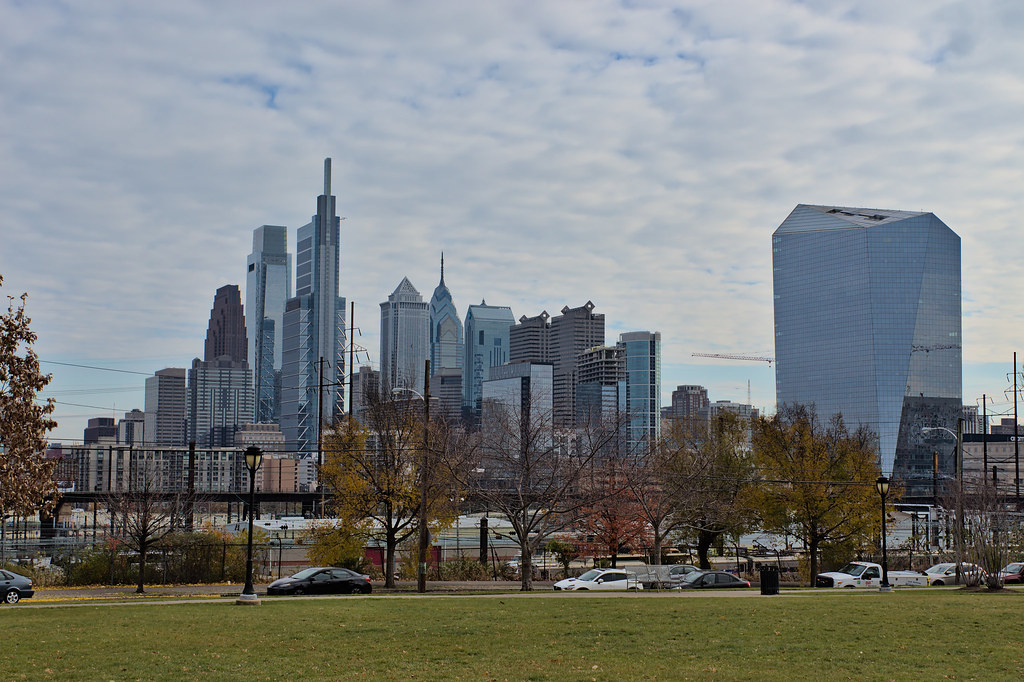
But today, new lab buildings are “being 100 percent occupied even before they have a certificate of occupancy,” he said. And some existing buildings, like the Cira Center across from 30th Street Station, the Curtis Center on Washington Square, and the former Hahnemann University Hospital building, are being retrofitted to accommodate labs. Cariola sees the need for more than three million square feet of additional lab space in the city and suburbs in the next few years.
Penn’s gene therapy program recently leased 150,000 square feet in King of Prussia. Cambridge Innovation Center, an operator of shared office space for life science companies, plans to convert 50,000 square feet in University City to labs. And developers want to transform the former Budd Company plant in North Philadelphia, which had been used to manufacture automobile and train parts, into a 2.4 million-square foot life sciences campus with labs, manufacturing and office space.
University City is a popular location because of its proximity to major universities and hospitals. “We are seeing more spin-outs from universities than in the past,” said Davidson, adding “the University City Science Center has attracted a lot of new start-ups.”
Spark chose University City for its headquarters, in part said Marrazzo, because of “the ability to walk across the street and talk to researchers” at Penn and CHOP.
The Navy Yard is also in demand because of its proximity to Philadelphia International Airport, since samples for cell therapies must often be rushed to other cities.
What does the future hold? “There is an opportunity to redefine our community as a hub of next generation technology,” said Greenwood.
|
Read more here:
https://www.inquirer.com/business/gene-cell-therapy-philadelphia-fda-jobs-growth-20211123.html

|
|
|





 Prev
Prev





 Linear Mode
