Quote:
Originally Posted by swimmer_spe

For us English people, can you give us the jest of it?
|
Google translate:
Defects, risk of injury: REM trains are "not at the expected level"
Patches are needed on dozens of cars made in India to ensure safety.
Thomas Gerbet
Mathiew Leiser
Alexis Gacon
4:00 am | Updated at 12:22 p.m.
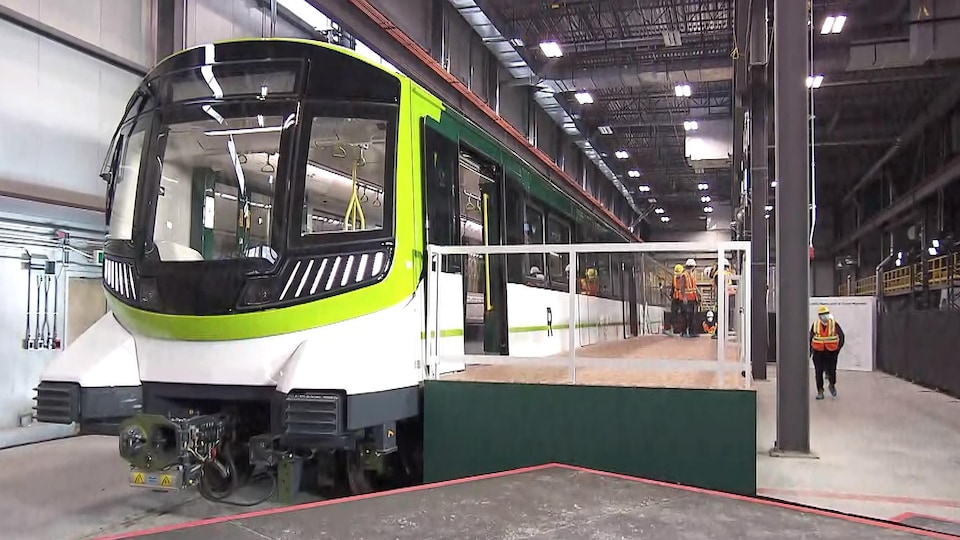
The first Metropolitan Express Network (REM) cars delivered to Quebec, from India, have defects and "obvious quality issues", raising fears of a "potential risk of injury" for passengers, has learned Radio- Canada. In a letter addressed to the consortium formed by Alstom and SNC-Lavalin, the CEO of CDPQ Infra, promoter of the REM, worries and denounces a multitude of non-conformities on cars already manufactured.
From the dressing to the finish, including the assembly and the electrical wiring of the cars, the CEO Jean-Marc Arbaud deplores in the document dated September 7 a breach of the principles and good practices of manufacturing trains. The product delivered is simply not of the expected level.
The letter was addressed to Éric Appert, director of the consortium known as the Groupe des Partenaires pour la Mobilité des Montréalais, following summary inspections carried out in Brossard.
The defects observed could affect the quality of the service that will be offered to REM passengers in terms of reliability, comfort, quality and, in certain cases, present a potential risk of injury to passengers.
A quote from: Jean-Marc Arbaud, CEO of CDPQ Infra, responsible for the realization of the MER in a letter addressed to the consortium.
In the photos attached to the letter, we discover welding problems on the bars held by the passengers. A train access door is poorly fitted and dented. Electric wires are poorly protected or even damaged.
Problems raised for months
The CEO wonders about the general quality of the manufacture and assembly of the trains at the site in Sri City, India. He adds that 30% of cars are already manufactured, so there is a growing risk of a significant build-up of fixes.
The situation worries him all the more since the problems had already been reported to Alstom several months ago. However, the fixes have not been made in the Indian factory and the defects are still detected, writes Jean-Marc Arbaud.
He adds that he is concerned about these conclusions, which clearly demonstrate a breach that does not respect the contract or good practices in the field, according to him.
It seems that Sri City's quality criteria are not up to those expected by REM.
A quote from: Jean-Marc Arbaud, CEO of CDPQ Infra, responsible for the realization of the MER in a letter addressed to the consortium.
This is one more tile falling on the REM project, which has already been delayed several times. The cost of the project has also climbed, partly because of the pandemic and the increase in the cost of materials. The first phase will cost at least $ 7 billion.
Alstom was chosen over Bombardier in the award of the contract. But there is no assurance that the Quebec manufacturer - which has since been swallowed up by Alstom - had the trains manufactured at its La Pocatière plant, since it also has facilities in Asia.
CPDQ Infra received the very first cars in October 2020. Alstom’s plant in Sri City is expected to produce 212. Each train will consist of two self-propelled cars. The parts come from Indian suppliers.
Workers paid $ 2 an hour
In 2018, Radio-Canada revealed that Alstom workers in Sri City earned $ 2 an hour with a more intense production rate than in Quebec, where a welder earns an hourly wage of around $ 30.
A company executive then assured that when you transfer technology from one country to another, you also transfer the culture of quality and the culture of the product.
The REM is convinced to turn the tide
There is a trend that is taking hold on certain elements of the production chain and we would like this to be corrected, confirms the director of communications of CDPQ Infra, Jean-Vincent Lacroix.
Project managers are, however, very confident that the rectifications will be made by Alstom and the spokesperson assures us that at this time, nothing major has been detected that could worry us for the rest, for the commissioning.
In the percentages of cars that we have received, anything that has been marked can be corrected and it will be corrected. We are also confident about the rest of the rolling stock.
A quote from: Jean-Vincent Lacroix, spokesperson for the REM
The fact that we have alerts like this, several months before commissioning, shows that we are extremely rigorous both in our expectations and in our inspections, he explains.
Same reassuring speech from Alstom, who claims to have put in place a detailed and planned action plan in response to this letter.
The manufacturer, who bears the cost of the fixes, argues that this is precisely the purpose of testing to modify or correct elements.
Alstom’s teams are keen to provide a high-performance, high-quality network, and everything is in place to achieve this, replied Adrien Vernhes, company spokesperson for the Americas.
The builder and the promoter assure that the project schedule will be respected. The first departures are scheduled for summer 2022 on the Rive-Sud branch.
At a press conference in Shawinigan, Quebec Premier François Legault said he was embarrassed about the REM trains. The quality isn't there, he blurted out.
He wished there was more Quebec content in REM cars, rather than following the lowest price rule.
At the same time, Mr. Legault accused the former Liberal government of Philippe Couillard of having let the Caisse de dépôt et placement du Québec select the lowest bidder.
Mr. Legault's goal, in future projects, is for there to be as much Quebec content as possible.





 Prev
Prev




 Linear Mode
