HomeDiagramsDatabaseMapsForum About
     

Go Back   SkyscraperPage Forum > Regional Sections > United States > Mountain West


Reply

 
Thread Tools Display Modes
     
     
  #11541  
Old Posted Oct 26, 2021, 10:24 PM
spr8364's Avatar
spr8364 spr8364 is offline
Registered User
 
Join Date: Apr 2017
Location: Larkspur
Posts: 68
Quote:
Originally Posted by The Dirt View Post
Yeah, it's Fine(TM). Looks like all of the stuff that's been built in Cherry Creek recently. I'd prefer traditional design, but architects are too busy patting each other on the back every time someone designs a "whimsical" cube.
Why don't you ask an Owner to build traditional? Good traditional can be done, but it is generally more expensive. Whenever a client starts talking about doing traditional, you remind them that it is expensive and they say never mind. Do something cheap. Then after you design a relatively nice building with some details to make it less boring, the Contractor will convince the Owner that the details are too expensive and don't add anything to the architecture of the building. So, the Owner tells them to take that off without telling the architect. And, then everyone wonders why the building is so boring.
Reply With Quote
     
     
  #11542  
Old Posted Oct 27, 2021, 2:43 AM
UrbanT's Avatar
UrbanT UrbanT is offline
Registered User
 
Join Date: Oct 2008
Posts: 60
Quote:
Originally Posted by The Dirt View Post
It's kind of wild how the parking hellscape between Lincoln and Governor's Park is very quickly getting infilled after decades of sitting empty.

Map: https://www.google.com/maps/d/u/0/edit?mid=1YRlemTyfZVxFVR3bUkYvWK87hEBxY7If&usp=sharing

Too bad all of the Cheesman Park NIMBYs are up in arms because they think a 13 story building nowhere near their precious view plane will block views of the mountains from their 18 story buildings.
Love the map! There's also the Gables residental proposal for 8th and Sherman. I also believe the proposal for the Racine's site stops at Racine's and does not cover Wendy's.
Reply With Quote
     
     
  #11543  
Old Posted Oct 27, 2021, 5:11 AM
TakeFive's Avatar
TakeFive TakeFive is offline
Registered User
 
Join Date: Jun 2010
Posts: 8,437
The power of making astute observations can be simply amazing
Quote:
Originally Posted by COtoOC View Post
I've thought about this theory of "induced demand" and I don't think they take into account a population that is rising rapidly.

I grew up in KC and recall when they added lanes to I-35 and I-435 back in the '80s. They recently added another lane to 435. I have to travel there often (unfortunately) and the freeway traffic there is nothing compared to Denver. Rush hour is still just an hour, and not bad IMO. But here's the deal... their population hasn't risen that much since the '80s. It's a very steady, slow increase.

Then look at Denver. When I first moved to Denver in 1994, the population was 50% lower. When you increase the population this fast, you obviously need more capacity on freeways. Same thing in places like LA (where I spent 10 years). Population keeps going up and up, you increase capacity.

And then if "induced demand" were true and more lanes means people decide to drive on the freeways more often, then what, removing lanes is the solution? Then people would stay home?
Well said, btw.

If we were to ask everybody that has moved to Denver in the last X years why they came to Colorado, the Number One reason has to be:

Jobs - "I was offered a job; I was transferred; the access to jobs in my area of skill is high in Denver.

Other prominent reasons for moving could be various like:
  • Family
  • Friends or girlfriend-boyfriend
  • I went to college in Colorado or I vacationed in Colorado and fell in love with the state
  • I love skiing or I love the mountains
  • When I thought about moving somewhere, I heard/read so many great things about Colorado

Has anybody EVER heard of anyone who was "induced" to move to Colorado b/c they heard about the T-REX lane expansion? I don't think so.
__________________
Cool... Denver has reached puberty.
Reply With Quote
     
     
  #11544  
Old Posted Oct 27, 2021, 6:26 AM
TakeFive's Avatar
TakeFive TakeFive is offline
Registered User
 
Join Date: Jun 2010
Posts: 8,437
Very nicely scripted
Quote:
Originally Posted by Ndj View Post
Bingo. Induced demand is just a reduction in demand for other transportation methods. Why would demand for alternatives increase if we keep making it easier to drive? Why would we build an environment that facilitates alternative forms of transportation when everyone drives anyway because it's most convenient for their needs?

It's self-perpetuating. Most people can't even imagine a built environment that would fulfill our transportation needs without the frequent use of cars.

Population increase doesn't mean that road capacity has to increase. You can build an environment where the majority of car trips are not necessary but the general population lacks the imagination or will to create such a world.
In theory and on paper it's all very logical; it looks real good. But I like to ask: "what are they not considering; what do they intentionally not talk about?"

The world is a very dynamic place; all kinds of people with their own ideas. Uppermost in people's minds is a concept that could be described as "personal freedom" and while it is one critical and thorny issue I don't want to get bogged down by that so let's move on.

We're not dealing with a blank slate here

Like everything in life there are no do-overs; we can only move forward from where we are.

Believe it not I consider myself to be an amateur transit expert

Over time as I continued to read and learn, I finally, finally came to appreciate the concept of "First and Last Mile." One reason why it took me so long was because most learned transit experts never talk about it.

I am only aware of one well-researched analysis of "First and Last Mile." The study was led by Marlon Boarnet, a professor of public policy and chair of the department of urban planning and spatial analysis at the USC Price School of Public Policy. Boarnet is also an associate director of METRANS for the National Center for Sustainable Transportation (NCST), a research center headed by the University of California, Davis. METRANS is a member of the NCST consortium.

This is what Marlon Boarnet's researchers discovered: https://news.usc.edu/126791/how-transit-...-to-the-station-make-all-the-difference/
Quote:
The researchers found that car commuters in low-income neighborhoods in San Diego have about 30 times greater job accessibility than those who take public transit.

The different ways riders leave and arrive at the stops closest to home and workplaces — what researchers term “first- and last-mile access” — can close this gap, even more effectively than more traditional and costly public transit measures like increasing transit frequency by adding buses and drivers.
Consider Denver meaning the whole metro banana

Ten percent of the jobs in metro Denver are in downtown. Let's be generous and add another 5% for the nearby downtown area or 15%.

That means 85% of the jobs are not downtown but somewhere else, like all over the place. How is this 85% of all employees supposed to get to and from work if transit doesn't go there - whether where they live or where they work?

Ya'll sexist, hope ya know

AFAIK, everybody here is a 'guy'. Women, at least the great majority of them, have very different attitudes about transit and transportation.

Many women are also moms. That also gives them a very different view of life from what the more typical guy view is.

The primary function of suburbs is to host families that care first and foremost about their children's education. This isn't an indictment on Denver schools; after all there's lots of families that live in Denver too. But when people move to Denver or when they move out of downtown the number one consideration after affordability are schools; and I know first hand they usually have already done their homework.
__________________
Cool... Denver has reached puberty.
Reply With Quote
     
     
  #11545  
Old Posted Oct 27, 2021, 2:33 PM
COtoOC's Avatar
COtoOC COtoOC is offline
Registered User
 
Join Date: Nov 2004
Location: Denver, CO (Stapleton)
Posts: 1,223
Quote:
Originally Posted by Ndj View Post
Bingo. Induced demand is just a reduction in demand for other transportation methods. Why would demand for alternatives increase if we keep making it easier to drive? Why would we build an environment that facilitates alternative forms of transportation when everyone drives anyway because it's most convenient for their needs?

It's self-perpetuating. Most people can't even imagine a built environment that would fulfill our transportation needs without the frequent use of cars.


Population increase doesn't mean that road capacity has to increase. You can build an environment where the majority of car trips are not necessary but the general population lacks the imagination or will to create such a world.


Well that's bit of an extreme solution but I don't hate it. If you make driving less convenient, that it will indeed increase demand for alternative forms of transportation and a built environment that facilitates them. Again it's self-perpetuating: Unsustainable development exists because highways allow it and highways continue to grow because we need to keep up with the expanding population of people who live in developments where the only viable method of transportation in driving.
Yeah, I get that. Metro Denver has added all the light rail lines to move in the right direction. If I'm going downtown to a function or entertainment, I take the train every time. But going to work in Lone Tree... well, the A line is a failure and I would only use it if it were snowing. To get me out of my car, I need to save time and money. Taking the LR from Central Park to Lone Tree doesn't save either.

I prefer good public transportation, but it's somewhat of a "chicken and egg" situation. I have no problem with expanding freeways today, as long as we're moving toward a better public transit system. And creating the density that requires. On the bright side, I no longer have to travel to my office in Lone Tree (work from home permanently), so I'm part of the solution in that aspect. I just don't drive very far from home anymore.
Reply With Quote
     
     
  #11546  
Old Posted Oct 27, 2021, 3:06 PM
SirLucasTheGreat SirLucasTheGreat is offline
Registered User
 
Join Date: Nov 2017
Posts: 782
DenverInfill has some updates in the Union Station and Denargo Market areas:

1.Construction Begins at 3000 Huron
https://denverinfill.com/2021/10/construction-begins-at-3000-huron.html


2. Denargo Market Phase 4 Breaks Ground
https://denverinfill.com/2021/10/denargo-market-phase-4-breaks-ground.html
Reply With Quote
     
     
  #11547  
Old Posted Oct 27, 2021, 3:41 PM
wong21fr's Avatar
wong21fr wong21fr is offline
Reluctant Hobbesian
 
Join Date: Feb 2002
Location: Denver
Posts: 13,125
Quote:
Originally Posted by COtoOC View Post
YI prefer good public transportation, but it's somewhat of a "chicken and egg" situation. I have no problem with expanding freeways today, as long as we're moving toward a better public transit system. And creating the density that requires. On the bright side, I no longer have to travel to my office in Lone Tree (work from home permanently), so I'm part of the solution in that aspect. I just don't drive very far from home anymore.
"Creating the density" is the rub. Lone Tree isn't dense enough to support robust transit, DTC isn't dense enough either (the north end is getting there). We're pretty damn far away from having the Denver equivalent of a Tyson's Corner.

Our bus system, which should be the basis getting people out of their cars, is anemic and RTD's existential crisis over what kind of transit system it should be isn't helping. Not to mention the "feel good approach" that RTD has taken towards poor behavior on their system that has manifested in RTD Security conducting a work slowdown to show how much we will miss those overpaid security guards if they aren't allowed to beat the 🞵🞵🞵🞵 out of people in bathroom stalls.

I do think the solution is for RTD to focus on the commuter corridors and go to some sort of block grant funding model to develop the intra-city bus lines, but I think that it would probably result in a semi-decent commuter system and a half-🞵🞵🞵 bus system given that Denver and the old suburbs would probably 'eff it up on the bus front.
__________________
"You don't strike, you just go to work everyday and do your job real half-ass. That's the American way!" -Homer Simpson

All of us who are concerned for peace and triumph of reason and justice must be keenly aware how small an influence reason and honest good will exert upon events in the political field. ~Albert Einstein

Reply With Quote
     
     
  #11548  
Old Posted Oct 27, 2021, 3:53 PM
The Dirt The Dirt is offline
Registered User
 
Join Date: Dec 2007
Posts: 3,215
Quote:
Originally Posted by UrbanT View Post
Love the map! There's also the Gables residental proposal for 8th and Sherman. I also believe the proposal for the Racine's site stops at Racine's and does not cover Wendy's.
Thanks! Updated. Do you have any info on the 8th and Sherman project?
Reply With Quote
     
     
  #11549  
Old Posted Oct 27, 2021, 4:00 PM
The Dirt The Dirt is offline
Registered User
 
Join Date: Dec 2007
Posts: 3,215
Quote:
Originally Posted by wong21fr View Post
"Creating the density" is the rub. Lone Tree isn't dense enough to support robust transit, DTC isn't dense enough either (the north end is getting there). We're pretty damn far away from having the Denver equivalent of a Tyson's Corner.
Until rail plays by the same rules as highways, it's going to be the worst option. For highways, we throw money at lane additions, bridges, and major re-grading all day long. For rail, we don't grade separate and then waste the next 2 years with the crossing software. Highways get swaths of dedicated ROW with smooth turn radii so that cars can continue to go 75 mph. Meanwhile, trains get tight ROW, so that they have to take turns at 20 mph and single track swaths of rail. Highways cut through (poor) residential neighborhoods to get the suburbanites to work. Trains go through industrial areas because homeowners don't want to hear any choo-choo noises.
Reply With Quote
     
     
  #11550  
Old Posted Oct 27, 2021, 4:18 PM
wong21fr's Avatar
wong21fr wong21fr is offline
Reluctant Hobbesian
 
Join Date: Feb 2002
Location: Denver
Posts: 13,125
Quote:
Originally Posted by The Dirt View Post
Until rail plays by the same rules as highways, it's going to be the worst option. For highways, we throw money at lane additions, bridges, and major re-grading all day long. For rail, we don't grade separate and then waste the next 2 years with the crossing software. Highways get swaths of dedicated ROW with smooth turn radii so that cars can continue to go 75 mph. Meanwhile, trains get tight ROW, so that they have to take turns at 20 mph and single track swaths of rail. Highways cut through (poor) residential neighborhoods to get the suburbanites to work. Trains go through industrial areas because homeowners don't want to hear any choo-choo noises.
All of which has nothing to do with RTD being unable to offer comprehensive bus service. The basic minimum that they should be able to do and they can't seem to make it work given that they cannibalized the intra-city system in order to build out the choo-choo. Granted, it's a money trade-off and we as a country are still giving transit the short-end of the funding stick, but the incompetence of RTD in up-keeping the existing system is infuriating.
__________________
"You don't strike, you just go to work everyday and do your job real half-ass. That's the American way!" -Homer Simpson

All of us who are concerned for peace and triumph of reason and justice must be keenly aware how small an influence reason and honest good will exert upon events in the political field. ~Albert Einstein

Reply With Quote
     
     
  #11551  
Old Posted Oct 27, 2021, 4:48 PM
The Dirt The Dirt is offline
Registered User
 
Join Date: Dec 2007
Posts: 3,215
Yeah, I was talking about highway-vs-rail for inter-city travel. As for intra-city, yeah, that's a whole other problem. RTD should honestly just be gutted. Let Denver-Glendale run their own buses and make the suburbs figure out that 🞵🞵🞵🞵 on their own. Give rail and the FF lines to CDOT.

Last edited by The Dirt; Oct 27, 2021 at 5:04 PM.
Reply With Quote
     
     
  #11552  
Old Posted Oct 27, 2021, 5:25 PM
laniroj laniroj is offline
[sub]urbanite
 
Join Date: Jun 2015
Posts: 809
Quote:
Originally Posted by twalm View Post
...So to answer your final question: Stop building extra lanes and instead invest more in alternative greener transportation methods.
Personally, I like my car and ease of transportation the automobile offers Americans in general (and with it the general ease of access to opportunity for most though not all). That said, I completely agree with your sentiment on every level and I've made this comment before so I'll make it again:

1. Maintain roads at current capacities and improve pinch points so that a highway system is standardized generally throughout a metro area or travel corridor. Pinch points are what exacerbate traffic and generate significant emissions.

2. Get tech involved with traffic light timing/planning and fire all the transportation engineers working on traffic lights currently or remove them in favor of roundabouts wherever possible.

3. We need upzoning and more density to support better public transportation, specifically regional rail and center city bus. I think Denver is 20 years away from a reasonable center city density that would benefit public transportation ridership provided the pace of development continues at it's current rate.

4. Regarding funding, to accelerate public transportation investment, offerings and ridership, provide City-wide upzoning that simply allows for more people and more density across a larger area of the City. Focused development activity as a result of our planning initiatives has created the strongest nimby opposition to development in the history of this country. The planning worked. We focused development in specific areas and development happened there, overwhelmingly so. Spread that love across the City.

5. Start witholding transportation dollars from communities which oppose development. Hell, tie it to a metric of existing jobs + jobs created vs housing produced. If that ratio is out of whack, no transportation dollars for you!

6. I'm not personally in favor of these specific strategies per say, but I see them as a way to accomplish an end goal of reducing automobile dependence, reducing greenhouse gas emissions, and increasing public transportation viability. I side with TakeFive on these issues generally and have an unwavering faith in the American system of choice. IMO communities should decide for themselves how their municipalities should operate because I believe the market and us Americans will award/punish those places in the long term and it'll all figure itself out. Perhaps that is naïve and I'm hanging onto youthful optimism more than I should in my aging self, but nobody ever accomplished anything with pessimism! We're seeing it on the coasts now...after many decades of poor governing and municipal management abuse, people are fleeing in droves. At some point, this will begin to affect those areas just as it has affected the rust belt with it's failure to pursue diverse economies. These trends are measured in decades, not years.
Reply With Quote
     
     
  #11553  
Old Posted Oct 27, 2021, 7:06 PM
SirLucasTheGreat SirLucasTheGreat is offline
Registered User
 
Join Date: Nov 2017
Posts: 782
Also, looks like Zeppelin just sold 1150 Bannock St to Urban Villages, where they plan to build 30 story towers.
Reply With Quote
     
     
  #11554  
Old Posted Oct 27, 2021, 7:12 PM
Denver Denver is offline
Registered User
 
Join Date: Sep 2012
Posts: 457
Quote:
Originally Posted by SirLucasTheGreat View Post
Also, looks like Zeppelin just sold 1150 Bannock St to Urban Villages, where they plan to build 30 story towers.
A demolition permit was submitted for the old RMPBS building in the Golden Triangle as well. Hopefully that means we will see the start of a new project soon.
Reply With Quote
     
     
  #11555  
Old Posted Oct 27, 2021, 7:36 PM
bunt_q's Avatar
bunt_q bunt_q is offline
Provincial Bumpkin
 
Join Date: Aug 2002
Location: Denver, CO
Posts: 13,203
Quote:
Originally Posted by The Dirt View Post
Until rail plays by the same rules as highways, it's going to be the worst option. For highways, we throw money at lane additions, bridges, and major re-grading all day long. For rail, we don't grade separate and then waste the next 2 years with the crossing software. Highways get swaths of dedicated ROW with smooth turn radii so that cars can continue to go 75 mph. Meanwhile, trains get tight ROW, so that they have to take turns at 20 mph and single track swaths of rail. Highways cut through (poor) residential neighborhoods to get the suburbanites to work. Trains go through industrial areas because homeowners don't want to hear any choo-choo noises.
This is all true. But to be fair, I am not sure we could build today's highways today any more easily than we can build quality rail infrastructure. We actually don't build any infrastructure well anymore. We happen to have 70 years of legacy highway infrastructure to expand/improve/build off of, which makes it relatively much much easier and much much cheaper, versus building from-scratch brand new trains. (Even where it should be relatively easy - take California HSR - we still can't do it these days.) If we had built elevated urban railways for 20 years in every U.S. city starting after WWII, I am sure we'd be building on that infrastructure today too. (Sort of like how DC can find a way to expand the Metro.) But in nearly all places, we didn't. And I am not sure we can ever catch up - not now, not in the 21st century, with empowered neighborhoods, empowered interest groups, empowered individuals through social media, etc. All good things, for sure. But the days of affordable infrastructure of ANY MODE are long gone. No amount of money that is remotely realistic will ever fix that. No amount of money will ever allow rail to "play by the same rules" as you put it, because highways have such a massive head start. (There's a reason our freight rail system works very well, though, and a lot of that is also due to a massive head start. The reason freight railroads are so fiercely protected is exactly because it would be impossible to re-create their rights-of-way today.)
Reply With Quote
     
     
  #11556  
Old Posted Oct 27, 2021, 8:14 PM
twister244 twister244 is offline
Registered User
 
Join Date: Aug 2016
Location: Chicago
Posts: 5,325
Quote:
Originally Posted by bunt_q View Post
This is all true. But to be fair, I am not sure we could build today's highways today any more easily than we can build quality rail infrastructure. We actually don't build any infrastructure well anymore. We happen to have 70 years of legacy highway infrastructure to expand/improve/build off of, which makes it relatively much much easier and much much cheaper, versus building from-scratch brand new trains. (Even where it should be relatively easy - take California HSR - we still can't do it these days.) If we had built elevated urban railways for 20 years in every U.S. city starting after WWII, I am sure we'd be building on that infrastructure today too. (Sort of like how DC can find a way to expand the Metro.) But in nearly all places, we didn't. And I am not sure we can ever catch up - not now, not in the 21st century, with empowered neighborhoods, empowered interest groups, empowered individuals through social media, etc. All good things, for sure. But the days of affordable infrastructure of ANY MODE are long gone. No amount of money that is remotely realistic will ever fix that. No amount of money will ever allow rail to "play by the same rules" as you put it, because highways have such a massive head start. (There's a reason our freight rail system works very well, though, and a lot of that is also due to a massive head start. The reason freight railroads are so fiercely protected is exactly because it would be impossible to re-create their rights-of-way today.)
Really good points.....

On that note, I think one easy step is to introduce express routes on existing lines.

How long does it take to get from Union Station to DIA? Somewhere around 38-45 minutes. I took a train directly from central Paris to Reims last weekend, which is 90 miles away, and it took 45 minutes. Yes, the train peaked at 190 mph, but.... If it had to stop multiple times, those peak speeds wouldn't have been realized, and the trip would have taken much longer.

So, why not start there with the A Line? Introduce a handful of express routes that don't make any stops, and I bet you would see WAY more people shelling out $10 to take the train. You can probably assume you would get to DIA in around 20 min or less.

Start doing the same with some of the light rail lines. Connect points where people live densely. I think this is one reason the FF2 was popular. Every 10 minutes, an express bus from downtown Denver to Boulder.
Reply With Quote
     
     
  #11557  
Old Posted Oct 27, 2021, 9:35 PM
jhwk jhwk is offline
Registered User
 
Join Date: Feb 2016
Posts: 101
Quote:
Originally Posted by twister244 View Post
Really good points.....

On that note, I think one easy step is to introduce express routes on existing lines.

How long does it take to get from Union Station to DIA? Somewhere around 38-45 minutes. I took a train directly from central Paris to Reims last weekend, which is 90 miles away, and it took 45 minutes. Yes, the train peaked at 190 mph, but.... If it had to stop multiple times, those peak speeds wouldn't have been realized, and the trip would have taken much longer.

So, why not start there with the A Line? Introduce a handful of express routes that don't make any stops, and I bet you would see WAY more people shelling out $10 to take the train. You can probably assume you would get to DIA in around 20 min or less.

Start doing the same with some of the light rail lines. Connect points where people live densely. I think this is one reason the FF2 was popular. Every 10 minutes, an express bus from downtown Denver to Boulder.
I disagree. For most transit systems (not inter-city like your trip in France), frequency is far more important a driver of ridership than speed. Express lines don’t make sense on our commuter rail - they already run about as fast as you can run an RER/S-Bahn type train and we would have to triple or quad track the line to make an express service work. Instead we should focus on full grade separation (build a new bridge every three years!), fully double tracking the commuter rail lines, improve the double curve at York Street, and improving to a 10-minute or better frequency on the A-line and 15-minute frequencies on the other lines.

That said, somehow we built a light rail system that does have a speed problem instead of a frequency problem, mostly north of 13th street. There are too many stations on the Union Station spur and the street running segment downtown is pretty awfully slow. Unfortunately neither problem is really solvable without a tunnel, though we could start by closing the stupid Mile High station except for 2 hours before a football game. It’s 900’ from the Auraria West station!
Reply With Quote
     
     
  #11558  
Old Posted Oct 28, 2021, 6:14 AM
TakeFive's Avatar
TakeFive TakeFive is offline
Registered User
 
Join Date: Jun 2010
Posts: 8,437
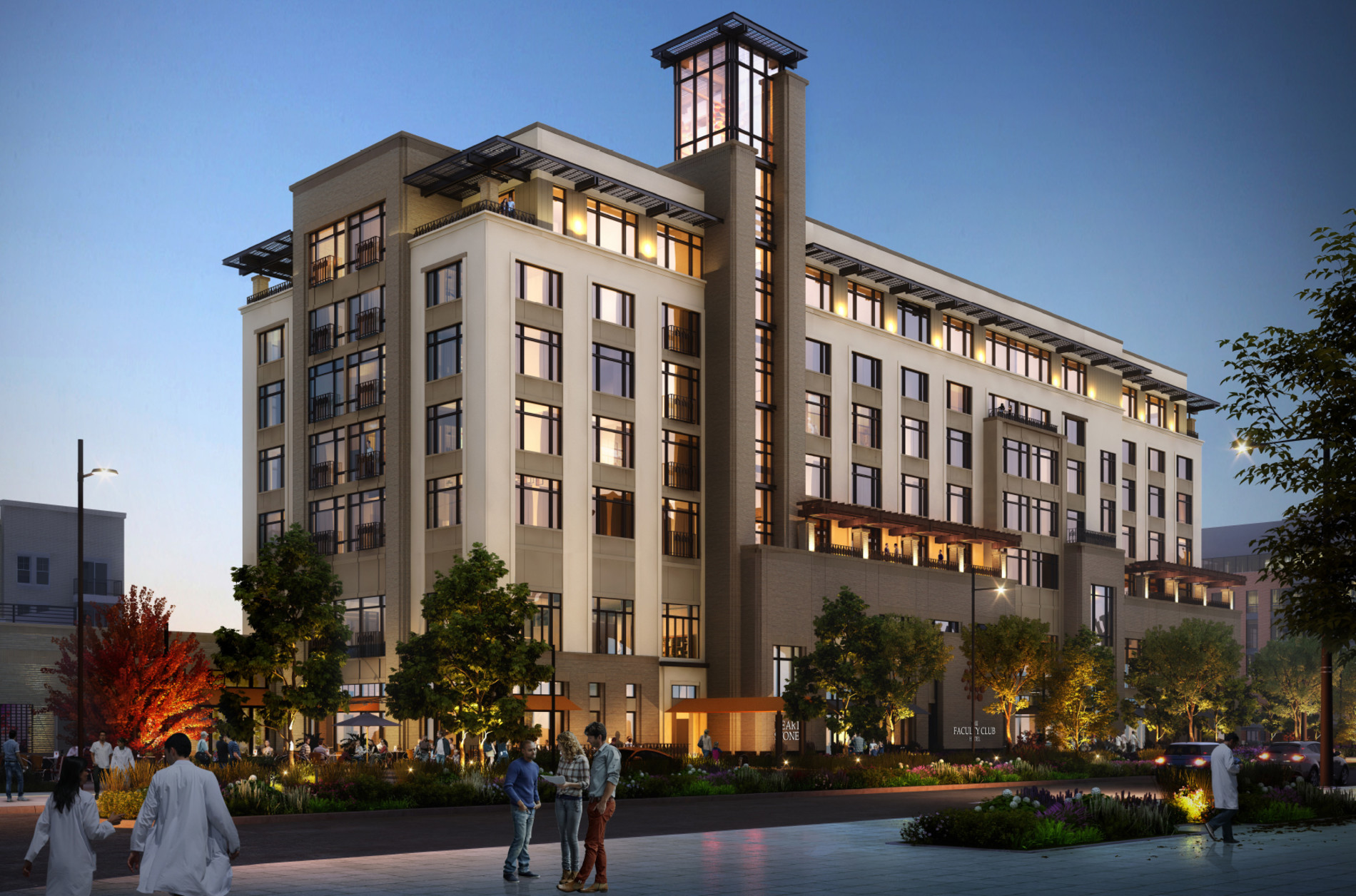
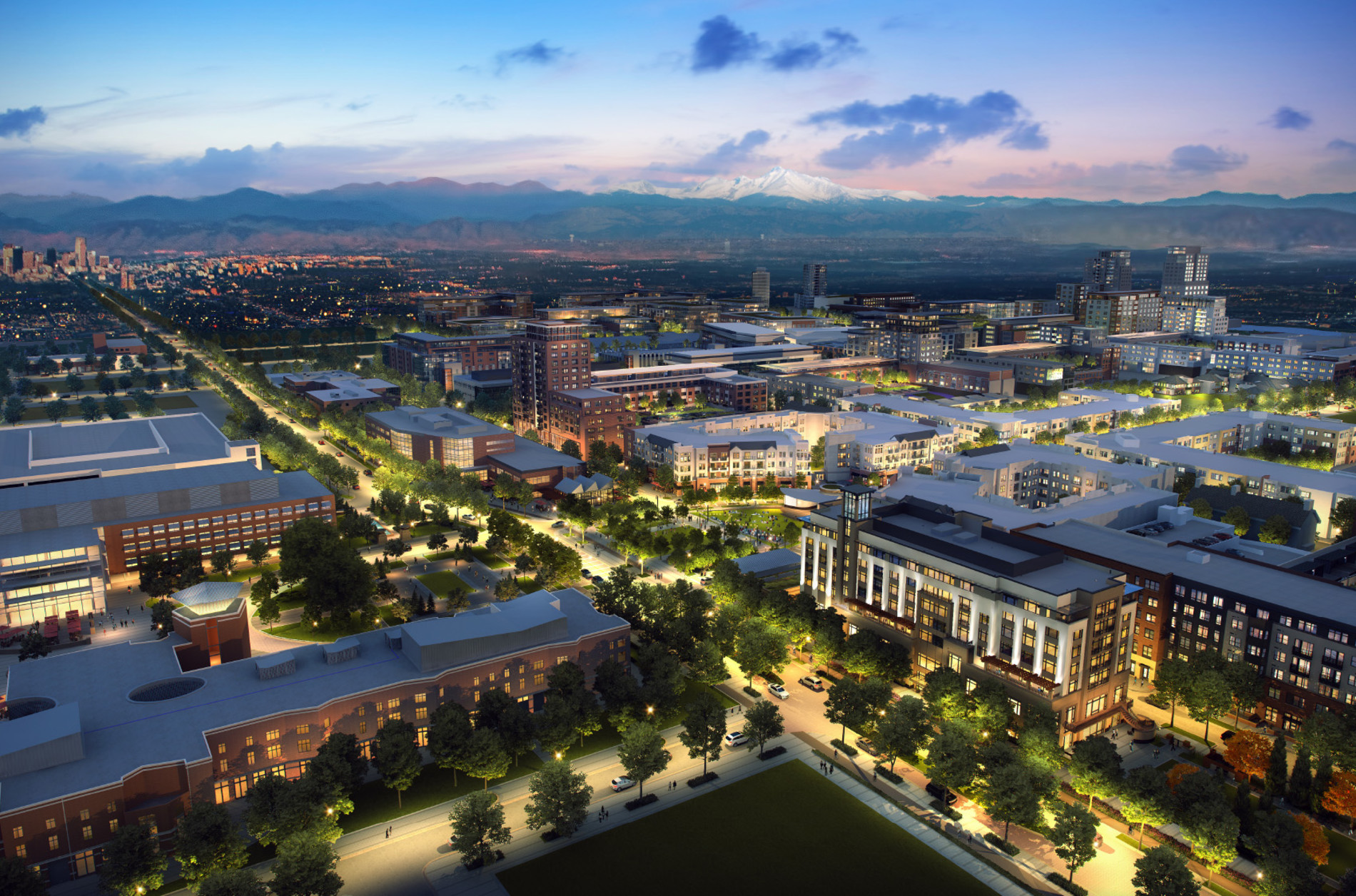
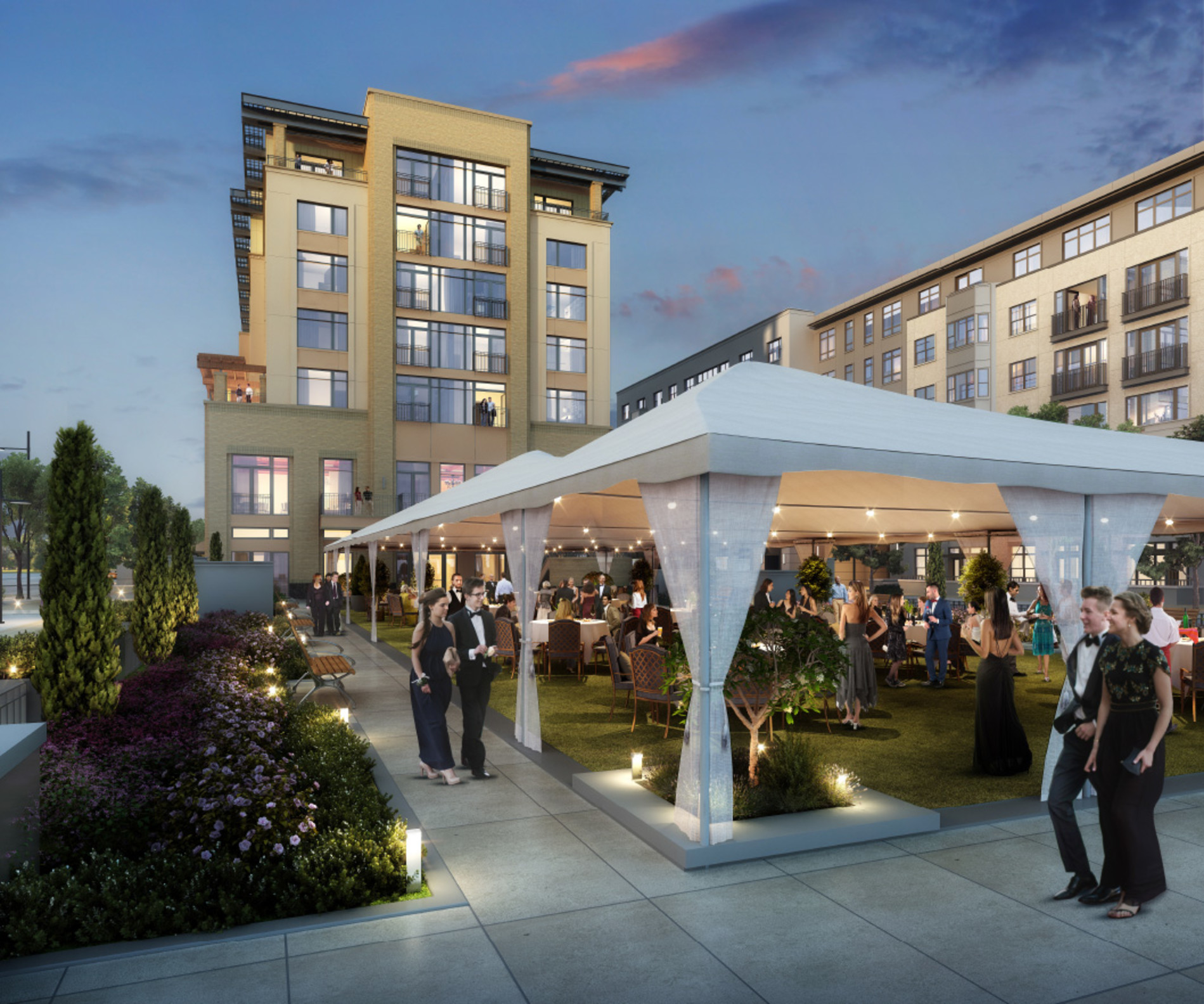
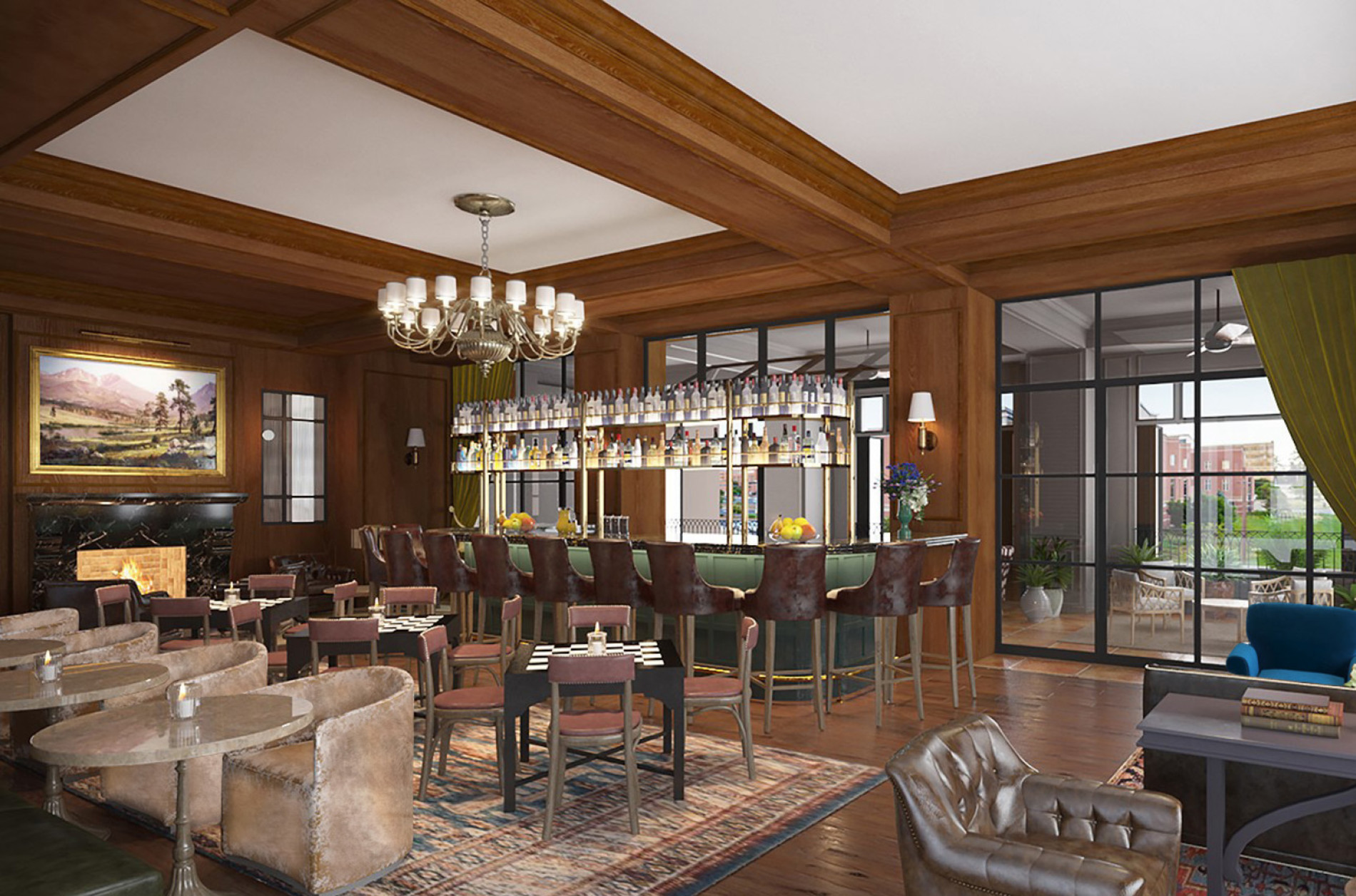
Benson Hotel and Faculty Club
Anschutz Medical Campus, Colorado

I don't normally like to do this, post oversized pics but the renderings are sooo nice. (To view, I put the bar in the middle and then scroll down)

Credits and compliments to Tryba Architects


Benson Hotel and Faculty Club Under Construction on Anschutz Medical Campus
October 25, 2021 - Mile High CRE
Quote:
A new boutique hotel is under construction at the Fitzsimons Innovation Community on the University of Colorado Anschutz Medical Campus in Aurora. Named in honor of former
University of Colorado President Bruce Benson, the 106-room Benson Hotel and Faculty Club is being developed by Aimco and is part of a collective vision for the future of the campus.
The architect for the project is Tryba Architects and the GC is Hyder Construction.
__________________
Cool... Denver has reached puberty.
Reply With Quote
     
     
  #11559  
Old Posted Oct 28, 2021, 1:55 PM
SirLucasTheGreat SirLucasTheGreat is offline
Registered User
 
Join Date: Nov 2017
Posts: 782
One quick comment on the transit issue. I went to law school in San Francisco. I used a bus three times a day everyday for three years and it was the most convenient transit experience that I've ever had because you could walk one to two blocks in any direction almost anywhere in the city, see a bus stop with real time arrival estimates based on GPS, and know that you would generally only need to wait less than 5 minutes for a bus. Also, everyone in SF used the bus so it felt reasonably safe.
Reply With Quote
     
     
  #11560  
Old Posted Oct 28, 2021, 3:59 PM
Sam Hill's Avatar
Sam Hill Sam Hill is offline
Registered User
 
Join Date: Jun 2012
Location: Denver
Posts: 875
Quote:
Originally Posted by SirLucasTheGreat View Post
One quick comment on the transit issue. I went to law school in San Francisco. I used a bus three times a day everyday for three years and it was the most convenient transit experience that I've ever had because you could walk one to two blocks in any direction almost anywhere in the city, see a bus stop with real time arrival estimates based on GPS, and know that you would generally only need to wait less than 5 minutes for a bus. Also, everyone in SF used the bus so it felt reasonably safe.
When I lived in SF I didn’t own a car and liked it that way. My first couple apartments were near the Financial District so I used the subway a lot. When I lived in The Haight I used the N a lot, and of course, buses. I have to say, the N was unreliable. Sometimes I’d wait forever and then finally two or three trains would show up all bunched together, back to back. Regular riders could sense when this was happening and would line up to enter where the 2nd train is going to be. Nevertheless, I used the N a lot and I liked it.

Denver is different. The buses are disgusting and filled with belligerent riffraff. The last time I took the bus, it was a couple months ago. I took the 0 to Union Station so I could hop on the A-line and get to the airport. It was extremely uncomfortable. The whole time I was waiting at the bus stop, this lady was pacing in circles around the bus stop, getting in peoples faces and yelling, “I don’t give a 🞵🞵🞵🞵! MUTHERFUCKING 🞵🞵🞵🞵! I don’t give a 🞵🞵🞵🞵!”

The guy who sat across from me on the bus had a blood-soaked sock because he was bleeding from somewhere above his sock. He wore no mask and stared constantly at me. I’d give him a dirty look, and shrug my shoulders like, “what!” So he’d look away, but then as soon as I looked away, he’d start staring again. I wanted to threaten him and warn him that he needs to stop starting but I feared it might provoke some kind of tussle and then I’d have to touch his gross 🞵🞵🞵 and who knows what kind of diseases he might have.

At the first stop some girl trying to get on the bus for free got in a big ol’ shouting match with the bus driver. She was apparently under the impression that, by law, as long as one is wearing a wristband from a hospital, all public transportation is free. The bus driver finally gave up and just let her on the bus.

I could go on. That 15-minute ride was quite the adventure.

EVERY TIME I ride the bus I promise myself I’ll never do that again, but a year or so goes by and I forget, and I make the same stupid mistake again.

The only affordable way for a civilized person to get across this town is by car. This sprawling, low-density metropolis isn’t likely to densify enough to make public transportation viable for the majority, in any of our lifetimes. In the meantime, our freeways are overcrowded and tiny compared to other cities of this size so they obviously need to be expanded.

I hope we build more rail. I hope much TOD gets built around that rail so public transit can become more viable for more people. I hope one day I can get a white collar job so I can live near where I work. Bring on the electric car!(?) The burbs are hopeless but… Bring on more density and pedestrian-friendly development to our hoods that were originally built around a streetcar system! Bring on inner-city, “last mile” transit so Cap Hill can have its own version of SF’s N line! In the meantime, our freeways need to be expanded so our lack of mobility doesn’t continue to hurt our economy.

Only within our esoteric little urbanist club does it make sense to commute via bus when you can afford not to. Out in the real world they need more lanes.

Reply With Quote
     
     
This discussion thread continues

Use the page links to the lower-right to go to the next page for additional posts
 
 
Reply

Go Back   SkyscraperPage Forum > Regional Sections > United States > Mountain West
Forum Jump


Forum Jump


All times are GMT. The time now is 11:43 AM.


Powered by vBulletin® Version 3.8.7
Copyright ©2000 - 2026, vBulletin Solutions, Inc.