Quote:
Originally Posted by adamuptownsj

I noticed in the ACAP concept they removed the barrier between the Marsh Creek outflow and the forebay. I presume this is way to expensive and complicated to ever expect, and who knows what it would disturb. Creosote or worse.
Any plan to straight up remove the causeway would have severe impacts on the industrial and commercial lots backing onto this area in the event of storm surges, and that's before you even get into any environmental impact assessment.
I presume the city has very long term plans to raise the causeway instead.
|
The creosote is a separate issue that is largely contained behind Canada Post in the creek bed. Portions do migrate downstream, but the vast majority is in the exact same place it has been since the Likely lumber yard was closed almost a century ago. It definitely needs to be dealt with, there have been a number of solutions identified over the years but not enough urgency to deal with it from any level of government.
The linear structure that was proposed to be removed from that concept was only installed in the first place because the original intent was to backfill the entire forebay area leaving only a narrow linear channel for Marsh Creek's drainage. The causeway itself was constructed of rock "donated" by Irving (that was at the time, a single company), which they did in exchange for ownership of whatever land was "reclaimed" behind it and that was intended to become an industrial park (the current IOL lubricants plant is an example of the intended use of the entire area). The rock placed by Irving that underpins the causeway was intended to be owned by the Province, while building the roadway atop it was the responsibility of the city. It was realized soon after that the flooding upstream in the Glen Falls are was exasperated by the infilling of land at the mouth of the creek, so the city council actually engaged in a number of disputes over the land and over the drainage in the creek going back to the 70s, but no new agreement was ever reached. There is a whole bigger story here about the change in legal status for the creek triggered by the construction of the causeway, which removed its federal navigable waters act protections and allowed certain industrialists to skirt regulations that would have otherwise applied to subsequent developments, but that's a whole other story.
The forebay is now a "provincially significant wetland" so it is unlikely it will ever be further filled in, since doing so would contravene a number of habitat protection laws, as well as further endanger the over $1.1 billion dollars (2019 estimate) of private property that exists within the Marsh Creek floodplain.
The causeway is here to stay because of how much of the city we developed upstream of it in low-lying areas, and the City's Climate Change Adaptation Plan (2020) clearly identifies that the height of the structure is far below what is required for adequate storm surge protection now, and will need at least 3 m of height added to it in order to accommodate sea level rise.
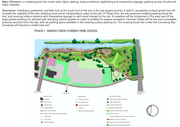
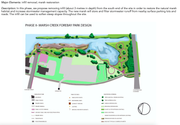
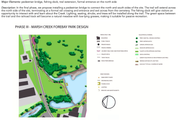
Anyway, here are the concepts of the three phases of Harbour Passage expansion into forebay I mentioned earlier:





 Prev
Prev


 Linear Mode
