HomeDiagramsDatabaseMapsForum About
     

Go Back   SkyscraperPage Forum > Discussion Forums > City Discussions


Reply

 
Thread Tools Display Modes
     
     
  #121  
Old Posted Aug 26, 2021, 1:49 AM
badrunner badrunner is offline
Registered User
 
Join Date: Oct 2016
Posts: 3,127
Quote:
Originally Posted by homebucket View Post
^ Thanks for putting this together! Looks like SF is still solidly holding on to a very distant 2nd place (behind only NYC).

In terms of just California cities, it's also interesting to see that DTSD and DT Oakland, as well as SF as a whole are more dense than DTLA.
On the ground though, it obviously isn't...

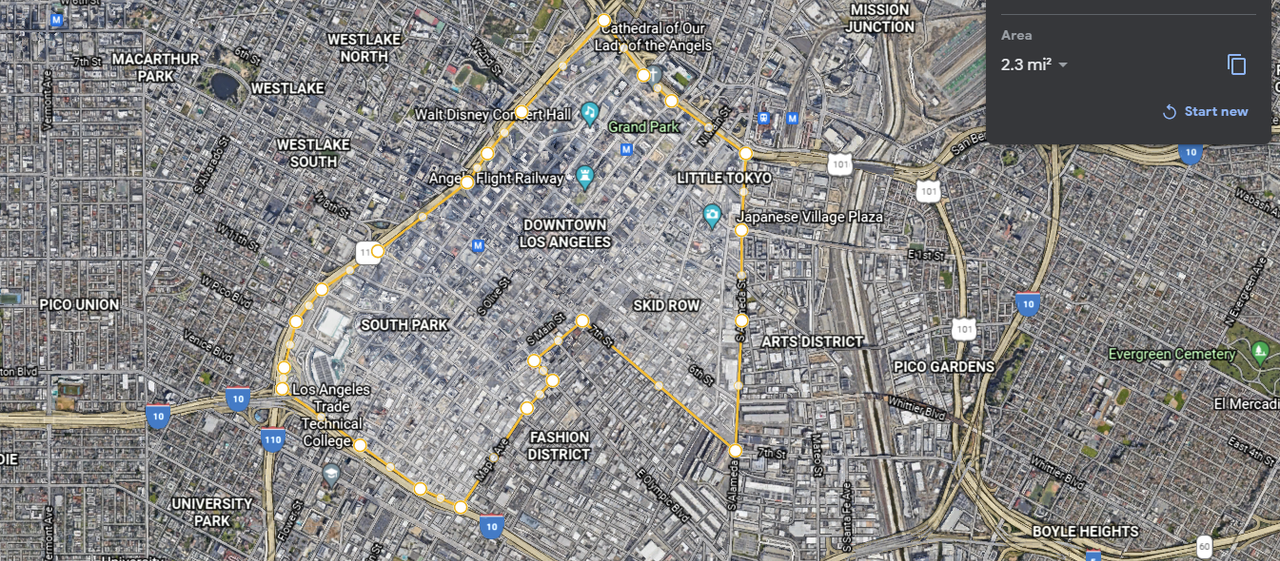
The fact that yuriandrade defines DTLA as being nearly twice the area of downtown SF reveals the problem here (reality on the ground - downtown SF feels like it covers a significantly larger area). The freeway loop only serves as a convenient border for DTLA and it should be used cautiously for any comparisons or detailed analysis of populations. It's a huge area. How many other downtown definitions include a 1.4 square mile census tract with 2,591 people in it? The east bank of the river + everything south of 4th st and east of Los Angeles st (more than half the area of the freeway loop) is an industrial district where very few people live.
Reply With Quote
     
     
  #122  
Old Posted Aug 26, 2021, 2:18 AM
homebucket homebucket is online now
你的媽媽
 
Join Date: Jan 2012
Location: The Bay
Posts: 11,312
Quote:
Originally Posted by badrunner View Post
On the ground though, it obviously isn't...

The fact that yuriandrade defines DTLA as being nearly twice the area of downtown SF reveals the problem here (reality on the ground - downtown SF feels like it covers a significantly larger area). The freeway loop only serves as a convenient border for DTLA and it should be used cautiously for any comparisons or detailed analysis of populations. It's a huge area. How many other downtown definitions include a 1.4 square mile census tract with 2,591 people in it? The east bank of the river + everything south of 4th st and east of Los Angeles st (more than half the area of the freeway loop) is an industrial district where very few people live.
That's a good point. DTLA is very expansive, and it seems like out of the downtowns that have been calculated so far, it has the largest area included.

What do the numbers look like if you subtract that area?
Reply With Quote
     
     
  #123  
Old Posted Aug 26, 2021, 2:40 AM
Yuri's Avatar
Yuri Yuri is online now
Registered User
 
Join Date: Sep 2008
Posts: 5,578
Downtown Houston


------------------------------ 2020 ------ 2010 ------ 2000 ------ 1990 ------ Growth ------ Density

Downtown --------------------- 17,138 ----- 14,342 ----- 11,882 ------ 7,029 ---- 19.5% ---- 20.7% --- 69.0% ------- 4.5 km² --- 3,834.9 inh./km²

Midtown ------------------------ 10,820 ------ 7,441 ------ 4,710 ------ 2,761 ---- 45.4% ---- 58.0% --- 70.6% ------- 2.8 km² --- 3,861.5 inh./km²

Houston MSA --------------- 7,122,240 -- 5,920,416 -- 4,693,161 -- 3,750,883 ---- 20.3% ---- 26.1% --- 25.1% -- 21,416 km²


Downtown Houston is the freeway loop and the 3 census tracts match perfectly with the definition.

Each one of them tells a completely different story: one is the norwestern corner, where all the tall buildings are; the other embraced the first, in an L shape, where all the parking lots are; and the third is the bit northern of the river. Apparently they've built an university campus there and population went from zero in 1990 to 8,200 now, but it actually decreased this decade, making Downtown numbers not looking that spectacular. In fact, it's actually lower than the Houston MSA, making one of the very few in the list to grow slower than its metro area.

About Midtown, located immediately south of Downtown, it's the typical central neighbourhood that's taking advantage from Downtown's boom. I brought its numbers just to register.
__________________
London - São Paulo - Rio de Janeiro - Londrina - Frankfurt
Reply With Quote
     
     
  #124  
Old Posted Aug 26, 2021, 2:41 AM
homebucket homebucket is online now
你的媽媽
 
Join Date: Jan 2012
Location: The Bay
Posts: 11,312
Again, thanks for putting together the data, yuriandrade. I took the liberty of compiling your data into a list, sorted by most dense to least.

City ---- 2020 ---- 2010 ---- 2000 ---- 1990 ---- Area ---- Density

Lower Manhattan ---- 88,744 ---- 71,847 ---- 46,581 ---- 35,316 ---- 23.5% ---- 54.2% ---- 31.9% ---- 3.5 km² ---- 25,384.4 inh./km²

San Francisco ---- 134,974 ---- 110,719 ---- 97,737 ---- 88,944 ---- 21.9% ---- 13.3% ---- 9.9% ---- 8.0 km² ---- 16,886.5 inh./km²

Chicago Near North Side ---- 105,481 ---- 80,484 ---- 72,811 ---- 62,842 ----- 31.1% ----- 10.5% ----- 15.9% ---- 6.8 km² ---- 15,500 inh./km²

Miami ---- 58,439 ---- 31,697 ---- 12,885 ---- 9,218 ---- 84.4% ---- 146.0% ---- 39.8% ---- 4.34 km² ---- 13,500 inh./km²

Boston ---- 47,825 ---- 39,046 ---- 33,151 ---- 28,800 ---- 22.5% ---- 17.8% ---- 15.1% ---- 3.9 km² ---- 12,332.4 inh./km²

Chicago Loop ---- 42,298 ---- 29,283 ---- 16,388 ---- 11,954 ---- 44.4% ---- 78.7% ---- 37.1% ---- 2.9 km² ---- 10,800 inh./km²

Philadelphia ---- 91,510 ---- 68,836 ---- 57,552 ---- 51,302 ---- 32.9% ---- 19.6% ---- 12.2% ---- 8.92 km² ---- 10,300 inh./km².

San Diego ---- 39,538 ---- 27,918 ---- 15,482 ---- 12,771 ---- 41.6% ---- 80.3% ---- 21.2% ---- 4.7 km² ---- 8,457.3 inh./km²

Denver ---- 15,198 ---- 7,998 ---- 4,181 ---- 2,795 ---- 90.0% ---- 91.3% ---- 49.6% ---- 2.3 km² ---- 6,736.7 inh./km²

Atlanta Midtown ---- 32,240 ---- 20,225 ---- 13,643 ---- 9,631 ---- 59.4% ---- 48.2% ---- 41.7% ---- 5.0 km² ---- 6,415.9 inh./km²

Oakland ---- 21,616 ---- 18,547 ---- 13,652 ---- 11,357 ---- 16.5% ---- 35.9% ---- 20.2% ---- 3.6 km² ---- 6,044.7 inh./km²

Los Angeles ---- 74,349 ---- 52,538 ---- 40,836 ---- 32,786 ---- 41.5% ---- 28.7% ---- 24.5% ---- 14.86 km² ---- 5,003 inh./km²

Atlanta Downtown ---- 21,026 ---- 14,615 ---- 12,089 ---- 8,635 ---- 43.9% ---- 20.9% ----- 40.0% ---- 5.1 km² ---- 4,114.7 inh./km²

Houston Midtown ---- 10,820 ----- 7,441 ---- 4,710 ---- 2,761 ---- 45.4% ---- 58.0% ---- 70.6% ---- 2.8 km² ---- 3,861.5 inh./km²

Houston Downtown ---- 17,138 ----- 14,342 ----- 11,882 ------ 7,029 ---- 19.5% ---- 20.7% --- 69.0% ---- 4.5 km² ---- 3,834.9 inh./km²

Detroit Midtown ---- 16,921 ---- 14,550 ---- 16,877 ---- 16,692 ---- 16.3% ---- 13.8% ---- 1.1% ---- 5.4 km² ---- 3,141.7 inh./km²

San Jose ---- 14,589 ---- 10,656 ---- 10,145 ---- 9,249 ---- 36.9% ---- 5.0% ---- 9.7% ---- 5.7 km² ---- 2,549.2 inh./km²

Cleveland ---- 13,338 ---- 9,471 ---- 6,312 ---- 4,561 ---- 40.8% ---- 50.0% ---- 38.4% ---- 7.8 km² ---- 1,705.6 inh./km²

Detroit Downtown ---- 6,151 ---- 5,287 ---- 6,141 ---- 5,970 ---- 16.3% ---- 13.9% ----- 2.9% ---- 3.7 km² ---- 1,668.3 inh./km²

Last edited by homebucket; Aug 26, 2021 at 4:42 AM.
Reply With Quote
     
     
  #125  
Old Posted Aug 26, 2021, 2:50 AM
Yuri's Avatar
Yuri Yuri is online now
Registered User
 
Join Date: Sep 2008
Posts: 5,578
Quote:
Originally Posted by homebucket View Post
That's a good point. DTLA is very expansive, and it seems like out of the downtowns that have been calculated so far, it has the largest area included.

What do the numbers look like if you subtract that area?
My first take on Downtown LA, would exclude 5 tracts, the three north of the highway, including the Union Station and the 2 big ones between Alameda St. and the river. Downtown would end on the freeways on its three sides and at Alameda St. at east.

In this case, we would have 56,000 people living in 8.7 km². We should keep in mind, however, population growth is very strong in those 5 tracts, except the one where Union Station is.


Quote:
Originally Posted by homebucket View Post
Again, thanks for putting together the data, yuriandrade. I took the liberty of compiling your data into a list, sorted by most dense to least.

City ---- 2020 ---- 2010 ---- 2000 ---- 1990 ---- Area ---- Density

Lower Manhattan ---- 88,744 ---- 71,847 ---- 46,581 ---- 35,316 ---- 23.5% ---- 54.2% ---- 31.9% ---- 3.5 km² ---- 25,384.4 inh./km²

San Francisco ---- 134,974 ---- 110,719 ---- 97,737 ---- 88,944 ---- 21.9% ---- 13.3% ---- 9.9% ---- 8.0 km² ---- 16,886.5 inh./km²

Miami ---- 58,439 ---- 31,697 ---- 12,885 ---- 9,218 ---- 84.4% ---- 146.0% ---- 39.8% ---- 4.34 km² ---- 13,500 inh./km²

Chicago Near North Side ---- 105,481 ---- 80,484 ---- 72,811 ---- 62,842 ----- 31.1% ----- 10.5% ----- 15.9% ---- 6.8 km² ---- 15,500 inh./km²

Boston ---- 47,825 ---- 39,046 ---- 33,151 ---- 28,800 ---- 22.5% ---- 17.8% ---- 15.1% ---- 3.9 km² ---- 12,332.4 inh./km²

Chicago Loop ---- 42,298 ---- 29,283 ---- 16,388 ---- 11,954 ---- 44.4% ---- 78.7% ---- 37.1% ---- 2.9 km² ---- 10,800 inh./km²

Philadelphia ---- 91,510 ---- 68,836 ---- 57,552 ---- 51,302 ---- 32.9% ---- 19.6% ---- 12.2% ---- 8.92 km² ---- 10,300 inh./km².

San Diego ---- 39,538 ---- 27,918 ---- 15,482 ---- 12,771 ---- 41.6% ---- 80.3% ---- 21.2% ---- 4.7 km² ---- 8,457.3 inh./km²

Denver ---- 15,198 ---- 7,998 ---- 4,181 ---- 2,795 ---- 90.0% ---- 91.3% ---- 49.6% ---- 2.3 km² ---- 6,736.7 inh./km²

Atlanta Midtown ---- 32,240 ---- 20,225 ---- 13,643 ---- 9,631 ---- 59.4% ---- 48.2% ---- 41.7% ---- 5.0 km² ---- 6,415.9 inh./km²

Oakland ---- 21,616 ---- 18,547 ---- 13,652 ---- 11,357 ---- 16.5% ---- 35.9% ---- 20.2% ---- 3.6 km² ---- 6,044.7 inh./km²

Los Angeles ---- 74,349 ---- 52,538 ---- 40,836 ---- 32,786 ---- 41.5% ---- 28.7% ---- 24.5% ---- 14.86 km² ---- 5,003 inh./km²

Atlanta Downtown ---- 21,026 ---- 14,615 ---- 12,089 ---- 8,635 ---- 43.9% ---- 20.9% ----- 40.0% ---- 5.1 km² ---- 4,114.7 inh./km²

Houston Midtown ---- 10,820 ----- 7,441 ---- 4,710 ---- 2,761 ---- 45.4% ---- 58.0% ---- 70.6% ---- 2.8 km² ---- 3,861.5 inh./km²

Houston Downtown ---- 17,138 ----- 14,342 ----- 11,882 ------ 7,029 ---- 19.5% ---- 20.7% --- 69.0% ---- 4.5 km² ---- 3,834.9 inh./km²

Detroit Midtown ---- 16,921 ---- 14,550 ---- 16,877 ---- 16,692 ---- 16.3% ---- 13.8% ---- 1.1% ---- 5.4 km² ---- 3,141.7 inh./km²

San Jose ---- 14,589 ---- 10,656 ---- 10,145 ---- 9,249 ---- 36.9% ---- 5.0% ---- 9.7% ---- 5.7 km² ---- 2,549.2 inh./km²

Cleveland ---- 13,338 ---- 9,471 ---- 6,312 ---- 4,561 ---- 40.8% ---- 50.0% ---- 38.4% ---- 7.8 km² ---- 1,705.6 inh./km²

Detroit Downtown ---- 6,151 ---- 5,287 ---- 6,141 ---- 5,970 ---- 16.3% ---- 13.9% ----- 2.9% ---- 3.7 km² ---- 1,668.3 inh./km²
I liked the ranking!

Even though most of them are not comparable, they are the most important subdivisions of their cities and it's nice to have this picture of them.
__________________
London - São Paulo - Rio de Janeiro - Londrina - Frankfurt
Reply With Quote
     
     
  #126  
Old Posted Aug 26, 2021, 3:05 AM
badrunner badrunner is offline
Registered User
 
Join Date: Oct 2016
Posts: 3,127
Quote:
Originally Posted by homebucket View Post
That's a good point. DTLA is very expansive, and it seems like out of the downtowns that have been calculated so far, it has the largest area included.

What do the numbers look like if you subtract that area?
Population would shrink slightly, density would be about double - still about a third less dense than downtown SF, but denser than downtown Oakland and SD.
Reply With Quote
     
     
  #127  
Old Posted Aug 26, 2021, 3:13 AM
Yuri's Avatar
Yuri Yuri is online now
Registered User
 
Join Date: Sep 2008
Posts: 5,578
I just finished all downtowns for every metro area above 900,000 inh. I guess it's more than 60, plus some central neighbourhoods or the multiple downtowns (Bay Area, Twin Cities, DFW). Only two exceptions: Tucson, where census tracts shape didn't allow to have a sensible border for its Downtown and Honolulu, because it's too many tracts and I got lazy.

It's now just a matter of select the pictures, organize the notepad and write my considerations about each of them.
__________________
London - São Paulo - Rio de Janeiro - Londrina - Frankfurt
Reply With Quote
     
     
  #128  
Old Posted Aug 26, 2021, 3:15 AM
Yuri's Avatar
Yuri Yuri is online now
Registered User
 
Join Date: Sep 2008
Posts: 5,578
Quote:
Originally Posted by badrunner View Post
Population would shrink slightly, density would be about double - still about a third less dense than downtown SF, but denser than downtown Oakland and SD.
Not that slightly. By a good 18,000 people. But indeed, would be about half the size.
__________________
London - São Paulo - Rio de Janeiro - Londrina - Frankfurt
Reply With Quote
     
     
  #129  
Old Posted Aug 26, 2021, 3:21 AM
homebucket homebucket is online now
你的媽媽
 
Join Date: Jan 2012
Location: The Bay
Posts: 11,312
Quote:
Originally Posted by yuriandrade View Post
My first take on Downtown LA, would exclude 5 tracts, the three north of the highway, including the Union Station and the 2 big ones between Alameda St. and the river. Downtown would end on the freeways on its three sides and at Alameda St. at east.

In this case, we would have 56,000 people living in 8.7 km². We should keep in mind, however, population growth is very strong in those 5 tracts, except the one where Union Station is.
Thanks for looking into this. So if it were to be amended, the new density calculation would be 6,436 inh./km².
Reply With Quote
     
     
  #130  
Old Posted Aug 26, 2021, 3:22 AM
Yuri's Avatar
Yuri Yuri is online now
Registered User
 
Join Date: Sep 2008
Posts: 5,578
Downtown Baltimore


--------------------------------- 2020 ------ 2010 ------ 2000 ------ 1990 ------ Growth ------ Density

Downtown --------------------- 24,228 ----- 18,766 ----- 16,207 ----- 14,210 ---- 29.1% ---- 15.8% --- 14.1% ------- 4.1 km² --- 5,913.6 inh./km²

Baltimore --------------------- 585,708 ---- 620,961 ---- 651,154 ---- 736,016 ---- -5.7% ---- -4.6% -- -11.5% ----- 209.6 km² --- 2,794.4 inh./km²

Baltimore Metro Area ------ 2,794,636 -- 2,662,691 -- 2,512,431 -- 2,348,221 ----- 5.0% ----- 6.0% ---- 7.0% --- 6,045 km²


At first, Downtown Baltimore growth might seem underwhelming. But when we look the already high density and how populated it is compared to even bigger cities, it's doing quite well. Moreover, Baltimore, unlikely most of cities this decade, is still losing population.
__________________
London - São Paulo - Rio de Janeiro - Londrina - Frankfurt
Reply With Quote
     
     
  #131  
Old Posted Aug 26, 2021, 4:32 AM
badrunner badrunner is offline
Registered User
 
Join Date: Oct 2016
Posts: 3,127
Quote:
Originally Posted by yuriandrade View Post
Not that slightly. By a good 18,000 people. But indeed, would be about half the size.
It depends on how you slice it. I got these 19 census tracts at a population of 52,691 in 2.3 square miles for a density of 22909 ppsm or 8845 per sq km.

2074 - 2002
2075.01 - 2489
2075.02 - 4113
2077.11 - 2280
2077.12 - 4737
2240.10 - 3621

2079.01 - 3645
2079.02 - 7405
2073.03 - 2311
2073.04 - 2124
2073.05 - 1181
2073.06 - 2227
2073.07 - 1160
2073.08 - 1407

2062.01 - 2647
2062.02 - 3035
2063.01 - 2074
2063.02 - 1375
2063.03 - 2858

It's basically everything inside the freeway loop, west of Alameda, minus the Fashion District. It's not perfect. You can add tracts in Chinatown or City West for better numbers, or add the Arts District or Fashion District for lower density. I'm not sure you can get a good border just using census tracts, but it's better than just using the freeway loop.

Reply With Quote
     
     
  #132  
Old Posted Aug 26, 2021, 12:37 PM
Yuri's Avatar
Yuri Yuri is online now
Registered User
 
Join Date: Sep 2008
Posts: 5,578
Quote:
Originally Posted by badrunner View Post
It depends on how you slice it. I got these 19 census tracts at a population of 52,691 in 2.3 square miles for a density of 22909 ppsm or 8845 per sq km.
Comparisons between cities are indeed very complicated. Context is everything.

But if we're looking at higher densities, we could put Westlake together, limited on three sides by the freeways and west by Hoover St. It would add tons of people, density, but growth rates wouldn't be that impressive. It's a bit like Nob Hill-Tenderloin bordering San Francisco's Financial District or Chicago's Near North Side bordering the Loop.
__________________
London - São Paulo - Rio de Janeiro - Londrina - Frankfurt
Reply With Quote
     
     
  #133  
Old Posted Aug 26, 2021, 1:40 PM
Doady's Avatar
Doady Doady is offline
Registered User
 
Join Date: Apr 2004
Posts: 5,120
Population by itself probably is not good measure of growth of downtown,. population + jobs would provide a more complete picture.

With improved communication technologies, many office jobs were shifted to the suburbs atarting the 90s, and you can see during the pandemic many people able to work from home as well.

Many suburbs try to build their own downtown, and attracting high density residential development is no problem. It's attracting office development that's usually fails and the lack of offices that prevents these places from becoming true downtowns.
__________________
Delay, defend, depose. #FreeLuigi, hero of the people.
Reply With Quote
     
     
  #134  
Old Posted Aug 26, 2021, 2:37 PM
mhays mhays is online now
Never Dell
 
Join Date: Jul 2001
Posts: 20,924
In the US, offices were moving heavily to the suburbs in the 60s and 70s.

It wasn't primarily about improved communication. It was primarily the idea that the suburban campus was a nicer place to work and lacked distractions.

In the desirable cores with decent transit, the shift back to urban office locations was in play by the tech boom around 1999, in part because the wants of 20-something grads became critical and the idea of innovation through mixing with others came to the forefront.

Residential population is hugely important. So are workers. If you want to carry that through, also include hotel guests, shoppers, students, and so on. They're all part of the stew. And they all have different profiles about when they're around, what they buy, and so on, so a diverse mix is essential.
Reply With Quote
     
     
  #135  
Old Posted Aug 26, 2021, 3:01 PM
SFBruin SFBruin is offline
Registered User
 
Join Date: Sep 2015
Location: Seattle, WA
Posts: 1,190
My understanding is that downtown LA isn't really a downtown in a traditional sense. It's more of like a financial district.

Of course, everything that I post about LA on this forum seems to be misguided, so please take this with a grain of salt.
__________________
Pretend Seattleite.
Reply With Quote
     
     
  #136  
Old Posted Aug 26, 2021, 4:43 PM
TexasPlaya's Avatar
TexasPlaya TexasPlaya is offline
Registered User
 
Join Date: Oct 2007
Location: ATX-HTOWN
Posts: 19,742
Quote:
Originally Posted by yuriandrade View Post
Downtown Houston


------------------------------ 2020 ------ 2010 ------ 2000 ------ 1990 ------ Growth ------ Density

Downtown --------------------- 17,138 ----- 14,342 ----- 11,882 ------ 7,029 ---- 19.5% ---- 20.7% --- 69.0% ------- 4.5 km² --- 3,834.9 inh./km²

Midtown ------------------------ 10,820 ------ 7,441 ------ 4,710 ------ 2,761 ---- 45.4% ---- 58.0% --- 70.6% ------- 2.8 km² --- 3,861.5 inh./km²

Houston MSA --------------- 7,122,240 -- 5,920,416 -- 4,693,161 -- 3,750,883 ---- 20.3% ---- 26.1% --- 25.1% -- 21,416 km²


Downtown Houston is the freeway loop and the 3 census tracts match perfectly with the definition.

Each one of them tells a completely different story: one is the norwestern corner, where all the tall buildings are; the other embraced the first, in an L shape, where all the parking lots are; and the third is the bit northern of the river. Apparently they've built an university campus there and population went from zero in 1990 to 8,200 now, but it actually decreased this decade, making Downtown numbers not looking that spectacular. In fact, it's actually lower than the Houston MSA, making one of the very few in the list to grow slower than its metro area.

About Midtown, located immediately south of Downtown, it's the typical central neighbourhood that's taking advantage from Downtown's boom. I brought its numbers just to register.
Seems about right.... Central Houston has more in common with Detriot than its sun belt peers. It's cut apart by freeways and a massive economic downturn in the 80s bombed out the core. There's still significant heavy industry nearby to the east and lots of freight traffic that further dissects the neighborhoods.
__________________
"A society grows great when old men plant trees whose shade they know they shall never sit in."

"Such then is the human condition , that to wish greatness for one's country is to wish harm to one's neighbor" Voltaire
Reply With Quote
     
     
  #137  
Old Posted Aug 26, 2021, 5:10 PM
homebucket homebucket is online now
你的媽媽
 
Join Date: Jan 2012
Location: The Bay
Posts: 11,312
Quote:
Originally Posted by SFBruin View Post
My understanding is that downtown LA isn't really a downtown in a traditional sense. It's more of like a financial district.

Of course, everything that I post about LA on this forum seems to be misguided, so please take this with a grain of salt.
You can see a similar effect with the FiDi in SF, where the residential density is much lower than the totality of the downtown area. My understanding of DTLA is that, like SF there is a FiDi area around Bunker Hill where there is less residential, and a more historic, dense, gritty residential area around Broadway, a la the Tenderloin/Chinatown, and a new rapidly growing area of luxury high rises in South Park a la SoMA/East Cut, and less dense industrial areas that are also becoming more residential in the Arts District a la rest outer SoMA.

Quote:
Financial District/Embarcadero ---- 10,991 ---- 8,512 ---- 6,369 ---- 11,734 ---- 29.1% ---- 33.6% ---- 45.7% ---- 2.2 km² ---- 5,030.2 inh./km²

Downtown San Francisco ---- 134,974 ---- 110,719 ---- 97,737 ---- 88,944 ---- 21.9% ---- 13.3% ---- 9.9% ---- 8.0 km² ---- 16,886.5 inh./km²
Reply With Quote
     
     
  #138  
Old Posted Aug 26, 2021, 6:01 PM
Yuri's Avatar
Yuri Yuri is online now
Registered User
 
Join Date: Sep 2008
Posts: 5,578
Quote:
Originally Posted by TexasPlaya View Post
Seems about right.... Central Houston has more in common with Detriot than its sun belt peers. It's cut apart by freeways and a massive economic downturn in the 80s bombed out the core. There's still significant heavy industry nearby to the east and lots of freight traffic that further dissects the neighborhoods.
Many SunBelt cities have in fact more in common with Detroit in this regard. I intend to post Dallas and Fort Worth soon, and it's not that different from Houston, at least regarding numbers. Atlanta is the outlier here, but even for them is a more recent phenomenon.

But Houston, if we ignored the parts of Loop north of CBD, where the university campus is, they have grown quite decently. I imagine they're replacing the (in)famous parking lots with highrises.
__________________
London - São Paulo - Rio de Janeiro - Londrina - Frankfurt
Reply With Quote
     
     
  #139  
Old Posted Aug 26, 2021, 6:05 PM
edale edale is offline
Registered User
 
Join Date: Apr 2017
Posts: 2,802
Quote:
Originally Posted by homebucket View Post
You can see a similar effect with the FiDi in SF, where the residential density is much lower than the totality of the downtown area. My understanding of DTLA is that, like SF there is a FiDi area around Bunker Hill where there is less residential, and a more historic, dense, gritty residential area around Broadway, a la the Tenderloin/Chinatown, and a new rapidly growing area of luxury high rises in South Park a la SoMA/East Cut, and less dense industrial areas that are also becoming more residential in the Arts District a la rest outer SoMA.
I'd say that's quite a good comparison. And a fully rehabbed/redeveloped Historic Core would rival or exceed the Tenderloin's density peaks, I think. The scale of the Historic Core is impressive: https://www.google.com/maps/@34.0449...7i16384!8i8192

And while the Arts District is definitely seeing a ton of investment, it's considerably behind SoMA in its redevelopment arc. There is still a ton of wholesale retail and industrial space, both used and vacant, that will most likely be redeveloped in coming years. Large swaths of this, just begging for higher and better use:
https://www.google.com/maps/@34.0362...7i16384!8i8192
Reply With Quote
     
     
  #140  
Old Posted Aug 26, 2021, 6:28 PM
Yuri's Avatar
Yuri Yuri is online now
Registered User
 
Join Date: Sep 2008
Posts: 5,578
Quote:
Originally Posted by edale View Post
I'd say that's quite a good comparison. And a fully rehabbed/redeveloped Historic Core would rival or exceed the Tenderloin's density peaks, I think. The scale of the Historic Core is impressive: https://www.google.com/maps/@34.0449...7i16384!8i8192

And while the Arts District is definitely seeing a ton of investment, it's considerably behind SoMA in its redevelopment arc. There is still a ton of wholesale retail and industrial space, both used and vacant, that will most likely be redeveloped in coming years. Large swaths of this, just begging for higher and better use:
https://www.google.com/maps/@34.0362...7i16384!8i8192
I calculated Tenderloin as part of Downtown San Francisco. It's 29,638 people living in 0.697 km² for a 42,500 inh./km² density (multiply for 2.59 for miles). That's comparable to the densest Paris arrondissements. It's very hard to reproduce elsewhere.

But it's beautiful this region. Lots of potential.
__________________
London - São Paulo - Rio de Janeiro - Londrina - Frankfurt
Reply With Quote
     
     
This discussion thread continues

Use the page links to the lower-right to go to the next page for additional posts
 
 
Reply

Go Back   SkyscraperPage Forum > Discussion Forums > City Discussions
Forum Jump


Forum Jump


All times are GMT. The time now is 4:40 AM.

     
SkyscraperPage.com - Privacy Statement - Top

Powered by vBulletin® Version 3.8.7
Copyright ©2000 - 2026, vBulletin Solutions, Inc.