Quote:
Originally Posted by Starv100

Lots of pretty uninformed talk about zoning laws here.
These laws have a highly legitimate purpose. Every few years, any good city updates their Master Plan. This plan contains the City's vision for the future. It lays out where the city envisions different kinds of development. High density, retail, high-rise residential, commercial -- those and more are envisioned. The rebuilding of Bernard was an outcome of such planning.
Without zoning laws, you would have uncontrolled growth -- and you wouldn't like it. Think Harvey -- a blighted urban mall 10 km long and 0.5 km wide. On Bernard, you would have the worst of the worst in uncontrolled high-rise development. Do you think any-and-all high-rise growth is good? Think again.
When developers seek variances, they are asking to push the boundaries or limits of the zoning rules (which emanate from the Master Plan). In some cases, a particular development makes absolute sense, even if it pushes those boundaries. A developer, many of whom employ very talented urban planners, may well be proposing something the authors of the Master Plan hadn't thought of -- or would not have imagined Kelowna could attract. Council may relax the zoning for such innovative projects. Or they may consider the economic benefits are too attractive to ignore.
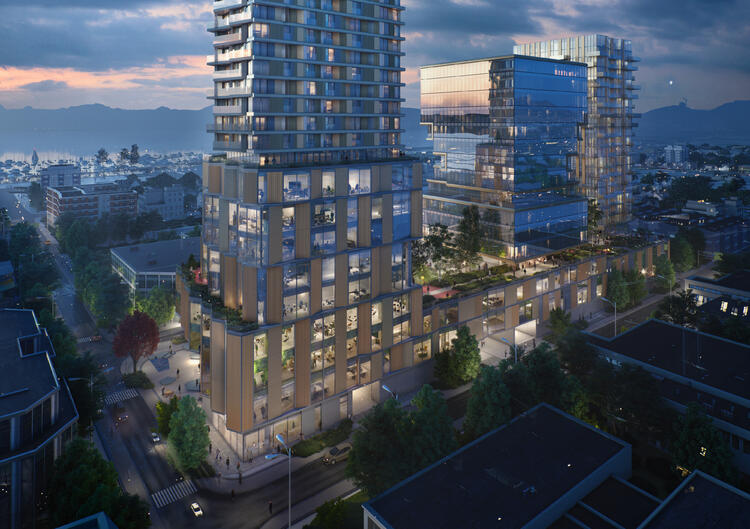
In the rejected case, it's possible that city council didn't want the prospect of a 40-storey wall of towers directly abutting a single-family home neighbourhood. I can understand that.
But drawing an immediate speculation of bribery or corruption, because a particular development was rejected, is thoughtless and irresponsible. Many, many developments have been rejected, only to come back with a vastly better plan. Water Street by the Park is a prime example.
|
All nicely said, but you forgot one thing:
There are many others that came back much worse. You see lots of examples in Vancouver and Victoria. Over-regulating has produced way worse results, because decision makers do not know what they are doing, or simply unable to imagine the grand vision or economic benefits from the earlier proposals.
All I am proposing is that there should be a good balance and flexibility when it comes to implementing zoning bylaws.





 Prev
Prev




 Linear Mode
