HomeDiagramsDatabaseMapsForum About
     

Go Back   SkyscraperPage Forum > Regional Sections > Canada > Ontario > Ottawa-Gatineau > Urban, Urban Design & Heritage Issues


Reply

 
Thread Tools Display Modes
     
     
  #621  
Old Posted Feb 26, 2021, 2:25 PM
J.OT13's Avatar
J.OT13 J.OT13 is offline
Moderator
 
Join Date: Mar 2012
Location: Ottawa
Posts: 28,869
Quote:
Originally Posted by lrt's friend View Post
We all know that developers mostly only care about money. Hence the proposals for building over the golf course in Kanata after getting premiums when they sold the surrounding homes in the first place.

We better be careful that we don't give developers too much free rein. We should not want to destroy the character of our neighbourhoods that make them distinctive and attractive.

I have seen so many cases of attractive old houses being torn down for modern high rises that have aged poorly. This has happened all across the city. The opposite has also been true (crappy houses replaced with something better), but it is far from universal.

What I worry about is developer block busting to push the rest of the homeowners out because of the behemoths that they have created. I have seen out of scale housing built in my own neighbourhood that don't enhance the area.

The temptation here is to increase density without providing additional amenities, so what exists only becomes more taxed over time. More congestion, more noise, more crime, the same parks, the same library, the same school (with more portables) etc. Who is really benefiting?
Visions of UP!
Reply With Quote
     
     
  #622  
Old Posted Mar 11, 2021, 5:34 PM
waterloowarrior's Avatar
waterloowarrior waterloowarrior is offline
National Capital Region
 
Join Date: Nov 2005
Location: Eastern Ontario
Posts: 9,254
Reply With Quote
     
     
  #623  
Old Posted Mar 17, 2021, 5:13 PM
rocketphish's Avatar
rocketphish rocketphish is offline
Planet Ottawa and beyond
 
Join Date: Feb 2009
Location: Greater Ottawa
Posts: 14,607
Ottawa's new official plan forges ahead, despite criticisms
Final version will go before for council in September

Kate Porter · CBC News
Posted: Mar 17, 2021 4:00 AM ET | Last Updated: 9 hours ago


The City of Ottawa's new official plan, which will lay out how the city will grow for the next 25 years, will still go before councillors for a decision in mid-September, despite calls from community associations to delay the cornerstone document.

The complex 264-page draft version and its many maps and appendices became public in mid-November. Hundreds of people have spent hours lately poring over what it prescribes for how land can be used across the city — from how tall buildings can be, to targets for squeezing in more households per hectare. The city accepted comments until last Friday.

The Federation of Citizen's Associations (FCA), an umbrella organization for 57 community groups, wrote to Mayor Jim Watson asking that the city show residents a second draft and postpone a final decision until after the next election, calling the timeline "woefully inaccurate."

"The policies in place were hard to disentangle. What applied to what neighbourhood? We need the time to digest this, to figure this out," FCA's president Alex Cullen, a former city councillor, explained to CBC News.

The mayor, along with the two councillors who chair committees that decide planning files — Jan Harder and Eli El-Chantiry — wrote a letter in response saying they would "not be placing your request on a future agenda."

The letter described various official plan meetings held over two years, boasted about having reached 100,000 residents so far during consultations, and pointed out the final report has already been pushed from June to September.

"The timeline the mayor refers to in his letter to us was decided before the pandemic," said Cullen, adding the mayor's response is not going over well.

The pandemic has limited how volunteers work together on feedback for the city, but moreover could affect future patterns for where people want to live and how they get around, Cullen said.

"Giving some time to see how the world plays out would make sense," he said.

The city first launched the process to create a new official plan in early 2019, and city council has already made some big decisions that will underpin it. For instance, council settled in February on nearly 1,300 hectares of rural properties where future development will be allowed, including an entirely new suburb called Tewin.

It also set a goal to greatly intensify neighbourhoods, which will bring big change especially to older areas or those located near transit stations. Eventually, the city wants 60 per cent of new development to take place through infill.

Despite talk about creating "15-minute" walkable neighbourhoods, Cullen saw no map in the draft official plan to identify where such neighbourhoods are or could be.

Daniel Buckles also felt the draft document was sometimes vague or contradictory, and worried greater intensification would affect the tree canopy the city seeks to protect.

The adjunct Carleton University professor is part of a network called People's Official Plan for Ottawa's Climate Emergency, which submitted 100 pages of comments to the city.

The group will be "on tenterhooks" not knowing if staff incorporate their advice until September, but Buckles says the city doesn't usually seem receptive to shifting its positions on big issues.

"That leaves us somewhat skeptical and mistrusting of the sincerity and utility of the consultation process," said Buckles, who also wants the city to produce a second draft with all the feedback it received.

The City of Ottawa said it has received hundreds of questions about the draft official plan in recent weeks, so it will hold a question-and-answer session online on March 24, from 6 to 8 p.m.

https://www.cbc.ca/news/canada/ottawa/official-plan-call-for-delay-1.5952027

Reply With Quote
     
     
  #624  
Old Posted Mar 17, 2021, 8:50 PM
J.OT13's Avatar
J.OT13 J.OT13 is offline
Moderator
 
Join Date: Mar 2012
Location: Ottawa
Posts: 28,869
Carling Tram still there, but is it necessary?

What's with the two stations at Mooney's Bay and Walkley?
Reply With Quote
     
     
  #625  
Old Posted Mar 17, 2021, 9:51 PM
OCCheetos OCCheetos is offline
Registered User
 
Join Date: Aug 2017
Posts: 2,111
Quote:
Originally Posted by J.OT13 View Post
Carling Tram still there, but is it necessary?
I suspect if any "big" changes are made, they'll be in the TMP review.
And my guess for the reason it'll still be there is to spur redevelopment, a la ION.

Quote:
What's with the two stations at Mooney's Bay and Walkley?
Red circle + blue outline = Rail-Bus transfer.

Yeah, it's kind of a stretch for Mooney's and Walkley, but it is what it is.

Reply With Quote
     
     
  #626  
Old Posted Mar 19, 2021, 8:54 PM
rocketphish's Avatar
rocketphish rocketphish is offline
Planet Ottawa and beyond
 
Join Date: Feb 2009
Location: Greater Ottawa
Posts: 14,607
City planning department willing to soften plans for neighbourhood intensification
The city's planning department is willing to reconsider how it rolls out intensification policies to established neighbourhoods after receiving loads of feedback on the first draft of the new official plan.

Jon Willing, Ottawa Citizen
Publishing date: Mar 19, 2021 • 28 minutes ago • 3 minute read


The city’s planning department is willing to reconsider how it rolls out intensification policies to established neighbourhoods after receiving loads of feedback on the first draft of the new official plan.

In other words, city hall appears to be listening to concerns generated by anxieties about the future of community development and desires to maintain the character of neighbourhoods.

Planning general manager Stephen Willis told council in a memo this week that the public engagement on the official plan is “far surpassing anything we had projected,” which is a sure sign that the preliminary proposal is hitting home for residents.

At the heart much of the controversy is a council-endorsed intensification target in the next official plan.

Council wants an average of 51-per-cent of new homes built in established communities between 2018 and 2046, with the last five years eyed for 60-per-cent intensification. It would require more multi-unit residential buildings in neighbourhoods accustomed to single-family homes on individual properties.

After mounting a defence of the intensification target — which included highlighting the council-declared climate change and housing and homelessness emergencies — Willis acknowledged in his memo that people are worried about how increased density will be distributed in their neighbourhoods.

“People want decisions on intensification to be made based on a local planning considerations with more time to consult and discuss,” Willis said in his memo.

Staff are working to “provide residents with assurances that intensification planning will be context-sensitive at the neighbourhood level,” he said.

The city proposes assessing future development based on six geographical zones. The city calls the zones “transects,” each with a distinguishable context, including strategies for adding residential density.

In his memo, Willis pointed to specific public concerns about the boundaries between the inner urban and outer urban transects and how the boundaries are drawn. There will likely be adjustments after a review, Willis said.

Intensification rules for a neighbourhood will be put off until staff tackle a new zoning bylaw after settling on an official plan and updating secondary plans. (The official plan provides general planning policies, while secondary plans provide community-specific polices and the zoning bylaw drills down to specific land-use rules for properties).

The province requires municipalities to accommodate residential growth for a minimum of 15 years. The city must always maintain that land supply, which informs the intensification target and any expansion to the urban boundary.

A key part of the city’s strategy on the next official plan is a commitment to revisit the intensification targets in five years, with the option of tweaking the size of the urban boundary.

Shifting development between the suburban edges and established communities requires a delicate balance of limiting urban sprawl and preserving neighbourhood character. It’s one of the biggest challenges for the city in writing a long-term development blueprint.

It’s so complex, and politically volatile, that community associations asked for final approval of the official plan to be delayed until 2023, after the next municipal election in October 2022. Mayor Jim Watson denied the request.

The final draft version of the official plan is on track to be considered by a council committee in September before going to council for a final decision. The city continues to collect feedback through the spring and summer, but the committee meeting will likely be the last chance for residents to address councillors on the matter.

A city-led online question-and-answer session on the official plan is scheduled for Wednesday evening. More information can be found on the city’s website at engage.ottawa.ca/the-new-official-plan.

[email protected]
twitter.com/JonathanWilling

https://ottawacitizen.com/news/local-new...-plans-for-neighbourhood-intensification
Reply With Quote
     
     
  #627  
Old Posted Mar 19, 2021, 11:05 PM
Williamoforange's Avatar
Williamoforange Williamoforange is offline
Registered User
 
Join Date: Sep 2020
Location: Ottawa
Posts: 865
Quote:
Originally Posted by rocketphish View Post
City planning department willing to soften plans for neighbourhood intensification
The city's planning department is willing to reconsider how it rolls out intensification policies to established neighbourhoods after receiving loads of feedback on the first draft of the new official plan.

Jon Willing, Ottawa Citizen
Publishing date: Mar 19, 2021 • 28 minutes ago • 3 minute read


The city’s planning department is willing to reconsider how it rolls out intensification policies to established neighbourhoods after receiving loads of feedback on the first draft of the new official plan.

In other words, city hall appears to be listening to concerns generated by anxieties about the future of community development and desires to maintain the character of neighbourhoods.

Planning general manager Stephen Willis told council in a memo this week that the public engagement on the official plan is “far surpassing anything we had projected,” which is a sure sign that the preliminary proposal is hitting home for residents.

At the heart much of the controversy is a council-endorsed intensification target in the next official plan.

Council wants an average of 51-per-cent of new homes built in established communities between 2018 and 2046, with the last five years eyed for 60-per-cent intensification. It would require more multi-unit residential buildings in neighbourhoods accustomed to single-family homes on individual properties.

After mounting a defence of the intensification target — which included highlighting the council-declared climate change and housing and homelessness emergencies — Willis acknowledged in his memo that people are worried about how increased density will be distributed in their neighbourhoods.

“People want decisions on intensification to be made based on a local planning considerations with more time to consult and discuss,” Willis said in his memo.

Staff are working to “provide residents with assurances that intensification planning will be context-sensitive at the neighbourhood level,” he said.

The city proposes assessing future development based on six geographical zones. The city calls the zones “transects,” each with a distinguishable context, including strategies for adding residential density.

In his memo, Willis pointed to specific public concerns about the boundaries between the inner urban and outer urban transects and how the boundaries are drawn. There will likely be adjustments after a review, Willis said.

Intensification rules for a neighbourhood will be put off until staff tackle a new zoning bylaw after settling on an official plan and updating secondary plans. (The official plan provides general planning policies, while secondary plans provide community-specific polices and the zoning bylaw drills down to specific land-use rules for properties).

The province requires municipalities to accommodate residential growth for a minimum of 15 years. The city must always maintain that land supply, which informs the intensification target and any expansion to the urban boundary.

A key part of the city’s strategy on the next official plan is a commitment to revisit the intensification targets in five years, with the option of tweaking the size of the urban boundary.

Shifting development between the suburban edges and established communities requires a delicate balance of limiting urban sprawl and preserving neighbourhood character. It’s one of the biggest challenges for the city in writing a long-term development blueprint.

It’s so complex, and politically volatile, that community associations asked for final approval of the official plan to be delayed until 2023, after the next municipal election in October 2022. Mayor Jim Watson denied the request.

The final draft version of the official plan is on track to be considered by a council committee in September before going to council for a final decision. The city continues to collect feedback through the spring and summer, but the committee meeting will likely be the last chance for residents to address councillors on the matter.

A city-led online question-and-answer session on the official plan is scheduled for Wednesday evening. More information can be found on the city’s website at engage.ottawa.ca/the-new-official-plan.

[email protected]
twitter.com/JonathanWilling

https://ottawacitizen.com/news/local-new...-plans-for-neighbourhood-intensification
And the march outwards to kemptville and Russell continues, guess the FCA wasn't really serious when they said they support growth through infill....

Also again note the call to maintain neighborhood character..
Reply With Quote
     
     
  #628  
Old Posted Mar 20, 2021, 1:25 PM
CapitalCity613 CapitalCity613 is offline
Closed account
 
Join Date: Jan 2021
Location: Ottawa
Posts: 51
Quote:
Originally Posted by Williamoforange View Post
And the march outwards to kemptville and Russell continues, guess the FCA wasn't really serious when they said they support growth through infill....

Also again note the call to maintain neighborhood character..
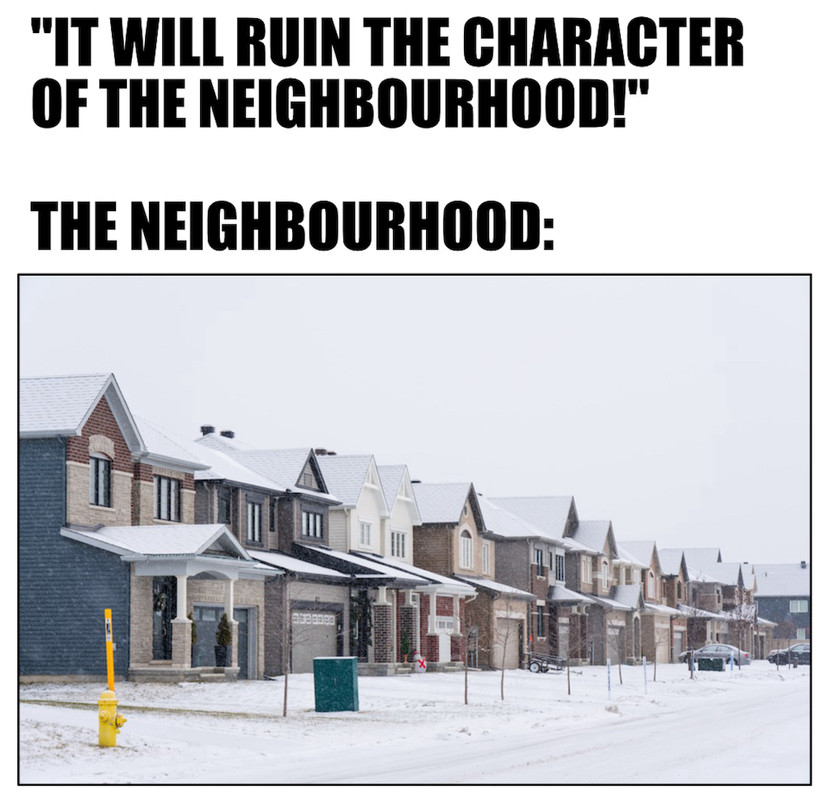
From Twitter:

Reply With Quote
     
     
  #629  
Old Posted Mar 20, 2021, 1:47 PM
waterloowarrior's Avatar
waterloowarrior waterloowarrior is offline
National Capital Region
 
Join Date: Nov 2005
Location: Eastern Ontario
Posts: 9,254
I read the memo and the language is pretty careful that they are sticking with the 60% intensification target. Mainly it's pointing out that the actual density will be determined through the secondary plan and zoning for each neighborhood. Hopefully the city staffs up to put all these plans forward,because multiyear processes for secondary plans won't help for the housing emergency they're trying to address.

https://twitter.com/ShawnMenard1/status/1372261371577044995?s=19
Reply With Quote
     
     
  #630  
Old Posted Mar 20, 2021, 3:29 PM
Williamoforange's Avatar
Williamoforange Williamoforange is offline
Registered User
 
Join Date: Sep 2020
Location: Ottawa
Posts: 865
Quote:
Originally Posted by waterloowarrior View Post
I read the memo and the language is pretty careful that they are sticking with the 60% intensification target. Mainly it's pointing out that the actual density will be determined through the secondary plan and zoning for each neighborhood. Hopefully the city staffs up to put all these plans forward,because multiyear processes for secondary plans won't help for the housing emergency they're trying to address.

https://twitter.com/ShawnMenard1/status/1372261371577044995?s=19
The problem is the again focused message that growth will take the "neighborhood character" into account when creating these plans.

Outside of few areas in the city the "neighborhood character" is detached single family homes. Context as we've done for some mean nothing higher then 3 stories and no apartments when a SFH is next to it. 33 maple grove, 841 Grenon, westboro new 2nd plan, and others. See responses by CA to the change of R1 removal

If the city has to fight section by section by section to get the zoning high enough to meet 60% whole staying in context of the now, then in 5 years the city will likely be forced to expand the urban boundary.
Reply With Quote
     
     
  #631  
Old Posted Mar 20, 2021, 4:57 PM
lrt's friend lrt's friend is offline
Registered User
 
Join Date: Dec 2006
Posts: 12,788
we want to bulldoze single family homes while we seem unable to intensify land that has been waiting forever.
Reply With Quote
     
     
  #632  
Old Posted Mar 25, 2021, 1:21 AM
Truenorth00 Truenorth00 is offline
Registered User
 
Join Date: May 2017
Posts: 28,948
Quote:
Originally Posted by lrt's friend View Post
we want to bulldoze single family homes while we seem unable to intensify land that has been waiting forever.
Says the guy who wants LRT to the burbs. Yes, let's build more transit unfriendly neighbourhoods. This city is going to really choking on traffic in a decade if this sprawl keeps up. It's worse than the GTA when put in context of Ottawa's population.
Reply With Quote
     
     
  #633  
Old Posted Apr 29, 2021, 10:33 AM
Proof Sheet Proof Sheet is offline
Registered User
 
Join Date: May 2009
Posts: 2,985
The people have spoken

https://bulldogottawa.com/new-official-plan-is-a-rotten-document/

Reading this would make you never want to get out of bed.
Reply With Quote
     
     
  #634  
Old Posted Apr 29, 2021, 11:51 AM
Williamoforange's Avatar
Williamoforange Williamoforange is offline
Registered User
 
Join Date: Sep 2020
Location: Ottawa
Posts: 865
Quote:
Originally Posted by Proof Sheet View Post
https://bulldogottawa.com/new-official-plan-is-a-rotten-document/

Reading this would make you never want to get out of bed.
Considering the same sentiment is displayed by more then a few CA, councillors and people on this board in regards to thinking that communities should be in control of the character of their neighborhood, I don't really find it surprising that grey also spouts the same ridiculous nonsense. Mind you for him its comes with a bit of right wing hypocrisy unlike the others above.

"represents all the new urbanism involving density and the like that cities will just screw up by destroying neighbourhoods. Plow the roads and fill the potholes. Let the city develop on its own. The city will do what it likes whether planners like it or not. Planners for the most part just get it wrong."

If the city was letting the city develop on is own then the city wouldn't be implementing zoning controls like Houston or Tokyo. Controls that currently stop or obstruct apartments in certain neighborhoods, something grey doesn't want..
Reply With Quote
     
     
  #635  
Old Posted Apr 29, 2021, 12:38 PM
silvergate's Avatar
silvergate silvergate is offline
Registered User
 
Join Date: Apr 2014
Location: Ottawa
Posts: 629
Quote:
Originally Posted by Proof Sheet View Post
https://bulldogottawa.com/new-official-plan-is-a-rotten-document/

Reading this would make you never want to get out of bed.
I think this line from that article really sums it up: "Keep apartments away from residential neighbourhoods"...........

What are apartments for anyways?
__________________
opendatastoriesottawa.ca
Reply With Quote
     
     
  #636  
Old Posted Apr 29, 2021, 12:55 PM
TransitZilla TransitZilla is offline
Registered User
 
Join Date: Dec 2006
Posts: 2,799
Quote:
Originally Posted by Proof Sheet View Post
https://bulldogottawa.com/new-official-plan-is-a-rotten-document/

Reading this would make you never want to get out of bed.
Ken Gray used to write articulately and passionately about LRT.

Sad what has become of him. Just a dog's breakfast of an article on a website full of them.
Reply With Quote
     
     
  #637  
Old Posted Apr 29, 2021, 1:21 PM
Proof Sheet Proof Sheet is offline
Registered User
 
Join Date: May 2009
Posts: 2,985
Quote:
Originally Posted by silvergate View Post
I think this line from that article really sums it up: "Keep apartments away from residential neighbourhoods"...........

What are apartments for anyways?
Agreed... all density is bad . Keep our single family neighbourhoods that emerged from farmland as single family neighbourhoods as nothing else will be accepted. He seems to pull a $300 K reduction in property value out of a hat as the value that your property will go down if an 'apartment' is built next to you. He has used that # in some of his posts. Not sure where he gets it from.

He seems to have a disdain for the 'tall foreheads' on Laurier Avenue. That is his term for the planning department and various government mandarins at City Hall.

Last edited by Proof Sheet; Apr 29, 2021 at 1:50 PM.
Reply With Quote
     
     
  #638  
Old Posted Apr 29, 2021, 5:58 PM
passwordisnt123 passwordisnt123 is offline
Registered User
 
Join Date: Mar 2015
Location: Ottawa (Centretown)
Posts: 643
He's so awful. I feel like this city would be a lot better off if we realized he has nothing of value to offer and stopped paying attention him altogether.

Can we not link to his website going forward? Or, if we must, maybe link to it via the waybackmachine so we don't give the site any traffic hits?
Reply With Quote
     
     
  #639  
Old Posted Apr 29, 2021, 7:48 PM
phil235's Avatar
phil235 phil235 is offline
Registered User
 
Join Date: Sep 2006
Location: Ottawa
Posts: 4,590
Quote:
Originally Posted by passwordisnt123 View Post
He's so awful. I feel like this city would be a lot better off if we realized he has nothing of value to offer and stopped paying attention him altogether.

Can we not link to his website going forward? Or, if we must, maybe link to it via the waybackmachine so we don't give the site any traffic hits?
Was going to look, but you talked me out of it. Probably will just make me angry anyway. Did he really say that apartments don't belong in residential neighbourhoods?
Reply With Quote
     
     
  #640  
Old Posted Apr 29, 2021, 9:06 PM
Williamoforange's Avatar
Williamoforange Williamoforange is offline
Registered User
 
Join Date: Sep 2020
Location: Ottawa
Posts: 865
Quote:
Originally Posted by phil235 View Post
Was going to look, but you talked me out of it. Probably will just make me angry anyway. Did he really say that apartments don't belong in residential neighbourhoods?
Out of the "train wreck" curiosity I decided to read the more recent articles, and not only does he state that in the linked article but most of the others written by him as well.

The other writer is not any better Benn exemplifies standard hypocritical boomer Nimby talk, with a dash of good old classism.
Reply With Quote
     
     
This discussion thread continues

Use the page links to the lower-right to go to the next page for additional posts
 
 
Reply

Go Back   SkyscraperPage Forum > Regional Sections > Canada > Ontario > Ottawa-Gatineau > Urban, Urban Design & Heritage Issues
Forum Jump


Forum Jump


All times are GMT. The time now is 9:31 AM.


Powered by vBulletin® Version 3.8.7
Copyright ©2000 - 2026, vBulletin Solutions, Inc.