HomeDiagramsDatabaseMapsForum About
     

Go Back   SkyscraperPage Forum > Regional Sections > Canada > Ontario > Ottawa-Gatineau > Urban, Urban Design & Heritage Issues


Reply

 
Thread Tools Display Modes
     
     
  #161  
Old Posted Mar 2, 2021, 2:28 PM
TransitZilla TransitZilla is offline
Registered User
 
Join Date: Dec 2006
Posts: 2,800
This thread has taken a bizarre turn on the strange assertion that a 4-storey, 21-unit building on a mid-block lot is not reasonable density. It seems perfectly reasonable to me.
Reply With Quote
     
     
  #162  
Old Posted Mar 2, 2021, 3:17 PM
Williamoforange's Avatar
Williamoforange Williamoforange is offline
Registered User
 
Join Date: Sep 2020
Location: Ottawa
Posts: 869
Quote:
Originally Posted by bradnixon View Post
This thread has taken a bizarre turn on the strange assertion that a 4-storey, 21-unit building on a mid-block lot is not reasonable density. It seems perfectly reasonable to me.
It is, the unreasonable statement was that it must cater to the SFH which will be replaced and that 4 stories limit is reasonable for the urban core, especially when infill must take into account that a SFH exists there so there most be setbacks.
Reply With Quote
     
     
  #163  
Old Posted Mar 2, 2021, 3:20 PM
phil235's Avatar
phil235 phil235 is offline
Registered User
 
Join Date: Sep 2006
Location: Ottawa
Posts: 4,597
Quote:
Originally Posted by Williamoforange View Post
It is, the unreasonable statement was that it must cater to the SFH which will be replaced and that 4 stories limit is reasonable for the urban core, especially when infill must take into account that a SFH exists there so there most be setbacks.
Except that no one actually made that statement. Nor were setbacks discussed at any point.

It's a more useful discussion if you respond to the arguments that were made - i.e. the "urban core", as you call it, is a very big area, and it isn't good planning to apply a one-size fits all zoning to the entire area. Perhaps have a look at the extensive documentation prepared by Urban Strategies in support of the Centretown plan for a more nuanced (and professional) view of the issue.
Reply With Quote
     
     
  #164  
Old Posted Mar 2, 2021, 3:24 PM
GeoNerd GeoNerd is offline
Registered User
 
Join Date: May 2010
Location: Ottawa, ON.
Posts: 552
Quote:
Originally Posted by phil235 View Post
I’d be interested to know where all of these “multi-million dollar” homes are on the West side of Centretown. And you do realize that sticking to the R4 zoning actually reduces the development value of the lots and potential benefit to the owners?

To repeat myself, no one is saying keep the entire urban core low-rise, or that the entire area should never be developed. The current plan allows for massive amounts of targeted growth (including south of this at Catherine St.). It makes no sense to upzone the entire area (it's roughly 50 blocks west of Kent and south of Gloucester, which is huge) and let people pop 9-storey buildings anywhere they want, including in the middle of residential blocks. There is no need for that for many decades. They actually took that approach in the 50s and 60s on the east side of Centretown between Bank and Metcalfe, and the result is a disjointed, ugly neighbourhood. Why would we repeat that mistake?

Directing growth into organized patterns is in no way outdated or small town. It produces better cities.
Your approach on urban planning is very puzzling and your take on "directed growth" is very odd. Instead of replacing old stock homes in the core that have outlived their viability and creating a very dense walkable downtown, you're suggesting we move density out of the core to areas like Catherine Street that are not walkable to most and have very poor public transit? Why? Just to protect some outdated low-rise homes? Why not build in an area that is already serviced and walkable?

I don't know how you can say "There is no need for many decades" to build a dense core with more than 4-6 storey's. Considering Ottawa has declared both a housing emergency AND climate emergency. The time is now to build dense walkable communities and preserving unremarkable SFH and moving population growth out of the core is not how to do that.

I also don't know how you can say preserving SFH in centretown is not elitist. Look at the sales records. Homes almost never go up for sale and when the do they are either bought by Bif and Nancy for 7 figures to raise their poodle, or by Bob from Barrhaven with zero attachment to the neighbour who proceeds to carve up the house and add gastly additions to create a Frankenstein triplex.

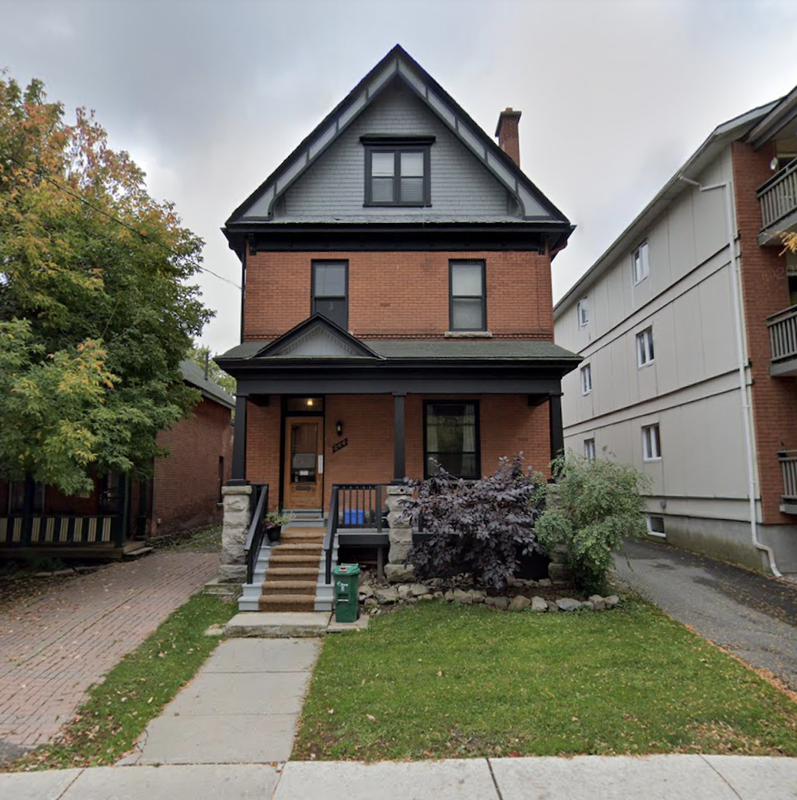
Half a block from the site sold last year in July for $1.2 million:

Reply With Quote
     
     
  #165  
Old Posted Mar 2, 2021, 5:09 PM
phil235's Avatar
phil235 phil235 is offline
Registered User
 
Join Date: Sep 2006
Location: Ottawa
Posts: 4,597
Quote:
Originally Posted by GeoNerd View Post
Your approach on urban planning is very puzzling and your take on "directed growth" is very odd. Instead of replacing old stock homes in the core that have outlived their viability and creating a very dense walkable downtown, you're suggesting we move density out of the core to areas like Catherine Street that are not walkable to most and have very poor public transit? Why? Just to protect some outdated low-rise homes? Why not build in an area that is already serviced and walkable?

I don't know how you can say "There is no need for many decades" to build a dense core with more than 4-6 storey's. Considering Ottawa has declared both a housing emergency AND climate emergency. The time is now to build dense walkable communities and preserving unremarkable SFH and moving population growth out of the core is not how to do that.

I also don't know how you can say preserving SFH in centretown is not elitist. Look at the sales records. Homes almost never go up for sale and when the do they are either bought by Bif and Nancy for 7 figures to raise their poodle, or by Bob from Barrhaven with zero attachment to the neighbour who proceeds to carve up the house and add gastly additions to create a Frankenstein triplex.

Half a block from the site sold last year in July for $1.2 million:
To be clear, it is not my approach that you find puzzling. It is the approach recommended by Urban Strategies (a well-respected Toronto planning firm) and adopted by the City.

TBH, I'm not sure that we are going to get much further with this discussion. To recap, I wrote that there is plenty of land in Centretown that is designated for dense development, both in the area east of Kent and along arterials. You respond by suggesting that I don't want a dense urban community, and I want to move population growth out of the core. None of that follows what I wrote.

I gather that you are not overly familiar with that area of Centretown. It is full of multi-family houses, small apartments and, rooming houses, and is by no means an affluent community. The idea that it consists of a bunch of rich people opposing development is not accurate. Yes, a nice house on a nice block in that area is likely in the million dollar range, but most go for below that. And I would challenge you to find any house that fits the "multi-million dollar" description that I was referring to.
Reply With Quote
     
     
  #166  
Old Posted Mar 2, 2021, 6:02 PM
GeoNerd GeoNerd is offline
Registered User
 
Join Date: May 2010
Location: Ottawa, ON.
Posts: 552
Quote:
Originally Posted by phil235 View Post
To be clear, it is not my approach that you find puzzling. It is the approach recommended by Urban Strategies (a well-respected Toronto planning firm) and adopted by the City.

TBH, I'm not sure that we are going to get much further with this discussion. To recap, I wrote that there is plenty of land in Centretown that is designated for dense development, both in the area east of Kent and along arterials. You respond by suggesting that I don't want a dense urban community, and I want to move population growth out of the core. None of that follows what I wrote.

I gather that you are not overly familiar with that area of Centretown. It is full of multi-family houses, small apartments and, rooming houses, and is by no means an affluent community. The idea that it consists of a bunch of rich people opposing development is not accurate. Yes, a nice house on a nice block in that area is likely in the million dollar range, but most go for below that. And I would challenge you to find any house that fits the "multi-million dollar" description that I was referring to.
I am very familiar with the area and lived in Centretown for years.

I think you're under the assumption that Urban Strategies is let loose and allowed to create design plans from their vision. They have to create these design plans using the city's stringent policies and guidance. They are heavily watered down plans by local special interests.

To be clear, when I say "single family homes" I am fully aware that many have been bought and converted into duplexes, triplexes, and rooming houses. I am referring to the housing stock, which has become redundant for that area. I am not saying that people should be forced to sell so that 200 unit buildings can be erected. But we shouldn't be forbidding 200 unit buildings to be erected in a downtown core of a major city because some local home owners don't want their neighbourhood to ever change.

The 4-6 storey range is appropriate for an urban residential neighbourhood like Hintonburg or Vanier, but wildly inappropriate for downtown.

I agree that we are not going to get much further with this discussion. There are people that recognize that Ottawa is a major city that has outgrown a SFH core, and there will be people with a more small-town mentality that want to keep Ottawa small and live a quiet suburban-style life in the city.

One final point, This is Vancouver in the 1970's versus the 2010's. Imagine where Vancouver would be today if they had fought downtown towers at every turn and desperately tried to retain SFH and dated low-rises in the core.


Last edited by GeoNerd; Mar 2, 2021 at 6:14 PM.
Reply With Quote
     
     
  #167  
Old Posted Mar 2, 2021, 6:44 PM
phil235's Avatar
phil235 phil235 is offline
Registered User
 
Join Date: Sep 2006
Location: Ottawa
Posts: 4,597
Quote:
Originally Posted by GeoNerd View Post
I am very familiar with the area and lived in Centretown for years.

I think you're under the assumption that Urban Strategies is let loose and allowed to create design plans from their vision. They have to create these design plans using the city's stringent policies and guidance. They are heavily watered down plans by local special interests.

To be clear, when I say "single family homes" I am fully aware that many have been bought and converted into duplexes, triplexes, and rooming houses. I am referring to the housing stock, which has become redundant for that area. I am not saying that people should be forced to sell so that 200 unit buildings can be erected. But we shouldn't be forbidding 200 unit buildings to be erected in a downtown core of a major city because some local home owners don't want their neighbourhood to ever change.

The 4-6 storey range is appropriate for an urban residential neighbourhood like Hintonburg or Vanier, but wildly inappropriate for downtown.

I agree that we are not going to get much further with this discussion. There are people that recognize that Ottawa is a major city that has outgrown a SFH core, and there will be people with a more small-town mentality that want to keep Ottawa small and live a quiet suburban-style life in the city.

One final point, This is Vancouver in the 1970's versus the 2010's. Imagine where Vancouver would be today if they had fought downtown towers at every turn and desperately tried to retain SFH and dated low-rises in the core.
Look, I would love to see Vancouver-style planning implemented. But Vancouver doesn't let people stick a 9-storey building anywhere they want. They have a strict short podium/thin tower approach that Ottawa has decidedly not taken. Also, in a neighbourhood like the West End in downtown Vancouver, which is more akin to the area we are talking about, residential areas are primarily zoned at six storeys - https://vancouver.ca/home-property-development/west-end-neighbourhoods.aspx

I think the crux of this debate is really the size of the urban core, and how much should be zoned for higher buildings at this point. I could buy the argument that this particular spot on Lisgar is close enough to the highrises on Gloucester that a transitional zone of 6-9 storeys make sense. What I don't buy is that property owners should be able to stick 9-storey buildings anywhere in Centretown, including in the middle of R4 residential blocks. It makes far more sense to develop taller buildings in the roughly 50-block area east of Kent and west of Elgin, and on arterials. It will be decades and decades before that supply of developable properties is exhausted.

In any event, it's not particularly helpful to refer to people as classist, or having a small town mentality just because they don't agree with your idea of what constitutes good urban development. Essentially every post you've written here includes that kind of thing.

Last edited by phil235; Mar 2, 2021 at 6:56 PM.
Reply With Quote
     
     
  #168  
Old Posted Mar 2, 2021, 11:08 PM
J.OT13's Avatar
J.OT13 J.OT13 is offline
Moderator
 
Join Date: Mar 2012
Location: Ottawa
Posts: 29,003
Quote:
Originally Posted by GeoNerd View Post
When I say "dated" I am not referring to the date which the last zoning by-law, official plan, secondary plan, or any other policy was passed. I'm referring to the mindset of these by-laws and policies, which protect large SFH neighbourhoods in a major city's downtown core. Imagine downtown Vancouver or Toronto with 2-6 storey buildings everywhere. It's ridiculous. It is very evident that many of the city planning staff and city councillors are from small-towns and have brought their small-town mentality to Ottawa. There is nothing wrong with slowly replacing SFH and low-rise building in Centretown with mid-rise and high-rise buildings. The anti-height attitude in this city is unwarranted, dated, and asinine.
Vancouver has stringent zoning to protect SFH outside of the downtown peninsula. Vancouver is only 114 square kilometers, compared to old Ottawa which was 110 square kilometers. That is part of the reason (along with foreign investors) why Vancouver is so expensive. Ottawa has gone great lengths to encourage redevelopment of SFH areas with the new R4 zoning.

https://www.google.com/maps/@49.2285842,-123.120699,4991a,35y,38.43t/data=!3m1!1e3!5m1!1e2

Toronto also has plenty of preserved late 19th, early 20th Century neighbourhoods, even on subway lines.

https://www.google.com/maps/place/Toront...77!8m2!3d43.653226!4d-79.3831843!5m1!1e2

https://www.google.com/maps/place/Toront...77!8m2!3d43.653226!4d-79.3831843!5m1!1e2

Quote:
Originally Posted by Williamoforange View Post
So it's a 7 year old plan based upon the old official plan, id say that's out of date with today's policies, policies that the Councilor of that very ward pushes at council.

As for diverse, in what form, as it's not diverse in the wealth of the owners, who are all sitting on multi-million dollar single family homes, in what very much is the core of Ottawa.

How is the idea that lots in the urban core of a city should never be allowed to develop greater then 4 stories nuanced? Especially for anyone other then those trying to protect the character that excludes those without the means to afford multi-million dollar SFH. Again SFH in the urban core of a city, which by comparison in the cities were trying to emulate exceed that height on majority.
We can't update CDPs every few years. We have an entire city to cover. The City is currently focused on areas served by rapid transit, and Centretown isn't one of those places.

It's also worth noting one again that a vast majority of SFH in Centretown have been converted into commercial or multi-units. The density has already doubled or tripled just with the heritage stock of former SFH.

Very few of those SFH are in fact, still SFH.

As for those who argue that we are facing a housing emergency, even if we zoned the entire city to allow 60 floors, it wouldn't make a difference. There's plenty of land to go around, and plenty of up-zoning near transit stations, vast empty fields like LeBreton and massive surface parking lots like Tunney's and Confederation Heights.
Reply With Quote
     
     
  #169  
Old Posted Mar 3, 2021, 12:00 AM
Williamoforange's Avatar
Williamoforange Williamoforange is offline
Registered User
 
Join Date: Sep 2020
Location: Ottawa
Posts: 869
Quote:
Originally Posted by J.OT13 View Post
Vancouver has stringent zoning to protect SFH outside of the downtown peninsula. Vancouver is only 114 square kilometers, compared to old Ottawa which was 110 square kilometers. That is part of the reason (along with foreign investors) why Vancouver is so expensive. Ottawa has gone great lengths to encourage redevelopment of SFH areas with the new R4 zoning.

https://www.google.com/maps/@49.2285842,-123.120699,4991a,35y,38.43t/data=!3m1!1e3!5m1!1e2

Toronto also has plenty of preserved late 19th, early 20th Century neighbourhoods, even on subway lines.

https://www.google.com/maps/place/Toront...77!8m2!3d43.653226!4d-79.3831843!5m1!1e2

https://www.google.com/maps/place/Toront...77!8m2!3d43.653226!4d-79.3831843!5m1!1e2


We can't update CDPs every few years. We have an entire city to cover. The City is currently focused on areas served by rapid transit, and Centretown isn't one of those places.

It's also worth noting one again that a vast majority of SFH in Centretown have been converted into commercial or multi-units. The density has already doubled or tripled just with the heritage stock of former SFH.

Very few of those SFH are in fact, still SFH.

As for those who argue that we are facing a housing emergency, even if we zoned the entire city to allow 60 floors, it wouldn't make a difference. There's plenty of land to go around, and plenty of up-zoning near transit stations, vast empty fields like LeBreton and massive surface parking lots like Tunney's and Confederation Heights.
Your ignoring that the official plan has changed and that those CDP are based around the old official plan, that's why there invalid today.

Also will the both of you read the new OP, because as it stands your both arguing against it.

There is no were full sign here, this isn't something to where you get to say will look over there it's got space, if the demand for housing is for centretown then that's where it should be allowed to be built. With the only restrictions being infrastructure and criteria that actually effects the physical health of residents.

Lastly, the housing in this city is getting ridiculous, and adding supply to both the available land to develop and housing units is a very good thing.

Lower the risk, cost, and barrier to entry for developing units that will house people.
Reply With Quote
     
     
  #170  
Old Posted Mar 3, 2021, 3:06 AM
phil235's Avatar
phil235 phil235 is offline
Registered User
 
Join Date: Sep 2006
Location: Ottawa
Posts: 4,597
Quote:
Originally Posted by Williamoforange View Post
Your ignoring that the official plan has changed and that those CDP are based around the old official plan, that's why there invalid today.

Also will the both of you read the new OP, because as it stands your both arguing against it.

There is no were full sign here, this isn't something to where you get to say will look over there it's got space, if the demand for housing is for centretown then that's where it should be allowed to be built. With the only restrictions being infrastructure and criteria that actually effects the physical health of residents.
I feel that I am repeating things six times, but who said anything about not building new housing in Centretown?

I’d be interested in knowing how you think we are arguing against the new official plan? Please be specific. I’d also like to know what part of the official plan invalidates the current CDP.
Reply With Quote
     
     
  #171  
Old Posted Mar 3, 2021, 3:27 AM
lrt's friend lrt's friend is offline
Registered User
 
Join Date: Dec 2006
Posts: 12,804
Infill housing typically does not lower the average cost of housing. It is usually higher priced because land prices are much higher in central locations.
Reply With Quote
     
     
  #172  
Old Posted Mar 3, 2021, 12:40 PM
Williamoforange's Avatar
Williamoforange Williamoforange is offline
Registered User
 
Join Date: Sep 2020
Location: Ottawa
Posts: 869
Quote:
Originally Posted by phil235 View Post
I feel that I am repeating things six times, but who said anything about not building new housing in Centretown?

I’d be interested in knowing how you think we are arguing against the new official plan? Please be specific. I’d also like to know what part of the official plan invalidates the current CDP.
That was a response to jot not you.

As for you, just read the plan. The new OP is based around a much higher infill rate 80 units/hectare for non-corridors, and 80-160 units/hectare for corridors, like Gladstone which is currently limited to 5 stories, while mainstreet corridors in the downtown transects are capped at 12.

So yeah I'd say that CDP is not valid
Reply With Quote
     
     
  #173  
Old Posted Mar 3, 2021, 3:28 PM
phil235's Avatar
phil235 phil235 is offline
Registered User
 
Join Date: Sep 2006
Location: Ottawa
Posts: 4,597
Quote:
Originally Posted by Williamoforange View Post
That was a response to jot not you.

As for you, just read the plan. The new OP is based around a much higher infill rate 80 units/hectare for non-corridors, and 80-160 units/hectare for corridors, like Gladstone which is currently limited to 5 stories, while mainstreet corridors in the downtown transects are capped at 12.

So yeah I'd say that CDP is not valid
I've read the plan. You keep referring to the overall growth targets as if there is nothing else in the plan. In fact, there are all sorts of specifics in the plan. For instance, the part of Section 5 on Downtown Transects reads as follows with respect to building heights:

(3) Mainstreet Corridors Low-rise, mid-rise and high-rise: minimum two storeys and maximum twelve storeys
(4) Minor Corridors Low-rise and mid-rise: minimum two storeys and maximum nine storeys
(2) Neighbourhoods Low-rise: minimum two storeys and maximum four storeys


Section 5.1.3 says that the Zoning By-law "shall set out maximum building heights and appropriate density thresholds within Neighbourhoods that shall allow: a) Building types that provide for high density development while maintaining a low-rise form from a minimum of two storeys to a maximum of four storeys;"

Section 5.1.5 - The Zoning By-law shall implement the density thresholds in a manner which adheres to the following: a) Allows and supports a wide variety of housing types with a focus on missing-middle housing (i.e. dense lowrise).

On height transitions: 4.6.6 - In order to ensure that impacts on neighbouring properties and on the public realm are minimized, transition in building heights shall be required where different building height categories abut.

All of which run counter to your comments. And finally - "Where there is a conflict or inconsistency between the policies or maps of this Plan and a policy or map of a secondary plan or area-specific policy, the policy or map of the secondary plan or area specific policy will prevail."

I could go on, but I won't. But to summarize, no, the CDP is not invalid, and no, the Official Plan does not require or promote 9-storey buildings midway down residential blocks.
Reply With Quote
     
     
  #174  
Old Posted Mar 3, 2021, 5:09 PM
Williamoforange's Avatar
Williamoforange Williamoforange is offline
Registered User
 
Join Date: Sep 2020
Location: Ottawa
Posts: 869
Quote:
Originally Posted by phil235 View Post
I've read the plan. You keep referring to the overall growth targets as if there is nothing else in the plan. In fact, there are all sorts of specifics in the plan. For instance, the part of Section 5 on Downtown Transects reads as follows with respect to building heights:

(3) Mainstreet Corridors Low-rise, mid-rise and high-rise: minimum two storeys and maximum twelve storeys
(4) Minor Corridors Low-rise and mid-rise: minimum two storeys and maximum nine storeys
(2) Neighbourhoods Low-rise: minimum two storeys and maximum four storeys


Section 5.1.3 says that the Zoning By-law "shall set out maximum building heights and appropriate density thresholds within Neighbourhoods that shall allow: a) Building types that provide for high density development while maintaining a low-rise form from a minimum of two storeys to a maximum of four storeys;"

Section 5.1.5 - The Zoning By-law shall implement the density thresholds in a manner which adheres to the following: a) Allows and supports a wide variety of housing types with a focus on missing-middle housing (i.e. dense lowrise).

On height transitions: 4.6.6 - In order to ensure that impacts on neighbouring properties and on the public realm are minimized, transition in building heights shall be required where different building height categories abut.

All of which run counter to your comments. And finally - "Where there is a conflict or inconsistency between the policies or maps of this Plan and a policy or map of a secondary plan or area-specific policy, the policy or map of the secondary plan or area specific policy will prevail."

I could go on, but I won't. But to summarize, no, the CDP is not invalid, and no, the Official Plan does not require or promote 9-storey buildings midway down residential blocks.
For starters the centretown guide is a CDP not Secondary plan and Its too be seen if old secondary plans will be recognized by the new OP.

Next the height limits are clearly outlined in the plan and specified to corridor type, so yes a 9+ story tower could be built mid-block on a main corridor in the downtown area next to SFH. (Assuming no heritage designation)

And while yes unfortunately the city is going to protect low rise in the core, the majority of the core will either be hub designation, or a main/minor corridor where the cap is more appropriate for the infrastructure the city had paid to provide for that area.

Last edited by Williamoforange; Mar 3, 2021 at 5:22 PM.
Reply With Quote
     
     
  #175  
Old Posted Mar 3, 2021, 6:43 PM
phil235's Avatar
phil235 phil235 is offline
Registered User
 
Join Date: Sep 2006
Location: Ottawa
Posts: 4,597
Quote:
Originally Posted by Williamoforange View Post
For starters the centretown guide is a CDP not Secondary plan and Its too be seen if old secondary plans will be recognized by the new OP.

Next the height limits are clearly outlined in the plan and specified to corridor type, so yes a 9+ story tower could be built mid-block on a main corridor in the downtown area next to SFH. (Assuming no heritage designation)

And while yes unfortunately the city is going to protect low rise in the core, the majority of the core will either be hub designation, or a main/minor corridor where the cap is more appropriate for the infrastructure the city had paid to provide for that area.
When we started, this conversation was about the residential streets of West Centretown and specifically whether you can or should build a 9-storey building in the middle of a low-rise residential block like the site on Lisgar. The Official Plan specifically protects those streets, and does not "invalidate" the CDP as you were claiming. No one ever suggested that you could not build 9-storey buildings on main corridors downtown.

As for hubs, those are defined as areas within 400 m of rapid transit stops. Some parts of the core will be designated as hubs, however, those areas are already very dense with high-rise built form. The City has opted not to serve most of Centretown with rapid transit, so the impact of hub designations will be limited and won't impact the residential blocks of West Centretown. Regardless, the CDP already recommends higher density construction and taller buildings in the majority of the core, so there is no conflict between the two.

Last edited by phil235; Mar 3, 2021 at 6:57 PM.
Reply With Quote
     
     
  #176  
Old Posted Mar 3, 2021, 10:59 PM
GeoNerd GeoNerd is offline
Registered User
 
Join Date: May 2010
Location: Ottawa, ON.
Posts: 552
Quote:
Originally Posted by J.OT13 View Post
Vancouver has stringent zoning to protect SFH outside of the downtown peninsula. Vancouver is only 114 square kilometers, compared to old Ottawa which was 110 square kilometers. That is part of the reason (along with foreign investors) why Vancouver is so expensive. Ottawa has gone great lengths to encourage redevelopment of SFH areas with the new R4 zoning.

Toronto also has plenty of preserved late 19th, early 20th Century neighbourhoods, even on subway lines.
Yes, but we aren't talking about outside the downtown core. I would fully support certain height/density limits outside the core, but we are talking about in centretown itself with absurd 4-6 storey limits.

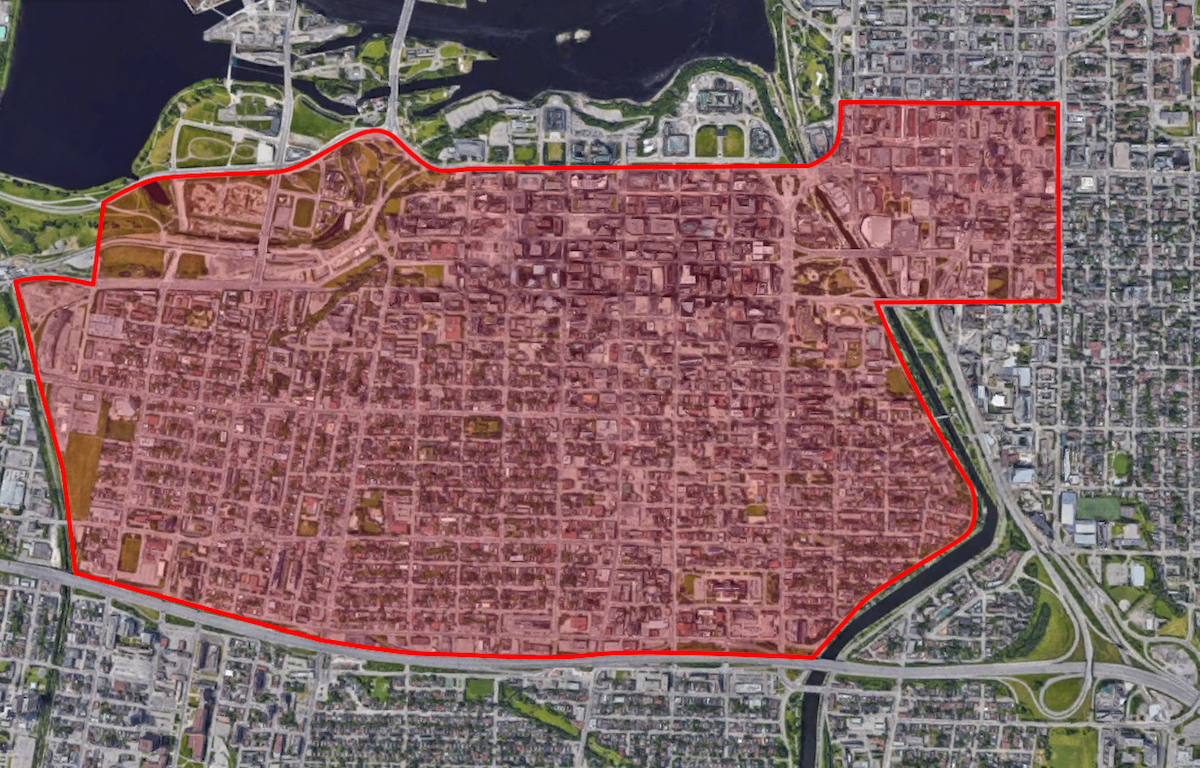
The Vancouver downtown peninsula is just under 5 km². The rough area of centretown as shown in this image is also just under 5 km². When you overlay the rough areas you can see the area of the peninsula vs. Ottawa's downtown. Imagine Vancouver had the same keep it tiny approach in that area. We are limiting towers to less than a quarter of the peninsula area. It's insanity.


Quote:
Originally Posted by phil235 View Post
Look, I would love to see Vancouver-style planning implemented. But Vancouver doesn't let people stick a 9-storey building anywhere they want. They have a strict short podium/thin tower approach that Ottawa has decidedly not taken. Also, in a neighbourhood like the West End in downtown Vancouver, which is more akin to the area we are talking about, residential areas are primarily zoned at six storeys - https://vancouver.ca/home-property-development/west-end-neighbourhoods.aspx

I think the crux of this debate is really the size of the urban core, and how much should be zoned for higher buildings at this point. I could buy the argument that this particular spot on Lisgar is close enough to the highrises on Gloucester that a transitional zone of 6-9 storeys make sense. What I don't buy is that property owners should be able to stick 9-storey buildings anywhere in Centretown, including in the middle of R4 residential blocks. It makes far more sense to develop taller buildings in the roughly 50-block area east of Kent and west of Elgin, and on arterials. It will be decades and decades before that supply of developable properties is exhausted.

In any event, it's not particularly helpful to refer to people as classist, or having a small town mentality just because they don't agree with your idea of what constitutes good urban development. Essentially every post you've written here includes that kind of thing.
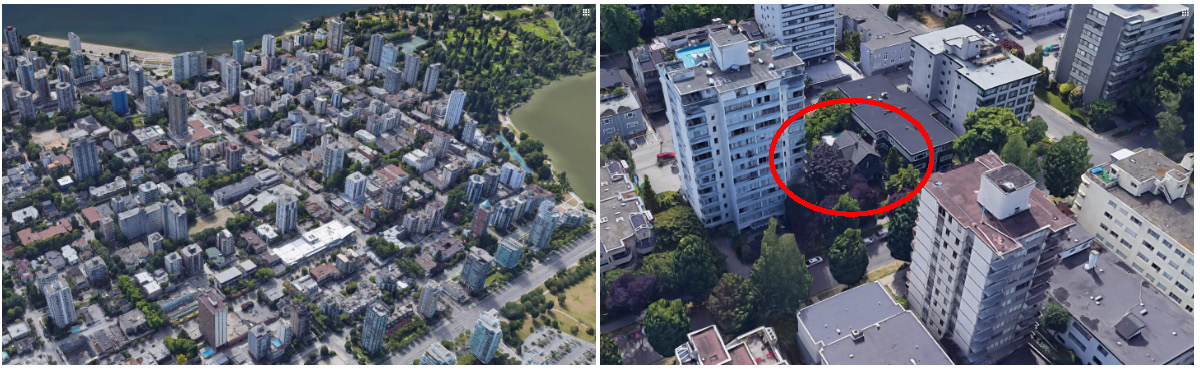
Have you been to the downtown Westside of Vancouver? It is a great mixture of SFH, low-rise, mid-rise, and high-rise. They have mid-block towers and a multitude of towers 20-30 storeys.

The SFH in the image has a 13 storey tower next door and 11 storeys tower across the street. They do not "destroy the neighbourhood", they make the neighbourhood dense, vibrant, sustainable, and interesting.

There is a strong small town mentality when it comes to development in this city. Most people won't bat an eye when we destroy a forest to build cheap suburban subdivision 30 miles out of the city, but are up in arms when we try to add even a modest tower to our downtown core. It The mentality is also alive and well on this forum. I was not surprised to learn that many (most?) here aren't from Ottawa, and do not even live in the city. The anti-sky scraper mindset even on a sky scrapper forum is mind boggling!

Restricting downtown towers to an area less than a 1/4 the size of the downtown Vancouver penisula is crazy, short sighted, and yes, small-townish. Zero vision for the urban future. Once we remove old SFH housing stock and replace it with 3-4 storey new builds, it becomes increasingly difficult to replace those new builds in the future. The city should be refusing these kind of underdevelopments downtown not encouraging them.

Reply With Quote
     
     
  #177  
Old Posted Mar 4, 2021, 2:04 PM
J.OT13's Avatar
J.OT13 J.OT13 is offline
Moderator
 
Join Date: Mar 2012
Location: Ottawa
Posts: 29,003
Towers in Vancouver are almost exclusively on the Peninsula and around False Creek. Ottawa has towers, existing, proposed and allowed through zoning, well beyond Downtown and Centretown.

EDIT: I'm comparing Vancouver proper with old Ottawa. If we get into the suburbs, Ottawa has potential to look somewhat similar to Vancouver with towers surrounding rapid transit stations with mostly SFH beyond.
Reply With Quote
     
     
  #178  
Old Posted Mar 4, 2021, 5:14 PM
GeoNerd GeoNerd is offline
Registered User
 
Join Date: May 2010
Location: Ottawa, ON.
Posts: 552
Quote:
Originally Posted by J.OT13 View Post
Towers in Vancouver are almost exclusively on the Peninsula and around False Creek. Ottawa has towers, existing, proposed and allowed through zoning, well beyond Downtown and Centretown.

EDIT: I'm comparing Vancouver proper with old Ottawa. If we get into the suburbs, Ottawa has potential to look somewhat similar to Vancouver with towers surrounding rapid transit stations with mostly SFH beyond.
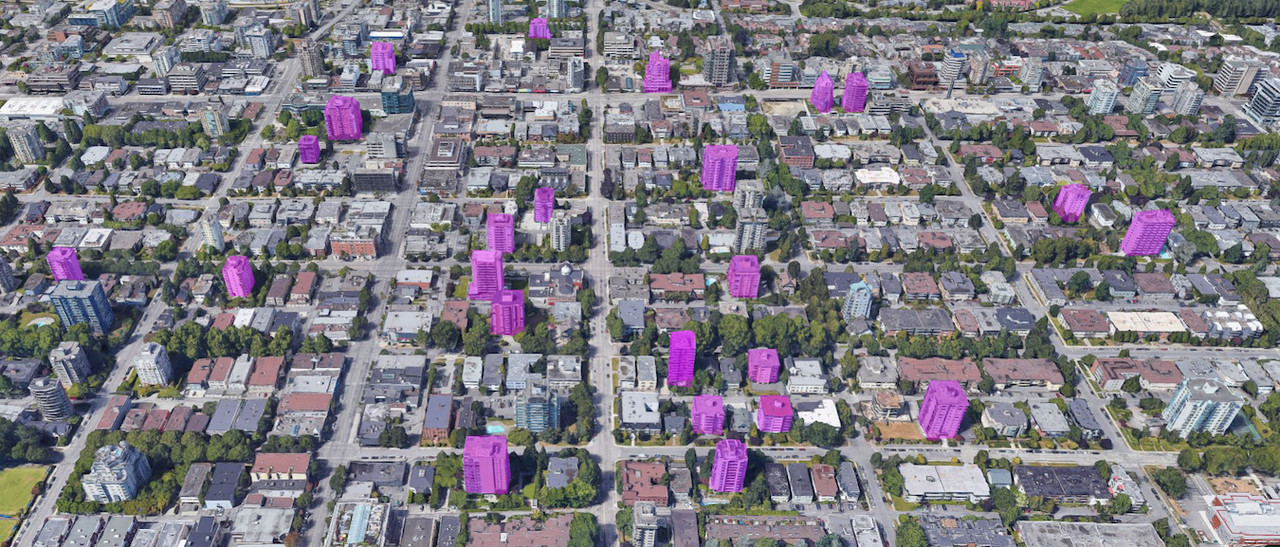
Ok, take the South Granville area of Vancouver which would be akin to our Glebe or Hintonburg/Wellington West areas. This area used to be almost exclusively SFH and now has numerous mid and high-rise towers. They allow more height/density in an urban neighbourhood outside the peninsula than we are allowing in our downtown core. The closest mass transit station is over 1500 metres away. The Lisgar site which began this discussion is less than 500 metres from Lyon Station. Again, it's incomprehensible why some want to keep massive areas of downtown which are walkable and serviced by LRT under 4-6 storeys.

For the record, here is an image highlighting only the mid-block towers of the South Granville (not downtown) neighbourhood.

Reply With Quote
     
     
  #179  
Old Posted Mar 17, 2021, 2:33 AM
rocketphish's Avatar
rocketphish rocketphish is online now
Planet Ottawa and beyond
 
Join Date: Feb 2009
Location: Greater Ottawa
Posts: 14,647
Just because governments want us to live in big cities doesn't mean we should
Politicians constantly seek to make cities more livable. But perhaps the best policy would be to enable greater choice in the types of communities people inhabit

Tasha Kheiriddin
Publishing date: Mar 16, 2021 • 8 hours ago • 3 minute read


I have always been a city person. As a child, I suffered from hay fever, lasted less than a week at summer camp and caught cold any time I slept in a tent. By adulthood, I had become hardwired to crave the restaurants, shopping, nightlife and general buzz of the urban environment. As the saying goes, you can’t plug a hairdryer into a tree.

In the past year, however, two events have radically changed my perspective. The first was the pandemic. Suddenly, the city was the worst place to be. Downtown neighbourhoods were overrun with apartment dwellers desperate to escape their four walls. Every trip to the store felt fraught with virus anxiety.

The second event was a concussion. In mid-February, I slipped on an icy sidewalk and into a nightmare. For the first week, I sported sunglasses everywhere, unable to tolerate light. The second week featured prescribed short bursts of activity — reading a book, talking on the phone, going for walks. Week three: driving for a grand total of 10 minutes. Bone-weary exhaustion and dizziness invariably followed the next day.

It is true that concussion recovery takes a long time. But it seemed as though every foray outdoors made things worse. The sight, sound and smell of traffic, people, buildings, lights and signs assailed my brain. The city, which had always been my friend, seemed to conspire against me. So I decided to get out of town.

As luck would have it, late last year, with our locked-down family climbing the walls, we did what I had vowed never to do and bought a cottage. The place is the antithesis of city life: a converted century-old log cabin, two hours outside of Toronto, on a dirt road amidst 25 acres of trees. On cloudless nights the sky blazes with millions of stars. It is wild and remote and beautiful and, I hoped, a place my injured brain could heal.

A family friend drove my car up, masks all around, me with my eyes covered, terrified about what the trip would do to my head. But the next morning the dizziness and fatigue were absent. Encouraged, I went outside. Watched birds. Contemplated trees. Slept in complete silence. And over the course of the week resumed driving, reading emails and viewing news articles online for set periods of time. I knew things were on the right track when watching a Netflix show with my daughter produced no noticeable ill effects.

The country is not a cure-all, butscientific research shows a correlation (with debate over causation) between urban environments and adverse mental health. People who live or are raised in cities exhibit a 39 per cent greater incidence of mood disorders, 21 per cent greater incidence of anxiety and double the risk of schizophrenia as their rural counterparts. Density may be great for the tax base, but may not be so good for our brains.

It’s also not good for affordable housing. The more people you pack into our cities, the greater the demand for shelter that can never be built fast enough. Conversely, with hundreds of thousands of fewer people pouring into our metropolises due to the pandemic, vacancies have soared and rents have plunged.

Politicians constantly seek to make cities more livable. Usually that translates to more parks, more transit, social housing and “pedestrian only” streets. But maybe the best policy would be to enable greater choice in the types of communities people can live. The ability to work remotely has already enabled thousands of (predominantly middle-class) urbanites to move to smaller communities. More would take the plunge if policy-makers addressed the remaining hurdles: the lack of broadband internet, high level health care and accessible schools.

Cities will always be crucial engines of economic growth, intellectual capital and creative development. But the time may be right for a rural renaissance, especially where our brains are concerned. I’m not fully recovered yet. But as I have learned this year, to get out of the woods, you just might have to go into them.

Tasha Kheiriddin is a Postmedia columnist and principal with Navigator Ltd.

https://ottawacitizen.com/opinion/tasha-...wcm/351d26db-aa6a-4514-9a47-c87a7c2b6726

Reply With Quote
     
     
  #180  
Old Posted Mar 17, 2021, 11:11 AM
waterloowarrior's Avatar
waterloowarrior waterloowarrior is offline
National Capital Region
 
Join Date: Nov 2005
Location: Eastern Ontario
Posts: 9,254
The rural communities are in Ottawa are booming right now, but I'm really curious to see what will happen once the feds and other sectors return to the office full time. When traffic is backed up on the 417 and there are no public transit options, the commute from Almonte or Embrun is much less appealing. I remember the winter before the pandemic friends had commented how often the 417 was stop and go from Anderson or Boundary Road, and the backup in the West end was very consistent.
Reply With Quote
     
     
This discussion thread continues

Use the page links to the lower-right to go to the next page for additional posts
 
 
Reply

Go Back   SkyscraperPage Forum > Regional Sections > Canada > Ontario > Ottawa-Gatineau > Urban, Urban Design & Heritage Issues
Forum Jump


Forum Jump


All times are GMT. The time now is 9:38 PM.


Powered by vBulletin® Version 3.8.7
Copyright ©2000 - 2026, vBulletin Solutions, Inc.