HomeDiagramsDatabaseMapsForum About
     

Go Back   SkyscraperPage Forum > Regional Sections > Canada


Closed Thread

 
Thread Tools Display Modes
     
     
  #15061  
Old Posted Feb 16, 2021, 7:29 PM
esquire's Avatar
esquire esquire is offline
Registered User
 
Join Date: Oct 2001
Posts: 37,480
^ Great idea, but I wonder if they could push the downtown station a little closer to Jasper? That would really improve connectivity with a major downtown corner.
     
     
  #15062  
Old Posted Feb 16, 2021, 7:31 PM
Coldrsx's Avatar
Coldrsx Coldrsx is offline
Community Guy
 
Join Date: Dec 2003
Location: Edmonton, AB
Posts: 68,980
The top of bank is already directly connected under Telus Tower/ATB Place to Central LRT, a major bus top and is well connected above-ground both inside and outside to Jasper.

All good there and the hope is to make this station an attraction with a cantilevered cafe overlooking the valley.
__________________
"The destructive effects of automobiles are much less a cause than a symptom of our incompetence at city building" - Jane Jacobs 1961ish

Wake me up when I can see skyscrapers
     
     
  #15063  
Old Posted Feb 16, 2021, 7:37 PM
esquire's Avatar
esquire esquire is offline
Registered User
 
Join Date: Oct 2001
Posts: 37,480
Good stuff... glad to hear they've integrated it well with what's already around there.
     
     
  #15064  
Old Posted Feb 16, 2021, 7:45 PM
Coldrsx's Avatar
Coldrsx Coldrsx is offline
Community Guy
 
Join Date: Dec 2003
Location: Edmonton, AB
Posts: 68,980
This would complete the LRT link and tie LRT/Bus/Gondola into one people-moving machine and is integral to the ridership/viability.
__________________
"The destructive effects of automobiles are much less a cause than a symptom of our incompetence at city building" - Jane Jacobs 1961ish

Wake me up when I can see skyscrapers
     
     
  #15065  
Old Posted Feb 16, 2021, 11:13 PM
Harrison's Avatar
Harrison Harrison is offline
A Better Place
 
Join Date: Jan 2007
Location: Edmonton
Posts: 3,074
Quote:
Originally Posted by Coldrsx View Post
This would complete the LRT link and tie LRT/Bus/Gondola into one people-moving machine and is integral to the ridership/viability.
I doubt many will use it for transit unless the gondola fare is integrated with ETS. If the gondola costs an additional $5+ on top of the $3.50 for ETS, few (if any) would use it for transit opposed to just staying on a bus.
__________________
Bingo bango bongo
     
     
  #15066  
Old Posted Feb 16, 2021, 11:21 PM
Coldrsx's Avatar
Coldrsx Coldrsx is offline
Community Guy
 
Join Date: Dec 2003
Location: Edmonton, AB
Posts: 68,980
Agreed.

It needs to be integrated into the system like many other cities do with public and private systems.
__________________
"The destructive effects of automobiles are much less a cause than a symptom of our incompetence at city building" - Jane Jacobs 1961ish

Wake me up when I can see skyscrapers
     
     
  #15067  
Old Posted Feb 19, 2021, 2:05 PM
Reecemartin's Avatar
Reecemartin Reecemartin is offline
YouTube Creator
 
Join Date: Sep 2015
Location: Vancouver/Toronto
Posts: 1,776
Canada is getting a new intercity rail line, but it’s not exactly high speed rail. We talk about how we got here, and why we aren’t overjoyed in our latest video: https://youtu.be/SY2w_yvFsJc
     
     
  #15068  
Old Posted Feb 19, 2021, 2:37 PM
J.OT13's Avatar
J.OT13 J.OT13 is offline
Moderator
 
Join Date: Mar 2012
Location: Ottawa
Posts: 28,565
Tunnel construction along the Sir John A. Macdonald Parkway.

Video Link


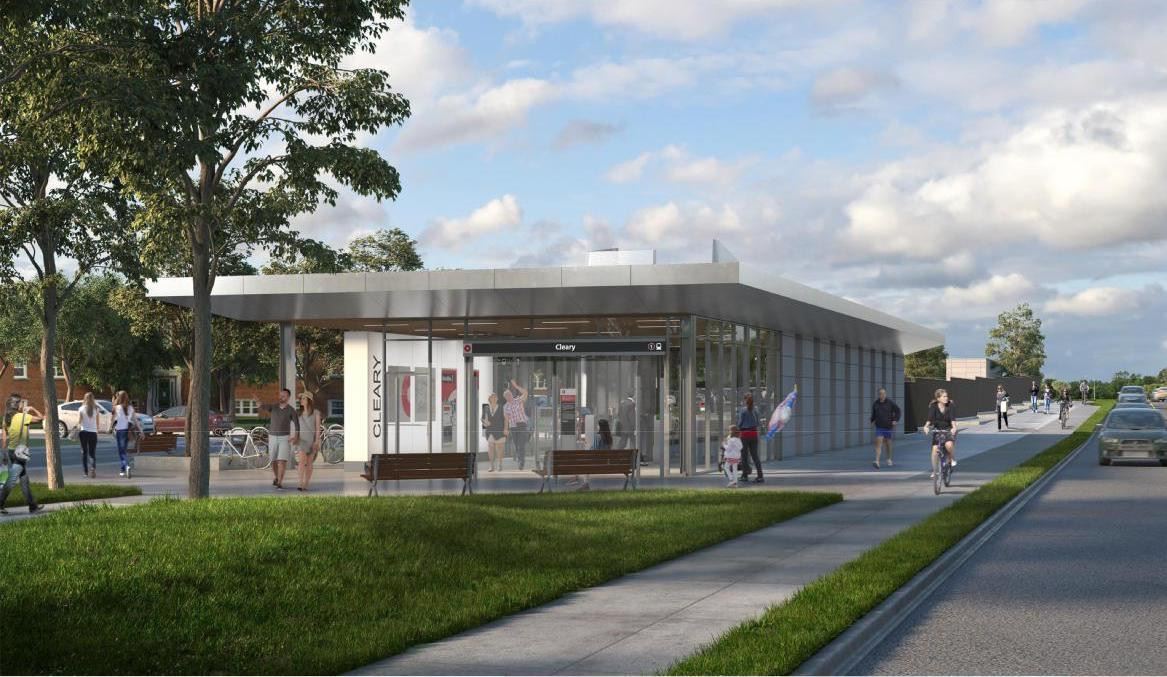
In the video, Shane from O-Train Fans is driving between Dominion (existing station to be renamed Kitchi Sibi) and Cleary (new station renamed Sherbourne) stations, and reverses course in the second half. Stations will be open trenches, not underground, unfortunately.


Last edited by J.OT13; Feb 19, 2021 at 3:03 PM. Reason: Station Name
     
     
  #15069  
Old Posted Feb 19, 2021, 2:48 PM
MalcolmTucker MalcolmTucker is offline
Registered User
 
Join Date: May 2007
Posts: 11,591
Being in trenches not underground probably is saving close to $50 million a station, and $40-75 million a km of track (even more if the trench is already there).

Helps buy more tracks and stations!
     
     
  #15070  
Old Posted Feb 19, 2021, 3:10 PM
J.OT13's Avatar
J.OT13 J.OT13 is offline
Moderator
 
Join Date: Mar 2012
Location: Ottawa
Posts: 28,565
That's a good way to look at it. New Orchard and Cleary will be local residential stations as opposed to destination stations, while Dominion might attract a little more due to its proximity to Westboro Village and Westboro Beach, along with some office space.

Cleary was the only one that was supposed to be underground (it was to be in the bend, integrated into a future TOD building) but was moved to the Byron Tramway Park for financial reasons.

Dominion is an existing infill "station" (glorified bus shelters) while Cleary and New Orchard will be new stations to serve a major gap in service from the old Transitway.

Kìchì Sìbì (current name Dominion)


https://otrain.railfans.ca/line-1-stations/kichi-sibi

Sherbourne (Cleary on map)


https://otrain.railfans.ca/line-1-stations/sherbourne

New Orchard


https://otrain.railfans.ca/line-1-stations/new-orchard
     
     
  #15071  
Old Posted Feb 19, 2021, 7:50 PM
Hybrid247 Hybrid247 is offline
Registered User
 
Join Date: Oct 2009
Posts: 1,320
Quote:
Originally Posted by Reecemartin View Post
Canada is getting a new intercity rail line, but it’s not exactly high speed rail. We talk about how we got here, and why we aren’t overjoyed in our latest video: https://youtu.be/SY2w_yvFsJc
Great vid. You pretty much sum up my exact sentiments regarding HFR. Countries have had HSR over half a century and here we are planning to double down on conventional rail for another century which will undoubtedly ensure we never see HSR in our lifetimes... How embarrassing. It's made worse by VIA's poor attempt to mislead the general public into thinking it's HSR (the similar-sounding HFR acronym is not a coincidence).

The lack of vision in this country is highly discouraging at times.
     
     
  #15072  
Old Posted Feb 19, 2021, 8:28 PM
hipster duck's Avatar
hipster duck hipster duck is offline
Registered User
 
Join Date: Oct 2014
Location: Toronto
Posts: 4,848
^My impression was that real HSR - the 300 km/h kind - was going the way of the Concorde in most of the developed world. Even places like China and Spain, which went crazy building HSR lines a decade ago, have slowed down their pace of construction considerably.

The benefits almost never justify the costs. You're basically building fully grade-separated metro-like rail system that's always on some kind of superstructure for hundreds of kilometers. We could build a rail line that tops out at 200 km/h for $4B or we could build a rail line that tops out at 300 km/h for $40B. That 45 minutes-1 hour of savings on a Toronto-Montreal isn't really worth it.
     
     
  #15073  
Old Posted Feb 19, 2021, 8:52 PM
JHikka's Avatar
JHikka JHikka is offline
ハルウララ
 
Join Date: Jul 2009
Location: Toronto
Posts: 12,853
Quote:
Originally Posted by hipster duck View Post
Even places like China and Spain, which went crazy building HSR lines a decade ago, have slowed down their pace of construction considerably.
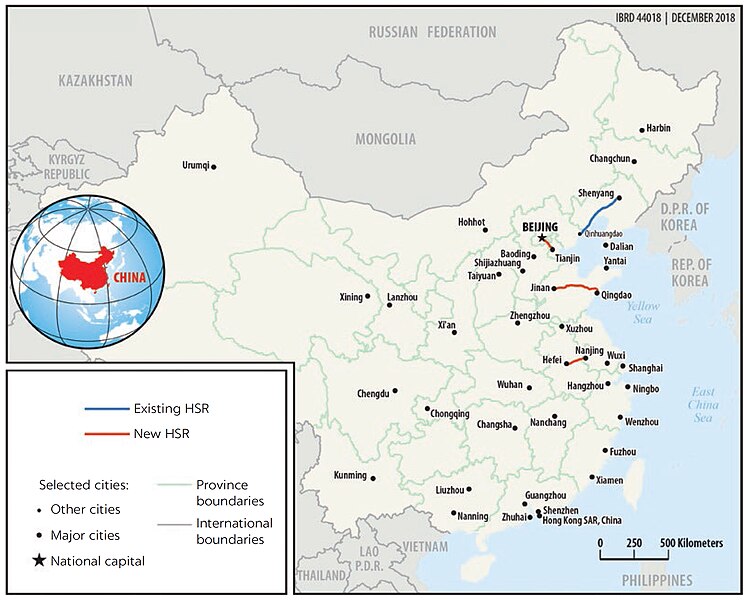
You might be right about the 300kmh+ builds but China will be expanding their HSR network, already the world's largest, in the next fifteen years.

Quote:
More high-speed rail arteries and feeder lines will connect China’s largest megacities and outlying regions in Beijing’s new drive to more than double the length of China’s high-speed railway network.

The network is already the world’s longest and the new aim is to hit the 70,000-kilometer mark within 15 years. More residents in far-flung cities and counties across inland provinces and border regions can expect to get onboard the expansion.

China National Railway Corporation unveiled the plans last week. Lines are designed to run deep into China’s far west to connect all cities with a population of at least half a million residents.

The new lines are in various stages of planning, land surveying and track laying and will add about 36,000 kilometers to China’s current high-speed network.
https://asiatimes.com/2020/08/china-sets-railway-building-spree-in-high-speed-motion/

HSR China 2008


HSR China 2018


Annual ridership has increased from 127M to 2.3B in that timeframe.

https://en.wikipedia.org/wiki/High-speed...ed%20rail%20(HSR),(120%E2%80%93220%20mph).
     
     
  #15074  
Old Posted Feb 19, 2021, 9:04 PM
Hybrid247 Hybrid247 is offline
Registered User
 
Join Date: Oct 2009
Posts: 1,320
Quote:
Originally Posted by hipster duck View Post
The benefits almost never justify the costs. You're basically building fully grade-separated metro-like rail system that's always on some kind of superstructure for hundreds of kilometers. We could build a rail line that tops out at 200 km/h for $4B or we could build a rail line that tops out at 300 km/h for $40B. That 45 minutes-1 hour of savings on a Toronto-Montreal isn't really worth it.
I understand your point, but that's highly debatable. In the age of global warming and growing carbon-neutral pursuits, you can't underestimate the costs associated with the negative externalities of travel. Perhaps in a purely financial sense -- relating to the net income of operations and the costs of implementing/operating the service -- the costs aren't justified. But when you start to think about a service that can directly compete with short-haul airline routes and replace a large proportion of carbon intensive trips with carbon-neutral ones, there are both major tangible and intangible cost savings.

That 45min-1hr difference might not seem like much in and of itself (still debatable), but it has the potential to greatly expand rail's modal share in regional travel. HFR will be better for existing rail travelers, but it will still be far off from competing with air travel, and it's also less likely to make a big dent in automobile travel.
     
     
  #15075  
Old Posted Feb 19, 2021, 11:40 PM
MalcolmTucker MalcolmTucker is offline
Registered User
 
Join Date: May 2007
Posts: 11,591
The carbon costs of air travel though are going to be disrupted too, like many of our transportation systems. Counting on HSR to be carbon advantageous in a CBA throughout a 30 year asset life is a bet I wouldn't make.
     
     
  #15076  
Old Posted Feb 20, 2021, 12:27 AM
someone123's Avatar
someone123 someone123 is online now
hähnchenbrüstfiletstüc
 
Join Date: Nov 2001
Location: Vancouver
Posts: 35,711
Quote:
Originally Posted by hipster duck View Post
We could build a rail line that tops out at 200 km/h for $4B or we could build a rail line that tops out at 300 km/h for $40B. That 45 minutes-1 hour of savings on a Toronto-Montreal isn't really worth it.
I dislike the "billions versus minutes" framing because it's actually a lot of time when you multiply the total trips by the lifetime of the infrastructure. Many rail lines have remained in operation for over 100 years.

If you pick some modest numbers like $10 value for saving 1 hour of trip, 5,000 trips per day, and 30 years of operation, that works out to around $500M. At $20 an hour, 50,000 trips a day and amortization period 50 years, it works out to $18B. The point is that when you do the multiplication, you can get big numbers. Easily numbers far beyond what is invested.

In general we don't invest enough in infrastructure, as judged by cost-benefit, and "sticker shock" has not kept up with inflation.

     
     
  #15077  
Old Posted Feb 20, 2021, 12:41 AM
wave46 wave46 is offline
Closed account
 
Join Date: Aug 2016
Posts: 3,875
Quote:
Originally Posted by someone123 View Post
I dislike the "billions versus minutes" framing because it's actually a lot of time when you multiply the total trips by the lifetime of the infrastructure. Many rail lines have remained in operation for over 100 years.

If you pick some modest numbers like $10 value for saving 1 hour of trip, 5,000 trips per day, and 30 years of operation, that works out to around $500M. At $20 an hour, 50,000 trips a day and amortization period 50 years, it works out to $18B. The point is that when you do the multiplication, you can get big numbers. Easily numbers far beyond what is invested.

In general we don't invest enough in infrastructure, as judged by cost-benefit, and "sticker shock" has not kept up with inflation.

Efficiency plays into it. It takes more energy to push a train at 300 km/h versus 200 km/h.

Also, you run the risk of 'perfect being the enemy of good'. VIA is a marginal operation at the best of times, but might get away with a $4b one-time splurge. At tens of billions for one project - which is close to what we've spent on transit in the past few decades in general - it won't even make it off the fantasy drawing board.
     
     
  #15078  
Old Posted Feb 20, 2021, 12:51 AM
someone123's Avatar
someone123 someone123 is online now
hähnchenbrüstfiletstüc
 
Join Date: Nov 2001
Location: Vancouver
Posts: 35,711
Quote:
Originally Posted by wave46 View Post
Also, you run the risk of 'perfect being the enemy of good'. VIA is a marginal operation at the best of times, but might get away with a $4b one-time splurge. At tens of billions for one project - which is close to what we've spent on transit in the past few decades in general - it won't even make it off the fantasy drawing board.
Sure. I was just making a narrow point about cost-benefit analysis and how it's plausible that fairly large capital outlays can be worth it for cutting seemingly comparatively small amounts of time per trip when you're talking about multi-decade infrastructure serving large cities.

There's the reality of what VIA can do given the status quo but that doesn't have much to do with the cost-benefit analysis (and really, if you can't do some abstract analysis on an amateur discussion forum where is the "fantasy drawing board"?). I would argue that if Canada has tons of low hanging fruit infrastructure projects that seem impossible to implement then we might have structural problems. Actually I think this is true of passenger rail in Canada and transportation infrastructure more generally. I don't think it can be brought into an optimal state by incrementally picking reasonable projects from the menu of the kinds of things VIA has implemented historically. Maybe one day we'll get an ambitious federal government that will change this.
     
     
  #15079  
Old Posted Feb 20, 2021, 2:20 AM
hipster duck's Avatar
hipster duck hipster duck is offline
Registered User
 
Join Date: Oct 2014
Location: Toronto
Posts: 4,848
Quote:
Originally Posted by someone123 View Post
I dislike the "billions versus minutes" framing because it's actually a lot of time when you multiply the total trips by the lifetime of the infrastructure. Many rail lines have remained in operation for over 100 years.

If you pick some modest numbers like $10 value for saving 1 hour of trip, 5,000 trips per day, and 30 years of operation, that works out to around $500M. At $20 an hour, 50,000 trips a day and amortization period 50 years, it works out to $18B. The point is that when you do the multiplication, you can get big numbers. Easily numbers far beyond what is invested.
That's true, but a HSR line between Toronto and Montreal would be the most expensive infrastructure project proposed in Canada (maybe ever? Some of the Ontario nuclear plants might be costlier in inflation-adjusted terms...) and there are many other projects that cost much less that deliver far more using those same metrics - mostly intracity public transit projects.

Like wave46 said, I fear the perfect being the enemy of the good, and it's taken us over 40 years for our pariah of a crown corporation to come up with a workable plan that's merely good.

Finally, I think a 600 km new-build HSR line to 300 km/h standards would be audacious for almost any country. Many of the famed European high speed rail lines were built incrementally over decades, with high speed trains switching over to using conventional track for much of their journeys. Our rail infrastructure is so far behind that we have to build the conventional passenger rail line from scratch, so we can't use that approach.
     
     
  #15080  
Old Posted Feb 20, 2021, 2:25 AM
swimmer_spe swimmer_spe is offline
BANNED
 
Join Date: Apr 2014
Posts: 10,743
Quote:
Originally Posted by hipster duck View Post
That's true, but a HSR line between Toronto and Montreal would be the most expensive infrastructure project proposed in Canada (maybe ever? Some of the Ontario nuclear plants might be costlier in inflation-adjusted terms...) and there are many other projects that cost much less that deliver far more using those same metrics - mostly intracity public transit projects.

Like wave46 said, I fear the perfect being the enemy of the good, and it's taken us over 40 years for our pariah of a crown corporation to come up with a workable plan that's merely good.

Finally, I think a 600 km new-build HSR line to 300 km/h standards would be audacious for almost any country. Many of the famed European high speed rail lines were built incrementally over decades, with high speed trains switching over to using conventional track for much of their journeys. Our rail infrastructure is so far behind that we have to build the conventional passenger rail line from scratch, so we can't use that approach
.
The issue in Canada is that the natural first line for HSR would be nothing less than connecting Toronto, Ottawa and Montreal. Unlike European countries, our major cities are not close.
     
     
This discussion thread continues

Use the page links to the lower-right to go to the next page for additional posts
 
 
Closed Thread

Go Back   SkyscraperPage Forum > Regional Sections > Canada
Forum Jump


Forum Jump


All times are GMT. The time now is 2:29 AM.

     
SkyscraperPage.com - Privacy Statement - Top

Powered by vBulletin® Version 3.8.7
Copyright ©2000 - 2026, vBulletin Solutions, Inc.