Quote:
Originally Posted by q12

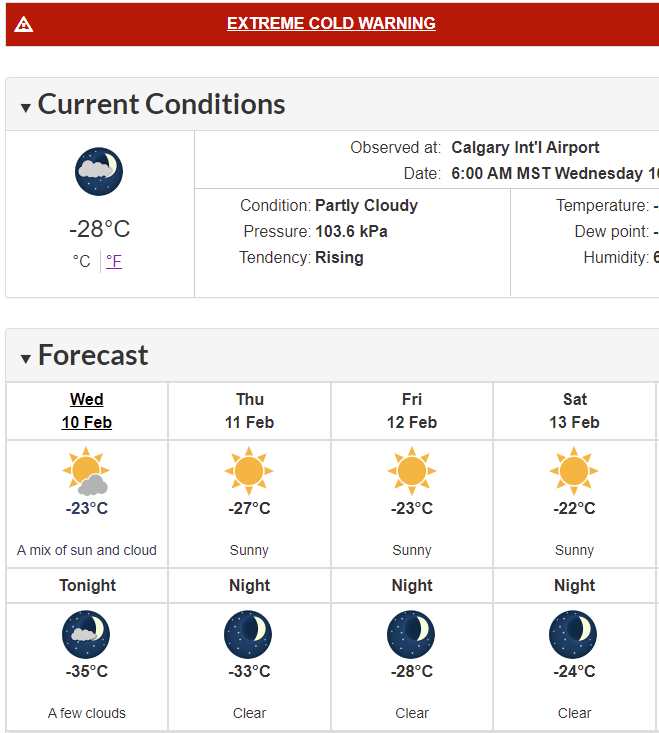
Bad time to make that argument. The next 4 days in Calgary are all you need to show me why I wouldn't tolerate living in Calgary.
|
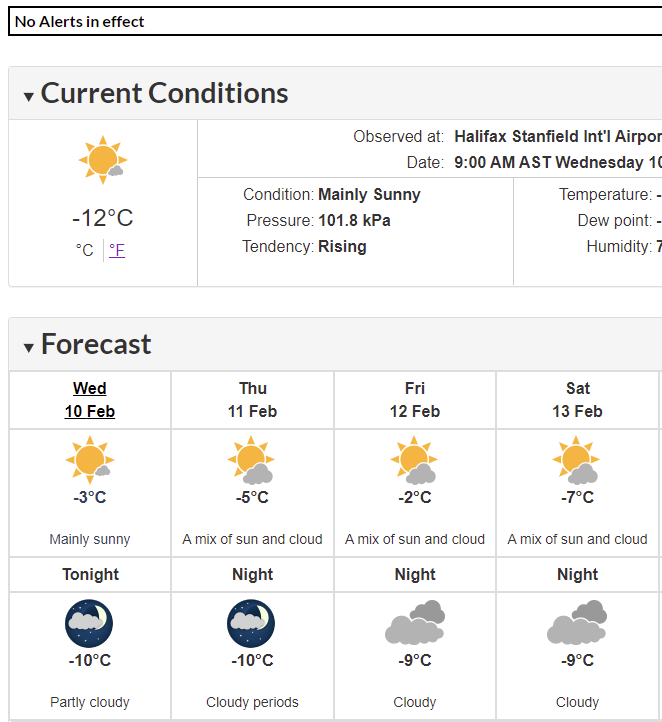
Yes, Calgary does see more extreme temperatures as I stated above, but average temperatures in winter are only about 2° colder. If you look a few days further on, the temps will recover to seasonal (around 0°) by early next week.
What I absolutely despise about Central Canadian and Maritime winters is actually the result of the milder temperatures. For example, Winnipeg's winter mean is -14.3° compared with -7.6° for Montreal. Because snow (which tends to be the heavy wet kind in the east, 140 cm in Montreal vs 59 cm for Winnipeg), slush, ice, rain (87 mm vs 4 mm for Winnipeg) and freezing rain are all such common occurrences, copious amounts of salt are used everywhere as roads are much more slippery at -2° than they are at -22° and it seldom drops below -18° (0°F) which means salt is effective all winter. The salt absolutely destroys vehicles, I would never buy a vehicle from the east, not to mention shoes and boots and gets everywhere, on your pant legs and even inside the house. Everything is dirty. Also despite their lower latitudes, all cities in southern Ontario and east have lesser amounts of sunshine than the southern prairies, example 278 hours for Toronto, compared with 348 for Winnipeg and 378 for Calgary. Montreal is just about at the same parallel (45th) as Minneapolis but MSP gets 449 hours of winter sunshine compared with 312 for YUL.
Personally, I think the winters everywhere in Canada — in varying ways. I've lived on the west coast and they were trying there too even if they feature gentle temperatures. The real problem with the prairie winter is that it is exceedingly LONG, often setting in by the middle of November and there are no guarantees that March will be a spring month either, so a bad year can feature winters that are five months long. I hate to say this, because it means a longer winter, but we desperately need some snow at least in the Red River Valley and the window is starting to close, just 28.5 mm of precip since November 1st, the normal for Nov through Feb is 80.2 mm, and 2020 was the driest year on record, none in the forecast, it's too cold for measurable precip.
At the moment the NWS suggests average temps for the back half of February and early March for Western and Atlantic Canada and below normal for Ontario and southwestern Quebec.





 Prev
Prev







 Linear Mode
