HomeDiagramsDatabaseMapsForum About
     

Go Back   SkyscraperPage Forum > Regional Sections > Canada > Ontario > Ottawa-Gatineau > General Discussion


Reply

 
Thread Tools Display Modes
     
     
  #401  
Old Posted Jul 14, 2020, 6:42 PM
Acajack's Avatar
Acajack Acajack is offline
Gros Méchant Loup
 
Join Date: Aug 2006
Location: SSP Graveyard
Posts: 72,949
I have done the park and ride thing from Montreal métro stations in Laval and Longueuil quite a few times over the years, and I've never gotten the impression that Gilles and Marie-France the white collar couple who live in Brossard or Laval would use that mode of transport if they're going to a show at Place des Arts or for dinner in the Vieux-Montréal.

I also don't think that suburban couples do that much in the GTA either.

Getting back to Montreal, those lines in Montreal towards the suburbs are fairly busy after dark, but they're mostly used by groups of young people (who don't drive or don't want to drink and drive), commuting workers, and maybe Gilles if he's going to a Habs game with the boys and wants to have a few beers and not worry about driving.

Couples and families who ride transit to and from the burbs during off-peak hours seem to be mostly people from outside the Montreal region, either from other parts of Quebec or further afield. Many probably don't want the hassle of navigating the city by car and looking for a place to park. Whereas if you're a "local" (even if that means Chambly or Mascouche) you know the city quite well and have a few tricks up your sleeve when it comes to finding a place to park, etc.
__________________
Gone... but never forgotten.
Reply With Quote
     
     
  #402  
Old Posted Jul 14, 2020, 8:27 PM
begratto's Avatar
begratto begratto is offline
Explorateur urbain
 
Join Date: Jun 2005
Location: Verdun > Montréal > Québec > Canada
Posts: 1,073
Quote:
Originally Posted by Acajack View Post
I have done the park and ride thing from Montreal métro stations in Laval and Longueuil quite a few times over the years, and I've never gotten the impression that Gilles and Marie-France the white collar couple who live in Brossard or Laval would use that mode of transport if they're going to a show at Place des Arts or for dinner in the Vieux-Montréal.

I also don't think that suburban couples do that much in the GTA either.

Getting back to Montreal, those lines in Montreal towards the suburbs are fairly busy after dark, but they're mostly used by groups of young people (who don't drive or don't want to drink and drive), commuting workers, and maybe Gilles if he's going to a Habs game with the boys and wants to have a few beers and not worry about driving.

Couples and families who ride transit to and from the burbs during off-peak hours seem to be mostly people from outside the Montreal region, either from other parts of Quebec or further afield. Many probably don't want the hassle of navigating the city by car and looking for a place to park. Whereas if you're a "local" (even if that means Chambly or Mascouche) you know the city quite well and have a few tricks up your sleeve when it comes to finding a place to park, etc.
I agree with most of this, but actually, I know quite a few people (adults) from the suburbs who do take the métro to get to the Place-des-Arts or the Bell Centre for a show, but they mostly come from Laval and the North Shore. They don't come (or very rarely) on the island to go out to bars and restaurants - they prefer restaurants with big parking lots in the suburbs.

People from the South Shore seem to drive more when they have to get downtown ; most likely because of the extra transfer needed from the yellow line to get anywhere - they need to transfer at Berri-UQAM to get on the Green or Orange lines, and the frequency isn't that good in the evening on the Yellow line. People who commute from Laval don't have this problem as the Orange line takes them directly downtown.

I suspect things will change for South Shore people when the REM opens, as it will directly link the southern part of the South Shore to the city centre ; more people will likely take transit to get downtown, even in the evenings, when you know that the most you can wait for a train is 5 minutes.

For anyone who lives in the city and close to a métro station, however, it is very common to use transit to go to shows, bars, restaurants, etc. I do it with mrs begratto, most of my "urban" friends do it too. It's just more convenent ; just as quick as driving, but without the hassle of trying to find a parking spot. More fun too : you can have a few more drinks and don't have to worry about driving after.

So convenience is the key, imo.

__________________
Venit ad oppidum!

Last edited by begratto; Jul 15, 2020 at 4:46 AM.
Reply With Quote
     
     
  #403  
Old Posted Jul 14, 2020, 9:31 PM
lrt's friend lrt's friend is offline
Registered User
 
Join Date: Dec 2006
Posts: 12,811
Quote:
Originally Posted by begratto View Post
I agree with most of this, but actually, I know quite a few people (adults) who do take the métro to get to the Place-des-Arts or the Bell Centre for a show, but they mostly come from Laval and the North Shore. They don't come (or very rarely) on the island to go out to bars and restaurants - they prefer restaurants with big parking lots in the suburbs.

People from the South Shore seem to drive more when they have to get downtown ; most likely because of the extra transfer needed from the yellow line to get anywhere - they need to transfer at Berri-UQAM to get on the Green or Orange lines, and the frequency isn't that good in the evening on the Yellow line. People who commute from Laval don't have this problem as the Orange line takes them directly downtown.

I suspect things will change for South Shore people when the REM opens, as it will directly link the southern part of the South Shore to the city centre ; more people will likely take transit to get downtown, even in the evenings, when you know that the most you can wait for a train is 5 minutes.

For anyone who lives in the city and close to a métro station, however, it is very common to use transit to go to shows, bars, restaurants, etc. I do it with mrs begratto, most of my "urban" friends do it too. It's just more convenent ; just as quick as driving, but without the hassle of trying to find a parking spot. More fun too : you can have a few more drinks and don't have to worry about driving after.

So convenience is the key, imo.

Thank you and you make my exact point.

I would go downtown more often if transit worked better, even with buses.

In my lifetime, when growing up in Ottawa suburbs involved doing a lot of business downtown, has shifted to doing almost everything in the suburbs. Why? A shift of business out of downtown and a tremendous increase in congestion with no improved alternatives over many years.
Reply With Quote
     
     
  #404  
Old Posted Jul 14, 2020, 9:38 PM
lrt's friend lrt's friend is offline
Registered User
 
Join Date: Dec 2006
Posts: 12,811
Quote:
Define "significant". A bump? Sure. I buy that. "Significant"? Debatable. Especially for the downtown core as a whole. Mostly, what you'd see is a diversion of riders from the Trillium Line and existing bus services. And whether that is worth $250-400M/km in construction costs is very much debatable.
This is the argument made on every new transit project. It was made before the Trillium Line first opened in 2001. A Bank Street subway would serve a new set of customers from those using the Trillium Line.

Quote:
Also, Montreal doesn't build subway lines out to subdivisions either. Neither do all those great cities people want to compare to.
But Montreal is building REM, a light metro to do exactly that, and Vancouver is planning to extend their skytrain further into the suburbs to Langley.

In big cities, subways are generally too expensive to build deep into the suburbs but accomplish the same thing with all day commuter lines. Look at New York with long distance commuter lines that take you right to Manhattan. Toronto is working on the same thing, with GO RER and San Francisco has extended BART all the way to San Jose and improving Caltrain at the same time.

The best cities all around the world are improving transit connections to their city centres.

Yes, definitely we need more people living downtown, but there are limits to those who want to live downtown. It has taken years to build Claridge Icon. It will take years to build all those other proposed towers.

Last edited by lrt's friend; Jul 14, 2020 at 9:50 PM.
Reply With Quote
     
     
  #405  
Old Posted Jul 15, 2020, 3:20 AM
Urbanarchit Urbanarchit is offline
Registered User
 
Join Date: Jun 2013
Location: Ottawa
Posts: 1,927
Some of what I would like to see for Ottawa has already been said. I'll summarize my points still.
  • Stop car-dependent suburban sprawl. If new communities are to be built, they should be constructed following the small town manner built around transit stations. There would be a transit station planned or built with a corridor connecting these stations. The town centre would be built around it following a similar grid as older towns to allow for retail, small offices and apartments with a public park. Buildings need not be taller than 4-6 floors for the town, but radiating out from the town would be the residential part with houses, on a grid. Buildings would be built side-by-side in the town centre and permit rowhouses. There should be a town hall located prominently and with a distinctive design to announce it as town hall; it could/ should also include a public/ civic space for other functions. The transit station would connect to other towns like it and eventually into Ottawa. This would require a comprehensive transit plan and setting aside land for the transit that can't be developed. And the province/ federal government would need to ban the way we build suburbs now and come up with an urban-inspired town development. Eventually, if Ottawa grows large these towns can see more development and might even grow into conurbations. I look to Tokyo with how transit is set up and how it grew over the centuries. Additionally, these sounds would likely be more affordable for many who can't afford to live in Ottawa anymore. It would create a town that people could walk around easily and even not need a car, and for those who want to come into the city for work and recreation they could come by transit without a car.

  • Make Ottawa a better city for pedestrians. We prioritize cars too much in Ottawa, allocating a lot more space to their travel and storage at the expense of other people, and many in Ottawa have an antiquated idea of how people live in the city (*cough* Glebe BIA *cough*). Streets should be redesigned, especially in central or urban areas.

  • Make Ottawa better for cyclists. Bike is a great mode of transportation for a number of reasons, and while most do it 6 months of the year, a growing number are adopting winter cycling. We need to expand dramatically our cycling infrastructure to build proper SBL that takes people where they need and want to go, and for it all to interconnect (which is something Ottawa does poorly). We need a comprehensive plan and actively add to the network every year.

  • Improve public transit. It's not reliable and become too expensive that many people have given up using it regularly. We should be planning for streetcars/ LRT and rail that's separate from grade to ensure rapid movement around the city. It should also target neighbourhoods people work and live in (ie. not ignoring Overbrook, Vanier, New Edinburgh). I'm embarrassed when friends visit the city. I also think we should be building commuter rail out to smaller towns and suburbs to ensure ease of movement in the region. Aylmer made a great map a few years ago for an idea.


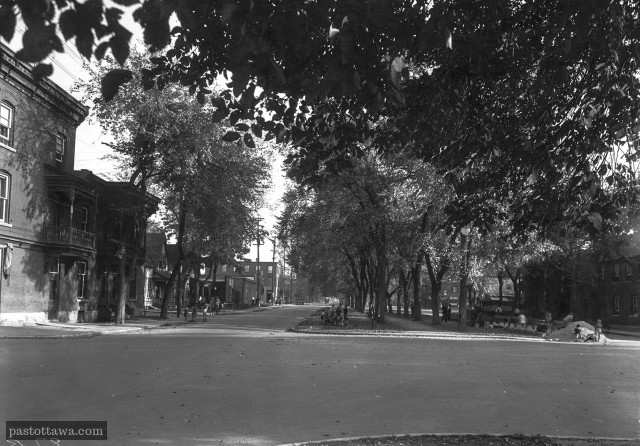
  • Improve our greenspaces. I think parts of Centretown could benefit from a good park, but we should rethink some of the greenspace we have now to make them more comfortable and attractive, and not turn part of them into a parking lot with vegetation to look at instead of grass to lay and play on (looking at the Museum of Nature for what they did). For how hot Ottawa gets, I think we could benefit from more shade on our streets, and one way is to reconsider roads as hardscaping for cars. Hydro poles should be buried, and roadspace should be limited to cars downtown to provide room for greenscaping. King Edward Avenue looked much more pleasant when it had a park in the middle, and Metcalfe looked more inviting with the trees along it. I look at some recent photos with a closed Bank Street, and it seems desert-like and unpleasant with how grey it looks, like in this photo.


  • Improved street life. Be in closing streets in the summer to cars regularly as Montreal does, and improving how streets are designed so it's more inviting for people to visit and stay without having to spend money at businesses. As well, making parklettes or terasses like in Montreal for patios for businesses.

  • Make housing in Ottawa more affordable.

  • Preserve, restore, and value our heritage buildings. We have many beautiful older buildings that are looking worse for wear and are even falling apart (Somerset House, Macgee House). What makes parts of Ottawa appealing and full of character, and what people visiting can see to appreciate, are our older buildings.

  • Better architecture. Ottawa 🞵🞵🞵🞵🞵 for architecture and new background buildings. Like how this building turned out is terrible, especially as there was a good opportunity to do something better at this site. Not to mention the drab and depressing buildings coming out of RLA...

  • Not surface parking lots and demolish multi-storey parking lots, like those in the Byward Market

  • Improve the Byward Market by pedestrianizing more streets, turn York Street into a large linear instead of a wide street with parking. Demolish the above-ground parking garages.

Last edited by Urbanarchit; Jul 15, 2020 at 3:31 AM.
Reply With Quote
     
     
  #406  
Old Posted Jul 15, 2020, 11:39 AM
Truenorth00 Truenorth00 is offline
Registered User
 
Join Date: May 2017
Posts: 29,115
Quote:
Originally Posted by lrt's friend View Post
This is the argument made on every new transit project. It was made before the Trillium Line first opened in 2001. A Bank Street subway would serve a new set of customers from those using the Trillium Line.
The question isn't whether some new customers are served. That is why I said "mostly". The question is whether it will "substantially" increase foot traffic in the downtown core. Zero evidence of that.


Quote:
Originally Posted by lrt's friend View Post
But Montreal is building REM, a light metro to do exactly that, and Vancouver is planning to extend their skytrain further into the suburbs to Langley.
Their population levels are past the point where buses can feed the core network. That's why. They certainly didn't build what you're proposing when they had a million people. And they still aren't building very expensive tunneled transit out to the burbs. Why do you think that is?

Quote:
Originally Posted by lrt's friend View Post
In big cities, subways are generally too expensive to build deep into the suburbs but accomplish the same thing with all day commuter lines. Look at New York with long distance commuter lines that take you right to Manhattan. Toronto is working on the same thing, with GO RER and San Francisco has extended BART all the way to San Jose and improving Caltrain at the same time.
You seem to love to compare to large metros. The GTA is 7 million. The New York Tri State Area is 23 million. The Bay Area is about 8 million. Montreal is 4 million. Vancouver is 2.5 million. Ottawa will not be close to any of these cities in population in my lifetime. Let alone yours. And certainly not large enough to warrant massive commuter or suburban rail services.

Quote:
Originally Posted by lrt's friend View Post
The best cities all around the world are improving transit connections to their city centres.
As a way to reduce congestion. Not with the idea of getting foot traffic in their core.

Quote:
Originally Posted by lrt's friend View Post
Yes, definitely we need more people living downtown, but there are limits to those who want to live downtown.
Then there are limits to how "lively" downtown will be. Simple as that. The great cities of the world that you love to compare to are all "great" specifically because of their urban centres and all the residents they have. Paris isn't great because the RER brings in workers from the banlieue. It's great because there's vibrancy in the core from the tons of people who live there.

Quote:
Originally Posted by lrt's friend View Post
It has taken years to build Claridge Icon. It will take years to build all those other proposed towers.
And yet those will all be complete before any of the transit plans you suggest, because there's no way the feds and Queen Park can fund fantasies like this in every city in our lifetimes. And Ottawa has zero ability to fund this on its own.
Reply With Quote
     
     
  #407  
Old Posted Jul 15, 2020, 11:55 AM
Truenorth00 Truenorth00 is offline
Registered User
 
Join Date: May 2017
Posts: 29,115
Let's get to the core of the problem. Most "lively" cities aren't suburban in nature. And that's what Ottawa is. You don't have to hit the Greenbelt either. You start getting suburban built forms 3-5 km from the Hill. This is a city full of 7-3 or 8-4 public servants that value quick transit to their desk jobs in the core, and a quick ride home. The suburban nature of Ottawa is a virtue to these people not a flaw. They aren't going to be spending more time in the core just because there's a faster way to get there. They don't have a reason to.

A more "lively" city is not some mystery. Everywhere else it's more residents and highly pedestrianized areas. The clue comes in the word. "Lively" implies full of life. You aren't going to get that from commuters. They have no ownership of neighbourhoods they don't live in. Nor will their numbers ever be enough to sustain businesses in these areas.

I love this video for the basic principles it lays out on how to make a more attractive (and lively) city:

• Video Link
Reply With Quote
     
     
  #408  
Old Posted Jul 15, 2020, 12:41 PM
Acajack's Avatar
Acajack Acajack is offline
Gros Méchant Loup
 
Join Date: Aug 2006
Location: SSP Graveyard
Posts: 72,949
Quote:
Originally Posted by begratto View Post

For anyone who lives in the city and close to a métro station, however, it is very common to use transit to go to shows, bars, restaurants, etc. I do it with mrs begratto, most of my "urban" friends do it too. It's just more convenent ; just as quick as driving, but without the hassle of trying to find a parking spot. More fun too : you can have a few more drinks and don't have to worry about driving after.

So convenience is the key, imo.
Yes, I was going to mention that on the island in inner parts of Montreal, people who would be like Monsieur et Madame Begratto do use transit for evening outings!
__________________
Gone... but never forgotten.
Reply With Quote
     
     
  #409  
Old Posted Jul 15, 2020, 2:20 PM
Truenorth00 Truenorth00 is offline
Registered User
 
Join Date: May 2017
Posts: 29,115
The idea that billions should be spent on transit lines to enable suburbanites to drink at bars downtown is dumber than a bag of hammers. But unsurprising for an Ottawa forum. Like I said, all suburbanites at heart.

Can't have great cities when you have an active dislike of urbanity.
Reply With Quote
     
     
  #410  
Old Posted Jul 15, 2020, 4:10 PM
OTownandDown OTownandDown is offline
Registered User
 
Join Date: Jul 2018
Posts: 1,637
I went walking last night, from the Supreme Court, to the West of west block to the 'Gazebo' in front of Centre Block, then down the new stairs to the river, along the river, over the canal, up to the bridge lookout, past Terrace on the Hill, across Major's Hill, and down Sparks, ending up at 3 Brewers.

To say the City is having a renaissance isn't enough. All areas were filled with people promenading, dressed up, having a great evening. Terrace on the Hill with its twinkly lights and large outdoor seating area was a definite highlight.

Restaurants have brought in high-design hipster food trucks to act as bars at Sparks Street, allowing for a busy nightlife even on a Tuesday.

The Chateau Laurier Terrace is about 3 acres in size, and dressed spectacularly.

I highly recommend 'getting out' on a nice summer evening. A HUGE turnaround from the 28-days-later zombie nightmare of two months ago in the same region.
Reply With Quote
     
     
  #411  
Old Posted Jul 15, 2020, 7:34 PM
phil235's Avatar
phil235 phil235 is offline
Registered User
 
Join Date: Sep 2006
Location: Ottawa
Posts: 4,615
Quote:
Originally Posted by OTownandDown View Post
I went walking last night, from the Supreme Court, to the West of west block to the 'Gazebo' in front of Centre Block, then down the new stairs to the river, along the river, over the canal, up to the bridge lookout, past Terrace on the Hill, across Major's Hill, and down Sparks, ending up at 3 Brewers.

To say the City is having a renaissance isn't enough. All areas were filled with people promenading, dressed up, having a great evening. Terrace on the Hill with its twinkly lights and large outdoor seating area was a definite highlight.

Restaurants have brought in high-design hipster food trucks to act as bars at Sparks Street, allowing for a busy nightlife even on a Tuesday.

The Chateau Laurier Terrace is about 3 acres in size, and dressed spectacularly.

I highly recommend 'getting out' on a nice summer evening. A HUGE turnaround from the 28-days-later zombie nightmare of two months ago in the same region.
That's awesome. I was on Somerset and the canal in the past week and had the same impression. Somerset was closed and full of life. QED was full of people. It really is a different feel in a good way.
Reply With Quote
     
     
  #412  
Old Posted Jul 15, 2020, 7:51 PM
lrt's friend lrt's friend is offline
Registered User
 
Join Date: Dec 2006
Posts: 12,811
I did say that improved transit connections could be by bus.

I am of no illusion that we cannot afford grandiose rail plans in the forseeable future, however, the status quo could be improved.

I have been to enough cities in my life to see which cities have the most lively city centres. Universally, they are supported by very good public transit. There are other factors, of course, and they can be discussed, but let's keep this discussion positive.
Reply With Quote
     
     
  #413  
Old Posted Jul 15, 2020, 10:15 PM
Truenorth00 Truenorth00 is offline
Registered User
 
Join Date: May 2017
Posts: 29,115
Quote:
Originally Posted by lrt's friend View Post
I have been to enough cities in my life to see which cities have the most lively city centres. Universally, they are supported by very good public transit.
And universally they have been great cities before they built transit to their suburbs....

Quote:
Originally Posted by lrt's friend View Post
There are other factors, of course, and they can be discussed, but let's keep this discussion positive.
Hard to take these discussions seriously when they always devolve to, "XYZ problem can't be fixed without ABC transit line to UVW suburb in Ottawa."

At this point I'm starting to think some here believe a Bank Street subway can cure cancer.
Reply With Quote
     
     
  #414  
Old Posted Jul 16, 2020, 5:22 AM
YOWetal YOWetal is offline
Registered User
 
Join Date: Oct 2006
Posts: 7,742
Quote:
Originally Posted by Truenorth00 View Post
Let's get to the core of the problem. Most "lively" cities aren't suburban in nature. And that's what Ottawa is. You don't have to hit the Greenbelt either. You start getting suburban built forms 3-5 km from the Hill. This is a city full of 7-3 or 8-4 public servants that value quick transit to their desk jobs in the core, and a quick ride home. The suburban nature of Ottawa is a virtue to these people not a flaw. They aren't going to be spending more time in the core just because there's a faster way to get there. They don't have a reason to.

A more "lively" city is not some mystery. Everywhere else it's more residents and highly pedestrianized areas. The clue comes in the word. "Lively" implies full of life. You aren't going to get that from commuters. They have no ownership of neighbourhoods they don't live in. Nor will their numbers ever be enough to sustain businesses in these areas.

I love this video for the basic principles it lays out on how to make a more attractive (and lively) city:
Yes I think you are right it fairly obvious. It's the kind of city I would prefer but it's important to understand likely those that prefer this lifestyle are a minority. People in Ottawa enjoy unrivaled personal space. Back yards. Rooms for every child. Separate office etc. If anything Covid has increased this preference. To a European 1500 SQ FT of living space is mostly unattainable.
Reply With Quote
     
     
  #415  
Old Posted Jul 16, 2020, 12:02 PM
Truenorth00 Truenorth00 is offline
Registered User
 
Join Date: May 2017
Posts: 29,115
Quote:
Originally Posted by YOWetal View Post
Yes I think you are right it fairly obvious. It's the kind of city I would prefer but it's important to understand likely those that prefer this lifestyle are a minority.
Yet all these suburbanites wonder why Ottawa is "boring" or not as "lively". There's not one example of mostly suburban cities being truly "lively".

Ottawa has improved a ton in the last decade. But most of that is attributable not to suburbanites using better transit (which was mostly under construction), but to the influx of downtown residents actually patronizing and growing the amenities in the core.
Reply With Quote
     
     
  #416  
Old Posted Jul 16, 2020, 12:27 PM
wave46 wave46 is offline
Closed account
 
Join Date: Aug 2016
Posts: 3,875
Quote:
Originally Posted by Truenorth00 View Post
Yet all these suburbanites wonder why Ottawa is "boring" or not as "lively". There's not one example of mostly suburban cities being truly "lively".

Ottawa has improved a ton in the last decade. But most of that is attributable not to suburbanites using better transit (which was mostly under construction), but to the influx of downtown residents actually patronizing and growing the amenities in the core.
I'd say Las Vegas is quite suburban, but quite lively. Admittedly, that's the exception to the rule, and it is not the locals.

Ottawa - for its population and location in the world - is quite lively.

But yes, I suspect your thesis is correct. The more suburban nature of the city, the less lively it is. Which is kind of the point of the suburbs, I guess. Quiet, peaceful and solitude from others.
Reply With Quote
     
     
  #417  
Old Posted Jul 16, 2020, 2:13 PM
Truenorth00 Truenorth00 is offline
Registered User
 
Join Date: May 2017
Posts: 29,115
Quote:
Originally Posted by wave46 View Post
I'd say Las Vegas is quite suburban, but quite lively. Admittedly, that's the exception to the rule, and it is not the locals.
Exactly. It's not the locals. It's the fact that their city is a giant adult fun theme park.

Quote:
Originally Posted by wave46 View Post
Ottawa - for its population and location in the world - is quite lively.
Very much debatable. I think metros of 1.3 million in Europe or Asia would be far more lively. For North America? Sure.

Quote:
Originally Posted by wave46 View Post
But yes, I suspect your thesis is correct. The more suburban nature of the city, the less lively it is. Which is kind of the point of the suburbs, I guess. Quiet, peaceful and solitude from others.
I just wish people would admit that. Quite a few want to insist it's not the suburban nature of the city but the lack of transit or not enough bike paths or some such other excuse.
Reply With Quote
     
     
  #418  
Old Posted Jul 16, 2020, 2:30 PM
YOWetal YOWetal is offline
Registered User
 
Join Date: Oct 2006
Posts: 7,742
Quote:
Originally Posted by Truenorth00 View Post
Yet all these suburbanites wonder why Ottawa is "boring" or not as "lively". There's not one example of mostly suburban cities being truly "lively".

Ottawa has improved a ton in the last decade. But most of that is attributable not to suburbanites using better transit (which was mostly under construction), but to the influx of downtown residents actually patronizing and growing the amenities in the core.
I think this is true for the most part but...

A lot of vibrant US cities are suburban. Austin stands out and is of similar size. Transit has nothing to do with this though.

It's impossible to compare but Berlin is actually fairly suburban. S Bahn whizzes people far distance and allows multiple areas of interest. Of course it's division subsequent rapid gentrification and resulting cheap housing and commercial rent makes it unique.

My point is not transit is a panacea but I think we could have vibrant life and be suburban. We are always going to be suburban. Too much cheap land and too much desire for a house with a yard.

Agree downtown residents are key.
Reply With Quote
     
     
  #419  
Old Posted Jul 16, 2020, 2:47 PM
wave46 wave46 is offline
Closed account
 
Join Date: Aug 2016
Posts: 3,875
Quote:
Originally Posted by Truenorth00 View Post
Exactly. It's not the locals. It's the fact that their city is a giant adult fun theme park.
Oh yeah. I just had to stir the 🞵🞵🞵🞵 pot and find an exception.

Quote:
Very much debatable. I think metros of 1.3 million in Europe or Asia would be far more lively. For North America? Sure.
That's harder to say, simply because there's not many isolated metros of only a million or so people in Europe or especially Asia. Is Birmingham that much more lively than Ottawa? Or Toulouse? I'd say on average, you'd be right, but I don't think the difference is as stark as it is made to be because Ottawa does fairly well. I suspect it would come down to a city-to-city comparison.

Ottawa is kind of in a twilight zone. It's good for North America as it's the capital of a major country and does have some decent urban fabric. It does badly compared to much larger cities and cities that are the respective centres of their country in addition to being the capital (say, Helsinki).

I mean, if this was a comparison of Oklahoma City to Toulouse, sure, no comparison.
Reply With Quote
     
     
  #420  
Old Posted Jul 16, 2020, 2:52 PM
wave46 wave46 is offline
Closed account
 
Join Date: Aug 2016
Posts: 3,875
Quote:
Originally Posted by YOWetal View Post
I think this is true for the most part but...

A lot of vibrant US cities are suburban. Austin stands out and is of similar size. Transit has nothing to do with this though.

It's impossible to compare but Berlin is actually fairly suburban. S Bahn whizzes people far distance and allows multiple areas of interest. Of course it's division subsequent rapid gentrification and resulting cheap housing and commercial rent makes it unique.

My point is not transit is a panacea but I think we could have vibrant life and be suburban. We are always going to be suburban. Too much cheap land and too much desire for a house with a yard.

Agree downtown residents are key.
I wouldn't go with 'a lot'.

Austin and Portland are the exception, not the rule. The average metro area of a million to two million people in North America is closer to Kansas City than Ottawa.
Reply With Quote
     
     
This discussion thread continues

Use the page links to the lower-right to go to the next page for additional posts
 
 
Reply

Go Back   SkyscraperPage Forum > Regional Sections > Canada > Ontario > Ottawa-Gatineau > General Discussion
Forum Jump


Forum Jump


All times are GMT. The time now is 12:59 PM.


Powered by vBulletin® Version 3.8.7
Copyright ©2000 - 2026, vBulletin Solutions, Inc.