Quote:
Originally Posted by rbt

Underground diesel human driven BRT will vary significantly in cost due to local building code (ventilation, lane shoulder requirements), depth (station, ventilation, and emergency exit costs), and number of stations.
That said, SR-99 in Seattle (opened 2019) is the most recent North American comparable and cost about $1B (2019 USD $'s) per km. The highway has more lanes in the tunnel than you might need (2 lanes per direction) but does not have any station stops, maintenance facilities, or rolling stock.
For LRT in Canada I think Eglinton is the more expensive with capital costs of about $480M (2015 CAD $'s) per km for the tunnel portion. That includes stations, most of the maintenance facility, and rolling stock.
Underground BRT gets considerably cheaper if it's electric (see Boston Silver line) and an automated guideway (Montreal metro?).
|
Quote:
Originally Posted by J.OT13
Here are Ottawa's 2008 cost estimates for different types of tunnels, page 92:
http://ottawa.ca/calendar/ottawa/citycou...ntown%20Transit%20Final%2014%20April.pdf
A BRT tunnel was estimated at $780 million vs $555 million for LRT. A shared bus-rail tunnel would have been far more expensive at $1.032 billion.
The 2.5 kilometre tunnel ended up costing around $500 million. The lower cost was achieved thanks to a shorter and shallower route, along with shorter platforms. Initially, the tunnel was supposed to be around 3.2 kilometres, with 4 stations and 180 meter platforms bored 40 meters underground vs 3 stations, 120 meter platforms and 15-26 meter deep mined tunnel.
The original proposed tunnel would probably have been $1 billion+. The City and its consultants have a bad track record with cost estimates.
https://ottawacitizen.com/news/local-new...a-2-5-km-rail-tunnel-under-its-downtown/ |
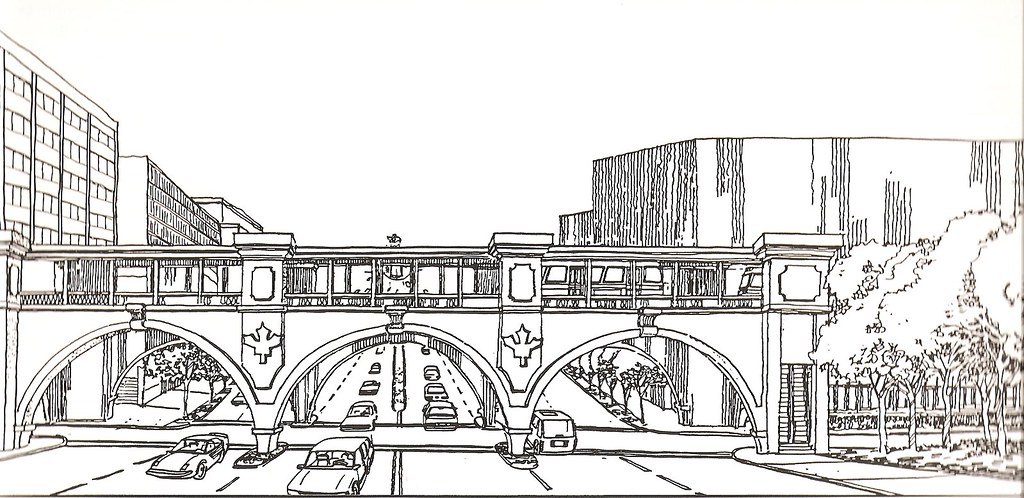
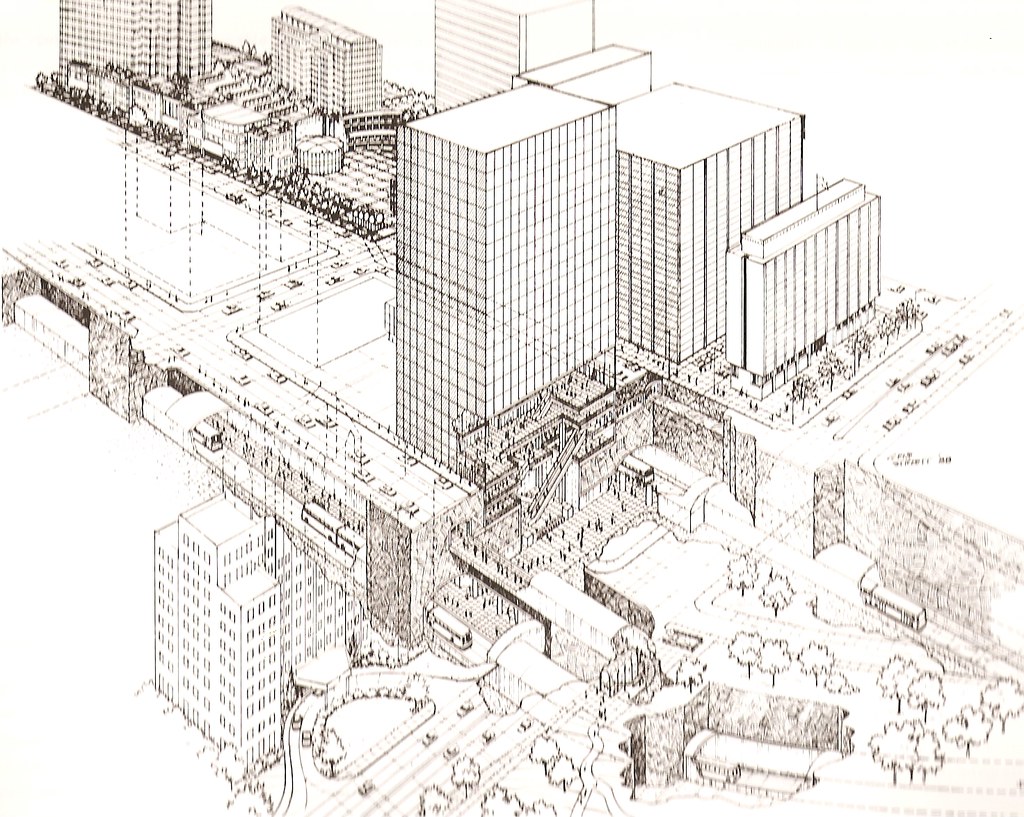
It does look like the short Central Transitway tunnel would have been cheaper. However, I don't think that it would be a good idea. If they had built the tunnel when this was built in the 80s/90s, then, maybe it would have been worth it. The fact that it can run 15 trains an hour and still match the former service, and that is not the max capacity of the line, that tells me that doing what they have done is good, in the long run.
Quote:
Originally Posted by scryer
Winnipeg's issue is traffic congestion. Combine that with a city full of drivers and a piss-poor "big" BRT release for Phase 1 and you have yourself an extremely hard sell to the tax-payers on the Bus Only lanes in downtown. The extension into downtown will need to be a proper grade-separated extension otherwise the city is going to kill rapid transit if it ends up continues constructing mediocre connections.
Winnipeg is not converting to LRT anytime soon.
Winnipeg's issue is lack of ridership. We will see what happens after cities open up again since the phase 2 BRT will have a working population to gauge ridership.
|
Oh, the ironies. Ottawa had about the same population with their Transitway opened as Winnipeg had then theirs opened.
The downtown section has ever been grade separated in Ottawa. Almost 40 years later, it finally is. It has been gradually expanded to what it is now, and is now in a process of being converted to LRT.
Will it take 40 years for Winnipeg to get an LRT? Likely not. However, that does not mean that theirs is a failure. The last mile is what everyone talks about. If Winnipeg can follow the footprints of Ottawa and build bus routes that fix the last mile that then dump onto their RT, it actually might be better. It is a better idea of a parking garage. The car should be at home, as if it is driven to a parking garage, many will just keep going.





 Prev
Prev


 may you find love,





 Linear Mode
