HomeDiagramsDatabaseMapsForum About
     

Go Back   SkyscraperPage Forum > Regional Sections > Canada > Ontario > Ottawa-Gatineau > Transportation


View Poll Results: What should be given priority for LRT Stage 3?
Rural Rail 3 2.29%
Barrhaven 14 10.69%
South East 0 0%
Kanata 32 24.43%
Gatineau 19 14.50%
Orleans 0 0%
Bank St Subway 37 28.24%
Montreal Road 23 17.56%
Other 3 2.29%
Voters: 131. You may not vote on this poll

Reply

 
Thread Tools Display Modes
     
     
  #341  
Old Posted Jan 20, 2020, 6:45 PM
OTSkyline OTSkyline is offline
Registered User
 
Join Date: Jun 2012
Posts: 2,789
I think one of the big reasons for Sprawl is due to the price discrepancy between a 2 or 3 bed unit condo in central parts of the city with 2 or 3 bed SFH or townhomes on the edge. If 20 people buy single family homes in Orleans which requires building, paving and the maintenance of a new street, extending sewers and power and water, etc.. then those costs should be covered or in the costs of those units (and passed onto buyers).

I think builders are not being held responsible for all these extra costs of sprawl (perhaps because the city is not imposing them or something) and they simply buy cheap(er) land and buyers get cheap prices. Someone living in the core would cost the city much less in terms of infrastructure and maintenance.. this should be reflected in real estate prices. But instead of selling $350,000 2-bed condos in central Ottawa and $550,000 2 or 3 bed homes in Orleans, the exact opposite is happening.. We want to encourage densification but we prevent many from doing so given the current financial model.

People can "want" what they want but there are ways the city can play with measures to discourage different behaviours.
Reply With Quote
     
     
  #342  
Old Posted Jan 20, 2020, 6:51 PM
roger1818's Avatar
roger1818 roger1818 is offline
Registered User
 
Join Date: Feb 2016
Location: Stittsville, ON
Posts: 6,610
Quote:
Originally Posted by Truenorth00 View Post
VIA operates several services that are exclusively intra-provincial already. There's absolutely nothing from a policy or legislative perspective preventing them from act as the contracted operator for Ontario Northland services.
There is nothing preventing them from doing it, but are they the best ones to do it? I would like to see VIA get out of the regional rail business and focus on intercity rail.

Quote:
Specifically, I am thinking of the Amtrak model where states contract Amtrak to run services and provide the funding to do so. Have a look at Amtrak's services in California. Trains and buses run by Amtrak and subsidized by the State of California.
Amtrak's model is a bit different. Back when Amtrak was formed, they were given priority access to the freight railroad's track in perpetuity. No other operator is given that privilege, so there is an advantage for the states to contract Amtrak if they want the trains to run on freight rail lines.

When Trudeau Sr. formed VIA, he failed give them that privilege, so it is much less of an advantage for the provinces to contract VIA.
Reply With Quote
     
     
  #343  
Old Posted Jan 20, 2020, 8:45 PM
Uhuniau Uhuniau is offline
Registered User
 
Join Date: Jan 2010
Posts: 8,838
Quote:
Originally Posted by roger1818 View Post
Maybe a better way of saying it would be, "Builders build what people want, if it is financially viable." Sure some people want urban living, but is it a viable proposition to provide affordable urban living to the masses? Even if they could make money doing it, they likely make more money building suburban sprawl. Builders will build what makes them the most money.
Fun fact: the cost of the house has pretty well nothing to do with the layout of the street "grid" (not that Ottawa suburbs are ever built to grids), nor with the presence of a walkable main street to provide a new suburban residential district with shops, services, and public facilities.

We can satisfy the demand for popular, affordable, and economically viable houses and housing developments, without those new residential districts constituting "sprawl" as it's become over the past eight (!) decades. We choose not to do that via stupid public policy choices.

How many more decades are we going to keep building to the 1950s ideal?
__________________
___
Enjoy my taxes, Orleans (and Kanata?).
Reply With Quote
     
     
  #344  
Old Posted Jan 20, 2020, 9:48 PM
roger1818's Avatar
roger1818 roger1818 is offline
Registered User
 
Join Date: Feb 2016
Location: Stittsville, ON
Posts: 6,610
Quote:
Originally Posted by Uhuniau View Post
Fun fact: the cost of the house has pretty well nothing to do with the layout of the street "grid" (not that Ottawa suburbs are ever built to grids),
The lack of street grids is not a developer choice but a foolish requirement by the city (and the former suburban cities) in an failed attempt to reduce vehicle speed. Cars travel just as fast on curved streets but you can't see them coming until it is too late. Yet we still do the same thing over and over again and expect a different result.

Quote:
nor with the presence of a walkable main street to provide a new suburban residential district with shops, services, and public facilities.
It is a chicken and egg thing. those shops, services, and public facilities aren't viable until the population of the surrounding community reaches a critical mass, but a community isn't very walkable without them.

I am also not convinced that building more, smaller shops, services, and public facilities costs the developer the same amount as building fewer, larger ones. Developers want to maximize their ROI and that means minimizing costs and maximizing revenue.

Quote:
We can satisfy the demand for popular, affordable, and economically viable houses and housing developments, without those new residential districts constituting "sprawl" as it's become over the past eight (!) decades. We choose not to do that via stupid public policy choices.
That's the thing. It is policy choices by the city.
Reply With Quote
     
     
  #345  
Old Posted Jan 21, 2020, 2:32 PM
Catenary Catenary is offline
Registered User
 
Join Date: Dec 2012
Posts: 1,386
Quote:
Originally Posted by roger1818 View Post
The lack of street grids is not a developer choice but a foolish requirement by the city (and the former suburban cities) in an failed attempt to reduce vehicle speed. Cars travel just as fast on curved streets but you can't see them coming until it is too late. Yet we still do the same thing over and over again and expect a different result.
Part of the lack of street grids is that they take up a lot of space. Compare a neighborhood like the Glebe with SFHs and a solid street grid with a new build subdivision. Density in the subdivision is likely higher, as the street grid takes up lots of space and reduces density and therefore ROI. The "subdivision style" street layout is designed to maximize the amount of space available for development, and minimize unnecessary roads.

Of course, even though the density may be higher, the walkability of the suburban neighborhood is much worse because of the lack of connectivity.
Reply With Quote
     
     
  #346  
Old Posted Jan 21, 2020, 4:20 PM
Uhuniau Uhuniau is offline
Registered User
 
Join Date: Jan 2010
Posts: 8,838
Quote:
Originally Posted by roger1818 View Post
The lack of street grids is not a developer choice but a foolish requirement by the city (and the former suburban cities) in an failed attempt to reduce vehicle speed. Cars travel just as fast on curved streets but you can't see them coming until it is too late. Yet we still do the same thing over and over again and expect a different result.
Nope. It's mostly a developer preference: they can fit more houses onto the same land by eliminating "superfluous" street space.

The city could require better street layouts. They choose not to, and have been for the past eight decades. And cars travel more slowly on the streets of the Glebe (a grid) than they do in any car-centred suburban residential area I've ever been in, so the "traffic calming" angle is bunk as well.

Quote:
It is a chicken and egg thing. those shops, services, and public facilities aren't viable until the population of the surrounding community reaches a critical mass, but a community isn't very walkable without them.
Which is all the more reason why we need to start building new suburbs in ways that can adapt over time, rather than the ones that will perpetually frozen in time that we've been building since the 1940s.
__________________
___
Enjoy my taxes, Orleans (and Kanata?).
Reply With Quote
     
     
  #347  
Old Posted Jan 21, 2020, 4:21 PM
Uhuniau Uhuniau is offline
Registered User
 
Join Date: Jan 2010
Posts: 8,838
Quote:
Originally Posted by Catenary View Post
Part of the lack of street grids is that they take up a lot of space. Compare a neighborhood like the Glebe with SFHs and a solid street grid with a new build subdivision. Density in the subdivision is likely higher, as the street grid takes up lots of space and reduces density and therefore ROI. The "subdivision style" street layout is designed to maximize the amount of space available for development, and minimize unnecessary roads.

Of course, even though the density may be higher, the walkability of the suburban neighborhood is much worse because of the lack of connectivity.
The word "unnecessary" does a lot of work here, though I'm not sure who its master is.
__________________
___
Enjoy my taxes, Orleans (and Kanata?).
Reply With Quote
     
     
  #348  
Old Posted Jan 21, 2020, 5:58 PM
phil235's Avatar
phil235 phil235 is offline
Registered User
 
Join Date: Sep 2006
Location: Ottawa
Posts: 4,415
Quote:
Originally Posted by Catenary View Post
Part of the lack of street grids is that they take up a lot of space. Compare a neighborhood like the Glebe with SFHs and a solid street grid with a new build subdivision. Density in the subdivision is likely higher, as the street grid takes up lots of space and reduces density and therefore ROI. The "subdivision style" street layout is designed to maximize the amount of space available for development, and minimize unnecessary roads.

Of course, even though the density may be higher, the walkability of the suburban neighborhood is much worse because of the lack of connectivity.
Not sure where figures are available, but I doubt that the density is higher in a new build subdivision. Hard to compare, as the Glebe is full of multi-unit buildings, but I expect that between smaller average lot sizes, narrower streets and more apartments, you can get more in a grid.
Reply With Quote
     
     
  #349  
Old Posted Jan 21, 2020, 5:58 PM
swimmer_spe swimmer_spe is offline
BANNED
 
Join Date: Apr 2014
Posts: 10,743
Quote:
Originally Posted by Uhuniau View Post
Nope. It's mostly a developer preference: they can fit more houses onto the same land by eliminating "superfluous" street space.

The city could require better street layouts. They choose not to, and have been for the past eight decades. And cars travel more slowly on the streets of the Glebe (a grid) than they do in any car-centred suburban residential area I've ever been in, so the "traffic calming" angle is bunk as well.


Which is all the more reason why we need to start building new suburbs in ways that can adapt over time, rather than the ones that will perpetually frozen in time that we've been building since the 1940s.
What you describe is a North American problem. One we all are learning does not work and must be fixed.
Reply With Quote
     
     
  #350  
Old Posted Jan 21, 2020, 6:03 PM
Uhuniau Uhuniau is offline
Registered User
 
Join Date: Jan 2010
Posts: 8,838
Quote:
Originally Posted by swimmer_spe View Post
What you describe is a North American problem. One we all are learning does not work and must be fixed.
We learned it doesn't work by the 1970s; we've done nothing to fix it, and are doing nothing to fix it.
__________________
___
Enjoy my taxes, Orleans (and Kanata?).
Reply With Quote
     
     
  #351  
Old Posted Jan 21, 2020, 6:05 PM
roger1818's Avatar
roger1818 roger1818 is offline
Registered User
 
Join Date: Feb 2016
Location: Stittsville, ON
Posts: 6,610
Quote:
Originally Posted by Uhuniau View Post
Fun fact: the cost of the house has pretty well nothing to do with the layout of the street "grid" (not that Ottawa suburbs are ever built to grids), nor with the presence of a walkable main street to provide a new suburban residential district with shops, services, and public facilities.
Quote:
Originally Posted by Uhuniau View Post
Nope. It's mostly a developer preference: they can fit more houses onto the same land by eliminating "superfluous" street space.
Your first statement, while true, is a bit misleading as the second one explains that the developer will make less money building houses on a walkable grid.
Reply With Quote
     
     
  #352  
Old Posted Jan 21, 2020, 6:12 PM
roger1818's Avatar
roger1818 roger1818 is offline
Registered User
 
Join Date: Feb 2016
Location: Stittsville, ON
Posts: 6,610
Quote:
Originally Posted by phil235 View Post
Not sure where figures are available, but I doubt that the density is higher in a new build subdivision. Hard to compare, as the Glebe is full of multi-unit buildings, but I expect that between smaller average lot sizes, narrower streets and more apartments, you can get more in a grid.
Smaller lot sizes and narrower streets are not features that are confined to grids. To do an apples to apples comparison, you have to compare with the same width of street and the same lot size.
Reply With Quote
     
     
  #353  
Old Posted Jan 22, 2020, 7:21 PM
Catenary Catenary is offline
Registered User
 
Join Date: Dec 2012
Posts: 1,386
Quote:
Originally Posted by Uhuniau View Post
The word "unnecessary" does a lot of work here, though I'm not sure who its master is.
Unnecessary only in the sense that they don't have lots fronting onto them.

Quote:
Originally Posted by phil235 View Post
Not sure where figures are available, but I doubt that the density is higher in a new build subdivision. Hard to compare, as the Glebe is full of multi-unit buildings, but I expect that between smaller average lot sizes, narrower streets and more apartments, you can get more in a grid.
Higher in an apples to apples comparison where lots are the same size and have the same SFHs on them.
Reply With Quote
     
     
  #354  
Old Posted Jan 22, 2020, 8:53 PM
OTownandDown OTownandDown is offline
Registered User
 
Join Date: Jul 2018
Posts: 1,593
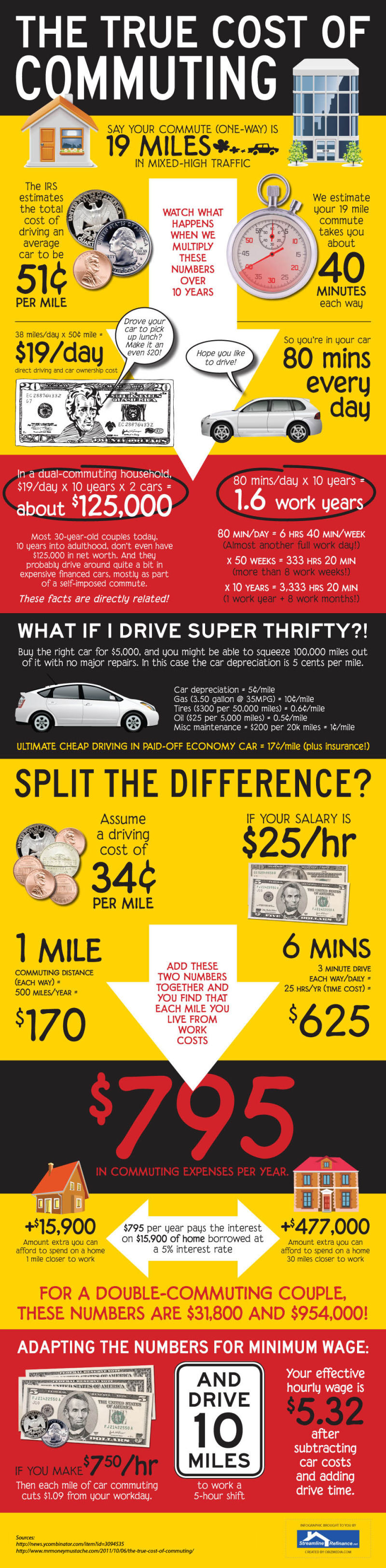
I apologize in advance for this gigantic poster thing, but it's amazing.

This is also the reason I wouldn't be caught dead buying a house in our far-flung suburbs.

https://lifehacker.com/the-true-cost...-price-5855550
Reply With Quote
     
     
  #355  
Old Posted Jan 22, 2020, 9:40 PM
swimmer_spe swimmer_spe is offline
BANNED
 
Join Date: Apr 2014
Posts: 10,743
We have gone off the rails from the future stages of LRT.

Lets hear suggestions the LRT should go that is currently not served and won't be in phase 2.
Reply With Quote
     
     
  #356  
Old Posted Jan 31, 2020, 2:25 AM
rocketphish's Avatar
rocketphish rocketphish is online now
Planet Ottawa and beyond
 
Join Date: Feb 2009
Location: Greater Ottawa
Posts: 14,206
The real casualty of Ottawa's transit fiasco may be LRT Stage 3
What government in its right mind would fork out billions for LRT 3 when the city can’t get the Confederation Line running, LRT 2 is not even built, and no one knows how it will turn out?

Mohammed Adam, Ottawa Citizen
Updated: January 30, 2020


Quite recently, some out-of-town friends on their way home thought it might be fun to hop on the Confederation Line to Tremblay station and catch their VIA train. We were in a location where it would have been quite easy to catch the train, but, surprisingly, their hosts objected. Given the Confederation Line’s recent problems, they weren’t prepared to trust it to get the visitors to Tremblay. One said the LRT might break down somewhere, leaving the visitors stuck and likely missing their ride home. They drove, instead.

I considered it a ridiculous overreaction, but last weekend’s train delays that stranded commuters changed my mind. It could actually have happened to our visitor friends.

There’s little doubt the Confederation Line’s never-ending problems have made the city look incompetent. And coupled with last week’s damaging revelations about the LRT 2 contract to SNC-Lavalin, the loss of confidence in the Confederation Line and the city could have serious consequences for the future of LRT Stage 3.

Just think about this: If the city can’t operate a 12-kilometre line, how is it going to run the entire 44-km LRT Stage 2? The problems facing riders now would pale in comparison. SNC-Lavalin, operating as part of the Rideau Transit Group, built the Confederation Line, which is also charged with its maintenance. With all the breakdowns and train delays the city is dealing with now, we know what a great job they have done. So, how confident can anyone be that the Trillium Line, being built by the same SNC-Lavalin (under the name TransitNEXT), would do any better?

If you are a provincial or federal government watching this mess, what would be the motivation to sign on to the next phase of LRT? What government in its right mind would fork out billions for LRT 3 when the city can’t get the Confederation Line running, LRT 2 is not even built, and no one knows how it will turn out? Remember the city’s own technical evaluation committee termed the SNC-Lavalin bid “a poor technical submission,” and unanimously agreed the company should be disqualified. If you are a government juggling competing demands for scarce resources and you have to make choices, how would you justify giving money to a city that awarded a massive contract to a company its own evaluation committee deemed unqualified for the job? What confidence would you have that they would get things right?

When the Confederation Line’s problems began only months into the launch, some, like me, chalked them off to teething problems that usually accompany projects of this magnitude. Many big and complex projects – whether it is the installation of new technology in a business, opening a new hospital or launching a new subway – do have kinks at the beginning that need to be sorted out. While pre-launch testing is critical, it takes real-time service to determine total system efficiency. As a result, some of us were prepared to cut OC Transpo some slack. But the alarming rate at which different parts of the system are breaking down, and the city’s inability to fix them, changes everything.

Commuters in Ottawa who depend on LRT but can’t get to their destinations are bearing the brunt of the Confederation Line debacle – but all things considered, the biggest casualty might be LRT 3. If this continues, we might not have LRT 3 for the foreseeable future.

Not that it matters because no one is taking responsibility for this fiasco. City manager Steve Kanellakos stands by his LRT managers, even daring councillors to fire him, as the top man. For his part, Mayor Jim Watson stands firmly behind a procurement system that handed a huge contract to a company that the city’s own technical experts considered unqualified for the job.

We all learn from mistakes, but what’s there to learn if nothing, apparently, went wrong with this process? That means when it comes to LRT 3, the city will follow the same playbook. Which is why the LRT future doesn’t look so bright right now.

Mohammed Adam is an Ottawa writer.

https://ottawacitizen.com/opinion/co...be-lrt-stage-3
Reply With Quote
     
     
  #357  
Old Posted Jan 31, 2020, 3:50 AM
Truenorth00 Truenorth00 is offline
Registered User
 
Join Date: May 2017
Posts: 28,371
Mohammed Adam has made a professional career out of being a skeptical drama queen. This article comes to mind:

https://ottawacitizen.com/opinion/co...ight-have-been

I'm starting to think lrt's friend works for the Ottawa Citizen!

The idea that the current difficulties will be so persistent that they forestall future investment by higher level governments is some hysterical BS.

Yes, the issues need to be addressed. Yes, they take time. No, they won't derail a phase that's probably over a decade away.

The best part for Adam? Since there's no Stage 3 actually in the books, if they don't announce anything by the end of Stage 2, he gets to claim vindication. It's nonsense. Stage 3 was always over a decade away because nobody can really afford to build that and the city isn't interested in contributing to it.
Reply With Quote
     
     
  #358  
Old Posted Jan 31, 2020, 4:23 AM
swimmer_spe swimmer_spe is offline
BANNED
 
Join Date: Apr 2014
Posts: 10,743
There will always be the naysayers that are going to scream that the sky is falling.

I predict that by the time Stage 2 is set to open the growing pains with Stage 1 will be resolved and the city will have learned from it.
Reply With Quote
     
     
  #359  
Old Posted Jan 31, 2020, 3:05 PM
lrt's friend lrt's friend is offline
Registered User
 
Join Date: Dec 2006
Posts: 12,605
Quote:
Originally Posted by swimmer_spe View Post
There will always be the naysayers that are going to scream that the sky is falling.

I predict that by the time Stage 2 is set to open the growing pains with Stage 1 will be resolved and the city will have learned from it.
I think that is the great hope that Stage 2 won't be as traumatic and problematic.

The bigger risk for Stage 3 is financing. We are expecting the upper levels of government to pay for it in its entirety. Look what happened with Hamilton LRT when the city had no financial stake in getting it built.
Reply With Quote
     
     
  #360  
Old Posted Jan 31, 2020, 3:58 PM
Truenorth00 Truenorth00 is offline
Registered User
 
Join Date: May 2017
Posts: 28,371
Quote:
Originally Posted by lrt's friend View Post
I think that is the great hope that Stage 2 won't be as traumatic and problematic.

The bigger risk for Stage 3 is financing. We are expecting the upper levels of government to pay for it in its entirety. Look what happened with Hamilton LRT when the city had no financial stake in getting it built.
And look at Toronto where the province is paying 100% of several of their much more expensive transit projects.

We all know why Hamilton got railroaded. Just look the party affiliations for MPPs from there. Now compare the MPPs that would benefit from Stage 3.
Reply With Quote
     
     
This discussion thread continues

Use the page links to the lower-right to go to the next page for additional posts
 
 
Reply

Go Back   SkyscraperPage Forum > Regional Sections > Canada > Ontario > Ottawa-Gatineau > Transportation
Forum Jump


Forum Jump


All times are GMT. The time now is 10:49 PM.

     
SkyscraperPage.com - Privacy Statement - Top

Powered by vBulletin® Version 3.8.7
Copyright ©2000 - 2026, vBulletin Solutions, Inc.