Quote:
Originally Posted by logan5

I swear I'm not trying to be a dick, but by "vertical circulation cores", do you mean stairs?
|
That's a totally fair question. A vertical circulation core is the fire-poof concrete structure that contains a fire escape stairwell and runs continuously to the ground floor (and safety). A vertical circulation core may also contain one or more elevators but there would still be fire-proof separation from the fire escape stairwell.
Depending on the size and design of the building, there could be multiple vertical circulation cores since fire code and building codes require there be a maximum distance to a fire escape vertical circulation core, so a long slab-like building is likely to have two vertical circulation cores, one of which would include the elevators and a fire escape and the other likely to just be a fire escape. Furthermore, the vertical circulation core may, or may not, be part of the structural design of the building, meaning that it is carrying structural loads.
For a low-rise wood frame building, the concrete vertical circulation cores are typically built prior to timber construction. It's my impression that the timber structure is self-supporting and does not rely on the vertical circulation core(s), though it would still be tied into it to improve lateral stability since the concrete core is far more rigid than timber.
For hybrid "tall-wood" mass timber towers like the recent Brock Commons at UBC, the concrete vertical circulation cores were integral to the structure of the building. The mass timber floors were self-supporting but relied on the cores for lateral stability. For non-hybrid mass timber buildings, the wood structure is completely self-supporting and provides its own lateral stability with the tie-in to the vertical circulation cores only providing additional (non-essential?) lateral stability.
For concrete buildings, the vertical circulation cores are integral to the structure of the building. While they are typically formed and poured a storey or two in advance of the floors and columns, they are essential to the structure's vertical and lateral loads.
For steel buildings, the vertical circulation cores are typically built prior to structural steel construction, either to their full height or well in advance of progress of steel construction. The steel structure is self-supporting and provides some lateral stability, but it must be tied into the core(s) for increased stability, particularly for high-rise buildings.
Hope that helps. If I've made any errors, I'd appreciate them being pointed out.
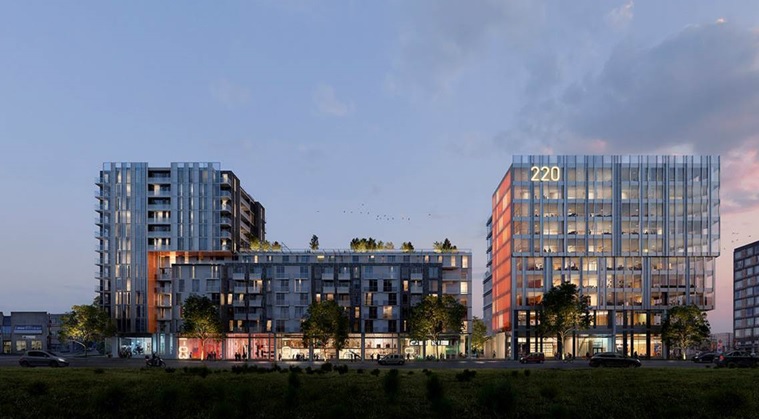
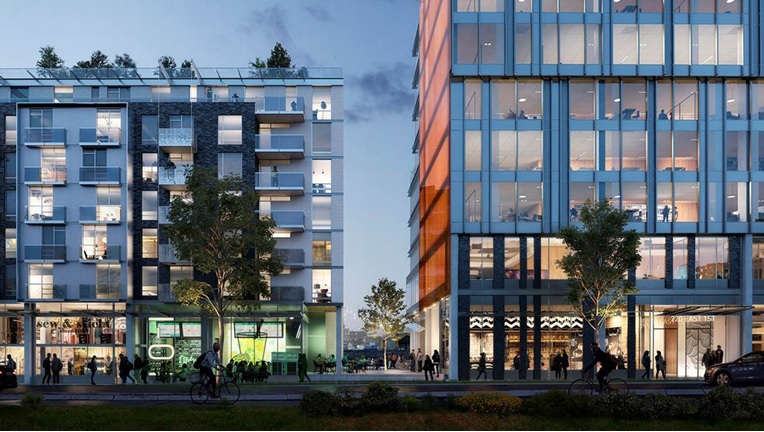
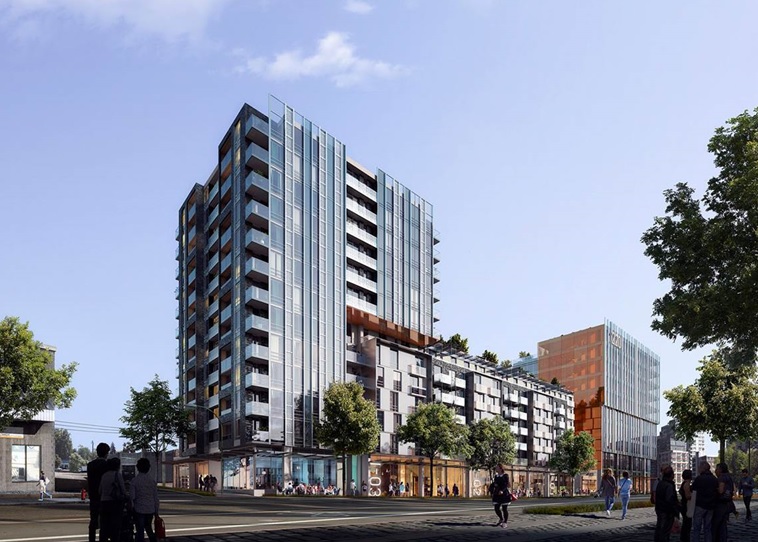
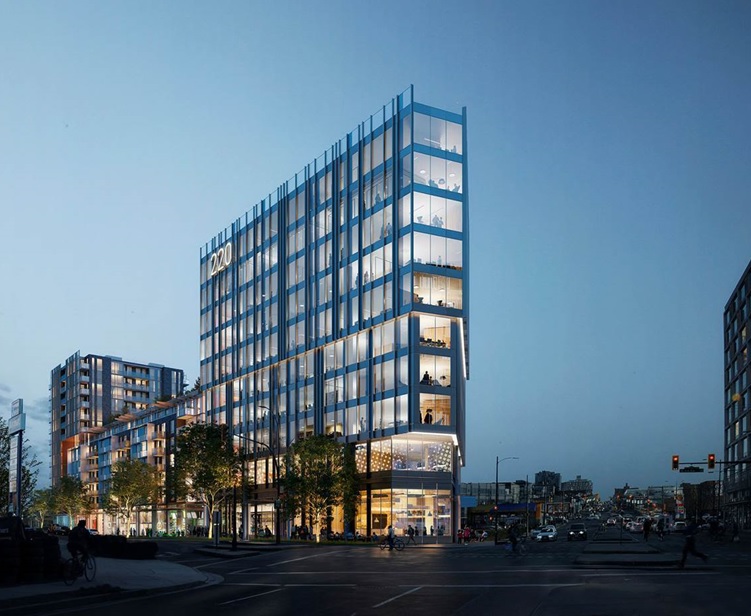
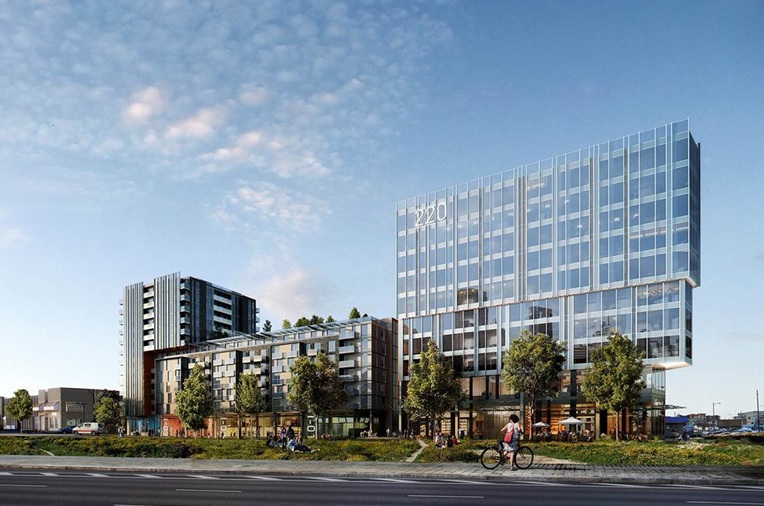
That 220 East 1st proposal looks great. I am looking forward to reviewing that DP once it's up on the City's website. I reviewed with interest the recent rezoning proposal for 560 Raymur Ave and wrote a letter of support for that precedent setting project.
[REQUEST]
I'm in the market, so to speak, for interesting precedent of mixed-use commercial-industrial/residential-industrial/academic-industrial/heck, even public amenity-industrial projects.
As forum members come across future examples of mixed-use industrial projects, would you be so kind as to send links to me by direct message? I would be most appreciative.





 Prev
Prev





 Significant step IMO (suggest reading urbanyr link)
 1717 Lorne







 Linear Mode
