HomeDiagramsDatabaseMapsForum About
     

Go Back   SkyscraperPage Forum > Discussion Forums > City Discussions


Reply

 
Thread Tools Display Modes
     
     
  #161  
Old Posted Oct 23, 2018, 7:03 PM
Urbanguy's Avatar
Urbanguy Urbanguy is offline
Go Beavs! Go Niners!
 
Join Date: Dec 2001
Location: Portland | Honolulu
Posts: 6,195
Quote:
Originally Posted by Jonesy55 View Post
Romania has pretty much the lowest wages of any EU country so there's a big incentive to move elsewhere when there are no barriers to doing that (my neighbours are Romanian). You see much fewer Bulgarians though even though the work situation there is similar I think. Of course Romania has a larger population but I don't know if that is the entire explanation.
^A lot of Bulgarians have moved to countries like Spain (for economic reasons) and Turkey (probably ethnic Turks returning).

@McBane, I did post statistics for Japan probably a few pages back. The foreign population is not very large relative to the country's overall population but there is an interesting mix (beyond sources nearby) from Brazil, Peru, Bolivia to even Mexico and Nigeria.

South Korea is coming up too.

As for Israel the data is so outdated and so far have been difficult to find city/metro specific statistics, mainly the country as a whole. It is one of the countries that I know has a diverse population in terms of countries of origin but so limited in release of data.
Reply With Quote
     
     
  #162  
Old Posted Oct 24, 2018, 3:11 AM
Urbanguy's Avatar
Urbanguy Urbanguy is offline
Go Beavs! Go Niners!
 
Join Date: Dec 2001
Location: Portland | Honolulu
Posts: 6,195
...and now we travel to Panama!

..first, a little history about Panama by: latinamericacollection.com

"Pre-Columbian Period
Panama, like many Latin American countries had a rich Pre-Columbian Period. Discovered artifacts have been dated back over 11,000 years while evidence shows that a more civilized culture existed around 2500-1700BCE. Such evidence includes some of the earliest pottery ever recovered in the area. Though pottery remained a significant cultural aspect of this civilization, it also became known for its impressive burial sites around the years 500-900CE. Prior to the arrival of the Spanish, the Panama region had been settled by many different peoples. Population estimates were once said to have reached two million though this number has recently been reduced to only 200,000 inhabitants.

Colonial Period
Marked by the Spanish arrival in 1501, Panama quickly became an important commercial route due to its tiny isthmus being all that separated the seas. It has been documented that during this period, gold and other commodities were brought from South America, hauled along the isthmus, and loaded onto Spanish ships. The trek quickly became known for the many deaths that resulted during each haul mostly due to disease.

Panama would remain part of the Spanish empire for 300 years until 1821 when the nationalism spawned by this colonial period began to take effect. During that period of 300 years, Panama proved to be the spot of most strategic and economic importance to Spain as the majority of all gold entering Spain had been first transported across the isthmus of Panama. However, the mid to late 1700s marked a change in the importance of Panama to the Spanish. As Spain's power in Europe began to recede, advances in transport also allowed for the transport of goods around Cape Horn, South America. This route also became the preferred manner because of the isthmus' vulnerability to pirates and escaped slaves during transport.

Independence
Due to the arrival of the printing press in 1820, many stories were spread through the population about freedom, liberty, and the effects of the French Revolution in hopes of sparking the country's inhabitants to fight for their own independence. This sparked a great deal of tension between the two most significant populations, one in Azuero fighting for their freedom and another in Veraguas loyal to the Spanish crown.

Finally in November of 1821, a decision was made by the inhabitants of Azuero to declare their independence from the crown. This was seen as treason by those of Veraguas and was not met with much excitement from Panama City as their plans to follow through with a claim of independence were not yet solidified. The heaviest fear of the Azueros was the retaliation by the Spanish crown's Colonel José de Fábriga, a staunch loyalist. However, the influence on those in the capital city fighting for Independence was overlooked and turned out to be much heavier than anticipated. This group effectively turned Fábriga into an independence supporter and successfully gained support from the significant groups within the town. He convened a meeting and officially declared Panama independent and a part of the Republic of Colombia.

By 1831, Panama felt that the chain of events occurring as part of the Republic of Columbia was not aligned with what was originally anticipated. After a number of attempts at finding a better option Panama and Columbia alone joined together, leaving the other countries and formed the Republic of New Granada. This alliance lasted for 70 years.

United States Intervention
In the 1840s, the United Sates grew interested in creating railroads and canals through Central America that would one day prove economically prosperous. In 1846, New Granada signed the Bidlack Mallarino Treaty which not only granted the U.S. rights to build railroads across the isthmus but also the use of American military to intervene against revolts in the area. Through the years, the troops were used to curb separatist uprisings which led to resentment against the American troops. These uprisings caused a great deal of instability in the nation and led to a new Republic of Columbia in 1886.

After the French failure to construct a canal through Panama, the U.S. President Theodore Roosevelt convinced congress to take on the challenge. The U.S. presented their plans of a U.S. controlled canal though Bogotá did not like the idea especially considering the controversy created by the American military presence. Instead of changing his terms, Roosevelt decided to support the Panamanian separatist movement and pushed for Panama's independence. In 1903, Panama celebrated its separation from Columbia, though it was not considered a form of independence as Panamanians never considered themselves Colombians to begin with. A treaty was signed giving the U.S. sovereign rights to a portion of land 10 miles by 50 miles, and the U.S. would then go on to build a canal and fortify it against any attacks. The canal was completed in 1914.

Through the 1900s, unrest continued regarding the presence of U.S. troops in Panama which led to riots and Panamanian deaths. Finally, in 1977 a treaty was signed that would lead to the transfer of power of the canal and the surrounding military bases into Panamanian control by the year 1999. This occurred during a period of the regime rule of Omar Torrijos, which lasted until 1981 when he was killed in a mysterious plane crash.

At this point a new regime was in full control, led my Manuel Noriega until 1989 when a public election led to the placement of Guillermo Endara. The election was claimed by Noriega to have been controlled by the United States' intervention. For that reason, Noriega refused to give up power which led to the deployment of thousands of U.S. troops to the region. After the death of an American marine who was involved in affairs outside of U.S. jurisdiction, a full U.S. invasion was commenced. This led to the placement of Endara and the imprisonment of Noriega, who is currently serving a drug trafficking sentence. The canal and surrounding military bases were turned over to Panamanian control on December 31, 1999 as originally promised. Since the 1989 conflict, Panama has experienced free elections and a constitutional democracy."


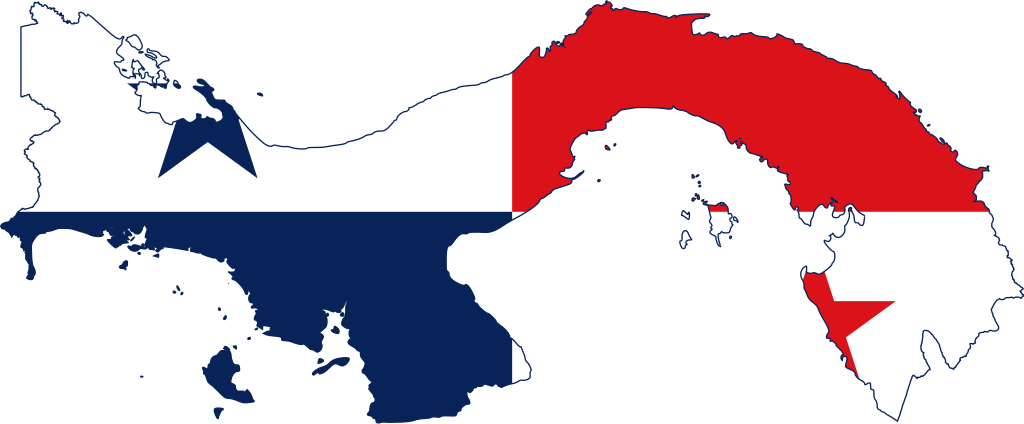
Image Source: wikimedia.org

Top 40 Non-Panama countries or places of birth

Panamá 2010

1 Colombia 41,911
2 China, People's Republic of 13,910
3 United States of America 10,652
4 Nicaragua 9,798
5 Venezuela, Bolivarian Republic of 7,497
6 Dominican Republic (República Dominicana) 6,141
7 Costa Rica 5,888
8 México (Estados Unidos Mexicanos) 3,665
9 India (Bhārat) 3,400
10 Perú 3,256

11 Spain (España) 2,809
12 El Salvador 2,448
13 Cuba 2,144
14 Ecuador 2,028
15 Argentine Republic (Argentina) 1,935
16 United Kingdom 1,531
17 Brasil 1,519
18 Chile 1,375
19 Canada 1,372
20 Guatemala 1,217

21 Philippines (Pilipinas), Republic of the 1,214
22 Honduras 1,140
23 Italy (Italia) 999
24 Israel (Yisra'el) 845
25 Germany (Deutschland) 808
26 Russian Federation (Russia) 756
27 France 736
28 Uruguay, Eastern Republic of 577
29 Puerto Rico 547
30 Jamaica 529

31 Haiti 411
32 Lebanese Republic (Lebanon) 400
33 Ukraine 382
34 Netherlands (Nederland) 367
35 Bolivia, Plurinational State of 344
36 Korea, Republic of (South) 305
37 Japan 283
38 Switzerland (Swiss Confederation) 278
39 Taiwan 248
40 Greece (Hellenic Republic) 247

Total Foreign-born: 140,236
Total Population: 3,405,813
Source: INE (Panama), Census 2010

*For me, the most interesting statistics are seeing the growing number of immigrants from China and India to Panama.

...and now we travel to the capital and the largest city in Panama!


Image Source: wikimedia.org

Top 40 Non-Panama countries or places of birth

Panama City, Panamá 2010

1 Colombia 31,779
2 China, People's Republic of 9,533
3 Nicaragua 8,371
4 United States of America 7,592
5 Venezuela, Bolivarian Republic of 7,079
6 Dominican Republic (República Dominicana) 5,372
7 México (Estados Unidos Mexicanos) 2,969
8 Perú 2,940
9 Costa Rica 2,867
10 India (Bhārat) 2,489

11 Spain (España) 2,282
12 El Salvador 1,895
13 Cuba 1,872
14 Ecuador 1,743
15 Argentine Republic (Argentina) 1,670
16 United Kingdom 1,346
17 Brasil 1,276
18 Chile 1,169
19 Guatemala 1,058
20 Canada 830

21 Honduras 829
22 Philippines (Pilipinas), Republic of the 801
23 Italy (Italia) 796
24 Israel (Yisra'el) 737
25 France 551
26 Uruguay, Eastern Republic of 545
27 Russian Federation (Russia) 537
28 Germany (Deutschland) 507
29 Puerto Rico 433
30 Jamaica 407

31 Bolivia, Plurinational State of 326
32 Haiti 305
33 Korea, Republic of (South) 267
34 Ukraine 263
35 Netherlands (Nederland) 258
36 Japan 246
37 Greece (Hellenic Republic) 197
38 Switzerland (Swiss Confederation) 195
39 Taiwan 187
40 Portugal 171

Total Foreign-born: 107,676
Total Population: 1,713,070


...before we leave it would not be complete without some statistics about the first Panamanians!


Image Source: wikimedia.org

Photo of Emberá women

Image Source: panamaroadtrips.com

Top 8 Indigenous Communities

Panamá 2010

1 Ngäbe 260,058
2 Kuna 80,526
3 Emberá 31,284
4 Buglé 24,912
5 Wounaan 7,279
6 Teribe/Naso 4,046
7 Bokota 1,959
8 Bri Bri 1,068

Total Indigenous Population: 411,592

...and as a special addition, I wanted to add some statistics about the Afro-Panamanian Community, many of which are more Caribbean/West Indian culturally & even English-speaking versus the majority Spanish-speaking/Spanish-influenced population of the rest of the country.

There is a reason for that...The Afro-Panamanian population can be mainly broken into one of two categories "Afro-Colonials," Afro-Panamanians descended from slaves brought to Panama during the colonial period, and "Afro-Antilleans," West Indian immigrant-descendants with origins in Trinidad, Martinique, Guadeloupe, Dominica, Grenada, Haiti, Barbados and Jamaica, whose ancestors were brought in to build the Panama Canal. Afro-Panamanians can be found in the towns and cities of Colón, Cristóbal and Balboa, the Río Abajo area of Panama City, the Canal Zone and the province of Bocas del Toro.

Afro-Panamanians


Image Source: panamaamerica.com.pa

Image Source: sertv.gob.pa

Afro-Panamanian Population

Afrocolonial (Afro-Colonial) 77,908
Afroantillano(a) (Afro-Antillean/West Indian) 65,113
Afropanameño(a) (Afro-Panamanian) 142,003
Reply With Quote
     
     
  #163  
Old Posted Oct 24, 2018, 3:24 AM
Urbanguy's Avatar
Urbanguy Urbanguy is offline
Go Beavs! Go Niners!
 
Join Date: Dec 2001
Location: Portland | Honolulu
Posts: 6,195
...now we travel to East Asia to South Korea!

First, a brief history of South Korea according to: Wikipedia

"The history of South Korea formally begins with its establishment on August 15, 1948.

Korea was administratively partitioned in 1945, at the end of World War II. As Korea was under Japanese rule during World War II, Korea was officially a belligerent against the Allies by virtue of being Japanese territory. The unconditional surrender of Japan led to the division of Korea into two occupation zones (similar to the four zones in Germany), with the United States administering the southern half of the peninsula and the Soviet Union administering the area north of the 38th parallel. This division was meant to be temporary (as was in Germany) and was first intended to return a unified Korea back to its people after the United States, United Kingdom, Soviet Union, and Republic of China could arrange a single government for the peninsula.

The two parties were unable to agree on the implementation of Joint Trusteeship over Korea. This led in 1948 to the establishment of two separate governments – the Communist-aligned Democratic People's Republic of Korea (DPRK) and the West-aligned First Republic of Korea – each claiming to be the legitimate government of all of Korea. On June 25,1950 the Korean War broke out. After much destruction, the war ended on July 27,1953 with the 1948 status quo being restored, as neither the DPRK nor the First Republic had succeeded in conquering the other's portion of the divided Korea. The peninsula was divided by the Korean Demilitarized Zone and the two separate governments stabilized into the existing political entities of North and South Korea.

South Korea's subsequent history is marked by alternating periods of democratic and autocratic rule. Civilian governments are conventionally numbered from the First Republic of Rhee Syngman to the contemporary Sixth Republic. The First Republic, arguably democratic at its inception, became increasingly autocratic until its collapse in 1960. The Second Republic was strongly democratic, but was overthrown in less than a year and replaced by an autocratic military regime. The Third, Fourth, and Fifth Republics were nominally democratic, but are widely regarded as the continuation of military rule.[1] With the Sixth Republic, the country has gradually stabilized into a liberal democracy.

Since its inception, South Korea has seen substantial development in education, economy, and culture. Since the 1960s, the country has developed from one of Asia's poorest to one of the world's wealthiest nations. Education, particularly at the tertiary level, has expanded dramatically. It is said to be one of the "Four Tigers" of rising Asian states along with Singapore, Taiwan and Hong Kong."


Image Source: wikimedia.org

Top 20 Non-South Korea countries or places of nationality

South Korea, Republic of 2017

1 China, People's Republic of 1,018,074
2 Vietnam (Việt Nam), Socialist Republic of 169,738
3 Thailand 153,259
4 United States of America 143,568
5 Uzbekistan (O‘zbekiston) 62,870
6 Philippines (Pilipinas), Republic of the 58,480
7 Japan 53,670
8 Cambodia (Kampuchea) 47,105
9 Mongolia 45,744
10 Indonesia 45,328

11 Russian Federation (Russia) 44,851
12 Nepal 36,627
13 Taiwan 36,168
14 Sri Lanka 26,916
15 Canada 25,692
16 Myanmar (Burma) 24,902
17 Kazakhstan (Qazaqstan) 22,322
18 Bangladesh 16,066
19 China, Hong Kong (Special Administrative Region) 13,303
20 Australia 13,008

Total legal foreign residents: 2,180,498
Total Population: 51,778,544
Source: Korea Immigration Statistics 2017

*It's highly possible that a large share of the immigrants from Uzbekistan and Kazakhstan are ethnic Koreans. Many Koreans had settled in those former Soviet Republics many years ago and those especially in Uzbekistan have created a fusion cuisine of Uzbek & Korean -- there are many Korean's from Uzbekistan that have also settled in New York City that have restaurants serving this interesting mix of food.

...and now we travel to the capital and largest city in South Korea...


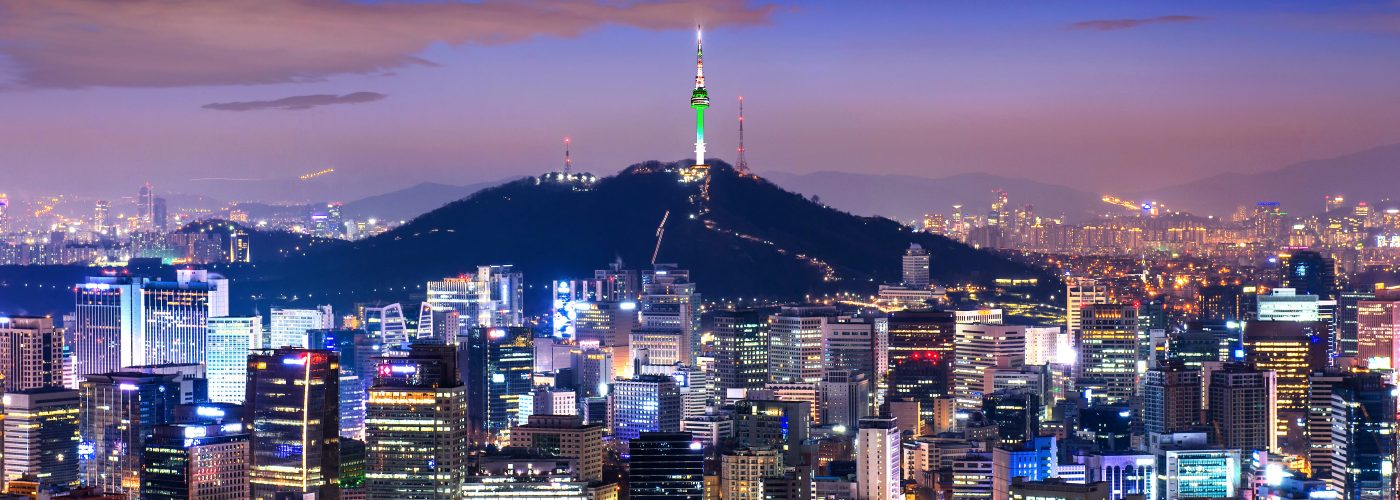
Image Source: smartertravel.com

Top 10 Non-South Korea countries or places of nationality

Seoul, South Korea 2015

1 China, People's Republic of 198,773
2 United States of America 9,224
3 Taiwan 8,753
4 Vietnam (Việt Nam), Socialist Republic of 8,545
5 Japan 8,386
6 Mongolia 4,747
7 Philippines (Pilipinas), Republic of the 3,677
8 Uzbekistan (O‘zbekiston) 1,923
9 France 1,904
10 India (Bhārat) 1,863

Total Foreign Nationality: 274,957
City Population: 10,297,138
Source: Seoul Metropolitan Government

...and last but not least for tonight we travel to Europe to a former Yugoslavia republic...Slovenia!

First, we dive into a little history of Slovenia by: Wikitravel

"Slovenes settled the region in the 6th century, when they were incorporated together with Bavarians and Franks. At that time, Christianisation took place. Afterwards, the Slovene lands were part of the Holy Roman Empire, and later they were part of the Austro-Hungarian Empire until the dissolution at the end of World War I in 1918 - when the Kingdom of Serbs, Croats and Slovenes was formed, and turned into a multinational state named Yugoslavia in 1929. After Slovenia was occupied by the Axis powers and later liberated by the Partisans with the help of Western Allies in World War II, Slovenia became a republic in the renewed Yugoslavia, which although communist, distanced itself from Moscow's rule. Dissatisfied with the exercise of power by the majority Serbs, Slovenes succeeded in establishing their independence in 1991 after a short 10-day war. Slovenia acceded to both NATO and the EU in 2004, and joined the eurozone and the Schengen Area in 2007, completing the final steps of accession to the European Union.

Slovenia (Slovenija) is a member of the European Union, Schengen Agreement and NATO. Not to be confused with Slovakia. The country lies in South Central Europe in the Julian Alps at the northern end of the Adriatic Sea, bordered by Austria to the north, Italy to the west, Hungary to the northeast, and Croatia to the southeast. Despite its small size, this Alpine country controls some of Europe's major transit routes.

Previously one of Yugoslavia's six constituent republics, present-day Slovenia became independent in 1991. Historical ties to Western Europe, a strong economy, and a stable democracy have assisted in Slovenia's transformation to a modern state.

Slovenia's main industries include car parts, pharmacy, electronics, electrical appliances, metal goods, textiles and furniture. It has a Mediterranean climate on the coast, continental climate with mild to hot summers, and cold winters in the plateaus and valleys to the east."


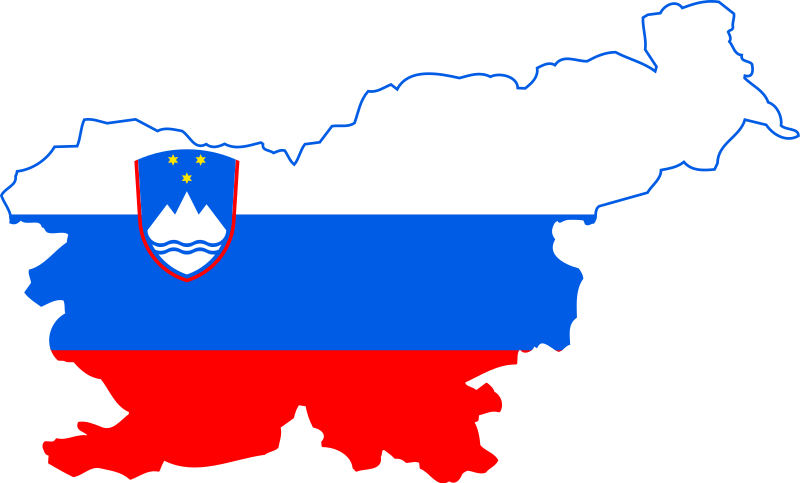
Image Source: wikimedia.org

Top 15 Non-Slovenia countries or places of birth or citizenship

Slovenia 2015

1 Bosnia and Herzegovina 100,880
2 Croatia (Hrvatska) 46,995
3 Serbia (Srbija) 27,073
4 Macedonia (Makedonija), The former Yugoslav Republic of 15,637
5 Kosovo (Kosova) 11,952
6 Germany (Deutschland) 7,586
7 Italy (Italia) 3,646
8 Montenegro (Crna Gora) 2,843
9 Austria (Österreich) 2,820
10 Russian Federation (Russia) 2,082

11 Ukraine 1,803
12 Bulgaria (Balgariya) 1,179
13 France 1,167
14 Switzerland (Swiss Confederation) 980
15 Slovak Republic (Slovenská republika/Slovakia) 600
Total Foreign country of birth and/or citizenship: 237,616
Total Population: 2,062,874
Source: Statistical Office of the Republic of Slovenia

Next time around we travel to Mexico and Poland! Stay tuned for more!
Reply With Quote
     
     
  #164  
Old Posted Oct 26, 2018, 3:13 AM
Urbanguy's Avatar
Urbanguy Urbanguy is offline
Go Beavs! Go Niners!
 
Join Date: Dec 2001
Location: Portland | Honolulu
Posts: 6,195
...we now arrive in the 2nd most populous country in North America -- Mexico!

First, some history about Mexico by: mexperience.com

"The Pre Columbian Era

The main centers of their civilization were Tres Zapotes, San Lorenzo, and La Venta. The Olmecs flourished roughly between 1,200 and 200 BC, and are best known for the giant basaltic sculptures of heads, some of which are more than three meters high. The Olmecs developed forms of writing and a calendar system. They influenced surrounding peoples, probably through trading.

A number of Olmec influences, such as working with stone, observation of the stars and the worship of certain gods, were adopted by the Mayas, who dominated a large region including most of southern Mexico, Guatemala, Belize, and parts of Honduras and El Salvador.

The Mayas developed a more sophisticated system of writing, astronomy, and a base five numeric system that used the concept of zero. The Mayan civilization suffered some kind of catastrophe at the end of the Classic period (200 BC to 900 AD). After that, a new and brilliant Mayan period developed further north in the Yucatan peninsula.

Just north of modern day Mexico City lie the ruins of Teotihuacan, considered by some the most important of the pre-Columbian archaeological sites. The origins of Teotihuacan are uncertain, although it’s thought some of the inhabitants arrived from the Valley of Mexico to the south, refugees from the eruption of the Xitle volcano. Construction of the city probably started in the first two centuries BC, and the civilization reached its high point between 350 and 650 AD.

The following centuries were marked by invasions from the north. The Purepechas, or Tarascos, settled in the western state of Michoacan, and the Toltecs settled at Tula, north of the Valley of Mexico. Tula, like Teotihuacan, ended up being sacked by invaders, although the influence of the Toltecs extended as far south as Yucatan, more than 1,000 kilometers away.

The Aztecs, who are also known as the Mexica (pronounced “meh-SHEE-kah”), were nomadic, warlike people who arrived in central Mexico from the north in the late 13th century AD. They were not well received by the established descendants of the Toltecs, and wandered around the area for decades until 1344, when, according to legend, they received the sign that they should build their city Tenochtitlan. The sign was an eagle devouring a snake on a cactus patch. The eagle and snake remain the national emblem today.

By 1430, the Aztecs dominated the Valley of Mexico, (modern-day Mexico City) and in 70 years they expanded their territory to create the largest empire in the history of Mesoamerica. Only a few peoples were able to resist the Aztec onslaught: the Purepechas of Michoacan, the Tlaxcaltecas to the east, and some Mixteca tribes in the southern state of Oaxaca. The Aztecs used political alliances with neighboring peoples, as well as strict military training among their young men, to extend their empire.

The Spanish Conquest

The first contact with Mexico occurred in 1517, when explorer Francisco Hernández de Córdoba landed on the Yucatan coast. A subsequent expedition by Juan de Grijalva confirmed a land dominated by a powerful people who were despised by those forced to pay tribute to them.

The Spanish governor of Cuba, Diego Velazquez, then sent a larger force under Hernán Cortés, with instructions to trade with the inhabitants. Cortés had more ambitious plans, however, and after landing on the coast of Veracruz, in 1521, made his way to Tenochtitlán—today, ruins of the Templo Mayor archaeology site in the center of Mexico City—the then center of power of the Aztec empire, which was built in the middle of a lake.

Using a mixture of terror and persuasion, Cortés gained allies during his march toward Tenochtitlán. Moctezuma received the Spanish with honors, fearing that they may be gods, according to an ancient prophecy.

Problems began when Cortés had to leave the city to meet a Spanish force sent by Velazquez to arrest him. When he returned, the Aztecs were fighting to expel the Spanish. Cortés made Moctezuma go onto the roof of the palace to tell his people to withdraw, but the Aztec chief was received with a barrage of stones, wounding him. He died several days later, and under the war-like leader Cuitláhuac, the Aztecs continued their fight against the invaders.

The Spanish attempted to escape one night, known as the Noche Triste (somber night): they were discovered as they crept along one of the roadways that led out of the city, and a fierce battle ensued in which Cortés lost many of his men. Cortés afterwards took refuge with his Tlaxcalteca allies. In June 1521, Cortés started the final assault on Tenochtitlán armed with small ships to use on the lake, and with thousands of local Indian allies.

By August that year he had captured the city, and made a prisoner of the new Aztec leader Cuauhtémoc. Cuitláhuac had died in an outbreak of smallpox which decimated the local population.

The Colonial Era

The following 300 years mark the Colonial era, when the territories of New Spain were expanded under the control of local viceroys, named by the Spanish crown.

The new territories extended through most of Central America and much of the south and west of what is now the United States. Apart from establishing military and economic control, the Spanish also embarked on converting the local population to the Roman Catholic religion.

Between 1521 and 1650 the Indian population was heavily reduced, largely as a result of fighting, diseases brought by the Spaniards against which they had no defenses, and the destructive effects of colonization on their way of life. The Spanish population grew during that time.

By 1810, there were an estimated six million inhabitants in New Spain, of which 60,000 were Spanish born in Spain, 940,000 were Spanish born in the territories, 3.5 million were indigenous Mexicans, and 1.5 million were Mestizos—of mixed Spanish and Indian blood.

Although mining (in particular silver) was the most sought after source of wealth, most of the inhabitants made their living from agriculture and raising livestock. The Spanish farmed large properties called haciendas, while the Indian population worked small plots, or as serfs on the lands owned by their Spanish lords.

The Spanish also controlled commerce. The main products were silver, sugar, cacao, hides and fine woods. The only manufacturing really developed during the period was the textile industry.

Independence and Revolution

In particular the Creoles (those born in New Spain of Spanish parents) resented being considered inferior by those born in the European homeland. They saw an opportunity in the Spanish war against Napoleon’s invasion of 1808.

The main protagonists of the Independence were the priests Miguel Hidalgo y Costilla and José María Morelos.

On September 16, 1810, Hidalgo freed the prisoners in the town of Dolores, locked up the Spanish authorities and called the people to rebel by ringing the church bells. Hidalgo started out with 600 men, but soon had 100,000 and overran towns of central Mexico. Hidalgo was tricked, caught, and condemned the following year, and was executed by firing squad on July 30, 1811.

Morelos, from the western city of Valladolid (now Morelia) led successful campaigns in 1812 and 1813, which included the capture of the city of Acapulco, the then principal trading port on the Pacific coast. He was captured and shot on Dec. 22, 1815. Despite the setbacks, the independence movement continued under the Creole colonel Agustín de Iturbide. On September 28, 1821, the first independent government was named with Iturbide at the head.

Independence was followed by thirty years of great political turmoil, which included the Mexican-American War of 1846-1848 in which Mexico lost Texas, California, and New Mexico to the victors.

Then came a period of reform, led by the educated of the country. The liberal Benito Juarez, who would be elected president in 1861, promoted reform laws that were incorporated into the Constitution of 1857. As provisional president, he also reduced the powers of the Roman Catholic Church, and confiscated church property.

In 1864, Austrian Archduke Maximilian was made Emperor with the backing of Napoleon III. Maximilian ruled Mexico until 1867, when he was defeated and shot after Napoleon pulled out his troops to fight a war with Prussia. The return to government of Juarez is also known as the Restoration of the Republic.

The Juarez years were followed by the dictatorship of Porfirio Diaz, a military leader who was president from 1876-1880 and 1884-1911. Mexico underwent a period of unprecedented economic development under Diaz, with the construction of railroads, ports, and telecommunications. But Diaz’s repressive government and the increasingly wide gap between rich and poor, coupled with Diaz’s courting of foreign investors and large landowners, led to discontent and uprising after he won yet another election in 1910—his sixth consecutive re-election.

The 1910-1917 Revolution was started by Francisco Madero, a democratically minded politician who was opposed to re-election. With military uprisings by Francisco Villa (or “Pancho” Villa as he is commonly known) in the north, and Emiliano Zapata in the south, Diaz was soon forced to resign and go into exile. Madero became president, but his army chief Victoriano Huerta staged a coup in 1913 and had him killed. Huerta stepped down in 1914, and Venustiano Carranza become president.

While few Mexicans question the importance of the birth of an independent nation after three centuries of colonial rule, the 1910-1917 period of conflict that led to the promulgation of the 1917 Constitution was far more complex, and to a certain extent inconclusive. A number of the better-known heroes of the Revolution were themselves killed in acts of treachery well after 1917: Emiliano Zapata in 1919, Venustiano Carranza in 1920, Francisco Villa in 1923, and Álvaro Obregón in 1928.

Disagreements continue to this day on the significance of the events that made up the Revolution, with ideas usually influenced by political views. The revolution is not the same thing seen from the left as from the right, and its success or failure from either of those viewpoints is not something that can be easily settled. The Wikipedia article (Spanish) illustrates how complicated a matter it was.

A new Constitution was promulgated in 1917 which, among other things, restored communal land to the Indian population and renewed the anti-clericalism of the Juarez years.

Modern Times

In 1929, the party that would later become the Institutional Revolutionary Party, or PRI, was formed as a way of consolidating the reforms that were included in the 1917 Constitution, and which had begun to be implemented during the 1920s.

A series of presidents under the PRI embarked on a course of fervent nationalism in the following decades, which included the 1937 nationalization of the railways and in 1938 the expropriation of the oil industry from British and U.S. firms. The PRI, backed by pro-government labor unions and peasant organizations, kept a tight control on power.

Government was typically paternalistic, looked on to solve problems of farmers, workers, peasants, and even private business. The 1950s and 1960s saw a period of industrialization promoted by the state, coupled with stringent protectionism that lasted throughout most of the 1970s and part of the 1980s.

In 1994, Mexico joined the U.S. and Canada in the North American Free Trade Agreement (NAFTA). Later that year, it was admitted into the Organization of Economic Cooperation and Development (OECD).

The PRI remained in power for 71 consecutive years until 2000, when the party lost the presidential election to the conservative National Action Party (PAN), bringing about what some considered to be Mexico’s first real democracy. By that time, however, the PRI had already moved far away from its socialist roots, courting foreign investment and having reversed most of the nationalizations during the previous fifteen years or so.

The PAN governed for two six-year periods, or sexenios, and was unseated again by the PRI in 2012. The PAN governments were beset by an increase in violence related to the illegal drug trade, which has continued to the present day.

Mexico’s oil industry—for decades a symbol of the nationalism born of the Revolution—underwent a boom in the 1970s and again in the first decade of the 21st century. Government dependence on oil income, which at one point provided as much as two-fifths of the federal budget, created an unhealthy dependence on oil prices and led to a number of budget crises in recent decades when prices fell.

The Mexican oil sector was opened again to private and foreign investment with changes in the Constitution during 2013 as the state seeks to share the costs and risks of finding new oil in more difficult deposits, such as those in deep water. The importance of oil to the overall economy and to budgets has dwindled, however, and it now accounts for less than 20% of revenue and 10% of exports.

As it traverses the 21st century, Mexico continues to pass through an unprecedented period of change. Political reforms being made in key sectors including communications, energy, and finance aim to transition the country’s economy away from being heavily dependent on oil and manufacturing into a multi-faceted and diverse economic environment, better prepared to face the disruptions and opportunities brought about through global markets and colossal technological evolution.

Presidential elections held in July 2018 brought a landslide change to Mexican politics, as voters elected left-wing candidate Andrés Manuel López Obrador, who campaigned on tackling corruption, violence, and inequality. As Mexico’s President-Elect, he will be sworn-in to office on December 1, 2018."


*Mexico has the largest population of immigrants born in the United States of any country in the World outside of the U.S. and the largest Indigenous Population in all of the America's (Guatemala is 2nd & Peru 3rd), many of which still speak their native languages.


Image Source: wikimedia.org

Top 40 Non-Mexico countries or places of birth

México (Estados Unidos Mexicanos) 2010

1 United States of America 738,103
2 Guatemala 35,322
3 Spain (España) 18,873
4 Colombia 14,942
5 Argentine Republic (Argentina) 13,896
6 Cuba 12,108
7 Honduras 10,991
8 Venezuela, Bolivarian Republic of 10,063
9 El Salvador 8,088
10 Canada 7,943

11 France 7,163
12 China, People's Republic of 6,655
13 Germany (Deutschland) 6,214
14 Perú 6,086
15 Chile 5,867
16 Italy (Italia) 5,064
17 Brasil 4,732
18 Korea, Republic of (South) 3,960
19 Nicaragua 3,572
20 Uruguay, Eastern Republic of 3,528

21 Switzerland (Swiss Confederation) 3,503
22 United Kingdom 3,490
23 Costa Rica 3,306
24 Ecuador 3,285
25 Japan 3,006
26 Russian Federation (Russia) 2,981
27 Panamá 2,974
28 Haïti 2,920
29 Belize 2,615
30 Lebanese Republic (Lebanon) 2,266

31 Israel (Yisra'el) 2,150
32 Bolivia, Plurinational State of 2,046
33 Poland (Polska) 1,980
34 Dominican Republic (República Dominicana) 1,912
35 Netherlands (Nederland) 1,562
36 Paraguay (Paraguáype) 1,330
37 Greece (Hellenic Republic) 1,286
38 Sweden 1,174
39 Turkey (Türkiye) 1,150
40 Belgium, Kingdom of 1,126

Total Foreign-born: 961,121
Total Population: 112,336,538
Source: INEGI & INE (Mexico), Census 2010

Now we explore the largest metro in North America and one of the largest in the World...


Image Source: wikimedia.org

Top 10 Non-Mexico countries or places of birth

Mexico City, Mexico 2010

1 United States of America 46,823
2 Spain (España) 9,971
3 Colombia 6,868
4 Cuba 4,559
5 France 3,424
6 Germany (Deutschland) 2,368
7 Guatemala 2,024
8 China, People's Republic of 1,923
9 Korea, Republic of (South) 1,666
10 Japan 1,422

Total Foreign-born: 122,333
Metropolitan Area Population: 24,026,942
*Limited data, Top 10 ranking may not be accurate

...and now we travel to the city with what appears to have the largest U.S. born population of any city outside of the U.S....


Image Source: Guillermo [email protected]

Top 10 Non-Mexico countries or places of birth

Tijuana, México 2010

1 United States of America 67,695
2 China, People's Republic of 1,195
3 Guatemala 481
4 Korea, Republic of (South) 208
5 Colombia 195
6 Cuba 183
7 Spain (España) 160
8 Japan 62
9 Germany (Deutschland) 57
10 France 41

Total Foreign-born: 82,528
Total Population: 1,559,683
*Limited data, Top 10 ranking may not be accurate

...of course we cannot leave Mexico without exploring some statistics about the first Mexicans!

The Indigenous population is over 11 Million strong & speak over 364 languages.


Image Source: Quora/quoracdn.net

A map of where the majority of the indigenous languages are concentrated.

Image Source: themaven.net


Image Source: landportal.org

México Indigenous Population by language 3yrs and older 2015

1 Náhuatl 1,725,620
2 Maya 859,607
3 Tseltal 556,720
4 Mixteco 517,665
5 Tsotsil 487,898
6 Zapoteco 479,474
7 Otomí 307,928
8 Totonaco 267,635
9 Ch'ol 251,809
10 Mazateco 239,078

11 Huasteco 173,765
12 Mazahua 147,088
13 Tarasco/Purépecha 141,177
14 Chinanteco 138,741
15 Tlapaneco 134,148
16 Mixe 133,632
17 Tarahumara 73,856
18 Zoque 68,157
19 Amuzgo 57,589
20 Tojolabal 55,442

21 Huichol 52,483
22 Chatino 51,612
23 Mayo 42,601
24 Popoluca de la sierra 37,707
25 Tepehuano del sur 36,543
26 Cora 28,718
27 Chontal de Tabasco 27,666
28 Triqui 25,674
29 Yaqui 20,340
30 Huave 18,539

Total Indigenous Population by language spoken 3 years and older: 7,382,785
Reply With Quote
     
     
  #165  
Old Posted Oct 26, 2018, 4:39 AM
Urbanguy's Avatar
Urbanguy Urbanguy is offline
Go Beavs! Go Niners!
 
Join Date: Dec 2001
Location: Portland | Honolulu
Posts: 6,195
...after a brief stop in Mexico we now arrive in Poland!

...but first a bit of History about Poland by: intopoland.com

"Poland has had a long and rich history. Over the past thousand years the country has defended its freedom and sovereignty from foreign aggressions on numerous occasions. Due to country’s geo-political location between the East and the West, Polish history is marked with wars and uprisings. There was a time when Poland was the largest country in Europe but there was also a stage when it was totally erased from the world map for over a hundred years. Thanks to the resilience and pride of the people who value freedom above all, Poland has not only managed to overcome troubles but also has been offering its own contribution to European history and culture.

Poland’s history dates back to prehistory times when Slavic tribes arrived on this territory and settled down. The first documented ruler was Mieszko I (from Piast dynasty) in the 10th century. In 966 duke Mieszko I converted to Christianity and by baptism brought Poland to the community of Western nations. The first coronation took place at Wawel Cathedral in Krakow in 1025 and the Kingdom of Poland began to take shape.

The Jagiellonian dynasty phase brought close ties with the Grand Dutchy of Lithuania. In 1385 Lithuania accepted Christianity from Polish hands and Polish-Lithuanian union was formed, which lasted for more than 400 years.

Over time a new threat emerged. The Teutonic Order directed their campaigns against Lithuania and Poland. In 1410 at the Battle of Tannenberg (Grunwald) the united forces of Poland and Lithuania completely destroyed the Teutonic Knights. It was one of the biggest and most important battles of medieval times.

The 16th century was Poland’s “Golden Age”. The Renaissance currents brought about country’s flourishing, Poland advanced culturally, arts and science developed. Polish astronomer, Nicolaus Copernicus (1473-1543), formulated the first modern heliocentric theory of the solar system and gave a start to modern astronomy. While Europe was absorbed with religious turmoil, Poland proclaimed a policy of religious tolerance which attracted many refugees from religious persecution (Christians, Jews, Muslims). The country also expanded territorially. In 1569 the Union of Lublin was signed forming the Polish-Lithuanian Commonwealth. From this time on Poland and Lithuania were known as the Republic of Both Nations and prospered together on the territory of almost 1,000,000 square kilometers of central and eastern Europe. The Union was largely run by the nobility but led by elected kings. This early democratic system (“a sophisticated noble democracy”) was untypical and in contrast to the absolute monarchies prevailing at the time in the rest of Europe.

In 1596 king Zygmunt III Waza moved the capital from Krakow to Warsaw as the city was more centrally located.

From the mid-17th century the Commonwealth entered a period of decline caused by internal disorder and anarchy, and devastating wars. The state was invaded by Swedes; the so called “Swedish Deluge” left the country in ruins. The last great victory was taken in 1683 when the allied armies of Europe led by the Polish king John III Sobieski save Europe from invasion of Islam in the huge battle of Vienna.

In the 18th century the Republic was in crisis. The state required reorganization. King Stanislaus Augustus Poniatowski (the last king of Poland) introduced numerous reforms. On 3rd May 1791 Europe’s first and the world’s second constitution was signed. However, the reform process was not enough to turn the tide of failing fortune. Poland gradually fell under foreign influence. The rulers of Russia, Prussia and Austria invaded Poland and partitioned its territory. In 1794 the Kosciuszko Uprising began but soon it was crushed. The three occupying powers through partitions terminated the Commonwealth’s independent existence in 1795. The country disappeared from the map of Europe and until 1918 there was no independent Polish state.

Despite the oppression, the idea of Polish independence was still alive in the nation and Poland continued to exist as a spiritual and cultural community. Poles engaged in armed resistance. They fought with Napoleon Bonaparte, organized November Uprising (1830-1831) and January Uprising (1863-1864), all of which failed. But yet some great achievements in science and art were obtained at that time: Frederic Chopin (1810-1849), the famous pianist and composer, who was born and raised in Poland preserved the national heritage in music; in 1853 Ignacy Lukasiewicz made a kerosene lamp, invented a way to refine kerosene from crude oil and built the first oil refinery in 1856; Maria Sklodowska-Curie (1867-1934), the famous physicist and chemist, discovered radioactive elements and won two Nobel Prizes, the only one ever in two different sciences.

The outbreak of World War I gave Poland chance to regain freedom. On 11th November 1918 Poland reappeared on the map of Europe after 123 years. The Second Polish Republic was established. In 1920 the young state stopped the massive Soviet invasion aimed at Western Europe in the battle of Warsaw.

On 1st September 1939 Poland was invaded by the Nazi Germany and World War II began. On September 17th the Soviet
Union launched the unexpected attack and the country was again divided between eastern and western powers. The Poles formed the strongest underground resistance movement in the occupied territories (known as Home Army). Many Polish soldiers joined military formations on the western and eastern fronts and fought together with the Allies against the German aggressor. In 1944 the Warsaw Uprising broke out being the largest single military effort taken by any European resistance movement of World War II. Six million of Polish citizens perished during the war, including three million of Polish Jews; the country lay in ruins.

After World War II ended, Poland fell under Soviet control and the communist People’s Republic of Poland was created as a Soviet satellite state. The country’s boundaries were radically changed and shifted to the west, followed by mass movements of people of various nations. In consequence, Poland lost its traditional multi-ethnic character and became a country with homogeneous Polish population.

In the difficult years of communism, a new hope for Poles arose when Karol Wojtyla (John Paul II) was chosen Pope in 1978. Two years later, in 1980, the “Solidarity” was founded, being the first mass independent trade union in communist states. This reform movement, led by Lech Walesa, eventually broke Soviet control in Eastern Europe. The first elections of the Third Polish Republic were held in 1989 and the country entered a period of transition from a communist state to the capitalist economic system and liberal parliamentary democracy. A modern Polish state arose.

Poland now has a new constitution which was signed in 1997. The country is a member of the NATO since 1999 and joined the European Union in 2004. After years of turbulent history, the country has finally found some stability and chance for growth in peace."


Image Source: wikimedia.org

Top 30 Non-Poland countries or places of birth

Poland (Polska) 2011

1 Ukraine 227,426
2 Germany (Deutschland) 84,059
3 Belarus 83,611
4 Lithuania (Lietuva) 55,571
5 Russian Federation (Russia) 41,210
6 United Kingdom 38,037
7 France 28,732
8 United States of America 15,049
9 Italy (Italia) 10,937
10 Ireland, Republic of (Éire) 8,365

11 Belgium, Kingdom of 5,547
12 Spain (España) 5,267
13 Kazakhstan (Qazaqstan) 4,936
14 Czech Republic (Česká Republika) 4,524
15 Austria (Österreich) 3,897
16 Bosnia and Herzegovina 3,523
17 Greece (Hellenic Republic) 3,097
18 Canada 2,894
19 Netherlands (Nederland) 2,721
20 Vietnam (Việt Nam), Socialist Republic of 2,563

21 Romania (România) 2,339
22 Armenia (Hayastan) 2,105
23 Bulgaria (Balgariya) 1,343
24 Latvia (Latvija) 1,255
25 Hungary (Magyarország) 1,134
26 Norway (Norge) 1,069
27 China, People's Republic of 1,061
28 Slovak Republic (Slovenská republika/Slovakia) 1,007
29 Sweden 831
30 India (Bhārat) 708

Total foreign-born (born abroad): 674,866
Total Population: 38,511,824
Source: 2018 Statistics Poland, Census 2011

...now we travel on to the capital and largest city in Poland...


Image Source: Marcel [email protected]

Top 30 Non-Poland countries or places of birth

Warsaw (Mazowieckie voivodeship) 2011

1 Ukraine 13,215
2 Belarus 6,649
3 Germany (Deutschland) 5,059
4 Russian Federation (Russia) 4,022
5 Lithuania (Lietuva) 3,930
6 United Kingdom 3,797
7 United States of America 2,602
8 France 2,597
9 Vietnam (Việt Nam), Socialist Republic of 2,217
10 Italy (Italia) 1,381

11 China, People's Republic of 836
12 Canada 737
13 Belgium, Kingdom of 639
14 Kazakhstan (Qazaqstan) 605
15 Ireland, Republic of (Éire) 564
16 Bulgaria (Balgariya) 549
17 Armenia (Hayastan) 513
18 Czech Republic (Česká Republika) 509
19 Spain (España) 442
20 Austria (Österreich) 426

21 India (Bhārat) 421
22 Hungary (Magyarország) 407
23 Turkey (Türkiye) 370
24 Romania (România) 346
25 Greece (Hellenic Republic) 329
26 Netherlands (Nederland) 324
27 Sweden 320
28 Australia 260
29 Serbia (Srbija) 231
30 Japan 230

Total foreign-born (born abroad): 60,719
Total Population: 5,268,660

...continuing on we now arrive in the 2nd largest city in Poland...


Image Source: wikimedia.org

Top 20 Non-Poland countries or places of birth

Kraków (Małopolskie voivodeship) 2011

1 Ukraine 8,009
2 United States of America 2,908
3 Germany (Deutschland) 2,900
4 United Kingdom 2,894
5 France 1,791
6 Italy (Italia) 1,443
7 Belarus 1,291
8 Russian Federation (Russia) 1,223
9 Austria (Österreich) 1,095
10 Ireland, Republic of (Éire) 972

11 Lithuania (Lietuva) 801
12 Spain (España) 583
13 Greece (Hellenic Republic) 429
14 Canada 373
15 Belgium, Kingdom of 363
16 Czech Republic (Česká Republika) 357
17 Kazakhstan (Qazaqstan) 353
18 Slovak Republic (Slovenská republika/Slovakia) 244
19 Hungary (Magyarország) 238
20 Vietnam (Việt Nam), Socialist Republic of 190

Total foreign-born (born abroad): 31,382
Total Population: 3,337,471

...now we head off to western Poland and to the largest city in the historical region of Silesia...


Image Source: wikimedia.org

Top 20 Non-Poland countries or places of birth

Wroclaw (Dolnośląskie voivodeship) 2011

1 Ukraine 74,799
2 Belarus 13,755
3 Germany (Deutschland) 13,482
4 Russian Federation (Russia) 8,789
5 Lithuania (Lietuva) 7,124
6 France 6,185
7 United Kingdom 3,652
8 Bosnia and Herzegovina 3,416
9 Ireland, Republic of (Éire) 1,044
10 Kazakhstan (Qazaqstan) 878

11 Italy (Italia) 862
12 Romania (România) 813
13 United States of America 811
14 Austria (Österreich) 674
15 Czech Republic (Česká Republika) 662
16 Spain (España) 550
17 Greece (Hellenic Republic) 478
18 Belgium, Kingdom of 465
19 Serbia (Srbija) 449
20 Croatia (Hrvatska) 414

Total foreign-born (born abroad): 143,076
Total Population: 2,915,241

...and last but not least we arrive in our last city of the night located in central Poland and a former industrial hub...


Image Source: wikimedia.org

Top 20 Non-Poland countries or places of birth

Lódz (Łódzkie voivodeship) 2011

1 Germany (Deutschland) 5,577
2 Ukraine 3,339
3 United Kingdom 2,287
4 Belarus 2,187
5 Lithuania (Lietuva) 1,841
6 France 1,390
7 Russian Federation (Russia) 1,218
8 Italy (Italia) 393
9 United States of America 386
10 Kazakhstan (Qazaqstan) 230

11 Armenia (Hayastan) 229
12 Ireland, Republic of (Éire) 223
13 Austria (Österreich) 182
14 Canada 173
15 Turkey (Türkiye) 167
16 Belgium, Kingdom of 149
17 India (Bhārat) 147
18 Syrian Arab Republic (Syria) 127
19 Spain (España) 126
20 Netherlands (Nederland) 122

Total foreign-born (born abroad): 22,556
Total Population: 2,538,677

...next time around we will make some brief stops in Honduras, Russia, Georgia and China...before adding some other cities of countries that we have already explored -- so stay tuned!
Reply With Quote
     
     
  #166  
Old Posted Oct 27, 2018, 7:30 PM
Urbanguy's Avatar
Urbanguy Urbanguy is offline
Go Beavs! Go Niners!
 
Join Date: Dec 2001
Location: Portland | Honolulu
Posts: 6,195
...off to Central America we go to the country of Honduras!

first, a little history about Honduras by: centralamerica.com

"Like the rest of the Isthmus of Central America, Honduras has not had an easy ride. It has had a violent, turbulent history.

The story of life in Honduras begins back when humans were migrating down from North America into South America using Central America as a land bridge. Along the way, many ended up staying. Artifacts found throughout the region show that humans were in it between 12,000 BC and 8,000 BC.

For the next few thousand years, Honduras was home to various tribes of different ethnicities dotted around the country. By 150 AD the Mayan civilization had taken hold in the areas to the north and west of Honduras – Guatemala, Mexico, and Belize.

The Mayans had spread into western Honduras and founded the city of Copan. Copan and western Honduras marked the extent of the Mayan range from its heartland. But that did not stop it from becoming a major center of the Maya world.

It was during the Preclassic period, 2000 BC to 200 AD that the Maya first arrived in the western Honduras. But Copan came into its own during the Classic period. Between around 400 AD and 800 AD, Copan was at its peak as the unrivaled head of a Maya kingdom.

From 800 AD onwards, the city collapsed. The ruling elites left Copan and the city little by little turned to ruin as people stole the stones for their own construction. The fate of Copan was a micro version of the fate of the Mayan civilization as a whole.

Most of Honduras was not under Mayan control, although the neighboring nations and tribes traded with, and fought with Copan. The centuries after Copan’s collapse leading up to the arrival of the Spanish passed in obscurity as each nation went about its business.

Things changed forever on July 30, 1502. That’s when Christopher Columbus, on his fourth and final voyage to the New World landed on the island of Guanaja, one of Honduras’s Bay Islands. He was the first European to reach Central America.

A few weeks later, on August 14th, Columbus became the first European to set foot on the Central American mainland, close to Trujillo. Columbus named this land Honduras, which means “depths”. It’s believed that he was referring to the depths of the waters off the coastline.

Columbus didn’t stay in Honduras long. He headed east along the coast and down to explore Nicaragua, Costa Rica, and Panama before heading back to Santo Domingo. The mainland of the Americas was now on the Spanish radar.

As the Spanish conquered the Aztecs in Mexico to the north and fought their way up from Panama to the south over the next twenty-odd years, it became obvious that they would all meet somewhere. That somewhere was Honduras, which became the scene of rival Spanish conquistadors from all different directions fighting each other as well as the indigenous people to gain control of the land.

Gil Gonzales Davila arrived from the north coast, hoping to make his way back down towards Nicaragua, which he had already conquered. In the meantime, Hernan Cortes, fresh from his conquest of Mexico, was looking for new challenges. Cortes sent Cristobal de Olid into Honduras from the west. Francisco Hernandez de Cordoba was also in the mix, coming up from Nicaragua, where he had also conquered in rivalry with Davila. None of these guys liked each other very much and they all wanted Honduras for themselves.

Olid, Cortes’ man, went rogue in Honduras and tried to take the land for himself and not the Spanish crown. This meant that Cortes arrived with his own force. Now there were four competing Spanish forces in Honduras, fighting each other between conquering the locals. After many skirmishes that bordered upon outright civil war amongst the Spanish, Olid was eventually executed. Intermediaries sent in from Santo Domingo helped to solidify the Spanish presence under the leadership of Cortes in 1525.

With Cortes controlling the Spanish in Honduras, things moved fast. The city of Trujillo was founded in 1525 and Cortes arrived in the country from Mexico soon after. His arrival was a boost to the Spanish soldiers and settlers in Honduras. From then on to 1539 the conquest went ahead more smoothly for the Spanish.

By 1539, Honduras was a part of the Spanish Empire under control of the Captaincy-General of Guatemala.

As part of the Captaincy-General, Honduras was important. Unlike most of the other parts of Central America, where the Spanish found no treasure, Honduras had silver.

Indigenous people from all over Central America came in (not of their own volition) to work in the mines, as well as, later on, slaves from Africa. Honduras became quite wealthy in comparison to the rest of Central America, and the city of Tegucigalpa was founded in 1578, in the mining area.

Spanish rule was always centered around the silver mining areas, in the center of Honduras, away from the Caribbean coast. As the silver mines became more important, the Spanish moved inland and left the coast unguarded. In truth, despite the fact that the Spanish arrived on the Caribbean coast from the get-go, once the conquest got underway, this was an area that they never quite completely managed to subdue. This part of Honduras, including the Bay Islands, became less influenced by the Spanish.

As the Spanish moved out, others moved in, in the form of pirates, who had more or less taken over control in the Bay Islands, which the used as a base. The British also stepped in, backing the Miskito tribe against the Spanish.

The Spanish had never conquered the Miskitos. Once they had allied with the British, that opened the door for the British to take over the entire Caribbean Coast of Central America. This was the area called the Mosquito Coast.

In 1821, Mexico gained independence from Spain, and with it, the Captaincy-General of Guatemala, of which Honduras was a part. Two years after that, the Captaincy-General broke free from Mexico, and Central America went at it alone.

The Federal Republic of Central America didn’t last too long itself. After a few years of turmoil, it dissolved in 1839, with each of its provinces becoming independent. Honduras was now a sovereign nation.

An irony of Honduras becoming independent was the fact that out of all the countries in Central America, it was Honduras that most pushed for Central America staying together."


Honduras doesn't have a very large foreign-born population as it is more well-known for emigration but they do have a presence.


Image Source: wikimedia.org

Top 20 Non-Honduras countries or places of birth

Honduras 2013

1 United States of America 8,432
2 El Salvador 7,434
3 Nicaragua 6,910
4 Guatemala 4,894
5 México (Estados Unidos Mexicanos) 1,641
6 Colombia 788
7 Costa Rica 656
8 Spain (España) 605
9 Cuba 480
10 China, People's Republic of 419

11 Belize 329
12 Canada 309
13 Germany (Deutschland) 280
14 Chile 258
15 Perú 257
16 Panamá 234
17 Italy (Italia) 224
18 Brasil 207
19 Argentine Republic (Argentina) 170
20 Dominican Republic (República Dominicana) 132

Total Foreign-born: 37,912
Total Population: 8,303,771
Source: INE (Honduras), Census 2013

...and now we travel to the capital and largest city in Honduras...


Image Source: wikimedia.org

Top 20 Non-Honduras countries or places of birth

Tegucigalpa, Honduras 2013

1 Nicaragua 1,893
2 United States of America 1,552
3 El Salvador 983
4 Guatemala 690
5 México (Estados Unidos Mexicanos) 494
6 Colombia 351
7 Costa Rica 312
8 China, People's Republic of 311
9 Spain (España) 232
10 Cuba 157

11 Chile 127
12 Germany (Deutschland) 114
13 Brasil 107
14 Perú 102
15 Italy (Italia) 95
16 Argentine Republic (Argentina) 92
17 Panamá 79
18 Canada 68
19 Japan 57
20 France 55

Total Foreign-born: 8,693
Total Population: 1,157,509

...of course we cannot leave without seeing some statistics about the first Honduras...


Image Source: pinterest.com


Image Source: tufts.edu


Top 9 Largest Indigenous Communities

Honduras 2013

1 Lenca 453,672
2 Miskito 80,007
3 Garífuna 43,111
4 Maya -Chortí 33,256
5 Tolupán 19,033
6 Negro de habla inglesa 12,337
7 Nahua 6,339
8 Pech 6,024
9 Tawahka 2,690

Total Indigenous Population: 717,618
Reply With Quote
     
     
  #167  
Old Posted Oct 27, 2018, 7:45 PM
Urbanguy's Avatar
Urbanguy Urbanguy is offline
Go Beavs! Go Niners!
 
Join Date: Dec 2001
Location: Portland | Honolulu
Posts: 6,195
...and now we take a short trip back to Eastern Europe to Russia!

...but first a brief history of Russia by: Wikipedia

"The History of Russia begins with that of the East Slavs and the Finno-Ugric peoples. The traditional beginning of Russian history is the establishment of Kievan Rus', the first united Eastern Slavic state, in 882. The state adopted Christianity from the Byzantine Empire in 988, beginning the synthesis of Byzantine and Slavic cultures that defined Orthodox Slavic culture for the next millennium. Kievan Rus' ultimately disintegrated as a state due to the Mongol invasions in 1237–1240 along with the resulting deaths of about half the population of Rus'.

After the 13th century, Moscow became a cultural center, and by the 18th century, the Tsardom of Russia had grown to become the Russian Empire, stretching from eastern Poland to the Pacific Ocean. Peasant revolts were common, and all were fiercely suppressed. Russian serfdom was abolished in 1861, but the peasants fared poorly and often turned to revolutionary pressures. In the following decades, reform efforts such as the Stolypin reforms, the constitution of 1906, and the State Duma attempted to open and liberalize the economy and political system, but the tsars refused to relinquish autocratic rule or share their power.

The Russian Revolution in 1917 was triggered by a combination of economic breakdown, war-weariness, and discontent with the autocratic system of government. It initially brought to power a coalition of liberals and moderate socialists, but their failed policies led to seizure of power by the communist Bolsheviks on 25 October. Between 1922 and 1991, the history of Russia is essentially the history of the Soviet Union, effectively an ideologically based state which was roughly conterminous with the Russian Empire before the Treaty of Brest-Litovsk. The approach to the building of socialism, however, varied over different periods in Soviet history, from the mixed economy and diverse society and culture of the 1920s to the command economy and repressions of the Joseph Stalin era to the "era of stagnation" in the 1980s. From its first years, government in the Soviet Union was based on the one-party rule of the Communists, as the Bolsheviks called themselves, beginning in March 1918.

By the mid-1980s, with the weaknesses of its economic and political structures becoming acute, Mikhail Gorbachev embarked on major reforms, which led to the overthrow of the communist party and the breakup of the USSR, leaving Russia again on its own and marking the start of the history of post-Soviet Russia. The Russian Federation began in January 1992 as the legal successor to the USSR. Russia retained its nuclear arsenal but lost its superpower status. Scrapping the socialist central planning and state ownership of property of the socialist era, new leaders, led by President Vladimir Putin, took political and economic power after 2000 and engaged in an energetic foreign policy. Russia's recent annexation of the Crimean peninsula has led to severe economic sanctions imposed by the United States and the European Union."


Russia has one of the largest foreign-born population's in the World -- the majority of which are from the former "Soviet Republics."


Image Source: wikimedia.org

Top 30 Non-Russia countries or places of birth

Russian Federation 2011

1 Ukraine 2,651,109
2 Uzbekistan (O‘zbekiston) 2,335,960
3 Tajikistan (Tojikiston) 1,105,500
4 Azerbaijan (Azərbaycan) 610,327
5 Moldova, Republic of 586,122
6 Kazakhstan (Qazaqstan) 575,400
7 Kyrgyz Republic (Kyrgyzstan) 552,014
8 Armenia (Hayastan) 514,663
9 Belarus 498,878
10 China, People's Republic of 273,034

11 Germany (Deutschland) 244,662
12 Afghanistan, Islamic Republic of 150,000
13 United States of America 142,405
14 Turkey (Türkiye) 111,681
15 United Kingdom 111,275
16 Finland (Suomi) 77,665
17 Italy (Italia) 53,649
18 Vietnam (Việt Nam), Socialist Republic of 53,649
19 France 53,382
20 Spain (España) 45,935

21 Lithuania (Lietuva) 42,672
22 Philippines (Pilipinas), Republic of the 34,755
23 Korea, Democratic People's Republic of (North) 34,217
24 Serbia (Srbija) 33,591
25 Canada 32,107
26 Georgia (Sak'art'velo) 30,718
27 Israel (Yisra'el) 30,126
28 Estonia (Eesti) 28,356
29 Poland (Polska) 27,979
30 India (Bhārat) 15,500

Total Foreign-born: 11,194,700
Total Population: 142,960,908
Source: Rosstat

...speaking of former Soviet Republics, we now travel to the Caucasus region to the country of Georgia!

first, a little history about Georgia by: Wikpedia

"Georgia is a country in the Caucasus region of Eurasia. Located at the crossroads of Western Asia and Eastern Europe, it is bounded to the west by the Black Sea, to the north by Russia, to the south by Turkey and Armenia, and to the southeast by Azerbaijan. The capital and largest city is Tbilisi. Georgia covers a territory of 69,700 square kilometres (26,911 sq mi), and its 2017 population is about 3.718 million. The sovereign state of Georgia is a unitary semi-presidential republic, with the government elected through a representative democracy.

During the classical era, several independent kingdoms became established in what is now Georgia, such as Colchis, later known as Lazica and Iberia. The Georgians adopted Christianity in the early 4th century. The common belief had an enormous importance for spiritual and political unification of early Georgian states. A unified Kingdom of Georgia reached its Golden Age during the reign of King David IV and Queen Tamar in the 12th and early 13th centuries. Thereafter, the kingdom declined and eventually disintegrated under hegemony of various regional powers, including the Mongols, the Ottoman Empire, and successive dynasties of Iran. In the late 18th century, the eastern Georgian Kingdom of Kartli-Kakheti forged an alliance with the Russian Empire, which directly annexed the kingdom in 1801 and conquered the western Kingdom of Imereti in 1810. Russian rule over Georgia was eventually acknowledged in various peace treaties with Iran and the Ottomans and the remaining Georgian territories were absorbed by the Russian Empire in a piecemeal fashion in the course of the 19th century. During the Civil War following the Russian Revolution in 1917, Georgia briefly became part of the Transcaucasian Federation and then emerged as an independent republic before the Red Army invasion in 1921 which established a government of workers' and peasants' soviets. Soviet Georgia would be incorporated into a new Transcaucasian Federation which in 1922 would be a founding republic of the Soviet Union. In 1936, the Transcaucasian Federation was dissolved and Georgia emerged as a Union Republic. During the Great Patriotic War, almost 700,000 Georgians fought in the Red Army against the German invaders. After Soviet leader Joseph Stalin, a native Georgian, died in 1953, a wave of protest spread against Nikita Khrushchev and his de-Stalinization reforms, leading to the death of nearly one hundred students in 1956. From that time on, Georgia would become marred with blatant corruption and increased alienation of the government from the people.

By the 1980s, Georgians were ready to abandon the existing system altogether. A pro-independence movement led to the secession from the Soviet Union in April 1991. For most of the following decade, post-Soviet Georgia suffered from civil conflicts, secessionist wars in Abkhazia and South Ossetia, and economic crisis. Following the bloodless Rose Revolution in 2003, Georgia strongly pursued a pro-Western foreign policy; aimed at NATO and European integration, it introduced a series of democratic and economic reforms. This brought about mixed results, but strengthened state institutions. The country's Western orientation soon led to the worsening of relations with Russia, culminating in the brief Russo-Georgian War in August 2008 and Georgia's current territorial dispute with Russia.

Georgia is a member of the United Nations, the Council of Europe, and the GUAM Organization for Democracy and Economic Development. It contains two de facto independent regions, Abkhazia and South Ossetia, which gained very limited international recognition after the 2008 Russo-Georgian War. Georgia and most of the world's countries consider the regions to be Georgian territory under Russian occupation."


Image Source: wikimedia.org

Top 10 Non-Georgia countries or places of citizenship

Georgia (Republic) 2017

1 Russian Federation (Russia) 9,723
2 Turkey (Türkiye) 4,365
3 Azerbaijan (Azərbaycan) 3,501
4 India (Bhārat) 2,686
5 Ukraine 2,275
6 Armenia (Hayastan) 2,042
7 United States of America 1,075
8 China, People's Republic of 904
9 Greece (Hellenic Republic) 569
10 Israel (Yisra'el) 429

Immigrants with Georgia citizenship: 48,343
Total Immigrant Population by Citizenship: 83,239
Total Population: 3,729,600
Source: GEOSTAT

...now we take a quick journey to the east to China!

...but first a brief history of these very populous country rich with history and an economic powerhouse as brought to you by: Wikipedia

"The earliest known written records of the history of China date from as early as 1250 BC, from the Shang dynasty (c. 1600–1046 BC).[3] Ancient historical texts such as the Records of the Grand Historian (c. 100 BC) and the Bamboo Annals (296 BC) describe a Xia dynasty (c. 2070–1600 BC) before the Shang, but no writing is known from the period, and Shang writings do not indicate the existence of the Xia. The Shang ruled in the Yellow River valley, which is commonly held to be the cradle of Chinese civilization. However, Neolithic civilizations originated at various cultural centers along both the Yellow River and Yangtze River. These Yellow River and Yangtze civilizations arose millennia before the Shang. With thousands of years of continuous history, China is one of the world's oldest civilizations, and is regarded as one of the cradles of civilization.

The Zhou dynasty (1046–256 BC) supplanted the Shang, and introduced the concept of the Mandate of Heaven to justify their rule. The central Zhou government began to weaken due to external and internal pressures in the 8th century BC, and the country eventually splintered into smaller states during the Spring and Autumn period. These states became independent and warred with one another in the following Warring States period. Much of traditional Chinese culture, literature and philosophy first developed during those troubled times.

In 221 BC Qin Shi Huang conquered the various warring states and created for himself the title of Huangdi or "emperor" of the Qin, marking the beginning of imperial China. However, the oppressive government fell soon after his death, and was supplanted by the longer lived Han dynasty (206 BC–220 AD). Successive dynasties developed bureaucratic systems that enabled the emperor to control vast territories directly. In the 21 centuries from 206 BC until AD 1912, routine administrative tasks were handled by a special elite of scholar-officials. Young men, well-versed in calligraphy, history, literature, and philosophy, were carefully selected through difficult government examinations. China's last dynasty was the Qing (1644–1912), which was replaced by the Republic of China in 1912, and in the mainland by the People's Republic of China in 1949, resulting in two de facto states claiming to be the legitimate government of all China.

Chinese history has alternated between periods of political unity and peace, and periods of war and failed statehood – the most recent being the Chinese Civil War (1927–1949). China was occasionally dominated by steppe peoples, most of whom were eventually assimilated into the Han Chinese culture and population. Between eras of multiple kingdoms and warlordism, Chinese dynasties have ruled parts or all of China; in some eras control stretched as far as Xinjiang and Tibet, as at present. Traditional culture, and influences from other parts of Asia and the Western world (carried by waves of immigration, cultural assimilation, expansion, and foreign contact), form the basis of the modern culture of China."


Image Source: wikimedia.org

Top 10 Non-Georgia countries or places of nationality

China, People's Republic of 2010

1 China, Hong Kong (Special Administrative Region) 234,829
2 Taiwan 170,283
3 Korea, Republic of (South) 120,750
4 United States of America 71,493
5 Japan 66,159
6 Myanmar (Burma) 39,776
7 Vietnam (Việt Nam), Socialist Republic of 36,205
8 China, Macao (Special Administrative Region) 21,201
9 Canada 19,990
10 France 15,087

Total Foreign Nationality: 593,832
Total Population: 1,339,724,852
Source: National Bureau of Statistics of China

...this concludes our journey for today! There's more to come as we start to explore cities and countries that we haven't yet and eventually start diving into the topic of ethnicity...Stay tuned for more!
Reply With Quote
     
     
  #168  
Old Posted Oct 28, 2018, 6:12 AM
Urbanguy's Avatar
Urbanguy Urbanguy is offline
Go Beavs! Go Niners!
 
Join Date: Dec 2001
Location: Portland | Honolulu
Posts: 6,195
...a special edition for tonight -- it's difficult to find as detailed of statistics for major cities of this next country but I do have these for the country as a whole -- Israel!

...but first a brief history of Israel by: Wikipedia

"Modern Israel is roughly located on the site of the ancient kingdoms of Israel and Judah. The area (also known as Land of Israel and as Palestine) is the birthplace of the Hebrew language, the place where the Hebrew Bible was composed and the birthplace of Judaism and Christianity. It contains sites sacred to Judaism, Christianity, Islam, Samaritanism, Druze and the Bahá'í Faith.

The Land of Israel has come under the sway of various empires and has been home to a variety of ethnicities, but was predominantly Jewish from roughly 1,000 years before the Common Era (BCE) until the 3rd century of the Common Era (CE). The adoption of Christianity by the Roman Empire in the 4th century led to a Greco-Roman Christian majority which lasted until the 7th century when the area was conquered by the Arab Muslim Empires. It gradually became predominantly Moslem until the Crusades between 1096 and 1291, when it was the focal point of conflict between Christianity and Islam. From the 13th century it was mainly Moslem with Arabic as the dominant language and was first part of the Syrian province of the Mamluk Sultanate and then part of the Ottoman Empire until the British conquest in 1917.

A Jewish national movement, Zionism, emerged in the late-19th century (partially in response to growing anti-Semitism), as part of which Aliyah (Jewish immigration) increased. During World War I, the British government publicly committed to the Zionist Organization to support the creation of a Jewish National Home in the area, which was then an Ottoman territory with a small minority Jewish population. The League of Nations subsequently granted the British a Mandate to rule Palestine which was to be turned into a Jewish National Home. A rival Arab nationalism also claimed rights over the former Ottoman territories and sought to prevent Jewish migration into Palestine, leading to growing Arab–Jewish tensions. Israeli independence in 1948 was marked by a massive exodus of Arabs from Israel during the Arab–Israeli conflict. The lifting of immigration restrictions allowed a massive Jewish exodus from Arab and Muslim countries and Europe to Israel. About 43% of the world's Jews live in Israel today, the largest Jewish community in the world.

The United States has become the principal ally of Israel. In 1979, an uneasy Egypt–Israel Peace Treaty was signed, based on the Camp David Accords. In 1993, Israel signed Oslo I Accord with the Palestine Liberation Organization, followed by establishment of the Palestinian National Authority and in 1994 Israel–Jordan peace treaty was signed. Despite efforts to finalize the peace agreement, the conflict continues to play a major role in Israeli and international political, social and economic life.

The economy of Israel was initially primarily socialist and the country dominated by social democratic parties until the 1970s. Since then the Israeli economy has gradually moved to capitalism and a free market economy, partially retaining the social welfare system."


*The following are immigration statistics since Israel became an independent State in 1948 to 2017.*


Image Source: wikimedia.org

Israel (Yisra'el) 1948-2017

1 Union of Soviet Socialist Republics (USSR), former 1,305,406
2 Romania (România) 276,915
3 Morocco (Al Maghrib) 274,560
4 Ukraine 183,085
5 Poland (Polska) 174,036
6 Russian Federation (Russia) 159,151
7 Iraq 131,044
8 United States of America 112,126
9 Ethiopia 93,033
10 Iran, Islamic Republic of 80,964

11 France 73,454
12 Turkey (Türkiye) 64,209
13 Argentine Republic (Argentina) 61,974
14 Tunisian Republic (Tunisia) 58,807
15 Yemen (Al Yaman) 51,547
16 Bulgaria (Balgariya) 44,511
17 Egypt, Sudan 38,008
18 Libyan Arab Jamahiriya (Libya) 36,112
19 United Kingdom 35,858
20 Hungary (Magyarország) 32,881

21 Algeria (Al Jaza'ir) 30,134
22 India, Pakistan and Sri Lanka 29,095
23 Uzbekistan (O‘zbekiston) 25,728
24 Czechoslovakia, former 24,675
25 South Africa, Republic of 21,156
26 Germany (Deutschland) 20,763
27 Brasil 14,516
28 Canada 12,197
29 Georgia (Sak'art'velo) 12,035
30 Yugoslavia, former 10,904

31 Syrian Arab Republic (Syria) 10,248
32 Uruguay, Eastern Republic of 9,589
33 Netherlands (Nederland) 7,378
34 Israel (Yisra'el) 7,362
35 Belgium, Kingdom of 6,630
36 Italy (Italia) 6,171
37 Chile 6,068
38 Austria (Österreich) 5,924
39 Australia, New Zealand 5,694
40 México (Estados Unidos Mexicanos) 5,158

41 Nordic countries (Finland, Sweden, Norway and Denmark) 4,944
42 Switzerland (Swiss Confederation) 4,771
43 Lebanese Republic (Lebanon) 4,224
44 Afghanistan, Islamic Republic of 4,158
45 Greece (Hellenic Republic) 4,073
46 Colombia 3,699
47 Venezuela, Bolivarian Republic of 2,352
48 Central America (Costa Rica, Guatemala, Cuba, Puerto Rico and El Salvador) 2,323
49 Spain (España) 2,196
50 China, People's Republic of 1,374
51 Paraguay (Paraguáype) 546

Other African countries 2,250
Other Asian countries 3,715
Other Central, North and South American countries (mainly Peru) 6,031
Other European countries 3,267
Not known 27,111

Total Country of Birth and Country of Last Residence: 3,256,335
Source: Israel Population and Immigration Authority, and the Ministry of Aliyah and Integration

Top 5 Countries of Last Residence to migrate to Israel in 2017

1 Russian Federation (Russia) 7,135
2 Ukraine 7,046
3 France 3,157
4 United States of America 2,567
5 Brazil 618

Total by Country of Last Residence: 26,357 *Immigration appears to have slowed quite a bit since the period of 1990 - 1999 when 956,319 people settled in the country.


Reply With Quote
     
     
  #169  
Old Posted Oct 30, 2018, 4:18 AM
Urbanguy's Avatar
Urbanguy Urbanguy is offline
Go Beavs! Go Niners!
 
Join Date: Dec 2001
Location: Portland | Honolulu
Posts: 6,195
...and now we travel back to the Baltic's to the country of Latvia!

First, a brief history of Latvia by: Wikipedia

"The history of Latvia began around 9000 BC with the end of the last glacial period in northern Europe. Ancient Baltic peoples arrived in the area during the second millennium BC, and four distinct tribal realms in Latvia's territory were identifiable towards the end of the first millennium AD. Latvia's principal river Daugava, was at the head of an important trade route from the Baltic region through Russia into southern Europe and the Middle East that was used by the Vikings and later Nordic and German traders.

In the early medieval period, the region's peoples resisted Christianisation and became subject to attack in the Northern Crusades. Latvia's capital city Riga, founded in 1201 by Germans at the mouth of the Daugava, became a strategic base in a papally-sanctioned conquest of the area by the Livonian Brothers of the Sword. It was to be the first major city of the southern Baltic and, after 1282, a principal trading centre in the Hanseatic League.

By the 16th century, Baltic German dominance in Terra Mariana was increasingly challenged by other powers. Due to Latvia's strategic location and prosperous trading city of Riga, its territories were a frequent focal point for conflict and conquest between at least four major powers: the State of the Teutonic Order, the Polish–Lithuanian Commonwealth, Sweden and Russian Empire. The last period of external hegemony began in 1710, when control over Riga and parts of modern-day Latvia switched from Sweden to Russia during the Great Northern War. Under Russian control, Latvia was in the vanguard of industrialisation and the abolition of serfdom, so that by the end of the 19th century, it had become one of the most developed parts of the Russian Empire. The increasing social problems and rising discontent that this brought meant that Riga also played a leading role in the 1905 Russian Revolution.

The First Latvian National Awakening began in the 1850s and continued to bear fruit after World War I when, after two years of struggle in the Latvian War of Independence, Latvia finally won sovereign independence, as recognised by Soviet Russia in 1920 and by the international community in 1921. The Constitution of Latvia was adopted in 1922. Political instability and effects of the Great Depression led to the May 15, 1934 coup d'état by Prime Minister Kārlis Ulmanis. Latvia's independence was interrupted in June–July 1940, when the country was occupied and incorporated into the Soviet Union. In 1941 it was invaded and occupied by Nazi Germany, then reconquered by the Soviets in 1944–45.

From the mid-1940s Latvian Soviet Socialist Republic was subject to Soviet economic control and saw considerable Russification of its peoples. However, Latvian culture and infrastructures survived and, during the period of Soviet liberalisation under Mikhail Gorbachev, Latvia once again took a path towards independence, eventually succeeding in August 1991 to be recognised by Russia the following month. Since then, under restored independence, Latvia has become a member of the United Nations, entered NATO and joined the European Union.

Latvia's economy suffered greatly during the Great Recession which caused the 2008 Latvian financial crisis. Worsening economic conditions and better job opportunities in Western Europe have caused a massive Latvian emigration."


Image Source: wikimedia.org

Top 30 Non-Latvia countries or places of birth

Latvia (Latvija) 2018

1 Russian Federation (Russia) 122,438
2 Belarus 43,941
3 Ukraine 32,477
4 Lithuania (Lietuva) 14,904
5 Kazakhstan (Qazaqstan) 5,729
6 United Kingdom 3,480
7 Estonia (Eesti) 2,928
8 Uzbekistan (O‘zbekiston) 2,309
9 Germany (Deutschland) 2,128
10 Azerbaijan (Azərbaycan) 1,935

11 Moldova, Republic of 1,701
12 Georgia (Sak'art'velo) 1,273
13 Ireland, Republic of (Éire) 909
14 Poland (Polska) 792
15 India (Bhārat) 773
16 Armenia (Hayastan) 724
17 United States of America 529
18 Norway (Norge) 407
19 Italy (Italia) 298
20 France 252

21 Sweden 249
22 Denmark (Danmark) 229
23 Spain (España) 197
24 Hungary (Magyarország) 185
25 Canada 167
26 Czech Republic (Česká Republika) 156
27 Netherlands (Nederland) 150
28 Finland (Suomi) 130
29 Belgium, Kingdom of 127
30 Bulgaria (Balgariya) 100

Total Foreign-born: 246,040
Total Population: 1,934,379
Source: Central Statistical Bureau of Latvia

...and now we travel to the capital and largest city in Latvia...


Image Source: wikimedia.org

Top 10 Non-Latvia countries or places of birth

Riga, Latvia (Latvija) 2011

1 Russian Federation (Russia) 79,343
2 Belarus 19,821
3 Ukraine 18,883
4 Lithuania (Lietuva) 4,580
5 Kazakhstan (Qazaqstan) 2,848
6 Estonia (Eesti) 1,459
7 Germany (Deutschland) 1,351
8 Azerbaijan (Azərbaycan) 1,337
9 Uzbekistan (O‘zbekiston) 1,165
10 Moldova, Republic of 873

All other countries or places of birth (incl. nfd) 6,458
Total Foreign-born: 138,118
Total Population: 658,640
Source: Central Statistical Bureau of Latvia, Census 2011

...after a brief stop in Latvia, we now travel to the Caribbean Island nation of the Dominican Republic!

First, a brief history of the Dominican Republic by: Wikipedia

"The recorded history of the Dominican Republic began when the Genoa-born navigator Christopher Columbus, working for the Spanish Crown, happened upon a large island in the region of the western Atlantic Ocean that later came to be known as the Caribbean. It was inhabited by the Taíno, an Arawakan people, who variously called their island Ayiti, Bohio, or Quisqueya (Kiskeya). Columbus promptly claimed the island for the Spanish Crown, naming it La Isla Española ("the Spanish Island"), later Latinized to Hispaniola. What would become the Dominican Republic was the Spanish Captaincy General of Santo Domingo until 1821 except for a time as a French colony from 1795 to 1809. It was then part of a unified Hispaniola with Haiti from 1822 until 1844. In 1844, Dominican independence was proclaimed and the republic, which was often known as Santo Domingo until the early 20th century, maintained its independence except for a short Spanish occupation from 1861 to 1865 and occupation by the United States from 1916 to 1924."


Image Source: wikimedia.org

Top 30 Non-Dominican Republic countries or places of birth

Dominican Republic (República Dominicana) 2010

1 Haïti 311,969
2 United States of America 24,457
3 Spain (España) 6,691
4 Puerto Rico 5,763
5 Venezuela, Bolivarian Republic of 5,132
6 Cuba 3,639
7 Italy (Italia) 3,595
8 Colombia 3,416
9 France 1,936
10 Germany (Deutschland) 1,574

11 México (Estados Unidos Mexicanos) 1,419
12 China, People's Republic of 1,406
13 Perú 1,353
14 Canada 1,152
15 Argentine Republic (Argentina) 1,015
16 Switzerland (Swiss Confederation) 990
17 Panamá 717
18 Brasil 611
19 Chile 600
20 Netherlands (Nederland) 562

21 Ecuador 551
22 Sint Maarten (Dutch part) 468
23 Russian Federation (Russia) 457
24 United Kingdom 457
25 Guatemala 406
26 Honduras 402
27 Japan 327
28 Curaçao 313
29 Taiwan 309
30 Costa Rica 291

Total Foreign-born: 395,791
Total Population: 9,445,281
Source: Oficina Nacional de Estadítica - República Dominicana, Census 2010

*D.R. appears to the have the 2nd largest population of people born in Haiti outside of that country & the largest Puerto Rico-born population (that i've seen) outside of the United States.

...and now we travel to the capital and largest city in D.R. ...


Image Source: wikimedia.org

Top 30 Non-Dominican Republic countries or places of birth

Santo Domingo, Dominican Republic 2010

1 Haïti 62,034
2 United States of America 4,424
3 Venezuela, Bolivarian Republic of 1,476
4 Spain (España) 1,242
5 Italy (Italia) 921
6 Puerto Rico 887
7 Cuba 599
8 Colombia 571
9 China, People's Republic of 460
10 Perú 360

11 France 274
12 Panamá 196
13 Germany (Deutschland) 176
14 Switzerland (Swiss Confederation) 165
15 México (Estados Unidos Mexicanos) 164
16 Netherlands (Nederland) 162
17 Argentine Republic (Argentina) 145
18 Curaçao 139
19 Sint Maarten (Dutch part) 118
20 Canada 110

21 Brasil 86
22 Honduras 80
23 Chile 79
24 Ecuador 77
25 Nicaragua 71
26 Costa Rica 59
27 Guatemala 52
28 Aruba 50
29 Russian Federation (Russia) 48
30 United Kingdom 46

Total Foreign-born: 77,746
Total Population: 2,374,370

...There are more to come! Stay tuned!
Reply With Quote
     
     
  #170  
Old Posted Nov 1, 2018, 3:55 AM
Urbanguy's Avatar
Urbanguy Urbanguy is offline
Go Beavs! Go Niners!
 
Join Date: Dec 2001
Location: Portland | Honolulu
Posts: 6,195
...and now we take a trip to the Middle East! Detailed statistics at the country and City/Metro level are very difficult to find especially because it's not something that are typically released publicly so the following statistics are from the United Nations Population Division and are of the "Migrant Stock" which can be quite broad by definition. A common demographic theme that you will notice is the MASSIVE amounts of South Asians that have migrated to this region (besides those from neighboring countries) and from Southeast Asia like the Philippines and Indonesia.

Without further ado, we will start with Kuwait!

First, a little history of Kuwait by: Brittanica.com

"Early settlers

The origin of the city of Kuwait—and of the State of Kuwait—is usually placed at about the beginning of the 18th century, when the Banū (Banī) ʿUtūb, a group of families of the ʿAnizah tribe in the interior of the Arabian Peninsula, migrated to the area that is now Kuwait. The foundation of the autonomous sheikhdom of Kuwait dates from 1756, when the settlers decided to appoint a sheikh from the Ṣabāḥ family (Āl Ṣabāḥ). During the 19th century, Kuwait developed as a thriving independent trading community. Toward the end of the century, one ruler, ʿAbd Allāh II (reigned 1866–92), began to move Kuwait closer to the Ottoman Empire, although he never placed his country under Ottoman rule. That trend was reversed with the accession of Mubārak the Great, who came to power by assassinating his brother ʿAbd Allāh—an act of uncustomary political violence in Kuwait. Ottoman threats to annex Kuwait prompted Mubārak to cultivate a close relationship with Britain. An 1899 treaty basically granted Britain control of Kuwait’s foreign affairs. Following the outbreak of World War I (1914–18), Kuwait became a British protectorate.

At the 1922 Conference of Al-ʿUqayr, Britain negotiated the Kuwait-Saudi border, with substantial territorial loss to Kuwait. A memorandum in 1923 set out the border with Iraq on the basis of an unratified 1913 convention.

The first Iraqi claim to Kuwait surfaced in 1938—the year oil was discovered in the emirate. Although neither Iraq nor the Ottoman Empire had ever actually ruled Kuwait, Iraq asserted a vague historical title. That year it also offered some rhetorical support to a merchant uprising against the emir. Following the failure of the uprising, called the Majlis Movement, Iraq continued to put forth a claim to at least part of Kuwait, notably the strategic islands of Būbiyān and Al-Warbah.

On June 19, 1961, Britain recognized Kuwait’s independence. Six days later, however, Iraq renewed its claim, which was now rebuffed first by British and then by Arab League forces. It was not until October 1963 that a new Iraqi regime formally recognized both Kuwait’s independence and, subsequently, its borders, while continuing to press for access to the islands.
Iran-Iraq War

The Iran-Iraq War of 1980–88 represented a serious threat to Kuwait’s security. Kuwait, fearing Iranian hegemony in the region, saw no alternative to providing Iraq with substantial financial support and serving as a vital conduit for military supplies. Iran attacked a Kuwaiti refinery complex in 1981, which inspired subsequent acts of sabotage in 1983 and 1986. In 1985 a member of the underground pro-Iranian Iraqi radical group al-Daʿwah attempted to assassinate the Kuwaiti ruler, Sheikh Jābir al-Aḥmad al-Ṣabāḥ.

In September 1986 Iran began to concentrate its attacks on gulf shipping, largely on Kuwaiti tankers. This led Kuwait to invite both the Soviet Union (with which it had established diplomatic relations in 1963) and the United States to provide protection for its tankers in early 1987. The effect of the war was to promote closer relations with Kuwait’s conservative gulf Arab neighbours (Saudi Arabia, Bahrain, Qatar, the United Arab Emirates, and Oman), with whom Kuwait had formed the Gulf Cooperation Council in 1981 in order to develop closer cooperation on economic and security issues. With the end of the Iran-Iraq War in 1988, Iraqi-Kuwaiti relations began to deteriorate. On August 2, 1990, Iraq unexpectedly invaded and conquered the country, precipitating the Persian Gulf War."


Image Source: wikimedia.org

Top 30 Non-Kutwait countries or places of origin

Kuwait 2017

1 India (Bhārat) 1,157,072
2 Egypt, Arab Republic of 422,823
3 Bangladesh 381,669
4 Pakistan 340,481
5 Philippines (Pilipinas), Republic of the 197,751
6 Indonesia 108,415
7 Yemen (Al Yaman) 70,975
8 Jordan (Al Urdun) 54,923
9 Sudan 49,611
10 Sri Lanka 39,837

11 United Arab Emirates 26,875
12 Nepal 24,713
13 Syrian Arab Republic (Syria) 23,255
14 Palestinian Territories (Gaza Strip and West Bank) 15,532
15 Turkey (Türkiye) 13,400
16 Lebanese Republic (Lebanon) 12,567
17 United Kingdom 10,237
18 France 5,241
19 United States of America 5,190
20 Eritrea (Ertra) 5,149

21 Nigeria 4,839
22 Thailand 4,092
23 Ethiopia 3,917
24 Somalia 3,452
25 Morocco (Al Maghrib) 3,045
26 Afghanistan, Islamic Republic of 2,908
27 Saudi Arabia 2,263
28 Tunisian Republic (Tunisia) 1,944
29 South Sudan 1,880
30 Chad 1,422

Total Migrant Stock By Origin: 3,123,431
Total Population: 4,136,528
Sources: UN Populations Division and Worldometers

...and now we travel on to Lebanon!

...but first a little history about Lebanon by: Brittanica.com

"Lebanon, country located on the eastern shore of the Mediterranean Sea; it consists of a narrow strip of territory and is one of the world’s smaller sovereign states. The capital is Beirut.

Though Lebanon, particularly its coastal region, was the site of some of the oldest human settlements in the world—the Phoenician ports of Tyre (modern Ṣūr), Sidon (Ṣaydā), and Byblos (Jubayl) were dominant centres of trade and culture in the 3rd millennium bce—it was not until 1920 that the contemporary state came into being. In that year France, which administered Lebanon as a League of Nations mandate, established the state of Greater Lebanon. Lebanon then became a republic in 1926 and achieved independence in 1943.

Lebanon shares many of the cultural characteristics of the Arab world, yet it has attributes that differentiate it from many of its Arab neighbours. Its rugged, mountainous terrain has served throughout history as an asylum for diverse religious and ethnic groups and for political dissidents. Lebanon is one of the most densely populated countries in the Mediterranean area and has a high rate of literacy. Notwithstanding its meagre natural resources, Lebanon long managed to serve as a busy commercial and cultural centre for the Middle East.

This outward image of vitality and growth nevertheless disguised serious problems. Not only did Lebanon have to grapple with internal problems of social and economic organization, but it also had to struggle to define its position in relation to Israel, to its Arab neighbours, and to Palestinian refugees living in Lebanon. The delicate balance of Lebanese confessionalism (the proportional sharing of power between the country’s religious communities) was eroded under the pressures of this struggle; communal rivalries over political power, exacerbated by the complex issues that arose from the question of Palestinian presence and from a growing “state within a state,” led to the outbreak of an extremely damaging civil war in 1975 and a breakdown of the governmental system. After the end of the civil war in 1990, Lebanon gradually reclaimed a degree of relative socioeconomic and political stability; because of the continued problems of external intervention and troubled confessional relations, however, many of Lebanon’s challenges persisted into the early 21st century."


Image Source: wikimedia.org

Top 30 Non-Lebanon countries or places of origin

Lebanon 2017

1 Syrian Arab Republic (Syria) 1,209,286
2 Palestinian Territories (Gaza Strip and West Bank) 506,966
3 Iraq 118,659
4 Egypt, Arab Republic of 81,924
5 Sri Lanka 3,215
6 Bangladesh 2,994
7 Indonesia 2,682
8 China, People's Republic of 2,387
9 India (Bhārat) 1,521
10 Saudi Arabia 1,296

11 Philippines (Pilipinas), Republic of the 989
12 Pakistan 837
13 United States of America 674
14 Yemen (Al Yaman) 613
15 Sudan 578
16 Jordan (Al Urdun) 473
17 Israel (Yisra'el) 404
18 Turkey (Türkiye) 263
19 Libyan Arab Jamahiriya (Libya) 250
20 United Kingdom 208

21 Kuwait (Al Kuwayt) 193
22 Germany (Deutschland) 184
23 Oman (Uman) 164
24 Morocco (Al Maghrib) 154
25 Russian Federation (Russia) 154
26 Hungary (Magyarország) 151
27 Bahrain (Al Bahrayn) 109
28 France 102
29 Ukraine 102
30 South Sudan 70

Total Migrant Stock By Origin: 1,939,212
Total Population: 6,082,357
Sources: UN Populations Division and Worldometers

...after a brief stop in Lebanon, we now move on to Oman!

...first a brief history of Oman by: historyworld.net

"Well placed for trade: from the 6th century BC

Like Yemen to the southwest, the territory of Oman has always benefited from its fine trading position at the southern extremity of the Arabian peninsula. From here merchants, without needing to sail far from land, can make easy contact with Persia to the north, India to the east and Africa to the south. This stretch of coast, together with that of Muscat just round the corner, is valuable territory.

From the 6th century BC until the arrival of Islam, some 1200 years later, both Muscat and Oman are under the control either of the Persian empire or of rulers from neighbouring Yemen. In the 7th century AD, like the rest of Arabia, they acquire new masters - the caliphs of Medina.

However it is only another century before Muscat and Oman evolve their own local system. From 751 they choose imams to rule the region as spiritual leaders. This elective theocracy lasts for the surprisingly long span of four centuries - until 1154, when Banu Nabhan suceeds in establishing a dynasty of hereditary kings.

The Nabhanite dynasty maintains itself in power for three centuries, until in 1429 its authority is again challenged by an elected imam. The struggle between imam and hereditary king or sultan becomes from this time a feature of Omani history.

From the early 16th century there is a third contender on the scene - the Portuguese, opening up their trade route to India. In 1507 Portuguese vessels enter the Gulf of Oman. They sack the town of Muscat and establish control of the neighbouring region. This control is strengthened after 1514, when they capture the island of Hormuz and plant a permanent garrison there.

For the rest of this century the Portuguese are the strongest sea power from the Gulf of Oman to the southern tip of Africa. But by the mid-17th century the Omanis are in a position to fight back. The imam Sultan bin Saif recaptures Muscat from the Portuguese in 1650. His son, Saif bin Sultan, is ready to extend the conflict down the African coast.

Oman and Zanzibar: 1698-1856

In the 1690s Saif bin Sultan, the imam of Oman, is pressing down the east African coast. A major obstacle is Fort Jesus, housing the garrison of a Portuguese settlement at Mombasa. After a two-year siege, it falls to Saif in 1698. Thereafter the Omanis easily eject the Portuguese from Zanzibar and from all other coastal regions north of Mozambique.

Zanzibar, a valuable property as the main slave market of the east African coast, becomes an increasingly important part of the Omani empire - a fact reflected by the decision of the greatest 19th-century sultan of Oman, Sa'id ibn Sultan, to make it from 1837 his main place of residence.

Sa'id builds impressive palaces and gardens in Zanzibar. He improves the island's economy by introducing cloves, sugar and indigo (though at the same time he accepts a financial loss in cooperating with British attempts to end Zanzibar's slave trade).

The link with Oman is broken after his death in 1856. Rivalry between his two sons is resolved, with the help of forceful British diplomacy, when one of them (Majid) succeeds to Zanzibar and to the many regions claimed by the family on the east African coast. The other (Thuwaini) inherits Muscat and Oman.

The Sultanate of Oman: to2000

Thuwaini and his descendants remain in control of Oman from his inheritance in 1856 to the present day. Indeed their dynasty is older than this, for it is first established in the 18th century by his ancestor Ahmad bin Said al Busaidi. Elected imam in 1741, Ahmad is succeeded in the role in 1775 by his son. Contriving to keep the office within the family, his descendants gradually become accepted as a hereditary line of sultans.

From 1798 the sultans have the support of the British, who in that year make Oman a protectorate. By the late 19th century British help is needed mainly against imams, now again being elected in Oman's traditional manner.

The imams' power base is among the tribes in the interior of the country, at Nizwa, from which tribal leaders emerge from time to time to attack the sultan's coastal territories. By 1920 the power of the imam and his allies is such that the British negotiate the treaty of Al-Sib, by which the sultan allows internal autonomy to the Nizwa region.

By the 1950s this is not enough. The imam and a powerful tribal leader enlist the help of Saudi Arabia in setting up an independent state. With British help the rebellion is suppressed by 1959. But the 1960s bring another threat, in the formation of a Marxist guerrilla movement - the PFLO, or Popular Front for the Liberation of Oman.

The PFLO involve themselves in an existing minor rebellion in the hill regions of the southern province of Dhofar. From 1968 they succeed in escalating this into a serious threat to the regime.

The crisis prompts a palace coup in 1970, in which Sultan Sa'id is overthrown by his son, a Sandhurst-trained officer, Qaboos bin Sa'id. With the help of British, Jordanian and Iranian troops Qaboos crushes the PFLO by 1975. Since that time the sultan has ruled in unashamedly royal style. He uses the modern trappings of a cabinet of ministers, but reserves for himself the portfolios of prime minister, foreign minister, finance minister and minister of defence. In 1996 he formally defines Oman as a hereditary absolute monarchy.

The sultanate of Oman has been the nation's name since the beginning of Qaboos' reign (he changes it from Muscat and Oman in 1970, after his coup against his father).

At the time of Qaboos' seizure of the throne, Oman's modern source of wealth is just beginning to materialize. The national petroleum company, jointly owned with Shell, begins exporting oil in 1967. By the end of the century production is approaching a million barrels a day. Meanwhile there are plans underway to develop Oman's reserves of natural gas."


Image Source: wikimedia.org

Top 15 Non-Oman countries or places of origin

Oman 2017

1 India (Bhārat) 1,201,995
2 Bangladesh 276,518
3 Pakistan 218,522
4 Egypt, Arab Republic of 77,119
5 Indonesia 65,305
6 Philippines (Pilipinas), Republic of the 40,397
7 Sri Lanka 26,268
8 Jordan (Al Urdun) 19,108
9 Sudan 17,724
10 United Arab Emirates 16,584

11 Iraq 10,734
12 United Kingdom 10,464
13 France 2,951
14 Saudi Arabia 1,869
15 Netherlands (Nederland) 1,412

Total Migrant Stock By Origin: 2,073,292
Total Population: 4,636,262
Sources: UN Populations Division and Worldometers

...we've got three more to go!
Reply With Quote
     
     
  #171  
Old Posted Nov 1, 2018, 4:19 AM
Urbanguy's Avatar
Urbanguy Urbanguy is offline
Go Beavs! Go Niners!
 
Join Date: Dec 2001
Location: Portland | Honolulu
Posts: 6,195
...and now our journey continues on to Qatar!

..but first a little history about Qatar by: Wikipedia

"The history of Qatar spans from its first duration of human occupation to its formation as a modern state. Human occupation of Qatar dates back to 50,000 years ago, and Stone Age encampments and tools have been unearthed in the peninsula. Mesopotamia was the first civilization to have a presence in the area during the Neolithic period, evidenced by the discovery of potsherds originating from the Ubaid period near coastal encampments.

The peninsula fell under the domain of several different empires during its early years of settlement, including the Seleucid, the Parthians and the Sasanians. In 628 AD, the population was introduced to Islam after Muhammad sent an envoy to Munzir ibn Sawa who was the Sasanid governor of Eastern Arabia. It became a pearl trading center by the 8th century. The Abbasid era saw the rise of several settlements. After the Bani Utbah and other Arab tribes conquered Bahrain in 1783, the Al Khalifa imposed their authority over Bahrain and mainland Qatar. Over the proceeding centuries, Qatar was a site of contention between the Wahhabi of Najd and the Al Khalifa. The Ottomans expanded their empire into Eastern Arabia in 1871, withdrawing from the area in 1915 after the beginning of World War I.

In 1916, Qatar became a British protectorate and Abdullah Al Thani signed a treaty stipulating that he could only cede territory to the British in return for protection from all aggression by sea and support in case of a land attack. A 1934 treaty granted more extensive protection.[8] In 1935, a 75-year oil concession was granted to the Qatar Petroleum Company and high-quality oil was discovered in 1940 in Dukhan.

During the 1950s and 1960s, increasing oil revenues brought prosperity, rapid immigration, substantial social progress, and the beginnings of the country's modern history. After Britain announced a policy of ending the treaty relationships with the Persian Gulf sheikdoms in 1968, Qatar joined the other eight states then under British protection in a plan to form a federation of Arab emirates. By mid-1971, as the termination date of the British treaty relationship approached, the nine still had not agreed on terms of union. Accordingly, Qatar declared its independence on September 3, 1971. In June 1995, deputy emir Hamad bin Khalifa became the new emir after his father Khalifa bin Hamad in a bloodless coup. The emir permitted more liberal press and municipal elections as a precursor to parliamentary elections. A new constitution was approved via public referendum in April 2003 and came into effect in June 2005."


Image Source: wikimedia.org

Top 30 Non-Qatar countries or places of origin

Qatar 2017

1 India (Bhārat) 658,488
2 Egypt, Arab Republic of 166,840
3 Bangladesh 163,386
4 Nepal 154,340
5 Philippines (Pilipinas), Republic of the 151,465
6 Pakistan 135,876
7 Sri Lanka 55,825
8 Indonesia 43,909
9 Yemen (Al Yaman) 35,574
10 Jordan (Al Urdun) 32,861

11 Sudan 18,954
12 United Arab Emirates 9,875
13 Lebanese Republic (Lebanon) 8,439
14 Syrian Arab Republic (Syria) 7,290
15 Kuwait (Al Kuwayt) 6,623
16 Palestinian Territories (Gaza Strip and West Bank) 5,706
17 Turkey (Türkiye) 5,146
18 Nigeria 4,152
19 United Kingdom 3,917
20 Thailand 2,336

21 United States of America 2,325
22 South Sudan 2,073
23 Eritrea (Ertra) 1,891
24 Ethiopia 1,700
25 Afghanistan, Islamic Republic of 1,602
26 Morocco (Al Maghrib) 1,465
27 Somalia 1,267
28 France 1,082
29 Tunisian Republic (Tunisia) 997
30 Saudi Arabia 914

Total Migrant Stock By Origin: 1,721,392
Total Population: 2,639,211
Sources: UN Populations Division and Worldometers

...and now we move on to a country where it seems as if everyone was born in another country....well pretty darn close to it & that's the United Arab Emirates!

First, a little history about the UAE by: Wikipedia

"The United Arab Emirates (UAE) is a country on the Arabian Peninsula located on the southeastern coast of the Persian Gulf and the northwestern coast of the Gulf of Oman. The UAE consists of seven emirates and was founded on 2 December 1971 as a federation. Six of the seven emirates (Abu Dhabi, Dubai, Sharjah, Ajman, Umm Al Quwain and Fujairah) combined on that date. The seventh, Ras al Khaimah, joined the federation on 10 February 1972. The seven sheikdoms were formerly known as the Trucial States, in reference to the treaty relations established with the British in the 19th Century.

Artifacts uncovered in the UAE show a history of human habitation and transmigration spanning back 125,000 years. The area was previously home to the 'Magan people' known to the Sumerians, who traded with both coastal towns and bronze miners and smelters from the interior. A rich history of trade with the Harappan culture of the Indus Valley is also evidenced by finds of jewellery and other items and there is also extensive early evidence of trade with Afghanistan and Bactria as well as the Levant.

Through the three defined Iron Ages and the subsequent Hellenistic Milieiha period, the area remained an important coastal trading entrepôt. As a result of the Ridda Wars, the area became Islamised in the 7th Century. Small trading ports developed alongside inland oases such as Liwa, Al Ain and Dhaid and tribal bedouin society co-existed with settled populations in the coastal areas.

A number of incursions and bloody battles took place along the coast when the Portuguese, under Albuquerque, invaded the area. Conflicts between the maritime communities of the Trucial Coast and the British led to the sacking of Ras Al Khaimah by British forces in 1809 and again in 1819, which resulted in the first of a number of British treaties with the Trucial Rulers in 1820. These treaties, including the Treaty of Perpetual Maritime Peace, signed in 1853, led to peace and prosperity along the coast and supported a lively trade in high quality natural pearls which lasted until the 1930s, when the pearl trade collapsed, leading to significant hardship among the coastal communities. A further treaty of 1892 devolved external relations to the British in return for protectorate status.

A British decision, taken in early 1968, to withdraw from its involvement in the Trucial States, led to the decision to found a Federation. This was agreed between two of the most influential Trucial Rulers, Sheikh Zayed bin Sultan Al Nahyan of Abu Dhabi and Sheikh Rashid bin Saeed Al Maktoum of Dubai. The two invited other Trucial Rulers to join the Federation. At one stage it seemed likely Bahrain and Qatar would also join the Union, but both eventually decided on independence.

Today, the UAE is a modern, oil exporting country with a highly diversified economy, with Dubai in particular developing into a global hub for tourism, retail, and finance, home to the world's tallest building, and largest man-made seaport."


Image Source: wikimedia.org

Top 30 Non-United Arab Emirates countries or places of origin

United Arab Emirates 2017

1 India (Bhārat) 3,310,419
2 Bangladesh 1,044,505
3 Pakistan 950,145
4 Egypt, Arab Republic of 857,947
5 Philippines (Pilipinas), Republic of the 538,590
6 Indonesia 304,044
7 Yemen (Al Yaman) 196,095
8 Jordan (Al Urdun) 161,143
9 Sudan 127,057
10 Sri Lanka 114,911

11 Kuwait (Al Kuwayt) 64,398
12 Palestinian Territories (Gaza Strip and West Bank) 55,608
13 Syrian Arab Republic (Syria) 50,463
14 Lebanese Republic (Lebanon) 39,972
15 Turkey (Türkiye) 36,417
16 United Kingdom 27,840
17 Nepal 26,595
18 Eritrea (Ertra) 18,440
19 France 17,302
20 South Sudan 15,186

21 Nigeria 14,971
22 United States of America 14,898
23 Thailand 12,227
24 Ethiopia 10,538
25 Somalia 9,284
26 Morocco (Al Maghrib) 8,529
27 Afghanistan, Islamic Republic of 7,813
28 Saudi Arabia 6,275
29 Tunisian Republic (Tunisia) 5,602
30 Chad 5,103

Total Migrant Stock By Origin: 8,312,524
Total Population: 9,400,145
Sources: UN Populations Division and Worldometers

...and now we travel on to our last country in the Middle East for tonight -- one with one of the largest foreign populations in the World and that country is Saudi Arabia!

First, a brief history of Saudi Arabia by: Brittanica.com

"Extending across most of the northern and central Arabian Peninsula, Saudi Arabia is a young country that is heir to a rich history. In its western highlands, along the Red Sea, lies the Hejaz, which is the cradle of Islam and the site of that religion’s holiest cities, Mecca and Medina. In the country’s geographic heartland is a region known as Najd (“Highland”), a vast arid zone that until recent times was populated by nomadic tribes. To the east, along the Persian Gulf, are the country’s abundant oil fields that, since the 1960s, have made Saudi Arabia synonymous with petroleum wealth. Those three elements—religion, tribalism, and untold wealth—have fueled the country’s subsequent history.

It was only with the rise of the Saʿūd family (Āl Saʿūd)—a Najdi group for which the country is named—and its eventual consolidation of power in the early 20th century that Saudi Arabia began to take on the characteristics of a modern country. The success of the Saʿūds was in no small part due to the motivating ideology of Wahhābism, an austere form of Islam that was embraced by early family leaders and that became the state creed. This deep religious conservatism has been accompanied by a ubiquitous tribalism—in which competing family groups vie for resources and status—that often has made Saudi society difficult for outsiders to comprehend. Enormous oil wealth has fueled huge and rapid investment in Saudi Arabia’s infrastructure. Many citizens have benefited from this growth, but it also has supported lavish lifestyles for the scions of the ruling family, and religious conservatives and liberal democrats alike have accused the family of squandering and mishandling the country’s wealth. In addition, civil discontent increased after the Persian Gulf War (1990–91) over the country’s close ties to the West, symbolized notably by the U.S. troops stationed in Saudi Arabia until 2005.

In the mid-20th century, most of Saudi Arabia still embraced a traditional lifestyle that had changed little over thousands of years. Since then, the pace of life in Saudi Arabia has accelerated rapidly. The constant flow of pilgrims to Mecca and Medina (vast throngs arrive for the annual hajj, and more pilgrims visit throughout the year for the lesser pilgrimage, the ʿumrah) had always provided the country with outside contacts, but interaction with the outside world has expanded with innovations in transportation, technology, and organization. Saudi Arabia’s growing petroleum wealth has also wrought irreversible domestic changes—educational and social as well as economic. Modern methods of production have been superimposed on a traditional society by the introduction of millions of foreign workers and by the employment of hundreds of thousands of Saudis in nontraditional jobs. In addition, tens of thousands of Saudi students have studied abroad, most in the United States. Television, radio, and the Internet have become common media of communication and education, and highways and airways have replaced traditional means of transportation.

Saudi Arabia, once a country of small cities and towns, has become increasingly urban; traditional centres such as Jiddah, Mecca, and Medina have grown into large cities, and the capital, Riyadh, a former oasis town, has grown into a modern metropolis. Most of the region’s traditional nomads, the Bedouin, have been settled in cities or agrarian communities."


Image Source: wikimedia.org

Top 15 Non-Saudi Arabia countries or places of origin

Saudi Arabia 2017

1 India (Bhārat) 2,266,216
2 Indonesia 1,548,032
3 Pakistan 1,343,737
4 Bangladesh 1,157,072
5 Egypt, Arab Republic of 871,621
6 Syrian Arab Republic (Syria) 745,580
7 Yemen (Al Yaman) 697,296
8 Philippines (Pilipinas), Republic of the 583,985
9 Sri Lanka 479,391
10 Nepal 455,905

11 Afghanistan, Islamic Republic of 435,810
12 Sudan 435,810
13 Myanmar (Burma) 242,510
14 Jordan (Al Urdun) 217,904
15 Ethiopia 148,753

Total Migrant Stock By Origin: 12,185,284
Total Population: 32,938,213
Sources: UN Populations Division and Worldometers

Hope you've enjoyed! There's still more to come! We will be exploring cities that we haven't seen yet in countries we've already explored. So stay tuned for more!
Reply With Quote
     
     
  #172  
Old Posted Nov 1, 2018, 4:40 AM
bnk bnk is offline
BANNED
 
Join Date: Mar 2006
Location: chicagoland
Posts: 12,071
That's a lot of worker bees from the sub continent right there for a smallish population wise country.

I wonder the unemployment or entitled rate of non employment amongst its native male citizens. We know women are mostly excluded from pretty much of everything there.


Quote:
1 India (Bhārat) 2,266,216
2 Indonesia 1,548,032
3 Pakistan 1,343,737
4 Bangladesh 1,157,072


Total Migrant Stock By Origin: 12,185,284
Total Population: 32,938,213
That a very high percentage of foreign born working there and I'm pretty sure those numbers are not families but male workers.
Reply With Quote
     
     
  #173  
Old Posted Nov 1, 2018, 2:37 PM
Urbanguy's Avatar
Urbanguy Urbanguy is offline
Go Beavs! Go Niners!
 
Join Date: Dec 2001
Location: Portland | Honolulu
Posts: 6,195
^It is a huge percentage of foreign born, actually for nearly all of the Middle East countries posted, save for maybe Lebanon.

I'm also surprised by the amount of people from Myanmar/Burma in Saudi Arabia. My educated guess would be that the majority are the Rohingya people that had originally fled to Bangladesh then eventually made their way over to S.A. for work.
Reply With Quote
     
     
  #174  
Old Posted Nov 3, 2018, 6:02 PM
Urbanguy's Avatar
Urbanguy Urbanguy is offline
Go Beavs! Go Niners!
 
Join Date: Dec 2001
Location: Portland | Honolulu
Posts: 6,195
...and now we travel back to Australia to explore the smaller regions and metros that we haven't yet...

First a stop in New South Wales to...


Image Source: eu.billabong.com

Top 40 Non-Australia countries or places of birth

Central Coast Council area, Australia 2016

1 United Kingdom 17,976
2 New Zealand (Aotearoa) 5,506
3 Philippines (Pilipinas), Republic of the 1,752
4 South Africa, Republic of 1,612
5 China, People's Republic of 1,498
6 India (Bhārat) 1,393
7 Germany (Deutschland) 1,171
8 United States of America 1,056
9 Ireland, Republic of (Éire) 1,052
10 Netherlands (Nederland) 1,000

11 Italy (Italia) 888
12 Malta 640
13 Korea, Republic of (South) 577
14 Canada 562
15 Thailand 560
16 Malaysia 414
17 Indonesia 384
18 Fiji Islands 379
19 Egypt, Arab Republic of 348
20 Poland (Polska) 339

21 Greece (Hellenic Republic) 332
22 Chile 307
23 Papua New Guinea 303
24 Vietnam (Việt Nam), Socialist Republic of 302
25 Uruguay, Eastern Republic of 289
26 France 280
27 Zimbabwe 278
28 Japan 273
29 China, Hong Kong (Special Administrative Region) 266
30 Croatia (Hrvatska) 266

31 Sri Lanka 239
32 Russian Federation (Russia) 232
33 Serbia and Montenegro, former 225
34 Austria (Österreich) 204
35 Singapore 197
36 Lebanese Republic (Lebanon) 192
37 Hungary (Magyarország) 182
38 Argentine Republic (Argentina) 177
39 Denmark (Danmark) 164
40 Spain (España) 155

Total Foreign-born: 47,951
Total Population: 327,732

Next up we travel to Queensland to visit...


Image Source: visitsunshinecoast.com

Top 40 Non-Australia countries or places of birth

Sunshine Coast, Australia 2016

1 United Kingdom 20,506
2 New Zealand (Aotearoa) 13,347
3 South Africa, Republic of 2,865
4 Germany (Deutschland) 1,816
5 United States of America 1,426
6 India (Bhārat) 1,297
7 Netherlands (Nederland) 1,278
8 Philippines (Pilipinas), Republic of the 1,159
9 Canada 1,035
10 Ireland, Republic of (Éire) 722

11 Papua New Guinea 679
12 Zimbabwe 669
13 Italy (Italia) 524
14 China, People's Republic of 516
15 Thailand 506
16 Malaysia 400
17 Korea, Republic of (South) 396
18 France 365
19 Japan 359
20 Indonesia 307

21 Fiji Islands 295
22 Switzerland (Swiss Confederation) 282
23 Poland (Polska) 274
24 Austria (Österreich) 262
25 Sweden 237
26 Sri Lanka 230
27 Denmark (Danmark) 227
28 Singapore 216
29 Taiwan 201
30 Brasil 200

31 China, Hong Kong (Special Administrative Region) 199
32 Nepal 192
33 Vietnam (Việt Nam), Socialist Republic of 190
34 Hungary (Magyarország) 177
35 Finland (Suomi) 172
36 Malta 170
37 Serbia and Montenegro, former 152
38 Croatia (Hrvatska) 151
39 Kenya 148
40 Spain (España) 121

Total Foreign-born: 57,460
Total Population: 294,364

...off to Victoria we go to...


Image Source: ckrealestatephotography.com

Top 40 Non-Australia countries or places of birth

Greater Geelong, Australia 2016

1 United Kingdom 10,089
2 India (Bhārat) 2,319
3 New Zealand (Aotearoa) 2,283
4 Italy (Italia) 1,644
5 China, People's Republic of 1,532
6 Netherlands (Nederland) 1,384
7 Croatia (Hrvatska) 1,334
8 Germany (Deutschland) 1,332
9 Philippines (Pilipinas), Republic of the 1,267
10 Serbia and Montenegro, former 870

11 Macedonia (Makedonija), The former Yugoslav Republic of 641
12 South Africa, Republic of 635
13 United States of America 611
14 Thailand 550
15 Ireland, Republic of (Éire) 548
16 Vietnam (Việt Nam), Socialist Republic of 525
17 Afghanistan, Islamic Republic of 511
18 Malaysia 509
19 Greece (Hellenic Republic) 463
20 Iran, Islamic Republic of 458

21 Bosnia and Herzegovina 434
22 Poland (Polska) 417
23 Sri Lanka 403
24 Pakistan 396
25 Myanmar (Burma) 376
26 Malta 339
27 Canada 296
28 Singapore 258
29 Spain (España) 256
30 Indonesia 231

31 Iraq 222
32 Austria (Österreich) 216
33 China, Hong Kong (Special Administrative Region) 195
34 Hungary (Magyarország) 183
35 France 157
36 Slovenia (Slovenija) 157
37 Korea, Republic of (South) 150
38 Turkey (Türkiye) 148
39 Zimbabwe 148
40 Japan 139

Total Foreign-born: 37,901
Total Population: 233,426

...and last but not least we make our final stop back in the State of New South Wales to...


Image Source: chilby.com.au

Top 40 Non-Australia countries or places of birth

Wollongong City, Australia 2016

1 United Kingdom 10,215
2 China, People's Republic of 3,035
3 Macedonia (Makedonija), The former Yugoslav Republic of 2,896
4 Italy (Italia) 2,617
5 New Zealand (Aotearoa) 2,158
6 India (Bhārat) 1,442
7 Germany (Deutschland) 1,117
8 Philippines (Pilipinas), Republic of the 1,056
9 Vietnam (Việt Nam), Socialist Republic of 938
10 Serbia and Montenegro, former 902

11 Portugal 829
12 Croatia (Hrvatska) 808
13 Netherlands (Nederland) 739
14 Greece (Hellenic Republic) 723
15 United States of America 681
16 Lebanese Republic (Lebanon) 617
17 Thailand 591
18 South Africa, Republic of 566
19 Turkey (Türkiye) 554
20 Chile 506

21 Ireland, Republic of (Éire) 472
22 Syrian Arab Republic (Syria) 468
23 Iraq 438
24 Spain (España) 431
25 Malaysia 415
26 Iran, Islamic Republic of 399
27 Malta 389
28 Canada 375
29 Poland (Polska) 354
30 Korea, Republic of (South) 308

31 Bosnia and Herzegovina 307
32 Indonesia 307
33 Sri Lanka 303
34 Pakistan 260
35 Myanmar (Burma) 207
36 France 206
37 China, Hong Kong (Special Administrative Region) 203
38 Fiji Islands 194
39 Saudi Arabia 191
40 Austria (Österreich) 190

Total Foreign-born: 43,860
Total Population: 203,630

Coming up we will return to France, Italy and Canada -- so stay tuned for more!
Reply With Quote
     
     
  #175  
Old Posted Nov 6, 2018, 2:24 AM
Urbanguy's Avatar
Urbanguy Urbanguy is offline
Go Beavs! Go Niners!
 
Join Date: Dec 2001
Location: Portland | Honolulu
Posts: 6,195
...and now we arrive back in France to explore some smaller less represented cities in the country...

First stop is in upper Brittany of western France to the the city of...


Image Source: wikimedia.org

Top 30 Non-France countries or places of birth

Nantes, France 2015

1 Algeria (Al Jaza'ir) 5,757
2 Morocco (Al Maghrib) 4,791
3 Portugal 2,766
4 Tunisian Republic (Tunisia) 2,533
5 Romania (România) 2,357
6 Turkey (Türkiye) 2,189
7 Russian Federation (Russia) 1,530
8 Côte d'Ivoire 1,235
9 Cameroon 1,204
10 Guinea (Guinée) 1,122

11 Spain (España) 1,059
12 Vietnam (Việt Nam), Socialist Republic of 893
13 China, People's Republic of 860
14 Sénégal 853
15 Italy (Italia) 835
16 Congo (Zaire), Democratic Republic of the 800
17 Madagascar (Madagasikara) 770
18 Congo, Republic of the 725
19 United Kingdom 715
20 Germany (Deutschland) 617

21 Brasil 573
22 Belgium, Kingdom of 506
23 Poland (Polska) 444
24 India (Bhārat) 422
25 Colombia 407
26 Angola 375
27 Haïti 374
28 Lebanese Republic (Lebanon) 359
29 Comoros (Komori) 327
30 Mali 324

Total Foreign-born (excludes Territories, Departments, etc.): 48,640
Urban Area Population: 949,316


...now we travel on to the capital and largest city of the Grand Est region of France and is the official seat of the European Parliament...


Image Source: wikimedia.org

Top 30 Non-France countries or places of birth

Strasbourg (French part), France 2015

1 Turkey (Türkiye) 12,328
2 Morocco (Al Maghrib) 12,250
3 Algeria (Al Jaza'ir) 7,926
4 Germany (Deutschland) 6,943
5 Portugal 4,265
6 Russian Federation (Russia) 3,749
7 Italy (Italia) 3,593
8 Serbia (Srbija) 2,448
9 Spain (España) 2,443
10 Tunisian Republic (Tunisia) 2,173

11 Romania (România) 2,076
12 Vietnam (Việt Nam), Socialist Republic of 1,545
13 Poland (Polska) 1,300
14 China, People's Republic of 1,293
15 Cameroon 1,272
16 Mauritius (Maurice) 1,267
17 Belgium, Kingdom of 1,035
18 United Kingdom 893
19 Congo, Republic of the 847
20 Madagascar (Madagasikara) 845

21 Sénégal 824
22 Congo (Zaire), Democratic Republic of the 742
23 India (Bhārat) 584
24 Switzerland (Swiss Confederation) 529
25 United States of America 518
26 Côte d'Ivoire 493
27 Cambodia (Kampuchea) 468
28 Lebanese Republic (Lebanon) 436
29 Guinea (Guinée) 413
30 Brasil 407

Total Foreign-born (excludes Territories, Departments, etc.): 94,896
Urban Area Population: 780,515

...off we go to a city in the east of Brittany in northwestern France at the confluence of the Ille and the Vilaine...


Image Source: ciee.org

Top 30 Non-France countries or places of birth

Rennes, France 2015

1 Morocco (Al Maghrib) 4,885
2 Turkey (Türkiye) 2,101
3 Algeria (Al Jaza'ir) 2,082
4 Portugal 1,995
5 Congo (Zaire), Democratic Republic of the 1,144
6 China, People's Republic of 978
7 Russian Federation (Russia) 958
8 Tunisian Republic (Tunisia) 947
9 Congo, Republic of the 865
10 Romania (România) 790

11 United Kingdom 787
12 Cameroon 713
13 Spain (España) 710
14 Vietnam (Việt Nam), Socialist Republic of 678
15 Sénégal 631
16 Italy (Italia) 626
17 Germany (Deutschland) 613
18 Côte d'Ivoire 558
19 Madagascar (Madagasikara) 448
20 Poland (Polska) 447

21 Brasil 428
22 Belgium, Kingdom of 414
23 Cambodia (Kampuchea) 413
24 Angola 412
25 Comoros (Komori) 412
26 Haïti 372
27 Guinea (Guinée) 349
28 Serbia (Srbija) 277
29 United States of America 270
30 Lebanese Republic (Lebanon) 254

Total Foreign-born (excludes Territories, Departments, etc.): 36,293
Urban Area Population: 719,840

Next up is a city in the Auvergne-Rhône-Alpes region of southeastern France...


Image Source: wikimedia.org

Top 30 Non-France countries or places of birth

Grenoble, France 2015

1 Algeria (Al Jaza'ir) 14,486
2 Italy (Italia) 12,452
3 Portugal 6,946
4 Morocco (Al Maghrib) 4,988
5 Tunisian Republic (Tunisia) 4,588
6 Spain (España) 3,384
7 Turkey (Türkiye) 2,633
8 Germany (Deutschland) 1,389
9 Romania (România) 1,115
10 China, People's Republic of 1,067

11 United Kingdom 1,048
12 Vietnam (Việt Nam), Socialist Republic of 940
13 Russian Federation (Russia) 867
14 Belgium, Kingdom of 788
15 Congo (Zaire), Democratic Republic of the 788
16 Serbia (Srbija) 782
17 Sénégal 743
18 Poland (Polska) 718
19 Brasil 681
20 Madagascar (Madagasikara) 670

21 United States of America 563
22 Côte d'Ivoire 551
23 India (Bhārat) 540
24 Cameroon 508
25 Guinea (Guinée) 504
26 Congo, Republic of the 432
27 Lebanese Republic (Lebanon) 406
28 Canada 387
29 Switzerland (Swiss Confederation) 376
30 Colombia 340

Total Foreign-born (excludes Territories, Departments, etc.): 76,110
Urban Area Population: 690,050

...and now we move on to the capital of the northern French region of Normandy, is a port city on the river Seine. Important in the Roman era and Middle Ages, it has Gothic churches, such as Saint-Maclou and Saint-Ouen, and a cobblestoned pedestrian center with medieval half-timbered houses. The skyline is dominated by the spires of Cathédrale Notre-Dame, much-painted by Impressionist Claude Monet...


Image Source: wikimedia.org

Top 30 Non-France countries or places of birth

Rouen, France 2015

1 Algeria (Al Jaza'ir) 8,336
2 Morocco (Al Maghrib) 6,603
3 Portugal 3,846
4 Sénégal 2,515
5 Tunisian Republic (Tunisia) 1,993
6 Turkey (Türkiye) 1,492
7 Congo, Republic of the 1,306
8 China, People's Republic of 883
9 Italy (Italia) 863
10 Cameroon 793

11 Spain (España) 666
12 Romania (România) 645
13 Congo (Zaire), Democratic Republic of the 641
14 Côte d'Ivoire 616
15 Belgium, Kingdom of 496
16 Russian Federation (Russia) 473
17 Guinea (Guinée) 446
18 Germany (Deutschland) 427
19 Madagascar (Madagasikara) 374
20 United Kingdom 369

21 Serbia (Srbija) 336
22 Mauritania, Islamic Republic of 324
23 Vietnam (Việt Nam), Socialist Republic of 298
24 Poland (Polska) 293
25 Brasil 252
26 Lebanese Republic (Lebanon) 201
27 Angola 165
28 Mali 165
29 Mauritius (Maurice) 165
30 Colombia 156

Total Foreign-born (excludes Territories, Departments, etc.): 42,335
Urban Area Population: 663,743

...next up we go to a city in southern France and a large military harbour on the Mediterranean coast, with a major French naval base...


Image Source: wikimedia.org

Top 30 Non-France countries or places of birth

Toulon, France 2015

1 Tunisian Republic (Tunisia) 7,306
2 Morocco (Al Maghrib) 6,962
3 Algeria (Al Jaza'ir) 5,137
4 Italy (Italia) 4,766
5 Spain (España) 1,859
6 Portugal 1,296
7 Belgium, Kingdom of 1,234
8 Germany (Deutschland) 832
9 Romania (România) 713
10 United Kingdom 701

11 Sénégal 658
12 Vietnam (Việt Nam), Socialist Republic of 658
13 Poland (Polska) 442
14 Madagascar (Madagasikara) 440
15 Turkey (Türkiye) 337
16 Switzerland (Swiss Confederation) 286
17 Brasil 279
18 Russian Federation (Russia) 276
19 Netherlands (Nederland) 233
20 Serbia (Srbija) 232

21 United States of America 230
22 Cambodia (Kampuchea) 166
23 Côte d'Ivoire 144
24 Canada 141
25 China, People's Republic of 138
26 Guinea (Guinée) 119
27 Colombia 104
28 Cameroon 83
29 Lebanese Republic (Lebanon) 83
30 Mauritius (Maurice) 75

Total Foreign-born (excludes Territories, Departments, etc.): 39,648
Urban Area Population: 622,895

...last but not least we travel to our last city in France for tonight to a city in southern France. It is the capital of the Hérault department, the 7th-largest city of France, and is also the fastest-growing city...


Image Source: becomeenglishteachers.com

Top 30 Non-France countries or places of birth

Montpellier, France 2015

1 Morocco (Al Maghrib) 20,151
2 Algeria (Al Jaza'ir) 7,856
3 Spain (España) 6,090
4 Italy (Italia) 2,132
5 Portugal 2,009
6 Tunisian Republic (Tunisia) 1,522
7 Belgium, Kingdom of 1,451
8 Madagascar (Madagasikara) 1,077
9 United Kingdom 1,075
10 Germany (Deutschland) 1,041

11 Turkey (Türkiye) 1,012
12 China, People's Republic of 976
13 Sénégal 958
14 Romania (România) 939
15 Vietnam (Việt Nam), Socialist Republic of 862
16 Russian Federation (Russia) 607
17 Lebanese Republic (Lebanon) 543
18 United States of America 538
19 Brasil 494
20 Côte d'Ivoire 489

21 Cameroon 435
22 Poland (Polska) 405
23 Switzerland (Swiss Confederation) 347
24 Guinea (Guinée) 310
25 Netherlands (Nederland) 310
26 Colombia 304
27 Congo, Republic of the 293
28 Canada 273
29 Cambodia (Kampuchea) 248
30 India (Bhārat) 215

Total Foreign-born (excludes Territories, Departments, etc.): 63,668
Urban Area Population: 599,365


Reply With Quote
     
     
  #176  
Old Posted Nov 6, 2018, 5:56 PM
Jonesy55 Jonesy55 is offline
Registered User
 
Join Date: Jul 2005
Posts: 1,336
UK is at the top of the lists for most of those smaller Australian cities, a bit different to the bigger cities where Chinese is often higher, i wonder if that's due to retirees or a legacy of migration decades back when the big cities weren't necessarily the overwhelmingly massive draw that they are today?
Reply With Quote
     
     
  #177  
Old Posted Nov 6, 2018, 5:58 PM
Crawford Crawford is online now
Registered User
 
Join Date: Nov 2003
Location: Brooklyn, NYC/Polanco, DF
Posts: 34,791
Quote:
Originally Posted by Jonesy55 View Post
UK is at the top of the lists for most of those smaller Australian cities, a bit different to the bigger cities where Chinese is often higher, i wonder if that's due to retirees or a legacy of migration decades back when the big cities weren't necessarily the overwhelmingly massive draw that they are today?
I bet you it's the latter. It's the same reason small cities in Canada have a decent numbers of (older) British born residents but there's almost no noticeable presence in Toronto. The huge waves of immigrants from elsewhere have drowned out the British presence.

Or in the U.S., you'll see Polish, Italian or German-born residents ranked highly in metros with low levels of immigration. It isn't that there are more immigrants from such places, it's that such places don't have the huge waves from more recent migrants.
Reply With Quote
     
     
  #178  
Old Posted Nov 6, 2018, 8:55 PM
McBane McBane is offline
Registered User
 
Join Date: Sep 2006
Location: Philadelphia
Posts: 3,707
Quote:
Originally Posted by bnk View Post
That's a lot of worker bees from the sub continent right there for a smallish population wise country.

I wonder the unemployment or entitled rate of non employment amongst its native male citizens. We know women are mostly excluded from pretty much of everything there.

That a very high percentage of foreign born working there and I'm pretty sure those numbers are not families but male workers.
Not necessarily. Lots of foreign women work in the Gulf countries as maids and in other domestic capacities. Every once in a while you hear some sad story about one of these domestic workers being abused or worse.
Reply With Quote
     
     
  #179  
Old Posted Nov 6, 2018, 11:57 PM
Commentariat Commentariat is offline
Registered User
 
Join Date: Dec 2015
Posts: 106
Quote:
Originally Posted by Crawford View Post
I bet you it's the latter. It's the same reason small cities in Canada have a decent numbers of (older) British born residents but there's almost no noticeable presence in Toronto. The huge waves of immigrants from elsewhere have drowned out the British presence.

Or in the U.S., you'll see Polish, Italian or German-born residents ranked highly in metros with low levels of immigration. It isn't that there are more immigrants from such places, it's that such places don't have the huge waves from more recent migrants.
It varies. Out of those examples above, Wollongong and Geelong are older industrial cities that attracted migrants to work in factories etc after WW2 but don’t really attract them much anymore. So they would have a lot of legacy migrants. Sunshine Coast and Central Coast are lifestyle/retirement destinations. Sunshine Coast was just a few rural hamlets until it started developing in the 1960s. It is home to towns like Noosa, probably the most desirable spot to have a beach house in Australia. Central Coast is within commuting distance of Sydney and is basically just scattered suburbia in a nice setting. They would have some legacy migrants and some retirees, but they are also appealing to modern-day British, NZ, South African etc migrants looking for the relaxed sun-and-sea lifestyle (which isn’t what most Chinese or Indian migrants are looking for).
Reply With Quote
     
     
  #180  
Old Posted Nov 9, 2018, 4:16 PM
Urbanguy's Avatar
Urbanguy Urbanguy is offline
Go Beavs! Go Niners!
 
Join Date: Dec 2001
Location: Portland | Honolulu
Posts: 6,195
..and the journey continues this time we return to Italy for extended tour!

First up is a stop in...


Image Source: wikimedia.org

Top 30 Non-Italy countries or places of citienship

Brescia, Italy 2017

1 Romania (România) 24,786
2 Albania (Shqiperia) 18,665
3 Morocco (Al Maghrib) 14,033
4 India (Bhārat) 13,836
5 Pakistan 11,981
6 Ukraine 7,815
7 Sénégal 7,032
8 Moldova, Republic of 5,854
9 China, People's Republic of 5,265
10 Egypt, Arab Republic of 5,033

11 Ghana 3,758
12 Kosovo (Kosova) 3,691
13 Sri Lanka 2,818
14 Tunisian Republic (Tunisia) 2,461
15 Philippines (Pilipinas), Republic of the 2,374
16 Nigeria 2,292
17 Bangladesh 1,814
18 Serbia (Srbija) 1,685
19 Bosnia and Herzegovina 1,531
20 Brasil 1,350

21 Burkina Faso 1,234
22 Poland (Polska) 1,202
23 Côte d'Ivoire 1,092
24 Macedonia (Makedonija), The former Yugoslav Republic of 1,007
25 Russian Federation (Russia) 833
26 Croatia (Hrvatska) 773
27 Germany (Deutschland) 706
28 Perú 679
29 Algeria (Al Jaza'ir) 608
30 Cuba 560

31 Colombia 559
32 Bulgaria 515
33 Cameroon 434
34 Spain (España) 380
35 Ecuador 357
36 France 357
37 Dominican Republic (República Dominicana) 340
38 Guinea (Guinée) 308
39 United Kingdom 302
40 Thailand 274

Resident foreigners by Country of citizenship: 156,068
Total Population: 1,262,402

Now we travel on to...


Image Source: wikimedia.org

Top 30 Non-Italy countries or places of citienship

Bari, Italy 2017

1 Albania (Shqiperia) 12,187
2 Romania (România) 5,839
3 Georgia (Sak'art'velo) 3,348
4 China, People's Republic of 2,376
5 Morocco (Al Maghrib) 2,089
6 India (Bhārat) 1,930
7 Bangladesh 1,124
8 Nigeria 1,103
9 Pakistan 886
10 Tunisian Republic (Tunisia) 813

11 Mauritius (Maurice) 745
12 Sénégal 655
13 Philippines (Pilipinas), Republic of the 647
14 Poland (Polska) 627
15 Ukraine 568
16 Somalia 509
17 Afghanistan, Islamic Republic of 433
18 Brasil 401
19 Bulgaria 384
20 Eritrea (Ertra) 299

21 Russian Federation (Russia) 279
22 Ethiopia 277
23 Côte d'Ivoire 264
24 Iraq 264
25 Gambia, The 246
26 Belarus 241
27 United Kingdom 220
28 Cuba 211
29 Germany (Deutschland) 206
30 Mali 194

31 Ghana 189
32 Greece (Hellenic Republic) 188
33 Spain (España) 178
34 France 162
35 Algeria (Al Jaza'ir) 161
36 Egypt, Arab Republic of 161
37 Venezuela, Bolivarian Republic of 160
38 United States of America 146
39 Sri Lanka 145
40 Moldova, Republic of 140

Resident foreigners by Country of citizenship: 43,484
Total Population: 1,257,520

Next up is...


Image Source: wikimedia.org

Top 30 Non-Italy countries or places of citienship

Bergamo, Italy 2017

1 Morocco (Al Maghrib) 17,620
2 Romania (România) 16,900
3 Albania (Shqiperia) 11,349
4 Sénégal 9,985
5 India (Bhārat) 9,871
6 Bolivia, Plurinational State of 5,838
7 Ukraine 5,185
8 Pakistan 4,767
9 China, People's Republic of 4,442
10 Egypt, Arab Republic of 3,037

11 Nigeria 2,089
12 Kosovo (Kosova) 1,835
13 Côte d'Ivoire 1,706
14 Tunisian Republic (Tunisia) 1,662
15 Ghana 1,591
16 Bangladesh 1,477
17 Ecuador 1,377
18 Moldova, Republic of 1,151
19 Brasil 1,142
20 Burkina Faso 1,069

21 Philippines (Pilipinas), Republic of the 1,066
22 Serbia (Srbija) 1,066
23 Bosnia and Herzegovina 1,048
24 Perú 1,020
25 Poland (Polska) 878
26 Bulgaria 637
27 Russian Federation (Russia) 591
28 Cuba 580
29 Sri Lanka 574
30 Macedonia (Makedonija), The former Yugoslav Republic of 564

31 Spain (España) 462
32 Dominican Republic (República Dominicana) 418
33 France 416
34 United Kingdom 317
35 Germany (Deutschland) 305
36 Colombia 290
37 Belarus 261
38 Croatia (Hrvatska) 258
39 Argentine Republic (Argentina) 249
40 Gambia, The 239

Resident foreigners by Country of citizenship: 120,205
Total Population: 1,111,035
*Bergamo has a very diverse foreign population as many of the world's regions are well represented in its top 10 from Africa's Maghreb, Middle East, Southern Europe, Eastern Europe, South Asia, East Asia, Latin America & Sub-saharan Africa.

...and now we head to...


Image Source: cruisediscover.com

Top 30 Non-Italy countries or places of citienship

Catania, Italy 2017

1 Romania (România) 11,480
2 Sri Lanka 3,975
3 China, People's Republic of 2,240
4 Albania (Shqiperia) 1,703
5 Mauritius (Maurice) 1,516
6 Morocco (Al Maghrib) 1,418
7 Bangladesh 1,111
8 Bulgaria 1,084
9 Tunisian Republic (Tunisia) 1,068
10 Sénégal 939

11 Poland (Polska) 819
12 Nigeria 661
13 Philippines (Pilipinas), Republic of the 603
14 India (Bhārat) 526
15 Ukraine 502
16 Gambia, The 465
17 Brasil 413
18 Russian Federation (Russia) 408
19 Germany (Deutschland) 316
20 Colombia 291

21 Pakistan 284
22 Egypt, Arab Republic of 246
23 Mali 243
24 France 189
25 Dominican Republic (República Dominicana) 180
26 United States of America 173
27 Spain (España) 160
28 United Kingdom 158
29 Ghana 157
30 Somalia 156

31 Cuba 152
32 Eritrea (Ertra) 146
33 Côte d'Ivoire 131
34 Guinea (Guinée) 111
35 Serbia (Srbija) 103
36 Afghanistan, Islamic Republic of 93
37 Algeria (Al Jaza'ir) 83
38 Venezuela, Bolivarian Republic of 70
39 Belarus 64
40 Malta 63

Resident foreigners by Country of citizenship: 36,009
Total Population: 1,109,888

After a brief stop in Catania we travel off to...


Image Source: wikimedia.org

Top 30 Non-Italy countries or places of citienship

Salerno, Italy 2017

1 Romania (România) 16,109
2 Morocco (Al Maghrib) 9,624
3 Ukraine 8,339
4 India (Bhārat) 2,516
5 Bulgaria 1,811
6 Poland (Polska) 1,755
7 Albania (Shqiperia) 1,335
8 Sénégal 1,052
9 Pakistan 978
10 China, People's Republic of 905

11 Philippines (Pilipinas), Republic of the 831
12 Russian Federation (Russia) 796
13 Bangladesh 708
14 Tunisian Republic (Tunisia) 571
15 Nigeria 543
16 Algeria (Al Jaza'ir) 542
17 Brasil 528
18 Mali 381
19 Sri Lanka 378
20 Cuba 358

21 Gambia, The 358
22 Georgia (Sak'art'velo) 347
23 Germany (Deutschland) 341
24 United Kingdom 262
25 Venezuela, Bolivarian Republic of 253
26 Ghana 230
27 Moldova, Republic of 229
28 Spain (España) 201
29 Côte d'Ivoire 184
30 United States of America 140

31 France 130
32 Guinea (Guinée) 124
33 Dominican Republic (República Dominicana) 115
34 Colombia 104
35 Cabo Verde 86
36 Argentine Republic (Argentina) 84
37 Egypt, Arab Republic of 79
38 Belarus 74
39 Honduras 66
40 Perú 54

Resident foreigners by Country of citizenship: 55,061
Total Population: 1,101,763

...and our last stop in Italy for now is...


Image Source: wikimedia.org

Top 30 Non-Italy countries or places of citienship

Caserta, Italy 2017

1 Romania (România) 8,443
2 Ukraine 8,335
3 Morocco (Al Maghrib) 4,034
4 Albania (Shqiperia) 2,853
5 Nigeria 2,827
6 India (Bhārat) 2,573
7 Poland (Polska) 2,386
8 Ghana 1,526
9 Sénégal 1,403
10 Bulgaria 1,387

11 China, People's Republic of 1,339
12 Tunisian Republic (Tunisia) 1,137
13 Algeria (Al Jaza'ir) 998
14 Pakistan 639
15 Russian Federation (Russia) 540
16 Philippines (Pilipinas), Republic of the 510
17 Burkina Faso 470
18 Côte d'Ivoire 341
19 Brasil 325
20 Bangladesh 289

21 Moldova, Republic of 272
22 Mali 262
23 Gambia, The 255
24 Iran, Islamic Republic of 199
25 Liberia 194
26 Egypt, Arab Republic of 178
27 Sri Lanka 151
28 Greece (Hellenic Republic) 138
29 Cuba 135
30 Macedonia (Makedonija), The former Yugoslav Republic of 135

31 United States of America 133
32 Guinea (Guinée) 126
33 Germany (Deutschland) 116
34 Spain (España) 115
35 Belarus 103
36 United Kingdom 101
37 France 100
38 Togolese Republic (Togo) 96
39 Serbia (Srbija) 94
40 Indonesia 84

Resident foreigners by Country of citizenship: 46,928
Total Population: 923,445

...Romania, Morocco & Albania are often the top origins for migrants in Italy but there a couple surprises in store as we continue to explore the country. So stay tuned for more!
Reply With Quote
     
     
This discussion thread continues

Use the page links to the lower-right to go to the next page for additional posts
 
 
Reply

Go Back   SkyscraperPage Forum > Discussion Forums > City Discussions
Forum Jump


Forum Jump


All times are GMT. The time now is 4:59 PM.

     
SkyscraperPage.com - Privacy Statement - Top

Powered by vBulletin® Version 3.8.7
Copyright ©2000 - 2026, vBulletin Solutions, Inc.