HomeDiagramsDatabaseMapsForum About
     

Go Back   SkyscraperPage Forum > Regional Sections > Canada > Ontario > Ottawa-Gatineau > Transportation


Closed Thread

 
Thread Tools Display Modes
     
     
  #6101  
Old Posted Feb 10, 2018, 7:10 PM
Truenorth00 Truenorth00 is offline
Registered User
 
Join Date: May 2017
Posts: 29,094
Quote:
Originally Posted by Uhuniau View Post
It is going to 🞵🞵🞵🞵 transit traffic off Albert and Slater.

It will not 🞵🞵🞵🞵 one ounce of transit traffic off any other downtown street, whose transit - in purpose, function, design, ridership, and every other respect - is entirely different from the crosstown distance-commuter transit users who ride the Transitway buses.
My question was whether there's enough traffic to justify a transit mall. Take away the Transitway and there's a lot less but traffic through the core.

And given the station spacing you'll see some local ridership through the core. So what's the need for a transit mall?
     
     
  #6102  
Old Posted Feb 10, 2018, 8:29 PM
Kitchissippi's Avatar
Kitchissippi Kitchissippi is online now
Busy Beaver
 
Join Date: Nov 2005
Location: Ottawa
Posts: 4,696
When the Confederation Line opens and people are unwilling to walk the 3 to 4 block distances between Lyon, Parliament and Rideau to go shopping, they're pretty well hopeless if they need a streetcar shuttle to take them up and down Sparks. You do more walking during a visit to IKEA. Transit will be the least of Sparks street's problems, it's retail mix and diversity of activity that are important.

Probably belongs in the Sparks Street thread, but here's a random thought: Imagine if the Feds handed the East and West Memorial Buildings over to a third university like Queen's or McGill (perfect for courses in Public Policy) for a satellite campus. I bet it would completely change the dynamic of the CBD more than a bunch of condos.
     
     
  #6103  
Old Posted Feb 10, 2018, 11:01 PM
LeadingEdgeBoomer LeadingEdgeBoomer is offline
Registered User
 
Join Date: Mar 2010
Posts: 1,408
Quote:
Originally Posted by Kitchissippi View Post
When the Confederation Line opens and people are unwilling to walk the 3 to 4 block distances between Lyon, Parliament and Rideau to go shopping, they're pretty well hopeless if they need a streetcar shuttle to take them up and down Sparks. You do more walking during a visit to IKEA. Transit will be the least of Sparks street's problems, it's retail mix and diversity of activity that are important.

Probably belongs in the Sparks Street thread, but here's a random thought: Imagine if the Feds handed the East and West Memorial Buildings over to a third university like Queen's or McGill (perfect for courses in Public Policy) for a satellite campus. I bet it would completely change the dynamic of the CBD more than a bunch of condos.
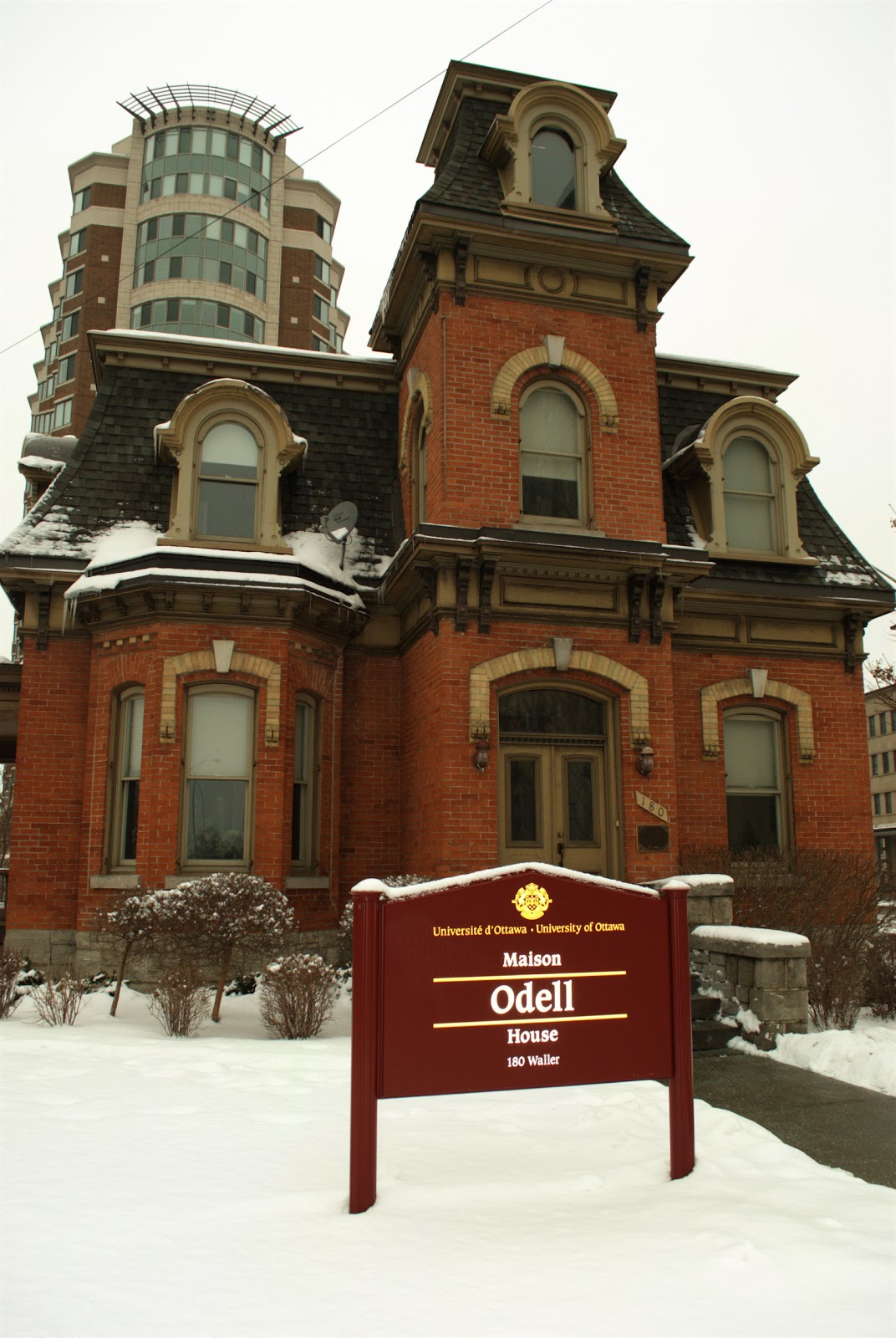
Why would they do this when there already is The Centre for Public Policy and Management close by in the 19th century (1884) Odell House on Waller? The Centre is part of uOttawa's Graduate of School Public and International Affairs. it will be serviced by the uOttawa Station on the Confederation Line.


Last edited by LeadingEdgeBoomer; Feb 11, 2018 at 12:06 AM.
     
     
  #6104  
Old Posted Feb 10, 2018, 11:55 PM
lrt's friend lrt's friend is online now
Registered User
 
Join Date: Dec 2006
Posts: 12,809
Quote:
Originally Posted by acottawa View Post
I think the types of businesses you're describing don't really exist anywhere, no matter the state of parking or road access. Independent department stores are gone everywhere, department stores in general are in decline, most types of specialty stores are in decline. Most types of independent stores are in decline. People have demonstrated a preference for big-box retail, outlet-type retail and the internet.

Meanwhile a range of stores, restaurants and entertainment venues have opened in suburbs closer to where people live and supermarkets have drastically improved (e.g. you don't need to go to the Market to buy cheese to the extent you once did).

To the extent downtowns are going to survive they need to cater to local residents, visitors or offer an experience to people from the suburbs. Bringing back surface parking or super wide streets will not offer that experience.
Obviously, we cannot turn back the clock, but Europe shows that downtown can be a much better focus than we even want to try for. Ottawa's downtown needs to be more than a service centre for locals and office workers. Downtown will never be the 'go-to place' if we are satisfied with that. It means that we should not be content with just building a few more bike tracks, not that I don't want that too. The Confederation Line is a start but we should not be just satisfied with that. It is not enough to make downtown a vibrant place and attract the masses.

The race to the lowest common denominator, such as big-box stores makes for a drab city and a drab population. We want to spend all our money where there are few amenities.

Perhaps I am looking for a planning revolution and much more thinking outside the box. I thought we were embarking on real change 15 years ago but we have now fallen back to traditional ideas. Our goal should not be one transit route with a train every 90 seconds. Instead, it should be six interconnecting transit lines with a train every 5 or 10 minutes that serve a much broader range of neighbourhoods. Outside of downtown, there is no need for a train every 90 seconds.

Last edited by lrt's friend; Feb 11, 2018 at 12:06 AM.
     
     
  #6105  
Old Posted Feb 11, 2018, 3:28 AM
KingofNannyGoatHill KingofNannyGoatHill is offline
Registered User
 
Join Date: Feb 2018
Posts: 4
Quote:
Originally Posted by acottawa View Post
None of the prairie cities have downtown freeways or parkways to funnel cars into the city centre. Parking might be a toss up but I don't think I have seen garages with free parking in cities comparable in size to Ottawa like Calgary or Edmonton (although maybe I don't know where the free parking is).
I would suggest that if we are talking about the way parking policy can make one city more car-friendly than another, we are really talking about the parking situation during weekday daytime hours; those hours are what influence modal share. The empty parking levels of the WEP or City Hall in the evening or on weekends don't really come into the modal share discussion.

We simply don't have a lot of free parking downtown on weekdays during daylight; I've never seen it anyway, and I've been working downtown for 30 years. I don't drive, but my workplace is surrounded by pay lots and everyone I know who drives to work expects to pay to park or at least have their employer pay for it - that's even true as far out from the core as Tunney's Pasture, where I live.

Leaving parking aside and turning to the issue of funnelling cars downtown, I would agree that the Queensway is very good at doing that. But your claim was that Ottawa has the *most* car-friendly downtown in Canada. So is the Queensway really better at streaming cars downtown than the Gardiner or the Ville Marie?

Downtown drivers have to get to or from the Queensway somehow. In my time working in downtown Ottawa I have seen Kent Street narrowed by one lane, Bank Street go from 4 lanes to 3, O'Connor have a lane converted to bicycles, and have seen road planners give up on plans that would widen Bronson. I support all those measures -- but I don't think they add up to making us the most car-friendly downtown in Canada.
     
     
  #6106  
Old Posted Feb 11, 2018, 1:44 PM
acottawa acottawa is offline
Registered User
 
Join Date: Aug 2009
Posts: 18,917
Quote:
Originally Posted by KingofNannyGoatHill View Post
I would suggest that if we are talking about the way parking policy can make one city more car-friendly than another, we are really talking about the parking situation during weekday daytime hours; those hours are what influence modal share. The empty parking levels of the WEP or City Hall in the evening or on weekends don't really come into the modal share discussion.

We simply don't have a lot of free parking downtown on weekdays during daylight; I've never seen it anyway, and I've been working downtown for 30 years. I don't drive, but my workplace is surrounded by pay lots and everyone I know who drives to work expects to pay to park or at least have their employer pay for it - that's even true as far out from the core as Tunney's Pasture, where I live.

Leaving parking aside and turning to the issue of funnelling cars downtown, I would agree that the Queensway is very good at doing that. But your claim was that Ottawa has the *most* car-friendly downtown in Canada. So is the Queensway really better at streaming cars downtown than the Gardiner or the Ville Marie?

Downtown drivers have to get to or from the Queensway somehow. In my time working in downtown Ottawa I have seen Kent Street narrowed by one lane, Bank Street go from 4 lanes to 3, O'Connor have a lane converted to bicycles, and have seen road planners give up on plans that would widen Bronson. I support all those measures -- but I don't think they add up to making us the most car-friendly downtown in Canada.
The comment I was responding to was about retail and entertainment, which does not occur during the morning rush hour. Outside of the morning rush hour it rarely takes more than 5 minutes to get from the city's principle freeway into downtown. There is no other city in Canada for which that is the case. Once downtown it is usually possible to park at one of the principle garages, even on weekdays. This is not the case in most downtowns. On evenings and weekends said parking is usually free. This is not the case in any downtown of any size in Canada. It is also usually possible to get free on street parking within a few blocks of downtown, even on weekdays. This is also very rare.

I guess I should have put in a caveat about the size of the city. I guess Moose Jaw or Wawa have more car friendly downtowns.

I think there is a perception problem. People who have no problem spending 10 minutes trying to find a parking spot at Costco and walking hundreds of metres in search of 10kg of nutmeg freak out about much smaller walks and much less parking hassle downtown.
     
     
  #6107  
Old Posted Feb 11, 2018, 2:17 PM
acottawa acottawa is offline
Registered User
 
Join Date: Aug 2009
Posts: 18,917
Quote:
Originally Posted by lrt's friend View Post
Obviously, we cannot turn back the clock, but Europe shows that downtown can be a much better focus than we even want to try for. Ottawa's downtown needs to be more than a service centre for locals and office workers. Downtown will never be the 'go-to place' if we are satisfied with that. It means that we should not be content with just building a few more bike tracks, not that I don't want that too. The Confederation Line is a start but we should not be just satisfied with that. It is not enough to make downtown a vibrant place and attract the masses.

The race to the lowest common denominator, such as big-box stores makes for a drab city and a drab population. We want to spend all our money where there are few amenities.

Perhaps I am looking for a planning revolution and much more thinking outside the box. I thought we were embarking on real change 15 years ago but we have now fallen back to traditional ideas. Our goal should not be one transit route with a train every 90 seconds. Instead, it should be six interconnecting transit lines with a train every 5 or 10 minutes that serve a much broader range of neighbourhoods. Outside of downtown, there is no need for a train every 90 seconds.
But European city centres are usually super unfriendly to cars, and they aren't used for regular shopping (unless the city is quite small) and people living in low-density suburbs are still expected to take a bus to some sort of higher order transit.
     
     
  #6108  
Old Posted Feb 11, 2018, 6:25 PM
1overcosc's Avatar
1overcosc 1overcosc is offline
Registered User
 
Join Date: Jun 2013
Location: Eastern Ontario
Posts: 12,377
Quote:
Originally Posted by acottawa View Post
But European city centres are usually super unfriendly to cars, and they aren't used for regular shopping (unless the city is quite small) and people living in low-density suburbs are still expected to take a bus to some sort of higher order transit.
Yeah. I lived in the suburbs of Prague last summer, and trips into the city required a 10km bus ride to a metro station. Prague has an extensive streetcar network but it only covers the inner city and inner suburbs. The metro reaches beyond that into the first few rings of outer suburbs but it never leaves the city limits (suburbs outside city limits make up around a quarter of the metro area's population).

In Prague the city centre is pretty much a tourist theme park; not many locals go there often. Employment is highly decentralized and scattered all over the city mostly in business parks. Other major cities in Europe are like this too.
     
     
  #6109  
Old Posted Feb 11, 2018, 11:32 PM
KingofNannyGoatHill KingofNannyGoatHill is offline
Registered User
 
Join Date: Feb 2018
Posts: 4
Quote:
Originally Posted by acottawa View Post
The comment I was responding to was about retail and entertainment, which does not occur during the morning rush hour. Outside of the morning rush hour it rarely takes more than 5 minutes to get from the city's principle freeway into downtown. There is no other city in Canada for which that is the case. Once downtown it is usually possible to park at one of the principle garages, even on weekdays. This is not the case in most downtowns. On evenings and weekends said parking is usually free. This is not the case in any downtown of any size in Canada. It is also usually possible to get free on street parking within a few blocks of downtown, even on weekdays. This is also very rare.

I guess I should have put in a caveat about the size of the city. I guess Moose Jaw or Wawa have more car friendly downtowns.

I think there is a perception problem. People who have no problem spending 10 minutes trying to find a parking spot at Costco and walking hundreds of metres in search of 10kg of nutmeg freak out about much smaller walks and much less parking hassle downtown.
Very true about Costco shoppers.

But our expressway is not really better at getting people in and out of the core than the Gardiner or the Ville Marie; in fact -- never mind a five minute drive --you are already *in* downtown when you get off their central exits. Drive them sometime and you'll see.

Toronto actually has an extensive and publicly run parking lot system; dozens and dozens of parking facilities - cheaper than private lots - and easy to reach from anywhere in the downtown. "The Green P"; and it even has an app to make payment faster and more convenient for the drivers. Whenever I rent a car to drive to TO I have no problem parking downtown. Yes it is paid parking, but so is Ottawa's during the day.

(And I'm not talking about Wawa or Moose Jaw either, so I'm not sure where you got that from.)

As I said before, I'm in broad agreement with the sentiment that we are still too easy on cars, but I think we need to keep perspective before we make sweeping statements, like Ottawa is "the most car-friendly".

Hyperbole doesn't help the discourse.

But if your point is that we have acres of free parking at night that most drivers don't even know about, I would say you are 100 percent accurate.
     
     
  #6110  
Old Posted Feb 12, 2018, 2:20 AM
Truenorth00 Truenorth00 is offline
Registered User
 
Join Date: May 2017
Posts: 29,094
Quote:
Originally Posted by acottawa View Post
The comment I was responding to was about retail and entertainment, which does not occur during the morning rush hour. Outside of the morning rush hour it rarely takes more than 5 minutes to get from the city's principle freeway into downtown. There is no other city in Canada for which that is the case. Once downtown it is usually possible to park at one of the principle garages, even on weekdays. This is not the case in most downtowns. On evenings and weekends said parking is usually free. This is not the case in any downtown of any size in Canada. It is also usually possible to get free on street parking within a few blocks of downtown, even on weekdays. This is also very rare.

I guess I should have put in a caveat about the size of the city. I guess Moose Jaw or Wawa have more car friendly downtowns.

I think there is a perception problem. People who have no problem spending 10 minutes trying to find a parking spot at Costco and walking hundreds of metres in search of 10kg of nutmeg freak out about much smaller walks and much less parking hassle downtown.
Having seen a lot of Canada, I disagree with this. I don't think Ottawa has a massively car-friendly downtown. Parking is not cheap in Ottawa and that alone makes a huge difference. Traffic actually competes with Toronto or Montreal during rush hour. There's limited access into the core of the city, with only one real highway sort of entrance into the core (Nicholas). Traffic is further constrained by about 20% of the downtown area being on the other side of the river and with chokepoints that are the bridges.

Outside of rush hour, Ottawa is better. But heck, getting around Toronto is massively better from 10am to 2 pm and after about 8 pm on most days. The real difference with the larger metros is how long their "rush hour" lasts. In the GTA peak traffic hours are effectively 6am-10am and 2pm to 8pm. Ottawa does not have anything like that.

I think your perception is getting skewed by size here. Ottawa's entire metro population is 1.3 million. It's car mobility is about on par for a city of its size. The GTA is about 5 million people. And its mobility by car is actually fairly decent given that population.

I actually think Ottawa has done a great job of boosting transit usage for a city of it's size. And for all the criticism here, ridership numbers show that. Transit modal share in Ottawa is on par with Toronto and Montreal and only behind New York City in the US.

https://en.wikipedia.org/wiki/List_of_No...ia/File:NorthAmericanPublicTransport.png

Sure, we're not Europe. And OC Transpo has a long way to go. But Ottawa benefits from strong employer support for transit (with the feds at least), transit system that has actually been able to keep up with population growth somewhat. And delivers travel times that are reasonable. 1+ hr commutes are not yet the norm in Ottawa, that they are in say the GTA.

And when Stage 2 is complete, Ottawa may well have the best transit coverage in Canada. 70% of Ottawa within 5 km, means that most of Ottawa will be within a 20 min bus ride of an LRT station. A third of Ottawa will be within a 20 min walk of the LRT. I'd certainly take an Ottawa with Stage 2 over most of the GTA.

     
     
  #6111  
Old Posted Feb 12, 2018, 2:17 PM
Uhuniau Uhuniau is offline
Registered User
 
Join Date: Jan 2010
Posts: 9,091
Quote:
Originally Posted by Kitchissippi View Post
When the Confederation Line opens and people are unwilling to walk the 3 to 4 block distances between Lyon, Parliament and Rideau to go shopping, they're pretty well hopeless if they need a streetcar shuttle to take them up and down Sparks. You do more walking during a visit to IKEA.
Drivists have weird concepts of walking distance: they will whinge incessantly about things like the King Street transit project in Toronto, forcing them to park all of a block or two away from a restaurant... but will happily walk hundreds of feet or even metres from a far-flung corner of a mall parking lot into the mall itself, because parking.

Instantly edited to add: as a pedestrian, the same psychology works in reverse - a ten-block walk along a traditional commercial mainstreet doesn't feel "far" in the same way that walking the same distance in big-box hell does.
__________________
___
Enjoy my taxes, Orleans (and Kanata?).
     
     
  #6112  
Old Posted Feb 12, 2018, 2:26 PM
Uhuniau Uhuniau is offline
Registered User
 
Join Date: Jan 2010
Posts: 9,091
Quote:
Originally Posted by Truenorth00 View Post
And when Stage 2 is complete, Ottawa may well have the best transit coverage in Canada. 70% of Ottawa within 5 km, means that most of Ottawa will be within a 20 min bus ride of an LRT station. A third of Ottawa will be within a 20 min walk of the LRT. I'd certainly take an Ottawa with Stage 2 over most of the GTA.


70% within 5 km is a meaningless metric in planning terms, but judging by how often it gets repeated, is a resounding success as a bit of political marketing.

It certainly means nothing for people in whole districts of the Inner Urban Area who will also be two, three, four, five km from their nearest LRT station, and - this is and important point - for whom the LRT won't be a practical part of a transit trip in any event.
__________________
___
Enjoy my taxes, Orleans (and Kanata?).
     
     
  #6113  
Old Posted Feb 12, 2018, 2:47 PM
roger1818's Avatar
roger1818 roger1818 is offline
Registered User
 
Join Date: Feb 2016
Location: Stittsville, ON
Posts: 6,610
Quote:
Originally Posted by Truenorth00 View Post
I actually think Ottawa has done a great job of boosting transit usage for a city of it's size. And for all the criticism here, ridership numbers show that. Transit modal share in Ottawa is on par with Toronto and Montreal and only behind New York City in the US.

https://en.wikipedia.org/wiki/List_of_No...ia/File:NorthAmericanPublicTransport.png
That is a very interesting chart! Thanks for sharing.

Getting back to the comment that originally started this debate:

Quote:
Originally Posted by lrt's friend View Post
Our plans for restricting traffic downtown actually have been very successful. It drove retail and entertainment out of downtown to the suburbs.
If you look to our neighbours to the south, most cities have a very drivable downtown core and yet have done an even better job driving retail and entertainment entertainment to the suburbs. The big exception is NYC and their drivability is very poor (not intentionally but because of the sheer volume) and have very high transit usage, resulting in a very vibrant downtown.

Personally I think the move of retail and entertainment to the suburbs was not done because of poor drivability, but because businesses discovered that not only will their operating costs go down by moving to the suburbs, but their market share goes up by being closer to their market.

It was the opening of suburban malls (and later big box stores) that really drew people away from downtown. Westgate is considered Ottawas first shopping centre, opening in 1955 according to Wikipedia. Before that, downtown was the place to go for shopping.
     
     
  #6114  
Old Posted Feb 12, 2018, 2:51 PM
roger1818's Avatar
roger1818 roger1818 is offline
Registered User
 
Join Date: Feb 2016
Location: Stittsville, ON
Posts: 6,610
Quote:
Originally Posted by Uhuniau View Post
Drivists have weird concepts of walking distance: they will whinge incessantly about things like the King Street transit project in Toronto, forcing them to park all of a block or two away from a restaurant... but will happily walk hundreds of feet or even metres from a far-flung corner of a mall parking lot into the mall itself, because parking.
I don't know if I agree with you on that one. Many people will spend 10-15 minutes circling the parking lot to get a spot close to the door instead of parking in the outer edge of the parking lot and walk a minute or two.

Quote:
Instantly edited to add: as a pedestrian, the same psychology works in reverse - a ten-block walk along a traditional commercial mainstreet doesn't feel "far" in the same way that walking the same distance in big-box hell does.
That I do agree with you on. I hate walking through a parking lot but walking along a downtown street can be pleasant (depending on the street).
     
     
  #6115  
Old Posted Feb 12, 2018, 2:51 PM
lrt's friend lrt's friend is online now
Registered User
 
Join Date: Dec 2006
Posts: 12,809
Quote:
Originally Posted by Uhuniau View Post
70% within 5 km is a meaningless metric in planning terms, but judging by how often it gets repeated, is a resounding success as a bit of political marketing.

It certainly means nothing for people in whole districts of the Inner Urban Area who will also be two, three, four, five km from their nearest LRT station, and - this is and important point - for whom the LRT won't be a practical part of a transit trip in any event.
I agree. It is BS really when the plan for people in my section of the city is not to use the closest LRT station because of possible capacity issues for the Trillium Line and because it will mean two transfers to reach downtown. So, the problem is more widespread than just central neighbourhoods. But really, what is the importance of the 5km figure if going the 5km makes your trip worse?

I hear all these comments about how well Ottawa is doing in the North American context while ridership is falling and modal share is falling faster. Then we hear that the Baseline BRT is being delayed, which is real new rapid transit, instead of the Confederation Line which is a rebuild for most of Phase 1 and 2.
     
     
  #6116  
Old Posted Feb 12, 2018, 3:29 PM
Acajack's Avatar
Acajack Acajack is offline
Gros Méchant Loup
 
Join Date: Aug 2006
Location: SSP Graveyard
Posts: 72,949
Quote:
Originally Posted by lrt's friend View Post
Our plans for restricting traffic downtown actually have been very successful. It drove retail and entertainment out of downtown to the suburbs. In my lifetime, there has been a dramatic shift. People don't have to go downtown anymore, and I would say, most go much less often than a generation or two ago. If we restrict traffic but don't offer a comparable alternative, this is the inevitable outcome. The one corridor Confederation Line is better than nothing but don't expect people to return downtown in droves. It will still be far too inconvenient.

So as we merrily go along restricting traffic more and more, there will be other consequences beyond beautifying the streets. One wonders why the Byward market is struggling with its traditional role as a farmer's market. Look no further than traffic restrictions, lack of parking and poor general public access.

When comparing North American and European cities, the differences are dramatic. While transit flows into downtowns from everywhere in Europe, our cities encourage people to avoid downtowns by design.
I think that the growth of "offerings" in Ottawa's suburbs is more a reflection of the growth of the city (in those areas) than anything else. There is enough population in many suburban areas now to justify entertainment and shopping options that cater just to them.

Also, transitions in vocation are normal for areas like Downtown Ottawa, but IMO it still seems to be doing fine, and I expect that when the Rideau Station opens and they can clean up Rideau St. afterwards we'll see a tremendous change for the better in that part of the city.
__________________
Gone... but never forgotten.
     
     
  #6117  
Old Posted Feb 12, 2018, 3:34 PM
PHrenetic PHrenetic is offline
Registered User
 
Join Date: Jun 2016
Location: Ottawa
Posts: 1,029
Quote:
Originally Posted by roger1818 View Post
That I do agree with you on. I hate walking through a parking lot but walking along a downtown street can be pleasant (depending on the street).
Good Day.

yep.
The effect is probably due to the attention diversions of street walking (!pun!) and focus elsewhere on storefronts and traffic (ped and bike and car).
Walking through a parking lot is walking through a boring, pain-in-the-a parking lot - a waste of time and walking with no diversions of attention.
     
     
  #6118  
Old Posted Feb 12, 2018, 3:45 PM
Acajack's Avatar
Acajack Acajack is offline
Gros Méchant Loup
 
Join Date: Aug 2006
Location: SSP Graveyard
Posts: 72,949
Quote:
Originally Posted by 1overcosc View Post
Yeah. I lived in the suburbs of Prague last summer, and trips into the city required a 10km bus ride to a metro station. Prague has an extensive streetcar network but it only covers the inner city and inner suburbs. The metro reaches beyond that into the first few rings of outer suburbs but it never leaves the city limits (suburbs outside city limits make up around a quarter of the metro area's population).

In Prague the city centre is pretty much a tourist theme park; not many locals go there often. Employment is highly decentralized and scattered all over the city mostly in business parks. Other major cities in Europe are like this too.
Our view of European cities and their vibrancy is often skewed as well. The downtowns of so many of them are often vibrant due in large part to a year-round tourist crush.

Inner city neighbourhoods just outside of downtown even in the more dynamic cities often aren't significantly more vibrant than their equivalents in major Canadian cities.

In most of Paris inner city on a random Thursday night you can shoot a cannon down the sidewalk of most streets after about 7 or 8 pm.

Yes, there may be a greater number of "nightlife" streets scattered throughout the city but 99% of city streets there are not like that.

And of course you're likely to find a café or a restaurant with some life here and there in most parts of the city on any given night, but that doesn't mean the streets they're on are more filled with people than, say, Richmond Rd. would be at the same time on the same night.
__________________
Gone... but never forgotten.
     
     
  #6119  
Old Posted Feb 12, 2018, 4:07 PM
acottawa acottawa is offline
Registered User
 
Join Date: Aug 2009
Posts: 18,917
Quote:
Originally Posted by Acajack View Post
Our view of European cities and their vibrancy is often skewed as well. The downtowns of so many of them are often vibrant due in large part to a year-round tourist crush.

Inner city neighbourhoods just outside of downtown even in the more dynamic cities often aren't significantly more vibrant than their equivalents in major Canadian cities.

In most of Paris inner city on a random Thursday night you can shoot a cannon down the sidewalk of most streets after about 7 or 8 pm.

Yes, there may be a greater number of "nightlife" streets scattered throughout the city but 99% of city streets there are not like that.

And of course you're likely to find a café or a restaurant with some life here and there in most parts of the city on any given night, but that doesn't mean the streets they're on are more filled with people than, say, Richmond Rd. would be at the same time on the same night.
I partly agree with you, but I think in many European cities there is more of a culture of getting out of the house in the evening. Partly this is weather related, partly this is density related (a suburb in Europe tends to be more dense and can often support a local high street), partly this is house related (a European at a particular income point will generally have less house than a Canadian). But I think a lot of it has to do with the relative cost of food and drink, where a glass of wine can be had at a local place for a few euros (and may well include some snacks).
     
     
  #6120  
Old Posted Feb 12, 2018, 4:23 PM
roger1818's Avatar
roger1818 roger1818 is offline
Registered User
 
Join Date: Feb 2016
Location: Stittsville, ON
Posts: 6,610
Quote:
Originally Posted by PHrenetic View Post
Walking through a parking lot is walking through a boring, pain-in-the-a parking lot - a waste of time and walking with no diversions of attention.
On top of that, when walking through a parking lot, you have to be extra vigelant for cars backing out of parking spots who's driver might not see you as well as motorist not stopping for you to walk by. The addition of a pedestrian walkway within the parking lot can make it much more pleasant even though there isn't anymore to look at.
     
     
This discussion thread continues

Use the page links to the lower-right to go to the next page for additional posts
 
 
Closed Thread

Go Back   SkyscraperPage Forum > Regional Sections > Canada > Ontario > Ottawa-Gatineau > Transportation
Forum Jump


Forum Jump


All times are GMT. The time now is 2:39 PM.


Powered by vBulletin® Version 3.8.7
Copyright ©2000 - 2026, vBulletin Solutions, Inc.