HomeDiagramsDatabaseMapsForum About
     

Go Back   SkyscraperPage Forum > Regional Sections > Canada


Closed Thread

 
Thread Tools Display Modes
     
     
  #7781  
Old Posted Dec 20, 2017, 7:48 PM
ssiguy ssiguy is online now
 
Join Date: Mar 2006
Posts: 12,001
Vancouver has been building housing at a dizzying pace for the last 15 years but it does little if A} Chinese are buying the units en masse to launder their money and B} the units they are building are for only the wealthy.
     
     
  #7782  
Old Posted Dec 20, 2017, 9:15 PM
Pinion Pinion is offline
 
Join Date: Jul 2007
Posts: 5,167
Also everything being bought by Chinese money (by technically "local" residents or otherwise) causes everything to rise out of reach of the middle class. My old condo has gone up 100% in value in two years.

Having this much housing demand in a city with very few high paying jobs is disastrous to the economy outside of real estate and that's why people are upset, not because of racism/xenophobia.
     
     
  #7783  
Old Posted Dec 20, 2017, 9:25 PM
Doady's Avatar
Doady Doady is offline
 
Join Date: Apr 2004
Posts: 5,166
If Canada hadn't let immigrants into the country, housing wouldn't have become such a problem. No more immigration = no more housing shortage.
     
     
  #7784  
Old Posted Dec 20, 2017, 9:29 PM
geotag277 geotag277 is offline
 
Join Date: Nov 2013
Posts: 5,091
Quote:
Originally Posted by GlassCity View Post
I disagree that this is only a City of Vancouer problem. Investors are buying properties in the whole region, and even if they are concentrated in Vancouver, that has reverberations through the rest of the metro area. Such large problems don't end at arbitrary, meaningless municipal borders.
Well, for one thing, while 20% of condos in the City of Vancouver seems high, that does also imply that 80% are being bought by residents.

Again, that 20% props up demand for the units, which allows them to be built, which adds more rental stock to the city, which helps moderate rental price increases. How many new rental units is Vancouver building?

While it may seem from statistics that Vancouver is building at a "dizzying" pace compared to it's history, there is a strong case to be made that Vancouver has been perpetually under-building new supply since at least the 80s. Prices have been driven by supply constraints for at least as long, and warning bells should have gone off when Vancouver housing passed Toronto in average value (which was decades ago).
     
     
  #7785  
Old Posted Dec 20, 2017, 9:32 PM
geotag277 geotag277 is offline
 
Join Date: Nov 2013
Posts: 5,091
Quote:
Originally Posted by ssiguy View Post
Vancouver has been building housing at a dizzying pace for the last 15 years but it does little if A} Chinese are buying the units en masse to launder their money and B} the units they are building are for only the wealthy.
Vancouver does need an urban housing strategy which puts the "affordable housing" boogeyman to bed, permanently. As if any units being built today without granite countertops and engineered hardwood must necessarily be destined to become slums.

Vancouver needs an urban planning strategy that ties new housing stock to prevailing wages, preferably in the form of rental unit dedicated stock.

Of course, Vancouver has transformed itself from being at the forefront of urban planning in Canada, to being the capital of NIMBYism in almost a single generation. Look at how many Vancouver residents in this very thread are campaigning for LESS new housing stock and LESS upzoning.

Boggles the mind.
     
     
  #7786  
Old Posted Dec 20, 2017, 9:34 PM
osmo osmo is offline
 
Join Date: Nov 2005
Posts: 1,717
Quote:
Originally Posted by ssiguy View Post
Vancouver has been building housing at a dizzying pace for the last 15 years but it does little if A} Chinese are buying the units en masse to launder their money and B} the units they are building are for only the wealthy.
It still isn't enough. Both Vancouver and Toronto need record years of housing development to catch up with demand. Both cities need 25K+ units per year to keep up.

There isn't enough being built. Vancouver is still awash in single-family homes when the whole city should be upzoned for townhome and mid-rise development at a minimum. Toronto is the same deal where the city show horns point towers into little slabs of land while the rest of the city is sleepy single-family homes.

Once again, both Vancouver and Toronto need record years of housing development to keep up with demand. There isn't enough and all can hold whatever opinions they want, only thing bringing prices down is more housing and more housing types to be constructed.

Toronto and Vancouver both with out of wack absorption rates where 65% of units get gobbled up the moment they see the light when typically a healthy absorption rate is 20% (Vancouver blew the roof off with a peak of 120% a few years which vaulted the city into comical territory shared by Hong Kong, Sydney, or SF all cities that literally have no more land to build on, or have outright banned anything of substance to be built). Imagine a world with that much surplus in units, prices would be very reasonable versus the mess they are currently. You won't see prices drop down until you get absorption rates at 10% or below.
     
     
  #7787  
Old Posted Dec 20, 2017, 9:36 PM
esquire's Avatar
esquire esquire is offline
 
Join Date: Oct 2001
Posts: 37,480
Quote:
Originally Posted by Doady View Post
If Canada hadn't let immigrants into the country, housing wouldn't have become such a problem. No more immigration = no more housing shortage.
What about all the parts of Canada that have immigrants AND reasonable housing prices?
     
     
  #7788  
Old Posted Dec 20, 2017, 9:40 PM
geotag277 geotag277 is offline
 
Join Date: Nov 2013
Posts: 5,091
Despite Toronto and Vancouver's relative urbanity within Canada, there does seem to be an intense NIMBY mindset in both places among residents that "I live in Canada, therefore, I should be able to live in a single family detached home" type mindset. This isn't helped by lack of mid-rise, lack of affordable new units, lack of sustainable urban planning, lack of three bedroom family friendly units and so on.

If Toronto and Vancouver were truly awash in new housing stock, their rental vacancy rates wouldn't be hovering around 1%, which is near crisis levels for affordable housing.

Saying "well, they are building more to historical averages" doesn't mean anything, you need to look at the situation on the ground, and all indicators are to build more, build faster, and encourage more development of units across the price spectrum, everywhere.

People should google street view Vancouver sometime. Even in a sprawl city like Calgary, which has generally lagged behind Canadian major cities in urban development, you get out of the downtown area by a few km, you are in solidly mid-rise intense neighbourhoods building up. In Vancouver, you are in the middle of a sea of single family homes, stubborn resisting upzoning, and selling for millions. Yes, that same land equally far from Calgary downtown would also sell for millions, the difference is it would be part of a huge multi family development.
     
     
  #7789  
Old Posted Dec 20, 2017, 11:01 PM
someone123's Avatar
someone123 someone123 is offline
 
Join Date: Nov 2001
Posts: 36,019
Affordable market-rate housing in metro Vancouver mostly has to be highrise at this point, unless land values drop enormously. The boutique 4 storey projects around Commercial Drive or in Kitsilano are built on plots that cost millions of dollars so the land cost per unit works out to hundreds of thousands of dollars. This is how you get 800 square foot condos that cost $600,000 to purchase and cost only $200,000 to build. It has little to do with granite countertops. Those nicer finishes only add in the tens of thousands in a small condo.

The obsession with detached homes in Vancouver exists partly because of a lack of decent larger units in multi-unit developments. I looked at one suburban development recently that advertised 3 bedroom units and they were 970 square feet or so, with mini apartment-sized appliances. Pre-sale prices were in the $700,000 range. The building didn't have a whole lot in the way of amenities (it had fake amenities like a "yoga room", i.e. an empty room). It was really depressing.
     
     
  #7790  
Old Posted Dec 20, 2017, 11:09 PM
whatnext whatnext is online now
 
Join Date: Feb 2009
Posts: 28,167
Quote:
Originally Posted by geotag277 View Post
Despite Toronto and Vancouver's relative urbanity within Canada, there does seem to be an intense NIMBY mindset in both places among residents that "I live in Canada, therefore, I should be able to live in a single family detached home" type mindset. This isn't helped by lack of mid-rise, lack of affordable new units, lack of sustainable urban planning, lack of three bedroom family friendly units and so on.

If Toronto and Vancouver were truly awash in new housing stock, their rental vacancy rates wouldn't be hovering around 1%, which is near crisis levels for affordable housing.

Saying "well, they are building more to historical averages" doesn't mean anything, you need to look at the situation on the ground, and all indicators are to build more, build faster, and encourage more development of units across the price spectrum, everywhere.

People should google street view Vancouver sometime. Even in a sprawl city like Calgary, which has generally lagged behind Canadian major cities in urban development, you get out of the downtown area by a few km, you are in solidly mid-rise intense neighbourhoods building up. In Vancouver, you are in the middle of a sea of single family homes, stubborn resisting upzoning, and selling for millions. Yes, that same land equally far from Calgary downtown would also sell for millions, the difference is it would be part of a huge multi family development.
That is simply untrue and SSPers can easily find a multitude of threads proving it. Every Canadian city has SFH relatively close to the city core. Vancouver hardly lags Canada in that regard to in having multifamily construction going up at a rapid pace, these are just in the City of Vancouver and are just a fraction of the developments:

http://forum.skyscraperpage.com/showthread.php?t=168823
http://forum.skyscraperpage.com/showthread.php?t=138106
http://forum.skyscraperpage.com/showthread.php?t=205914
http://forum.skyscraperpage.com/showthread.php?t=202232
http://forum.skyscraperpage.com/showthread.php?t=141924
     
     
  #7791  
Old Posted Dec 20, 2017, 11:38 PM
geotag277 geotag277 is offline
 
Join Date: Nov 2013
Posts: 5,091
Quote:
Originally Posted by someone123 View Post
Those nicer finishes only add in the tens of thousands in a small condo.
Maybe in terms of build costs, but in terms of after market pricing it could potentially be much more, and differentiate between "luxury" versus "standard" suites.

Part of my point was that government mandating units be built to a certain price, even if it means removing something as simple and relatively cheap as granite counter tops, immediately puts that development into the "affordable housing" boogeyman, which causes NIMBY's everywhere to cry foul.

It's part of the real estate game, where prices can only ever go up. If you put affordable housing (even if it just means no granite counter tops) in a neighbourhood, it will "comp down" the entire neighbourhood.

Looking at condo prices across Vancouver, the entire metro area needs to be "comp'd down" several times over everywhere. Yet, no one will advocate for building affordable housing in their own neighbourhood (again, even if it means the government saying "you need to build to a price and income bracket, of which the only practical consequence of which is no granite counter tops").
     
     
  #7792  
Old Posted Dec 21, 2017, 1:40 AM
osmo osmo is offline
 
Join Date: Nov 2005
Posts: 1,717
"New" Affordable Housing is an oxymoron. You don't build "new" affordable, anything that is new will have a price premium due to land escalations cooked into purchase price.

Secondary older market units become affordable as new places replace them. The top of the market will always go towards nice and new. Well maintained older housing is what becomes cheap housing as it has lower costs to maintain and you can (hopefully) capture tax and maintenance in gradual rent increases slowly over time.

Canada built most of its housing during a older time that now presents "affordable housing" now. Montreal has such great value because much of its housing stock is older.

In regards to single family homes, they don't belong in city unless you're reselling to pay a kings ransom and it is in a historical elite neighborhood or near the best schools. You should be building townhomes in towns and then apartments in cities. There are also cottage courts, duplex housing, semi detached homes that help fit many families very cozy into a urban context.

There are very few neighborhoods in Canada that excel at urban town/city form. Most evreyone city has an apartment style transition area which is highly urban but very sleepy because it is so affordable seniors and families pack it up.

I will post some examples when I'm not on the cellular.
     
     
  #7793  
Old Posted Dec 21, 2017, 2:20 AM
geotag277 geotag277 is offline
 
Join Date: Nov 2013
Posts: 5,091
Quote:
Originally Posted by osmo View Post
Secondary older market units become affordable as new places replace them.
I don't think this is quite right, or at least it is only looking at the partial equation.

It is true that the actual building built on top of the land itself tends to depreciate as it ages. This is like any other manufactured good. Newer builds will likely have higher value than older builds, when discounting the cost of the land itself.

But this cost analysis removes the land value, which tends to more than offset the depreciation of the build itself, thus, results in the new appreciating asset of home ownership.

In any growing city, under the sprawling model, new units are built upon land that is further and further away, purchased for relatively low cost. These new houses are technically more expensive to build than existing stock, yet with the land value taken into account of the equation, are actually cheaper to buy than housing closer to the city core. This growth puts pricing pressure upwards on all existing housing stock, as being closer to the city tends to give more advantages, the radius of multi-family development expands, and the land existing multifamily was built on gets more valuable as this development increasing and the development potential increases.

The model breaks in cases like Vancouver (and recently Toronto) when there is no more new housing stock added in the form of SFH. There is no affordable zone which natural market pressures allow to be added. All of a sudden, all the land becomes relatively valuable, and the only thing that really makes sense is to blanket the city in more multifamily to keep prices in check.

In this model, where land is constrained, no large scale SFH developments are coming online, and city growth is placing the same upward pricing pressure on all available land, targeted affordable housing outside of the free market model is necessary to maintain affordable housing options for city residents.

NIMBYism in Vancouver is blocking upzoning, blocking multifamily builds, and blocking affordable housing initiatives. The City of Vancouver itself (along with all the myriad cities contained in metro Vancouver) also seem severely handicapped in providing a way forward for housing in their respective districts.

     
     
  #7794  
Old Posted Dec 21, 2017, 4:29 AM
milomilo milomilo is offline
 
Join Date: Dec 2013
Posts: 10,498
Quote:
Originally Posted by geotag277 View Post
People should google street view Vancouver sometime. Even in a sprawl city like Calgary, which has generally lagged behind Canadian major cities in urban development, you get out of the downtown area by a few km, you are in solidly mid-rise intense neighbourhoods building up. In Vancouver, you are in the middle of a sea of single family homes, stubborn resisting upzoning, and selling for millions. Yes, that same land equally far from Calgary downtown would also sell for millions, the difference is it would be part of a huge multi family development.
Wait what? I agree with what you have said in this thread but I'm not sure how you can say this? Every community that bounds downtown - Sunnyside, Inglewood, Ramsay, Bankview, Mt Royal, etc - is predominately low rise with at best far less than 50% midrises. Once you get past that, to 'a few km' it is almost entirely SFH and infill.
     
     
  #7795  
Old Posted Dec 21, 2017, 4:41 AM
Pinion Pinion is offline
 
Join Date: Jul 2007
Posts: 5,167
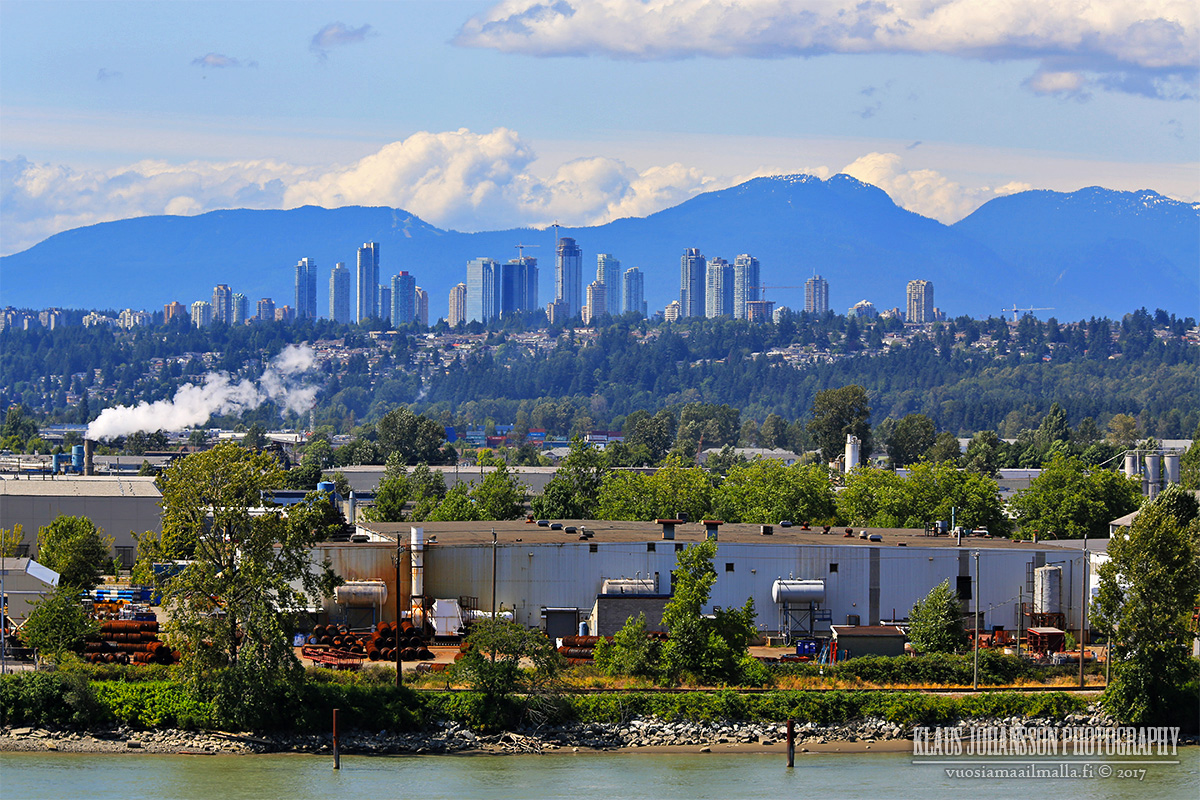
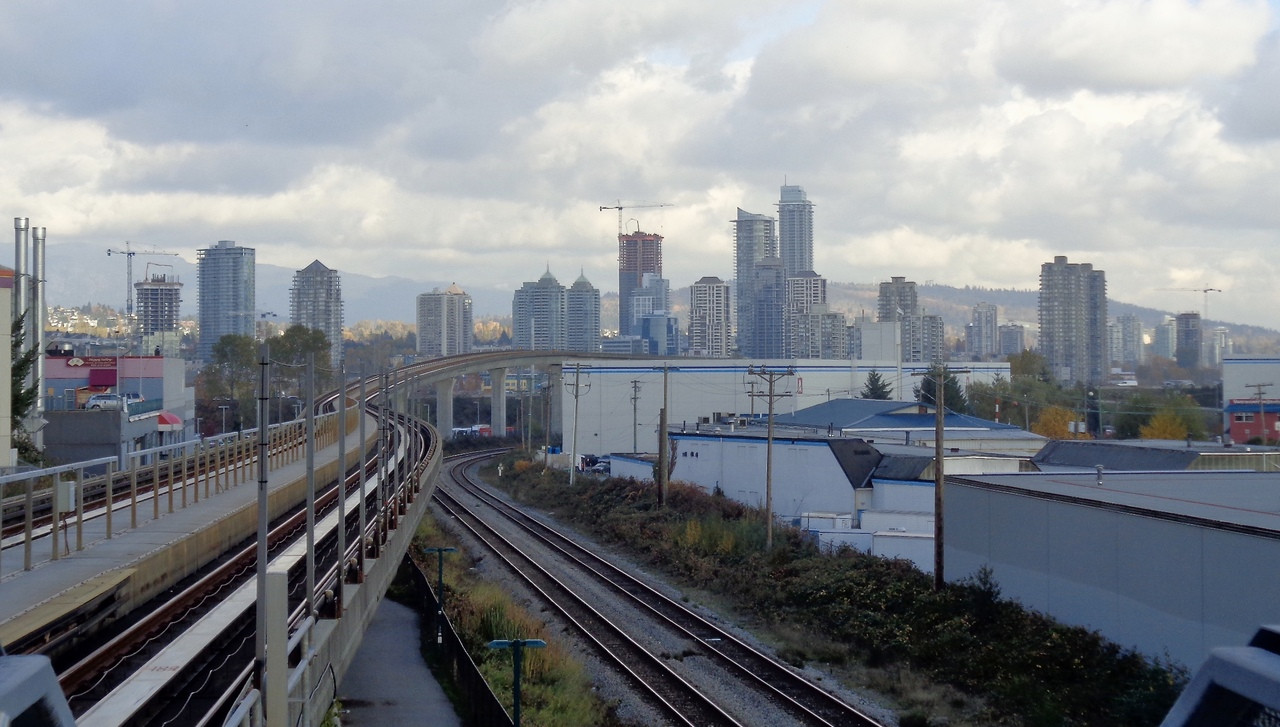
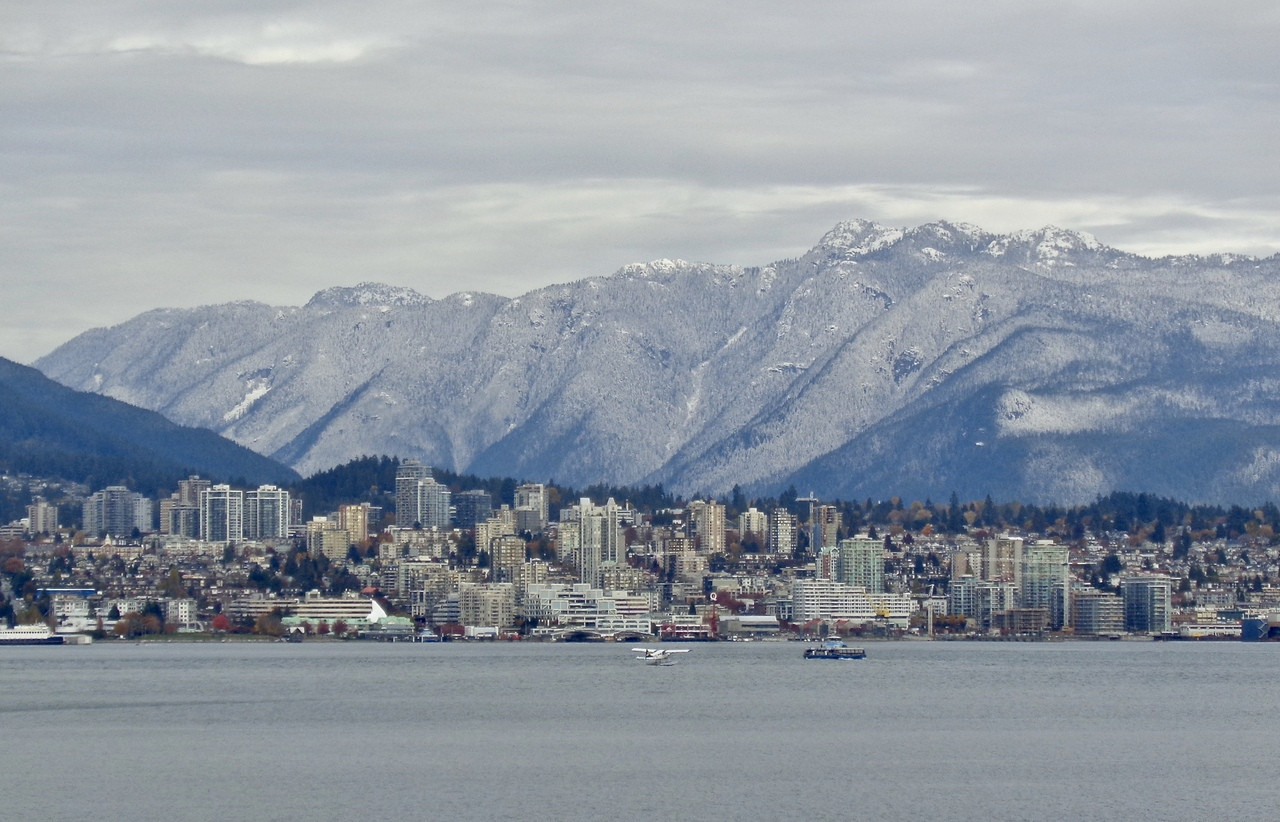
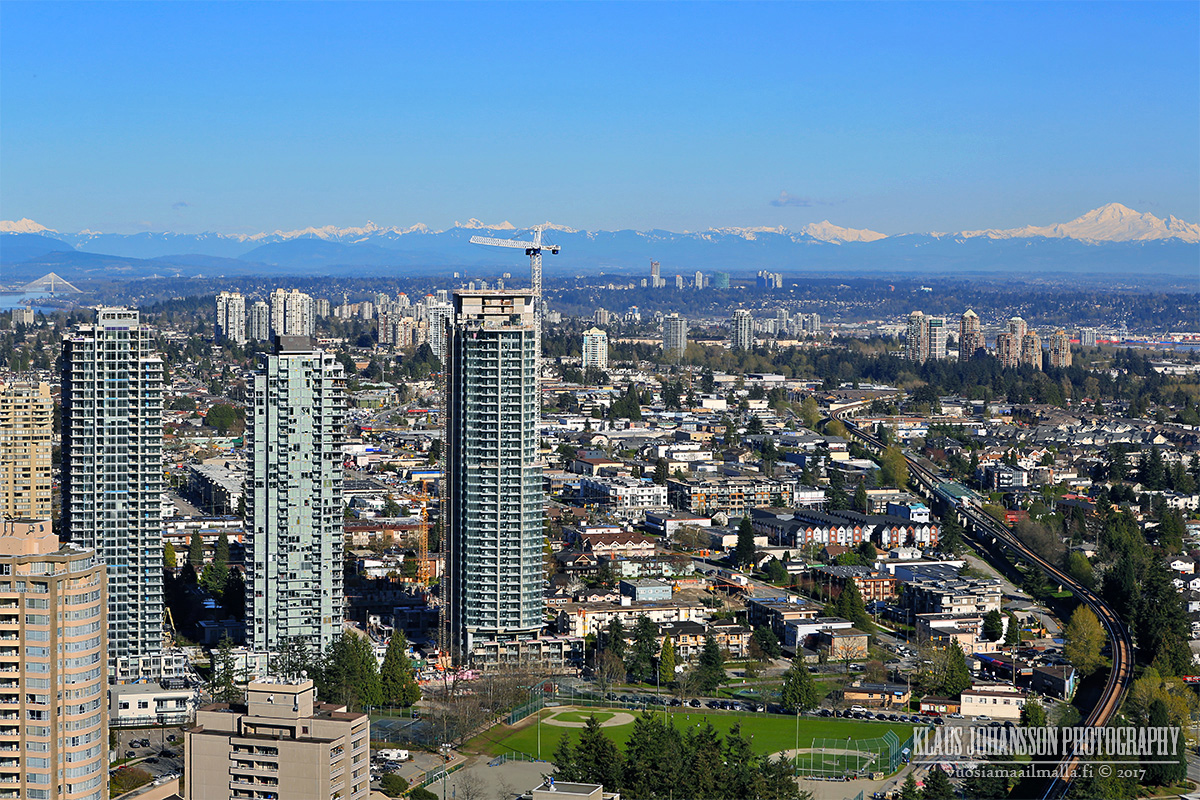
The City of Vancouver definitely has a problem with densifying but it's a relatively small area. There are tons of city-sized skylines outside of the City of Vancouver but within a 30 minute commute. I absolutely disagree with the idea that the Fraser Valley is running out of space and that has anything to do with the fact that the average house is approaching $2 million. Maybe in 100 years the valley constraints will be an issue.

Metrotown


Brentwood


North Van


New Westminster


And this is what it looks like further east into the valley:


All photos from SSP posters in the Suburban skyline thread.

The geographical limits should make Vancouver a little more expensive than the rest of the country, like it was in the 90s, instead of the most expensive place on the continent. The housing prices - often more than anyone's lifetimes earnings in this country - is caused by Chinese money and everyone knows it.
     
     
  #7796  
Old Posted Dec 21, 2017, 4:41 AM
lio45 lio45 is offline
 
Join Date: Aug 2007
Posts: 44,901
Quote:
Originally Posted by osmo View Post
"New" Affordable Housing is an oxymoron. You don't build "new" affordable, anything that is new will have a price premium due to land escalations cooked into purchase price.
The first part of your statement is true, but the second part is completely incorrect. It's the opposite: land value affects everything, old and new alike.

The reasons "new is pricier" is that we've got higher standards for almost anything, regulations are a lot more strict, and labor and materials are also pricier than they used to.
     
     
  #7797  
Old Posted Dec 21, 2017, 4:50 AM
Pinion Pinion is offline
 
Join Date: Jul 2007
Posts: 5,167
.

Last edited by Pinion; Apr 18, 2018 at 1:50 AM.
     
     
  #7798  
Old Posted Dec 21, 2017, 5:14 AM
ssiguy ssiguy is online now
 
Join Date: Mar 2006
Posts: 12,001
Quote:
Originally Posted by Doady View Post
If Canada hadn't let immigrants into the country, housing wouldn't have become such a problem. No more immigration = no more housing shortage.
Not true. Vancouver is only growing at about 1.3%/year. OK growth but certainly not dizzying. The problem is that Vancouver has allowed homes to be destroyed en masse so the value goes from the house to the land. Also Vancouver and BC have turned a complete blind eye to the massive money laundering going on, in fact they have encouraged it buy shutting down all conversations by raising the "race" card.

BC decided it wanted an economy built on real estate and money laundering and they got both. If Vancouver and BC had respected their citizens and the law they wouldn't be in this fix. This is very much of their own making.
     
     
  #7799  
Old Posted Dec 21, 2017, 6:10 AM
logan5's Avatar
logan5 logan5 is offline
 
Join Date: Feb 2011
Posts: 8,193
Quote:
Originally Posted by Pinion View Post
The City of Vancouver definitely has a problem with densifying but it's a relatively small area. There are tons of city-sized skylines outside of the City of Vancouver but within a 30 minute commute. I absolutely disagree with the idea that the Fraser Valley is running out of space and that has anything to do with the fact that the average house is approaching $2 million. Maybe in 100 years the valley constraints will be an issue.

The geographical limits should make Vancouver a little more expensive than the rest of the country, like it was in the 90s, instead of the most expensive place on the continent. The housing prices - often more than anyone's lifetimes earnings in this country - is caused by Chinese money and everyone knows it.
Have a look at this ALR map.


http://www.writeopinions.com/agricultural-land-reserve

That's 100's of square km's that can't be developed. Now transpose that map onto a Google Earth view of Metro Vancouver and you will see that there is very little developable land left. Then there's the fact that most detached houses in Metro Vancouver are built on 50 to 60 foot wide lots. Grossly oversized for a such a land constrained city.
     
     
  #7800  
Old Posted Dec 21, 2017, 12:38 PM
Pinion Pinion is offline
 
Join Date: Jul 2007
Posts: 5,167
I'm aware of (and support) the ALR, thanks. Doesn't change what the real problem is.
     
     
This discussion thread continues

Use the page links to the lower-right to go to the next page for additional posts
 
 
Closed Thread

Go Back   SkyscraperPage Forum > Regional Sections > Canada
Forum Jump


Forum Jump


All times are GMT. The time now is 12:31 AM.


Powered by vBulletin® Version 3.8.7
Copyright ©2000 - 2026, vBulletin Solutions, Inc.