HomeDiagramsDatabaseMapsForum About
     

Go Back   SkyscraperPage Forum > Regional Sections > Canada > Atlantic Provinces > Halifax > Halifax Peninsula & Downtown Dartmouth


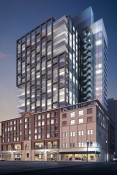
    The Roy Halifax in the SkyscraperPage Database

Building Data Page   • Halifax Skyscraper Diagram

Map Location

Reply

 
Thread Tools Display Modes
     
     
  #881  
Old Posted May 28, 2016, 6:59 PM
Keith P.'s Avatar
Keith P. Keith P. is offline
Registered User
 
Join Date: Mar 2006
Posts: 8,883
Quote:
Originally Posted by Drybrain View Post
A city needs a wide variety of building scales and frontages, and narrower ones (in a healthy mix of old and new buildings) create opportunities for a wide variety of businesses and other uses. Newer buildings tend to have large frontages (not in every case--ugly as the Trillium is, it works well at sidewalk level).

Even when new buildings are well-scaled, it's still important to keep a variety of older buildings around. As much as the Spring Garden West development will likely be an architectural improvement (except for the loss of the Coburg Apartments, which seems like a lost opportunity for re-use) it will probably have a far more upscale mix of businesses, and perhaps a higher concentration of chains, than what's there now, due tiny the higher overhead of the new building). That's not necessarily bad, and we need somebody that. But if we have too much of that develipment all at once, we run the risk of tipping the balance too far to new buildings. I think it'd be pretty plainly a bad thing to see the small-scaled frontages of Halifax become overwhelmingly consolidated into large frontages. We need a diversity of building types and ages to ensure a healthy mix of businesses.

You worry too much.
Reply With Quote
     
     
  #882  
Old Posted May 28, 2016, 7:20 PM
Hali87 Hali87 is offline
Registered User
 
Join Date: Dec 2011
Location: Calgary
Posts: 4,465
I think it's a valid concern. Is it that you don't think it's likely that the small-scale frontages will overwhelmingly be consolidated into large frontages? Or just that you don't see this as a negative thing?

I would see it as a negative thing for the reasons already mentioned by Someone123 and DryBrain, and it's already kind of happening with nothing really in place to prevent most of the major corridors from having the character of their streetscapes completely erased - hopefully the Centre Plan will address this or else there's a risk that it will actually accelerate this process.

Note that I'm not saying "we should not allow any lot consolidation" or "we should not build anything new" or "I only want small-scale stuff that appeals only to hipsters" or what have you. Some larger retail spaces would be good, and in many cases that requires lot consolidation. Again, it's about balance.

To be fair, a lot of newer building designs seem to be along the lines of the Trillium, with several small frontages - actually the Vic is better IMO (the frontages are distinct whereas with the Trillium it is just a large uniform base with several entrances).
Reply With Quote
     
     
  #883  
Old Posted May 28, 2016, 9:13 PM
Keith P.'s Avatar
Keith P. Keith P. is offline
Registered User
 
Join Date: Mar 2006
Posts: 8,883
Quote:
Originally Posted by Hali87 View Post
I think it's a valid concern. Is it that you don't think it's likely that the small-scale frontages will overwhelmingly be consolidated into large frontages? Or just that you don't see this as a negative thing?
I think that in a place where virtually no development occurred for the last couple of decades, we have a long, long way to go before there is any danger of this becoming an issue of any importance. We certainly do not need further laws impeding potential development in service of what is largely a theoretical issue that has not had any real impact here.
Reply With Quote
     
     
  #884  
Old Posted May 28, 2016, 9:46 PM
someone123's Avatar
someone123 someone123 is offline
hähnchenbrüstfiletstüc
 
Join Date: Nov 2001
Location: Vancouver
Posts: 35,963
Quote:
Originally Posted by Keith P. View Post
I think that in a place where virtually no development occurred for the last couple of decades, we have a long, long way to go before there is any danger of this becoming an issue of any importance. We certainly do not need further laws impeding potential development in service of what is largely a theoretical issue that has not had any real impact here.
There was a brief period in the 1990's when the economy was bad an not much development happened, but lots of stuff was built from about the late-90's up until 2010 or so when construction went into high gear.

I am thinking of buildings like the Paramount, Martello, Garden Crest, W Suites on Barrington, Letson Court, and on and on. Bishop's Landing is 200 units from circa 2000. In the North End you'll find developments like Armoury Square, the Lexington, and the ones on Gladstone. Walk around downtown with an eye to when the buildings were built and you will find a large number of changes that date to 1998-2010. You will even find the odd building from the mid-90's, like Barrington Gate (the one at Barrington and Blowers).

The "no construction for 20 years" thing is a construct of the local media and developers who have an interest in making it looks like the city is in crisis mode, something that has basically never been true in the modern era. This doesn't mean I think we should introduce a bunch of punitive measures to slow down development but it's the reality.

Even the claim that downtown living has just caught on recently in Halifax isn't true. There are tons of condos from the 1980's in the downtown area.
Reply With Quote
     
     
  #885  
Old Posted May 28, 2016, 11:24 PM
Keith P.'s Avatar
Keith P. Keith P. is offline
Registered User
 
Join Date: Mar 2006
Posts: 8,883
Quote:
Originally Posted by someone123 View Post
I am thinking of buildings like the Paramount, Martello, Garden Crest, W Suites on Barrington, Letson Court, and on and on. Bishop's Landing is 200 units from circa 2000. In the North End you'll find developments like Armoury Square, the Lexington, and the ones on Gladstone. Walk around downtown with an eye to when the buildings were built and you will find a large number of changes that date to 1998-2010. You will even find the odd building from the mid-90's, like Barrington Gate (the one at Barrington and Blowers).
And how many of those developments you listed took out a bunch of smaller buildings in order to be constructed? Only one or two as far as I can recall. Most were built on vacant sites or replaced equally large structures. This is a restriction that is not needed.
Reply With Quote
     
     
  #886  
Old Posted May 29, 2016, 12:08 AM
someone123's Avatar
someone123 someone123 is offline
hähnchenbrüstfiletstüc
 
Join Date: Nov 2001
Location: Vancouver
Posts: 35,963
Quote:
Originally Posted by Keith P. View Post
And how many of those developments you listed took out a bunch of smaller buildings in order to be constructed? Only one or two as far as I can recall. Most were built on vacant sites or replaced equally large structures. This is a restriction that is not needed.
True, most were on vacant sites but as the number of vacant sites available for development continues to drop we will invariably see more pressure on smaller older buildings as long as the pace of development keeps up.

This is particularly true given the development controls in older residential areas and all the institutional land owned by the province and universities. The number of privately-held empty lots that can be developed downtown is quite small.
Reply With Quote
     
     
  #887  
Old Posted May 29, 2016, 12:26 AM
Keith P.'s Avatar
Keith P. Keith P. is offline
Registered User
 
Join Date: Mar 2006
Posts: 8,883
Keep on bailing, it'll slow down your sinking position!
Reply With Quote
     
     
  #888  
Old Posted May 29, 2016, 1:46 AM
Hali87 Hali87 is offline
Registered User
 
Join Date: Dec 2011
Location: Calgary
Posts: 4,465
It's not a sinking position though, because he's right. Which is not to say that you're not also right in that many larger-floorplate developments have been built on vacant or underused lots, or replaced other larger-floorplate buildings, but it stands to reason that sooner or later we will run out of sites like that to redevelop - and then what? Just because it has not really been an issue in the past doesn't mean that it won't be in the future, and planning is about anticipating the future (hence, "planning").

The Nova Centre, Doyle block, Spring Garden West, and the Brenton Street proposal are examples of this process already happening, and it is unclear what the approach will be for the redevelopment at Barrington/Bishop. The Wellington Street redevelopment will also do this although there isn't really any commercial aspect involved. The Colonial Honda expansion is another example of lot consolidation and in that case the buildings are being replaced by a large paved area. The Vic is one example that I think was done well, all things considered. The Trillium has multiple storefronts but doesn't address the rhythm of the streetscape very well because the base is wide and uniform, in contrast with the rest of that section of South Park. The Waterside Centre is sort of the opposite in that the streetscape was preserved but all of the different ground floor uses were replaced by a single tenant.

I'm not saying that all of those redevelopments are net negatives but it's not really true that there hasn't been lot consolidation and that it's unlikely to happen in the future. It seems to be happening at an accelerated rate and logically this will continue to happen as the city runs out of vacant/underused lots to redevelop. Will streetscapes be totally erased or "ruined" once all of the projects that I listed are built? No, but it's unlikely that that process will come to a halt after they're built unless the planning rules adapt and make that a less attractive option (this also does not mean changing the rules so that lots can never be consolidated - but there could be design requirements or limitations in certain specific areas).

I think part of the disagreement here comes down to personal tastes and values - if the Doyle redevelopment is replacing "nothing special" then it's not as big a deal, but many people would disagree that the now-demolished buildings were "nothing special". If driving is and always will be your primary mode of transportation and you place strong values on free-market principles, then the Colonial Honda expansion might not seem to have any really negative aspects, but again, this is not necessarily how most people think. If you consider all of the redevelopments that replace fine-grained with large-grained buildings that are ongoing or proposed, and extrapolate that into the future under the current planning regime, then it's not really hard to imagine streets like Quinpool, Spring Garden, Gottingen and Agricola losing their fine-grained character. It's conceivable that you'd be totally ok with this, but many wouldn't be.
Reply With Quote
     
     
  #889  
Old Posted May 29, 2016, 4:17 AM
OldDartmouthMark OldDartmouthMark is offline
Registered User
 
Join Date: May 2010
Posts: 10,498


Very well stated.
Reply With Quote
     
     
  #890  
Old Posted May 29, 2016, 2:27 PM
Drybrain Drybrain is offline
Registered User
 
Join Date: Sep 2012
Posts: 4,564
Quote:
Originally Posted by Keith P. View Post
I think that in a place where virtually no development occurred for the last couple of decades, we have a long, long way to go before there is any danger of this becoming an issue of any importance. We certainly do not need further laws impeding potential development in service of what is largely a theoretical issue that has not had any real impact here.
But we are a fairly small city without that many commercial streets. The Doyle block is a whole block, gone. Spring Garden Weet is another. It doesn't take that many large-scale projects to start really remaking the city in a substantial way, so we better make sure the projects in question are good.
Reply With Quote
     
     
  #891  
Old Posted May 29, 2016, 7:27 PM
Keith P.'s Avatar
Keith P. Keith P. is offline
Registered User
 
Join Date: Mar 2006
Posts: 8,883
Quote:
Originally Posted by Drybrain View Post
But we are a fairly small city without that many commercial streets. The Doyle block is a whole block, gone. Spring Garden Weet is another. It doesn't take that many large-scale projects to start really remaking the city in a substantial way, so we better make sure the projects in question are good.
That assumes that what was there previously was "good" by whatever measure one chooses to assess that. It also assumes the new development is inferior. That is silly. The folly of the planning profession is that is presumes that it knows what is good and what is not. In reality that is seldom black or white but rather is determined by the market and the public response to what is being offered. The tenement slums on McCully and May Sts were in no way good based on any objective measure, yet many urbanists are pretending they were. This dogma-based thinking is what dooms the planning profession to perpetual squabbling and at times outright mockery.
Reply With Quote
     
     
  #892  
Old Posted May 29, 2016, 9:31 PM
Hali87 Hali87 is offline
Registered User
 
Join Date: Dec 2011
Location: Calgary
Posts: 4,465
But in this case we're talking about something more specific than "in my opinion this building is good/bad", it's about the process of lot consolidation and replacing blocks made up of several small buildings/frontages with a single large one.

It's more complex than saying "this development is better/worse than what was there before", it's about the larger trend of fine-grained streetscapes potentially disappearing altogether.

It's also not really a fact that "the tenement slums" on McCully and May Streets were "in no way good based on any objective measure", or that what is replacing them is a better use of the land (This is what you consider a "tenement slum"? Even this is unremarkable at worst, IMO). They were presumably fairly inexpensive (affordability generally being considered a good thing), and could certainly have been fixed up to be more attractive if the desire/motivation had been there (in the first example most of them already had been). The city is trying to encourage residential density, and demolishing residential units and replacing them with asphalt does the opposite of this. Luckily this seems to be a fairly unique case in that most of the other car dealerships in the area are just next to other car dealerships.

Maybe we could just agree to disagree on these things and get back to talking about the Roy? (Or move this discussion to another thread?)


Last edited by Hali87; May 29, 2016 at 9:47 PM.
Reply With Quote
     
     
  #893  
Old Posted May 30, 2016, 2:00 AM
Drybrain Drybrain is offline
Registered User
 
Join Date: Sep 2012
Posts: 4,564
Quote:
Originally Posted by Keith P. View Post
That assumes that what was there previously was "good" by whatever measure one chooses to assess that. It also assumes the new development is inferior. That is silly. The folly of the planning profession is that is presumes that it knows what is good and what is not. In reality that is seldom black or white but rather is determined by the market and the public response to what is being offered. The tenement slums on McCully and May Sts were in no way good based on any objective measure, yet many urbanists are pretending they were. This dogma-based thinking is what dooms the planning profession to perpetual squabbling and at times outright mockery.
#1 The issue at Colonial Honda isn't the quality of the proposed housing, it's the replacement use.

#2 "Slums" are inhabited by people who require shelter.

#3 The area has clearly been gentrifying, as photos like this show. These two houses on the right were renovated in 2013-14.

In the country's larger cities we tend to see the fine-grained fabric of main streets much better respected by developers. No one is buying up blocks of Yonge Street or wherever and bulldozing them.

But they do here, and all it will take is two or three bad developments to destroy what makes Agricola successful and special, for example. A lot of Halifax developers simply don't have a clue what makes for good city-building, and our planning regime doesn't meaningfully enforce anything.
Reply With Quote
     
     
  #894  
Old Posted Jun 1, 2016, 5:38 PM
Duff's Avatar
Duff Duff is offline
Registered User
 
Join Date: Oct 2012
Location: West End Halifax
Posts: 337
From this weekend

Reply With Quote
     
     
  #895  
Old Posted Jun 2, 2016, 9:18 AM
counterfactual counterfactual is offline
Registered User
 
Join Date: Jul 2013
Location: Parts Unknown
Posts: 1,796
Quote:
Originally Posted by Drybrain View Post
#1 The issue at Colonial Honda isn't the quality of the proposed housing, it's the replacement use.

#2 "Slums" are inhabited by people who require shelter.

#3 The area has clearly been gentrifying, as photos like this show. These two houses on the right were renovated in 2013-14.

In the country's larger cities we tend to see the fine-grained fabric of main streets much better respected by developers. No one is buying up blocks of Yonge Street or wherever and bulldozing them.

But they do here, and all it will take is two or three bad developments to destroy what makes Agricola successful and special, for example. A lot of Halifax developers simply don't have a clue what makes for good city-building, and our planning regime doesn't meaningfully enforce anything.
Not sure why this debate is in The Roy thread, but I agree, those houses are obvious candidates for gentrification. I mean, there are major new developments going in literally just up the street.
Reply With Quote
     
     
  #896  
Old Posted Jun 2, 2016, 11:49 AM
OldDartmouthMark OldDartmouthMark is offline
Registered User
 
Join Date: May 2010
Posts: 10,498


That discussion was continued in General Updates and News:

http://forum.skyscraperpage.com/showthread.php?t=157134&page=401
Reply With Quote
     
     
  #897  
Old Posted Jun 3, 2016, 12:52 PM
OldDartmouthMark OldDartmouthMark is offline
Registered User
 
Join Date: May 2010
Posts: 10,498
Quote:
Originally Posted by Duff View Post
From this weekend
(photo deleted for space/load time considerations)
That shot really shows how well the new podium will fit in with the vintage streetscape. Hopefully their material selection will be of high quality so that it is in keeping with the vintage stuff. I'm sure it will be, given the high-end nature of the building.
Reply With Quote
     
     
  #898  
Old Posted Jun 8, 2016, 8:56 PM
Jonovision's Avatar
Jonovision Jonovision is online now
Registered User
 
Join Date: Sep 2003
Posts: 5,053
Reply With Quote
     
     
  #899  
Old Posted Jun 9, 2016, 2:12 AM
fenwick16 fenwick16 is offline
Honored Member
 
Join Date: Feb 2007
Location: Toronto area (ex-Nova Scotian)
Posts: 5,558
Thanks for all the construction pictures.

The back of the Green Lantern building really looks horrendous with the brown corrugated sheet metal partly peeled off.

This corner will look so different in 2 - 3 years. Maybe by that time there will be construction on the former TexPark lot.
Reply With Quote
     
     
  #900  
Old Posted Jun 9, 2016, 8:54 AM
counterfactual counterfactual is offline
Registered User
 
Join Date: Jul 2013
Location: Parts Unknown
Posts: 1,796
We used to criticize Starfish a lot on here, but they're playing a huge role in turning Barrington Street around.
Reply With Quote
     
     
This discussion thread continues

Use the page links to the lower-right to go to the next page for additional posts
 
 
Reply

Go Back   SkyscraperPage Forum > Regional Sections > Canada > Atlantic Provinces > Halifax > Halifax Peninsula & Downtown Dartmouth
Forum Jump


Forum Jump


All times are GMT. The time now is 11:25 AM.


Powered by vBulletin® Version 3.8.7
Copyright ©2000 - 2026, vBulletin Solutions, Inc.