Quote:
Originally Posted by SFUVancouver

That's a great chart, LeftCoaster. Thank you.
One thought, I think that some of the Air Canada and United flights may be code-shares and not necessarily separate flights. On my IHA-YVR flight this past Sunday, for example, it was United Airlines metal code-shared with Air Canada. It was a brand new B737-900 no less with the fancy Boeing interior with Dreamliner lighting and cavernous B777 overhead bins.
|
No problem, this one was much tougher to do than the intl flights, since there are more flights and less information. Other than the changes pointed out by everyone it's mostly correct I think. Codeshares were definitely the toughest, it took me going onto the airline websites and attempting to book flights. From there the operator is listed. I think I got rid of most of the overlap, but clearly one or two still got through (phantom AC to Denver)
That United 737 looks fantastic, still no TVs in the back it seems though, that's a shame.
Quote:
Originally Posted by Johnny Aussie
AC doesn't fly its own a/c to DEN. That's just code share with UA.
WS doesn't fly to MCO in the summer. Seasonal winter only.
I guess it's arguable whether to include all the Hawaii flights or not.
As for the hub debate I think it's been discussed ad nauseum over the last couple of years.
Very interesting info I read about SEA and DL on airliners.net today.
Summer 2016 DL is cutting capacity on: AMS, ICN, PEK and PVG. And of course HND is gone. All other international routes are status quo for capacity compared to summer 2015 those being: CDG, HKG, LHR and NRT. Just a curious observation.
|
The hub debate will continue I'm sure, for as long as we are on the verge of getting into that hub territory it will dominate the psyche.
Fixed the AC into Denver and WS MCO as well. I'm also planning on adding the Hawaii flights, as YVR does act as the closest point for travel between Europe and Hawaii, not that it's a huge market by any means, but every little bit helps!
Very surprising regarding Delta, especially given the growth at SEA this year, seems like a lot of the extra capacity was absorbed. Yields must be suffering.
Quote:
Originally Posted by Klazu
Can we perhaps be taking advantage of that? Does YVR offer good connection for people flying out of Seattle? Seattle is a stronghold for Delta (SkyTeam) and Alaska (One World) and unfortunately we are not so strong on that front.
Otherwise the gazillion daily SEA-YVR flights could also work to our advantage when Seattle is seeing reductions.
|
SkyTeam is by far YVRs second biggest alliance, both transborder and internationally. China Eastern double daily, KLM/Airfrance more or less double daily and China Airlines+China Southern really bring in a lot of seats. Couple that with Delta being the largest non-star alliance transborder operator at YVR and the airport is really well served to cover any need from SEA. That said I think delta will add the capacity back to SEA if it is needed.
Quote:
Originally Posted by Klazu
This is challenging for an airport that doesn't have any airline calling it its base, as there is not that much feeder routes.
|
That's the crux of it. AC has been good to YVR, but it is still for good reason focused on YYZ. What would do wonders for YVR would be a SkyTeam aligned airline hubbing out of Vancouver.
I do think AC can add more routes out of Vancouver without cannibalizing its YYZ ops, the mid-west particularly is unserved to Asia. Austin, St Louis or KC would be some great regions to connect to, and all are in range of a CRJ700.
Quote:
Originally Posted by Valley_Refugee
As I've said a million (or so) times before, Vancouver is incredibly well connected for a North American city of 2.8 million, especially considering it is not an economic or political capital.
|
Couldn't agree more, but that doesn't mean we shouldn't strive to be even better. I'm very impressed by what YVR has, but the sights should be set on what it can be. I think the airport is doing a great job at that, and hopefully airlines continue to buy in the way they have been.
Quote:
Originally Posted by Cage
(1 and 2) As stated above, secondary US cities are concentrated in the East, along with most of the US population. I would also put forth that from an aviation perspective there are very few secondary US cities in the West, most cities are actually tertiary cities (Spokane, Reno, Sacremento, Tuscon, etc.).
RE YYZ Hub. There is a master plan to make YYZ into a global super hub. The airport, AC, and citizens of Toronto are all behind the plan. The airport has entered into a master fixed cost agreement with AC (the agreement is nonexclusive however no other airline has also signed up). AC is making YYZ the global super hub and directing the majority of expansion to the airport. Torontonians are supporting AC in large numbers to make the O&D traffic work for AC (AC is the preferred airline, even over airlines).
However one must also temper the AC is gutting/doesn't care about YVR with the fact that CP did not have aircraft to do YYZ-Asia nonstop. The DC10 workhorse could barely make YYZ-NRT work, even then the flight was gas pig that would make the flight uneconomical under the past 10 years. At the end of the day, if CP had made it into the 2000s with enough financial capacity to buy 77Ws, they would have bypassed YVR infavour of YYZ nonstop to Asia.
|
I don't think that YYZs hub strategy should have a major effect on YVRs. The two airports are nearly 4,000kms apart and certainly serve different submarkets. While YVR no doubt competes with YYZ, its greater competition is LAX, SEA and SFO, while YYZs greatest competition is ORD and JFK.





 Prev
Prev


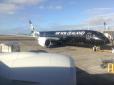


 According to AC.com, it's an UA Express CRJ-700, so a totally different aircraft from the CRJ-705 (which is really a CRJ-900)...


 Linear Mode
