 Posted Oct 24, 2015, 8:01 PM
|
 |
Registered User
|
|
Join Date: Aug 2002
Location: Toronto
Posts: 50,586
|
|
Should Hong Kong Scrap Its Iconic Tramway?
Read More: http://www.citylab.com/commute/2015/10/should-hong-kong-scrap-its-iconic-tramway/411382/
Quote:
.....
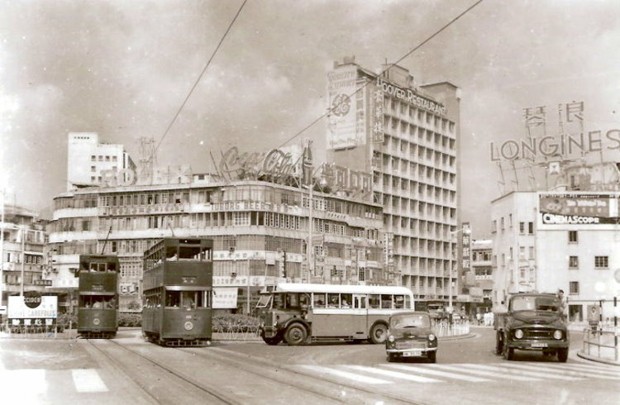
The 111-year-old tramway, affectionately called “Ding Ding” by locals, runs east-west through some the city’s busiest neighborhoods on Hong Kong Island. The double-deckers cruise unhurriedly alongside cars and buses, which means a trip that might take only 15 minutes by subway, or the Mass Transit Railway (MTR), could take far longer by tram. Yet, at 30 cents a ride, the 200,000 passengers—both old and young—who use it each day don’t seem to mind at all.
- “It’s not like an antique that we just put in a museum; it’s actually working as another public transport option,” says Simon Ng at the Civic Exchange, a public-policy think tank in Hong Kong. “This is part of people’s lives and memories, so I think that’s why a lot of people have a strong connection with the tram.” --- This Friday, however, Hong Kong’s Town Planning Board will decide on a proposal submitted in August by former government town planner Sit Kwok-Keung to scrap part of the historic tramways to ease congestion in one of the city’s busiest districts.*
- Sit, a private consultant at Intellects Consultancy Limited, called for the government to slowly phase out trams in the Central District, arguing that the MTR’s Island Line, which runs parallel to the tramway, has replaced much of the tram’s function. He also maintained that getting rid of the tram tracks and cars would free up nearly a third of the roadway, reports Hong Kong Free Press. If approved, the plan could affect 1,400 tram trips a day and more than 300 tram drivers and maintenance workers.
- Public protest to the proposal has been vocal, with public comments and petition signatures pouring in by the thousands. Many call the idea “backward,” noting that removing trams will only increase traffic. "The world's cities are moving toward using more mass transit systems running on electricity to reduce the number of cars and tailpipe emissions on the road,” one South China Morning Post reader wrote to the Hong Kong newspaper. “What kind of consultancy advises to remove mass transit vehicles to accommodate more cars?”
- Private cars, many of which are often illegally parked on the side of the road, take up 70 percent of roadways while trams occupy only 6 percent, according to China Daily. In the same article, Hung Wing-tat, a professor of civil and structural engineering at the Hong Kong Polytechnic University, said that if anything, trams ease congestion by “shouldering a proportion of public transport users on a daily basis.” And since the tramway runs on electricity, it also helps ease Hong Kong’s alarmingly poor air quality. “I don’t think the tram is the culprit,” Ng says. “They are one of the victims just like pedestrians.”
- Tramway passengers aren’t looking for speed, he adds. But the tram might actually be faster than the MTR for short distances. “You have to consider the time [it takes] to take the elevator or escalator and then navigate through the crowd to get to the [MTR] platform,” he tells CityLab. “For those who just want to hop on and off, the tram is actually a good alternative.” --- Perhaps more importantly, the trams are a symbol of Hong Kong’s heritage. First built in the 1901 by the British, some antique cars are still intact (and operational upon special request). “The key counter argument is that the tram is iconic and part of Hong Kong’s history,” says Ng, “and so there’s value in keeping them.”
.....
|

__________________
ASDFGHJK
|





 Prev
Prev
















 Linear Mode
