Commercial lenders don't like low rates because it compresses their margins. So they have been predicting imminent disaster for years now, inaccurately as it turns out:
http://krugman.blogs.nytimes.com/2015/09/19/rate-rage/
Here is an independent calculation of the risk of recession based on empirical factors. As it turns out, they suggest the risk of recession remains low:
https://www.economy.com/dismal/indicators/releases/usa_recession
Edit: A few more useful links . . .
Calculated Risk has been as accurate as anyone in predicting broader economic trends, and specifically called the housing bubble/bust and subsequent recovery. As documented there, multi-family housing starts recovered well (but now may be leveling off), but single family homes recovered slowly (but now may be accelerating):
http://www.calculatedriskblog.com/2015/09/comments-on-august-housing-starts.html


Some of that is behaviorial, with the housing bust persuading people to rent rather than own. But a lot of it is just demographics:
http://www.calculatedriskblog.com/2014/12/housing-demographics-for-renting-and.html
Specifically, there has been an age shift in favor of the youngest adults:
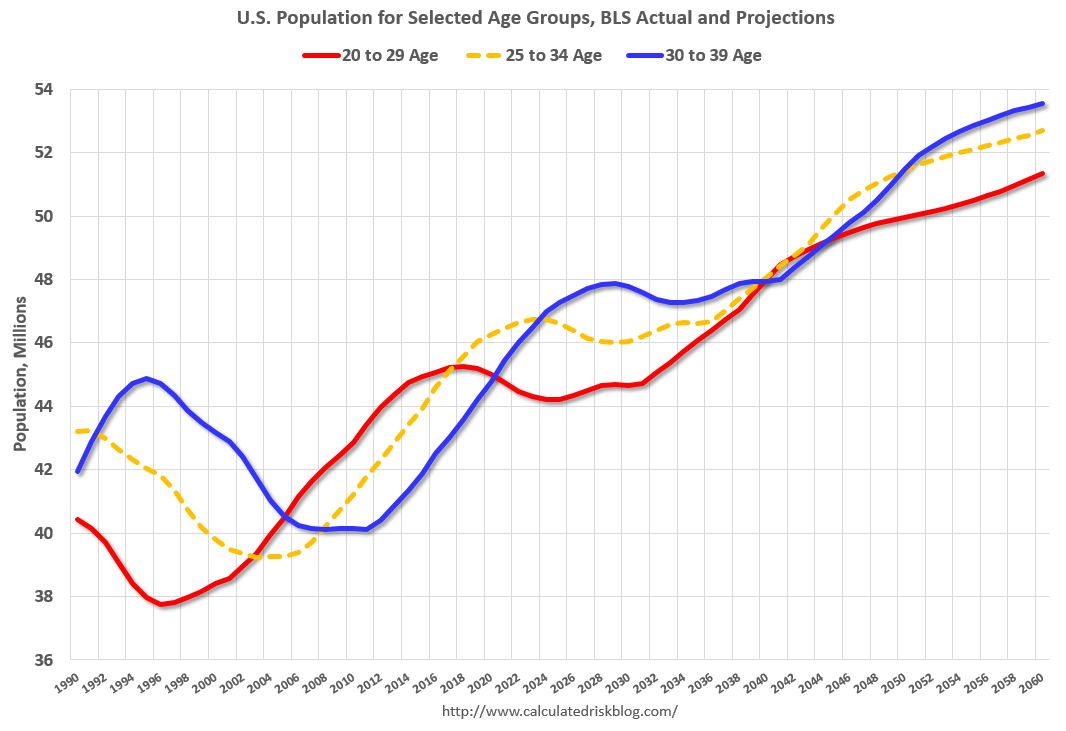
As Calculated Risk explains, things are starting to turn back, however, and around 2020 we reach a re-crossing point. Until around then, though, apartment starts should continue to be strong.
Of course all this is national--locally, we are on our own demographic track, with an even more extreme shift toward young adult share. And ours may last longer.





 Prev
Prev


 Linear Mode
