Quote:
Originally Posted by The North One

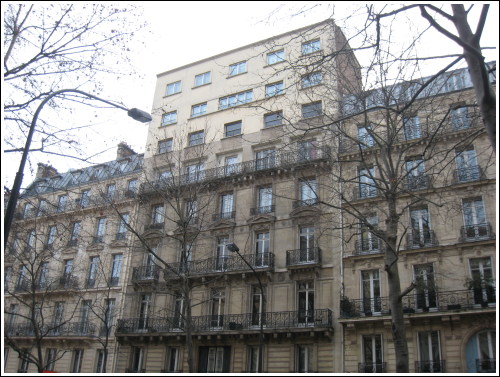
You're forgetting the 7 floor height limit.
If you think those were seamless, attractive transitions, go ahead and try to convince the authority/citizens over there that it should be done (good luck considering the fact that they already want the roofs to be an untouched world heritage site). a few additional floors even to every building in the city won't fix the problem, only put a small band-aid on it.
The only way I see something being done about this is creating more areas outside of the landmarked core that will allow higher buildings.
|
That was only a proposal from the nimbys of the right wing conservative and the far left green parties, but they're a minority at the municipal council, thus failed to pass such a nimby bill.
The current socialist mayor as her predecessor is a moderate, more of a 'liberal' than a 'socialist', so to speak and she's in favor of highrises in the new districts developed on the edge of the city. She has to deal with a municipal majority that's been partly skeptical on the issue, but keeps on implementing the plans of her former boss anyway.
For example, see what the new fabric of the Rive Gauche master plan is morphing into.

Hopefully Vincent doesn't mind if I pick this shot of his as the most eloquent I could quickly find on SSC.
You see that the latest infill gradually counts more floors, simply because there's no choice. These things sit on a southeast limit of the central city and are likely to prompt the neighboring suburbs to do the same, if not taller. So what you're suggesting is happening already. Obviously, most of today's development occurs in the large inner ring suburbs.
Moreover, I would remind you of this I mentioned in March in the Paris general development thread, when that silly roof story was also reported.
The urban planning office of Central Paris counted some 11,500 buildings (out of 140k in all on the Central Paris territory) of which the heights could be increased in a recent census, still by complying with the overly strict height limits and urban planning rules enforced within the central city. That would allow to append 1 to 5 floors to those buildings, and build some 40,000 new homes whose areas would range from 500 to 750 square feet.
That's what the mayor's planning, and I assume it would slightly affect the central districts themselves. That plan is shy enough, huh, really nothing rebellious. So if the mayor's temper can get aggressive enough, it should be implemented without even really be noticed. We're just talking about some little and basically insignificant adjustments here, nothing like an upheaval. So don't worry about the Central Paris roofs. Almost all will remain unaltered anyway.
Finally, we desperately need a noticeable signal that would help locals better appreciate highrises in general, and high-rise living in particular. I think the project of the Hermitage twins at la Défense is both tall and neutral enough to achieve this. Although some dislike the top heavy side of the towers - that's yet their smartest feature when you think about it - their design is pretty consensual, sleek and soft enough, and even quite generic by contemporary codes. That's the kind of developments needed to finally set up highrises in the local cityscape for good. When those twins are built in the coming years, I expect more and more residential towers to rise again, but this time mostly in the inner suburbs. Then we can really improve the local housing market.





 Prev
Prev










 No, we're not that large. So what do you want? Classy high-rise districts properly laid out, or hellish boring sprawl? We can't have both. Besides, I like thinking of our country as a big farming power. People need to fill in their stomachs before anything else.

 Linear Mode
