Light Rail advocates keep insisting that LRT will meet the needs of Surrey right now which is fine, well and good, but we all know that rapid transit brings growth to a community and the major question mark would be if LRT would be robust enough to manage more than a certain amount of trains on one line. Portland and Calgary have shown that the LRT cannot cope with urban growth and increased ridership to the point of saturation. LRT proponents will say "add more cars" to make up the difference - well the more cars you add to the LRT, the longer it gets thus creating congestion slowing down the traffic around it from cars having to wait for six or more LRT linked-cars to go past in order to make a lane change or longer light changes favoring the LRT while pedestrian traffic builds up at the intersection. Also lengthening the LRT trains will end up having to have work done on the train stops in order to allow passengers to board thus increasing downtime. All of this becomes a logistical nightmare. Skytrain on the other hand can link more cars without affecting traffic flow. Rapid transit is designed to grow communities and create jobs as well as opening up pockets of communities around the SkyTrain stations. All of those will increase ridership. Most would note that many families move into bedroom communities such as Langley and Abbotsford just so that they can afford something cheaper than the astronomical rates for housing prices in Vancouver/Burnaby. And the farther out they go, the more problems that crop up such as taking two hours to get to work downtown. Even more so, rapid transit will help to create jobs in the areas, but only if the rapid transit concept makes sense in the long term as well as the short term. When one looks at the Skytrain Lines (Millenium, Canada, and Expo), one sees communities growing, condominiums and high-rises popping up around those stations. These are due to the proximity of efficient rapid transit.
...and such would be the same with Surrey. People move where its economical to do so; and economically means both logistical economics as well as pocketbook economics (it has to make sense; which means that rapid transit has to be "rapid" and "efficient"). And if house prices are $mid 400s out in Surrey for a five bedroom; 4 bath home; then granted, that's where the families will move to in order to keep money in their pockets. And these families will want efficient rapid transit to get them from place to place or they will just get in their cars and drive to where they want to go. If Translink's intent is to get people out of cars, they need to consider how much time it takes for transit to get those folks from place to place without running into problems.
If one were to look at at-grade LRT...one has to also consider the safety issues:
Driverless LRT though able to increase the volume of trains on existing tracks will only serve to increase the danger of interactions - mainly due to a situation where a computer is still not able to process the information fast enough to prevent a collision unless complicated and expensive collision avoidance systems are implemented. This is especially so at street-level. As Robert A. Heinlein said, "Never underestimate the power of human stupidity." You have to factor in "human decision-making process" in understanding how train/pedestrian/automobile accidents happen and do what you can to reduce the potential of injury/death.
Driver-Operated LRT is probably the safest LRT situation where human response will be crucial in preventing train-human-auto collisions though in many cases with LRT it hasn't mainly due to human reaction not being quick enough. If given enough time to see a track incursion, the train with human driver intervention should be able to stop. The problem is when pedestrians (at the last second) thinking that they can make the crossing without realizing that the train is travelling at a higher speed than they originally thought steps into the track area thus causing a fatal train-pedestrian collision and likewise with a car. Is human reaction quick enough to prevent such a collision? No. Neither are track-brake triggering systems. This is even more important to consider as all evidence points to Surrey not implementing a grade-separated LRT but street-level. This means that "accidental" interactions with passengers and other road vehicles will be considerable.
Skytrain over LRT makes the most sense as it is not prone to traffic problems such as car accidents which would block sections of roadway which LRT would get snarled up in major accidents of the sort that have been seen in Portland, Calgary and other locations with LRT where the entire line has been blocked with 3-4 hour delays while accident investigators comb over the accident.
In terms of urban growth and moving people; Skytrain makes the most sense...I want to have the most efficient rapid transit possible with the least impact to traffic which is why I prefer RRT over LRT.
As far as the plebiscite is concerned; I was led to assume that the Transit plebiscite would be fair and impartial not selecting any one mode of rapid transit over the other...with a fair and equitable accounting of the pros and cons of each system. That hasn't happened. Surrey City Hall and the Mayor's Council have in fact without regard for the viewpoints of Surrey Citizens have pushed LRT from the outset. I dislike the fact that Hepner is trying to link the YES vote with a YES for LRT.


If this is going to be the way they play it. Consider my vote: "
NO"

They wanna pull the "We'll put in LRT if the Yes vote goes through" Here's MY trump card -
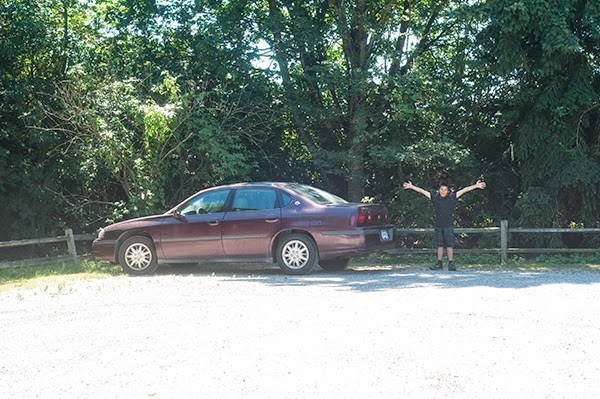
you'll pull me out of my car over my DEAD body.





 Prev
Prev


 Linear Mode
