HomeDiagramsDatabaseMapsForum About
     

Go Back   SkyscraperPage Forum > Regional Sections > Canada


Reply

 
Thread Tools Display Modes
     
     
  #81  
Old Posted Jan 3, 2015, 6:56 PM
lrt's friend lrt's friend is offline
Registered User
 
Join Date: Dec 2006
Posts: 12,789
Quote:
Originally Posted by 1overcosc View Post
Hmm? Currently it's every 15 minutes... being upgraded to 8.5min in a month or two.

The only real headache zone for double tracking would be the Dows Lake tunnel... the rest of the route could be doubled fairly easily.

Gladstone & Walkley won't cut down frequency. The travel time increase from the current expansion plan is because of the addition of two extra stops on passing sidings. When the time comes for those two new stations, they'll simply extend the passing sidings to them (it just so happens that the Walkley & Gladstone station sites are very near the new sidings), meaning the number of times the train stops will remain the same. What this really says, of course, is that it would have made far more sense for the city to just build the two new stations as part of the current plan.

If we run into a capacity crunch, we could couple up some extra cars before having to double track.
First of all, when they first announced the service expansion for the O-Train, they said service frequency was going to be every 8 minutes. The latest statement (obviously as a result of train testing) has indicated that service frequency will be every 9 minutes.

We are doubling the number of trains but instead of service going from every 15 minutes to every 7.5 minutes, it is going to every 9 minutes because trains have to stop at two additional passing tracks.

When we add two additional stations, trains will be stopping two additional times. Even if this means 30 seconds more at each new station, it means that the limit of 4 trains that the single track can handle will at best run every 10 minutes. This is what I am talking about.

And with the possibility of two south branches, service levels are going to be at best every 20 minutes on each branch even during peak periods. This doesn't match current bus frequencies.

Even the addition of a second car to each train means that every station and every passing track needs to be retrofitted. As we have seen with the O-Train, every improvement affecting track has resulted in a protracted shut down of service and a ridiculous implementation time.

As far as double tracking is concerned, there are numerous headaches. Yes, the Dow's Lake is the worst, but a number of bridges need to be replaced or doubled, we may need extensive additional blasting through bedrock and there is the question of the Ellwood diamond and whether that needs to be eliminated and grade separated in the long-term. I know some have said that this can occur with trains in operation but history of the O-Train does not support this. The original double tracking proposals indicated a 3 year full shutdown. I expect a substantial shutdown especially with the option available of shifting riders to the Southeast Transitway during a construction period.
Reply With Quote
     
     
  #82  
Old Posted Jan 3, 2015, 7:00 PM
lrt's friend lrt's friend is offline
Registered User
 
Join Date: Dec 2006
Posts: 12,789
Quote:
Originally Posted by GoTrans View Post
You seem to think that just by having a plan for 30 years out that it will come to fruition. That is not how municipal government works. You cannot commit future councils to a plan for the next 30 years and not expect changes. The big factor here is money. But even if the city had unlimited money, it couldn't possibly implement a large scale plan at once. It can't even add 2 sidings to the O Train line on time.

How can you claim that we are boxed into a corner at this stage when phase 2 has not even been funded or approved by the NCC for the city's poorly conceived idea of running the route along the parkway.

It is much easier to put lines on a map than to actually construct them, especially when you have to live with the political reality of having large suburbs caused by the greenbelt.
Isn't that even a more pessimistic view than mine?
Reply With Quote
     
     
  #83  
Old Posted Jan 3, 2015, 7:13 PM
lrt's friend lrt's friend is offline
Registered User
 
Join Date: Dec 2006
Posts: 12,789
Quote:
Originally Posted by miketoronto View Post
I think we need to ask this on a country wide basis. Canadian cities are still doing well in the transit picture. However we did a pretty outstanding job from the 60s-90s.

But it feels like we are trying to go for lost cost solutions now, and that our development controls are just not as good as they were in the past.

Take Ottawa for example. They actually had tighter controls 30 years ago, with trying to keep all office development in the central area or along the transitway. Including deals with the federal government to keep office space near transit.

Now we see the federal government decamping offices to sprawly places away from transit, and Ottawa does not seem to have as tight controls on development anymore.

The is not just an Ottawa situation. Toronto is the same, as are other Canadian cities.

We also see cities trying to push low cost, slow transit options, instead of building what they know needs to be built.

Again, we are doing pretty well. But we really could be doing so much better.
Ottawa is by far the worst example. Flip-flopping on massive transit expansion plans is costly in dollars, lost time and opportunities. You need to have plans build upon each other and this is the big lesson to other cities from what happened in Ottawa. We have actually flip-flopped twice, both on bus Transitways and then our first LRT plan that was intended to complement rather than replace the Transitways.

There also needs to be a proper assessment of what transit expansion is supposed to achieve and whether their will be real service improvement. Rapidbus in Gatineau is the worst example.
Reply With Quote
     
     
  #84  
Old Posted Jan 3, 2015, 9:29 PM
1overcosc's Avatar
1overcosc 1overcosc is offline
Registered User
 
Join Date: Jun 2013
Location: Eastern Ontario
Posts: 12,377
Quote:
Originally Posted by lrt's friend View Post
First of all, when they first announced the service expansion for the O-Train, they said service frequency was going to be every 8 minutes. The latest statement (obviously as a result of train testing) has indicated that service frequency will be every 9 minutes.
It's always been 8.5mins. That's what was in the reports in the beginning, that's what in the end now. 8 minutes is rounding down, 9 minutes is rounding up. Surprise, surprise, the city preferred to round down in the beginning.

Quote:
Originally Posted by lrt's friend View Post
When we add two additional stations, trains will be stopping two additional times. Even if this means 30 seconds more at each new station, it means that the limit of 4 trains that the single track can handle will at best run every 10 minutes. This is what I am talking about.
No, they will not be stopping two additional times after the two new stations are up. That's what I explained last post. The new sidings are so close to the projected station sites, that the sidings will be extended to the new stations and the siding stop will be relocated TO the station, meaning no net increase in the number of stops. And the dwell time to wait for the oncoming train is long enough that stop time won't increase, really. "Door open" time is only 5-10 seconds per stop, and they're going to be stopped that long at the sidings anyway. TL;DR travel time will not increase when the two new stations are added.

Quote:
Originally Posted by lrt's friend View Post
And with the possibility of two south branches, service levels are going to be at best every 20 minutes on each branch even during peak periods. This doesn't match current bus frequencies.
The city explicitly said in the TMP that it doesn't want two branches, for precisely this reason. The airport branch is only being studied for possible inclusion, in the end they're going to pick one branch or the other. Probably the Bowesville one, it's obvious the airport branch was picked only because the airport complained about "no studies" being done on the topic.

Quote:
Originally Posted by lrt's friend View Post
Even the addition of a second car to each train means that every station and every passing track needs to be retrofitted. As we have seen with the O-Train, every improvement affecting track has resulted in a protracted shut down of service and a ridiculous implementation time.
Passing tracks wouldn't need to change because they're already long enough. Platform lengthening wouldn't be too drastic of an enhancement. And there is no need for service shut down to lengthen platforms other than maybe the odd night closure or weekend closure. Ask any other Canadian city.

Quote:
Originally Posted by lrt's friend View Post
As far as double tracking is concerned, there are numerous headaches. Yes, the Dow's Lake is the worst, but a number of bridges need to be replaced or doubled, we may need extensive additional blasting through bedrock and there is the question of the Ellwood diamond and whether that needs to be eliminated and grade separated in the long-term. I know some have said that this can occur with trains in operation but history of the O-Train does not support this. The original double tracking proposals indicated a 3 year full shutdown. I expect a substantial shutdown especially with the option available of shifting riders to the Southeast Transitway during a construction period.
Dow's Lake is the only difficult part. The segment north of Carling in rock can fit two tracks inside the rock in most places, and cutting away more of it isn't that hard to do. In Toronto, they've created entirely new trenches to replace at-grade segments... without shutdowns. Twinning the bridges is no biggie, because the road bridges are all wide enough for two tracks, and adding a second deck to the Rideau bridge isn't that big of a deal, Rideau is easy to cross because of how shallow it is. VIA will probably pay for the separation of the diamond, it's high on their list and they need it more. That's not too difficult of a task, they just built a underpass of a VIA track for the Confederation Line this past year.

Lastly... there is no technical reason why the city can't upgrade the O-Train to double-track while it's in service. How many times do you have to be told this? There's no need to shut it down. It's simply easier and cheaper to do so, and because the line has such low ridership in the summer, the city's chosen to do summer shutdowns. But if that changes, like if ridership becomes high at all times of the year, they won't do that anymore. Simple enough.

The 2006 plan wasn't just a double track it also included full station rebuilds and a rebuilding of the entire trackbed.

Reply With Quote
     
     
  #85  
Old Posted Jan 3, 2015, 9:30 PM
1overcosc's Avatar
1overcosc 1overcosc is offline
Registered User
 
Join Date: Jun 2013
Location: Eastern Ontario
Posts: 12,377
Quote:
Originally Posted by lrt's friend View Post
Ottawa is by far the worst example. Flip-flopping on massive transit expansion plans is costly in dollars, lost time and opportunities. You need to have plans build upon each other and this is the big lesson to other cities from what happened in Ottawa. We have actually flip-flopped twice, both on bus Transitways and then our first LRT plan that was intended to complement rather than replace the Transitways.

There also needs to be a proper assessment of what transit expansion is supposed to achieve and whether their will be real service improvement. Rapidbus in Gatineau is the worst example.
Ottawa the worst? Uh, ask Toronto. They've been flip-flopping again and again while building nothing for decades now. I think Montreal's being doing the same thing. It's a problem with democracy, really.
Reply With Quote
     
     
  #86  
Old Posted Jan 4, 2015, 2:38 AM
red-paladin red-paladin is offline
Vancouver Moderator
 
Join Date: Sep 2008
Location: Burnaby
Posts: 3,626
Reply With Quote
     
     
  #87  
Old Posted Jan 4, 2015, 2:58 AM
ehlow ehlow is offline
Registered User
 
Join Date: Jan 2014
Location: Toronto
Posts: 42
Quote:
Originally Posted by 1overcosc View Post
Ottawa the worst? Uh, ask Toronto. They've been flip-flopping again and again while building nothing for decades now. I think Montreal's being doing the same thing. It's a problem with democracy, really.
While yes we've been flip flopping on some projects, we are building things now:

-Eglinton LRT - 20km (10km underground)
-Spadina subway extension - 6km
-Georgetown GO corridor grade separations & Union Pearson express train
Reply With Quote
     
     
  #88  
Old Posted Jan 4, 2015, 4:19 AM
lrt's friend lrt's friend is offline
Registered User
 
Join Date: Dec 2006
Posts: 12,789
Quote:
Originally Posted by 1overcosc View Post
It's always been 8.5mins. That's what was in the reports in the beginning, that's what in the end now. 8 minutes is rounding down, 9 minutes is rounding up. Surprise, surprise, the city preferred to round down in the beginning.


No, they will not be stopping two additional times after the two new stations are up. That's what I explained last post. The new sidings are so close to the projected station sites, that the sidings will be extended to the new stations and the siding stop will be relocated TO the station, meaning no net increase in the number of stops. And the dwell time to wait for the oncoming train is long enough that stop time won't increase, really. "Door open" time is only 5-10 seconds per stop, and they're going to be stopped that long at the sidings anyway. TL;DR travel time will not increase when the two new stations are added.


The city explicitly said in the TMP that it doesn't want two branches, for precisely this reason. The airport branch is only being studied for possible inclusion, in the end they're going to pick one branch or the other. Probably the Bowesville one, it's obvious the airport branch was picked only because the airport complained about "no studies" being done on the topic.


Passing tracks wouldn't need to change because they're already long enough. Platform lengthening wouldn't be too drastic of an enhancement. And there is no need for service shut down to lengthen platforms other than maybe the odd night closure or weekend closure. Ask any other Canadian city.


Dow's Lake is the only difficult part. The segment north of Carling in rock can fit two tracks inside the rock in most places, and cutting away more of it isn't that hard to do. In Toronto, they've created entirely new trenches to replace at-grade segments... without shutdowns. Twinning the bridges is no biggie, because the road bridges are all wide enough for two tracks, and adding a second deck to the Rideau bridge isn't that big of a deal, Rideau is easy to cross because of how shallow it is. VIA will probably pay for the separation of the diamond, it's high on their list and they need it more. That's not too difficult of a task, they just built a underpass of a VIA track for the Confederation Line this past year.

Lastly... there is no technical reason why the city can't upgrade the O-Train to double-track while it's in service. How many times do you have to be told this? There's no need to shut it down. It's simply easier and cheaper to do so, and because the line has such low ridership in the summer, the city's chosen to do summer shutdowns. But if that changes, like if ridership becomes high at all times of the year, they won't do that anymore. Simple enough.

The 2006 plan wasn't just a double track it also included full station rebuilds and a rebuilding of the entire trackbed.

This leaves me bewildered.

I just re-read the O-Train Expansion report on the city's website and it said 8 minute frequency and the first reference to 9 minute frequency was in the most recent update concerning the start-up of the new trainsets in February. It is only a slight variation but it shows the inflexibility of the single track line.

I don't know what you are talking about the passing tracks and new stations not affecting service in the future. It makes no sense whatsoever. For safety reasons, the trains have to stop at the new passing tracks because that is where the trains from the other direction will pass and they are not located at the proposed additional stations. There is no passing track at Gladstone Avenue or Walkley Road. It means the trains DO have to stop two additional times. It means the trains have to brake and accelerate two additional times. This will impact schedules. I think I was quite fair (maybe even more than fair) to suggest that it would add 1 additional minute to the trip and it simply can't be made up elsewhere with the limitations of one track. You cannot add additional trains. You cannot even twin trains without extending the passing tracks and this will require an additional service shutdown as we have seen in the last two years. This is the weakness of a single track system.

My concern is in the level of service when this is supposed to be the trunk line for the whole southeast part of the city. And it doesn't matter about the TMP, the environmental assessment is seriously considering an airport spur. If the airport kicks some money in, won't the city consider building it?

Regarding double tracking the O-Train, have you actually looked at the corridor? I have waited for the O-Train at Carling station and there is no way that a second set of tracks will fit inside that rock cut. We are talking about some major blasting here. I have also just looked at Google maps satellite view and none of the bridges (and there are several) have room for a second set of tracks. Even the road overpasses at Heron and Walkley Roads cannot accommodate a second set of tracks.

Double tracking of the O-Train between Greenboro and Bayview will be a massive reconstruction and if we can't install two passing tracks without a 4 month shutdown and several more service interruptions, how can you seriously believe that this can occur without a lengthy service interruption?

Just because you say something, doesn't make it true.
Reply With Quote
     
     
  #89  
Old Posted Jan 4, 2015, 4:44 AM
ehlow ehlow is offline
Registered User
 
Join Date: Jan 2014
Location: Toronto
Posts: 42
Why didn't they build for two tracks originally for the O Train? Did they not foresee a future where ridership & service levels would increase?

Can it handle ridership as is with trains only every 15 min?
Reply With Quote
     
     
  #90  
Old Posted Jan 4, 2015, 12:37 PM
caltrane74's Avatar
caltrane74 caltrane74 is offline
gettin' rich!
 
Join Date: Aug 2002
Location: Toronto
Posts: 34,204
The O-Train started out as an experimental low cost line using existing freight right of way, with Euro-Tech trainsets.
Reply With Quote
     
     
  #91  
Old Posted Jan 4, 2015, 2:11 PM
TownGuy's Avatar
TownGuy TownGuy is online now
Registered User
 
Join Date: May 2013
Location: Cobourg, ON
Posts: 3,540
Quote:
Originally Posted by ehlow View Post
While yes we've been flip flopping on some projects, we are building things now:

-Eglinton LRT - 20km (10km underground)
-Spadina subway extension - 6km
-Georgetown GO corridor grade separations & Union Pearson express train
Not necessarily expansion but I would add the massive and necessary work thats being done at Union Station. Toronto has entered a new golden age of transit expansion. There is more action than flip flopping being done these days. It's only picking up steam with the Liberal government in power.
Reply With Quote
     
     
  #92  
Old Posted Jan 4, 2015, 3:29 PM
TownGuy's Avatar
TownGuy TownGuy is online now
Registered User
 
Join Date: May 2013
Location: Cobourg, ON
Posts: 3,540
Actually I'm going to make a very crude list of recent transit happenings in the GTA. Probably miss a ton of things.

These things have happened or are currently happening. Flip flopping? Not anymore.

Eglinton Crosstown LRT - $6 billion

http://www.thecrosstown.ca

YUS subway extension - $2.6 billion

www.urbantoronto.ca

Union Pearson Express - $ 500 million

http://en.m.wikipedia.org/wiki/Union_Pearson_Express

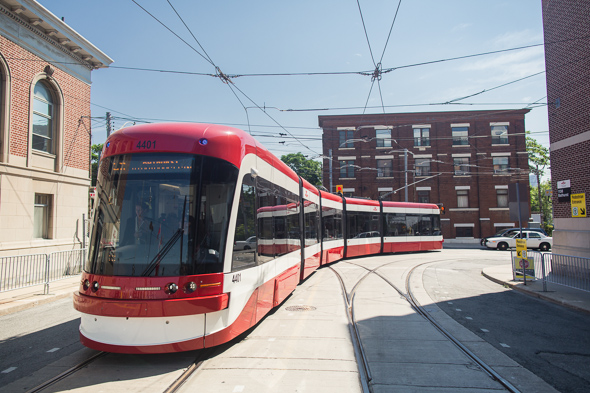
New streetcars & track upgrades - $2 billion

http://www.blogto.com/city/2013/07/this_is_what_torontos_new_streetcars_look_like_in_action/

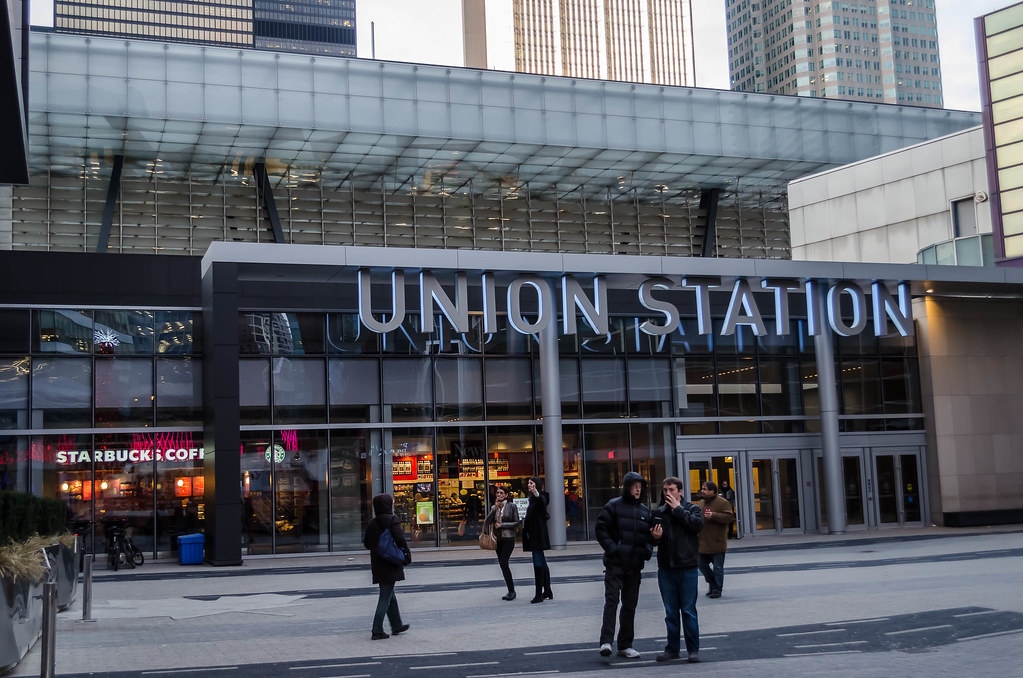
Union Station shed replacement and station revitalization - $1 billion

Union Station
by kotsy.in.toronto, on Flickr

Union Station second subway platform - $140 million

Www.urbantoronto.ca

TTC signal upgrades - $500 million

www.thestar.com

GO Transit Georgetown corridor grade separations - $1.2 billion

http://www.gotransit.com/gts/en/project/default.aspx

Mississauga Transitway - $260 million

http://www.gotransit.com/public/en/improve/projects.aspx

GO Transit various new and upgraded stations - not sure the total cost, would be a lot.

Nov 2014 - Erindale GO Station by Metrolinx, on Flickr

TTC new subway cars - $700 million

http://thonosject.host.sk/110.html

St Clair streetcar ROW - $100 million

http://www.railwaypreservation.com/vintagetrolley/toronto.htm

Right there, and who knows what I missed, $15+ BILLION in under 10 years. The province is committed to spending an addition $15 billion over the next 10 years.
Reply With Quote
     
     
  #93  
Old Posted Jan 4, 2015, 3:43 PM
miketoronto miketoronto is offline
Registered User
 
Join Date: Jul 2001
Location: Toronto, Ontario, Canada
Posts: 9,932
I think we focus so much on showing major rapid transit expansions, that we forget about some of the smaller less sexy improvements which have been implemented. Lets see some maps of the bus service improvements in places like the 905 suburbs of Toronto, or even portions of Calgary, etc.

Compared to a few years ago, it is now vastly easier to rely on public transit in many parts of the Greater Toronto Area, thanks to major expansion of bus service, like you see in Brampton.
Calgary has also been trying to get most services to operate as at least every 30 minutes or less. All these little improvements have a major impact on making transit more attractive and viable.
__________________
Miketoronto
Reply With Quote
     
     
  #94  
Old Posted Jan 4, 2015, 4:01 PM
Beedok Beedok is offline
Exiled Hamiltonian Gal
 
Join Date: Jun 2012
Posts: 6,795
Hamilton continues to preform at levels that are iffy for the US let alone Canada though.
Reply With Quote
     
     
  #95  
Old Posted Jan 4, 2015, 7:09 PM
lrt's friend lrt's friend is offline
Registered User
 
Join Date: Dec 2006
Posts: 12,789
Quote:
Originally Posted by caltrane74 View Post
The O-Train started out as an experimental low cost line using existing freight right of way, with Euro-Tech trainsets.
Yes, it was a temporary pilot project that became anything but temporary using a former single track freight line. It demonstrated that there was demand for transit even though the line did not go downtown. So, when we decided to make it permanent, which included electrification and double tracking, conservative-liberal rivalry at all three levels of government got involved. The lesson learned that you could run DMUs on existing rail lines within suburban areas and attract new ridership was quickly unlearned.

My further point about double tracking of the O-Train is clearly demonstrated with what is going to happen to the Eastern Transitway soon. Although in theory, it could remain open for much of the period of conversion to LRT, it was deemed to be so difficult that a full shutdown for a 2 to 3 year period is the best choice.

If double tracking of the O-Train ever occurs (now delayed from 2009 until 2030 to 2035 according to city report), it will also face a similar shutdown period as was indicated in the original conversion plan from 2006.

It has been argued on the Ottawa board since 2006 that technically you can keep trains running but I can't see it when so many bridges need to be twinned or replaced, a new tunnel constructed, extensive blasting of bedrock, and installation of new power and signal systems.

The O-Train expansion report also indicates that service cannot be extended to Riverside South Town Centre (the long-term purpose of the line) until high floor DMUs are replaced with low floor electric LRVs. This relates to the Riverside South community plan that is not compatible with high floor DMUs and special restrictions (probably federal) on operating DMUs on this particular line when there are level crossings. This means that all the platforms on the entire line will have to be replaced.

Some of these things might be able to be accomplished while trains are operating but as a total package, it will make more sense to redirect riders onto buses.

Last edited by lrt's friend; Jan 4, 2015 at 7:28 PM.
Reply With Quote
     
     
  #96  
Old Posted Jan 4, 2015, 7:14 PM
lrt's friend lrt's friend is offline
Registered User
 
Join Date: Dec 2006
Posts: 12,789
Quote:
Originally Posted by miketoronto View Post
I think we focus so much on showing major rapid transit expansions, that we forget about some of the smaller less sexy improvements which have been implemented. Lets see some maps of the bus service improvements in places like the 905 suburbs of Toronto, or even portions of Calgary, etc.

Compared to a few years ago, it is now vastly easier to rely on public transit in many parts of the Greater Toronto Area, thanks to major expansion of bus service, like you see in Brampton.
Calgary has also been trying to get most services to operate as at least every 30 minutes or less. All these little improvements have a major impact on making transit more attractive and viable.
The current political situation in Ottawa does not allow for any significant service improvements in the foreseeable future. We have put all our eggs in the Confederation Line basket.
Reply With Quote
     
     
  #97  
Old Posted Jan 4, 2015, 7:25 PM
lrt's friend lrt's friend is offline
Registered User
 
Join Date: Dec 2006
Posts: 12,789
Quote:
Originally Posted by miketoronto View Post
I think we need to ask this on a country wide basis. Canadian cities are still doing well in the transit picture. However we did a pretty outstanding job from the 60s-90s.

But it feels like we are trying to go for lost cost solutions now, and that our development controls are just not as good as they were in the past.

Take Ottawa for example. They actually had tighter controls 30 years ago, with trying to keep all office development in the central area or along the transitway. Including deals with the federal government to keep office space near transit.

Now we see the federal government decamping offices to sprawly places away from transit, and Ottawa does not seem to have as tight controls on development anymore.

The is not just an Ottawa situation. Toronto is the same, as are other Canadian cities.

We also see cities trying to push low cost, slow transit options, instead of building what they know needs to be built.

Again, we are doing pretty well. But we really could be doing so much better.
There is a couple of things that are happening in Ottawa that are causing the federal government to move to the suburbs.

The biggest thing is the perceived need for higher security. The departments that are moving to the suburbs are the RCMP, Department of National Defence and various spy agencies.

The second thing is that the federal government is repurposing former high tech private sector sites that had become vacant. This was cheaper than building completely new buildings. This is a carryover from pre-amalgamation when the suburban cities were competing with Ottawa for businesses to set up shop.

I believe that since city amalgamation in 2001, new city master plans are attempting to locate major business and retail activities along current and future transit lines.
Reply With Quote
     
     
  #98  
Old Posted Jan 4, 2015, 11:42 PM
1overcosc's Avatar
1overcosc 1overcosc is offline
Registered User
 
Join Date: Jun 2013
Location: Eastern Ontario
Posts: 12,377
Quote:
Originally Posted by lrt's friend View Post
I don't know what you are talking about the passing tracks and new stations not affecting service in the future. It makes no sense whatsoever. For safety reasons, the trains have to stop at the new passing tracks because that is where the trains from the other direction will pass and they are not located at the proposed additional stations. There is no passing track at Gladstone Avenue or Walkley Road. It means the trains DO have to stop two additional times. It means the trains have to brake and accelerate two additional times.
I've explained it twice... there is no schedule change when the new stations are added, the passing siding stop will be relocated to the stations.

Right now (or rather, next month):
-Station stop at Bayview
-Siding stop in the north
-Station stop at Carling
-Station stop at Carleton
-Station stop at Confederation
-Siding stop in the south
-Station stop at Greenboro
A total of 7 train stops

The new north siding is only a few hundred metres away from Gladstone Avenue, and the new south siding is only a few hundred metres away from Walkley Road. When the stations are built, they'll simply extend the sidings so that way they do reach those two roads, and then trains can pass each other at the stations. You literally replace siding stops with station stops. So it will become:
-Station stop at Bayview
-Station stop at Gladstone
-Station stop at Carling
-Station stop at Carleton
-Station stop at Confederation
-Station stop at Walkley
-Station stop at Greenboro
A total of 7 train stops!

The technical documents have always said 8.5mins. The City until very recently was always saying 8 minutes.
Reply With Quote
     
     
  #99  
Old Posted Jan 4, 2015, 11:45 PM
1overcosc's Avatar
1overcosc 1overcosc is offline
Registered User
 
Join Date: Jun 2013
Location: Eastern Ontario
Posts: 12,377
Let me clarify on Toronto, they've gotten their act together for the most part (City Council still a little flippy but the province perfect) but there was a long period where nothing happened because of cancellations.
Reply With Quote
     
     
  #100  
Old Posted Jan 4, 2015, 11:46 PM
1overcosc's Avatar
1overcosc 1overcosc is offline
Registered User
 
Join Date: Jun 2013
Location: Eastern Ontario
Posts: 12,377
Quote:
Originally Posted by lrt's friend View Post
The current political situation in Ottawa does not allow for any significant service improvements in the foreseeable future. We have put all our eggs in the Confederation Line basket.
Huh? The Confederation Line will be accompanied with increases in bus service, worth about $15M-$20M per year. And there's two VIVA-style BRT routes funded as well.
Reply With Quote
     
     
This discussion thread continues

Use the page links to the lower-right to go to the next page for additional posts
 
 
Reply

Go Back   SkyscraperPage Forum > Regional Sections > Canada
Forum Jump


Forum Jump


All times are GMT. The time now is 4:35 PM.


Powered by vBulletin® Version 3.8.7
Copyright ©2000 - 2026, vBulletin Solutions, Inc.