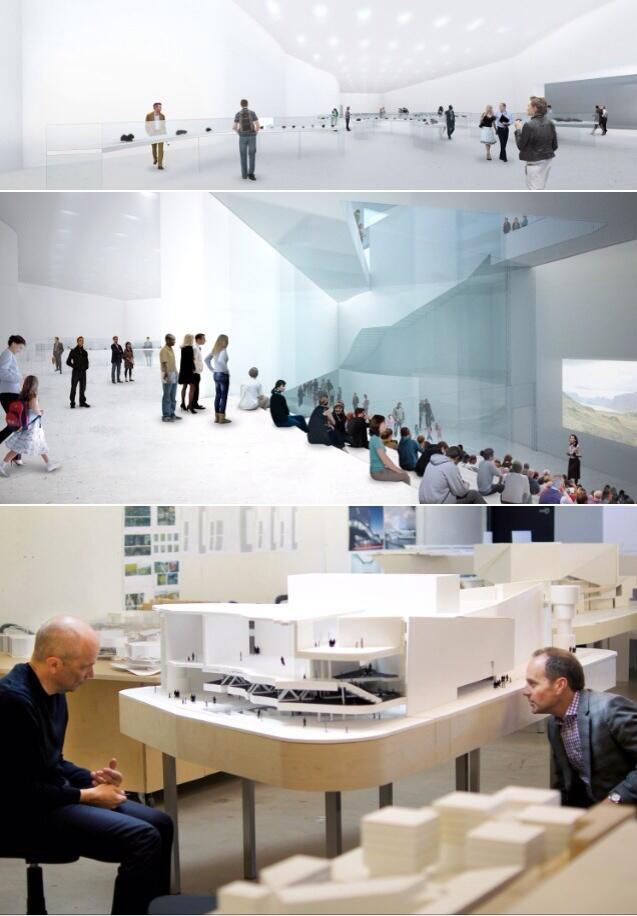
first inuit center rendering?

Winnipeg Free Press - PRINT EDITION
WAG's neighbour from the North
Inuit Art Centre to be bold, enlightening inside and out
ON ARCHITECTUREBy: Brent Bellamy
Posted: 03/10/2014 1:00 AM
The powerful forms of Inuit art, a dancing soapstone bear, a majestic ivory narwhal or an etching of a snowy owl, shape the symbolic imagery of Canada's northern indigenous people. The distinctive works that have come to represent this ancient culture are, surprisingly, a modern form of artistic expression.
The idea of establishing a self-sufficient handicrafts industry across the Arctic was promoted in the early 1950s by the federal government as a means of providing economic opportunity in northern communities.
As the program grew, a rich artistic movement began to flourish, driven by a provocative esthetic imbued with 1,000 years of custom and ritual. Lives spent observing the form and movement of Arctic animals and understanding the intimate nuances of an overpowering landscape provided a depth and gravity to the artistic expression. Rich storytelling traditions combined with a craftsmanship refined through generations of constructing delicate kayak frames and carving intricate objects such as snow knives and harpoons, translated into skill and imagination that made artistic carving a natural extension of Inuit culture and tradition.
Former Winnipeg Art Gallery director Ferdinand Eckhardt was an early proponent of the movement, making the WAG one of the nation's first galleries to display the new art form in 1953. In 1964, he organized Canada's first significant exhibition of Inuit sculpture, the beginning of a relationship that would establish the gallery as a global leader in the study and presentation of Inuit artwork. With over 13,000 pieces, the WAG is today home to the largest and most important public collection of Inuit art in the world.
http://www.winnipegfreepress.com/business/wags-neighbour-from-the-north-249233971.html





 Prev
Prev









 Linear Mode
