HomeDiagramsDatabaseMapsForum About
     

Go Back   SkyscraperPage Forum > Global Projects & Construction > City Compilations


Reply

 
Thread Tools Display Modes
     
     
  #6681  
Old Posted Jan 14, 2014, 8:23 PM
BrianTH BrianTH is offline
Registered User
 
Join Date: Jan 2010
Posts: 6,078
Quote:
Originally Posted by themaguffin View Post
Pittsburgh is different than any metro I can think.
Agreed, but that is largely because of topographic factors that persist today. If you are carving a city out of level corn or cotton fields or desert, you can pretty much map out whatever transportation system you like. Pittsburgh's region, in contrast, is defined by its meandering valleys, which have always channeled its development patterns and transportation links in unusual ways.

And so I agree with you that it can be hard to apply words like "sprawl" here in normal ways. For example, I think you are right that a good case can be made that redevelopment along the major valleys within the historic development zones doesn't really count as sprawl even if it is pretty far from the Point. Conversely, you can have "sprawl" as you move up into greenfield areas in "the hills" even if you are not very far from the center by normal metro standards.

Anyway, if you try to impose on Pittsburgh the sort of two-dimensional transportation patterns you see in other cities, a couple things will happen as that third dimension of reality asserts itself. First, your costs per mile as the crow flies will be way higher than usual, as you have to incorporate an outrageous number of cuts and bridges and tunnels and bends and such. Second, you still won't get the sort of induced development you would ordinarily expect, because the ordinary development patterns still depend on having the ordinary topography to spread out into.

All this Pittsburgh exceptionalism is therefore a good argument AGAINST things like the Southern Beltway. Although this is deeply problematic, beltways in other cities have certainly served to attract a lot of new development (although likely away from other parts of the relevant metro area, which again is pretty problematic). In Pittsburgh, however, that is likely to prove less successful even on its own terms, and all at a higher cost.

Quote:
We aren't talking about getting from Podunk A to Podunk B, but larger groups of people (and goods and services, along with commercial transportation) being able to traverse the metro area.
That's really a semantic distinction, albeit with both descriptions being biased in their own way.

The fact is that there are not a lot of people trying to "traverse the metro area" on a daily basis, in comparison to vast daily flows into and then out of the center. And in fact there are already pretty direct ways to "traverse" (or bypass) the metro area for most users interested in doing that.

The only notable case for the Southern Beltway is that it would provide, in exchange for a toll, a somewhat quicker route for some users at some times to make such a "traverse the metro" trip. But not all that many users, and that is precisely because there are not actually all that many potential users located where it is routed with an interest in making such trips.

And that is the kernel of truth to the Podunk A to Podunk B statement: there is no great benefit to a new way to "traverse the metro" if its route is too far away from you to begin with, and the route of the Southern Beltway isn't close to all that many potential users. That is why its rationale has always depended on the idea of development moving to the Southern Beltway, which is both a dubious proposition and not inherently desirable anyway.

Quote:
The Findley Connector wasn't an end product. It was part of a larger project. This latest news isn't the complete project either.
That same point applies to both the cost and benefit side. As much as you insist on claiming critics of this project refuse to see things in context or complexity, it amazes me you simply refuse to consider the entire cost side of the ledger.
Reply With Quote
     
     
  #6682  
Old Posted Jan 14, 2014, 8:38 PM
BrianTH BrianTH is offline
Registered User
 
Join Date: Jan 2010
Posts: 6,078
Quote:
Originally Posted by Buzz Pittsburgh View Post
Could this just be a case of sunk cost? The Turnpike Commission has put so much into land acquisition, environmental studies, etc. that it would be a bigger loss to NOT build it?
Sunk cost FALLACY maybe.

It is certainly true that the $225 million spent on the Findlay Connector is money we can't get back, nor are all the extra millions we have spent on other planning, acquisitions, and so on.

But this next round of construction is going to cost over $600 million IN ADDITION. And people here are saying it still needs to go farther before it makes sense, which will cost many hundreds of millions more.

So at some point you have to admit you made a mistake and just cut your losses. Unfortunately, even under the best of circumstances it can be tough to get the political process to admit a mistake, and in this case there are a lot of well-connected folks who stand to benefit from those expenditures whether they actually make sense or not, so it is not really anything close to the best of circumstances politically.

Quote:
How does the Turnpike Commission get funded anyway? It's not part of PennDot but it still gets state money.
That is an incredibly complex question overall, but in this case I believe the plan is to fund the project with some combination of state and federal grants and bonds, and no toll revenue. The state money would come from the new transportation funding scheme, which basically means it is mostly fuel taxes plus a bit of a mix of other fees and fines. Otherwise the details to my knowledge have been pretty sketchy, including no particular explanation of how the bonds would be paid off if not through tolls, and I am not at all sure this project counts as fully funded yet.

Which would be a good thing, because that means it could still be killed before we waste too much more money on it.
Reply With Quote
     
     
  #6683  
Old Posted Jan 14, 2014, 9:00 PM
Buzz Pittsburgh's Avatar
Buzz Pittsburgh Buzz Pittsburgh is offline
Flood City
 
Join Date: Aug 2011
Location: Johnstown, Pa
Posts: 26
Quote:
Originally Posted by BrianTH View Post
Sunk cost FALLACY maybe.
Thanks that's what I meant.

Quote:
Originally Posted by BrianTH View Post
So at some point you have to admit you made a mistake and just cut your losses. Unfortunately, even under the best of circumstances it can be tough to get the political process to admit a mistake, and in this case there are a lot of well-connected folks who stand to benefit from those expenditures whether they actually make sense or not, so it is not really anything close to the best of circumstances politically.
Agreed. It's clear that certain people in power have their own ideas on what's best, so this is what they want to do. Although it would be interesting to see if the funding does get pulled to another more worthy project. If not, I'm hopeful the beltway can give some developed areas better road connections.
__________________
Patience and diligence, like faith, remove mountains. ~ William Penn
Reply With Quote
     
     
  #6684  
Old Posted Jan 14, 2014, 9:12 PM
DBR96A DBR96A is offline
bnkhjsdlgj,sdgnsdkljvfjgl
 
Join Date: Mar 2006
Location: 412
Posts: 810
Quote:
Originally Posted by themaguffin View Post
Seriously griping about the low volume of the Findley Connector, a road that is like 6 miles long demonstrates that I don't think the big picture and how complicated this all is...
Traffic on that highway will increase dramatically the moment the extension to I-79 opens. The reason there's not much traffic on it right now is because not many people from Weirton or Steubenville are going to the airport.


Quote:
Originally Posted by themaguffin View Post
I'm a big supporter of extending the T and bus options as well.
Quote:
Originally Posted by glowrock View Post
You and everyone else here in this forum know full well I'm in favor of both transit AND highway projects, not one or the other.
As am I. A great city has modern transportation infrastructure of all kinds. You know all those walkable urban areas in Europe? Nearby are modern highways. Pittsburgh has an obsolete highway infrastructure and a sparse commuter rail infrastructure. Hell, I'd argue that Pittsburgh only does buses and bikes half-decently. That's not enough.


Quote:
Originally Posted by glowrock View Post
Pittsburgh is a city with pretty lousy transportation infrastructure of all sorts, including bus, rail, roads, bridges and highways. It's old and it's generally crumbling, and unfortunately it's going to take a combination of transit and highway projects to get it back up to par. If and when Pittsburgh really starts growing substantially again, the traffic is going to be nearly completely gridlocked far longer than it is currently.
A friend of mine from a small town in southern Georgia went to Pittsburgh on business about three years ago. He said the city was nice, and he had a good time when he was there, but the one dislike he mentioned was, "The highway system up there 🞵🞵🞵🞵🞵."


Quote:
Originally Posted by glowrock View Post
There is a definitive condescending nature amongst certain forumers here when it comes to being all transit, no roads. I understand that for cities that literally have done nothing but promote roads over transit ... but for cities like Pittsburgh I think that's shortsighted.
You're not the only one who's noticed. If investing in nothing but highways is wrong, then investing in everything but highways is also wrong, because, like I said, great cities have modern transportation infrastructure of all kinds -- rail, buses and highways

And just because other cities went too heavy on the highways doesn't mean that Pittsburgh did. In fact, most of the highways built in and around other cities were built between 1970 and 2000, precisely when Pittsburgh fell apart. The only new segments of highway built in Allegheny County in that period of time were the Parkway North and the Airport Expressway, for a grand total of 17 miles of new highways. I bet almost all other urban core counties in the United States built more than 17 miles worth of highways between 1970 and 2000.


Quote:
Originally Posted by PITairport View Post
...while PIT is kinda out there in the sticks, it needs to be as viable a facility as possible, and that includes improving access from the south and east which is why I support the complete Southern Beltway.
Definitely. Right now, anybody who needs to get to the airport from Monroeville or Greensburg has to go through downtown Pittsburgh, and anybody who has to get from the Mon Valley to the airport has to use a series of two-lane back roads to even get close. East/west mobility across the southern portion of the metropolitan area is piss-poor, and that needs to change.


Quote:
Originally Posted by PITairport View Post
Look at some of the great transit orientated cities in the world... London, Hong Kong, Shanghai, etc. London is famous for is sprawling underground network and double decker buses. A very transit orientated city. But guess what? Their highway system was sub-par so in the 1980s they built a beltway. Hong Kong? A very modern metro system, ferries, double deck buses, and trolleys. Few people have cars. So why have they recently built a new web of expressways throughout H.K. and the New Territories? Not only expressways, but incredibly expensive expressways consisting of multiple suspension and cable stay bridges and tunnels. For the movement of goods and services. Expansion continues, even a bridge to Macau. Shanghai is on their 3rd beltway. Its not only the large cities. Zurich, a small city compared to others, is famous for its rail networks. BUT they still have a good highway network and built a beltway.
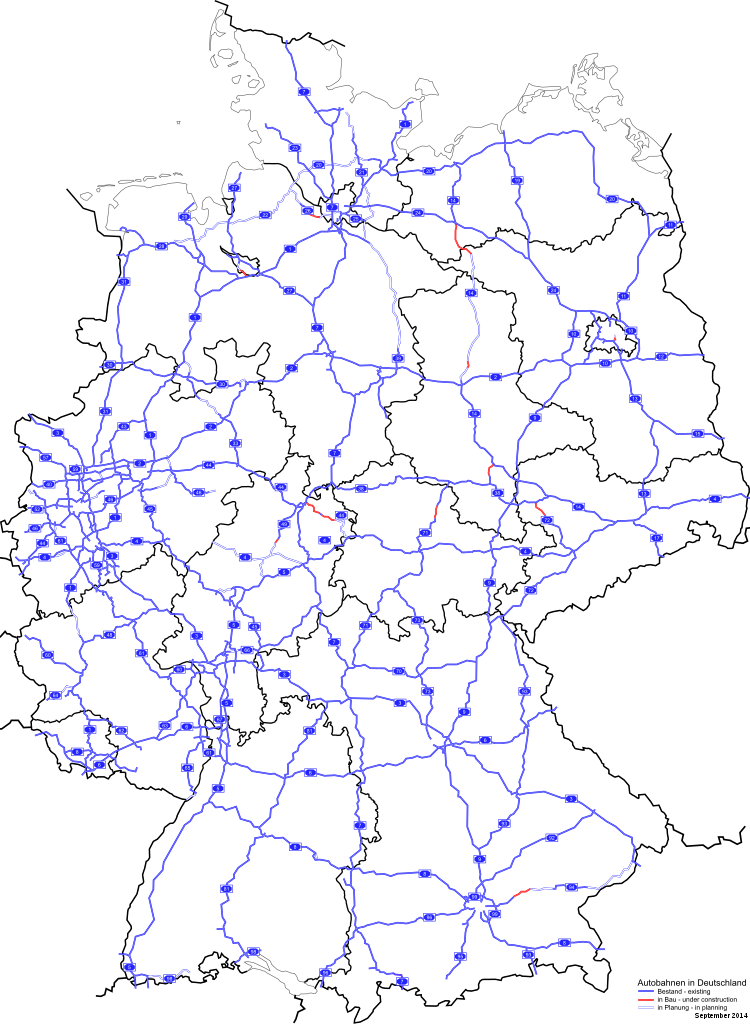
Here's a map of the Autobahn system in Germany:


Notice how all the large metropolitan regions are extensively served. Now focus in particular on the Rhine-Neckar metropolitan region (south of Frankfurt, northwest of Stuttgart). Its population is almost exactly the same as the Pittsburgh metropolitan area, and it has a strong network. A5 goes north to Frankfurt and south to Switzerland. A6 goes east to Nuremburg and west to Saarbrucken. A61 goes northwest to Cologne, and A65 goes southwest to France. And there are also three short connector highways.

It should also be noted that the highway segments shaded in red on that map were under construction as of December 2009, and the segments shaded in white were in planning. If Germany is not done building highways, then why should we stop?

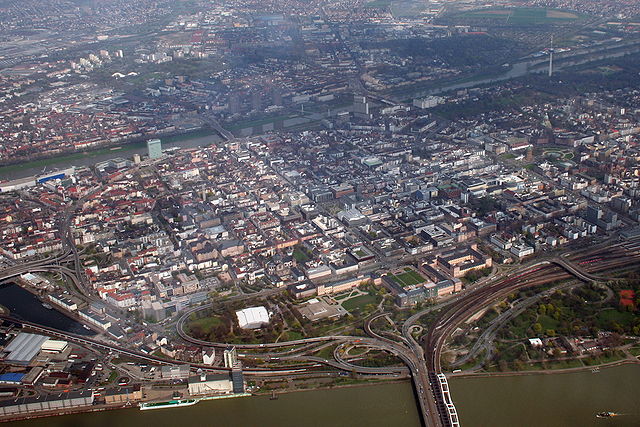
Here's a picture of Mannheim, the largest city in Rhine-Neckar:


Notice how two highways begin right on the edges of the city center, and a rather significant arterial road connects them both. I-376 past downtown Pittsburgh is no more intrusive than this arrangement, so there's no need to eliminate it, as far as I'm concerned. Mannheim manages to be a dense, walkable city despite having two highways that start on its doorstep.

Quote:
Originally Posted by themaguffin View Post
My point with all those examples is that highways are integral to the overall transportation infrastructure, and in Pittsburgh the highways quite frankly 🞵🞵🞵🞵 compared to our peer cities. No amount of busways and light rail will fix that.
I agree, and so does a friend of mine from small-town south Georgia after he drove around the Pittsburgh area himself. I-376 between Robinson Township and Wilkins Township is terrible, to put it mildly. It was functionally obsolete the moment it opened, and improvements since have only been marginal.

I had another "everything but highways" person on another message board try taking me to task for suggesting that capacity on I-376 should be expanded, and I had to illustrate that even if traffic on it was cut in half after T extensions are built to the airport and Monroeville, it'd still be over capacity. And don't even get me started on the design deficiencies. All the light rail expansion in the world won't magically make the on- and off-ramps longer and less dangerous. All the bike trails in the world won't magically create more space between the inner lanes and the median barrier. Even the Southwestern Pennsylvania Commission said 12 years ago in Section 3.3 of a multimodal transportation study between downtown Pittsburgh and the airport:

Quote:
Originally Posted by Southwestern Pennsylvania Commission
The Parkway West was designed shortly after World War II and constructed in the 1950's and early 1960's. Since that time, median barriers and paved shoulders have been added. Today, the interchange configurations, roadway width, and geometric design are substantially the same as when the road was constructed. However, the Parkway handles more than twice the design traffic volume and, in addition, carries a high percentage of trucks. And, despite the congestion that affects the Carnegie to Pittsburgh segment (and, increasingly, the I-79 to the Airport segment), the latent traffic demand is far greater than what the road actually carries every day.

...

The following are important in regard to the development of corridor alternatives and modes:

The 1950's era design conditions can be addressed only by directly correcting the specific problem. As such, the Parkway West and other arterials have a baseline need for improvements, regardless of new modes or corridors.

New corridors, whether highway or transit, may provide direct benefits, but cannot directly address the need to update the Parkway and other arterials.
(Emphasis added.)

Plain and simple, capacity needs to be expanded, and most of the interchanges need to be reconfigured for safety reasons. Six lanes are necessary between the airport and I-79, and through the Fort Pitt Tunnel. Eight lanes are necessary between I-79 and the Fort Pitt Tunnel, with a lane drop inbound at PA 51.


Quote:
Originally Posted by Topher51 View Post
You are kidding, right? It is routinely backed up in both directions west of I-79 in the mornings and afternoons.
It's the only highway I've seen in a similarly-sized metropolitan area that's backed up in both directions during rush hour. That's bad.


Quote:
Originally Posted by Topher51 View Post
...the beltway as a whole (and the Mon-Fayette Parkway) are meant more for development of depressed and under-utilized areas than current commuting needs.
Basically, yes. Those Mon Valley towns have no chance of ever coming back without being better connected to the greater Pittsburgh area. A series of narrow two-lane roads ain't gonna cut it. And since industry doesn't ship their goods via light rail or bikes, it makes sense to build the highway connections first to get industry reinvestment, and then (re)build the transit if the population in the Mon Valley begins to increase.


Quote:
Originally Posted by Topher51 View Post
Obviously since I frequent this page, I am all in favor of urban development and public transportation, but in a metropolitan area you need a balance of smart urban and suburban development.
The map of the Autobahnen in Germany and the picture of central Mannheim illustrate that there's room for every mode of transportation in a major metropolitan area: sidewalks, light rail and highways.

Quote:
Originally Posted by Topher51 View Post
Allegheny County has a very unique topography that led to pockets of development that are connected with windy, two lane roads. Frankly speaking, I've never lived anywhere where it took longer to get from one side of the city to another on the surface streets.
When I was younger, my older brother used to play in a regional soccer league, and one weekend he had to play a game at Elizabeth Forward High School. I'll never forget how long and tedious the drive from Penn Hills to Elizabeth was. It took us nearly an hour to get there, and we never even left Allegheny County. I got carsick both ways. Not only does there need to be better east/west mobility across the southern suburbs, but there needs to be better north/south mobility across the eastern suburbs. The Monroeville branch of the Mon-Fayette Expressway should help with that. (On that note, I'm not sure if the branch into the city of Pittsburgh is needed.)


Quote:
Originally Posted by Topher51 View Post
Yes, the traffic on both the beltway and the Mon-Fayette Parkway are lower than expected, but both roads are unfinished. The airport and the city are the ultimate destinations and until all the links are completed, the traffic is going to be light. I for one will be using both if/when they are finished to cut my 45-50 minute commute from Canonsburg to Homestead to ~25 minutes.
Again, I'm not sure if the Mon-Fayette branch into the city is necessary, but at the very least it should be connected to another highway. You're absolutely correct that the highway segments opened since 2000 won't be used very much until that happens.

Somebody proposed extending the northern terminus of the Monroeville branch up Thompson Run to the Pennsylvania Turnpike in Plum, and based on what I could tell from the satellite images, it seems to be an excellent idea. Thompson Run is very sparsely developed, so an extension up to the Turnpike would only impact a subdivision or two in the vicinity of the Turnpike, and very little else. And if somebody needed to get from, say, Cranberry to West Mifflin, they could take the Turnpike around to the Mon-Fayette Expressway and head straight down that way.

By the way, it's worth noting that toll highways don't seem to promote suburban sprawl nearly as much as "free" highways do. Take a look at I-79 between the Pennsylvania Turnpike and I-70. That's 40 miles of nearly continuous suburban development. Now contrast that with the Turnpike between I-79 and I-70. Only between the Allegheny River and I-376 are there even any hints of suburban development. If there's a compelling argument in favor of toll highways, that has to be one of them. Access on toll highways is limited to the point that suburban sprawl is limited.

Quote:
Originally Posted by Topher51 View Post
Speaking of public transit, I took the DC metro to work every day for 7 years and really enjoyed it. One big difference between that system and the T that I haven't seen mentioned on here are the perimeter stations with massive parking structures. The T runs through neighborhoods (which is great, don't get me wrong), but it would get a hell of a lot more use if the lines were extended to the Interstates and other arterials so that people could easily drive to the stations, park, hop on the train and take a 15 minute ride to work. A T-line to the airport wouldn’t just need to rely on air travelers if it ran roughly along the path of the Parkway West and replace the Carnegie Busway into town. That would get a lot of use by suburbanites like myself.
One day, I'd love to drive down an expanded and modernized Parkway West and see the T trains moving by between Carnegie and the airport.
Reply With Quote
     
     
  #6685  
Old Posted Jan 14, 2014, 9:12 PM
BrianTH BrianTH is offline
Registered User
 
Join Date: Jan 2010
Posts: 6,078
Quote:
Originally Posted by PITairport View Post
Its not an oversimplification at all. The airport most certainly is the engine for those jobs. There are other factors of course, but without the airport those jobs don't exist.
Again, that just means the existence of the airport is one of many necessary conditions for such jobs to exist, not the actual engine. Cars have lots of parts that are necessary to make them work--calling something the "engine" implies more than that, and in fact you have not justified such a claim for the airport. All your logic shows is that the airport is the alternator cable of the region, or something like that.

Quote:
That has been proven time and time again by economic impact studies at airports all over.
Please cite or link the studies you have in mind. I might note I am aware of some self-interested "studies" by certain sorts of consultants who profit from promoting this notion, so please make sure to focus on studies from relatively neutral sources.

Quote:
I agree with your Oakland example and it should be a priority for transportation funding as it is a major economic growth area.
OK, so now the tough part--since we can't do it all immediately, what should we be starting with?

Quote:
The benefit of the Southern Beltway is useless unless it is taken as a completed project, including the eastern arm of the MFE (which really should be considered the 4th leg of the beltway).
Then it is time to cut our losses, because that entire project would cost billions more and still not come close to justifying that entire expenditure. So if completing all that is a necessary condition for justifying the next phase of the Southern Beltway, it is unjustifiable in general and should be halted.

Quote:
Its like viewing the North Shore Connecter as a hole in the ground without considering its full potential if/when extended.
The NSC was not an ideal project, and I doubt it will ever be extended--and if it is, it will likely be into Manchester, not to the airport.

That said, the situation is not remotely comparable, because ridership on the NSC has actually exceeded expectations. It looks like it has added around 6000 daily riders to the T system so far, and we have not even begun to scratch the development potential near the two North Shore stations.

Quote:
Just because that is the way I view it does not mean I can't "grapple" with the concept of cost/benefit. I realize there is only so much money to go around and projects need to be prioritized.
Then provide a detailed explanation of how the expected benefits of this project can justify its costs in the present budget environment.

Quote:
While I don't have exact figures at my finger tips, I would think that total people using cars in Allegheny county far outweighs those using PAT, more than a 2.4 to 1 ratio. So on a per capita basis, I would wager that PAT is already getting more than its fair share of the transportation pie and its time to reinvest in our highways.
PAT is an Allegheny County agency, which is why I used that example--even Allegheny County spends a lot more on roads and bridges than transit. If you added up all the capital being spent on roads and bridges versus transit in the Pittsburgh region, not just by the County, the ratio would very likely be different.

But of course it doesn't make sense to think of these issues in your terms anyway. Users don't randomly benefit from "per capita" spending on the modes of transportation they use (as an aside, of course many users use different modes at different times). For a given capital project proposal, you need to look at present and projected users, and consider the marginal transportation benefit that would result, not consider it an automatic "win" if there are already a lot of other users of the mode in question.

Again, you say you are fine with thinking in serious cost/benefit terms, but you are still refusing to do so.

Quote:
I think it is quite telling that very strong transit oriented cities are catching up on their highways. Just maybe there is something to that? Pittsburgh can and should learn from other cities and regions.
And global cities with better highway systems than Pittsburgh are also still investing way more in transit than Pittsburgh. Just maybe there is something to that too? Shouldn't we be learning those lessons as well?

Again, this argument gets you absolutely nowhere in terms of deciding what projects to prioritize. What it demonstrates is just that we are systematically underinvesting in transportation, and really all forms of infrastructure, without suggesting where to start remedying that shortfall.
Reply With Quote
     
     
  #6686  
Old Posted Jan 14, 2014, 9:54 PM
BrianTH BrianTH is offline
Registered User
 
Join Date: Jan 2010
Posts: 6,078
Quote:
Originally Posted by DBR96A View Post
Traffic on that highway will increase dramatically the moment the extension to I-79 opens. The reason there's not much traffic on it right now is because not many people from Weirton or Steubenville are going to the airport.
They are claiming traffic will approximately double to about 6500 vehicles daily once they connect to I-79. Again, even assuming they are not being overly optimistic, that isn't nearly enough to justify the cost of the extension.

Quote:
If investing in nothing but highways is wrong, then investing in everything but highways is also wrong
There is exactly zero danger of that happening.

The question at hand, whether this particular project is justifiable, is not all or nothing when it comes to highway spending in general. And it seems telling to me that only the proponents of the project are insisting on talking about it as if it were.

Quote:
And just because other cities went too heavy on the highways doesn't mean that Pittsburgh did. In fact, most of the highways built in and around other cities were built between 1970 and 2000, precisely when Pittsburgh fell apart. The only new segments of highway built in Allegheny County in that period of time were the Parkway North and the Airport Expressway, for a grand total of 17 miles of new highways. I bet almost all other urban core counties in the United States built more than 17 miles worth of highways between 1970 and 2000.
I think you are undercounting exactly how much capital has been spent on roads and bridges in the Pittsburgh area by focusing just on entirely new highway segments.

That said, I am all in favor of simply abandoning the notion that Pittsburgh has been, or could be, or should be, just like other cities when it comes to how it spends its transportation funds.

Quote:
East/west mobility across the southern portion of the metropolitan area is piss-poor, and that needs to change.
Again, I think it is imperative to consider both costs and alternative projects when drawing conclusions about how we "need" to spend our limited transportation budgets. I don't know why this is such a hard point to convey, but, "Here is something that would benefit some people" is not a complete thought when it comes to justifying a project.

Quote:
Here's a map of the Autobahn system in Germany . . . Now focus in particular on the Rhine-Neckar metropolitan region
And here is a rapid transit map of the Rhine-Neckar region:


Again, the fact that regions like this crush us on all conceivable measures of infrastructure investment doesn't help answer the question of what our priorities should be.

Quote:
I had to illustrate that even if traffic on it was cut in half after T extensions are built to the airport and Monroeville, it'd still be over capacity.
As an aside, a busway lane has about 15-20 times the peak capacity as a highway lane, so if you want to add more peak capacity, that is definitely the more efficient way to go.

That said, as always, I agree you cannot build your way out of urban road congestion with either new road capacity OR new transit capacity. Only flexible road fares, aka congestion pricing, can do that.

By the way, despite an extremely powerful auto lobby, the Germans are also starting to look at congestion pricing:

http://www.dw.de/german-cities-consider-congestion-charges/a-16294719-1

Quote:
And don't even get me started on the design deficiencies. All the light rail expansion in the world won't magically make the on- and off-ramps longer and less dangerous. All the bike trails in the world won't magically create more space between the inner lanes and the median barrier.
Actually, please DO start. Rather than building entirely new highways for very few projected users, like the Southern Beltway, it seems like a great idea to (among other things) focus instead on on safety improvements and similar upgrades to our existing highways.

Quote:
Those Mon Valley towns have no chance of ever coming back without being better connected to the greater Pittsburgh area. A series of narrow two-lane roads ain't gonna cut it. And since industry doesn't ship their goods via light rail or bikes, it makes sense to build the highway connections first to get industry reinvestment, and then (re)build the transit if the population in the Mon Valley begins to increase.
That's a terrible plan for the existing Mon Valley towns. First, relying on industrial goods production remains a dead end strategy for such towns. The future of the Pittsburgh economy, like any modern developed economy, is mostly in services.

Second, new limited-access highways harm, not hurt, existing developed areas along their path. You are really talking about entirely killing off those towns, and replacing them with a new set of developments in greenfields and brownfields along the highway route.

Finally, for all the reasons we have discussed above, WAY more important than a better link to the airport is better links into the core area, where all the best jobs and best job growth is located.

Which is why a real transportation plan for helping the Mon Valley would be focused on upgrading various arterial routes into boulevards, including (where appropriate) things like busway lanes and other complete street features.

Quote:
When I was younger, my older brother used to play in a regional soccer league
Transportation decisions of this magnitude can't be centered on travel soccer leagues.

Seriously, if anything the Turnpike Commission's usage projections are overly optimistic, so can't proponents of the project agree we can just use those?

Quote:
By the way, it's worth noting that toll highways don't seem to promote suburban sprawl nearly as much as "free" highways do.
That's because they typically are not used as much. That's not a bad reason to institute tolls on overutilized highways. It is not a good reason to put hundreds of millions of dollars into new highways expecting they will not be used much and also not do much to attract development.
Reply With Quote
     
     
  #6687  
Old Posted Jan 14, 2014, 10:13 PM
Wiz Khalifa Wiz Khalifa is offline
Registered User
 
Join Date: Jul 2008
Location: Pittsburgh, PA
Posts: 408
I think that a lot of the pro-Southern Beltway people are missing the point here, the other side does not simply consist of a bunch of pro-transit people that hate highways with all of their being. I am actually in favor of highway development if it makes sense from a cost/benefit standpoint, like BrianTH has said.

My issue with this project in particular, is that it is so far down on the priority list of transportation projects that already NEED to be completed yesterday, which includes a bunch of other highway projects. It is disconcerting to say the least how well greased this project still seems to be considering the ramifications of recently released traffic and airport studies. I have to imagine that it has to do with it being a PA Turnpike Commission project, and is probably their baby at this point. So I guess simply shifting the funds to other state projects is probably nearly impossible due to it being separate bureaucracies, which is unfortunate.

It also doesn't help that considering the massive scope and currently unknown time scale, it is conceivable that by the time anyone would even see any of the predicted benefits of the entire completed project, it will be decades down the line, and cars could very well all be driver-less by then. But that is another in the long line of reasons why this project makes zero sense right now.

What we need to be focusing on right now are the projects that would benefit the most people in the shortest amount of time. For highways, in order of need and importance it would be:

1) Parkway upgrades
2) Route 51 upgrades
3) Turnpike upgrades

No "from scratch" highway projects should even be considered until all the necessary upgrades of these 3 crumbling major arterial routes are fully funded with shovels in the ground. I bet 600+ mil would go a LONG WAY with all three of these important roads, and the best part is most in the region would actually benefit from it in their lifetimes.

Now from a mass transit standpoint, obviously BRT into Oakland is the best short-term bang for the buck. However, there exists another no-brainer when considering the rippling short-term benefits with the growing younger population in the city, and that would be a nightlife circulator (bus/shuttle?) route that lasts well beyond 2am on the weekends.

Get these done, and they could all be finished in 10-15 years tops, then we can come back and run another cost/benefit study on the Southern beltway and see if even restarting the conversation is worth the effort.
Reply With Quote
     
     
  #6688  
Old Posted Jan 14, 2014, 10:37 PM
PITairport PITairport is offline
Registered User
 
Join Date: Dec 2011
Location: Pittsburgh/Anchorage
Posts: 117
Quote:
Originally Posted by BrianTH View Post
Again, that just means the existence of the airport is one of many necessary conditions for such jobs to exist, not the actual engine. Cars have lots of parts that are necessary to make them work--calling something the "engine" implies more than that, and in fact you have not justified such a claim for the airport. All your logic shows is that the airport is the alternator cable of the region, or something like that.
Regarding the Beltway, your initial claim was that US Airways' large employment at PIT was a driving factor for authorities giving the go-ahead with the first segment. Followed up by the loss of US airways jobs, and lack of replacement jobs, has cancelled the aforementioned need.

You are wrong on both counts. I don't ever recall the US Airways employment base being the reason for the go-ahead. However, continued and forecast growth in the airport area as a result of the airport and businesses surrounding it... yes that I agree with.

As far as there being a lack of substitute for US Airways employment cutbacks, that is also incorrect, as the energy industry has filled much of that void centered around Southpointe. Yet another reason to finish this highway.

Quote:
Please cite or link the studies you have in mind. I might note I am aware of some self-interested "studies" by certain sorts of consultants who profit from promoting this notion, so please make sure to focus on studies from relatively neutral sources.
http://www.flypittsburgh.com/UserFiles/File/pdf/ACAA_Full_Technical_Report_September_2009.pdf
"•Supporting approximately 71,160 jobs
•Generating nearly $2.13 billion in annual payroll
•Producing over $5.73 billion in annual economic activity"


71,000 jobs is exponentially higher than the number actually at the airport. Then it doesn't even include the impact of companies relocating or expanding to the region. Since we are using Google (a California company) as an example, there is no way they would have set up shop in Pgh if air service was not a requirement.

" It is estimated that at least 354,500
jobs in the Pittsburgh region are in some way reliant
on air transportation services provided by Allegheny
County Airport Authority airports.
"
http://www.flypittsburgh.com/UserFiles/File/pdf/PITEcon_ExecSummary.pdf


Some others, completely random both large and small:
"In 2009, more than
434,000 jobs and $16
billion in wages and
salaries were supported
by passenger and air
cargo activity at ATL
"
http://www.atlanta-airport.com/docs/NewsRoom/2009_Economic_Impact_Study_report.pdf


"Total employment 41,588 jobs"
http://www.flylcpa.com/uploads/pagesfiles/473.pdf

There are hundreds more, but a common theme is the large amount of resulting employment not directly on the airport.


Quote:
Then it is time to cut our losses, because that entire project would cost billions more and still not come close to justifying that entire expenditure. So if completing all that is a necessary condition for justifying the next phase of the Southern Beltway, it is unjustifiable in general and should be halted.
The same can be said for the NSC

Quote:
That said, the situation is not remotely comparable, because ridership on the NSC has actually exceeded expectations. It looks like it has added around 6000 daily riders to the T system so far, and we have not even begun to scratch the development potential near the two North Shore stations.
That's because it is free. Its popularity so far is because it is nothing more than a fancy extended parking lot to downtown. Development potential? Perhaps, I like Toby Keith but talk about potential wasted. This whole conversation is a moot point if this is the development we get after a $500 million 1 mile tunnel.


Quote:
Then provide a detailed explanation of how the expected benefits of this project can justify its costs in the present budget environment.

"Project Need and Purpose
The Southern Beltway will support economic development in southwestern Pennsylvania and
improve east-west mobility in the circumferential corridor
south and west of the City of Pittsburgh. The US-22 to I-79 Project will provide safe, efficient transportation improvements in
the corridor between US-22 and I-79, and ultimately improve access to the PIA from the south. It will be compatible with local, regional, and national planning efforts, and will improve access
for employment, industry, truck traffic, emergency services, and future growth areas by providing a modern transportation facility that enhances transportation continuity locally and regionally. The project is expected to address the following transportation needs and
deficiencies within the corridor:
•Poor circumferential mobility to adjacent job and planned growth areas
•Only two-lane roads are available for traveling in an east-west direction through the corridor
•Poor east-west mobility for auto, transit, and truck travel
•The transportation network is inadequate to serve economic development plans
•Safety concerns because of the deficient roadway network

The purpose and major benefits of
completing Southern Beltway from US-22 to I-79 are:
•Makes critical side road connections and improves travel times
•Relieves congestion while improving safety
•Increases potential for orderly economic development in Findlay and North/South Fayette Townships in Allegheny County and Robinson, Mount Pleasant, and Cecil Townships in Washington County
•Significantly improves access to the PIA for traffic travelling north on I-79"

http://www.spcregion.org/pdf/tipamend/be...Narrative_Southern%20Beltway%20draft.pdf

Quote:
PAT is an Allegheny County agency, which is why I used that example--even Allegheny County spends a lot more on roads and bridges than transit. If you added up all the capital being spent on roads and bridges versus transit in the Pittsburgh region, not just by the County, the ratio would very likely be different.
So you were debunked with your Allegheny County example, you want to shift goal posts. Now you are focusing on areas outside Allegheny County but that's fine as the need for mass transit in those areas is even less.

Quote:
For a given capital project proposal, you need to look at present and projected users, and consider the marginal transportation benefit that would result, not consider it an automatic "win" if there are already a lot of other users of the mode in question.
If "there are already a lot of other users of the mode in question", then that should weigh heavily on what the priorities should be. Anything else is an attempt to shift people's transportation habbits.

Good transportation planning should address peoples needs and lifestyles, not shift people's needs and lifestyles to suit the transportation agencies.

Last edited by PITairport; Jan 14, 2014 at 11:16 PM.
Reply With Quote
     
     
  #6689  
Old Posted Jan 14, 2014, 11:01 PM
BrianTH BrianTH is offline
Registered User
 
Join Date: Jan 2010
Posts: 6,078
Quote:
Originally Posted by Wiz Khalifa View Post
I think that a lot of the pro-Southern Beltway people are missing the point here, the other side does not simply consist of a bunch of pro-transit people that hate highways with all of their being. I am actually in favor of highway development if it makes sense from a cost/benefit standpoint, like BrianTH has said.
Kind of interesting that whether people are for or against this project, we are all saying the same thing about not dealing with these issues in such an all-or-nothing fashion. So why do we keep talking about that? I think a lot of people, on all sides, have been scarred by the nature of the typical Internet conversation that erupts whenever different modes of transportation are being discussed.
Reply With Quote
     
     
  #6690  
Old Posted Jan 15, 2014, 1:24 AM
Jonboy1983's Avatar
Jonboy1983 Jonboy1983 is offline
Registered User
 
Join Date: Apr 2010
Location: The absolute western-most point of the Philadelphia urbanized area. :)
Posts: 1,721
Wow, talk about a heated, heated discussion regarding the Southern Beltway, T, transit in general, etc. I still think they should just finish this project. When you look at how much money goes into building this new infrastructure, the vast majority of it goes into land acquisition and all the studies before you can even get to the actual construction. That price tag is a drop in the bucket compared to all the other components. Prior to building this $600m highway, I believe the PTC spent well over a billion dollars just on the land acquisition and studies alone. So if this project is halted, then that would mean the PTC has pretty much wasted all of that money...

Regarding the T, I think parts of that could be revamped and re-worked so that it does become more of a rapid system rather than, well whatever it is used as today. I suggest they make the Beechview segment elevated.

Of course, if it were up to me, they would have just gone with a heavy-rail system outright. At the time, though, LRT seemed to be the most logical considering it uses an old trolley line. I took a tour of the LRT system back in 2008, and the rep from Port Authority explained all the hows and whys of the system...
__________________
Transportation planning, building better communities of tomorrow through superior connections between them today...
Reply With Quote
     
     
  #6691  
Old Posted Jan 15, 2014, 2:51 AM
BrianTH BrianTH is offline
Registered User
 
Join Date: Jan 2010
Posts: 6,078
Quote:
Originally Posted by PITairport View Post
Regarding the Beltway, your initial claim was that US Airways' large employment at PIT was a driving factor for authorities giving the go-ahead with the first segment. Followed up by the loss of US airways jobs, and lack of replacement jobs, has cancelled the aforementioned need.
You are putting a lot of words in my mouth and not getting them right.

But in fact, the 1990s studies done in support of the Southern Beltway specifically designated the airport as one of the four "major destinations and employment centers" in the study area, and the Southern Beltway was specifically selected as the preferred alternative in part because it would improve travel time to those destinations. It was then endorsed by the SPC (then the SPRPC) in part because the SPRPC had designated the airport as a major location of expected jobs growth. And their traffic projections for the Findlay Connector phase as a standalone project specifically cited the number of people who would use it to enter the airport (although presumably that included both passengers and employees).

So I don't know if you are actually trying to deny that expectations for airport employment as of the mid-1990s were part of the rationale for the Southern Beltway, but I think it would be pretty silly if you were.

Moreover, it doesn't matter. I documented that the expectations for the Findlay Connector alone going in were 12,000 daily vehicles, and the actual result has consistently been way less than that. I've also pointed out that the new expectations even if it is extended to I-79 are only 6500. I've suggested that a large portion of that discrepancy between original expectations and actual results/current expectations was the massive shortfall of employment at the airport, which apparently caused a poster who chose to name him- or herself "PITairport" to leap to defend its good name. But even if that isn't contributing to the discrepancy (which, again, I think is a silly proposition), that just means any other causes of the discrepancy are doing more of the work. And it is the fact of the discrepancy itself that makes extending the Southern Beltway impossible to justify given its cost.

But that said, even at the risk of offending those who identify themselves personally with the airport, I am going to continue to conclude that a major contributing factor to the dramatic shortfall of vehicles was the massive disappointment the airport ended up being as an employment center.

Quote:
As far as there being a lack of substitute for US Airways employment cutbacks, that is also incorrect, as the energy industry has filled much of that void centered around Southpointe.
You'll have to do more than that to show Southpointe will actually restore enough potential demand for the Southern Beltway to make its costs justifiable.

Of course Southpointe has already been a success in part because it is located on I-79, which allows access both into the core area and also out into Marcellus territory. And to the extent people work at Southpointe, I understand a lot of them live nearby, farther out, or in reasonable proximity to I-79 as it is.

That doesn't mean there would be absolutely no one who would use the extended Southern Beltway to get to Southpointe, but we are talking about a project which is many, many thousands of daily vehicles away from being justifiable. So you have to show that Southpointe can have an effect of that magnitude--and notably, the Turnpike Commission itself has not yet made any such predictions.

So not exactly a neutral source, but in any event, it makes my point for me. The verb there is "supporting" (not responsible for, the engine of, or so on). If you then look at how they get that number you are relying on, airport employment (including both aviation-related and non-aviation tenants on airport land) only accounts for a fraction of it, even when you add in "second-round effects" (which applies multiples based on the theory the money paid to first round employees is circulating through the local economy and supporting more jobs). Rather, a large majority of the jobs being "supported" are the result of visitor expenditures, plus second round effects on top of those expenditures.

Of course it is perfectly fair to say the airport "supports" those visitor expenditures and the resulting jobs. It is not at all fair or accurate to claim the airport is "responsible" for those visitor expenditures and resulting jobs. That is because those visitors are actually coming to Pittsburgh for some other reason, and the airport is just a tool they use to get here. Therefore, those other reasons they are coming here at least share responsibility for, and in fact really drive, their visits. But the airport does "support" those visits.

This is precisely how airports get oversold in development circles. You definitely need a decent airport to "support" visitors who want to come to your locale. But the airport isn't what is driving those visits in the first place, and confusing the two concepts can lead to bad policy decisions.

Quote:
Since we are using Google (a California company) as an example, there is no way they would have set up shop in Pgh if air service was not a requirement.
I'm not sure what you are saying here, but I am pretty sure if they didn't care about air service they still would have come here, because it all started with a program at CMU, and they continue to reference accessing the local talent base as their main reason to be here.

I guess I shouldn't be arguing with someone who identifies personally with an airport about the importance of airports, but all this is really quite simple. Yes, a decent airport is important to have, but only because it supports visitors, and businesses, and so on, not because it is actually the fundamental driver of all that activity.

Quote:
" It is estimated that at least 354,500
jobs in the Pittsburgh region are in some way reliant
on air transportation services provided by Allegheny
County Airport Authority airports.
"
http://www.flypittsburgh.com/UserFiles/File/pdf/PITEcon_ExecSummary.pdf
Again, not exactly the neutral source I asked for, but the phrase "in some way reliant" basically makes my point for me.

Quote:
There are hundreds more, but a common theme is the large amount of resulting employment not directly on the airport.
Again, "resulting" is not a fair translation of "supporting". When you look at what they mean by supporting, many other causes are also contributing to the jobs in question, as I originally pointed out.

Quote:
The same can be said for the NSC
Well no, not about the NSC, because it is already built.

Now you are right that the same could be said for the idea of extending the T from the NSC to the airport--and I have said it myself!

Quote:
That's because it is free. Its popularity so far is because it is nothing more than a fancy extended parking lot to downtown.
Even at free, few people will ride it for fun (not more than once, at least--it ain't that fun). And it is doing more than serving parkers--people use it for North Shore events/activities, and also for access to the North Side (more, frankly, than I was expecting).

In any event, it doesn't matter why it is already more popular than the extended Southern Beltway is projected to be. The fact that it is means it is not an apt analogy.

Quote:
Development potential? Perhaps, I like Toby Keith but talk about potential wasted. This whole conversation is a moot point if this is the development we get after a $500 million 1 mile tunnel.
It is also a couple floors of office space, but yes, that particular project 🞵🞵🞵🞵🞵. However, there is still a LOT of space around the stations, not all of it in the hands of Continental. And the basic point is that we don't need to rely on extending the NSC further for it to be a useful piece of infrastructure.

Quote:
"Project Need and Purpose
The Southern Beltway will support economic development in southwestern Pennsylvania and
improve east-west mobility in the circumferential corridor
south and west of the City of Pittsburgh. The US-22 to I-79 Project will provide safe, efficient transportation improvements in
the corridor between US-22 and I-79, and ultimately improve access to the PIA from the south. It will be compatible with local, regional, and national planning efforts, and will improve access
for employment, industry, truck traffic, emergency services, and future growth areas by providing a modern transportation facility that enhances transportation continuity locally and regionally. The project is expected to address the following transportation needs and
deficiencies within the corridor:
•Poor circumferential mobility to adjacent job and planned growth areas
•Only two-lane roads are available for traveling in an east-west direction through the corridor
•Poor east-west mobility for auto, transit, and truck travel
•The transportation network is inadequate to serve economic development plans
•Safety concerns because of the deficient roadway network

The purpose and major benefits of
completing Southern Beltway from US-22 to I-79 are:
•Makes critical side road connections and improves travel times
•Relieves congestion while improving safety
•Increases potential for orderly economic development in Findlay and North/South Fayette Townships in Allegheny County and Robinson, Mount Pleasant, and Cecil Townships in Washington County
•Significantly improves access to the PIA for traffic travelling north on I-79"[/I]
http://www.spcregion.org/pdf/tipamend/be...Narrative_Southern%20Beltway%20draft.pdf
So I suggest you are engaging in the fallacy of only looking at benefits, and ignoring costs. You claim no, no, you are perfectly capable of doing cost/benefit analysis. I challenge you to do that, and you quote . . . a passage that only looks at benefits and makes no mention of costs.

Point made, don't you think?

Quote:
So you were debunked with your Allegheny County example, you want to shift goal posts. Now you are focusing on areas outside Allegheny County but that's fine as the need for mass transit in those areas is even less.
Oh, nonsense. Go back and read the post I was responding to, then my full post in response. I haven't shifted anything, and I stand by everything I originally said. If you want to insist on misreading it for what you think is great rhetorical effect, it just makes you look petty and uninterested in a serious discussion.

Quote:
If "there are already a lot of other users of the mode in question", then that should weigh heavily on what the priorities should be. Anything else is an attempt to shift people's transportation habbits.
That is terrible reasoning, although all too typical of people who have turned transportation policy into another front in the "culture wars".

The vast majority of people don't inherently prefer one mode over another. They just use whatever is most practical in terms of cost, convenience, time, and so on. As a result, most people will freely use different modes depending on the purpose and options at hand.

So transportation planners shouldn't put any special weight on what people are currently using, because that just tells you what options they currently have. Instead, transportation planners should use whatever technologies and modes they have available and that would provide better options, because people will go ahead and use them.

In fact, if it was bad "to shift people's transportation habbits," we would almost all still be walking, because that was the dominant mode of human transportation for quite a long time. But that's silly--historically most people didn't walk everywhere because they inherently preferred walking, that was just the only practical option available to them.

Quote:
Good transportation planning should address peoples needs and lifestyles, not shift people's needs and lifestyles to suit the transportation agencies.
Needs yes, "lifestyles" no. Again, transportation mode choice isn't a "lifestyle" choice for most people, and transportation planners should be focused on serving needs with whatever technologies and modes will do the best job.

Reply With Quote
     
     
  #6692  
Old Posted Jan 15, 2014, 3:13 AM
BrianTH BrianTH is offline
Registered User
 
Join Date: Jan 2010
Posts: 6,078
Quote:
Originally Posted by Jonboy1983 View Post
Prior to building this $600m highway, I believe the PTC spent well over a billion dollars just on the land acquisition and studies alone.
I'm not sure that is right--are you also including the construction costs for the first phase?

Quote:
So if this project is halted, then that would mean the PTC has pretty much wasted all of that money...
Even if that is true, it doesn't justify wasting $600 million more. As I noted above, what you are describing is the sunk cost fallacy (feel free to Google), and it is very important not to fall victim to it.

Quote:
Regarding the T, I think parts of that could be revamped and re-worked so that it does become more of a rapid system rather than, well whatever it is used as today.
It may be possible to build a heavier-duty system in its place using the same ROW, but that would be very expensive just for the existing network, before you could get to any extensions.

Again, it could be viable at some point, but there are a lot of other things I would prefer to do first.
Reply With Quote
     
     
  #6693  
Old Posted Jan 15, 2014, 4:06 AM
PITairport PITairport is offline
Registered User
 
Join Date: Dec 2011
Location: Pittsburgh/Anchorage
Posts: 117
Quote:
Originally Posted by BrianTH View Post
You are putting a lot of words in my mouth and not getting them right.
Your words:
Quote:
I have also been pointing out that one of the major reasons that happened is that the airport was originally expected to be a huge jobs center, but that the USAir bankruptcy and de-hubbing of PIT has destroyed that vision, and it is not coming back.
I can only take your words at face value, and that is what I responded to.


Quote:
I've suggested that a large portion of that discrepancy between original expectations and actual results/current expectations was the massive shortfall of employment at the airport, which apparently caused a poster who chose to name him- or herself "PITairport" to leap to defend its good name.
You've suggested that claim, but offered nothing to back it up. The fact is the employment at the airport would be such a small percentage of the total users of a complete Southern Beltway.

Quote:
But that said, even at the risk of offending those who identify themselves personally with the airport, I am going to continue to conclude that a major contributing factor to the dramatic shortfall of vehicles was the massive disappointment the airport ended up being as an employment center.
Why? There is nothing to verify this claim. I'd love to see a source.

Quote:
I'm not sure what you are saying here, but I am pretty sure if they didn't care about air service they still would have come here, because it all started with a program at CMU, and they continue to reference accessing the local talent base as their main reason to be here.
Well they do care about air service, and without it I highly doubt they would chose to be here, with or without CMU.

Quote:
Again, not exactly the neutral source I asked for, but the phrase "in some way reliant" basically makes my point for me.
So the numbers are not correct because you don't trust the source? Now that is putting words in your mouth, but that is the impression you are leaving.

Regardless, "reliant" seems to in fact NOT make your case. Reliant means just that, in this case 354,500 jobs reliant on the airport.

Quote:
So I suggest you are engaging in the fallacy of only looking at benefits, and ignoring costs. You claim no, no, you are perfectly capable of doing cost/benefit analysis. I challenge you to do that, and you quote . . . a passage that only looks at benefits and makes no mention of costs.

Point made, don't you think?
The costs are well known; just because I didn't quote them in that particular quote does not mean I don't take that into consideration.

Quote:
The vast majority of people don't inherently prefer one mode over another. They just use whatever is most practical in terms of cost, convenience, time, and so on. As a result, most people will freely use different modes depending on the purpose and options at hand.
I agree, and it goes back to the "all or nothing" fallacy. Pittsburgh needs comprehensive transportation of all types so people have options to siut those purposes.

Going in circles now, but it has been shown that Pittsburgh is lacking severely wrt highways when compared to peer cities. Cities such as Columbus, Cincinnati, Indianapolis, and Kansas City have much better highways than Pittsburgh, while Pittsburgh has better transit systems. That shows me where transportation funding in Pittsburgh should be spent.

Quote:
Again, transportation mode choice isn't a "lifestyle" choice for most people, and transportation planners should be focused on serving needs with whatever technologies and modes will do the best job
Of course its a lifestyle choice. If you chose to live in the 'burbs and drive in because that's your only option, then that is part of your lifestyle. Likewise if you chose to live downtown and can't afford to keep a car parked, then that too is part of a lifestyle choice.

Last edited by PITairport; Jan 15, 2014 at 4:21 AM.
Reply With Quote
     
     
  #6694  
Old Posted Jan 15, 2014, 4:42 AM
BrianTH BrianTH is offline
Registered User
 
Join Date: Jan 2010
Posts: 6,078
Quote:
Originally Posted by PITairport View Post
Your words
Which are different from what you then tried to attribute to me.

Quote:
You've suggested that claim, but offered nothing to back it up. . . . I'd love to see a source.
I explained the nature of the 1990s studies. I am not sure if they are available online. But they include the Southern Beltway Needs Study (I think there was both a 1993 report and a 1995 supplement) and the Southern Beltway combined CMS/MIS report (I think that was circa 1996).

Quote:
Well they do care about air service, and without it I highly doubt they would chose to be here, with or without CMU.
That's a different proposition from the previous one you stated. Again, though, I have always agreed decent airport service is a necessary condition.

Quote:
So the numbers are not correct because you don't trust the source?
Well, more that the way the numbers are presented and summarized in self-interested commissioned studies like this typically reflect the agenda of the entity paying for the study.

But as I noted, when you dig into how they came up with those numbers, it confirms what I have been noting all along.

Quote:
Regardless, "reliant" seems to in fact NOT make your case. Reliant means just that, in this case 354,500 jobs reliant on the airport.
You dropped the "in some way". With that qualifier, it is consistent with what I have been noting.

Quote:
The costs are well known; just because I didn't quote them in that particular quote does not mean I don't take that into consideration.
The challenge you claimed to be addressing was: "Then provide a detailed explanation of how the expected benefits of this project can justify its costs in the present budget environment."

I don't know what else to say if you think you have actually done that just by quoting a list of unquantified possible benefits.

Quote:
and it goes back to the "all or nothing" fallacy.
Which no one is actually suggesting.

Quote:
Going in circles now, but it has been shown that Pittsburgh is lacking severely wrt highways when compared to peer cities. Cities such as Columbus, Cincinnati, Indianapolis, and Kansas City have much better highways than Pittsburgh, while Pittsburgh has better transit systems. That shows me where transportation funding in Pittsburgh should be spent.
I understood why people were citing comparable metropolitan areas in places like Germany as models, although as previously noted that just leads to the conclusion that infrastructure spending in general has been deficient in Pittsburgh.

I don't accept the premise that Columbus, Cincinnati, Indianapolis, and Kansas City are appropriate models.

Quote:
If you chose to live in the 'burbs and drive in because that's your only option, then that is part of your lifestyle. Likewise if you chose to live downtown and can't afford to keep a car parked, then that too is a lifestyle choice.
But to the extent there is a "lifestyle choice" involved in these choices (and typically a lot of it is actually about housing costs, schools, and other such things) it is choosing to live in the suburbs or choosing to live Downtown. People in the suburbs are not deliberately choosing NOT to have a transit option, and people in Downtown are not deliberately choosing NOT to have cheap parking.

So if someone living in the suburbs and working Downtown gets, say, a new commuter rail option that competes with driving and parking in terms of cost, convenience, and speed, they are not going to reject it because they have made a different "lifestyle" choice. They will use it to the extent it makes practical sense for them. Ditto for people living Downtown--those of them that are able to drive and can comfortably afford a car often do in fact own cars, and if owning cars Downtown got cheaper, more of them would.

Seriously, this "lifestyle" concept as applied to transportation modes is such a silly, silly notion, even if it has become very popular among the Culture Warriors. Human history, including American history, demonstrates that most people freely switch their transportation mix when given new options. Which of course makes perfect sense--why wouldn't they?

Edit: By the way, that is an EXTREMELY ironic suggestion coming from a self-identified superfan of an airport. I can just imagine PENNstation, a poster back in 1920, arguing that Americans would never switch to airplanes because they had made a "lifestyle choice" to use trains for intercity travel. Invest in public airports? Never! You are trying to change their habbits!
Reply With Quote
     
     
  #6695  
Old Posted Jan 15, 2014, 5:58 AM
photoLith's Avatar
photoLith photoLith is offline
Ex Houstonian
 
Join Date: Feb 2008
Location: Pittsburgh n’ at
Posts: 15,996
This highway transport discussion is getting ridiculous. Can we just talk about preservation and construction again, thatd be great .
__________________
Kill your lawn
Reply With Quote
     
     
  #6696  
Old Posted Jan 15, 2014, 11:31 AM
BrianTH BrianTH is offline
Registered User
 
Join Date: Jan 2010
Posts: 6,078
Quote:
Originally Posted by photolith View Post
this highway transport discussion is getting ridiculous. Can we just talk about preservation and construction again, thatd be great .
OK.

Deb Gross is proposing a land bank program, recently authorized under a new state law:

http://www.post-gazette.com/local/city/2...-proposes-land-bank/stories/201401140145

http://triblive.com/news/adminpage/5416090-74/bank-properties-gross#axzz2qM0vu1BX

The City already sorta does this, but apparently this would streamline the process. That would be great--I have seen people complain about identifying properties they were interested in, but finding out it was impossible to work with the City in any sort of timely fashion.

The sheriff's sale for the Union Trust Building has been set for March 3:

http://www.post-gazette.com/business/201...-sale-in-two-months/stories/201401150042

I really, really hope it ends up in the hands of someone respectful but ambitious, and I agree with some of the comments to the article--it could make a great upscale hotel (or maybe upscale residences).

Last edited by BrianTH; Jan 15, 2014 at 11:56 AM.
Reply With Quote
     
     
  #6697  
Old Posted Jan 15, 2014, 12:04 PM
BrianTH BrianTH is offline
Registered User
 
Join Date: Jan 2010
Posts: 6,078
Nice roundup of recent residential projects in Lawrenceville:

http://www.popcitymedia.com/features/lawrencevillenewhousingstyle010814.aspx
Reply With Quote
     
     
  #6698  
Old Posted Jan 15, 2014, 3:01 PM
Evergrey's Avatar
Evergrey Evergrey is offline
Eurosceptic
 
Join Date: Apr 2003
Location: Pittsburgh
Posts: 24,141
The as-of-yet-unrealized Southern Beltway is based upon 1990s ideas of "economic development" and is a type of "retro-futurism"... an outdated view of a Pittsburgh future that has not become reality and never will become reality. The aerotropolis model is a fantasy. An overbuilt airport as a regional economic "silver bullet" was a colossal misfire that continues to be a drag on service levels a decade after US Air tore its fortress walls down.

What amazes me is how much support this highway is getting on an urbanist forum... even if you love unfettered highway construction... you've got to admit that this particular highway totally 🞵🞵🞵🞵🞵! Look at the map... it is pointless... incredibly awkward and is essentially redundant with existing highway infrastructure. ("But Southpointe gas employees will be able to shave a couple minutes off their trips to the airport compared to I-79!")

Add to it that this highway is being developed by the corrupt, single-minded, anachronistic and unaccountable Turnpike Commission... and it is amazing to me the broad support it gets here. The Turnpike Commission does not operate within PennDOT and only makes decisions to serve themselves. Sadly, Corbett's recent transportation plan hinges upon a gas tax increase that which is saddled with 1990s legislation dictating a dedicated 12% funding mechanism for the Southern Beltway... which is why this zombie concept is now shambling forward once again.

This KDKA piece is typical of the "rah rah" journalism in support of the Southern Beltway and Mon-Fayette Expressway in this region:

http://pittsburgh.cbslocal.com/2014/01/14/phase-ii-of-southern-beltway-underway/
Reply With Quote
     
     
  #6699  
Old Posted Jan 15, 2014, 3:25 PM
GeneW GeneW is offline
Northsider
 
Join Date: May 2007
Posts: 657
Land bank would rehabilitate property and sell it to individuals, developers

Quote:
On Tuesday, Ms. Gross introduced a bill to create the legal framework for the Pittsburgh Land Bank, which would be an entity separate from the city with a board of directors appointed by Mayor Bill Peduto and city council. The legislation is a work in progress because Ms. Gross wants to get community input on many of the program's details.

Under the state law, land banks have the ability to capture about half of the money collected from penalties on tax-delinquent parcels when they're sold through a treasurer's sale. The land bank can use that money and other capital to purchase and rehabilitate other tax-delinquent parcels.

They can then turn around and sell those parcels to individuals or developers, allowing for a more deliberate approach to redeveloping land.
Reply With Quote
     
     
  #6700  
Old Posted Jan 15, 2014, 5:57 PM
doo dah's Avatar
doo dah doo dah is offline
Registered User
 
Join Date: Oct 2011
Location: Pulchra Agro
Posts: 69
Reply With Quote
     
     
This discussion thread continues

Use the page links to the lower-right to go to the next page for additional posts
 
 
Reply

Go Back   SkyscraperPage Forum > Global Projects & Construction > City Compilations
Forum Jump


Forum Jump


All times are GMT. The time now is 7:09 AM.


Powered by vBulletin® Version 3.8.7
Copyright ©2000 - 2026, vBulletin Solutions, Inc.