Wow this place is so wicked rippin' cool, I don't know where to start. And they love having you come by for a little tour or a little research if 17th and 18th century English Lit is your thing, provided you call first. I've searched the thread for mentions of this West Adams jewel and come up with naught.
To make a long story long, around 1860 Billy Clark Sr., for whom the library is named, quit teaching at Wesleyan to strike it rich in Montana, made more off his trading business which led to banking, which led to repossessing enough claims to become become one of the Copper Kings of Butte by 1880.
In a 1907 essay Mark Twain portrayed Clark as the very embodiment of Gilded Age excess and corruption:
"He is as rotten a human being as can be found anywhere under the flag; he is a shame to the American nation, and no one has helped to send him to the Senate who did not know that his proper place was the penitentiary, with a ball and chain on his legs. To my mind he is the most disgusting creature that the republic has produced since Tweed's time."
-Wikipedia
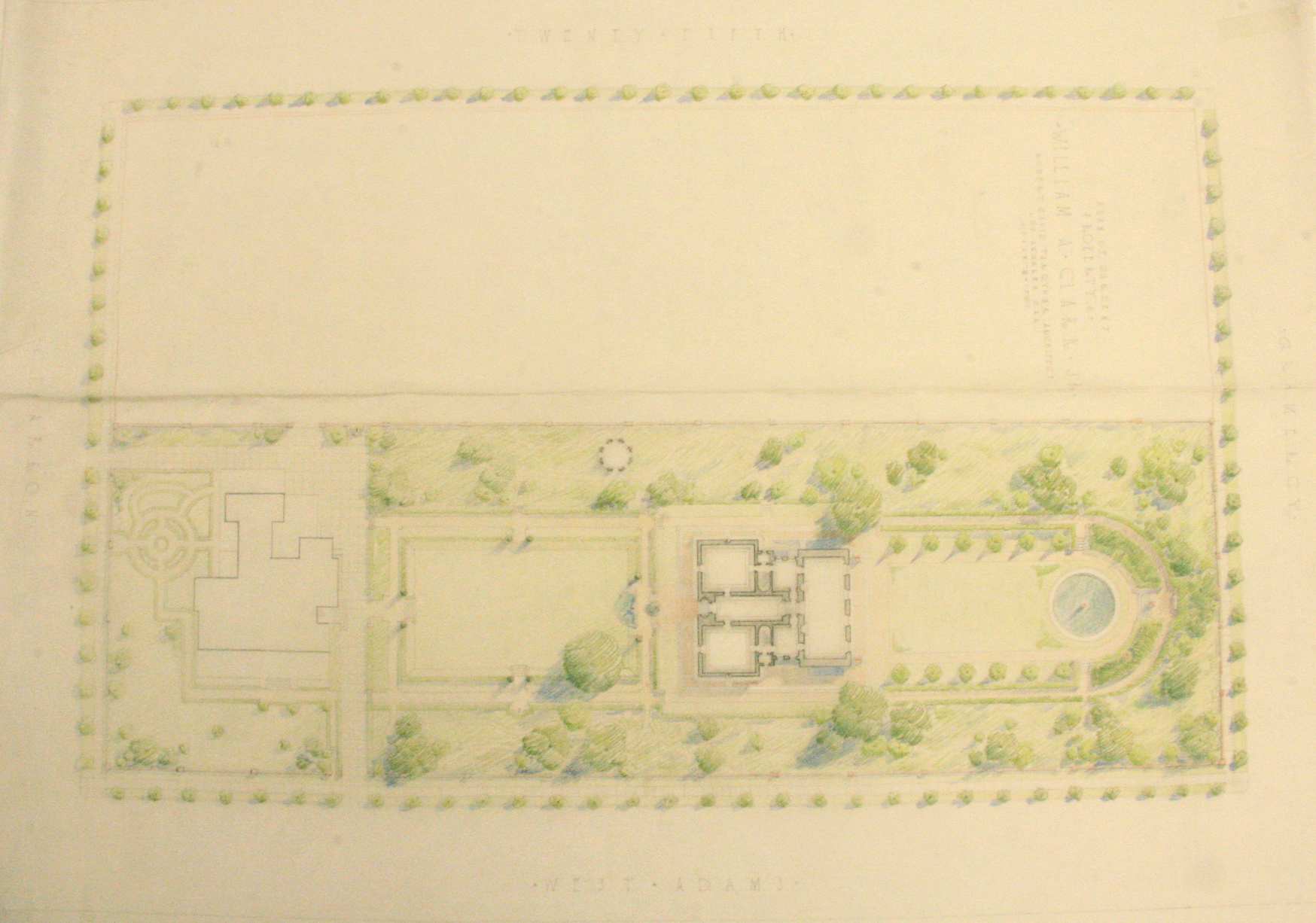
So that leads us to Junior, who moved the family to California sometime in the early teens. It sounds like he mostly concentrated on giving away dad's money as he's primarily known for founding the Los Angeles Philharmonic and funding the construction of the Hollywood Bowl. The chronology of the West Adams property at this point gets hazy, at least for me with my limited research abilities. There is a Popular Science article from 1919 detailing the observatory so it was built by then. It does not mention the house and only describes reflecting pools which may or may not be related to the lawns surrounding the library today. Being there, it feels right that they should be filled with water. The library was designed by Robert D. Farquhar and completed in 1926, in the backyard of the main house which stood on the corner of Adams and Cimarron, according to the library's website. I can't find an image of that original house but I seem to remember hearing when I visited that it was removed by the UCLA, possibly due to structural deficiencies. I found these LAPL photos after my visit so didn't know to ask about the observatory's fate.
As shown in the following undated images, the observatory, "gate house" and library all once stood in fairly close proximity, clustered almost entirely on the east end of the property. I can imagine that these were taken from the back of the main house but have no idea. The other images on LAPL are all from the 70's and show the current configuration of the property with the gate house moved to the other side of the block, at the corner of Cimarron and 25th St.
Once he took up residence in that swank mausoleum at Hollywood Forever, UCLA had bequeathed all over them the entire 13,000 volume collection, the square-block property and all buildings, and $1.5 million endowment just for good measure (not without some dismay from the much closer USC, I imagine). I haven't found much more history of it since then, though this bit is interesting - from
Barton Phelps & Associates, the architectural firm hired to add on support facilities around 1990.
"By then Clark had demolished ten neighboring houses, relocated the brick servants' quarters, and extended an old brick wall around the block. For sixty years the library drifted in an unfinished landscape gradually emptied of Clark's house, gardens, and observatory."
An undated photo of the observatory, gate house and library.
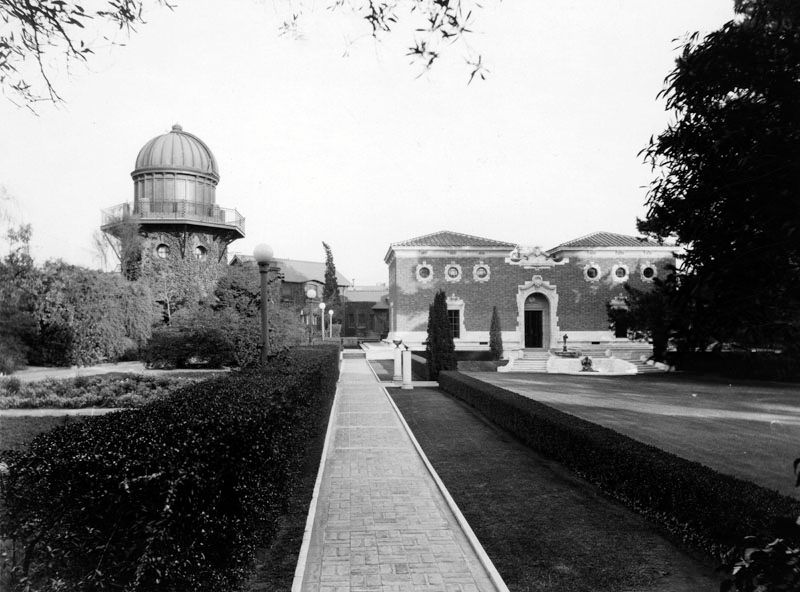 LAPL
LAPL
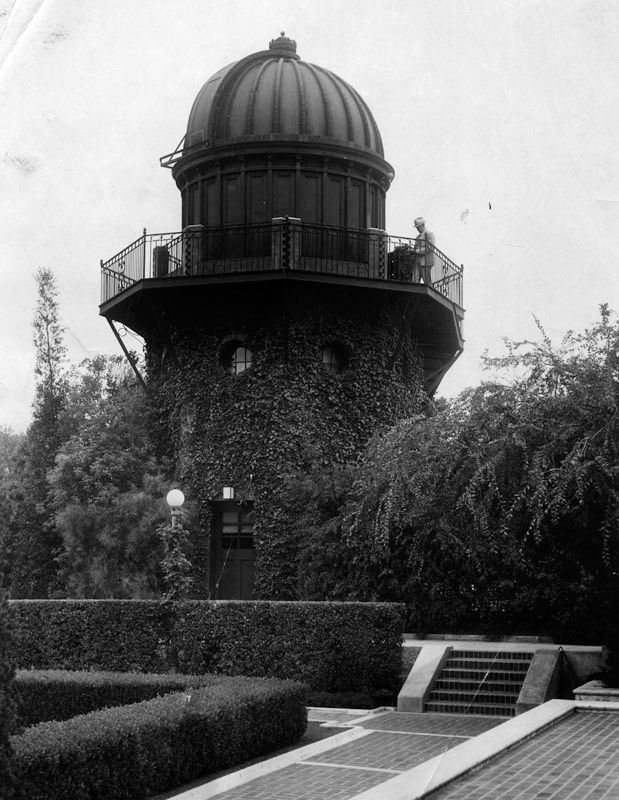 LAPL
LAPL
 Popular Science, December 1919
The site today:
 Google Maps
Some of the interesting bits in the PopSci article:
"Probably nowhere else in the world is there another private observatory like that built by William A. Clark, Jr., son of former United States Senator Clark, on the beautiful grounds of his home in Los Angeles.
"Overlooking the hedged lawns and the pools where waterlilies cast their reflections, rises the observatory tower, sixty feet high, and built of of brick with its dome made entirely of copper.
"..among all the treasures in the tower, none are more marvelous to the visitor than the star maps which are the invention of its creator...to make his stars, Dr. Baumgardt uses radium bromide...this powder is sprinkled on sheet celluloid which has been painted with ether...

"The visitor has no inkling of a vault chamber below the first floor until a trap door is raised and a tiny staircase leading downward is revealed."
And a little context:
William Andrews Clark Junior at a ballgame in 1926, the year the library was completed.
 LAPL
LAPL
Dear Old Dad, library namesake.
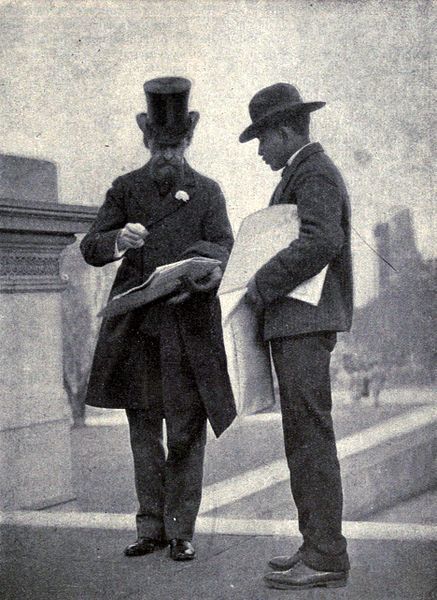 Wikipedia
A graduation ceremony of some sort, with each young woman wearing a sash with the name of a different city - I can only make out Los Angeles and New York City.
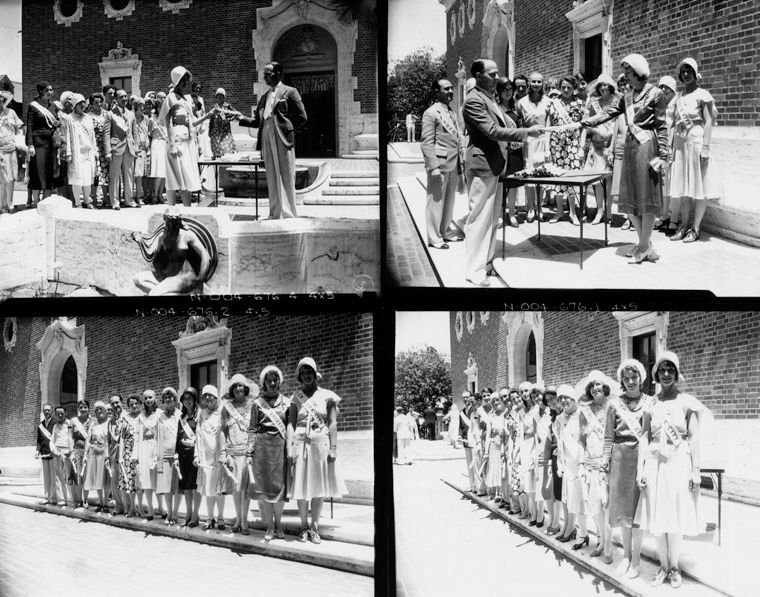 LAPL
LAPL
And some recent photos I took during my visit:
Gate House.
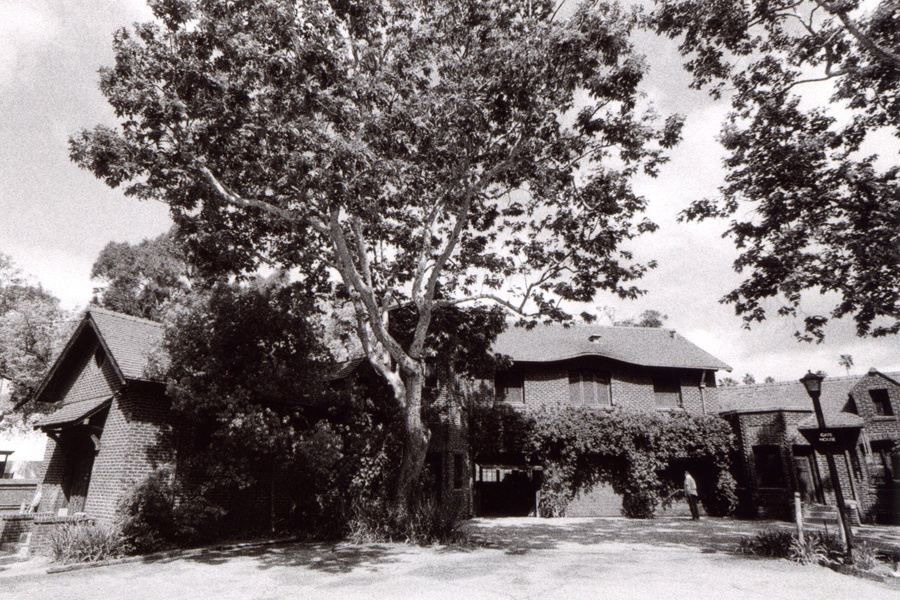 My Flickr
One of two identical reading rooms.
 My Flickr
Double-walled, offset windows. Is this a light-diffusion method, to keep direct light off the shelves, maybe?
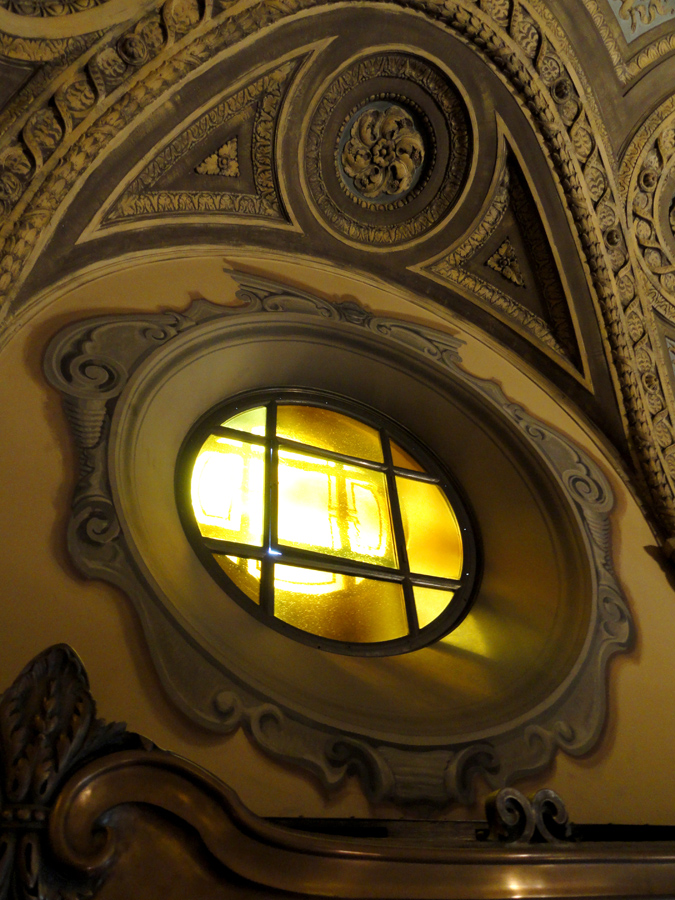 My Flickr
Your average ceiling.
 My Flickr
Of The Wilde Bore
My Flickr
Of The Wilde Bore
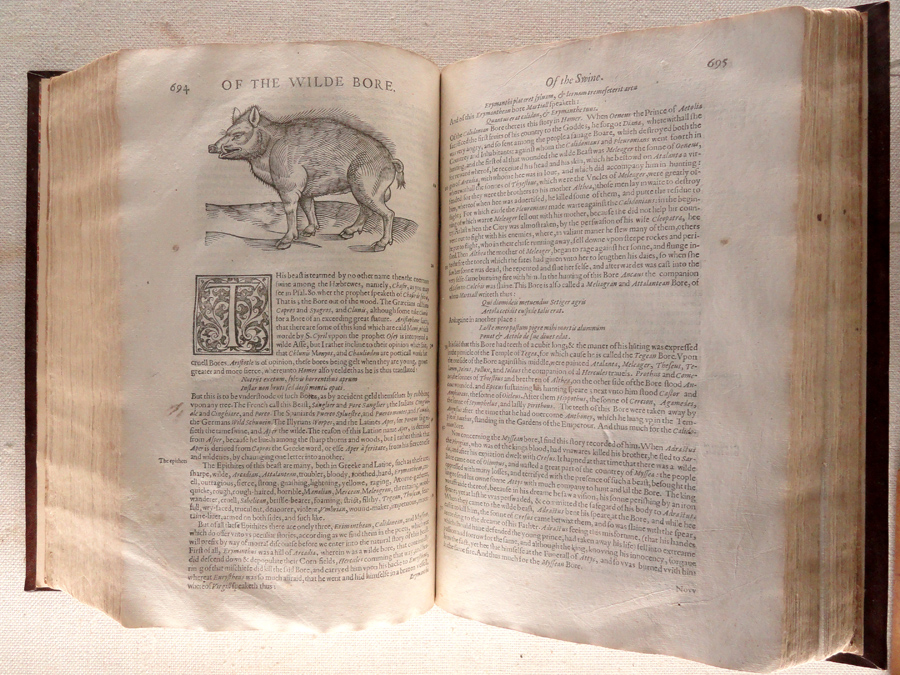 My Flickr
The environs.
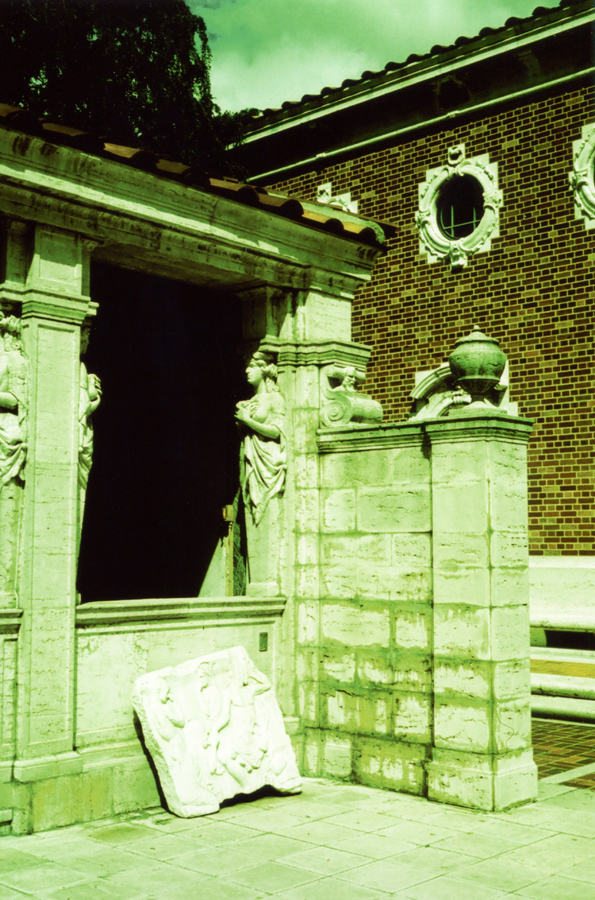 My Flickr
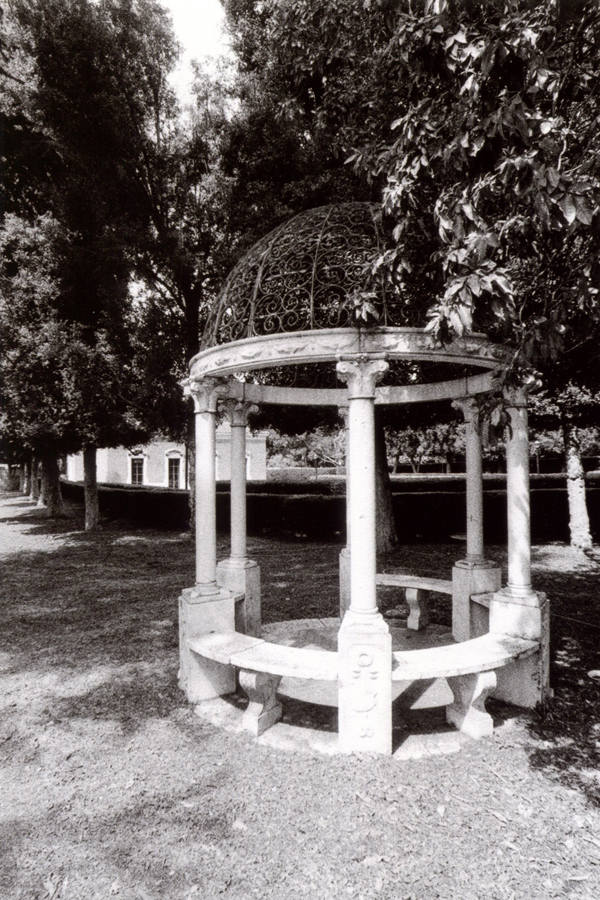 My Flickr





 Prev
Prev


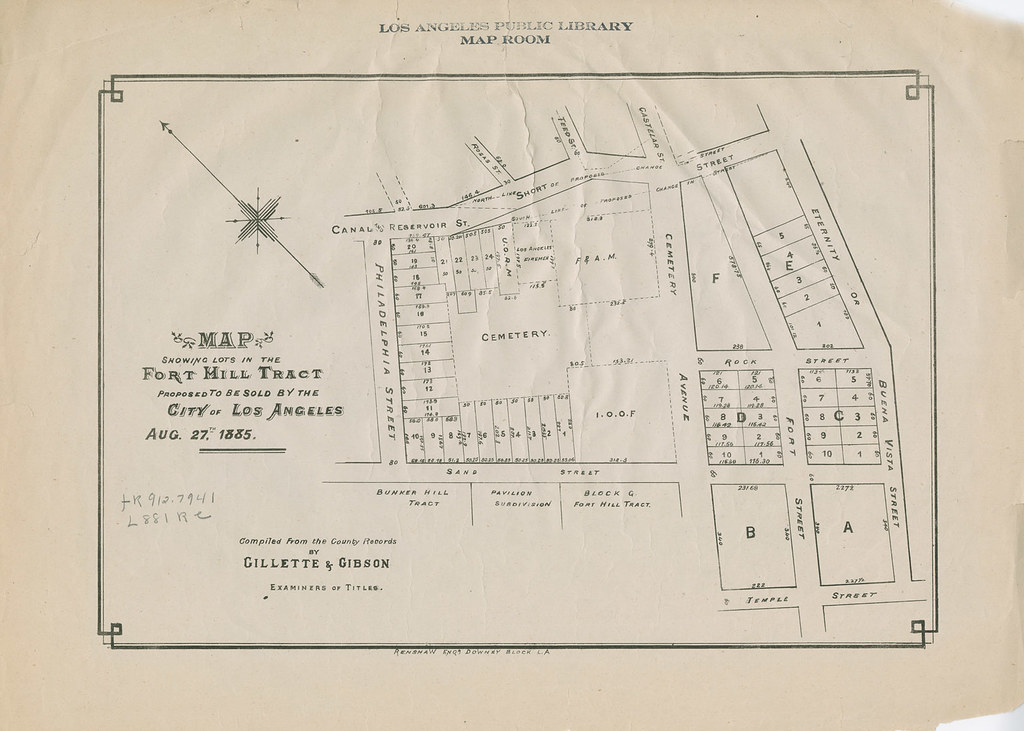


 )
)


 GSV
GSV


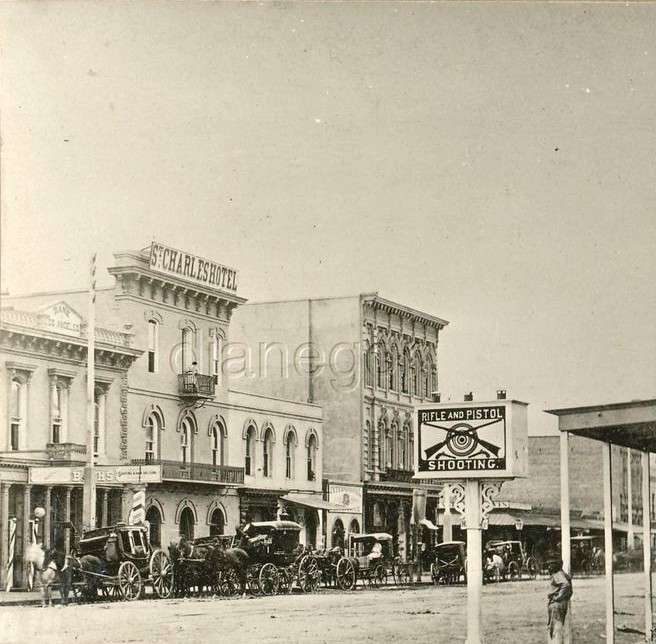

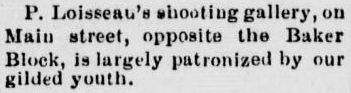
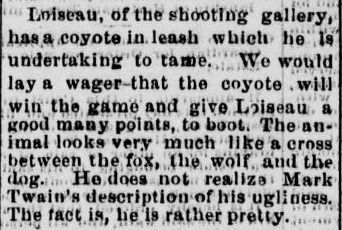
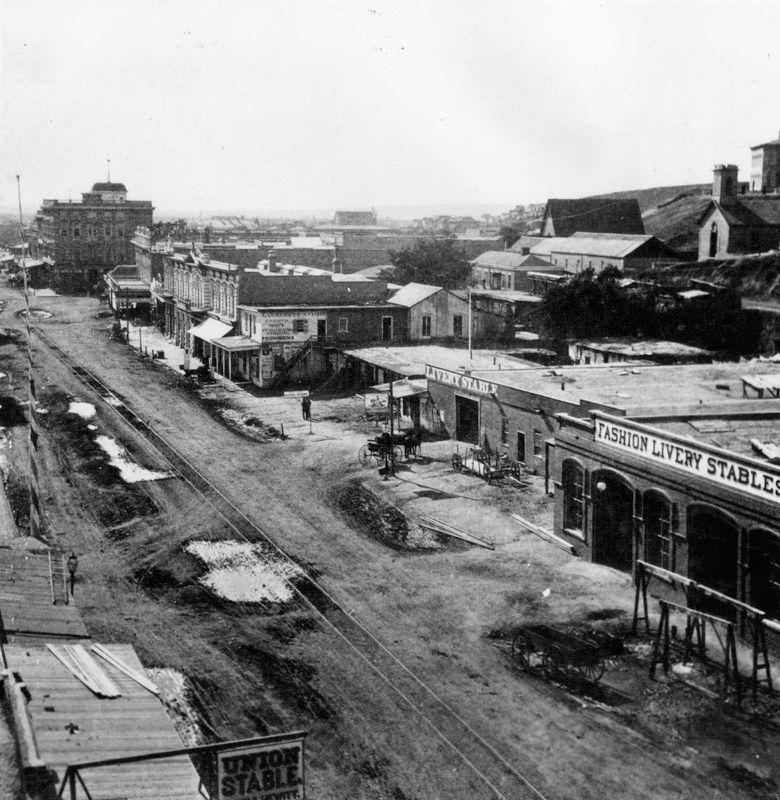
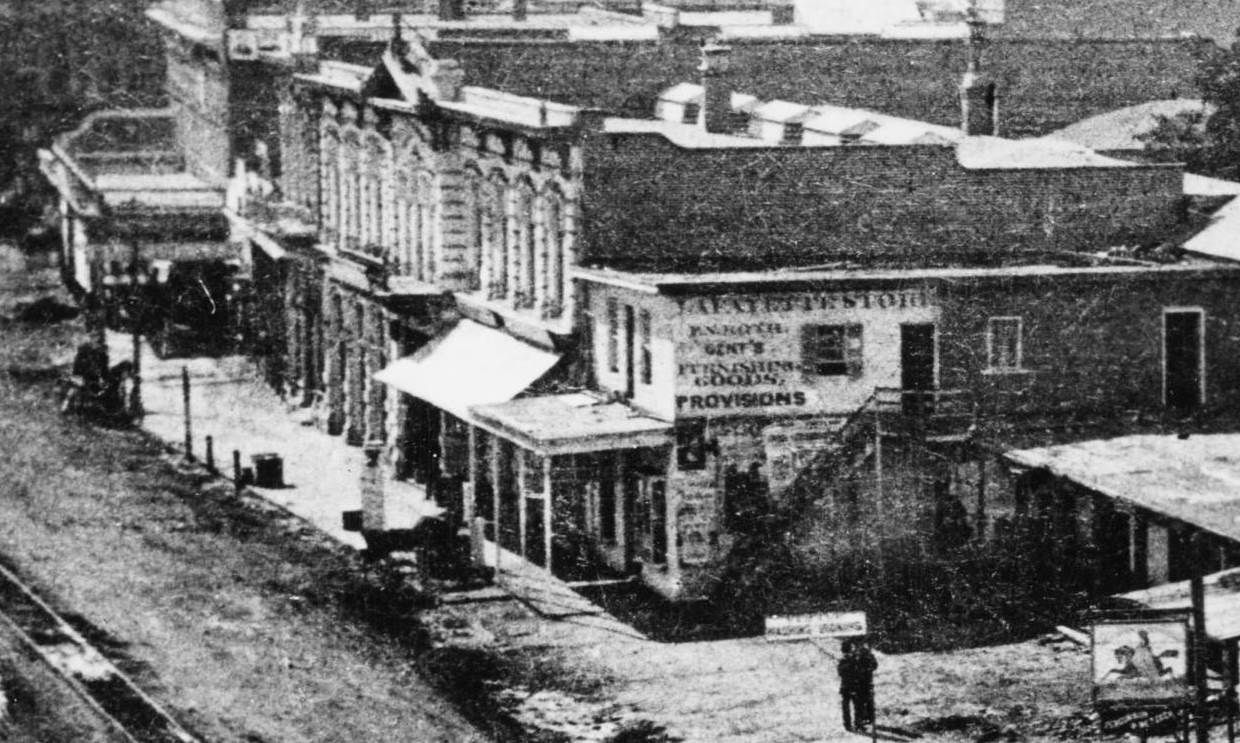

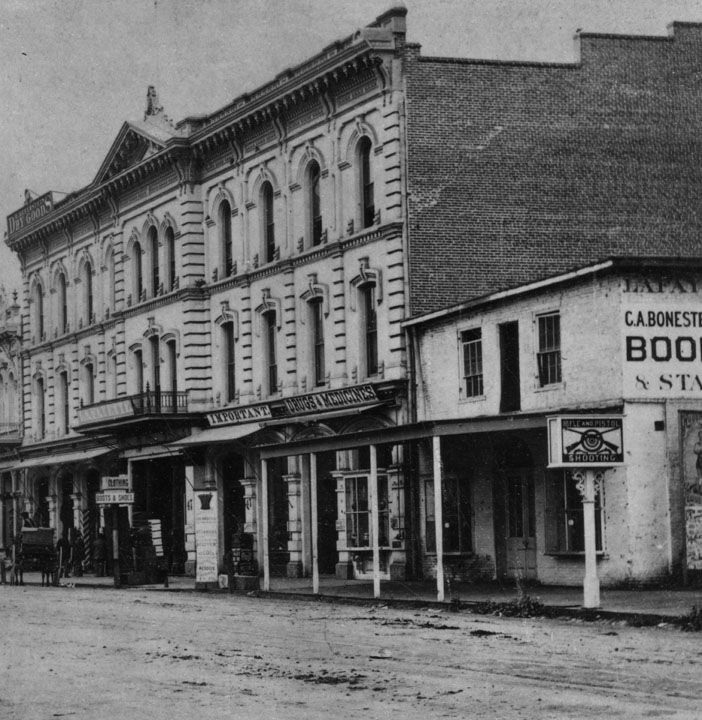
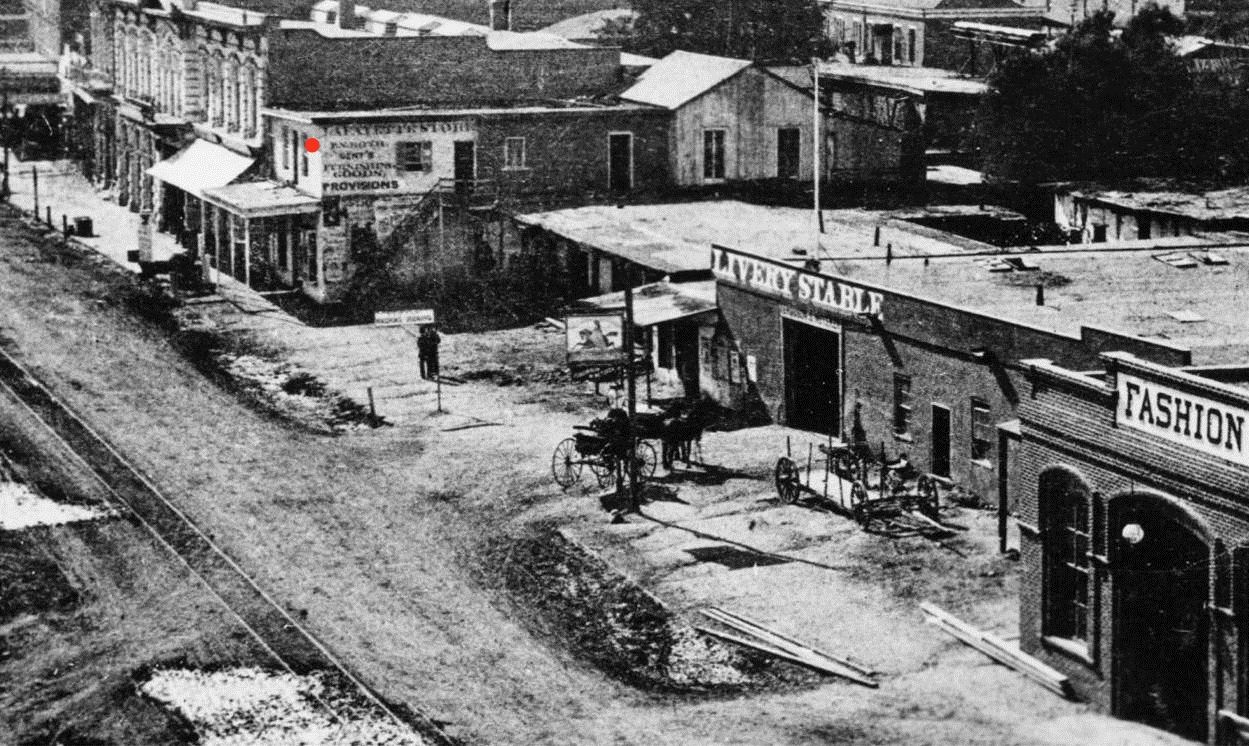
 Maybe the sign was designed to be illuminated, but was not in this case? Was the shooting gallery even open at night? Perhaps it was just a weird old sign. Something else we'll never know for sure I guess.

 ]
]
 Your interesting exposition provokes even more questions! (Just wish I had the time to think about these things half-intelligently!)


 Linear Mode
