HomeDiagramsDatabaseMapsForum About
     

Go Back   SkyscraperPage Forum > Global Projects & Construction > City Compilations


Closed Thread

 
Thread Tools Display Modes
     
     
  #4061  
Old Posted May 30, 2013, 11:56 PM
Future Mayor's Avatar
Future Mayor Future Mayor is offline
Vote for me in 2019!
 
Join Date: Jun 2007
Location: Salt Lake City, UT
Posts: 4,803
Quote:
Originally Posted by Comrade Reynolds View Post
No. I'm not complaining about that development at all. I quite like it.

As for a review board, as I said, I don't think we need a dominant city force that showers hell on bold development - rather guidelines that limit the use of stucco and advance more walkable development with better street engagement - which I think they've done a better job over the years. Moreover, I do think certain areas of the city should be regulated a tad more than the city as a whole - you know, a hospitality building like this:


Should never be approved by the city in its downtown core - at least in that state. Would anyone have had problems with the city enforcing a more urban design on a project like that even if it meant it would be delayed a few months? I certainly wouldn't. But the laissez-faire approach the city government has toward development, IMO, is not working.
I agree with you completely on this, and I am pretty sure that the current zoning, even where this Crystal Inn is located, would no longer allow such a development, if something new where to be built there is would much more urban in design and would interact with the sidewalk and street in a much more downtown way. I think in the early to mid 90's (this was built in 94) the city was still fighting to become more competitive with the burbs as many cities were, and I'm sure the zoning at that time was simply as a result of that.
     
     
  #4062  
Old Posted May 31, 2013, 2:13 AM
Orlando's Avatar
Orlando Orlando is offline
Registered User
 
Join Date: Nov 2007
Location: Salt Lake City, UT
Posts: 4,132
Quote:
Originally Posted by Future Mayor View Post
So let me see if I've got this right. Many of you are saying we need a design review committee to allow more bold developments to happen in SLC, and to eliminate bland design and the over use of stucco. Then on the flip side, when something a little more bold in design and color, that has ZERO stucco "Eastside Apartments" gets built many are then complaining about that.

I for one absolutely love the Capital Theater addition. I would like to hear why several of you don't like it. It seems as if some think it is too bold.

Portland has a Design Review Board, and the result is that Portland's architecture in general is much more urban, pedestrian friendly, and aesthetically better. Portland is a model for many other cities. As some of you have commented before, Portland is not perfect, but I would say that it is doing generally better than Salt Lake City in terms of planning and architecture. Not to hash on SLC. I love SLC, and want it to be so much better than what it is. Anyways, a Design Review Board is typically made up of respectable local Architects, Planners, and other professionals from related industries. Architects and Planners are typically more progressive in their view of aesthetics and urbanism. So, the result would be less bland stucco Cowboy Partners suburban like apartments in the Gateway area. The result would also be arrived through a consensus of these professionals. Salt Lake City went through a grass roots version of the Design Review with the City Creek Center. If Mayor Rocky and the public didn't demand an opportunity to express concerns regarding the initial enclosed mall proposal, we would have had another enclosed mall. Also, if the city council and public didn't petition the proposed demolition of the First Security Building, it would have been demolished. Both of these examples are an informal grass roots effort to reign in a single developer from doing whatever they want.

Regarding the Capitol Theater addition, I have a problem with it, because the purpose of that building should not try to be bolder or jar with the existing beautiful Capitol Theater. It is much too flashy and lacks the subtle sophistication which Europeans design for buildings next to older buildings. Brian Junge, IMO, is not that good of a designer. He's a nice guy, and he creates some cool graphic flashy presentations, but lacks refinement and subtlety in his designs. The only reason that I can find that he is an a design position is just what I said above. He really isn't that good of a designer. I abhor one of his designs, the office buildings out in Cottonwood Heights area with those curved metal extensions. Anyways, this is all my professional opinion. And, in general, most architects can usually agree on what is bad architecture, and what is better architecture.
     
     
  #4063  
Old Posted May 31, 2013, 4:41 AM
jimmycdii jimmycdii is offline
Registered User
 
Join Date: May 2013
Posts: 131
For a long time I thought design boards would be a great thing. However, over time I've change my mind; I now believe the market will "approve" worthy structures over time. In the long run, for example, the Cowboy Partners — will be torn down, either because it's falling apart or because demand increases an we need bigger buildings.

I came to this conclusions after traveling a lot; none of the cities I loved had design boards. Some of them had absolutely no zoning whatsoever. I'm thinking of medieval quarters in Rome and Barcelona, parts of Florence, pretty much all of Venice. A lot of London. Older parts of Boston. These places got great buildings over a very long period of time via economic bursts, the likes of which SLC has probably never seen. (Rome, Venice, London, NYC were all economic capitals of vast empires at some point.)

Exceptions to this are poor areas; Barcelona's medieval quarter was a slum at one point. So was Boston's North End. And some favelas in Rio de Janeiro are absolutely medieval and charming in their (non-)design (not to minimize the many other problems that plague them).

So, if we want better buildings, my feeling is we should devote more resources to economic development and/or free people up to building things more quickly. Increasing density dramatically and quickly via a medeval-style "slum," for example, would probably lead to better buildings a few generations down the road.

I know Portland is held up as a fantastic example. But that seems like a short term solution. And possibly a short-sighted one as well. Show me a city that is 500 years old that has used a design board to great effect.

If I had to chose, I'd just let people do whatever they want. There's no way buildings like the Crystal Inn — which is near my home and absolutely awful — are going to survive 100 years. I suspect they'll come down much sooner than that.
     
     
  #4064  
Old Posted May 31, 2013, 4:43 AM
(Eco)nomy_404's Avatar
(Eco)nomy_404 (Eco)nomy_404 is offline
Registered User
 
Join Date: Feb 2011
Location: Jersey Shore
Posts: 299
Quote:
Originally Posted by Comrade Reynolds View Post
Legitimate question - how many people do you think actually walk to The District? Because from my perspective, it's a autocentric development and while I understand, even in Salt Lake, you're not going to get huge numbers of people walking to certain areas of the community, I'd wager that still is an issue and what will continue to be an issue because the development around Daybreak is not changing its development patterns.

Moreover, it's not just about walking to one certain area within the neighborhood. It's about connectivity to the region as a whole and while mass-transit certainly helps in that regard, when neighborhoods don't interact, its stretch is limited.

Like I said, you can't blame Daybreak for how its neighbors developed, and I won't, but the problem still exists and Daybreak is still not the solution if everything around it is not changing as well. I know that sounds harsh, but the reality remains that area of the city is still sprawl-oriented and Daybreak is just as disconnected from other neighborhoods as other subdivisions throughout the valley.

The problem at hand is still not being addressed and I hate that. It goes beyond just a self-sufficient neighborhood because a city is not just one neighborhood - it's a collection of those neighborhoods. It's why I continue to hesitate to call South Jordan a city because it doesn't interact as a city should. Maybe some will believe that perspective is snobbish, but I look at the area where The District is located and I don't see it anywhere near as being walkable for Daybreak residents as what you can get in Salt Lake or even Millcreek and other older suburbs.

This is one thing I remember complaining about when The District was proposed in the first place a few years ago. The presentation was sleek, to be sure, but the underlying problem still existed - it's a spruced up version of Jordan Landing.

If South Jordan is serious about developing into a city, and not just a sprawling mess, they need more than Daybreak. Unfortunately, it just seems they're content with Daybreak being their walkable community without pushing for further walkable development outside the Daybreak borders and in reality, that is just going to set up Daybreak to fail because it won't offer the connection needed between neighborhoods. When I say I can reach certain areas of Salt Lake by foot, it's not just to get to development - it's also the interaction with the neighborhoods. I still don't see legitimate neighborhoods being developed in this area of the valley outside Daybreak ... so, what are they going to interact with? A highway and a glorified strip mall?

I know you'll disagree with that last part - but there is nothing urban or walkable about The District. It is essentially an outdoor mall and who knows, maybe South Jordan gets serious here and pushes for denser, mixed-use development on the parking that surrounds The District, but I'm not holding my breath.
And if that's your example of 'walkable' ... I'm not impressed. But I agree that Daybreak is a good start. But that development is only as good as the neighboring development and that, I'm afraid, will only hold Daybreak back.
I really don`t disagree with you in general. The problem is that you are trying to find a city in a suburb. I am comparing a different, more sustainable type of suburb to general suburbia. What I am saying is that suburbs are not going away anytime soon so it would be completely ineffective to pound your fist and demand that the entire Salt Lake Valley aspire to SLC development standards. What Daybreak does, however, is change the paradigm in suburban development. It is showing a better type of suburb that sprawls much less and has a smaller carbon footprint with smaller houses, less yards, and more mass transit options. You are right that we would be better off if every place looked like SLC. It would be a much more realistic approach, though, to look at Daybreak as a feasible model for future suburban development in the area. I agree that density in its truest form is found in the city center - but that is not a realistic model for real-world application in many areas.

What I was talking about at the District is the massive Garbett Homes development to the north and the 4-story apartment building complex to the south. To the west of daybreak, there are more apartment complexes, town-homes, and multi-family units that are still suburban - but a little more manageable than traditional suburbia. While it is not ideally walkable, it is more walkable. For those who desire to, it is feasibly possible to walk to the District from Daybreak and there are sidewalks that take you safely into the development and across parking lots. What is hard to see in your areal images are the walkways that cut across the parking lots from one set of store-fronts to another. For people like me - and the many youth i see walking down the hill to the District - it is quite possible to do safely. Jordan Landing, on the other hand, would be completely impossible to walk to or within the development as there is absolutely no consistent pedestrian infrastructure. Walking is not even an option at Jordan Landing. It is an option at the district. The District is no CCC, but it is an improvement from Jordan Landing. Daybreak is no 9th and 9th, but it is a significant improvement from the District.

The Garbett Homes development draws inspiration from Daybreak as well as other modern designs. The houses are much closer together and don't have the vaulted ceilings and massive yards typical suburban neighborhoods have:


You say that these developments leave you unimpressed. That is because you would never be satisfied with anything less than SLC-style neighborhoods. The major problem with your vision - as much as I would agree that it is ideal - is that it will never happen. A large segment of the population will always want to live in suburbs. If we want to make a difference in making development more sustainable, we need to figure out how to improve what people want. Like you find enjoyment in walking down a bustling city street, others prefer the suburbs for quite different reasons. For these people, quieter, open areas with winding trails and walkways are more appealing. They would enjoy being able to walk for a couple miles with a few urban amenities available along the way with other destinations a short drive or train ride away. Daybreak helps to facilitate this lifestyle preference while reigning in some of the excesses and unsustainable aspects of traditional suburbia. It is taking suburbia away from the Eagle Mountain or Saratoga Springs ilk - having to drive 15-20 miles to reach commercial amenities - and bringing it into a compact, more urban community that still allows for the suburban atmosphere.

It's like trying to get everyone to drive a zero-emission vehicle. While such a scenario would be ideal, it would not be a practical approach to decrease carbon emissions overall because a significant portion of the population would continue to want to drive dirty vehicles. Where you can really make the difference is by raising fuel efficiency standards and finding ways to make traditional dirty vehicles less dirty. It is not the ideal solution, of course, but it is the practical one that can actually make a difference. It`s not that I am fighting for the dirty vehicle, I am simply encouraging the cleaning up of dirty vehicles rather than trying to force everyone to drive a Tesla or a Prius (metaphorically speaking, of course - I hope that analogy made sense).


Last edited by (Eco)nomy_404; May 31, 2013 at 5:42 AM.
     
     
  #4065  
Old Posted May 31, 2013, 4:49 AM
Comrade's Avatar
Comrade Comrade is offline
They all float down here
 
Join Date: Jan 2002
Location: Hair City, Utah
Posts: 9,639
Okay, two things here...

1) I don't buy the 'over time' argument because that's something we might not see for the next two decades and by that time, who knows what monstrosities are developed. I mean, let's get real - if we're going to wait for the Cowboy Partners developments to essentially run their course before we realize it's not the way to go, we'll be waiting a long time (as even buildings roughly a decade old are still standing). Until that process takes over, however, we'll still be developing a great deal of these projects - adding to the life of cheap development by at least a decade or two. So, in 2033, they could still make up a huge amount of our housing stock. Do we really want to wait that long?

2) I don't think being a suburb is a valid excuse. I guess in a sense it is because modern suburbs all developed the same way - but it doesn't change the fact much of that part of the valley is still developing as suburbs did in the 70s and 80s and 90s. Instead of taking the initiative to redevelop more urban, I feel West and South Jordan and Herriman and everything in Utah County, are still falling into the same problems that dominated suburban sprawl for so long. If I felt they were making a true push toward changing the patterns out there, I'd feel better. But they're not and Daybreak is good, but it's a limited development that isn't starting a revolution. That's my concern.
     
     
  #4066  
Old Posted May 31, 2013, 5:13 AM
jimmycdii jimmycdii is offline
Registered User
 
Join Date: May 2013
Posts: 131
Quote:
Originally Posted by Comrade Reynolds View Post
Okay, two things here...

1) I don't buy the 'over time' argument because that's something we might not see for the next two decades and by that time, who knows what monstrosities are developed. I mean, let's get real - if we're going to wait for the Cowboy Partners developments to essentially run their course before we realize it's not the way to go, we'll be waiting a long time (as even buildings roughly a decade old are still standing). Until that process takes over, however, we'll still be developing a great deal of these projects - adding to the life of cheap development by at least a decade or two. So, in 2033, they could still make up a huge amount of our housing stock. Do we really want to wait that long?
I'm totally with you about not wanting to wait that long. I definitely don't want to. But I think things like design boards (and many regulations generally) will slow development down. They may result in a few better buildings, but they'll also just result in fewer buildings generally. I hate that SLC may not be the city I want it to be in my life time, but a few decades is really a short time in the grand scheme. (On the other hand, I'd also support policies that make it vastly easier for developers to move quickly. If we can speed things up, lets do it. I definitely want to try for something better.)

This reminds me of a speech I heard today. I had the chance to go to a few sessions of CNU 21, where I heard Andres Duany speak. Among many other interesting things, he talked about how NYC started as a shanty town and took hundreds of years to get to 100 story buildings. Comparing SLC to NYC (Duany didn't do this, I am) we're in the late 1700s or early 1800s now. Duany's point: cities inherently take a long time to grow.

And again, the strongest influence on design that I have observed is wealth. (For this reason I wish the LDS church had seeded 2,000 startups with $1 million each instead of building city creek. The long term results would have be staggeringly better even if only a small fraction succeeded.)
     
     
  #4067  
Old Posted May 31, 2013, 5:52 AM
(Eco)nomy_404's Avatar
(Eco)nomy_404 (Eco)nomy_404 is offline
Registered User
 
Join Date: Feb 2011
Location: Jersey Shore
Posts: 299
Well, if you find a way to keep people from living in suburbs and flock to the urban centers in droves, let me know. You are right, that would be the best solution. How that would be possible is beyond me.

Rome wasn`t built in a day. Unfortunately, you will have to wait for things to change. I don`t know what sort of speedy ideal solution you have in mind to stop urban sprawl in its tracks, but I`m sure there is a reason it hasn`t happened yet. Development is accomplished through a balance of the ideal with the practical. Unfortunately, that takes time.
     
     
  #4068  
Old Posted May 31, 2013, 6:31 AM
Comrade's Avatar
Comrade Comrade is offline
They all float down here
 
Join Date: Jan 2002
Location: Hair City, Utah
Posts: 9,639
It's not even about people living in the suburbs. I have no problem with people wanting cheaper housing and manicured lawns. The problem continues to be the sprawling nature of suburban America. That hasn't changed in all these years and while we make advancements, they're not at the level to significantly change these areas. South Jordan isn't any more urban today than it was ten years ago - even with the addition of Daybreak and that's the problem. Unfortunately, suburban cities don't seem to want to change.

As we wait for the change, more and more land is gobbled up by huge subdivisions. We'll reach the point where change will only come when these neighborhoods outlive their usefulness and are demolished for more walkable, urban designs. Unfortunately, that isn't going to happen anytime soon - we're talking decades of reversed growth. Problem is, no one seems to find this issue all that pressing and we're in the same mindset we were in during the 90s - essentially conceding we need to change, but that we won't be able to change until it runs its course. Well it's not running its course. The District, sadly, is really proof of this. We're just manipulating what we believe is urban by creating faux Main Streets that really don't interact with the neighborhood and giving it a day.

Well had we taken initiative in the 80s and 90s to curb sprawl, we wouldn't be in this mess. But because we like to put things on the back burner, it just grows and grows and grows and it makes it so that a great development like Daybreak is drown out by miles and miles and miles of suburban sprawl.

Gotta step up! I mentioned in another post that I hesitate to call South Jordan a city for a reason and it's because to me, a city is more than just people living in a designated area. Sure, under the most technical definition, it is absolutely a city, but it has zero characteristic - it's just sprawl. You'd think city leaders would like to change that ... build on Daybreak and enforce stricter control over residential development. Sadly, I don't think they're concerned with any of that. They're just concerned with profit, building their population and landing the unique chain restaurants to draw more tax dollars into their borders. On its most basic level, there is nothing inherently wrong with that because a city is a business when you get down to it. But it's also wrong for the overall establishment of a community. Subdivisions are isolated from one another - there is no connectivity between neighborhoods. You get that with Daybreak and then what?

I'd love to see that change. I'd love for each suburb to take the bull by the horn and develop into something resembling walkable. But it's not going to happen. I think we're too far gone anyway. That land is developed and will remain developed for a considerable amount of time. Subdivisions built within the last twenty years, which make up a huge bulk of the growth in that area, will remain for at least another twenty and probably longer.

So, what are we going to do about the unused land? You know, the area west of Daybreak? Already you have an isolated subdivision...what can be built to interact with that when all the roads winding through that development automatically end at its far-west border?
     
     
  #4069  
Old Posted May 31, 2013, 7:43 AM
Atlas's Avatar
Atlas Atlas is online now
Space Magi
 
Join Date: Sep 2006
Location: Salt Lake City
Posts: 2,008
I drove around SLC today. Here's a phone pic of the Public Safety Building taken from the library:


The views from the top of the library are great. Salt Lake is an awesome town.
     
     
  #4070  
Old Posted Jun 1, 2013, 3:07 AM
TimeSaltlake's Avatar
TimeSaltlake TimeSaltlake is offline
Registered User
 
Join Date: Nov 2007
Posts: 154


I would never want to live in houses like this. This is my personal opinion, but to "ME," Key word "ME" they are cold, plain and boring. I like the Nevada, Arizona style, almost Hacienda like homes you don't really ever see in Utah. But that just me
     
     
  #4071  
Old Posted Jun 1, 2013, 5:11 AM
Stenar's Avatar
Stenar Stenar is offline
Registered User
 
Join Date: Jul 2008
Location: Salt Lake City
Posts: 3,234
I adore the Solaris collection at Daybreak. I would totally love to live in one of these houses, but closer to SLC.


Quote:
Originally Posted by TimeSaltlake View Post


I would never want to live in houses like this. This is my personal opinion, but to "ME," Key word "ME" they are cold, plain and boring. I like the Nevada, Arizona style, almost Hacienda like homes you don't really ever see in Utah. But that just me
     
     
  #4072  
Old Posted Jun 1, 2013, 4:41 PM
slc801's Avatar
slc801 slc801 is offline
Registered User
 
Join Date: Dec 2012
Posts: 120
Quote:
Originally Posted by Stenar View Post
I adore the Solaris collection at Daybreak. I would totally love to live in one of these houses, but closer to SLC.
I agree. I really like those houses and would love to live in them, if only they weren't so far away from SLC.
     
     
  #4073  
Old Posted Jun 1, 2013, 4:48 PM
slc801's Avatar
slc801 slc801 is offline
Registered User
 
Join Date: Dec 2012
Posts: 120
I passed by the Tribune Building today. They uncovered the original building. I wonder if they are going to bring back the original look of the building or just cover it back up with something similar to what used to be there (I hope they restore it). Below is a picture of what it used to look like and what it looks like today.


  #4074  
Old Posted Jun 1, 2013, 4:52 PM
slc801's Avatar
slc801 slc801 is offline
Registered User
 
Join Date: Dec 2012
Posts: 120
Why I love SLC: Because this photo


is located only three miles away from this one


I love living in a city that I really enjoy and that allows me to escape so easily and quickly to the mountains whenever I want to. And, no, this isn't exactly development related, but I've always loved City Creek Canyon and how close and accessible it is from downtown. It is a bustling place, but just go a few miles north in City Creek and there aren't any signs that you are anywhere close to Salt Lake.
     
     
  #4075  
Old Posted Jun 1, 2013, 7:55 PM
SLC Projects's Avatar
SLC Projects SLC Projects is offline
Bring out the cranes...
 
Join Date: Dec 2006
Location: Salt Lake City
Posts: 6,108
The Trib. Building is turning out great. Looks to me it is being restored.
     
     
  #4076  
Old Posted Jun 1, 2013, 8:03 PM
slc801's Avatar
slc801 slc801 is offline
Registered User
 
Join Date: Dec 2012
Posts: 120
Quote:
Originally Posted by SLC Projects View Post
The Trib. Building is turning out great. Looks to me it is being restored.
That was my thoughts too.
     
     
  #4077  
Old Posted Jun 1, 2013, 8:59 PM
scottharding scottharding is offline
Registered User
 
Join Date: Oct 2008
Location: Salt Lake City
Posts: 1,681
Nice, slc801, I agree. Salt lak is one of a kind. I'm an outdoor enthusiast and an urban dweller. There few places where someone like me can have both.
     
     
  #4078  
Old Posted Jun 2, 2013, 9:16 PM
Comrade's Avatar
Comrade Comrade is offline
They all float down here
 
Join Date: Jan 2002
Location: Hair City, Utah
Posts: 9,639
     
     
  #4079  
Old Posted Jun 3, 2013, 12:26 PM
delts145's Avatar
delts145 delts145 is offline
Registered User
 
Join Date: Aug 2006
Location: Downtown Los Angeles
Posts: 20,768
Quote:
Originally Posted by slc801 View Post
I passed by the Tribune Building today. They uncovered the original building. I wonder if they are going to bring back the original look of the building or just cover it back up with something similar to what used to be there (I hope they restore it). Below is a picture of what it used to look like and what it looks like today.


http://signaturebookslibrary.org

It would appear that those two arched porticos had pretty elaborate masonary carvings surrounding them. Definitely hope they go to the archives and duplicate the original work.

Pic By slc801
.

Last edited by delts145; Jun 3, 2013 at 12:43 PM.
     
     
  #4080  
Old Posted Jun 3, 2013, 3:27 PM
TimeSaltlake's Avatar
TimeSaltlake TimeSaltlake is offline
Registered User
 
Join Date: Nov 2007
Posts: 154
Quote:
Originally Posted by Viperlord View Post
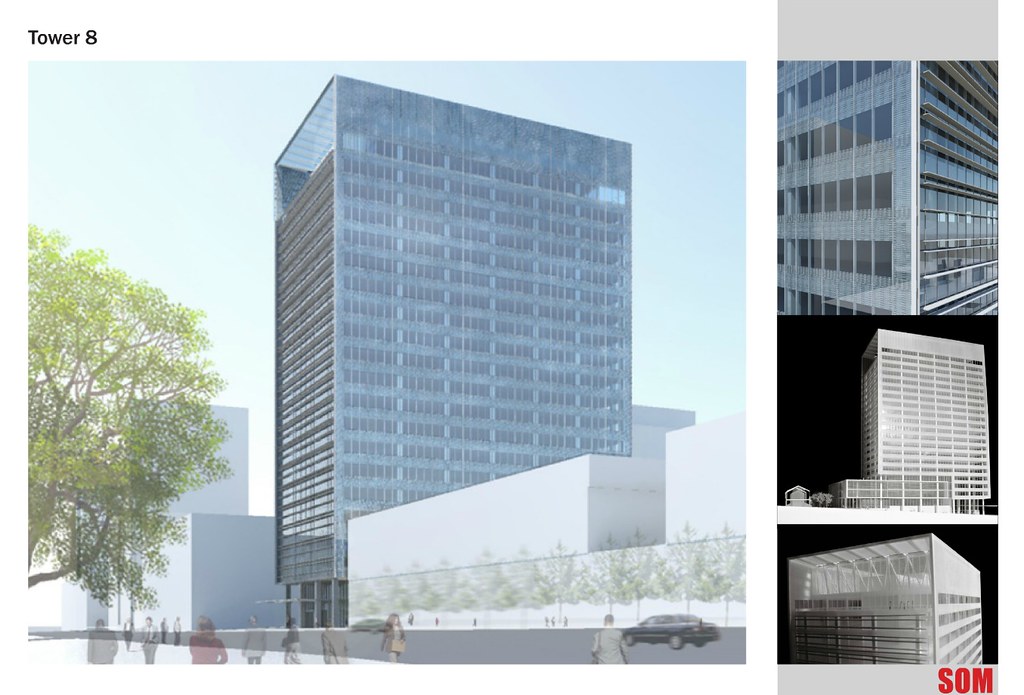
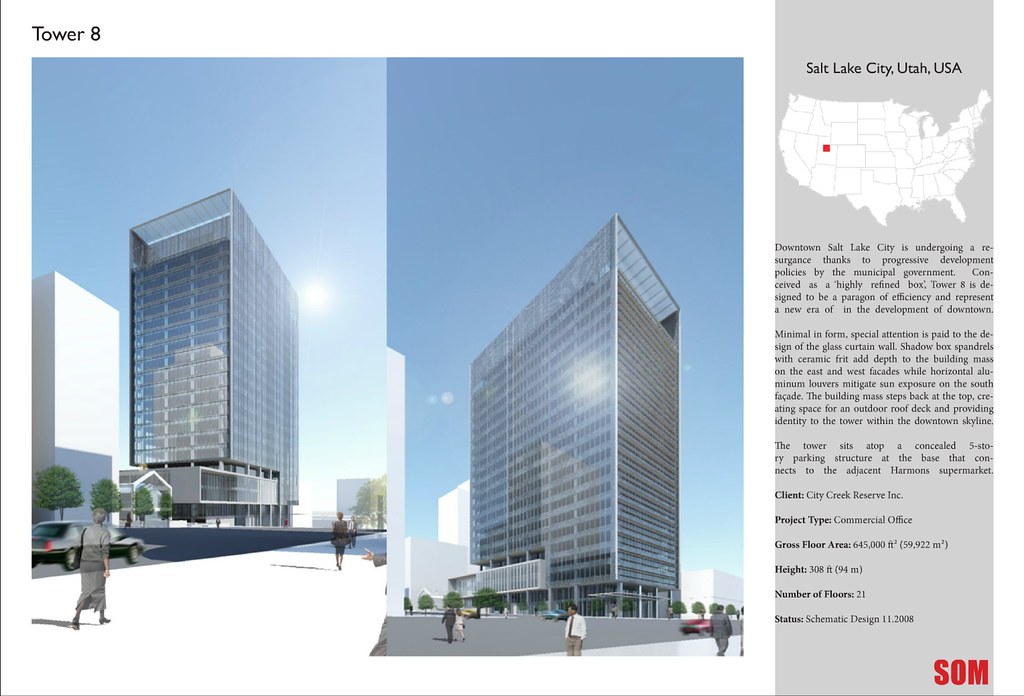
I ran across some early schematic renderings for Tower 8. they are dated 11/2008. So, I'd bet that they have already changed, or will change by the time we get the final product built. Anyways........


Can't wait for them to start on this.
     
     
This discussion thread continues

Use the page links to the lower-right to go to the next page for additional posts
 
 
Closed Thread

Go Back   SkyscraperPage Forum > Global Projects & Construction > City Compilations
Forum Jump


Forum Jump


All times are GMT. The time now is 4:03 PM.


Powered by vBulletin® Version 3.8.7
Copyright ©2000 - 2026, vBulletin Solutions, Inc.