Quote:
Originally Posted by (Eco)nomy_404

The District has pretty much every kind of place you could want to go to - a large movie theater, Target, Hobby Lobby, JC Penny, Gordmans, lots of icecream shops, restaurants, sports bars, jewlers, Harmons, etc. It is surounded by dense development to the north and south that are not associated with Daybreak in anyway. Like I said in my prior post, this development is less than 2 miles away from the furthest part of Daybreak. I timed it on foot - it takes 25 min from the TRAX station to reach the District. There are paved pedestrian trails that take you all the way there with tunnels under the roadways until you reach Bangerter - which is bad to cross, I know, but it can be done with enough time to make it across (they could really use a pedestrian bridge, though). The District has walkways and sidewalks that can get you around with minimal crossing of parking lots and roads. There is more shopping on 104th South and 40th West - about a 20-30 min walk, 5-10 min by bike. There is more shopping to the south at 126th south - but that is not very accessible by foot like the other two are (but its a short 5 min drive).
You don`t have to go all the way down town for things on TRAX - you can access 3 malls that are less than 5 min from TRAX stops on foot: Valley Fair, Fashion Place, and South Towne. Trust me, I did not have a car when I lived in Salt Lake and I was able to meet friends at all three of those malls with little difficulty.
You`re right that Daybreak is not SLC, but it is a HUGE step in the right direction. It is having a possitive influence in the area - I have noticed lots of dense developments going up in the areas to the south and west in Riverton and Harriman. It is positively influencing the area to conserve more land and build more multi-family units. Pedestrian/bike trails are also going up in West Jordan and other neighboring areas. Mountain View Corridor has a completed trail running parallel to it that goes for miles - farther than I have cared to bike or run to. I have noticed a lot of people are beginning to utilize the trails for biking, roller-bladiding, runnning, walking, etc. Even the traditionally suburban neighborhoods going up in the area have much smaller yards than the usual Utah suburbs. It is definitely not an end solution, but suburban sprawl will not be going away any time soon. At least Daybreak is helping to hem in the sprawl and encourage more land conservation through smaller yards and denser residential developments.
Exactly! Soda Row is only the first of three "village centers" and a large "town center". The Daybreak website says that the goal is to have commercial access be no more than a 5 min walk from any given point in the development when complete. The TRAX station was put where it was because it will be right in the middle of the future "town center""
|
Legitimate question - how many people do you think actually walk to The District? Because from my perspective, it's a autocentric development and while I understand, even in Salt Lake, you're not going to get huge numbers of people walking to certain areas of the community, I'd wager that still is an issue and what will continue to be an issue because the development around Daybreak is not changing its development patterns.
Moreover, it's not just about walking to one certain area within the neighborhood. It's about connectivity to the region as a whole and while mass-transit certainly helps in that regard, when neighborhoods don't interact, its stretch is limited.
Like I said, you can't blame Daybreak for how its neighbors developed, and I won't, but the problem still exists and Daybreak is still not the solution if everything around it is not changing as well. I know that sounds harsh, but the reality remains that area of the city is still sprawl-oriented and Daybreak is just as disconnected from other neighborhoods as other subdivisions throughout the valley.
The problem at hand is still not being addressed and I hate that. It goes beyond just a self-sufficient neighborhood because a city is not just one neighborhood - it's a collection of those neighborhoods. It's why I continue to hesitate to call South Jordan a city because it doesn't interact as a city should. Maybe some will believe that perspective is snobbish, but I look at the area where The District is located and I don't see it anywhere near as being walkable for Daybreak residents as what you can get in Salt Lake or even Millcreek and other older suburbs.
This is one thing I remember complaining about when The District was proposed in the first place a few years ago. The presentation was sleek, to be sure, but the underlying problem still existed - it's a spruced up version of Jordan Landing.
If South Jordan is serious about developing into a city, and not just a sprawling mess, they need more than Daybreak. Unfortunately, it just seems they're content with Daybreak being their walkable community without pushing for further walkable development outside the Daybreak borders and in reality, that is just going to set up Daybreak to fail because it won't offer the connection needed between neighborhoods. When I say I can reach certain areas of Salt Lake by foot, it's not just to get to development - it's also the interaction with the neighborhoods. I still don't see legitimate neighborhoods being developed in this area of the valley outside Daybreak ... so, what are they going to interact with? A highway and a glorified strip mall?
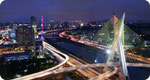
I know you'll disagree with that last part - but there is nothing urban or walkable about The District. It is essentially an outdoor mall and who knows, maybe South Jordan gets serious here and pushes for denser, mixed-use development on the parking that surrounds The District, but I'm not holding my breath. So, the way I see it - this:

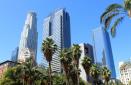
Is no different than this:

And if that's your example of 'walkable' ... I'm not impressed. But I agree that Daybreak is a good start. But that development is only as good as the neighboring development and that, I'm afraid, will only hold Daybreak back.





 Prev
Prev


 Soda Row is the tiny little village center in the yellow.








 Linear Mode
