Komeht,
You realize that the argument you make is in no way mutually exclusive from the argument that Kevin and I made and other are continuing to make here.
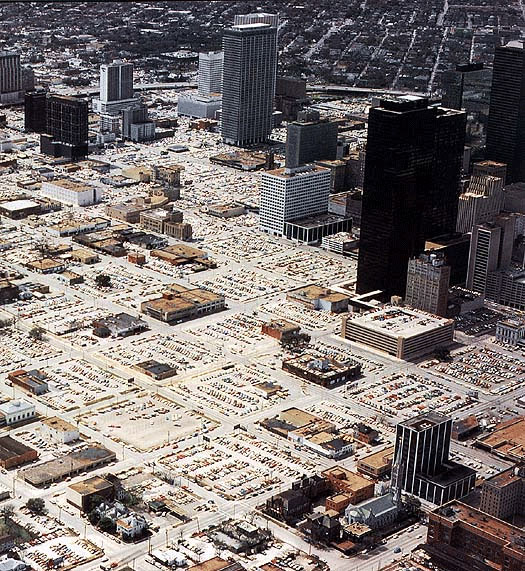
You're saying that CVCs blight certain parts of downtown, where the CVC overlays are so close to the ground that they prohibit anything to be built at all or, if something can, a single or perhaps a few stories at max. In other words, making those blocks undesirable for developers.
Yes, that's true (at least in the short term, which I address below).
We aren't saying that CVCs are all good, just that they do have good impacts in a few ways. Such being that on some blocks they force developers to build higher if they want to get the bang for their buck (these are the blocks where a CVC overlay is partial) that they originally wanted. Most here are also arguing, quite rightly, that this happens to make for interesting development patterns. My addendum to this was that the overlays happen to increase unit values because they can offer their residents protected views, which actually makes development
more likely on some parcels.
But going even deeper, both sides are having completely different arguments here (we're talking past each other). We are arguing primarily a fact based "this is what CVCs have happened to contribute in a positive way, though there may be negatives" whereas you, Komeht, seem to be arguing a straight "this is why we should get rid of CVCs" (as I think became evident when you tipped your hand on your "dogmatic urbanist only attitude") instead of what would logically be the opposite of our position: "CVCs are all bad and the good outcomes don't actually exist" (which would be a problem for you, given that they do and there's pretty clear empirical evidence that they do).
And I'd actually argue that in the long-term, though certain CVCs should be removed and there are current major efforts to do reform, CVCs actually do not end up with the bad that you suggest they do:
1. The lots where CVCs would prohibit more than a story or two will eventually become prime developable land, when other parcels are off the market because they've already been developed. In fact, adjacent development (especially residential) would make redevelopment of these blocks more likely for retail or what-have-you. They may not be built to their full potential, but they certainly will not be maintained as urban blight.
2. The lots where CVCs prohibit anything taller than a parking lot (and there are a few, though not more than a handful) should and can be bought by the city and turned into parkland.
3. The height limits that CVCs institute actually create an interesting incentive to develop a diversity of projects in downtown. A grocery store here, a small museum there, a four story VMU residential project elsewhere. And actually also create a very organic urban atmosphere that many cities lack. And they do all this while also protecting legacy views.
And I do have a single note on something you said:
Quote:
|
both an economic price in terms [of, sic] taxes and services the city can produce and price [sic, you mean provide right?] in not being able to create the kind of world class downtown that we deserve.
|
You stand alone on this. Local economists have actually said that the CVCs, because of the increase in land value that they give to many parcels and because of the value of units that they result in due to unfettered views, actually
increase the total amount of taxes that downtown pays, especially with regard to property taxes. On this you are just simply and completely factually wrong.





 Prev
Prev










 Linear Mode
