Quote:
Originally Posted by ErickMontreal

At this point, perhaps it is the time to think outside the box and stop waiting for the next big thing that would spur growth for the next two years and start to put the emphasis on small and medium businesses that will create stability.
|
+1.

Part of the issue in Saint John is that there is one massive industrial employer. It's not necessarily in Irving's best interest to be entrepreneurial, it's in their best interest to look after their core business and their core assets. It doesn't help that Irving sometimes buys small businesses that do work for them. Instead of small businesses growing and innovating, they're added to the Irving corporation. Works fine for Irving, maybe not so much for Saint John.
Quote:
|
On side note, I just bought a house in the inner city and the market is literally flooded by houses. There are about 12 houses per 1000 people available which is one of the highest in the country. It maybe an indication that some of the people who moved back and bought a house between 2006 and 2009 during the peak of the boom on the hope of the positive economic forecast will materialized are packing and leaving to go out West. There is obviously an out migration that needs to be taken seriously.
|
I live on Orange Street and there are at least half a dozen big houses for sale - most with apartments in them. The place I live in is huge, beautiful and well kept, with 3 units, one owner occupied. It sold for under $400,000. A comparable place in Halifax is likely a million dollar home. Affordability is great here, but in a lot of ways it just represents a lack of demand.
Quote:
A lack of available jobs and industries, concurrent with a city that has gone into debt building a massive, financially unsustainable, suburban framework that is unmarketable to today's young working demographics demanding urbanised living options, means that the average age of Saint Johners will increase with its unemployment rate and municipal debt.
Costs for products and services will continue climbing, as consumer spending drops, which translates into decreased corporate investments.
And the cycle continues.
Saint John = a bigger example of northern New Brunswick. Immediate political action is necessary to change course. For Christ's sake: please commit to a stronger pace of inward urbanism; please reform your tax system so that even the suburbs are paying their fair share. It is the least they can do after draining SJ's infrastructure budget, which is now maintained by federal equalisation payments (people not living in New Brunswick).
|
Blaming the city's fiscal problems entirely on suburban sprawl and associated infrastructure misses some other large fiscal issues. The pension fund deficit is THE big fiscal issue right now: most of the immediate service cuts have been to make up for the pension shortfall, which I believe is around $190 million (someone correct me if I'm wrong). The overall slow economy (a problem for decades) is also a big issue: this is not a rich city, and there is very little population growth in the entire region. It's not surprising that housing prices are low across the board, which is a pretty big problem when most revenue comes from property tax. Moncton is at least as sprawly as Saint John but their fiscal situation is miles better.
And it's far from easy to commit to a quicker pace of urban development. Restrict suburban development in Saint John and a lot of it will go to Rothesay, Quispamsis, or Grand-Bay Westfield, not Uptown or Lower West. Individual home buyers aren't necessarily binary (i.e. strictly suburban or strictly urban) but they don't just live in the city because it makes more sense for the city. The market in most of Atlantic Canada is primarily suburban or low density urban. That won't change with new municipal plans, or zoning by-laws, or with tax reform. You can change how the city grows but the government can't magically make more people live downtown. A lot of the suburban infrastructure built in Saint John was for an anticipated population boom that never materialized: we planned for the growth and it simply didn't happen, or happened in the valley instead. I see no reason why the same thing couldn't happen if we decide to repopulate Uptown at a quicker pace: lots of plans, not a lot of growth and development.





 Prev
Prev




 I would say I'm negative during a strong minority of my time on this forum, mostly due to my debating of forumers who cling to their own mythologies about property taxes -- about federal equalisation payments -- about urban sprawl -- about climate change -- about francophones -- about municipal reputations, etc...


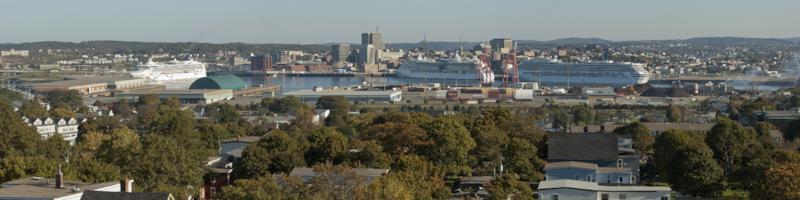
 Very nice pics, Jim. Keep up the great work....


 Linear Mode
