| |
 Posted Apr 20, 2012, 1:16 PM
|
 |
Eurosceptic
|
|
Join Date: Apr 2003
Location: Pittsburgh
Posts: 24,141
|
|
http://www.pittsburghlive.com/x/pittsburghtrib/business/s_792102.html
Quote:
Pittsburgh looks to spark development
By Jason Cato, PITTSBURGH TRIBUNE-REVIEW
Friday, April 20, 2012

The Highland Building (left,) and Wallace Building along Highland Avenue are part of the "Walnut on Highland" development in East Liberty. The historic rehabilitation of the Highland and Wallace buildings will mark the final step in transforming the popular corridor.
Keith Hodan | Tribune-Review

The Oakland Portal project now under construction.
James Knox | Pittsburgh Tribune-Review
The Lamar Building -- its once-proud, brick and stone facade now marked by graffiti and shattered windows -- stares at a new development project quickly rising across Fifth Avenue at the edge of Oakland near its border with Uptown.
The Oakland Portal project, much like the planned conversion of the Highland and Wallace buildings in East Liberty, could offer development opportunities not only for its immediate neighborhood but others nearby through an injection of new residents, city planners and developers said.
"I do believe that our project will help redevelop Uptown," said Skip Molnar of L.W. Molnar & Associates, which is developing the Oakland Portal project.
Oakland Portal eventually will include the Portal Place Apartments, with about 150 luxury units overlooking the Monongahela River and the South Side, and a separate office building and hotel spanning both sides of Fifth Avenue to Forbes Avenue near Carlow University and UPMC Magee-Womens Hospital.
"I believe development spurs development. Once you clean up one area, the only place to go is to the next area that needs to be cleaned up."
That theme resounded this week at the ground-breaking for the Highland-Wallace project and was reinforced Thursday with the announcement of a new program designed to spur development in city neighborhoods.
The Urban Redevelopment Authority board yesterday agreed to establish the Pittsburgh Neighborhood Renaissance Fund, a project created by the URA, the city's planning department and the Community Design Center of Pittsburgh. The fund will provide community organizations expertise and guidance to create neighborhood development plans. The URA is providing a $300,000 start-up grant that officials hope will be matched by local nonprofits with neighborhood grants ranging from $10,000 to $50,000 to help pay for professional design and planning services.
Goals of the initiative include identifying neighborhood clusters that generate the greatest needs and development opportunities and create plans that cross boundaries in order to reach each of the city's 90 neighborhoods.
Uptown residents and leaders are counting on such growth to help their revitalization efforts, including the soon-to-be-finished conversion of Fifth Avenue High School into 65 luxury lofts and the soon-to-start renovation of the 106-year-old Shanahan Building into 43 affordable-housing units for adults with special needs.
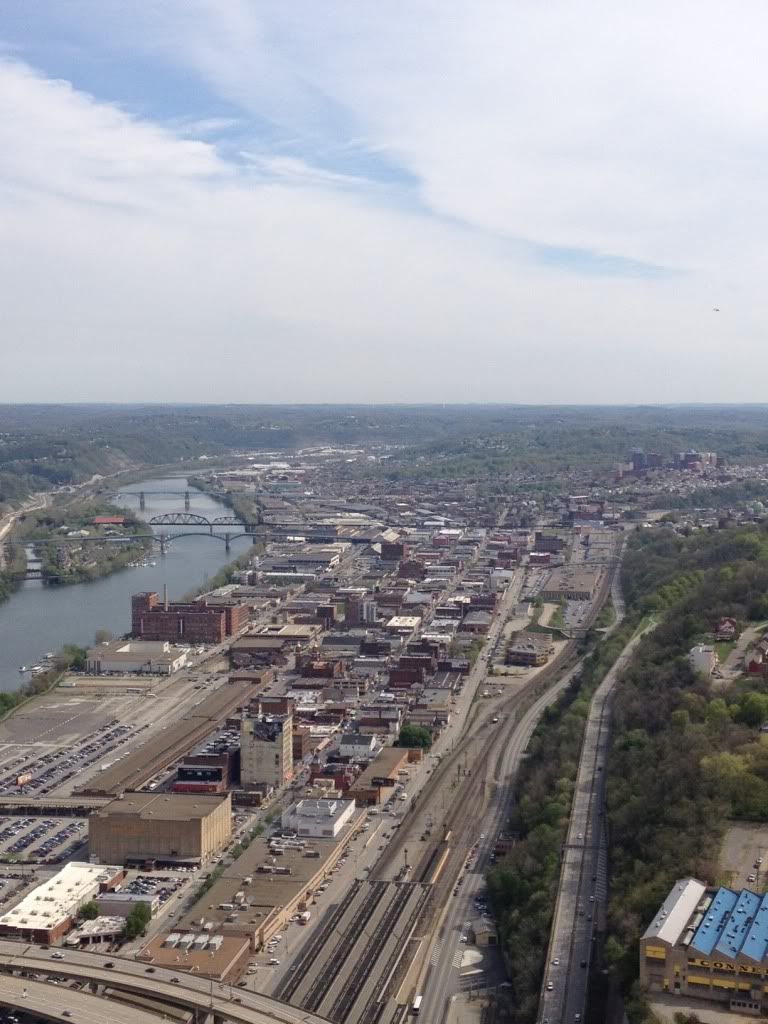
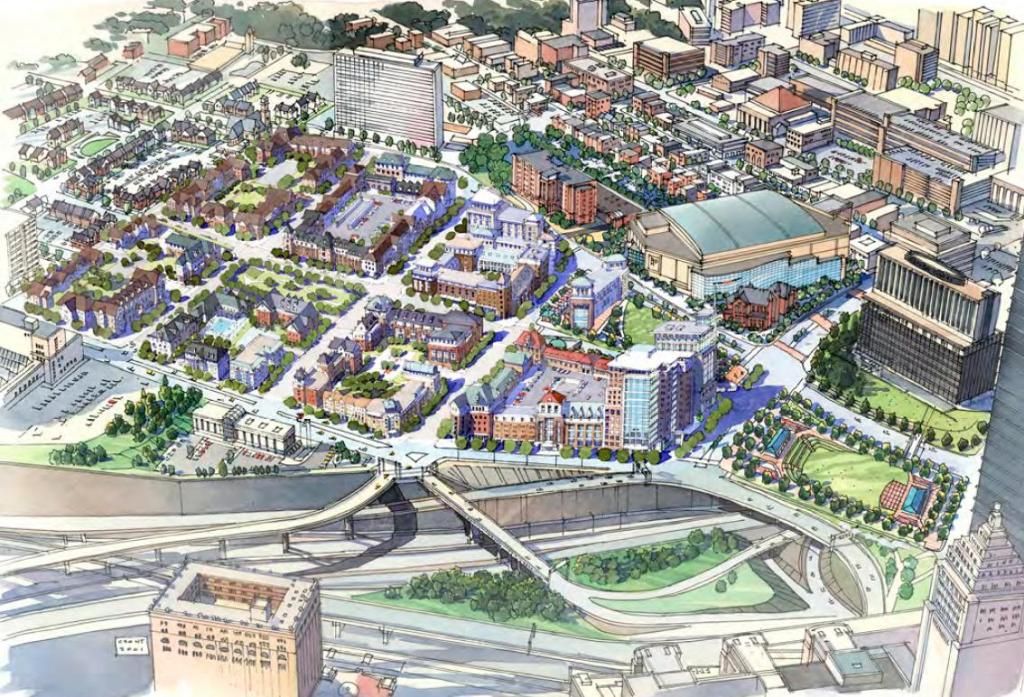
"There is great potential for Uptown to capitalize on the growth at our edges, whether Oakland or the Lower Hill District," said Jeanne McNutt, executive director of Uptown Partners of Pittsburgh. "If this building (Portal Place), or potential new development on the opposite side of Fifth, is dynamic, it could be a nice bookend to Uptown anchors to the west."
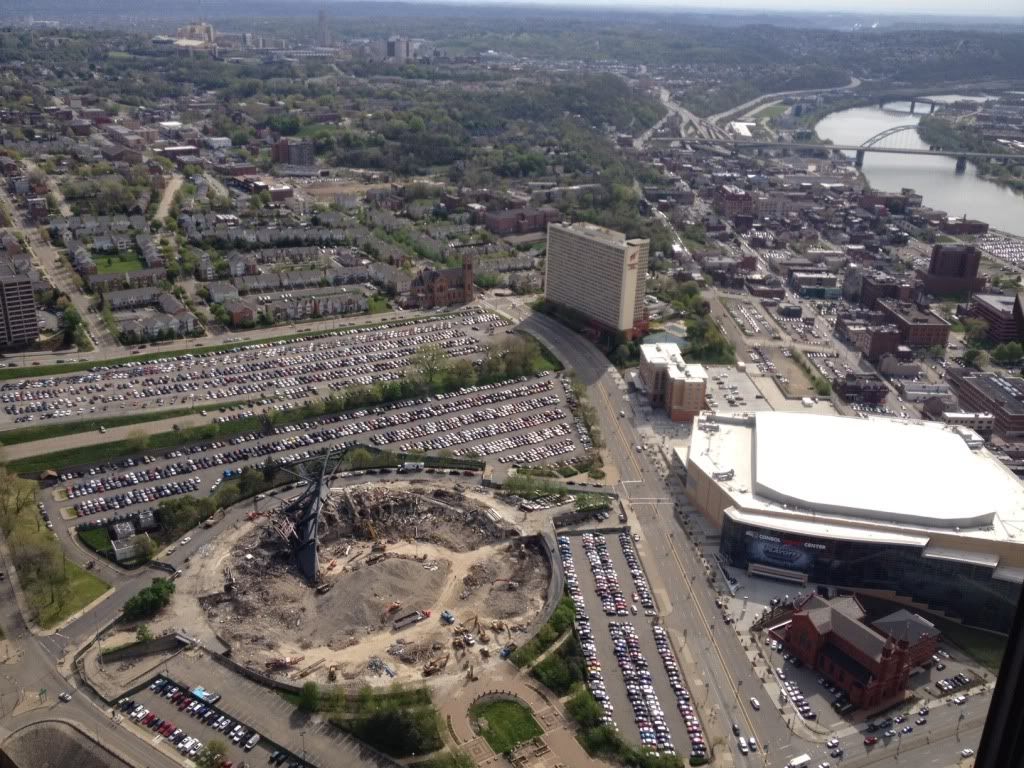
Consol Energy Center, home to the Penguins, provides development opportunities as the neighborhood's other bookend on Fifth Avenue.
City Councilman Ricky Burgess hopes the renovation of the iconic Highland and Wallace buildings helps that neighborhood's decade-long redevelopment spill over into the rest of his district, including Larimer, Lincoln-Lemington, Homewood and North Point Breeze. The renovation is being done through a partnership between Walnut Capital and Massaro Properties, into 127-residential units in the heart of East Liberty.
"This development is not going to end here," Burgess said this week. "This is the beginning of an East End development that will go beyond East Liberty."
Both projects are on the scale to make them dynamic enough to have such impact, said Tom Cummings, the URA's director of housing.
"To be ultimately successful, there must be more than one project," Cummings said. "It takes years, decades."
And it likely will take time for such transformations, said Rolf Pendall, director of Metropolitan Housing and Communities Policy at the Washington-based Urban Institute.
New residential options for people in their 20s looking to stay in urban centers to retiring baby boomers looking to come back from the suburbs make cities more attractive, he said.
"I think it's a really positive thing that cities like Pittsburgh are now developing these options," Pendall said. "And it makes sense to expect further developments to spin off from these developments, but it will probably be gradual over a number of years.
|
|
|
|





 Prev
Prev






 Linear Mode
