Quote:
Originally Posted by Ridge

I can see your point - but CTrains are expensive, and in order to justify major capital expenditures they have to be very well used, no? The bigger numbers the better, up to the point of people not being able to get on the train, in my opinion.
|
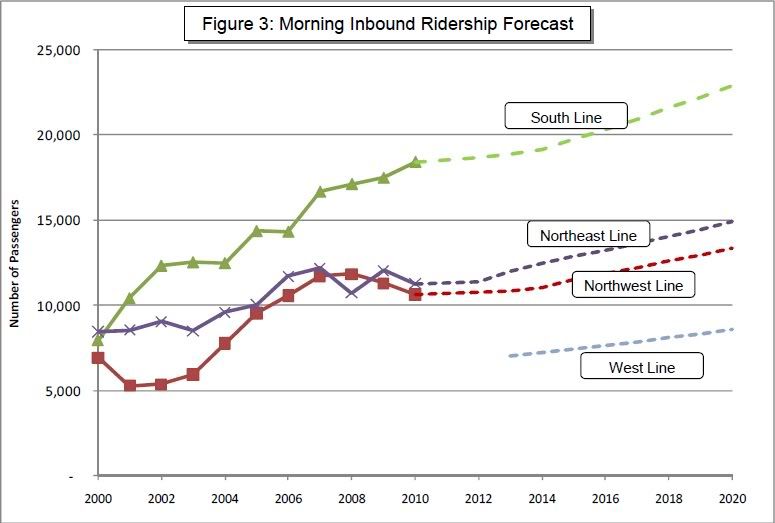
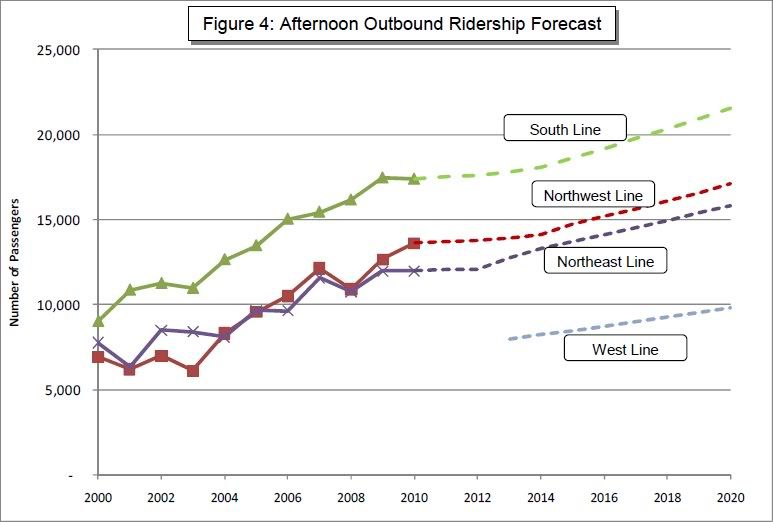
I disagree. I get what you're saying, as a theory, but in practice I don't think that philosophy works. If you see added capacity as only truly a need when no one can physically fit on anymore, that doesn't mean that it is every potential rider's "breaking point." Not everyone feels comfortable squeezing onto a train that is 100% minus one person full, especially when there are other travel options for them to weigh it against. I seem to recall a report mentioning that somewhere around 95% of the vehicle's physical capacity is when most people will feel uncomfortable about riding, and thus boarding it. Considering the South line has been at this point for some time, and the other lines are beginning to realize this as well, it raises a few questions:
1. How many people have tried boarding for some time, and via their mixed experiences with squeezing on, not wanting to squeeze on, and being physically unable to squeeze on to any number of trains, have decided to not try any longer?
2. How many people have merely heard via friends or coworkers or just seeing a few passing trains about the difficulty with boarding and dismissed any fleeting thoughts about taking transit?
3. How many former riders, who rode daily for months or years have experienced the LRT's crowding grow and surpass their comfort levels and have subsequently chosen other travel options, never to return, or perhaps to only return when the level of crowding has been mitigated?
Basically, I'm saying that it's not just the few people on the platform this coming September 1st (LRT ridership is highest in fall and winter) that we are losing out on, its those people, plus all others who either were on the platform a week earlier than that and gave up, or might walk onto the platform the following week if they get the impression that there will be a space for them.
I'm suggesting that there probably exists a level of pent up demand for the LRT service, should the capacity for them actually be provided. A prediction I've been formulating for some time is that 4 car train service implementation (it won't be all train consists at first, it might be as many as 50% of them, and then ramping up from there), will open everyone's eyes to this pent up demand and the extra capacity provided will be soaked up rather quickly.
The other thing I'd like to say is that while it might be good to say that capacity should be added once existing capacity is filled up completely, that's not really what we're dealing with here. These things have to be anticipated. It shouldn't be, "wow the trains are filled to the brim, better start planning to come up with a solution for maybe possibly figuring out a way to deal with this." That's a bit of hyperbole, but really we're still 3 year s away from the first four car trains being put into service, and a matter of decades away from the 8th Avenue Subway. The system is at capacity now, which means no growth from now until then.





 Prev
Prev




 Linear Mode
