| |
 Posted Oct 27, 2010, 3:03 PM
|
 |
Sonoma Strong
|
|
Join Date: Mar 2006
Location: Cotati - The Hub of Sonoma County
Posts: 1,881
|
|
a lot of transportation news:
it's official:
Quote:
Supervisors approve reduced maintenance on Sonoma County roads

PD FILE, 2006
Bicycle riders pass a pickup truck on one of Sonoma County's rural roads outside of Healdsburg.
By GUY KOVNER
THE PRESS DEMOCRAT
Published: Tuesday, October 26, 2010 at 12:33 p.m.
Last Modified: Tuesday, October 26, 2010 at 12:33 p.m.
(page 1 of 3)
Expressing dismay that they had no alternative, Sonoma County supervisors on Tuesday approved a plan to limit preservation of smooth paved surfaces to a select list of 150 miles of county roads.
“What else are we gonna do at this point?” Supervisor Mike Kerns said. “Something’s got to happen here or all our roads are going to fall apart.”
Paul Kelley, who along with Kerns is leaving the board this year, said that setting priorities for pavement preservation was “a foregone conclusion.”
The plan presented by Phil Demery, county transportation and public works director, directs $4.5 million a year in pavement preservation work to 31 heavily traveled roads in unincorporated areas of the county.
Those roads represent 11 percent of the county’s 1,384-mile network of roads, which Demery said is an asset worth $2.5 billion.
County roads are in poor shape overall, with a pavement condition index of 43 on a scale of 100. It would cost $55 million a year — more than 10 times the county’s budget — to maintain that rating throughout the road system, Demery said.
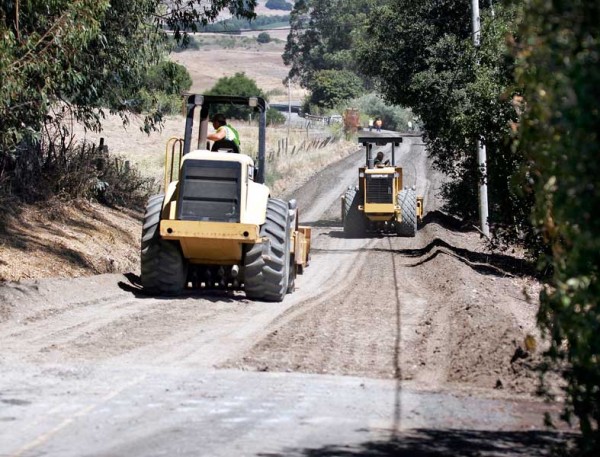
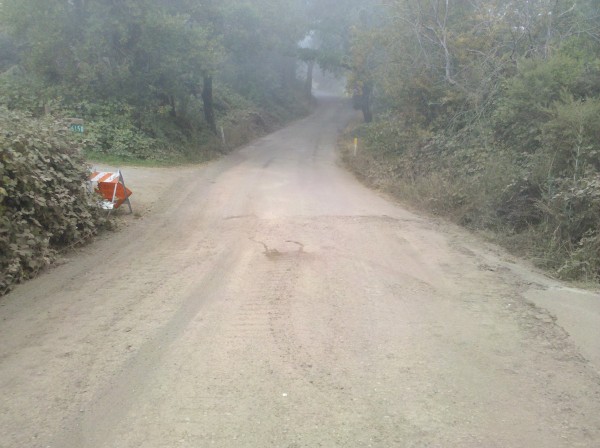
Under the new plan, 150 miles of roads that carry an average of 4,500 vehicles per day will be maintained in good condition. More than 1,200 miles of county roads will be allowed to fail within 10 years, Demery said, and some of those roads will be converted to gravel surfaces.
Routine maintenance, including filling potholes, clearing brush and repairing storm damage, will continue on all county roads.
Roads in unincorporated Sonoma County were rated worst in the Bay Area this year for the sixth year running, according to the Metropolitan Transportation Commission.
...
|
click for full article: http://www.pressdemocrat.com/article/201...rvisors-approve-reduced-road-maintenance
Quote:
October 26th, 2010 10:52pm
Hwy. 101 getting taller in Cotati
by Road.Warrior
As Highway 101 is growing wider in Cotati, it’s also getting taller.
New overpasses being built at Highway 116 and West Railroad Avenue are several feet higher than the old ones, which will be torn down and rebuilt higher as well.
“The two new overpasses there are being raised just in order to raise the clearance below,” Caltrans spokesman Bob Haus said. “Trucks have gotten a little bit bigger over the past 55 years since that highway first opened up.
“As things are now, the clearance is a little bit iffy. There are some trucks that can’t make it underneath. This will make it a little bit easier for them.”
Haus said the 116 overpass is 5 to 6 feet higher than existing one and the West Railroad overpass is 3 feet higher.
Crews have brought in dirt to raise the highway on both sides of the overpasses, which at some point will be opened up to north or southbound traffic when Caltrans starts replacing the current overpasses.
Haus said work on the overall $55 million project to widen 101 to six lanes from Rohnert Park Expressway south to Pepper Road is on schedule, expected to be finished late next year.
|
source: http://roadwarrior.blogs.pressdemocrat.com/11276/hwy-101-getting-taller-in-cotati/
as for SMART:
Quote:
SMART team visits Japan to assess rail cars
October 26th, 2010:
By BOB NORBERG
THE PRESS DEMOCRAT
Four representatives from the Sonoma-Marin transit agency are in Japan this week to examine the rail car being considered for North Bay train service.
“They want to ride on vehicles produced by this company, see the kind of quality, the kind of comfort,” said Chris Coursey, spokesman for Sonoma—Marin Area Rail Transit. “It is like test-driving a car before you buy it. We want to know the type of workmanship we are getting.”
SMART’s Chairwoman Deb Fudge, a Windsor councilwoman; Director Charles McGlashan, a Marin County supervisor; the agency’s capital projects director, John Lackey; and Dominic DiBrito, project manager for consultant LTK Engineering, are riding the trains and will visit the Nippon Sharyo factory southwest of Tokyo.
The trip is estimated to cost SMART $12,000.
Sumitomo Corp. of America was the low bidder for nine two-car trains, at $56.8 million. The amount was $20 million under SMART’s estimate and $22 million below the next lowest bid.
The cars will be made by Nippon Sharyo, which has built 302 similar rail cars, called diesel multiple units, for 12 other transit agencies in four countries, according to the bid proposal released Monday.
In Japan, similar diesel-powered cars are being used in service from Nagoya to Shinagawa, while an electric-motor version is in service in a Chicago-South Bend commute service.
Coursey stressed that SMART alone is paying for the cost of the trip.
“This group is not being wined or dined or even spoken to by Nippon Sharyo while over there,” Coursey said. “They are on their own, although they will go to the Nippon Sharyo factory in Toyokawa.”
SMART staff has completed negotiations with Sumitomo, the financial partner with Nippon Sharyo, and is recommending its bid be accepted by the SMART board at its Nov. 10 meeting.
“Negotiations were fairly straightforward and brief,” Coursey said. “Sumitomo accepted all of the conditions and terms of sample contract. They offered us everything we asked for. There was not a whole lot of haggling to do.”
The trains will meet the crash-worthiness standards set by the Federal Railroad Administration, while also incorporating a crash energy management system, according to the specifications.
The trains also will be equipped with diesel engines that meet the U.S. emission standards taking effect in 2015.
The aluminum shells of the cars would be built in Nippon Sharyo’s plant in Japan and shipped to a new plant being built in Rochelle, Ill., for final assembly, satisfying federal Buy America standards, according to the bid proposal.
The state of Illinois is investing $12 million in the plant, which will create 250 jobs. The plant also will produce 160 new cars for Chicago’s MetraRail transit system.
The two-car SMART trains will have 158 seats, four wheelchair spaces, room for up to 38 bicycles, a snack bar, restroom, work tables, luggage racks, Wi-Fi, reclining seats and security cameras.
...
|
for complete article: http://www.watchsonomacounty.com/2010/10...t-team-visits-japan-to-assess-rail-cars/
a lot to digest.
|
|
|





 Prev
Prev







 Linear Mode
