|
From the opinion section of the Herald Online...
Development must make the most of HRM’s potential
Thu, Oct 14 - 7:03 AM
The future of downtown Halifax requires all of our attention. This is not just Halifax’s downtown, it is Nova Scotia’s downtown — it represents the prosperity and vision of both our province and our city. Consequently, we must ensure that we have a downtown that provides a showcase for our unique qualities and aspirations. Halifax must embrace our collective history, engage our waterfront and express our vision for the future.
So far, Halifax has done well with our waterfront: With expansive boardwalks, public spaces and engaging developments, our waterfront has become our premier destination for tourists and locals.
This kind of quality development needs to continue throughout our downtown; however, we mustn’t accept development purely for the sake of development. New developments will make Halifax a better city only if they represent who we are, celebrating our unique location and culture while respectfully engaging their immediate environments.
Halifax must aspire to improve the quality of our downtown with an emphasis on streetscapes, open spaces, public amenities and environmental sustainability. HRMbyDesign, HRM’s Sustainable Environment Strategy and the Nova Scotia Sustainable Prosperity Act are major initiatives designed to ensure that our new developments proceed thoughtfully, humanely and without long-term harm to the environment and natural beauty that surrounds us.
The proposed Central Library, Citadel High and the Seaport Farmers’ Market are examples of projects that fulfil these community objectives. Through their progressive designs, these projects represent and express our vision as a city, while providing much-needed public infrastructure that supports a healthy and vibrant city.
Most notably, our HRMbyDesign initiatives have recently been recognized by the Royal Architectural Institute of Canada as the most forward-thinking document in Canada with regard to urban design principles and initiatives.
Which brings us to the new convention centre proposal. First, we think a new convention centre is a great idea, possessing tremendous potential to inject economic and cultural vitality into the downtown core. Convention centres consistently attract large gatherings that have the potential to support other development and business. A new convention centre in downtown Halifax has the potential to bring many new visitors from around the world to enjoy the natural beauty and hospitality that we are renowned for.
In other port cities, such as Hong Kong, Liverpool, Stockholm and recently Vancouver, their convention centres have become iconic waterfront buildings that help to engage and define the downtown. Regardless of location, our new convention centre must express the uniqueness of Halifax.
Just like the convention centre, our new central library is being built with public money. The library designers are conducting extensive public consultations to ensure the best possible result and a library unique to Halifax. So why isn’t this happening with the convention centre?
This is quite troubling: We are only going to get one crack at this critical part of our cultural infrastructure and we have an obligation to ensure it is the best possible result for the future of our city.
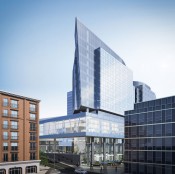
As an idea, a new convention centre could be a win-win-win, especially if it highlights the unique strengths we possess as a city. Unfortunately, the proposed convention centre does not appear to meet these criteria. Simply put, the current proposal will ignore who we are, where we are and what we want to be. As proposed, the project is devoid of context, buried deep underground and highly compromised. Where does it begin to suggest its purpose as a convention centre or as a cultural centerpiece of our region?
We know from experience that well-intentioned, meaningful architecture and urban design can directly contribute to the success of businesses while providing significant public amenity and value. In a city our size, these opportunities are rare and must be taken full advantage of.
How can HRM and the province of Nova Scotia support a subterranean convention centre that will not see the light of day, not engage the downtown, not adhere to HRMbyDesign, not embrace what makes our city unique and not include a public design process? These critical questions need to be addressed before decisions are made that cannot be reversed.
We want to see more development in our downtown. However, we have an obligation to each other to ensure that it is appropriate and aspires to a greater vision. If we want our city to become great, we need to rely on our elected officials to act with virtue and our citizens to be heard with respect. Halifax has more potential than any other city in this country — it’s time we started reaching for it.
Submitted by Eugene Pieczonka, Keith Tufts and Andy Lynch, principals of Lydon Lynch Architects.
I do agree with some of what they are saying. I don't agree about the meeting space; there are certainly lots of examples in Canada where that's occured (Calgary - Telus Convention Centre and Stampede Round up centre and Edmonton's Shaw Convention Centre).
But certainly updating Argyle to have commercial space would help improve the street there. The Market street frontage perhaps should be where the parking and loading is done considering it's mainly the backs of residential buildings and parking lots anyway?
I totally agree with someone's previous comment about having a roof top balcony and green roof - definate pluses.

|





 Prev
Prev


 Linear Mode
