HomeDiagramsDatabaseMapsForum About
     

Go Back   SkyscraperPage Forum > Regional Sections > Canada > Alberta & British Columbia > Vancouver > Transportation & Infrastructure


Reply

 
Thread Tools Display Modes
     
     
  #481  
Old Posted Nov 25, 2009, 1:16 PM
jlousa's Avatar
jlousa jlousa is offline
Ferris Wheel Hater
 
Join Date: Jun 2006
Posts: 8,371
The reason people feel the skytrain viaduct is more obstructive even though it's narrow is that's it's the only thing that cuts off pedestrian access. The viaducts do not create any barrier n-s.

29th and Nanaimo will be rezoned in time, the city will wait until after the Cambie st corridor process and use lessons learned there. Also while it might not look it but the areas are already pretty dense, between 1996-2006 the area of Collingwood had the highest percentage increase in population after downtown.
Reply With Quote
     
     
  #482  
Old Posted Nov 25, 2009, 6:30 PM
Zassk Zassk is offline
Registered User
 
Join Date: Sep 2009
Posts: 2,303
Quote:
Originally Posted by geoff's two cents View Post
The reason is an ever shrinking supply of industrial land.
But... there's hardly any industry there now. What industry is the City of Vancouver courting for the flats? What industry would want to be located there? I thought the area had been slated for a high-tech business park and a stadium in the recent past, and it would be a wicked spot for a new university campus and/or park, but none of those would be classified as industry.
Reply With Quote
     
     
  #483  
Old Posted Nov 25, 2009, 7:52 PM
BCPhil BCPhil is offline
Registered User
 
Join Date: Jun 2009
Location: Surrey
Posts: 2,578
Quote:
Originally Posted by Zassk View Post
But... there's hardly any industry there now. What industry is the City of Vancouver courting for the flats? What industry would want to be located there? I thought the area had been slated for a high-tech business park and a stadium in the recent past, and it would be a wicked spot for a new university campus and/or park, but none of those would be classified as industry.
Yeah, I don't think there is a single industry on Industrial Road. A few warehouses, but they don't even make use of the railway tracks for transport. Why can't businesses like that relocate to PoMo, Maple Ridge, Delta, Surrey, or Langley where the land would be cheaper (cutting their costs so they can be more competitive and hire more employees).

I could understand leaving the flats industrial if we actually made proper use of the land due to it's proximity to the rail yard and port, but we don't. Or if it was an efficient use of space with commercial/industrial services important to those who live in the CoV, but it's not. Most of it is barren at the moment.

The only business that has built in the flats recently that NEEDS to be in the flats is the Rocky Mountaineer Station (although I would have preferred if they rebuilt the Great Northern Station next to Pacific Central haha).

I've always thought the flats would be a great location for a full blown Vancouver University, complete with huge residency complex allowing thousands of University students to live near downtown at the school. The Millennium line extension would facilitate a station right at the school, allowing it to be transit focused with minimal parking.
Reply With Quote
     
     
  #484  
Old Posted Nov 25, 2009, 8:05 PM
SpongeG's Avatar
SpongeG SpongeG is offline
Registered User
 
Join Date: Jun 2006
Location: Coquitlam
Posts: 40,068
Quote:
Originally Posted by Zassk View Post
But... there's hardly any industry there now. What industry is the City of Vancouver courting for the flats? What industry would want to be located there? I thought the area had been slated for a high-tech business park and a stadium in the recent past, and it would be a wicked spot for a new university campus and/or park, but none of those would be classified as industry.
its really the last parcel in the city for industrial - there have been some very informative articles over the year - especially after they rezoned it in the late 90's to the dot.com boom thinking it would become filled with dot.com companies and of course that whole thing died

the city gets more tax from industrial land and to lose so much would be a huge hit - residential doesn't bring enough taxes - industrial type business is fleeing to the suburbs who are benefitting
__________________
belowitall
Reply With Quote
     
     
  #485  
Old Posted Nov 25, 2009, 8:30 PM
jsbertram jsbertram is offline
Registered User
 
Join Date: Sep 2009
Posts: 3,245
Quote:
Originally Posted by SpongeG View Post
its really the last parcel in the city for industrial - there have been some very informative articles over the year - especially after they rezoned it in the late 90's to the dot.com boom thinking it would become filled with dot.com companies and of course that whole thing died

the city gets more tax from industrial land and to lose so much would be a huge hit - residential doesn't bring enough taxes - industrial type business is fleeing to the suburbs who are benefitting
I thought that area at Main & Prior was the TechPark that Schroeder Properties / ING Realty / BC Hydro were trying to build for the DotCom industry (formerly the Great Northern RR station area on 18 Acres). With the DotCom bust, I'm hearing that St. Paul's Hospital may be building brand-new facilities there & abandoning their Burrard site.
Reply With Quote
     
     
  #486  
Old Posted Nov 25, 2009, 8:35 PM
SpongeG's Avatar
SpongeG SpongeG is offline
Registered User
 
Join Date: Jun 2006
Location: Coquitlam
Posts: 40,068
yes but they rezoned a lot of the flats - apparently now its a real hodge podge of zoning

there's an article somewhere i just googled it - something about finning - cause it used to be finning land - when it left the city it pushed for some kind of rezoning and got a huge tax break - i don't understand it but its the city loss to lose industrial land
__________________
belowitall
Reply With Quote
     
     
  #487  
Old Posted Nov 25, 2009, 8:46 PM
jsbertram jsbertram is offline
Registered User
 
Join Date: Sep 2009
Posts: 3,245
Quote:
Originally Posted by SpongeG View Post
yes but they rezoned a lot of the flats - apparently now its a real hodge podge of zoning

there's an article somewhere i just googled it - something about finning - cause it used to be finning land - when it left the city it pushed for some kind of rezoning and got a huge tax break - i don't understand it but its the city loss to lose industrial land
I see we're talking about different areas of the False Creek Flats:

The north edge along Prior where the viaducts end at the unbuilt TechPark or future St. Pauls;

The south edge along Great Northern Way where Finning used to be, now the Great Northern Way Campus (reusing some of the old Finning buldings I believe), and QLT further east on Great Northern Way.

And in the middle along Terminal Ave is "Pacific Central Station" for Via / Amtrak, Home Depot, the Flea Market, Long & McQuade.
Reply With Quote
     
     
  #488  
Old Posted Nov 25, 2009, 9:31 PM
whatnext whatnext is online now
Registered User
 
Join Date: Feb 2009
Location: Vancouver
Posts: 27,831
Quote:
Originally Posted by s211 View Post
Yeah, buried in with umpteen other crack-addled motions. This council is like ONE BIG LOOSE CANNON.
The danger of course is that Council rushes into some "feel-good" greenwashing and unthinkingly eviscerates downtown in the process.

There's a developing scandal in the UK which call into questions the whole science behind the anti-car brigade. I'm surprised it has gotten so little play over here:
http://blogs.telegraph.co.uk/news/jamesd...-coffin-of-anthropogenic-global-warming/
Reply With Quote
     
     
  #489  
Old Posted Nov 25, 2009, 11:25 PM
officedweller officedweller is offline
Registered User
 
Join Date: Jul 2001
Location: Vancouver
Posts: 41,699
Quote:
Originally Posted by BCPhil View Post
I could understand leaving the flats industrial if we actually made proper use of the land due to it's proximity to the rail yard and port, but we don't. Or if it was an efficient use of space with commercial/industrial services important to those who live in the CoV, but it's not. Most of it is barren at the moment.

The only business that has built in the flats recently that NEEDS to be in the flats is the Rocky Mountaineer Station (although I would have preferred if they rebuilt the Great Northern Station next to Pacific Central haha).
The latest False Creek Flats study showed that the railways will be using the marshalling yards longer into the future than originally thought when the area was sort of fast-tracked for high tech industrial development. But having the railyards remain in place is sure to hinder any widescale redevelopment efforts (whether industrial/commercial/office like on Terminal) or residential.

http://vancouver.ca/commsvcs/currentplanning/fcflats/pdf/railwaylands.pdf

The City is touting it now as the Energy Precinct - but the areas neatly avoid the railyards:

http://vancouver.ca/commsvcs/currentplanning/fcflats/pdf/energyprecinct.pdf

and the City is cooperating/pushing the grade separations that will allow greater use of the False Creek railyards (i.e. Powell St., Malkin Ave., etc.) - read the background information section:

http://vancouver.ca/ctyclerk/cclerk/20090217/documents/tt3.pdf
Reply With Quote
     
     
  #490  
Old Posted Nov 26, 2009, 12:37 AM
geoff's two cents geoff's two cents is offline
Registered User
 
Join Date: Jul 2008
Posts: 504
Quote:
Originally Posted by whatnext View Post
The danger of course is that Council rushes into some "feel-good" greenwashing and unthinkingly eviscerates downtown in the process.

There's a developing scandal in the UK which call into questions the whole science behind the anti-car brigade. I'm surprised it has gotten so little play over here:
http://blogs.telegraph.co.uk/news/jamesd...-coffin-of-anthropogenic-global-warming/
I could comment on the article itself that you cite, but that would derail this thread. Instead, I'll address two aspects of your post:
1) "the whole science behind the anti-car brigade": the rationale for limiting SOV use, and the interest Vancouver civic leaders in particular have on this, goes way beyond issues of global warming - ie. efficiency of land use and tax revenue bases, pedestrian-oriented, international tourism, and expense of building and maintaining transportation infrastructure, to name a few examples. There's a lot more going on here than '"feel-good' greenwashing." I should add that the environmental argument for transportation infrastructural balance in our cities is frequently made from a much broader array of evidence than global warming alone - ie. human health and well-being and human/non-human environmental ecology.
2) "anti-car brigade": another straw man. Calling for balance is not the same as calling for the complete eradication of a form of transportation which would be necessary for many - ie. doctors, people in short-haul freight transport, farmers, tradespeople, high-ranking politicians and corporate execs, etc. - to have access to so as to preserve a higher standard of living for all. Also keep in mind that people calling for this balance pay taxes just like you do, and should have a say in what their hard-earned money is paying for.
Reply With Quote
     
     
  #491  
Old Posted Nov 26, 2009, 12:40 AM
racc racc is offline
BANNED
 
Join Date: Oct 2008
Posts: 1,241
Time to leave the 1950's and join this century. Regarding the SkyTrain guildway, Bing Thom is thinking of either building around it, burying it. Either option could include rebuilding it. Now that is being creative.

http://www2.canada.com/vancouvercourier/news/story.html?id=be195a3f-615f-4f1f-8fd2-8adda2ebf37a

Quote:
Councillor aims wrecking ball at Georgia, Dunsmuir viaducts
City staff to study demolition, traffic management proposal
Mike Howell, Vancouver Courier
Published: Wednesday, November 25, 2009
Monsters. Eyesores. Two words renowned architect Bing Thom and Vision Vancouver Coun. Geoff Meggs use to describe the Georgia and Dunsmuir viaducts.
And with those descriptions, guess what the architect and the politician want done with the concrete structures?
Knock 'em down, they say.


And in their place create park space, build affordable housing, put up a few more condos and add some retail. Motorists need not worry--smaller, more design friendly off-ramps and on-ramps could link up Expo and Pacific boulevards. "We're not talking about eliminating traffic, we're talking about changing its direction and managing it in a different way," said Meggs, who successfully introduced a motion at city council last Thursday to have staff examine "the potential costs and benefits" of demolishing the viaducts.
His motion was inspired by Thom's belief that removing the viaducts is not only feasible but would open up the area between downtown and Chinatown for development. "I met with [Thom] because I didn't want to make a proposal that would be dismissed out of hand by professionals as lunacy," Meggs said. "And he assured me that it wasn't lunacy."
The timing of his motion works for two reasons, Meggs said. The viaducts will be closed during the Winter Olympics in February for security. While the busy Olympic time will not provide a true test of the impact the closure will have on motorists, Meggs suggested feedback would assist staff in its review.
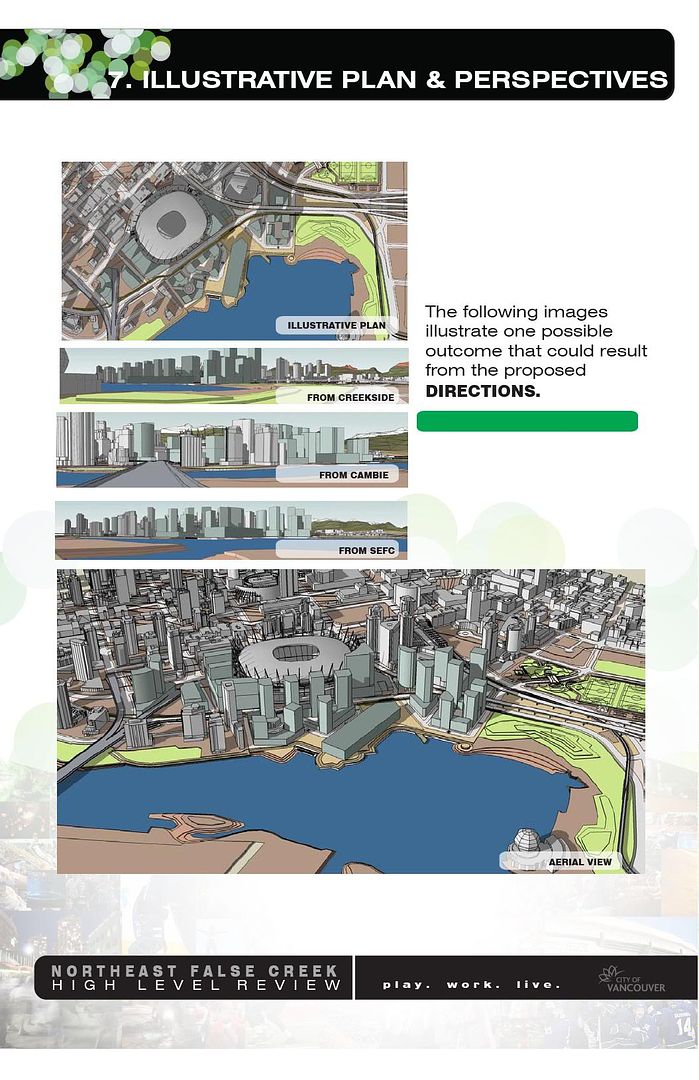
Meggs also noted that last Tuesday council approved the Northeast False Creek plan which calls for a mixed-use neighbourhood, park space and public amenities on the land north of Science World. The viaducts fall within the plan.
"You have this land which is in the middle of some of the most valuable real estate on the planet, where the most the public is going to get out of it is a basketball court or something of that sort," Meggs said of the plan. "Which is fine but it seems like a very poor benefit for holding onto the land for all that time."
The viaducts were built in the early 1970s at a time when council of the day considered approving a freeway that would run through Strathcona and along the waterfront. Thom recalled that 15 years ago he called for the demolition of the viaducts when he floated a proposal to have a convention centre built in the area.
"We've got to get rid of these monsters that, really, destroy the city's fabric," Thom said. "Take them down and free up about four or five city blocks and take the pressure off of the Downtown Eastside and Chinatown."
Thom acknowledged the SkyTrain track that runs under the viaducts is "a major issue" for redevelopment. But he said reconfiguring the track should be considered.
"Build around it, bury it--I don't know, I'm not sure. But what I've been saying is we have to look at the city of Vancouver for the next 20 or 30 years. We can't just go on with these incremental two or three year plans."
Thom pointed out the deck around Science World is old and needs replacement. He suggested its renovation include the creation of a beach. He noted herring has returned to Southeast False Creek.
"It would be good for fish habitat, it would be good for the dragon boats, it would be good for people having access to the water. Otherwise, you're up 10 or 15 feet from the water and you can never get to the water."
Added Thom: "We've got to make better use of our land and we've got to do better planning. Luckily, Coun. Meggs gets it."
City staff is expected to update council in March or April on Meggs' request to remove the viaducts.


© Vancouver Courier 2009
Reply With Quote
     
     
  #492  
Old Posted Nov 26, 2009, 1:58 AM
jlousa's Avatar
jlousa jlousa is offline
Ferris Wheel Hater
 
Join Date: Jun 2006
Posts: 8,371
I read the same article and my impression is that Bing hadn't given the skytrain guideway much thought, his solution seems to be we'd figure it out. That is a awfully expensive solution.
Reply With Quote
     
     
  #493  
Old Posted Nov 26, 2009, 2:14 AM
Metro-One's Avatar
Metro-One Metro-One is offline
Registered User
 
Join Date: Sep 2008
Location: Japan
Posts: 17,978
Quote:
Originally Posted by racc View Post
I get it that some people like the viaducts, that is fine but to claim there is a lack of creativity in the city because because the city is studying the possible tearing down of the viaducts is ridiculous.

It is even worse to claim there is a lack of creativity and then dismiss the idea of tearing down the viaducts before even seeing what the results of the study are. That, quite frankly, is being very closed minded, which, to be honest, is the opposite of creativity.

To me this is really the pot calling the kettle black because there is not a study on earth that would change racc and bike troubles mind in keeping the viaducts.

If anyone's minds are already made up on the viaducts fate before a study is finished, it is these two.

Now, if the study included the replacement of the ducts with a similar capacity tunnel and/or a high capacity grade separated rail system to go in its place, then I would consider it.

Unfortunately these people have found their straw man and air aiming to demolish it. (And a 1km long viaduct really is a straw man in a metro region with no other true elevated roadways).

If this debate truly was about building sustainable neighbourhoods, instead of simply having an anti-car agenda, then how come they are not pushing full force on the city to rezone the areas around the expo line stations, such as around Nanaimo station, and now also the Cambie corridor.

To me it seems that if we really want to get more people in dense neighbourhoods around transit, and reduce the use of the personal vehicle, then these areas are the ones to start (also would they not have a greater profit margin as well and offer more affordable condo living then in downtown?) instead having to tear down functional mid life infrastructure and re-design an entire areas road network?

Not to mention we have already shown how much can be built there (public park space, tram OMC, bike baths sheltered from the rain, commercial/retail structures, office, etc...) with keeping the ducts in place.

I really do think this is more of a Concord Pacific agenda then anything else, and if anyone here thinks that they do not have their fingers deep in the Vancouver government pie is in denial.

People tend to forget that downtown is built in the worse spot possible, on a peninsula, and the entire metro area east of downtown only has a 2km wide wedge to get in and out. We do not have the luxury on a continuous grid road network around downtown, hence this makes layers even more important in Vancouver's case.

People also tend to forget that unlike London we can not as easily close downtown off from the rest of the metro area and still believe it will proser as well, simply because, Vancouver metro is not 10 million plus, it is not a 1000 year old or more established city, it is not a provincial or national capitol, it is not one of the world's premier financial cities therefore having extremely well established business culture, etc... Vancouver is still in its infant stages of becoming a large city, and it would be wise to keep as many entrance points open downtown as possible, especially since most of downtown is cut off by water. If anything, downtown needs more layers entering it. To me, there is no reason that downtown can not have several metro lines, heavy rail lines, bike lanes, trams, pedestrian walkways, at grade road and the viaducts co-existing entering the city.

Vancouver is a growing infant, and it needs to keep all avenues open, and it is not hard to incorporate 1km or well designed high viaducts into an urban fabric.

Enough of this agenda straw man stuff. If you really believe in eco-density, then start pushing the city to rezone areas around skytrain and the Canada line first, there are plenty of areas to build on first before the ducts need to come down.

This is a waste of effort and money (it is expensive to demolish such structures and then re-deisgn a street system).

__________________
Bridging the Gap
Check out my Flickr: https://www.flickr.com/photos/30634635@N03/with/29495547810/ and Youtube channel https://www.youtube.com/channel/UCV0_0h9qKlhxXFxuAey_q6Q
Reply With Quote
     
     
  #494  
Old Posted Nov 26, 2009, 2:21 AM
racc racc is offline
BANNED
 
Join Date: Oct 2008
Posts: 1,241
Quote:
Originally Posted by whatnext View Post
The danger of course is that Council rushes into some "feel-good" greenwashing and unthinkingly eviscerates downtown in the process.
This same type of tired argument has been used for the last 50 years. First it was that there must be freeways to downtown or it will die. That was certainly proven wrong big time. In fact, the freeways would have likely sucked the life out of downtown. Instead of vibrant communities along the water, there would have been ugly freeways.

The Burrard Bridge Trial was predicted to cause chaos and the end of life as we know it. Maybe in 2012 it will finally destroy downtown

The fact is with more people living near downtown and improved cycling and transit options, fewer people are driving downtown and yet somehow downtown is becoming more and more vibrant all the time.

Quote:
Originally Posted by whatnext View Post
There's a developing scandal in the UK which call into questions the whole science behind the anti-car brigade. I'm surprised it has gotten so little play over here:
http://blogs.telegraph.co.uk/news/jamesd...-coffin-of-anthropogenic-global-warming/
What is not in question is that at some point oil will run out and even before that, oil prices will rise again and again and again. The automotive age was a symptom of cheap gas and resources. With both those history once the great recession is over, the car is going to be less and less affordable to the average person. Don't expect the electric car to save it. China is hoarding the rare resources needed for the batteries, motors and electronics. Don't bet on them playing nice just so you can continue to drive.
Reply With Quote
     
     
  #495  
Old Posted Nov 26, 2009, 2:27 AM
deasine deasine is offline
Vancouver Moderator
 
Join Date: Mar 2007
Posts: 5,747
Quote:
Originally Posted by jlousa View Post
That is a awfully expensive solution.
Precisely. We have a list of projects that should be done now and have higher priority over this one. When we complete those, and have money, by all means, take away the viaducts, but until we are done, let's just deal with its existence.
Reply With Quote
     
     
  #496  
Old Posted Nov 26, 2009, 2:39 AM
whatnext whatnext is online now
Registered User
 
Join Date: Feb 2009
Location: Vancouver
Posts: 27,831
Quote:
Originally Posted by racc View Post
This same type of tired argument has been used for the last 50 years. First it was that there must be freeways to downtown or it will die. That was certainly proven wrong big time. In fact, the freeways would have likely sucked the life out of downtown. Instead of vibrant communities along the water, there would have been ugly freeways...
Actually, and ironically, it was the actions of the same mayors and council who pushed the viaduct that saved downtown. By encouraging "rampant" high rise development in the West End.

Quote:
Originally Posted by racc View Post
...The fact is with more people living near downtown and improved cycling and transit options, fewer people are driving downtown and yet somehow downtown is becoming more and more vibrant all the time.
The viaducts are better for cyclists, with no intersections and total traffic separation than at grade streets. Its debatable whether downtown is more vibrant. The Granville Street of the 30-50's was very vibrant. Downtown certainly has more people than it did. But so does Walnut Grove.

Quote:
Originally Posted by racc View Post
What is not in question is that at some point oil will run out and even before that, oil prices will rise again and again and again. The automotive age was a symptom of cheap gas and resources. With both those history once the great recession is over, the car is going to be less and less affordable to the average person. Don't expect the electric car to save it. China is hoarding the rare resources needed for the batteries, motors and electronics. Don't bet on them playing nice just so you can continue to drive.
Long before oil runs out we will have found better technology for personal vehicles. The all-electric Nissan Leaf goes on sale next year, the Chevy Volt not far behind. The technology will only improve. The Chinese will go where the money is. The personal vehicle has improved the standard of living too much for major economies to let it go. Not everyone has a desire to live in the 19th century. If we let downtown Vancouver be choked off, the centre of Metro will merely move to Surrey. First to go will be the sports stadiums, followed by the major retail.
Reply With Quote
     
     
  #497  
Old Posted Nov 26, 2009, 2:50 AM
Metro-One's Avatar
Metro-One Metro-One is offline
Registered User
 
Join Date: Sep 2008
Location: Japan
Posts: 17,978
Again, downtown is 90% cut off by water, it makes sense to have 1 true high capacity east west road in an out of downtown in a region that will be 3 million in 10 to 15 years.

We do not have the luxury of a complete street grid around our downtown, or even a 50% street grid around downtown. Piling everything on the few surface street connections we have is a bad idea.

And yes, the centre of the region will slowly shift to the highly more accessible areas of Burnaby and Surrey if Vancouver keeps to close itself off. Instead of reducing access points, we should be adding. We should have pedestrian/bike only bridges over false creek, a tram system, and a grade separated road system (also known as the ducts we have!)

Again, can you guys stop chasing straw men and focus your energy on getting Vancouver to densify around our existing train stations first.

But their minds are already made up, as I said before there is not a study on earth that would change their minds on keeping the ducts. It will be an incredibly biased study they are striving for.

My mind could be changed though, again if a decent alternative is proposed *cough* tunnel *cough.*

I also love all the end of the car talk. The personal vehicle is going no where. It will simply change technologies.
__________________
Bridging the Gap
Check out my Flickr: https://www.flickr.com/photos/30634635@N03/with/29495547810/ and Youtube channel https://www.youtube.com/channel/UCV0_0h9qKlhxXFxuAey_q6Q
Reply With Quote
     
     
  #498  
Old Posted Nov 26, 2009, 3:04 AM
cornholio cornholio is offline
Registered User
 
Join Date: Jun 2006
Posts: 3,916
imo its pretty sad that the city council is actually spending taxpayers money on such a study.

Once the GM place office tower is built
+ the BC Place office tower
+ the block east of GM place is developed to residential(probably the last peace since I think Concord owns it i beleive)
+ the potential two other office/hotel towers are developed on GM place lands
+ the vision of developing basketball/tennis/etc. courts bellow the rest of the viaducts to Quebec st. is realized (which by the way is the best place to have such facilities which would be also covered from the elements and are sorely needed in the city)
+ once the conceptual/proposed retail spaces are built bellow the Viaducts at Main street (i clearly remember this was discussed by the city years ago and is feasible and eventually will happen)
then these viaducts will be virtually invisible and still be effective at keeping cars of the roads bellow and making it a safer pedestrian/bicycle environment plus allowing commercial vehicles easy access in to the core and the future ambulances leaving the relocated St.Pauls hospital.


posted by Officedweller


posted by Jlousa
Reply With Quote
     
     
  #499  
Old Posted Nov 26, 2009, 3:21 AM
Stingray2004's Avatar
Stingray2004 Stingray2004 is offline
Registered User
 
Join Date: Jan 2004
Location: White Rock, BC (Metro Vancouver)
Posts: 3,145
Quote:
Motorists need not worry--smaller, more design friendly off-ramps and on-ramps could link up Expo and Pacific boulevards. "We're not talking about eliminating traffic, we're talking about changing its direction and managing it in a different way"
Meggs is just up to his usual silly nonsense based upon his background. I doubt that any 'on-ramps' or 'off-ramps' can be built from the escarpment down to Expo/Pacific Blvd. based upon the current configuration of structures at the escarpment base.

Even then, the length of such 'ramps' would be similar to what currently exists near the Pan Pacific Hotel at the waterfront, which will impede any access underneath.

Furthermore, if that can't be constructed, I would just take Nelson St. down to the Cambie Street bridgehead and head eastward along Expo Blvd. to Terminal Ave.

That additional regional thru traffic congestion certainly would negate any positive benefits for the pedestrian/cyclist environment that one would expect to exist along Pacific/Expo Blvds. for the future residents of NEFC.

This 'Meggs' matter might even turn into a political issue in time. Who knows. Nevertheless, I doubt that anything will come to fruition from this 'study'.

BTW, the "Malkin Connector" is still identified as a priority by the city and that requires the viaducts to remain extant.
Reply With Quote
     
     
  #500  
Old Posted Nov 26, 2009, 4:21 AM
geoff's two cents geoff's two cents is offline
Registered User
 
Join Date: Jul 2008
Posts: 504
I should add that, despite my obvious prejudices (ie. not a fan of the viaducts, as my previous posts make absolutely clear), I am intrigued by several suggestions that have come to the fore in this forum:
1) MetroOne's suggestion that we be more creative with the area under the viaducts a la the Japanese example. This would enable us to do more with that space than simply build sports facilities, though there's definitely a place for that as well.
2) Deasine's suggestion that we consider a streetwall for the viaducts. I think this could be done while preserving the soon-to-be Abbott streetwall below, provided the building designs were creative enough. Eventually (years down the road, so to speak), we might consider losing a lane or two on the 'ducts to create something of a parkway w/ plantings, bike lanes, etc. Retail would be an option, as would staircases connecting to the street and park below. This would entail incrementally reducing road capacity, while preserving the existing shortcut into downtown that the 'ducts make possible. The result would be an intensely interesting and unique, multi-layered yet not enclosed, urban space. I'd be interested in hearing what others think of this.

For a contrary perspective, I imagine Thom's response to the (justified) criticisms above regarding the expense entailed in moving the Skytrain viaduct would be that the reason this is a problem now is because we awkwardly constructed our high capacity rapid transit infrastructure around the viaducts in the first place. Had we made the necessary changes to our road infrastructure in the early 1980s (redesigned them, that is, or torn them down), we wouldn't be in this spot today. The solution, then, is to cut our losses, learn from our mistakes, and quit organizing our city planning around a soon-to-be obsolete quasi-freeway viaduct. Our roads should be made to work for the city, not the reverse.

I'm not saying I'm wholeheartedly in this camp but, as I see it, it's really the only intelligent response to the above criticisms.
Reply With Quote
     
     
This discussion thread continues

Use the page links to the lower-right to go to the next page for additional posts
 
 
Reply

Go Back   SkyscraperPage Forum > Regional Sections > Canada > Alberta & British Columbia > Vancouver > Transportation & Infrastructure
Forum Jump


Forum Jump


All times are GMT. The time now is 3:01 AM.


Powered by vBulletin® Version 3.8.7
Copyright ©2000 - 2026, vBulletin Solutions, Inc.