HomeDiagramsDatabaseMapsForum About
     

Go Back   SkyscraperPage Forum > Regional Sections > United States > Mountain West


Reply

 
Thread Tools Display Modes
     
     
  #481  
Old Posted Nov 26, 2008, 5:56 PM
Cirrus's Avatar
Cirrus Cirrus is offline
cities|transit|croissants
 
Join Date: Jul 2001
Location: Washington, DC
Posts: 18,718
Right. The executive branch has tremendous power over any of the departments, including the department of transportation.

For example, earlier this year Bush's appointed transportation secretary Mary Peters removed money from the FTA's transit account in order to pay for more roads.

Another example is that the President can always influence Congress with the veto. Obama has said from day one that he wants a different infrastructure plan than what we've been living with in recent decades. He can threaten to veto the next TEA bill if Congress sends it to him without substantive changes.
__________________
writing | twitter | bluesky | flickr | instagram | ssp photo threads
Reply With Quote
     
     
  #482  
Old Posted Nov 26, 2008, 9:39 PM
Fritzdude Fritzdude is offline
Registered User
 
Join Date: Jun 2008
Posts: 1,014
Quote:
Originally Posted by SnyderBock View Post
So honestly, the West Corridor already has federal Commitment and probably won't get anymore. This leaves Denver Union Station, Gold Line EMU, East Corridor EMU and oddly enough, the US-36 BRT Corridor most likely to get any kind of Federal Funding Boost in such a stimulus package.
FYI: I noticed that Dave responded to you cost-costing plan on the northern metro corridor:

We feel the original alignment that we have studied effectively serves the neighborhoods like Globeville/Elyria/Swansea and Commerce City, which is some of our goals on North Metro. Your alignment proposal, however, is an interesting thought and one that we can add to the variety of ideas that are being considered now as we look at ways to move the program forward.

You probably caught him off guard as it appears that he typically answers more mundane questions rather than proposals to save millions of dollars and righ-away exchanges..
Reply With Quote
     
     
  #483  
Old Posted Nov 26, 2008, 10:15 PM
SnyderBock's Avatar
SnyderBock SnyderBock is offline
Robotic Construction
 
Join Date: Sep 2006
Posts: 3,833
Quote:
Originally Posted by Cirrus View Post
The big problem with the Boulder rail, of course, is that it doesn't serve either of the two biggest transit-trip generators in the corridor: CU and downtown Boulder.

If RTD took all the money it's spending on the BRT and instead spent it on the rail, then maybe they could find a way to get the rail into central Boulder. At the very least, that should have been studied. Maybe it wouldn't turn out to be worth it, but AFAIK nobody even looked into it.
That's the problem I have too Cirrus... They never seriously looked at solutions for rail-only which would have had rail serve an alignment along US-36 and serving downtown Boulder/CU, because they said it would cost too much (because of grades and sharp curves). Ironically, they came up with a quick solution in BRT and DMU. But now with DMU cost going from just over $400 million to nearly $900 million, plus BRT up around $500-700 million (I think?), they would be better off looking at scraping one mode of transit and upgrading the other one.

Since the BRT alignment serves the top ridership generators, is a shorter, more direct route, plus has an EIS well underway (where as the rail doesn't), unfortunately it makes more since to cancel rail and expand the BRT to be more effective. But, if done right, BRT can be a viable mass transit corridor. I also hold aspirations that in the future, it could somehow be tracked and converted to EMU or DMU or possibly even LRT.
__________________
Automation Is Still the Future

Last edited by SnyderBock; Nov 26, 2008 at 10:25 PM.
Reply With Quote
     
     
  #484  
Old Posted Nov 26, 2008, 10:57 PM
Octavian Octavian is offline
Registered User
 
Join Date: Aug 2005
Posts: 1,023
Quote:
Originally Posted by Cirrus View Post
Right. The executive branch has tremendous power over any of the departments, including the department of transportation.

For example, earlier this year Bush's appointed transportation secretary Mary Peters removed money from the FTA's transit account in order to pay for more roads.

Another example is that the President can always influence Congress with the veto. Obama has said from day one that he wants a different infrastructure plan than what we've been living with in recent decades. He can threaten to veto the next TEA bill if Congress sends it to him without substantive changes.
On the other hand, the transportation bill has thousands of individual earmarks and a Democratic president is unlikely to veto a bill coming from a Democratic Congress.
Reply With Quote
     
     
  #485  
Old Posted Nov 26, 2008, 11:17 PM
SnyderBock's Avatar
SnyderBock SnyderBock is offline
Robotic Construction
 
Join Date: Sep 2006
Posts: 3,833
Is a transportation bill coming from a Democratic Congress, be likely to neglect the very issues their Democratic President wishes to address?
__________________
Automation Is Still the Future
Reply With Quote
     
     
  #486  
Old Posted Dec 5, 2008, 8:14 PM
Octavian Octavian is offline
Registered User
 
Join Date: Aug 2005
Posts: 1,023
Quote:
Originally Posted by SnyderBock View Post
Is a transportation bill coming from a Democratic Congress, be likely to neglect the very issues their Democratic President wishes to address?
Congress is its own master.

An article I came across.

http://aviewoftherockies.blogspot.com/2008/12/fastracks-i-225-intra-suburban-beltway.html

The FasTracks I-225 Intra-Suburban Beltway Corridor
by Jeff Kraft
The issues surrounding the proposed Purple Line on the Washington D.C. subway system are very relevant for FasTracks. See below for an extended excerpt from an article titled "Greening the Suburbs" from The New Republic's environmental blog, The Vine.

The Purple Line in Maryland would be the first intra-suburban rail transit line in the D.C. system because it would not carry people from the suburbs to the city center in a hub-spoke model but instead would follow the beltway around the city carrying people between the suburbs. The purple line provides connectivity between the spoke lines near the perimeter of the system allowing for transfers to occur away from the city center.

In the FasTracks system, the analogous line is the I-225 Corridor which will connect the Southeast and East Corridors together and make it easier for Southeast riders to travel to DIA as well as serving new destinations in Aurora. This line is an intra-suburban beltway line like the purple line in D.C.

Some of the proposed solutions to the FasTracks budget deficit involve shortening the I-225 Corridor including not completing loop and terminating the line before the connection to the East Corridor at the Peoria/Smith Station. As I have said in previous posts, I believe any cuts to the FasTracks system including the I-225 line would be a huge mistake.

Excerpt from "Greening the Suburbs:"
"The logic undergirding the Purple Line is that D.C.'s Metro, like most old-school subways, is a hub-and-spoke model, built for an era when people lived in the suburbs and commuted downtown for work. Nowadays, though, most traffic flows from suburb to suburb—hence the need to interlink Montgomery County and Prince George's County. Most area residents favor some sort of connecting line; the bickering is over the details. Marc Elrich, a Montgomery County councilman, explained that he was agonizing about whether Maryland should spend $1.2 billion on a fixed light-rail system projected to transport 64,000 people per day, or spend just $600 million on a bus rapid transit (BRT) system with a dedicated lane, projected to transport 58,000, and use the savings for other worthwhile initiatives.

Chris Leinberger, a Brookings expert on development who comes at things from a real-estate perspective, countered that Elrich was approaching this too narrowly. Leinberger argued that transportation tends to drive development, and that transit projects should be viewed as a means of creating new value in a metro area. In that vein, he argued that middle-class people like trains well enough, but often refuse to ride buses, which carry the stigma of poverty; as a result, developers are much more likely to invest around rail stations than bus stops. (This may not be an ironclad law, but, alas, the United States has relatively few examples of successful BRT, a la the famous system in Curitiba, Brazil).

What's more, Leinberger assured the audience, developers will flutter to new light-rail stops in droves, because there's colossal pent-up demand in this country for transit-oriented development. By his count, some 30 to 50 percent of residents in U.S. metropolitan areas want to live in a walkable urban environment—a trend fueled by the growing number of single and childless couples, who will constitute 88 percent of household growth through 2040. Trouble is, he estimates there are currently only enough walkable neighborhoods to satisfy about 5 to 10 percent of metro residents, which is why rents in transit-accessible areas are so exorbitant. (Incidentally, the boom in childless households is one reason why development in D.C. could start to expand beyond Montgomery County and toward the northeastern suburbs, which have long been hampered by relatively inferior schools.)

Of course, to fix all this, new rail lines alone won't suffice. The towns around the proposed stops will have to revamp their zoning codes to allow high-density development near train stations—a suggestion that's typically greeted by angry, pitchfork-wielding mobs. (Ryan Avent recently dredged up a perfect example.) Now, since these changes in land use can both reduce greenhouse-gas emissions and bring down the cost of housing, Leinberger argued that environmentalists and social-justice activists should be at the forefront here. "Instead," he said, "you've just been leaving it up to developers—and no one seems to trust us!" Not that developers will ever be irrelevant: One interesting point Leinberger made was that if transit really does create the sort of value he expects, then real-est

Reply With Quote
     
     
  #487  
Old Posted Dec 5, 2008, 11:31 PM
Cirrus's Avatar
Cirrus Cirrus is offline
cities|transit|croissants
 
Join Date: Jul 2001
Location: Washington, DC
Posts: 18,718
Quote:
In the FasTracks system, the analogous line is the I-225 Corridor which will connect the Southeast and East Corridors together and make it easier for Southeast riders to travel to DIA as well as serving new destinations in Aurora. This line is an intra-suburban beltway line like the purple line in D.C.
The 225 line and the Purple line aren't really all that comparable. Technically speaking the Purple line may be located in the suburbs, but really it's more of a crosstown route than an intra-suburban route. Development in the MD suburbs of DC follows a "corridors and wedges" model where you have corridors to-and-from central Washington that are very urban, separated by wedges of low density and parkland. The Purple line moves between corridors, but the corridors it goes through are urban. It's more comparable to BART's Richmond-to-Fremont line that goes through downtowns Oakland and Berkeley but not San Francisco. (Orange on this map.) There is nothing along the 225 line even remotely comparable to Bethesda or Silver Spring, for example.

There is actually a proposed LRT line in the DC area that I would say is comparable to the 225 line. Fairfax County has in its master plan a line from Dulles Airport down VA Route 28 to Manassas. But unlike the Purple line (which is close to construction), the 28 line is very early in the planning process and will probably not be built.

Also, just for the record, that guys numbers are off. The LRT option ridership is higher and the BRT option lower.
__________________
writing | twitter | bluesky | flickr | instagram | ssp photo threads
Reply With Quote
     
     
  #488  
Old Posted Dec 5, 2008, 11:34 PM
eduardo eduardo is offline
Registered User
 
Join Date: Nov 2008
Posts: 28
Smile

I received an email today from the College of Architecture and Planning at CU that announced FasTracks's "debut" to you tube. Included in the email were the following links:


Construction Overview
http://www.youtube.com/watch?v=3XJWK2oDnn8


Keeping FasTracks On-Track
http://www.youtube.com/watch?v=jvzDZ7s-FGs


Individual Project Information Videos

Gold Line
http://www.youtube.com/watch?v=ygCGogQ-vK4

West Corridor
http://www.youtube.com/watch?v=fkK3nfQUWKw

Northwest Rail
http://www.youtube.com/watch?v=w2khkmGo1O4

North Metro
http://www.youtube.com/watch?v=wvdDz9UC3cU

East
http://www.youtube.com/watch?v=OKbqq79R7d0

Southeast
http://www.youtube.com/watch?v=sxB2m-ZNn20

Southwest
http://www.youtube.com/watch?v=GOmK3fFgz_8

US 36 Corridor
http://www.youtube.com/watch?v=Bzk7EjXjL4o

Denver Union Station
http://www.youtube.com/watch?v=bPZzwZE85Po

I-225 Corridor
http://www.youtube.com/watch?v=LfoezhP4Mnc


Check back for more updates to videos as the project moves forward! Click on http://www.youtube.com/user/RTDFasTracks for a direct link to all of the videos!


Enjoy!
Reply With Quote
     
     
  #489  
Old Posted Dec 21, 2008, 6:15 AM
Fritzdude Fritzdude is offline
Registered User
 
Join Date: Jun 2008
Posts: 1,014
RTD Volunteers

Saw this in the paper: RTD is inviting letters of application from individuals interested in serving on the volunteer FasTracks Citizens Advisory Committee, which are one and two year terms.

Call Roger Sherman (303)299-6918 or email him at [email protected]
Reply With Quote
     
     
  #490  
Old Posted Dec 22, 2008, 8:29 AM
The Dirt The Dirt is offline
Registered User
 
Join Date: Dec 2007
Posts: 3,215
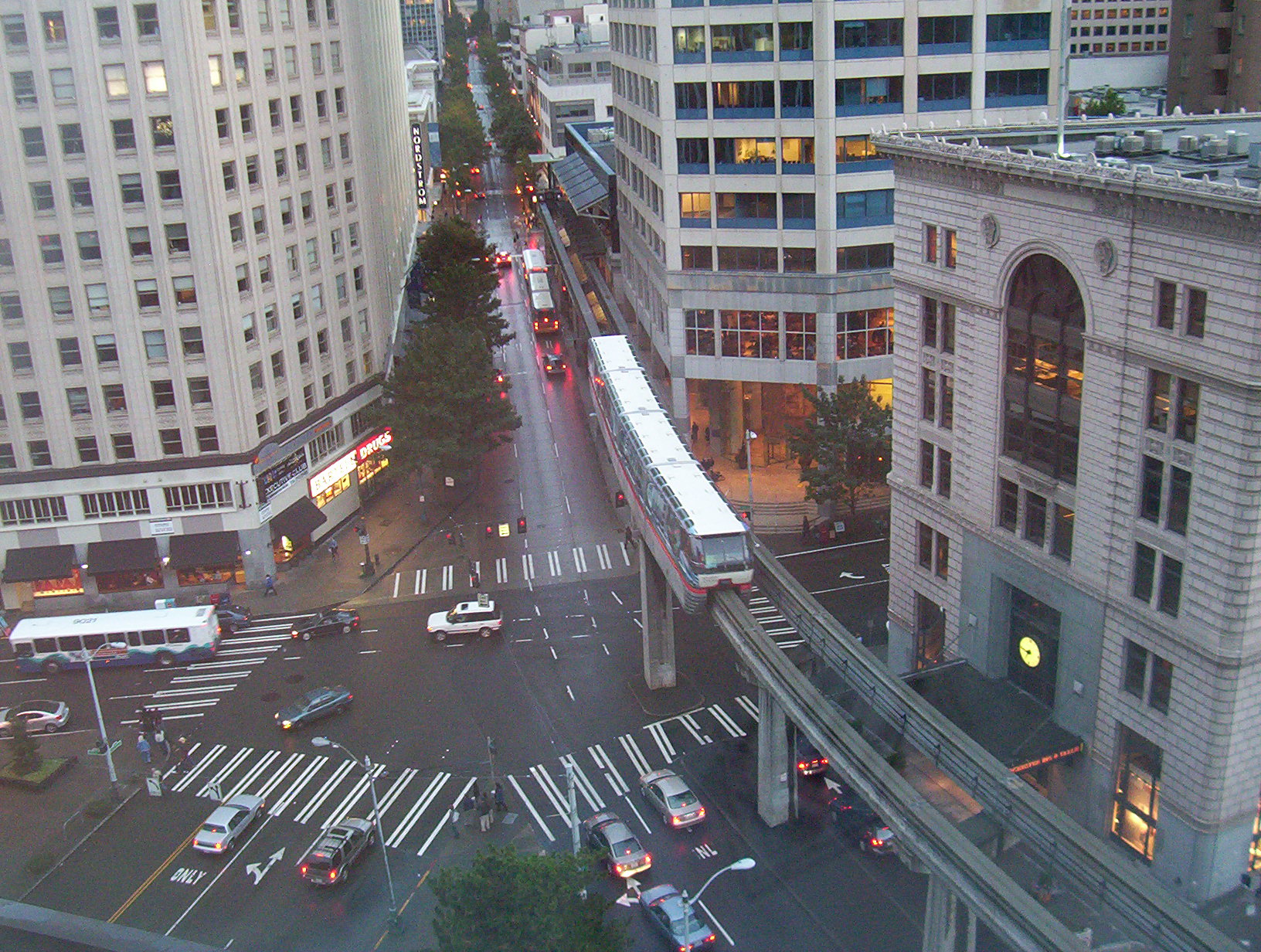
Okay - this isn't quite light rail, but acw's post in the CS&P thread gave me an idea (not completely original, I should admit).

Denver needs to ditch the bus circulator along 16th and invest in an elevated monorail line (similar to Seattle's system) all along 16th with a direct connection to the heart of the Union Station Development - either above ground or underground - I'm thinking right there at 17th and Chestnut. The other end of the line would terminate at exactly the same area, either underground or above ground into a new terminal building.

Yes, this is expensive, but bold, and nothing less than a complete update to the 16th Street Mall. Denver needs to stop pussyfooting and nickel and diming this area. Forget all the fuss over pavers and planters. I'm talking about a state of the art system that will be an attraction of it's own. The system should be a 2 line system that has elevated platforms and overpasses. In certain cases, such as with the Tabor Center and the Pavilions, the platforms should connect directly to the 2nd floor of these buildings. Furthermore, this would be a pay system - not like the free buses, with 2 or 3 zones to establish adjustable fares. The fares however would be fairly cheap, subsidizes with local business taxes.

The greatest benefit of this is that it open up the whole of 16th street to foot traffic. No more dodging the bus. The next greatest benefit is that it creates a highly reliable system that operates on a fixed schedule and gets people from one end of the mall to the other without having to wait for lights. Such an investment will put all competitive retail and office centers (Cherry Creek and DTC) to shame and help promote the downtown area to both businesses and retailers. Let's face it, 16th street retail has been in decline since it was established. Putting such a deep investment into fixed infrastructure would help assure any existing and future businesses that 16th street will always be a mecca for regional shoppers.

Now that the pep talk is over, I'm ready for the clobbering. Lets see some cost estimates, and if all goes well, we can start petitioning the city and the DDP starting... say, the first of the new year?

Here are some pictures from Seattle's line, built in 1962 (holy crap!):


Last edited by The Dirt; Dec 22, 2008 at 4:20 PM.
Reply With Quote
     
     
  #491  
Old Posted Dec 22, 2008, 1:53 PM
bunt_q's Avatar
bunt_q bunt_q is offline
Provincial Bumpkin
 
Join Date: Aug 2002
Location: Denver, CO
Posts: 13,203
Completely unneccessary, and a real blight (certainly on 16th it would be an unnecessary blight. 15th or 18th maybe). It'd be worth the extra money to bury it, otherwise at-grade will work just fine.
Reply With Quote
     
     
  #492  
Old Posted Dec 22, 2008, 4:18 PM
mgmAZCO mgmAZCO is offline
Registered User
 
Join Date: Nov 2008
Posts: 98
I'm not a fan of the monorail idea, for Denver anyway. Seattle doesn't get as much sun as Denver so I think it works well there. Putting this structure up here would block out the sunshine, which is one of our biggest assets. It just seems unnecessary here.

Plus I don't think that it would help retailers at all. When you're riding the mall shuttle now you can see various shops and restaurants. If you want to jump off and pick something up you can...on an elevated track you remove that element. Also, I don't feel like I'm constantly dodging buses on 16th St...I feel like I'm dodging the homeless more than buses, but that's a whole other issue...

Overall 16th Street isn't perfect, but it's fairly lively and well-traveled for an urban core. Dozens of cities out West would love to have what Denver has. It can certainly be improved but I don't think a monorail is the answer.
Reply With Quote
     
     
  #493  
Old Posted Dec 22, 2008, 4:34 PM
The Dirt The Dirt is offline
Registered User
 
Join Date: Dec 2007
Posts: 3,215
I'm confused how it's blight.

I don't buy the weather and sunshine argument. The street grid is set up at a 45 degree angle, so when the sun is in a position to light up the whole corridor, the rail would only cast a shadow on it's own footprint. A monorail track is pretty thin to begin with, so I just don't see it casting a huge shadow on anything. When the sun isn't in the optimal position, you'll be getting just as much shadow from the buildings as the rail. The sun shines like crazy here, but it doesn't mean we don't have cold winters or need for covered and heated stations.

The rail will be utilized mostly for people that want fast connection from one end of the mall to the other. If you want to go down 2-3 blocks, why not do it on foot - many more people may not want to fork up the cash for the monorail and walk. Without the mall buses, you have a ton more mall space to work with - you open up the center median area a lot more.
Reply With Quote
     
     
  #494  
Old Posted Dec 22, 2008, 4:40 PM
Fritzdude Fritzdude is offline
Registered User
 
Join Date: Jun 2008
Posts: 1,014
Quote:
Originally Posted by mgmAZCO View Post
I'm not a fan of the monorail idea, for Denver anyway. Seattle doesn't get as much sun as Denver so I think it works well there. Putting this structure up here would block out the sunshine, which is one of our biggest assets. It just seems unnecessary here.

Plus I don't think that it would help retailers at all. When you're riding the mall shuttle now you can see various shops and restaurants. If you want to jump off and pick something up you can...on an elevated track you remove that element. Also, I don't feel like I'm constantly dodging buses on 16th St...I feel like I'm dodging the homeless more than buses, but that's a whole other issue...

Overall 16th Street isn't perfect, but it's fairly lively and well-traveled for an urban core. Dozens of cities out West would love to have what Denver has. It can certainly be improved but I don't think a monorail is the answer.
I agree; the monorail idea presents more problems than it actually solves - and blocking out the sun would be a big one. Plus, it's a hassle to ascend and descend the platforms. Other than Disneyworld, I think they're ill-equiped to improve pedestrian experiences. They remind me of the Simpson's episode where Springfield was hoodwinked by a sales guy to install a monorail. As for buses, I'm more often looking for a bus rather than avoiding one so I don't really think that's a concern.

What's up with the proposed ciruclator throughout the CBD? Is that actually going to happen? Or, is this more likely wishful thinking? If it doesn happen - what would be the path? And would it be a bus or rail system?
Reply With Quote
     
     
  #495  
Old Posted Dec 22, 2008, 4:49 PM
mgmAZCO mgmAZCO is offline
Registered User
 
Join Date: Nov 2008
Posts: 98
Usually when transportation elements are elevated it's hard for them to blend into the fabric of the neighborhood. Putting up a big, grey, drab concrete structure works in Seattle. I believe a portion of 15th Street in LoDo was elevated for a long time, and it vastly improved that street when it was removed. You've had numerous loft and housing project go up along that street.

Yes a monorail would be much smaller in scale, but I feel like it wouldn't be effective. The mall ride is free, and is used by commuters, shoppers, tourists and the like. Have there been a lot of complaints or calls for it to be removed? It circulates people up and down the street, which is the whole point of the system. I just feel that a monorail would put fewer pedestrians on the street...not more.

C'mon even Springfield realized that a monorail was a bad idea
Reply With Quote
     
     
  #496  
Old Posted Dec 22, 2008, 5:46 PM
wong21fr's Avatar
wong21fr wong21fr is offline
Reluctant Hobbesian
 
Join Date: Feb 2002
Location: Denver
Posts: 13,125
Here's another question, if the monorail is such a success in Seattle why haven't they expanded it? Why did Seattle opt to spend money to upgrade and expand its bus system?

Because the system is more of a gimmick than anything practical. Same as a 16 block system down the Mall would be.

I would rather sink some serious cash into a capital improvement project like the central corridor down Broadway linking Broadway Station with Civic Center Station. You could then extend the line down the 16th St Mall, or 17th St, terminating at Union Station. Part of it would be surface and part sub-surface (I never did like the elevated option).
__________________
"You don't strike, you just go to work everyday and do your job real half-ass. That's the American way!" -Homer Simpson

All of us who are concerned for peace and triumph of reason and justice must be keenly aware how small an influence reason and honest good will exert upon events in the political field. ~Albert Einstein

Reply With Quote
     
     
  #497  
Old Posted Dec 22, 2008, 6:05 PM
SnyderBock's Avatar
SnyderBock SnyderBock is offline
Robotic Construction
 
Join Date: Sep 2006
Posts: 3,833
The reason the 16th Street Mall works, is because it has a FREE mall shuttle and it's easy to jump on and off the frequent Mall Shuttles. It works brilliantly.

What is needed in the future, will be a non-16th Street Mall foot traffic transit connection between Union Station and Civic Center Station, via 17th Street which would be below-grade subway. There would only be two stops between Union Station and Civic Center Station. One around the Tabor Center area on the edge of the CBD and LoDo and another where it crosses under the Central Light Rail Corridor.

This would be the starter line for a Colfax line, a Cherry Creek line and a possible Broadway line. So it may be streetcar, but the reason it woudl be subway between Civic Center Station and Union Station, is because there would be multiple streetcar lines sharing this central line through the CBD. The frequency of service would be disruptive to people and cars at street level, so a grade separation would be required for this 1.5 mile stretch or so.

Any possible Highlands streetcar line, could simply feed in, at-grade to the planned Light Rail Terminal, but from the north, instead of the south.
__________________
Automation Is Still the Future
Reply With Quote
     
     
  #498  
Old Posted Dec 22, 2008, 6:08 PM
Octavian Octavian is offline
Registered User
 
Join Date: Aug 2005
Posts: 1,023
I'm not a fan of the monorail.

Instead of building a monorail, I suggest taking the money a monorail would cost and burying it. At least this way, we won't be tempted to build a monorail.
Reply With Quote
     
     
  #499  
Old Posted Dec 22, 2008, 7:07 PM
bunt_q's Avatar
bunt_q bunt_q is offline
Provincial Bumpkin
 
Join Date: Aug 2002
Location: Denver, CO
Posts: 13,203
I don't think the problem would be blocking the sun per se, but there would definitely be an impact associated with having a massive structure hulking over the mall... I don't care how slender you make it, it's still going to be 20-feet of concrete structure overhead... a visual blight in my opinion. Not to say monorails are always bad, but on the mall, it's a terrible idea...
Reply With Quote
     
     
  #500  
Old Posted Dec 22, 2008, 7:15 PM
enjo13 enjo13 is offline
Registered User
 
Join Date: Jun 2006
Location: Riverfront Park (Denver)
Posts: 1,833
What is the need to bury it or elevate it? 16th street is the PERFECT avenue for a street car. It would improve the streetscape (nothing says urban like the tangle of electric wires running above), provide a sense of movement up and down the mall, and is (above all else) extremely practical.

Subways are rarely the answer. Especially in Denver with our wide streets. A street car helps to narrow those (not particularly pertinent to 16th, but I'm speaking in generalities now).
Reply With Quote
     
     
This discussion thread continues

Use the page links to the lower-right to go to the next page for additional posts
 
 
Reply

Go Back   SkyscraperPage Forum > Regional Sections > United States > Mountain West
Forum Jump


Forum Jump


All times are GMT. The time now is 11:23 PM.


Powered by vBulletin® Version 3.8.7
Copyright ©2000 - 2026, vBulletin Solutions, Inc.