Quote:
Originally Posted by RC14

^
I beg to differ. 65+ percent of the land in Utah is owned by the federal government. 75+ is owned by eather federal or state government or part of an Indian reservation. In fact over half the land in the 13 western states is owned by the federal government and is therefore virtualy unusable. When you consider that most of that land is beron desert, such as the 80% of Nevada land owned by the feds, and that the vast majority of the Utah population is already concentrated along the Wasatch Front. It realy seems nonsencical to me, to say we need to lock up any more land.
Don't get me wrong, I think Utah is beautiful and there are places that need to be protected, such as Arches N.P., and parts of the Wasatch Mts. However, I think fenceing off such large sections of land and denying the public access to it for any useful purpose, is stupid and down right socialist.
|
OK, I respect that opinion, however, the Great Salt Lake ecosystem actually is one of the most valuable and unique on the planet. Literally, if we don't protect that ecosystem and wetland environment, it will reek havoc on the migratory patterns of numerous species of bird, causing population crashes and altered routes of migration at best. Not to mention the fish and amphibian populations, but those are more of a local issue as opposed to the international implications of destroying the migratory bird habitat. Besides, no one is denying the public access to this land, in fact there will be a trail that skirts to preserve so people can walk, bike, or ride horses through it and enjoy the unique ecosystem. Wilderness areas and National Parks are not fenced off to keep people out, they are specifically designed for both preserving the natural environment and for allowing people to recreate in those areas in a natural environmentally conscious way (in my opinion, National Parks are far too developed and should be left in a more natural state).
I guess our difference on the issue probably boils down to what each of us considers a "useful" purpose. I think preserving natural ecosystems is a VERY useful purpose, not only for every other species of life on this planet besides humans, but also FOR humans. I believe that without wild natural places a very real part of the human psyche will wither and erode.
Perhaps that is a romantic, head-in-the-clouds attitude, so here is something more concrete. The west doesn't have enough water to support too much larger of a population. Yes there is water about and it can be pumped great distances, but what happens when we have extended droughts so even the pumping isn't enough? How about if a natural disaster hits and takes out the pumping capacity? People can go quite some time without food (especially considering how fat the average person in the developed world is) but not without clean water. My point is: How smart is it really to modify the environment to such a great degree that life as is hangs in such a delicate balance such that everything has to work just right or else life is no longer sustainable? I think it is much smarter to adapt yourself to your environment, at least to some degree, than to try to change your environment to fit with your own desires.
Ok, I have rambled wayyyy too long.






 Prev
Prev


 ) I think the human population needs to stop growing altogether. 6 billion is plenty humans for this planet. Of course I am looking at the issue as a biologist, not an economist who would want the growth to continue the economic growth, but it is simply not sustainable. Every ecosystem has a carrying capacity and the Planet as a whole is no exception. Planet Earth simply cannot sustain 20 billion people; of course reducing the average humans consumption would allow for a higher population, but there is still a limit. OK, I'll shut up now, and let the conversation get back to urban development.


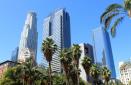


 It is awesome that such beauty is so close to the public. Go 20 minutes up any canyon and you're in a whole other world.


 Linear Mode
