I never was at the meeting, I just have insider sources to get my materials
 Downtown Economic Forum March 26, 2008
DOWNTOWN ECONOMIC FORUM
2007 ECONOMIC BENCHMARK STUDY
SALT LAKE CITY’S CENTRAL BUSINESS DISTRICT
EXECUTIVE SUMMARY
PREPARED BY JIM WOOD,
BUREAU OF ECONOMIC AND BUSINESS RESEARCH,
David Eccles School of Business, University of Utah
Over the next five at least $1.5 billion will be invested in Salt Lake City’s Central Business District. This investment includes the largest project ever developed in the CBD, City Creek Center with 750 residential units in five residential towers and 731,000 square feet of new retail spread over 20 acres.
Although the preparation for City Creek Center has resulted in some economic disruption and dislocation, which has affected downtown employment growth, the CBD economy remains one of the most significant economic and employment centers in the state. In 1990, there were approximately 49,000 employees with in the CBD. This number increased to nearly 61,000 in 2001. Currently within the CBD’s forty block area there are nearly 65,000 jobs paying $2.3 billion in wages. Only four counties and two cities—Salt Lake which includes the CBD and Provo—have more employment and wages than the CBD.
The CBD has 12.7 million square feet of office space comprised of 7.8 million square feet of leasable space and 4.9 million square feet of government, institutional and owner occupied space. Over the past two years demolitions and changes in use have reduced the CBD’s office inventory from 13.3 million square feet in 2001 to 12.7 million square feet. The reduction in the inventory combined with increasing demand for Class A office space has resulted in low vacancy rates for the CBD. The vacancy rate for Class A office space is less than 2 percent.
Despite the phasing out of retail at Crossroads Mall and the ZCMI Center, retail sales in the CBD set a new record in 2006 of $555.1 million, breaking the record set in 1996 of $550 million. In 2001, retails sales totaled $373 million. Restaurant sales, by far the largest category of sales, accounted 49 percent or $271 million of retail sales activity in the CBD. This amount is more than double the $108.0 million in restaurant sales in 2000.
The development of City Creek Center will replace 1.2 million square feet of retail in the Crossroads Mall and ZCMI Center with 731,500 square feet of new retail. At completion of the City Creek Center in 2011 the CBD will have about 3 million square feet of retail space.
The CBD’s eight cultural and entertainment venues; Abravanel Hall, Capitol Theater, Rose Wagner Center, Clark Planetarium, EnergySolutions Arena, LDS Church Family History Library, Museum of Church History, Salt Lake Arts Center, and Discovery Gateway had over 3 million in attendance in 2007.
The CBD’s hotel occupancy rate is 75 percent, the highest since 1997. In 2006, conventions headquartered at the Salt Palace accounted for 302,000 room nights. The spending of the convention attendees at these conventions totaled $108 million.
In 2006, retail sales and lodging in the CBD generated $42.6 million in taxes for the state, Salt Lake County and Salt Lake City.
The CBD has a housing inventory of 3,700 units. These units provide housing for 3,600 households and 7,500 people. When the CBD is combined with the periphery, the housing inventory expands to 15,200 units and the population to 28,000. Rental units account for 77 percent of the housing inventory however in the past two years the share of owner occupied units has increased with the development of a number of condominium projects.
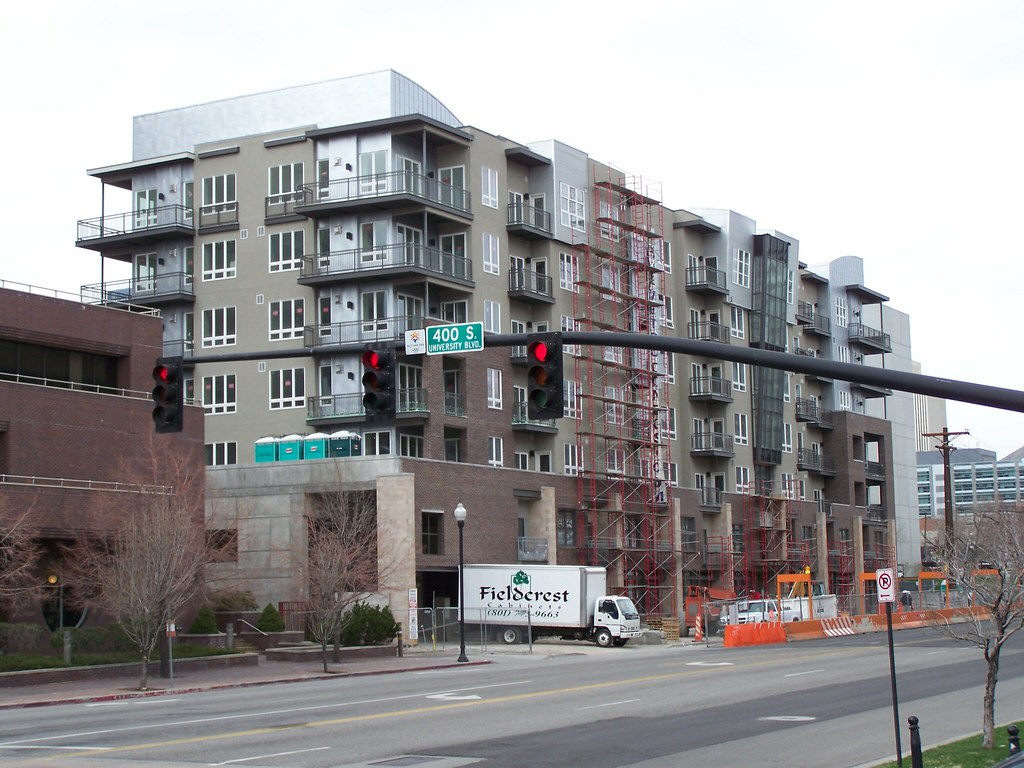
In 2008, approximately 900 new or renovated condominiums units will be added to the housing inventory of the CBD/Periphery. The new units will increase the inventory of condominiums units From 2,000 to 2,900, a 45 percent increase. New condominiums units are typically selling for $300 to $350/square foot while older or renovated units sell for $225 to $250/square foot. Demand for downtown housing is related to the CBD’s proximity to a large employment base and the availability and diversity of commercial, cultural and retail amenities.






 Prev
Prev







 Linear Mode
