HomeDiagramsDatabaseMapsForum About
     

Go Back   SkyscraperPage Forum > Regional Sections > Canada > Manitoba & Saskatchewan


Reply

 
Thread Tools Display Modes
     
     
  #5781  
Old Posted Sep 9, 2026, 10:32 PM
Wpg_Guy's Avatar
Wpg_Guy Wpg_Guy is online now
Moderator
 
Join Date: Aug 2002
Location: Winnipeg, Manitoba
Posts: 8,478
1986 Canada! And Our Polish Canadian Relatives

Some great footage of 1986 Winnipeg.

• Video Link
__________________
Winnipeg Act II - April 2024

Winnipeg Developments

In The Future Every Building Will Be World-Famous For Fifteen Minutes.
Reply With Quote
     
     
  #5782  
Old Posted Sep 14, 2026, 7:54 AM
Wpg_Guy's Avatar
Wpg_Guy Wpg_Guy is online now
Moderator
 
Join Date: Aug 2002
Location: Winnipeg, Manitoba
Posts: 8,478
World's Deadliest Predator Up Close (Private Tour)

__________________
Winnipeg Act II - April 2024

Winnipeg Developments

In The Future Every Building Will Be World-Famous For Fifteen Minutes.
Reply With Quote
     
     
  #5783  
Old Posted Sep 14, 2026, 8:51 PM
Wpg_Guy's Avatar
Wpg_Guy Wpg_Guy is online now
Moderator
 
Join Date: Aug 2002
Location: Winnipeg, Manitoba
Posts: 8,478
The Arena Winnipeg Tore Down to Forget: Winnipeg Arena

For nearly 50 years, Winnipeg Arena was one of the emotional centres of the city. Opened in 1955, the building quickly became far more than a hockey rink. It hosted major sporting events, concerts, community gatherings, and generations of fans who came to see the Winnipeg Warriors and, later, the Winnipeg Jets. By the time the Jets joined the National Hockey League in 1979, the arena had already become part of Winnipeg’s identity. (heritagewinnipeg.com)

The building was never considered glamorous. It was cramped, loud, aging, and increasingly outdated compared with newer arenas across North America. But that was also part of its character. The seats were close to the ice, the building trapped noise, and during playoff games the atmosphere could become overwhelming. In 1987, Winnipeg fans created the famous Whiteout, filling the arena in white and turning Jets playoff games into one of hockey’s most recognizable traditions. (heritagewinnipeg.com)

But the arena’s greatest years were also tied to one of Winnipeg’s most painful sports stories. Financial problems, rising player salaries, and the economics of operating a small-market Canadian NHL team eventually pushed the original Jets toward relocation. In 1996, fans packed Winnipeg Arena for the team’s final playoff games before the franchise moved to Phoenix. The building that had once symbolized the city’s hockey pride suddenly became a reminder of what Winnipeg had lost. (winnipegfreepress.com)

The arena continued operating for several more years, but by the early 2000s its future was effectively decided. A new downtown arena was built, and Winnipeg Arena closed in 2004. Two years later, demolition crews brought down the old building. Even the demolition became memorable: the initial implosion failed to completely collapse the structure, forcing crews to finish the job with heavy machinery. (heritagewinnipeg.com)

For some residents, tearing down the arena was simply part of moving forward. For others, it felt like erasing one of the last physical reminders of the original Jets, the Whiteout, and an era when Winnipeg hockey still felt intimate, local, and inseparable from the building itself.

This documentary explores the rise and fall of Winnipeg Arena — from its opening in 1955 and the arrival of the Jets to the Whiteout, the heartbreak of 1996, the construction of a new arena, and the final demolition of a building that had defined generations of Winnipeg sports fans.

It is the story of a place that was never beautiful, but was deeply loved — and why, when Winnipeg finally tore it down, part of the city’s old hockey identity disappeared with it.
• Video Link

__________________
Winnipeg Act II - April 2024

Winnipeg Developments

In The Future Every Building Will Be World-Famous For Fifteen Minutes.
Reply With Quote
     
     
  #5784  
Old Posted Sep 16, 2026, 2:16 AM
Wpg_Guy's Avatar
Wpg_Guy Wpg_Guy is online now
Moderator
 
Join Date: Aug 2002
Location: Winnipeg, Manitoba
Posts: 8,478
Winnipeg residents feeling threatened by encampment

__________________
Winnipeg Act II - April 2024

Winnipeg Developments

In The Future Every Building Will Be World-Famous For Fifteen Minutes.
Reply With Quote
     
     
  #5785  
Old Posted Sep 16, 2026, 8:22 PM
Wpg_Guy's Avatar
Wpg_Guy Wpg_Guy is online now
Moderator
 
Join Date: Aug 2002
Location: Winnipeg, Manitoba
Posts: 8,478
Fear of crime keeping Winnipeggers from going out, poll suggests

__________________
Winnipeg Act II - April 2024

Winnipeg Developments

In The Future Every Building Will Be World-Famous For Fifteen Minutes.
Reply With Quote
     
     
  #5786  
Old Posted Sep 21, 2026, 9:30 PM
Wpg_Guy's Avatar
Wpg_Guy Wpg_Guy is online now
Moderator
 
Join Date: Aug 2002
Location: Winnipeg, Manitoba
Posts: 8,478
Growing apathy in Winnipeg toward homelessness, open drug use: survey

__________________
Winnipeg Act II - April 2024

Winnipeg Developments

In The Future Every Building Will Be World-Famous For Fifteen Minutes.
Reply With Quote
     
     
  #5787  
Old Posted Sep 22, 2026, 12:03 AM
Wpg_Guy's Avatar
Wpg_Guy Wpg_Guy is online now
Moderator
 
Join Date: Aug 2002
Location: Winnipeg, Manitoba
Posts: 8,478
Quote:
How to boost the local housing supply
By: Lindsey Ward
Saturday, Sep. 19, 2026


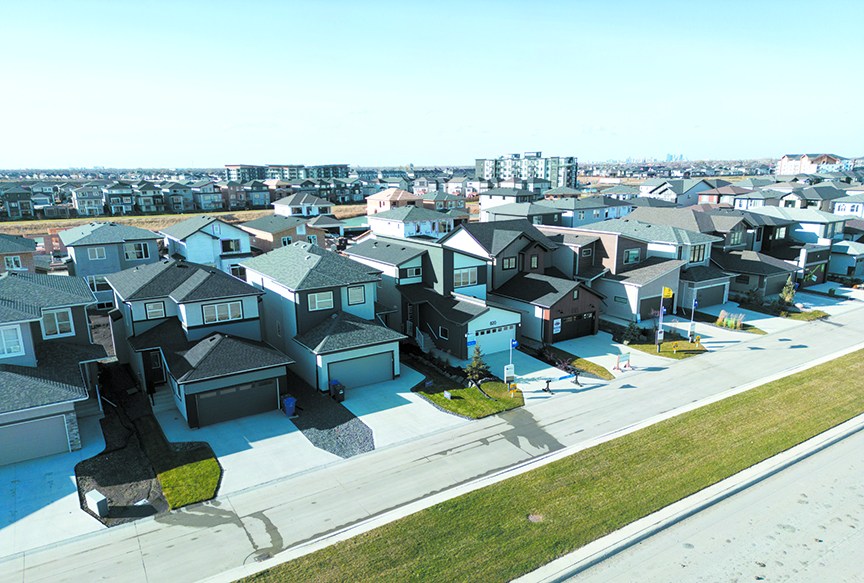
Photos courtesy of the Manitoba Home Builders' Association

Finding a place to call home is a heartbreaking struggle for many Canadians as the housing crisis lingers. Although Manitoba has a reputation as one of the more affordable markets in the country — especially compared to Ontario or British Columbia — the province is not immune to the barriers both buyers and builders face.

Costly materials, supply chain slowdowns and high labour costs are, of course, as prevalent here as they are in most other jurisdictions across Canada and the globe itself. But Manitoba has its own set of obstacles.

“We’ve been faring pretty well, especially when you look at what’s been happening in other markets,” says Lanny McInnes, president and CEO of the Manitoba Home Builders’ Association, a non-profit trade association that educates its members, the public and all levels of government about the province’s housing industry.

“We have our own challenges as well.”

Uniquely Manitoban hurdles include a need for more growth enabling infrastructures, bureaucratic roadblocks such as zoning restrictions and dated permit requirements, and NIMBYism — an acronym, Not in My Back Yard, that refers to residents who are opposed to development in their neighbourhoods.

Thankfully, McInnes does have some suggestions for resolving these issues — and has hope that many solutions are already in the works.

The City of Brandon, for example, invested $50.3 million in water and wastewater infrastructure in its 2026 budget to pave the way for more housing. In Winnipeg, McInnes says the MHBA supports the need to have all three levels of government contribute and commit to completing a much-needed upgrade of the North End Wastewater Plant.

“That has to be a key infrastructure investment allowing both our population and our economy to grow.”

In terms of addressing bureaucratic barriers, McInnes says positive work has been taking place for the last few years that will pay dividends in terms of making it easier to build housing.

For one, the Housing Accelerator Fund, a $4.4-billion Government of Canada initiative, kick-started a lot of the work that municipalities were already looking at. Winnipeg has also removed unnecessary requirements for development permits and launched a comprehensive rewrite of its zoning bylaw that will modernize the bylaw for stability and clarity as to what can be built and where.

“Within the city, that’s going to be very helpful as we move forward and address some of the bureaucratic barriers and hoops that builders and developers go through in order to build what the market is needing,” McInnes says.

Even when the seemingly most significant requirements for new home builds are met, there’s always the chance the impending developments will be met with criticism from neighbouring residents. That’s why MHBA members ensure transparent conversations are had even before their initial applications go in, McInnes says.

“I think it’s understandable that change can be something that people are apprehensive about and unsure of. Our members, especially when it comes to infill development, go above and beyond to talk to the neighbouring residents to inform them of what’s being proposed and discuss their concerns. Sometimes it’s just a fear of change and an apprehension of what possibly could happen,” he says.

“We understand that, and you will never satisfy everyone’s concerns, but having that communication with the residents of that neighbourhood is a key piece and our leading members who do work in that area make sure it’s a component of the work that they do even before an application goes in on a project.”

Even as Manitoba’s housing situation continues to evolve, there are many areas of growth to celebrate. McInnes says there’s been an increase in rental properties being built — including government-subsidized units — along with larger scale multi-family units. Meanwhile, single-family detached construction continues to be stable and increasing at a consistent pace.

Greenfield development communities tend to be the most visible of the bunch, as they pop up from scratch (and seemingly out of nowhere), but McInnes points out the number of housing units built in Winnipeg’s established neighbourhoods is higher than the number of units built in new areas. The City of Winnipeg has a target that 50 per cent of new housing is to be built within established parts of the city and continues to exceed that target every year.

“Winnipeg is growing up just as much — if not faster — than it’s growing out.”


Photos courtesy of the Manitoba Home Builders' Association
Winnipeg Free Press
__________________
Winnipeg Act II - April 2024

Winnipeg Developments

In The Future Every Building Will Be World-Famous For Fifteen Minutes.
Reply With Quote
     
     
  #5788  
Old Posted Sep 23, 2026, 3:10 AM
Wpg_Guy's Avatar
Wpg_Guy Wpg_Guy is online now
Moderator
 
Join Date: Aug 2002
Location: Winnipeg, Manitoba
Posts: 8,478
Quote:
‘Opportunity for us to grow’
RRC Polytech among 10 civilian schools selected by Ottawa to train RCAF aircraft technicians

Gabrielle Piché
Tuesday, Sep. 22, 2026


MIKE DEAL / FREE PRESS

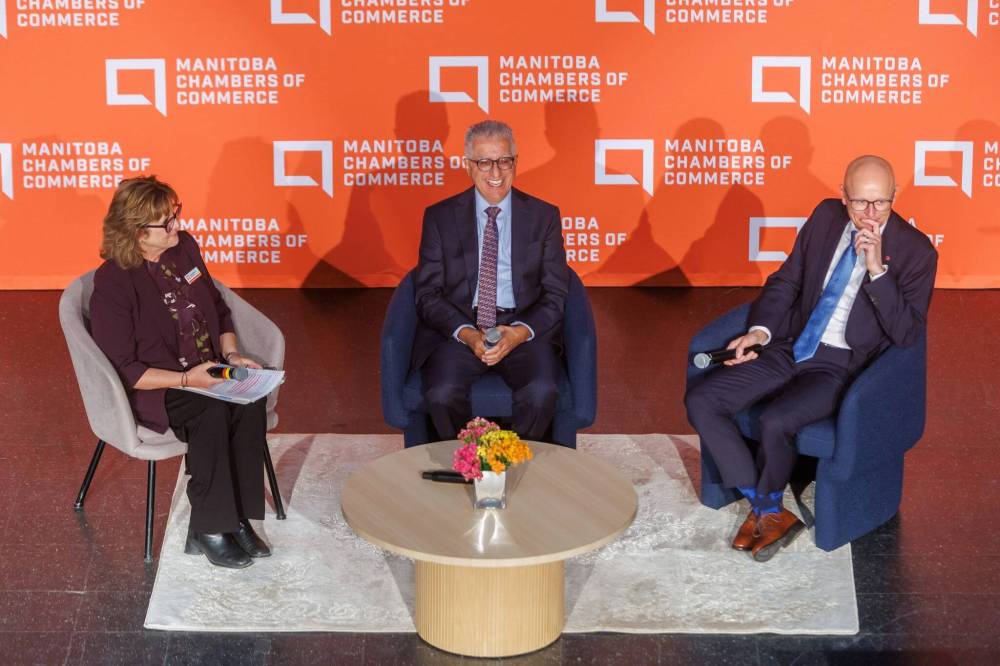
Beverlie Stuart (from left), president & CEO of Manitoba Aerospace, moderates a discussion with University of Manitoba president Michael Benarroch and RRC Polytech president Fred Meier at a Manitoba Chambers of Commerce event Tuesday morning in Winnipeg.


Red River College Polytechnic will become one of the first civilian schools to train Royal Canadian Air Force aircraft technicians.

The first cohort is expected to begin aircraft maintenance engineer training in fall 2027. Students will attend the post-secondary’s Stevenson campus in Winnipeg.

“There’s a lot of opportunity for us to grow,” Fred Meier, RRC Polytech’s president, said as he and University of Manitoba president Michael Benarroch addressed business executives at a Manitoba Chambers of Commerce event Tuesday morning in Winnipeg.

They highlighted the local post-secondaries’ increasing work with the Canadian Armed Forces and broader defence sector.

The Royal Canadian Air Force has inked deals with 10 civilian schools to outsource training of its aircraft technicians. It historically has conducted its own training.

However, there’s been a training backlog, an RCAF video posted to social media notes. Students attending civilian colleges will undergo programming designed by the military and will get the same level of training as they would on base, the video explains.

It comes as the Air Force begins a 20-year-long modernization project.

RRC Polytech bid to be a partner training institution. The number of RCAF members to be trained at the polytechnic wasn’t available by end of day Tuesday.

Planning and implementation is being finalized, Emily Doer, RRC Polytech’s acting director of public relations, wrote in a statement.

Schools in British Columbia and Nova Scotia, among others, are also conducting training.

There seems to be military demand for skilled trades, Meier told the Free Press after Tuesday’s event.

“We always think of defence skills … as being military,” Meier said. “Really, they’ve got a lot of facilities to take care of.”

However, many of RRC Polytech’s skilled trades programs have waitlists.

The Manitoba polytechnic has lobbied Ottawa for “capacity building” funding. The federal government announced up to $6 billion for more skilled trades workers, over five years, in its 2026 spring economic update.

The feds later promised $2 billion for expanding training and apprenticeship programs.

Funding distribution to the provinces and their respective schools is being worked out, Meier said. He’s expecting an increase in funded seats at RRC Polytech in 2027.

Already, the post-secondary has added 48 seats in its pre-employment electrical program and a new section to its automotive service technician certificate program.

“I think that we’ll be playing a greater role with the Canadian Armed Forces in training capacity and inviting more members onto our campuses,” Meier said when asked where he sees RRC Polytech in two years’ time.

Benarroch expects years-long change at the University of Manitoba resulting from Canada’s current defence push.

Executives are talking to the Canadian Armed Forces about how the university can contribute to military research, he said.

“Securing the Arctic is going to be a huge responsibility for Canada, and we have a lot of knowledge in that area,” Benarroch said. “We’ve presented possibilities, and we’ll see how this rolls out.”

He called discussions “very early stages.”

The university oversees the Churchill Marine Observatory and employs researchers who study northern communications and the North American Aerospace Defense Command (NORAD). It could conduct work for the military in virology and biosciences, Benarroch said.

In August, the post-secondary announced five new research program heads. Professors specializing in Arctic navigation and Canadian defence, mining, bioengineering, global public health and climate resilience in the Arctic have and are arriving in Manitoba over the coming year.

The professionals come through the federal government’s Eddie Goldenberg Research Chair program. This, plus funding for more academics, graduate students and research, leaves the University of Manitoba with $79 million in federal funding over the next 12 years, Benarroch said.

An Indigenous water management chair and a new aerospace professor are incoming.

“All of these build on needs here in the province of Manitoba, and Canada as a whole,” Benarroch said. “We see kind of a realignment into the areas where we begin to do more research.”

Manitoba Advanced Education Minister Renée Cable called the emphasis on defence “fantastic.”

“We have world-class institutions here that have been doing research and applied research for generations,” she said. “To be able to transition to focus it on a real need is great.”

Manitoba businesses — including in aerospace and defence — have an “opportunity” to better collaborate with post-secondaries on research and development, said Elisabeth Saftiuk, acting president of the Manitoba chambers.

“The strength of Manitoba’s economy and the strength of Manitoba’s post-secondary system are deeply connected.”
Winnipeg Free Press
__________________
Winnipeg Act II - April 2024

Winnipeg Developments

In The Future Every Building Will Be World-Famous For Fifteen Minutes.
Reply With Quote
     
     
  #5789  
Old Posted Sep 23, 2026, 4:30 AM
Wpg_Guy's Avatar
Wpg_Guy Wpg_Guy is online now
Moderator
 
Join Date: Aug 2002
Location: Winnipeg, Manitoba
Posts: 8,478
How can Winnipeg end homelessness for good?

__________________
Winnipeg Act II - April 2024

Winnipeg Developments

In The Future Every Building Will Be World-Famous For Fifteen Minutes.
Reply With Quote
     
     
  #5790  
Old Posted Sep 24, 2026, 2:52 AM
Wpg_Guy's Avatar
Wpg_Guy Wpg_Guy is online now
Moderator
 
Join Date: Aug 2002
Location: Winnipeg, Manitoba
Posts: 8,478
Lack of compassion or loss of faith? Some Winnipeggers becoming apathetic to homeless

__________________
Winnipeg Act II - April 2024

Winnipeg Developments

In The Future Every Building Will Be World-Famous For Fifteen Minutes.
Reply With Quote
     
     
  #5791  
Old Posted Sep 24, 2026, 11:27 AM
Wpg_Guy's Avatar
Wpg_Guy Wpg_Guy is online now
Moderator
 
Join Date: Aug 2002
Location: Winnipeg, Manitoba
Posts: 8,478
Inside Winnipeg's homelessness crisis

__________________
Winnipeg Act II - April 2024

Winnipeg Developments

In The Future Every Building Will Be World-Famous For Fifteen Minutes.
Reply With Quote
     
     
  #5792  
Old Posted Sep 25, 2026, 4:11 AM
Wpg_Guy's Avatar
Wpg_Guy Wpg_Guy is online now
Moderator
 
Join Date: Aug 2002
Location: Winnipeg, Manitoba
Posts: 8,478
Quote:
Toxic street drugs 'wreaking havoc' on people who use them, challenging doctors
Animal tranquilizer showing up in Winnipeg supply is making withdrawal more complicated, physician says


Alana Cole · CBC News · Posted: Sep 24, 2026

A recent drug alert posted online by a Winnipeg public health team shows how the street supply is increasingly unpredictable as substances have become more powerful and dangerous.

Testing of a substance believed to be linked to a fatal overdose found fentanyl, para-fluorofentanyl — a synthetic fentanyl-like opioid with an unknown potency — and the strong animal tranquilizer medetomidine.

It’s only one sample. But it paints a picture of a toxic drug supply addiction medicine specialist Dr. Paxton Bach said has grown more potent and volatile, and is "wreaking havoc" on the lives of those using substances.

While the repercussions are evident in the daily overdose numbers, the unpredictable street supply is also making it more difficult when people want to stop using, he said.

"For us on the treatment end, it really feels like we're playing this perverse game of whack-a-mole, where every week or month or six months I'm learning about a substance that I've never heard of before," said Bach, co-medical director of the British Columbia Centre on Substance Use.

Numbers from the federal government show more than 50,000 apparent opioid toxicity deaths were reported from January 2016 to December 2025.

Preliminary numbers from Manitoba's Office of the Chief Medical Examiner show there were 141 suspected substance-related deaths in the first four months of this year.

Bach recalls seeing a shift in the illicit drug supply about 10 years ago, with the emergence of fentanyl and other strong opioids.

"We started to see that potency go up. And that really challenged us, 'cause it was unlike anything we'd ever seen before," he said.

They started seeing other drugs such as benzodiazepines showing up in the street supply about five years ago, as well as animal tranquilizers such as xylazine and medetomidine, Bach said.

He said it's resulted in more complicated withdrawal from opioids, which can lead to seizures, ICU admissions or death.

"It has challenged us in stabilizing people on medication in a way that we've never had to face before," Bach said, adding once doctors develop evidence or consensus on how to treat a certain drug, things change.

"If we can't stabilize you on a medication appropriately, like we should be able to, like we used to be able to, then how are we supposed to help somebody engage in other treatment activities, and hopefully put them on a lifesaving pathway?"

Bach said the medications and approaches they have can still be effective, but the road is more difficult.

The mix of drugs out there means both he and a new patient have to acknowledge they don't know for certain what substance the person has been using, he said.

"And neither they nor I really know what to expect in terms of their treatment trajectory, and that's a scary place to begin," Bach said.

Dr. Erin Knight, a Winnipeg addiction physician and medical director of addiction services at Health Sciences Centre, is seeing that same unknown play out with patients.

"It's not uncommon, for example, for me to be working with somebody who is coming in saying they're using down or fentanyl, and they're testing positive also for methamphetamine and benzodiazepines, and saying that they're not intentionally using those substances," she said.

Like Bach, Knight said that's making it more challenging to treat people going through withdrawal.

One example she points to is the presence of medetomidine in the opiate supply in Winnipeg and elsewhere in Canada.

"What that means for an individual, if they've been using an opiate with medetomidine mixed into it, is that even if we treat them with medication for their opiate withdrawal, like Suboxone or Sublocade or methadone, it doesn't necessarily get rid of the aspect of the medetomidine withdrawal," Knight said.

She said there's always been some unpredictability in the drug supply, but it's more uncertain now than 10 to 20 years ago.

The potency of drugs has also changed, Knight said.

"For example, the potency of methamphetamine today is much different than the potency of what it was a decade or more ago," she said.

"So, that can mean that the severity of the substance use disorder and the severity of the sort of disordered behaviour that goes with that … is just more intense than it was when the drug supply was different."

Knight said the toxicity of drugs is increasing overdose risks, but even when someone survives, a lack of oxygen can cause brain injury.

"That impacts their ability to make decisions in the same way and be able to function day to day in the same way as they were able to previously," she said.

Knight also works as medical lead for the province's rapid access to addictions medicine (RAAM) clinics. She couldn't say whether they're seeing a change in the number of people trying to access help — particularly in Winnipeg, where the clinics are busiest — because there are still days they aren't able to see everyone looking for care that day.

Knight said they are able to see people "within a day or two" in most cases, and efforts are still made to provide some harm reduction counselling and peer support.

"We also just have to look at [how] everybody presenting for care is actually probably an underestimate of everybody who could benefit from care," she said.

Knight said since she's been practising, the biggest shift in drug use in Manitoba came during the COVID-19 pandemic, where a lot of people switched from methamphetamine to fentanyl use. While there was some return to methamphetamines, she said, many ended up using both types of substances.

There have been efforts to scale up the availability of opioid agonist therapy to support those who want to stop using drugs, Knight said. That treatment option can also be started by some physicians in some Winnipeg emergency departments as part of a pilot project, she explained.

"There's a lot of sort of logistical barriers around how to integrate that and how to make sure that people are connected to service. So, it's something that we're working on," Knight said.

Regulation of substances is another way to address a toxic drug supply, she said.

"I'll just highlight something that we often forget," Knight said. "We actually have a mechanism for regulating drugs. We regulate nicotine, we regulate cannabis, we regulate alcohol."

A similar approach could be applied to all substances in an effort "to provide protection and standardization of what people are purchasing and getting access to," the doctor said.

Bach said 10 years into a public health emergency, he's still not seeing a response that reflects the level of harm occurring.

He said the response isn't going to look the same in every community impacted by toxic drugs, though there are principles that need to be part of the conversation.

That includes addressing the reasons people are using substances, such as trauma, homelessness, chronic pain or lack of access to primary care, Bach said.

There also needs to be timely access to evidence-based treatment, he said.
CBC Manitoba
__________________
Winnipeg Act II - April 2024

Winnipeg Developments

In The Future Every Building Will Be World-Famous For Fifteen Minutes.
Reply With Quote
     
     
End
 
 
Reply

Go Back   SkyscraperPage Forum > Regional Sections > Canada > Manitoba & Saskatchewan
Forum Jump


Forum Jump


All times are GMT. The time now is 4:49 AM.


Powered by vBulletin® Version 3.8.7
Copyright ©2000 - 2026, vBulletin Solutions, Inc.