HomeDiagramsDatabaseMapsForum About
     

Go Back   SkyscraperPage Forum > Regional Sections > Canada > Manitoba & Saskatchewan


Reply

 
Thread Tools Display Modes
     
     
  #381  
Old Posted Sep 10, 2026, 9:40 PM
BorealLynx BorealLynx is offline
Registered User
 
Join Date: Aug 2025
Location: Kenora, ON
Posts: 62
From pipelines, to railways and AI: Ottawa pitches 167 projects ahead of Carney's investment summit - CBC News Article

https://www.cbc.ca/news/business/investment-summit-prospectus-pitches-9.7339224

Sounds like Carney is pushing hard for the Port of Churchill expansion in this investment summit. I guess it remains to be seen just how interested the private sector will be.
__________________
NOW is the time for a National Highways strategy for Canada.
One Trans-Canada Highway, federally funded, 4-lane "Interstate" quality, from coast to coast.
Reply With Quote
     
     
  #382  
Old Posted Sep 10, 2026, 9:52 PM
WayneShuster WayneShuster is offline
Registered User
 
Join Date: Apr 2026
Posts: 133
'A float glass manufacturing facility in Manitoba'.

A, what is that, and b, this is the first I've heard this mentioned before. Are any more details available for this proposal?
Reply With Quote
     
     
  #383  
Old Posted Sep 10, 2026, 10:48 PM
Wpg_Guy's Avatar
Wpg_Guy Wpg_Guy is offline
Moderator
 
Join Date: Aug 2002
Location: Winnipeg, Manitoba
Posts: 8,483
Quote:
Originally Posted by BorealLynx View Post
From pipelines, to railways and AI: Ottawa pitches 167 projects ahead of Carney's investment summit - CBC News Article

https://www.cbc.ca/news/business/investment-summit-prospectus-pitches-9.7339224

Sounds like Carney is pushing hard for the Port of Churchill expansion in this investment summit. I guess it remains to be seen just how interested the private sector will be.
Quote:
Some of the priciest projects on the list include a $57-billion US expansion of the Port of Churchill; a $44-billion investment in Nova Scotia's Wind West offshore wind project, led by the province; the proposed $35-billion West Coast oil pipeline, which would carry oil from Alberta to B.C.'s coast; and the $28.5-billion Ksi Lisims LNG terminal project.

Other projects include a float glass manufacturing facility in Manitoba, expanded manufacturing capacity for night-vision technology used in defence and satellite technology for Earth observation, along with the long list of infrastructure projects.
A $57-billion (USD) expansion of the Port of Churchill seem impossible to generate any sort of return on that investment, i just cant imagine the economics on this ever working.

Regarding the float glass manufacturing facility, my guess is that would be integral to the development of silica sand mining in the province. Float glass manufacturing is the industrial process for making high-quality flat glass and high purity silica sand is the dominant raw material.
__________________
Winnipeg Act II - April 2024

Winnipeg Developments

In The Future Every Building Will Be World-Famous For Fifteen Minutes.
Reply With Quote
     
     
  #384  
Old Posted Sep 10, 2026, 11:47 PM
bomberjet bomberjet is offline
Registered User
 
Join Date: Nov 2012
Location: Winnipeg
Posts: 16,359
Offshore LNG facilities are expensive.
Reply With Quote
     
     
  #385  
Old Posted Sep 11, 2026, 1:23 AM
pspeid's Avatar
pspeid pspeid is online now
Registered User
 
Join Date: Aug 2018
Posts: 2,646
Quote:
Originally Posted by Wpg_Guy View Post
A $57-billion (USD) expansion of the Port of Churchill seem impossible to generate any sort of return on that investment, i just cant imagine the economics on this ever working.
Yes i agree it's definitely a long shot, and probably unlikely.

However, I wonder if some investment groups may be looking at more than just financial return. A port facility would seem to benefit the countries the port services as well as the host. If the investors represent countries that would benefit from, say, a Churchill-Antwerp link, there might be a little more interest?

We'll just have to wait and see.
__________________
"Opinion is really the lowest form of intelligence"-Bill Bullard

"Naysayers are always predicting the present"-Anon.

"Rudeness is the weak man's imitation of strength"-Eric Hoffer
Reply With Quote
     
     
  #386  
Old Posted Sep 12, 2026, 6:07 AM
Wpg_Guy's Avatar
Wpg_Guy Wpg_Guy is offline
Moderator
 
Join Date: Aug 2002
Location: Winnipeg, Manitoba
Posts: 8,483
The New Yorker

“Nuisance Bear,” a documentary by Jack Weisman and Gabriela Osio Vanden, follows the chaotic migration of a polar bear as it clashes with the residents of a Canadian town.

• Video Link
__________________
Winnipeg Act II - April 2024

Winnipeg Developments

In The Future Every Building Will Be World-Famous For Fifteen Minutes.
Reply With Quote
     
     
  #387  
Old Posted Sep 13, 2026, 12:59 AM
Wpg_Guy's Avatar
Wpg_Guy Wpg_Guy is offline
Moderator
 
Join Date: Aug 2002
Location: Winnipeg, Manitoba
Posts: 8,483
Quote:
The port of Churchill — but done right
By: Editorial
Saturday, Sep. 12, 2026


SUPPLIED

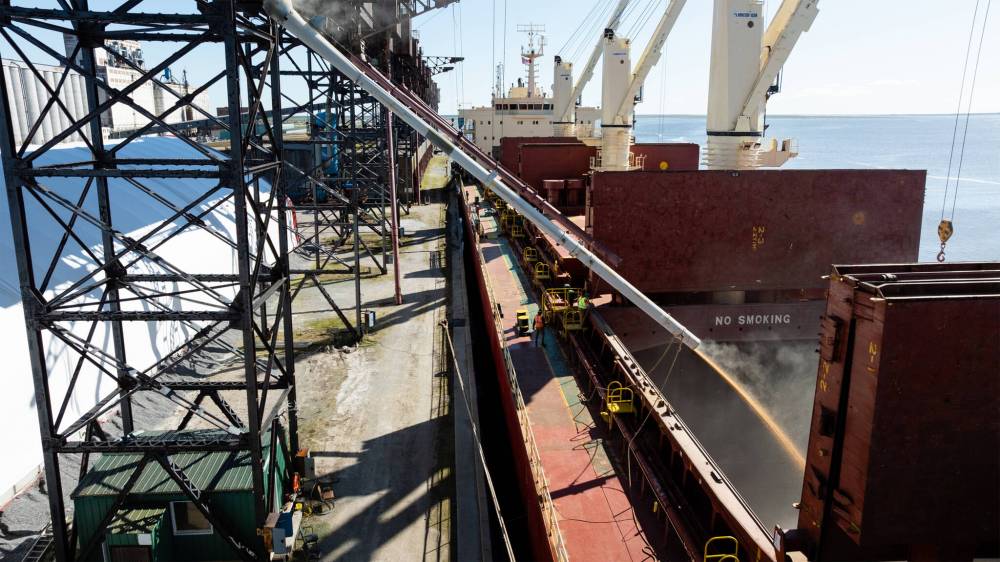
Canadian durum wheat, supplied by Saskatchewan- based AGT Foods, is loaded at the Port of Churchill to be shipped to customers in Europe.


The seagoing grain carrier wasn’t christened with a champagne bottle. There was no confetti or streamers. Nevertheless, the Aug. 31 event marking the first shipment of grain to be loaded at the Port of Churchill since 2020 was celebrated like the launch of a brand new vessel.

The presence of the federal minister of northern and arctic affairs, provincial cabinet ministers and leaders and elders from several northern First Nations signalled that the fast-tracked process of refurbishing and buffing up Manitoba’s deep-water seaport gem is gaining momentum.

For OneNorth, the partnership of 29 First Nations and 12 northern communities which owns the Port of Churchill and the Hudson Bay Railway (both operated by the Arctic Gateway Group) the event heralded a new beginning. It’s been eight years since OneNorth purchased the port and railroad, and six years since grain was moved by rail through Manitoba and then by ship to European markets. Two more grain shipments, plus shipments of potash and critical minerals, will continue through the fall.

When Prime Minister Mark Carney solicited the premiers to suggest “nation-building” projects following his election in 2025, Premier Wab Kinew pitched a Manitoba trade corridor that would move wheat, critical minerals, potash and energy (oil or liquid natural gas) through the Port of Churchill.

The province also committed an additional $51 million for capital improvements to the Hudson Bay rail line and construction of a new critical minerals storage facility at the port — bringing total federal and provincial investment in Churchill over the past five years to $262.5 million.

While Port of Churchill Plus is not yet on the approved list of expedited national projects, it’s moving in that direction. In April, Carney and Kinew signed off on an agreement to streamline the regulatory process, and Kinew said Carney presented an “aggressive” timeline for getting LNG moving through a corridor that could include a pipeline.

Just last month, the province heralded the preliminary findings of new studies which suggest Churchill’s shipping season could be extended from the present four-month window to seven months or longer, owing to climate change, icebreakers and ships with strengthened hulls.

Next on the list is talking up Churchill Plus at the Canada Investment Summit in Toronto on Sept. 14 and 15. That event will bring together 250 global investors, including banks and sovereign wealth funds, at a showcase of Canada’s investment-ready sectors and projects.

Such chatter has left the people in Manitoba and Churchill cautiously optimistic.

The optimism is naturally spurred by the prospect of industrial activity, related jobs and growth. The caution is in acknowledging the environmental disruption such activity could bring.

The polar bear and beluga whale ecosystems which make Churchill a nearly $100-million tourist destination must be protected, but environmental impact assessments of the Churchill Plus project have not begun. While the province and the feds are busy talking up the possibilities of the port, they are simultaneously studying the creation of a national marine conservation area in western Hudson Bay, which could effectively protect about a quarter of the world’s beluga whale habitat.

“We want to protect the waters in the area as we pursue commercial development,” Kinew said.

He and the PM should both take a breath and realize that achieving both goals may take some time. In his first 16 months in office, Carney has been a man on a hurried mission to buffer and diversify the Canadian economy — to get things done. Kinew has stood by the prime minister, bullishly at times.

When it comes to Churchill, both men would be wise to not just get things done, but also to get them right.
Winnipeg Free Press
__________________
Winnipeg Act II - April 2024

Winnipeg Developments

In The Future Every Building Will Be World-Famous For Fifteen Minutes.
Reply With Quote
     
     
  #388  
Old Posted Sep 13, 2026, 1:39 PM
pspeid's Avatar
pspeid pspeid is online now
Registered User
 
Join Date: Aug 2018
Posts: 2,646
I guess the investment summit this week will tell whether there's any real interest in developing Churchill.
__________________
"Opinion is really the lowest form of intelligence"-Bill Bullard

"Naysayers are always predicting the present"-Anon.

"Rudeness is the weak man's imitation of strength"-Eric Hoffer
Reply With Quote
     
     
  #389  
Old Posted Sep 13, 2026, 11:21 PM
Wpg_Guy's Avatar
Wpg_Guy Wpg_Guy is offline
Moderator
 
Join Date: Aug 2002
Location: Winnipeg, Manitoba
Posts: 8,483
Quote:
Port of Churchill expansion could chase belugas away, U of M researcher says
Nicole Buffie
Sunday, Sep. 13, 2026


A beluga whale swims behind a boat through the Churchill River. (Joshua A. Bickel / The Associated Press files)

As plans to expand the Port of Churchill into a four-season trade corridor gathers momentum, a University of Manitoba researcher has published a report on what ship traffic could mean for the beluga whales that gather in the Churchill River estuary each summer.

Veronica Coppolaro said more vessels in the waterways bring a risk that belugas will stop using the estuary for migration, which would impact the ecological landscape, tourism and communities that rely on the animals for food and cultural purposes.

“There are studies showing that (noises) change the way they swim, they change the way (the whales) are vocalizing, they change their main activity, and so this (expansion) can have consequences at different levels,” she said.

The Churchill river estuary is a marine habitat where the Churchill River empties into Hudson Bay. During the summer months belugas gather in the area to feed and give birth.

Belugas have sensitive hearing and use echolocation — a biological sonar system — for food and keeping track of their pods, so if they can’t hear due to the noise from ships, they will need to change their habitats.

In 2019 as part of her PhD research, Coppolaro began tracking beluga whale activity by using passive acoustic monitoring, a non-invasive way of “listening” to the estuary underwater. Coppolaro and her colleagues found persistently high activity in the areas that overlap directly with Port of Churchill operations.

The recordings were collected before and during the COVID-19 pandemic, when port activity was limited. The data is now being analyzed, but it offers a baseline for what future activity can be compared to when ships are consistently passing through the region.

The disturbances could stress the animals and affect reproduction levels, Coppolaro hypothesized. The disruption could also cause other fish to leave the areas, causing a disruption to food sources.

The estimated population of belugas in the Churchill River is hard to estimate, but at any given time in the day during summer migration hundreds could be swimming in the area, making it a popular tourist destination.

“There isn’t really a lot of disturbance, but once you have ships and a lot more vessel traffic in general, everything is going to change underwater,” she said. “This is why we need continued monitoring.”

The provincial and federal governments have taken the marine habitat into consideration. In February the province announced it was spending $250,000 to study the feasibility of a new national marine conservation area in western Hudson Bay as it moves forwards with the port’s expansion.

National marine conservation areas are federally protected sections of freshwater or marine coastlines. The Parks Canada-managed areas are intended to represent the nation’s various marine ecosystems.

At the time, premier Wab Kinew said economic development and environmental protection can co-exist.

In August the provincial and federal governments, alongside the Arctic Gateway Group — which owns the Port of Churchill — presented new research confirming the feasibility of year-round shipping from the port.

The reports stated advances in marine technology and declining sea ice due to climate change mean shipping could be possible all year.

With that, Coppolaro said, ships would essentially be following belugas around the bay and potentially disturb them in other areas, too.

Other research groups are interested in continuing the monitoring of beluga activity as shipments enter and exit the port to see the short-term impacts of the expansion, Coppolaro said, adding she supports the port’s expansion, but wants to see a balance.

“I hope that the province and the government will find a way to kind of have it hand in hand: the port expansion, the economic side and the conservation,” she said.
Winnipeg Free Press
__________________
Winnipeg Act II - April 2024

Winnipeg Developments

In The Future Every Building Will Be World-Famous For Fifteen Minutes.
Reply With Quote
     
     
  #390  
Old Posted Sep 14, 2026, 7:45 AM
Wpg_Guy's Avatar
Wpg_Guy Wpg_Guy is offline
Moderator
 
Join Date: Aug 2002
Location: Winnipeg, Manitoba
Posts: 8,483
__________________
Winnipeg Act II - April 2024

Winnipeg Developments

In The Future Every Building Will Be World-Famous For Fifteen Minutes.
Reply With Quote
     
     
  #391  
Old Posted Sep 14, 2026, 10:19 AM
WayneShuster WayneShuster is offline
Registered User
 
Join Date: Apr 2026
Posts: 133
I mean, as much as I want to port to be as much as it can be, I don't want it to come at the expense of our unique northern wildlife.
Reply With Quote
     
     
  #392  
Old Posted Sep 14, 2026, 1:36 PM
drew's Avatar
drew drew is offline
the first stamp is free
 
Join Date: Feb 2004
Location: Hippyville, Winnipeg
Posts: 8,928
Quote:
Originally Posted by Wpg_Guy View Post
A $57-billion (USD) expansion of the Port of Churchill seem impossible to generate any sort of return on that investment, i just cant imagine the economics on this ever working.

Regarding the float glass manufacturing facility, my guess is that would be integral to the development of silica sand mining in the province. Float glass manufacturing is the industrial process for making high-quality flat glass and high purity silica sand is the dominant raw material.
Surely there must be some sort of middle ground to expand the Port that doesn't cost 57 Billion. For that much $$ you could basically open up a new rail and road access port at any point on the coast, anywhere on mainland Canada.
Reply With Quote
     
     
  #393  
Old Posted Sep 14, 2026, 5:35 PM
Wpg_Guy's Avatar
Wpg_Guy Wpg_Guy is offline
Moderator
 
Join Date: Aug 2002
Location: Winnipeg, Manitoba
Posts: 8,483
Quote:
Premier touts Port of Churchill opportunities at Canadian investment summit
By: Free Press staff
Monday, Sep. 14, 2026

Premier Wab Kinew announced Monday that major capital investments in the Port of Churchill Plus project will receive an exemption from Manitoba’s seven per cent retail sales tax.

Kinew made the announcement at the start of the two-day Canada investment summit in Toronto. The premier made the pitch to a room of 250 Canadian and global investors representing more than US$13 trillion in assets.

“We are here in Toronto to tell global investors that the Port of Churchill is open and ready to expand,” Kinew said in a provincial government news release.

“These new capital incentives make it easier for investors to get in on the ground floor of the largest project featured at the Canada investment summit. The grain and critical minerals we are already shipping out of the port are reaching Europe faster than the Port of Vancouver. With the right investments we can ship commodities year-round, strengthening trade between reliable partners and creating good jobs,” the premier said.

The new tax measure would apply to a new energy corridor and liquefied natural gas facilities, upgrades to the Hudson Bay Railway to support a Class 1 rail line and marine icebreaking capacity or ice-class ships to support year-round shipping, which new studies estimate would cost $100 to $130 million. It would also apply to other upgrades that are part of the Port of Churchill Plus project, the release said.

The premier will hold bilateral meetings with multiple global investment firms at the two-day summit, pitching the Port of Churchill to investors as well as mining, infrastructure and agriculture projects totalling more than $85 billion.

Kinew is accompanied by Finance Minister Adrien Sala and Business, Mining, Trade and Job Creation Minister Jamie Moses, along with a Manitoba delegation that will meet with proponents and investors throughout the summit.

The delegation includes Assembly of Manitoba Chiefs Grand Chief Kyra Wilson, Manitoba Métis Federation President David Chartrand, Anisininew Okimawin Grand Chief Alex McDougall, Southern Chiefs’ Organization Grand Chief Jerry Daniels and representatives from Manitoba Keewatinowi Okimakanak.

The premier’s business and jobs committee representatives, including Gustavo Zentner, Ash Modha and Stacy Kennedy are there, as well as business community representative Bram Strain, president and CEO of the Business Council of Manitoba, Chuck Davidson, president and CEO of Winnipeg Economic Development & Tourism, and Elisabeth Saftiuk, vice-president of policy and government relations at the Manitoba Chambers of Commerce.
Winnipeg Free Press
__________________
Winnipeg Act II - April 2024

Winnipeg Developments

In The Future Every Building Will Be World-Famous For Fifteen Minutes.
Reply With Quote
     
     
  #394  
Old Posted Sep 14, 2026, 10:30 PM
Wpg_Guy's Avatar
Wpg_Guy Wpg_Guy is offline
Moderator
 
Join Date: Aug 2002
Location: Winnipeg, Manitoba
Posts: 8,483
U of M researcher Veronica Coppolaro discusses a new study looking into how increasing activity at the Port of Churchill will impact animals and tourism.

• Video Link
__________________
Winnipeg Act II - April 2024

Winnipeg Developments

In The Future Every Building Will Be World-Famous For Fifteen Minutes.
Reply With Quote
     
     
  #395  
Old Posted Sep 15, 2026, 1:11 AM
dennis dennis is offline
Registered User
 
Join Date: Sep 2003
Location: Winnipeg
Posts: 1,336
I am starting to lean towards Port Nelson as a replacement to Churchill. It seems to make more sense. I just worry about what would happen to Churchill’s economy. It may help to preserve the natural resources, but the port and its economic benefits would be devastating to the town if they were replaced.
Reply With Quote
     
     
  #396  
Old Posted Sep 15, 2026, 6:41 PM
Wpg_Guy's Avatar
Wpg_Guy Wpg_Guy is offline
Moderator
 
Join Date: Aug 2002
Location: Winnipeg, Manitoba
Posts: 8,483
Quote:
Opinion

Canada needs more trade gateways to the world. The Port of Churchill is ready
This country has never been a better place to invest, and Churchill is a unique opportunity to establish a major new Canadian trade route. We’re ready, open for business, and stepping up to be an important part of building a stronger Canada.


Published September 14th, 2026

Chris Avery


A Wagenborg ship at the Port of Churchill (Courtesy of Arctic Gateway Group)

The world is changing and so is Canada. As our country diversifies trading relationships, we have a big advantage: Canada produces many of the things the world needs, from food and fertilizer to critical minerals and energy. What we need now is better infrastructure to get those products to global markets.

At Arctic Gateway Group, we know Churchill can be an important part of that next generation of Canadian trade infrastructure. Through the Hudson Bay Railway and Port of Churchill, we operate a corridor connecting Western Canada and the North American rail network to Canada’s only deepwater northern seaport, providing another route for Canadian products to reach customers in Europe and around the world.

We are already demonstrating what this northern trade route can do. This year, we are exporting grain through the port, along with critical minerals, potash and supplies destined for Nunavut, and this is only the beginning. Western Canada has massive mineral, energy and agricultural resources, and our allies are actively seeking trusted, secure, and reliable sources of these commodities.

There is major investment opportunity for this kind of trade-enabling infrastructure. Export Development Canada recently said that increasing Canada’s non-U.S. trade by 10 percentage points would require moving four times the volume currently handled by the Port of Vancouver. Meeting that challenge will require public investment, but it also creates a real opportunity for pension funds, institutional investors and other sources of private capital to invest alongside governments in infrastructure that will generate economic value and returns for generations.

The opportunity is also growing as marine technology advances and conditions in Hudson Bay change. Recent technical work has reinforced our confidence that commercial shipping at Churchill can move toward year-round operations with appropriately designed ice-class vessels. That means we should no longer think about Churchill simply as a seasonal regional port, but as an emerging major port and national trade corridor with the potential to provide Canada with significant additional export and import capacity.

There is another important part of the investment case. Arctic Gateway Group is owned by 29 First Nations and 12 northern Manitoba communities, so investors who partner with us are investing alongside Indigenous and northern communities with a direct stake in the corridor’s long-term success.

Public and private investment can work together to advance this trade corrdior. The same kinds of enabling investments that have helped de-risk and unlock major projects elsewhere in Canada will work in Churchill, starting with bringing the Hudson Bay Railway up to modern industrial weight standards. Doing so requires increasing its current weight capacity by only about eight per cent, which would significantly expand the railway’s ability to support the major industrial projects and export volumes that are now being contemplated. Government investment in this core trade infrastructure will allow private sector investments to participate in this nation building project, especially in building up the Port. Major ports and railways in Canada deliver strong operating margins and Churchill represents a tremendous long-term investment for many institutional and non-institutional fund managers.

Canada wants to diversify trade, strengthen our Arctic presence, develop natural resources and advance Indigenous economic reconciliation. Churchill represents an opportunity to advance all those national objectives while building an asset that can serve Canadians and generate value for decades to come.

The world is changing, and Canada is, too. This country has never been a better place to invest, and Churchill is a unique opportunity to establish a major new Canadian trade route. We’re ready, open for business, and stepping up to be an important part of building a stronger Canada.

Chris Avery is the president and CEO of the Arctic Gateway Group.
iPolitics
__________________
Winnipeg Act II - April 2024

Winnipeg Developments

In The Future Every Building Will Be World-Famous For Fifteen Minutes.
Reply With Quote
     
     
  #397  
Old Posted Sep 15, 2026, 8:53 PM
Wpg_Guy's Avatar
Wpg_Guy Wpg_Guy is offline
Moderator
 
Join Date: Aug 2002
Location: Winnipeg, Manitoba
Posts: 8,483
Premier Wab Kinew announces tax exemption for major capital investments into Port of

__________________
Winnipeg Act II - April 2024

Winnipeg Developments

In The Future Every Building Will Be World-Famous For Fifteen Minutes.
Reply With Quote
     
     
  #398  
Old Posted Sep 22, 2026, 12:31 AM
Wpg_Guy's Avatar
Wpg_Guy Wpg_Guy is offline
Moderator
 
Join Date: Aug 2002
Location: Winnipeg, Manitoba
Posts: 8,483
Quote:
There might be no economic case for expanding the Port of Churchill, but that may not be the point
Canada might need shipping route as sovereignty insurance policy, even if it pays a premium to do so

Bartley Kives · CBC News · Posted: Sep 19, 2026


The Port of Churchill, in northern Manitoba, must be modernized before it can ship higher volumes of commodities. (CBC)

Piece by piece, like patches of ice receding from a frigid waterway, Manitoba's plan to expand the Port of Churchill is getting clearer.

Late last week, port owner Arctic Gateway Group attached a price range to the task of upgrading the site and the railway that connects it to the rest of Canada. CEO Chris Avery said it would cost $2 billion to $3 billion to expand the port to allow it to ship higher volumes of commodities and rebuild the Hudson Bay Railway so it can carry heavier loads.

In the context of provincial megaprojects, $3 billion is nowhere near unprecedented. There are two other projects in the works in Manitoba right now that are in the same price range.

The upgrades underway to the largest of Winnipeg's three sewage-treatment plants are expected to cost $3.2 billion once they're finished. The City of Winnipeg has assembled most of the money it needs to complete the job, which is entering its final phase.

The proposed expansion of Manitoba Hydro's gas-burning generating station in Brandon is also expected to cost $3 billion. Pending regulatory approval, the Crown corporation is ready to proceed with buying three new natural gas turbines.

The Port of Churchill expansion, meanwhile, exists in some sort of development limbo. The essential $3-billion work was not the subject of any pitch at Prime Minister Mark Carney's investment summit in Toronto this week.

Rather, the upgrades to the port and railway exist as a precursor to a larger project touted by Premier Wab Kinew — a $79-billion port expansion that includes a liquefied natural gas terminal floating off the shore of Hudson Bay.

The question before Manitobans right now is, why is the province not simply proceeding with a $3-billion port expansion and railway upgrade, if indeed this infrastructure is a prerequisite for other projects that are inevitable?

The answer is that the provincial government still has a choice as to whether it wishes to proceed.

The City of Winnipeg didn't have a choice when it pulled the trigger on upgrades to its North End Water Pollution Control Centre. Without those upgrades, Winnipeg would violate its environmental licence, run out of sewage-treatment capacity and end up unable to approve new residential and industrial development.

Manitoba Hydro, meanwhile, contends it is also in a difficult position. Without three more gas turbines in place in Brandon by 2030, Hydro argues, Manitobans could suffer from mid-winter power shortages.

There is less at stake if Manitoba dawdles on Churchill, as failing to upgrade the port and railway would affect far fewer residents. The town and dozens of other northern Manitoba communities stand to benefit the most from this particular megaproject.

As well, the economic benefits of the port expansion have not been demonstrated. The federal government has thus far refused to publish a Port of Churchill market sounding it commissioned. This raises suspicion international markets are not in love with the idea.

This could be why Kinew appears to be more interested in pursuing a liquefied natural gas moonshot. This week, the premier said this much larger project provides potential backers with a greater potential rate of return.

All of this ignores the primary purpose Canada ought to be interested in expanding the port at this moment in history, when our American friends have proven to be less than friendly.

As some of the world's leading experts in supply chains have stated over the past year, the Port of Churchill is of vital importance to Canada as an insurance policy — that is, an alternative means of getting goods out of the country — as opposed to being a money-maker.

Avery made this point last week, effectively arguing the port must be expanded if Canada ever hopes to divert more exports away from the United States.

"If we want to grow our non-U.S. trade by 10 percentage points, that's the equivalent volume of four times the size of the Port of Vancouver. So that gives you a context of what we're looking at,'" he said in an interview.

To be clear, Avery has never said an expanded Port of Churchill won't make money. But there is an argument to be made that its value as an insurance policy — effectively, the Canadian sovereignty argument — ought to make its potential as an economy-transforming revenue source a secondary concern.

University of British Columbia transportation and logistics professor Trevor Heaver said in 2025 that Canada should expand the Port of Churchill even without a purely economic case to do so.

"You've got to view these things from a national perspective, and that is present in this route," said Heaver, adding that insurance, by definition, comes at a higher cost.

Higher costs are certain for a route that involves an isolated port operated in frigid conditions on water that requires ice-hardened vessels to navigate for at least seven months out of the year.

"The economics may play out that it doesn't pay financially, commercially. So then, you're left with the issue of how much are you prepared to pay for the resilience, and how much are you prepared to pay for the sovereignty which comes from it?" Heaver said.

“How much are you prepared to pay for the revitalization of northern Manitoba?”

Heaver is not alone. Vidya Mani, a University of Virginia professor who studies global supply chains, said the Port of Churchill offers Canada's international trade partners the clear benefit of a shipping route that's free of geopolitical conflict.

She said the question is not whether Hudson Bay shipping offers Canada more flexibility.

"It is more a question of, can this flexibility be paid for?" Mani asked. "It will cost, but can you pay for it?"

Right now, no one's lining up to pay that $3-billion bill. The province doesn't have the ability to do so on its own.

While Manitoba Hydro and the City of Winnipeg can rely on utility bills to finance their own $3-billion projects, the province has no self-sustaining revenue source of its own to tap for a Churchill megaproject.

It's also burdened with nearly $40 billion of its own debt.

Documents obtained by CBC News show the Manitoba government sought U.S. advice last year to find private partners to build an artificial intelligence data centre near Winnipeg, as well as a new Nelson River hydro station, without affecting the province's own balance sheet.

While those talks didn't appear to go anywhere, the mere fact Manitoba was looking for private partners to pay for megaprojects is revealing.

Arctic Gateway can't foot the Churchill tab, either. It's owned by First Nations and other northern communities.

This leaves the federal government as the only saviour if Kinew's trip to Toronto this week did not result in big money coming to the Port of Churchill's rescue.
CBC News
__________________
Winnipeg Act II - April 2024

Winnipeg Developments

In The Future Every Building Will Be World-Famous For Fifteen Minutes.
Reply With Quote
     
     
  #399  
Old Posted Yesterday, 10:08 PM
Wpg_Guy's Avatar
Wpg_Guy Wpg_Guy is offline
Moderator
 
Join Date: Aug 2002
Location: Winnipeg, Manitoba
Posts: 8,483
Quote:
Port of Churchill signs agreement with Dutch port
Aaron Epp
Tuesday, Sep. 29, 2026


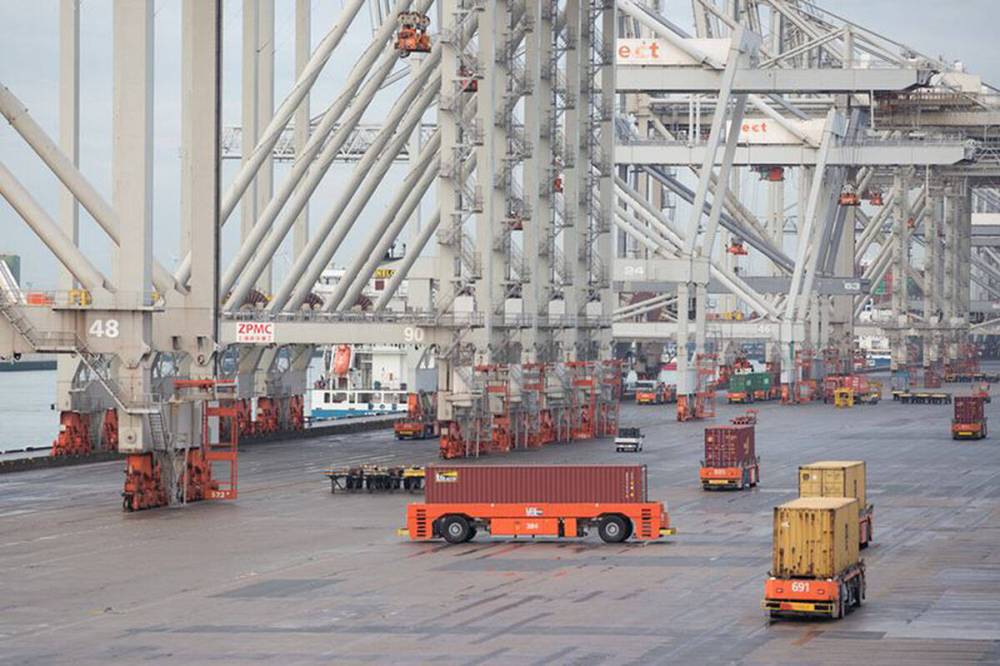
Automated guided vehicles operate at the Port of Rotterdam in the Netherlands. (Jasper Juinen/Bloomberg)

Arctic Gateway Group, operator of the Port of Churchill, has signed an agreement with the Port of Rotterdam in the Netherlands to attract business and strengthen supply chains linking Western Canada and Europe.

The agreement enables the two ports to work together to develop new trade in critical minerals and energy products, connect Canadian producers with European buyers, and identify opportunities to improve the supply chain from Western Canadian resource projects through Churchill and into European markets.

The Port of Rotterdam is Europe’s largest port and home to more than 3,000 businesses across its industrial complex, serving as a major gateway for critical raw materials and energy.

Meanwhile, the Port of Churchill has been identified as a transformative national strategy for Canada and is emerging as a northern trade corridor connecting Western Canada’s resources to global markets.

“The world is taking notice of what we are building in northern Manitoba, and major European ports recognize Churchill’s value as a shorter, more economical trade route from Western Canada,” Chris Avery, president and CEO at Arctic Gateway Group, said in a news release. “This agreement opens thousands of new doors for us to pursue import and export opportunities.”
Free Press
__________________
Winnipeg Act II - April 2024

Winnipeg Developments

In The Future Every Building Will Be World-Famous For Fifteen Minutes.
Reply With Quote
     
     
  #400  
Old Posted Today, 2:03 PM
pspeid's Avatar
pspeid pspeid is online now
Registered User
 
Join Date: Aug 2018
Posts: 2,646
Nice article, but will these opportunities bring the infrastructure investment needed to reinforce the rail line and grow the port facilities? It feels like we're stuck waiting for "someone" to invest the $3 Billion they say is needed before these shipping deals can proceed. I wish Wab had focussed more on this level of investment at the summit rather than swinging for the fences with his LNG terminal idea.
__________________
"Opinion is really the lowest form of intelligence"-Bill Bullard

"Naysayers are always predicting the present"-Anon.

"Rudeness is the weak man's imitation of strength"-Eric Hoffer
Reply With Quote
     
     
End
 
 
Reply

Go Back   SkyscraperPage Forum > Regional Sections > Canada > Manitoba & Saskatchewan
Forum Jump


Forum Jump


All times are GMT. The time now is 6:54 PM.


Powered by vBulletin® Version 3.8.7
Copyright ©2000 - 2026, vBulletin Solutions, Inc.