HomeDiagramsDatabaseMapsForum About
     

Go Back   SkyscraperPage Forum > Regional Sections > Canada > Manitoba & Saskatchewan


Reply

 
Thread Tools Display Modes
     
     
  #1401  
Old Posted Apr 22, 2025, 1:52 AM
borkborkbork's Avatar
borkborkbork borkborkbork is offline
Registered User
 
Join Date: Jul 2014
Posts: 1,754
i volunteer you to go propose this plan to Misipawistik Cree Nation, see what they think about it
Reply With Quote
     
     
  #1402  
Old Posted Apr 22, 2025, 2:00 AM
bodaggin bodaggin is offline
BANNED
 
Join Date: Sep 2017
Posts: 758
Grand Rapids Population = 700?

A $250k cheque to each citizen, and $400k for the 50 houses displaced and I bet I could get 700 signatures within 48hrs.

$200m land acquisition budget. Peanuts on a project this large. Likely wouldn't even take that.

Last edited by bodaggin; Apr 22, 2025 at 2:34 AM.
Reply With Quote
     
     
  #1403  
Old Posted Apr 22, 2025, 3:32 AM
1ajs's Avatar
1ajs 1ajs is offline
ʇɥƃıuʞ -*ʞpʇ*-
 
Join Date: Jul 2005
Location: lynn lake
Posts: 26,524
not that simple
Reply With Quote
     
     
  #1404  
Old Posted Apr 22, 2025, 4:05 AM
Mr Tall Forehead's Avatar
Mr Tall Forehead Mr Tall Forehead is online now
Registered User
 
Join Date: Jul 2024
Location: Winnipeg
Posts: 902
Wow. Quite the Time Machine ride back to the 1960s. Holy.
Reply With Quote
     
     
  #1405  
Old Posted Apr 22, 2025, 7:30 PM
bodaggin bodaggin is offline
BANNED
 
Join Date: Sep 2017
Posts: 758
These numbers only confirm the importance of Lake MB wind and Cedar Lake Pumped Hydro. Rapidly adding wind will piggy back off our existing hydro's dispatchable baseload. Each wind generated MW, saves 1 MW of hydro in our reservoirs. Allowing us to commit to more export contracts at the higher rate without drought risk.

Effectively, 1GW of wind farms would cost roughly $3 billion, conservatively. These could yield $500M per year in contracts (50% CF) at this $0.12/kWh rate.

That's a 6 year repayment time. Incredible ROI for a utility.

But! Eventually, we'd run out of baseload (currently 6GW). That's why we need the pumped hydro storage to backstop it with another ~4GW.
Reply With Quote
     
     
  #1406  
Old Posted Apr 23, 2025, 2:13 AM
1ajs's Avatar
1ajs 1ajs is offline
ʇɥƃıuʞ -*ʞpʇ*-
 
Join Date: Jul 2005
Location: lynn lake
Posts: 26,524
theres also different rates for if u own ur own transformer where the feed comes in from the 9000 or 66k ect down to 600 or what ever u need
Reply With Quote
     
     
  #1407  
Old Posted Aug 28, 2026, 1:44 PM
Wpg_Guy's Avatar
Wpg_Guy Wpg_Guy is online now
Moderator
 
Join Date: Aug 2002
Location: Winnipeg, Manitoba
Posts: 8,433
Quote:
Manitoba Hydro’s strategy: Deny, deny, deny
By: Tim Sale
Friday, Aug. 28, 2026
Opinion


Manitoba Hydro photo

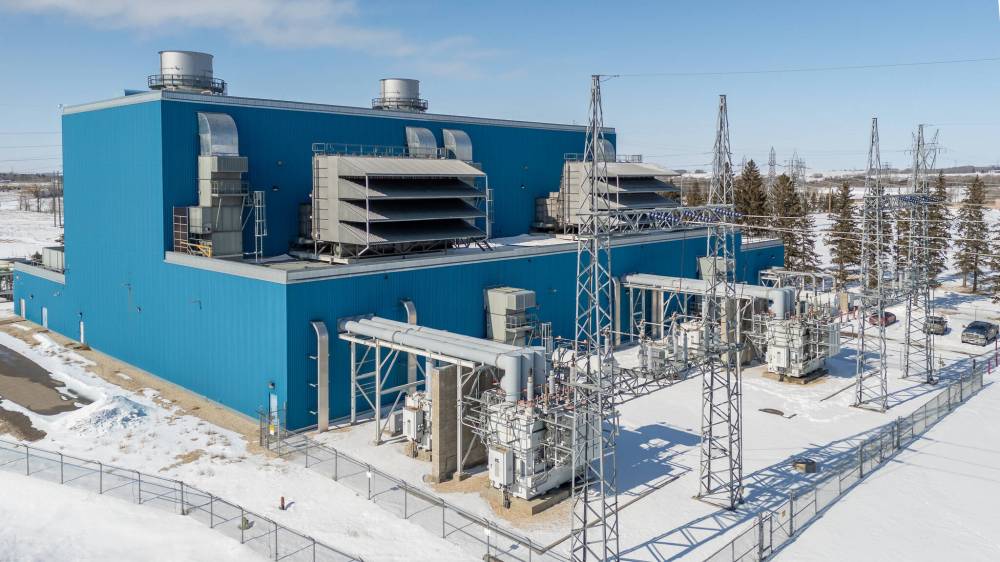
Manitoba Hydro’s Brandon gas turbines haven’t always be available when needed.


Here’s a good story…

A man walks into your office and says, “Have I got a deal for you! I want $3 billion (plus perhaps a bit more) to build you something that you might use three or even four times a year, for maybe 30-60 hours each time. Sign here.”

You might respond… “and I’ve got a lovely bridge for sale…”

That is exactly what Manitoba Hydro wants — $3 billion or more, plus the fossil fuel bonus for peak load events that happen a few times each year. They assure us that the gas turbines will only be used very occasionally. At the same time, they tell us that we are headed for a crisis of energy supply by 2030.

These two statements don’t go together very well.

Either we will only need them a little bit or we will need them a lot after 2030.

Apparently, when we have had these peak events in the past few years, no one noticed … Hydro coped. They imported power from the U.S.A., which happens every year, in fact, not just at times of peak demand. They do have a couple of older turbines already in Brandon, but they failed several times in recent years, just when they were needed.

Poor maintenance, they said, as if that were a decent excuse.

Now we can finally understand what has happened. Instead of developing our own, privately-funded wind farms and selling power to Manitoba Hydro at far less than the cost of power from either Wuskwatim or Keeyask, Hydro is buying excess wind power from the U.S.A.

When the wind lessens there, we send them power from our vast storage lakes. Manitoba Hydro firms up U.S. wind. Perhaps they get a good rate for that; we don’t know. It is “commercially confidential.”

Though Hydro is a public, Crown corporation, it appears to have no concern for the broader well-being of Manitobans.

Without public knowledge and consent, it has deliberately stalled wind or major solar developments in Manitoba so it can make some money firming up American wind power.

It has denied the value of decentralizing the southern grid system with renewables such as wind, solar, biomass or battery backup.

It has denied the value of the jobs created by a robust wind industry.

It has denied rural municipalities the tax income from wind farms and the rent to land owners for erecting a turbine on their property.

The rural municipalities around the St. Leon Wind Farm have received over $16 million from that wind farm and landowners about the same. That is not small change in any community.

Hydro also denies the efficiency of wind, valuing it at only 20 per cent of its capacity.

Most Manitobans may believe that every Hydro dam produces its full, stated capacity all the time, but that’s not true.

Hydro’s older annual reports state that the capacity factor of the entire hydro system, that is the percentage of time it can guarantee power for all customers, is only 66 per cent.

Manitoba wind, on the other hand, has a capacity factor of 44 per cent.

In winter, when peak demands occur, it is higher, reaching 55 per cent on windy days. That’s because in winter the air is more dense and thus has more energy to turn those big turbine blades.

However, the biggest loss we encounter by denying wind energy development is in not using wind to deliberately smooth out our water storage use.

If, for example, we could use wind to help Hydro use less water in normal seasons and thus ensure higher freeze-up storage every year, the peak capacity of the whole system would grow.

Even an increase to 70 per cent would make a large difference in our ability to meet peak demands.

The current Public Utilities Board hearings have received many submissions seeking to overturn the rush to gas turbines without seriously examining all alternatives.

They have received a very strong report from an independent technical analysis that the current Hydro plan is biased towards its preferred solution and not technically capable of reaching the conclusions Hydro states.

That alone should send Hydro back to the drawing board, preferably with outside help, to seriously examine all the options for meeting future peak events.

Wind, solar and batteries have come a long, long way in 20-plus years.

How is it possible that the rest of the world is wrong?

Tim Sale is a former Manitoba minister of energy.
Winnipeg Free Press
__________________
Winnipeg Act II - April 2024

Winnipeg Developments

In The Future Every Building Will Be World-Famous For Fifteen Minutes.
Reply With Quote
     
     
  #1408  
Old Posted Aug 28, 2026, 2:30 PM
Wpg_Guy's Avatar
Wpg_Guy Wpg_Guy is online now
Moderator
 
Join Date: Aug 2002
Location: Winnipeg, Manitoba
Posts: 8,433
Quote:
Hydro CEO leaving job two years after appointment
By: Free Press staff
Friday, Aug. 28, 2026


Allan Danroth, president and CEO of Manitoba Hydro (Mikaela MacKenzie / Free Press files)

Manitoba Hydro president and CEO Allan Danroth is leaving his position with the provincial Crown power utility, the Free Press has learned.

Danroth was hired two years ago by the NDP government after former CEO Jay Grewal was let go after helming Hydro for five years.

Last month, Danroth lashed out at critics for criticizing Hydro’s plans to build natural gas turbines to backstop the utility’s hydro-electric power generation system.
Winnipeg Free Press
__________________
Winnipeg Act II - April 2024

Winnipeg Developments

In The Future Every Building Will Be World-Famous For Fifteen Minutes.
Reply With Quote
     
     
  #1409  
Old Posted Aug 28, 2026, 3:08 PM
bomberjet bomberjet is offline
Registered User
 
Join Date: Nov 2012
Location: Winnipeg
Posts: 16,357
What Hydro needs is the Feds to pony up and pay for Conawapa and Gillam Island. Build a road to the coast along the Nelson to do this, and also build a road to Churchill at the same time. Nation building.

Dithering around with wind, solar, and gas does not appear to be the solution to both current electrical demand and large growth opportunities for the Province.

Add this to an offshore LNG plant, upgrades to the Port of Churchill and the railway. Major northern development opps for Manitoba and Canada.

Burning through CEO's at this timeframe is not ideal.
Reply With Quote
     
     
  #1410  
Old Posted Aug 28, 2026, 3:49 PM
Winnipeg Grump's Avatar
Winnipeg Grump Winnipeg Grump is offline
Registered User
 
Join Date: Nov 2015
Location: Winnipeg
Posts: 708
Danroth leaving right after he blew 6 figures setting up a gym in the Hydro building because he didn't want to use the public gyms like the plebs. LOL
Reply With Quote
     
     
  #1411  
Old Posted Sep 1, 2026, 12:56 AM
Wpg_Guy's Avatar
Wpg_Guy Wpg_Guy is online now
Moderator
 
Join Date: Aug 2002
Location: Winnipeg, Manitoba
Posts: 8,433
__________________
Winnipeg Act II - April 2024

Winnipeg Developments

In The Future Every Building Will Be World-Famous For Fifteen Minutes.
Reply With Quote
     
     
  #1412  
Old Posted Sep 3, 2026, 1:06 AM
Wpg_Guy's Avatar
Wpg_Guy Wpg_Guy is online now
Moderator
 
Join Date: Aug 2002
Location: Winnipeg, Manitoba
Posts: 8,433
Quote:
Canada-U.S. trade war complicates Hydro plan to purchase gas turbines from U.S. manufacturer
Premier says purchase is not a done deal; Environmental organization urges province to cancel

Bartley Kives · CBC News · Posted: Sep 02, 2026


Manitoba Hydro plans to spend $3 billion to add three more gas turbines to its generating station in Brandon. (Riley Laychuk/CBC)

The Canada-U.S. trade war has complicated Manitoba Hydro's plan to purchase gas turbines for its $3-billion Brandon generating station expansion from a manufacturer based in Massachusetts.

Premier Wab Kinew is casting doubt on a Hydro reservation agreement to buy three gas turbines from GE Vernova, a Cambridge, Mass., company spun off from General Electric to build gas and wind turbines. The agreement was made public in a document submitted to the Public Utilities Board in January as well as during public hearing testimony before the provincial energy regulator last week.

This agreement reserves a place in line for Hydro to buy turbines at a time when machinery for generating stations is in extremely high demand due to the worldwide rush to produce more electricity.

Kinew said last week Hydro may not proceed with the purchase, even as he characterized the deal as being struck with GE Canada, which is based in Mississauga, Ont.

"I wouldn't say it's a done deal," Kinew said in Winkler, Man., on Aug. 26.

Kinew said Manitoba has a very good relationship with GE Canada but mused about both the $3-billion Brandon construction project as well as $30 billion worth of additional infrastructure improvements Manitoba Hydro has to make in the coming decades.

"If all of a sudden firms in Trump's America were not eligible for that, I wonder how much attention that would get. So we've got to take a look at the fact that Manitoba has a lot of leverage," the premier said.

"What if we made a decision in Manitoba to ensure that we were only going to procure the next $30 billion of public spending on our energy infrastructure from firms located in companies that respect Canada and respect Manitoba business?"

Climate Action Team Manitoba, a non-profit organization that has voiced opposition to Hydro's plans to purchase natural gas turbines, suggested it does not make sense for the province to spend billions on turbines manufactured in the United States while the premier touts the trade-war leverage gained by removing U.S. alcohol from liquor-store shelves.

Policy manager James Wilt also noted that GE Vernova donated $500,000 to Trump's 2025 inauguration.

"There needs to be serious consideration of how this will look , given that the premier has been very vocal about needing to divest from U.S. investments," James Wilt said Wednesday in an interview.

"This could be one of the largest investments made in this generation: A $3-billion gas turbine purchase and then the lifetime costs in terms of whatever it would require for maintenance and parts and so on."

Siemens Energy, a manufacturer based in Munich, Germany, was also shortlisted as a potential gas turbine supplier, according to a June submission to the utilities board in June.

"We think that this is an important moment not only to pivot away from GE Vernova, but also to pivot away from the gas turbines as a concept entirely," Wilt said, touting wind power and battery storage as alternatives to burning gas in order to stave off energy shortages Hydro says it could experience within four years.

"There's other generation and storage technologies that can meet peak capacity needs, which can be sourced from other countries, whether in Europe or elsewhere, and that can be delivered and installed before the 2030 requirements."

The Brandon generating station expansion is part of Hydro's plan to save and produce more power over the next 10 years. Public hearings into this plan before the Public Utilities Board are slated to conclude on Friday.

The board will then make recommendation to the provincial government about this plan. Interim Hydro CEO Hal Turner said the utility does not have to wait for those recommendations before it proceeds with its plans to purchase the gas turbines.

"We've built mechanisms into the contract for us to be able to adapt to whatever the PUB recommends," Turner said on Aug. 28.

Wab Kinew's cabinet can choose to accept, amend or ignore the PUB's recommendations.
CBC Manitoba
__________________
Winnipeg Act II - April 2024

Winnipeg Developments

In The Future Every Building Will Be World-Famous For Fifteen Minutes.
Reply With Quote
     
     
  #1413  
Old Posted Sep 16, 2026, 10:45 PM
Wpg_Guy's Avatar
Wpg_Guy Wpg_Guy is online now
Moderator
 
Join Date: Aug 2002
Location: Winnipeg, Manitoba
Posts: 8,433
Quote:
Wind and batteries the best bet
By: James Wilt
Wednesday, Sep. 16, 2026

Opinion


MIKAELA MACKENZIE / FREE PRESs fileS

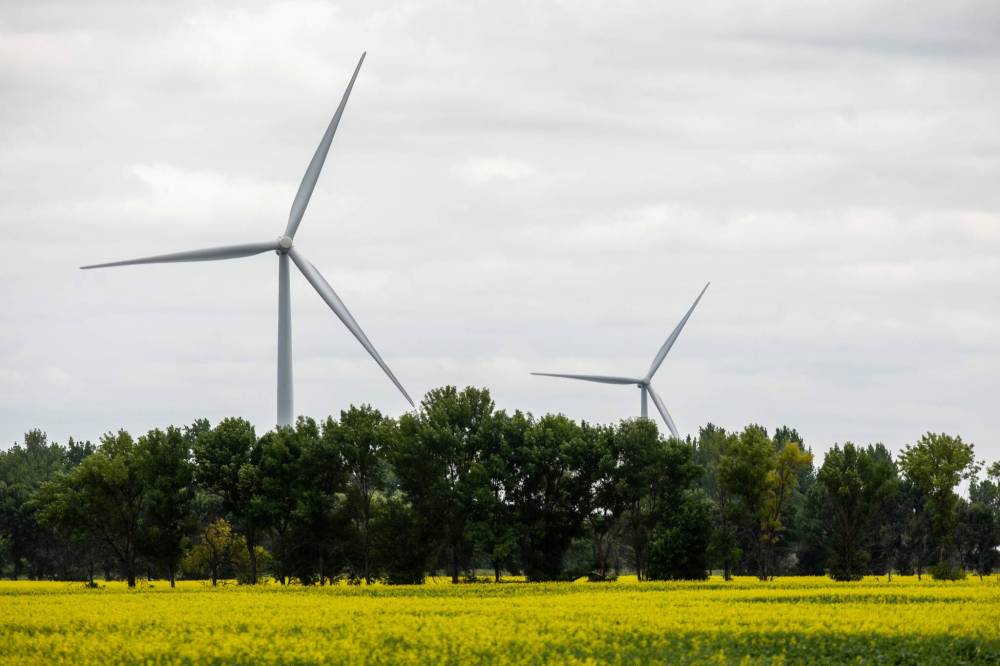
Wind turbines in southern Manitoba in July. New analysis shows wind-generation reliability exceeds expectations.


For years, Manitoba Hydro has claimed that we can’t rely on wind turbines during multi-day or even multi-week cold snaps. Although turbines can be equipped with cold-weather packages to operate down to –30 C, as at the St. Leon and St. Joseph wind farms, Hydro routinely warns of the possibility of a lengthy winter wind drought at the same time as electricity use peaks due to high heating demand.

This concern is largely why Hydro is pushing to build a 750 MW fossil gas-fired power plant in Brandon, rather than building more wind farms.

But new analysis by Alexander Hogeveen Rutter, a former energy modeller for Manitoba Hydro, shows that wind-generation reliability well exceeds assumptions and that, if combined with battery energy storage, it could meet even the most bullish load growth forecasts. (These findings were presented to the Public Utilities Board on Aug. 31, and the full report can be found on Climate Action Team Manitoba’s website.)

Hydro’s low estimate of wind generation stems from its erroneous assumption that all new wind farms will be built in the same locations as Manitoba’s two existing wind farms (St. Leon and St. Joseph). Because these two wind farms are only 100 kilometres apart, they have highly correlated wind speeds; when wind conditions are low at one site, they likely are at the other as well. This is not how new wind farms will be built in Manitoba. Instead, they will be located in different areas and use much taller turbines with higher generation potential than the existing wind farms.

As a result, this new modelling examined the reliability of new wind farms with modern turbines if they were hypothetically built at four different sites. These assumptions led to significantly higher wind reliability than Hydro’s models, as wind speeds at diversified wind farms are much less likely to experience simultaneous wind droughts.

If 1,080 megawatts (MW) of new wind farms are built at diverse locations with modern turbines, wind generation would almost fully cover nine of the top 10 peak load events reported by Manitoba Hydro between 2021 and 2026 — and with an additional 750 MW of demand added, too, to account for Hydro’s highest load growth forecast by 2031. Given that wind farms only take two to three years to develop, and that even Hydro has suggested that up to 600 MW could be installed per year, there’s no reason to think Manitoba can’t do this if it sets clear priorities. (To put 1,080 MW in perspective, North Dakota — population 800,000 — has about 5,000 MW of wind generation.)

While this modelling shows that wind farms can cover far more of winter demand than previously imagined, it also found that installing 750 MW of battery storage capacity is needed to ensure reliability. These batteries could be charged with new wind (and even solar) energy, meaning they can work together to provide reliable capacity even on the coldest nights and worst droughts.

Crucially, Manitoba Hydro’s analysis only considered batteries and renewables in isolation, rather than evaluating how they can work together.

The only real question with battery storage concerns duration, or how many hours of power it can provide each cycle. If Manitoba builds 1,080 MW of new wind generation, it would need only four hours of battery storage to meet necessary reliability thresholds. If the provincial government sticks to its current plan of 600 MW of new wind, it would need seven hours of battery storage. A combination of 600 MW of wind and 600 MW of solar would drop the requirement back down to four hours of storage. Any of these options would provide the same or even greater reliability than the proposed gas plant.

Building out wind farms, battery storage and even solar arrays might sound prohibitively expensive. But this analysis found that these three scenarios cost considerably less than the proposed gas plant when upfront capital costs and energy costs are totalled, even before clean energy tax credits and the rapidly rising costs of gas turbines were factored in. And unlike the proposed fossil gas plant, which Hydro expects to operate only 0.5 per cent to five per cent of the year, these alternatives would provide year-round value to the grid, including better optimization of hydroelectric generation and reduced transmission/distribution costs.

Wind, batteries and even solar can provide a reliable power supply for Manitoba. Given these findings, the Public Utilities Board — which is currently reviewing Hydro’s proposed plan to meet electricity needs for the next decade — should require Hydro to re-run its modelling using realistic assumptions about wind generation and synergies with battery storage.

And the provincial government should prepare to instruct Hydro to expand and accelerate the development of wind farms and batteries, rather than the proposed gas plant.

James Wilt is the policy development manager at Climate Action Team Manitoba.
Winnipeg Free Press
__________________
Winnipeg Act II - April 2024

Winnipeg Developments

In The Future Every Building Will Be World-Famous For Fifteen Minutes.
Reply With Quote
     
     
  #1414  
Old Posted Sep 17, 2026, 2:17 PM
Winnipeg Grump's Avatar
Winnipeg Grump Winnipeg Grump is offline
Registered User
 
Join Date: Nov 2015
Location: Winnipeg
Posts: 708
Yeah, this part of Hydro's IRP was rage-inducing for me. If anyone ever doubts that the organization operates under a 'we build hydro dams' mentality, I'll just point them to this.

They treat grid-storage batteries like it's some new, unproven technology that will need a decade of study in-house before they consider some far-off future installation. Meanwhile, I read an article the other day where China contracted for 60 GW of battery storage to be installed over 3 years. That's 10x MB Hydro's entire capacity just on that one contract, never mind all of the other installs happening.

The cheapest installs for new generation are wind/solar with batteries - not gas. And let's not ignore that the AI build out is swallowing up every turbine available and you're looking at long lead times.

Just ... maddening.
Reply With Quote
     
     
  #1415  
Old Posted Sep 17, 2026, 2:58 PM
bomberjet bomberjet is offline
Registered User
 
Join Date: Nov 2012
Location: Winnipeg
Posts: 16,357
Short term, I'm onside with solar/wind, etc. Long term, new dams let's goooo Feds.
Reply With Quote
     
     
  #1416  
Old Posted Sep 17, 2026, 3:53 PM
Stormer's Avatar
Stormer Stormer is offline
Registered User
 
Join Date: Jan 2008
Posts: 8,043
Quote:
Originally Posted by Winnipeg Grump View Post
Yeah, this part of Hydro's IRP was rage-inducing for me. If anyone ever doubts that the organization operates under a 'we build hydro dams' mentality, I'll just point them to this.

They treat grid-storage batteries like it's some new, unproven technology that will need a decade of study in-house before they consider some far-off future installation. Meanwhile, I read an article the other day where China contracted for 60 GW of battery storage to be installed over 3 years. That's 10x MB Hydro's entire capacity just on that one contract, never mind all of the other installs happening.

The cheapest installs for new generation are wind/solar with batteries - not gas. And let's not ignore that the AI build out is swallowing up every turbine available and you're looking at long lead times.

Just ... maddening.
This is untrue. Solar with batteries is still not cheaper than gas if you want full back-up. Those that say it is competitive with gas are basing it on a 4-hour BESS. To ensure reliability you still need standby gas, hydro or nuclear and you must attribute some of that cost to solar if you are being honest. With gas you do not need any standby power. This is why data centres and utilities are not all-in on solar with batteries. If what you are saying was true, do you not think that Elon, the world's biggest solar and battery booster, would be using solar for his Colossus data centers?

Also "60GW" of battery storage means 60 GW hours. So you need a minimum of 4-10 times that.
Reply With Quote
     
     
  #1417  
Old Posted Sep 17, 2026, 4:06 PM
Winnipeg Grump's Avatar
Winnipeg Grump Winnipeg Grump is offline
Registered User
 
Join Date: Nov 2015
Location: Winnipeg
Posts: 708
IDGAF about data centres, to be honest; they can rot in piss for all I care.

Wrote that note earlier before noticing the opinion piece in the Freep from Don Scott, where he provides a much more detailed breakdown on this.

MBH isn't proposing to build those gas plants for base loads - they have ~6 G of dams for that. They're talking about setting them up for peakers and that's a role increasingly being covered all over the world by grid batteries and wind/solar.
Reply With Quote
     
     
  #1418  
Old Posted Sep 17, 2026, 4:23 PM
Stormer's Avatar
Stormer Stormer is offline
Registered User
 
Join Date: Jan 2008
Posts: 8,043
Quote:
Originally Posted by Winnipeg Grump View Post
IDGAF about data centres, to be honest; they can rot in piss for all I care.

Wrote that note earlier before noticing the opinion piece in the Freep from Don Scott, where he provides a much more detailed breakdown on this.

MBH isn't proposing to build those gas plants for base loads - they have ~6 G of dams for that. They're talking about setting them up for peakers and that's a role increasingly being covered all over the world by grid batteries and wind/solar.
OK that should make more sense as gas peaking plants are way more expensive than baseload plants per MW as you need to amortize the full capital cost and fixed operating costs over much fewer MWHs.

Still I would be concerned about winter when there are some major usage peaks and solar radiation falls off a cliff.
Reply With Quote
     
     
  #1419  
Old Posted Sep 17, 2026, 5:58 PM
Winnipeg Grump's Avatar
Winnipeg Grump Winnipeg Grump is offline
Registered User
 
Join Date: Nov 2015
Location: Winnipeg
Posts: 708
Quote:
Originally Posted by Stormer View Post
OK that should make more sense as gas peaking plants are way more expensive than baseload plants per MW as you need to amortize the full capital cost and fixed operating costs over much fewer MWHs.

Still I would be concerned about winter when there are some major usage peaks and solar radiation falls off a cliff.
Interties, my friend. Interties.

One of the big things that Ottawa wants to get going is sturdy east-west connections between the provincial grids so power can be shuffled between the regions as needed.

The wind's always blowing somewhere, it's still sunny in the west when the eastern folk are seeing peak power demand in the evening, etc.
Reply With Quote
     
     
  #1420  
Old Posted Sep 24, 2026, 10:33 AM
Wpg_Guy's Avatar
Wpg_Guy Wpg_Guy is online now
Moderator
 
Join Date: Aug 2002
Location: Winnipeg, Manitoba
Posts: 8,433
Quote:
Time for 21st century leadership at MB Hydro
By: Scott Forbes
Thursday, Sep. 24, 2026

With the recent resignation of its CEO Alan Danroth, Manitoba Hydro now has a chance for an overdue course correction. The propaganda spouted by its PR flaks notwithstanding, our Crown corporation has set a backward path to the era of fossil fuels, largely ignoring the rapid clean (and cheap) energy transition taking place around the globe.

MB Hydro has argued that spending $3 billion on new methane (aka natural) gas generating stations is the best way to meet rising peak-load power demands, and oh, by the way, don’t worry about rising carbon emissions because we’ll hardly ever use them. Just stop and think about that. We’re going to spend (at minimum) $3 billion for something we don’t intend to use very much.

That borders on absurdity.

The much more likely scenario is that as the inevitable electrification of the economy proceeds, in tandem with rising grid demands, those methane-gas power plants will be called into service more and more.

Hydro argues that there’s nothing to worry about as our electricity grid is largely based on clean hydro power. A bit of fossil fuel burning won’t mean much in the big picture.

But the reality is this: more than 70 per cent of Manitoba’s energy use is still fossil-fuel based, mainly from using gas and diesel for transportation and methane gas for home and industrial heating. Electrification means replacing fossil fuels with clean energy, largely from the electricity grid. If that electricity is generated more and more from fossil fuels, well, the problem becomes obvious.

To find examples of a 21st century approach, we need only compare MB Hydro to its counterparts in Quebec and BC. Both Hydro Quebec and BC Hydro are moving aggressively to add wind-power to the grid. That allows their reservoir system to act as an effective battery, by substituting wind power for hydro when there’s a surplus. Water held behind the dams can be saved for later peak loads.

Quebec Hydro is far out in front with wind generation: 4,000 MW built, another 10,000 MW scheduled to come online by 2035. BC Hydro is also moving rapidly in that direction: 700 MW built, another 1,500 MW by 2032/33. MB Hydro, by comparison, has barely dipped its toes in the water: 258 MW built, another 600 MW planned for 2035.

Quebec and BC are also moving to add grid-scale batteries to firm intermittent wind and solar power into reliable base-load power. Without this, the utilities only count ~15 per cent of wind power toward base load. With batteries in place, that rises to over 40 per cent.

The clean energy transition is based chiefly on growing wind and solar energy, and to some extent, geothermal power. Any utility that does not recognize this global change lives in the past. And that is where our crown corporation finds itself.

MB Hydro lags far behind its counterparts in B.C. and Quebec in promoting the energy transition.

Just one example is EV charging infrastructure. BC Hydro has already built 917 charging stations at 190 sites, and will expand that to 3,500 charging ports by 2035. BC has completed its electric highway with charging stations 150 kilometres apart on every major highway and travel corridor.

Quebec Hydro? Even better. It has already built over 8,000 charging ports at 3,500 charging stations and Quebec’s Green Economy plan expands that to over 100,000 charging ports by 2030.

And MB Hydro? It has not yet finished any charging stations.

It has plans for six charging sites on Highway 6 by next year. If Manitoba wants a 21st century economy, it needs a 21st century power utility.

Our next Hydro CEO should come not from the fossil fuel sector, but from firms specializing in the burgeoning clean energy. Capital Power, where Danroth was an executive before his brief stint with MB Hydro (amongst other jobs he held), came from the fossil fuel side. While Capital Power produces a bit of renewable energy, 85-90 per cent of its power comes from methane gas. It even boasts on its website that ‘the natural gas expansion era has arrived.’ Little surprise then that MB Hydro chose that wrong-headed direction.

Any new MB Hydro CEO should be tasked with building a robust wind, solar, geothermal and storage division. A 21st century MB Hydro needs to move aggressively to acquire the expertise in-house to build out new sources of renewable energy, including staffing up an environmental stewardship division to minimize adverse impacts — e.g., bird and bat mortality at wind turbines. Cheap, clean, reliable renewable energy is not the future but the present.

The 21st century is now more than a quarter over. It’s waiting for Manitoba to join it.

Scott Forbes is an ecologist at the University of Winnipeg.
Winnipeg Free Press
__________________
Winnipeg Act II - April 2024

Winnipeg Developments

In The Future Every Building Will Be World-Famous For Fifteen Minutes.
Reply With Quote
     
     
End
 
 
Reply

Go Back   SkyscraperPage Forum > Regional Sections > Canada > Manitoba & Saskatchewan
Forum Jump


Forum Jump


All times are GMT. The time now is 5:15 AM.


Powered by vBulletin® Version 3.8.7
Copyright ©2000 - 2026, vBulletin Solutions, Inc.