HomeDiagramsDatabaseMapsForum About
     

Go Back   SkyscraperPage Forum > Regional Sections > Canada > Manitoba & Saskatchewan


Reply

 
Thread Tools Display Modes
     
     
  #181  
Old Posted Aug 14, 2026, 7:52 AM
Wpg_Guy's Avatar
Wpg_Guy Wpg_Guy is online now
 
Join Date: Aug 2002
Posts: 8,707
Quote:
Making the right move on rail lines
By: Editorial
Friday, Aug. 14, 2026
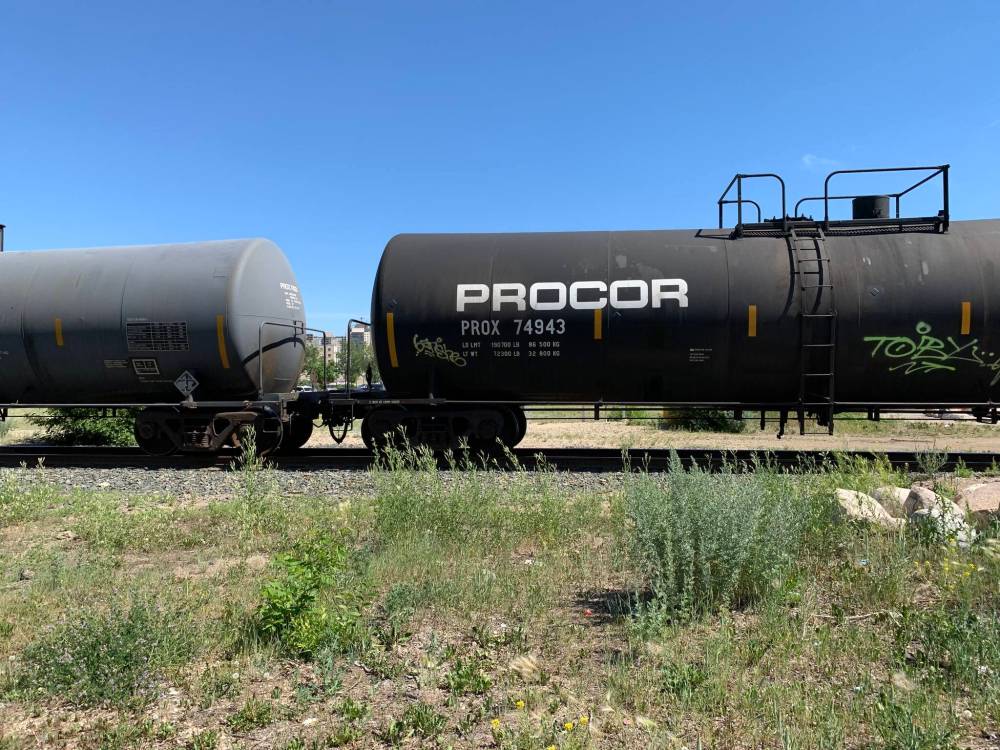

File

Dangerous goods travel by rail through Winnipeg


It’s a familiar sound in Winnipeg.

(No, not sirens, which are now almost a constant.)

It’s the 3 a.m. distant and lonesome train horn, the sound of a train crew working through the night hours, the horn giving its warning at level crossings. Some Winnipeggers hear far more: when the night is still enough, they can hear the rhythmic “tap-tap, tap-tap” of rail wheels on the tracks as long trains thread through the city.

Sounds romantic, in its own way. Unless, of course, the romance is close enough to your bedroom window to wake you up.

The bottom line is that it’s also something that residents of Winnipeg shouldn’t have to deal with. Major rail corridors and rail yards shouldn’t be in the backyards of residents. City streets shouldn’t be blocked by trains and whole parts of the city shouldn’t have to face the risks of accidents and potential derailments.

Accidents happen, especially when you’re dealing with thousands of miles of track and lengthy trains of tanker cars. The only question, really, is who ends up being the winner of the disaster lottery. Everything in the world can be done to keep railways safe, but rail wheels can crack or their axles can overheat, tracks or switches can fail.

Railways in Canada have, on average, around 1,000 accidents with 60 deaths per year. The fact is that railroad accidents tend to take place in areas outside cities — but that’s because the majority of rail lines are not in urban areas.

So Wednesday’s announcement of a new plan to take rail lines out of Winnipeg is good news.

The current plan being reviewed? To examine the feasibility of running a new bypass rail line south of Winnipeg on a combination of Crown-owned land and the Manitoba Hydro transmission corridor. The work would take two decades — and a lot of money — but would remove more than 100 railway crossings and open up 250 acres of land for potential development.

All of that is good and all of it is necessary. Rail lines through a city — especially, as in Winnipeg’s case, when they don’t have to run through a city but are essentially grandfathered in — are a safety risk.

But there are caveats. One is cost — and not just the cost of building the new rail lines.

There are the costs of decommissioning old rail lines and infrastructure such as bridges, assuming financial responsibility for the infrastructure that remains and the costs of workarounds while decades of construction take place.

This is not untrammelled forest land being purchased from a developer to create new greenspace. This is heavily-used industrial land.

And railway companies are businesses — they will want to make the best deal they can, one which may look at the question of who should shoulder the environmental costs of remediating rail corridors that have decades of potential contamination, everything from carcinogens that have leached from creosoted railway ties to herbicides for plant control to incidental spills of fuel and lubricating oils.

The North End rail yards are essentially a legacy site, with rail installations dating back to the 1880s, which means that the lands have seen materials and potential contamination that would be a long way from current environmental standards.

There will be building costs, cleanup costs, planning costs — and the list goes on. While Winnipeg certainly shouldn’t have railway corridors in city neighbourhoods, that doesn’t mean that the city and the provincial and federal governments should carry all the costs to handle the change.

It can be done — the Forks is living, breathing proof of that.

But, just as in trade negotiations, no deal is better than a bad deal.
Winnipeg Free Press
Reply With Quote
     
     
  #182  
Old Posted Aug 14, 2026, 7:59 AM
Wpg_Guy's Avatar
Wpg_Guy Wpg_Guy is online now
 
Join Date: Aug 2002
Posts: 8,707
New study looking into rerouting rail traffic

Reply With Quote
     
     
  #183  
Old Posted Aug 17, 2026, 4:49 PM
bomberjet bomberjet is offline
 
Join Date: Nov 2012
Posts: 16,383
I will provide some more comment on my experience with rail relocation when I get a moment.

But I feel Lloyd is giving the rosey version of his interactions with the railways. This will not sit well with railway ops people about re-routing into a joint use main line track corridor. They'll probably each want a double main line section, so min 4 tracks, with wider spacing in between for ownership and maintenance and regulatory purposes. They will want to own to own and control the track. They will not be bullied and this would likely move into a lengthy, protracted mediation period with the CTA.
Reply With Quote
     
     
  #184  
Old Posted Aug 18, 2026, 11:00 PM
borkborkbork's Avatar
borkborkbork borkborkbork is offline
 
Join Date: Jul 2014
Posts: 1,761
Quote:
Originally Posted by bomberjet View Post
I will provide some more comment on my experience with rail relocation when I get a moment.

But I feel Lloyd is giving the rosey version of his interactions with the railways. This will not sit well with railway ops people about re-routing into a joint use main line track corridor. They'll probably each want a double main line section, so min 4 tracks, with wider spacing in between for ownership and maintenance and regulatory purposes. They will want to own to own and control the track. They will not be bullied and this would likely move into a lengthy, protracted mediation period with the CTA.
It's interesting that the person who apparently will be driving this two-decade project forward is an 86-year old man.
Reply With Quote
     
     
  #185  
Old Posted Aug 18, 2026, 11:01 PM
Danny D Oh Danny D Oh is offline
 
Join Date: Dec 2012
Posts: 906
Quote:
Originally Posted by Biff View Post
I think an interesting question is - if this all happens and all three levels of government and the railway companies contribute funds to build this...who owns it once it is complete?

My understanding is that the rail companies like to own and control their infrastructure. They are very protective over anything that affects their lines and schedules.
I don't think anyone will care if they own and are liable for track infrastructure and rail yards.

Governments have generally been doing everything they can to hold no liabilities moving forward for almost 50 years. It's why P3's exist.
Reply With Quote
     
     
  #186  
Old Posted Aug 19, 2026, 3:02 PM
bomberjet bomberjet is offline
 
Join Date: Nov 2012
Posts: 16,383
This matter is very complex, as I'm sure we're all aware. Schemes like this have been proposed in other locations recently, including Saskatoon and Regina. Both projects are basically dead at this point.

The railways will want a net-positive impact to their operations. Which includes (but not limited to lol) things like train travel times, operational efficiency of customers, and general operational practices of the network. The biggest hiccup I can see with the proposed dual use bypass is CPKC travel times and distances. Just because the trains MAY be going faster around a bypass does not mean operations will be equal to or better.

How will CPKC and CN operations work with the exiting yard locations. The main purpose of all this is to relocate CPKC yard. The southern bypass scheme works better for CN than CPKC. But still would require some type of integration to Symington yard. Ie: run through trains (trains stopping here only for crew changes basically) could be done out of a new yard placed somewhere along the bypass. But generally Symington is a major node on the CN network. simply saying "oh well we'll just put your trains somewhere els" will not fly.

I could go on for days about this. But want to give the benefit of the doubt to this idea. I've spoken directly with the payers at both major railways (BNSF doesnt even count here), and while thye'll generally participate as they're required to, it is a very tough sell to someone like CN to uproot they're tried and true rail network. selling this to the board/shareholders, will be difficult.

And just because somethings difficult doesn't mean we don't try. But we'll see where there 90 day feasibility study lands. Ie: they will need more money and a longer duration study with actual engineering work to march this forward.
Reply With Quote
     
     
  #187  
Old Posted Aug 19, 2026, 3:04 PM
bomberjet bomberjet is offline
 
Join Date: Nov 2012
Posts: 16,383
In terms of ownership, each railway will want to control their asset, which includes interactions with the other railway(s). Ie: they will want their own tracks, not shared, and will want control of the interchange locations with the other railway(s). They want priority, want to own the asset, but want someone else to pay for it up front. otherwise they'll just continue on status quo.
Reply With Quote
     
     
  #188  
Old Posted Aug 19, 2026, 4:56 PM
cllew cllew is offline
 
Join Date: Feb 2012
Posts: 4,848
Quote:
Originally Posted by bomberjet View Post
In terms of ownership, each railway will want to control their asset, which includes interactions with the other railway(s). Ie: they will want their own tracks, not shared, and will want control of the interchange locations with the other railway(s). They want priority, want to own the asset, but want someone else to pay for it up front. otherwise they'll just continue on status quo.
Or they could do something like the Belt Railway of Chicago where they are members of a joint rail company that is owned by the Class 1's of North America to move rail traffic around and thru Chicago.

In this case it would be a 2 owner (maybe 4 if CEMR and BNSF get in for their short lines) railway.
Reply With Quote
     
     
  #189  
Old Posted Aug 19, 2026, 6:00 PM
bomberjet bomberjet is offline
 
Join Date: Nov 2012
Posts: 16,383
Based on my interactions with the railways on another relocation project, they had zero interest in a shared set-up. Not to say it couldn't happen, but we'll see.
Reply With Quote
     
     
  #190  
Old Posted Aug 20, 2026, 6:10 PM
EastK EastK is offline
 
Join Date: Nov 2008
Posts: 158
I don't understand why we as a city keep funding study after study of something that will never happen and is a pipe dream. Im sure the consultants love the extra funding though. This would end up costing easily north of two billion dollars by any measure and I would ask any proponent of this project to add up what could be accomplished with that two billion dollars. How many after school programs or upgraded science labs would that fund? How many abandoned properties could be rehabilitated instead of torched? How many rooms for addictions recovery could that fund? If we move the rails all those problems still exist and would need to be addressed. Furthermore the land it would free up is in a neighbourhood not many people are looking to move into. Winnipeg does not need more massive Portage Place style projects. We need to address the real problems this city faces.
Reply With Quote
     
     
  #191  
Old Posted Aug 21, 2026, 11:34 AM
biguc's Avatar
biguc biguc is offline
 
Join Date: Mar 2003
Posts: 11,905
It pretty much instantly makes commuter rail on existing tracks possible. Replicating the infrastructure that already exists to do so would cost more than 2 billion. In reality it would probably be impossible, making the value of rail relocation priceless.

That's just one example.

Anyway, the city hasn't funded "study after study" on this. This is the first real study. It will determine if and how this project could move ahead. And I know you didn't make this dumb point, but this study is all Lloyd is leading.
Reply With Quote
     
     
  #192  
Old Posted Aug 21, 2026, 11:39 AM
Wpg_Guy's Avatar
Wpg_Guy Wpg_Guy is online now
 
Join Date: Aug 2002
Posts: 8,707
Also the city didn't pay for these studies, the province did.
Reply With Quote
     
     
  #193  
Old Posted Aug 21, 2026, 12:18 PM
biguc's Avatar
biguc biguc is offline
 
Join Date: Mar 2003
Posts: 11,905
Exactly!
Reply With Quote
     
     
  #194  
Old Posted Aug 21, 2026, 1:51 PM
EastK EastK is offline
 
Join Date: Nov 2008
Posts: 158
Quote:
Originally Posted by Wpg_Guy View Post
Also the city didn't pay for these studies, the province did.
Does it matter really? It is still our tax dollars. It doesn't change the fact that the mega projects we propose here do nothing to address the real social problems these areas face.
Reply With Quote
     
     
  #195  
Old Posted Aug 21, 2026, 1:58 PM
bomberjet bomberjet is offline
 
Join Date: Nov 2012
Posts: 16,383
The current study work is basically a cup of coffee in terms of the budgets. If they want to do a real study with engineering it will be a couple million. IMO this is a — or get off the pot moment for rail relocation in Winnipeg. They need to advance the study to a point where an accurate cost estimate can be generated. And a phased plan of how the work would be completed. And most of all, signed agreement with the railroads and all levels of government to proceed and fund it.

It's a tall order and I can see it going one of two ways. Dieing a quick death in the next year or two. Or, a lengthy negotiation with the railways, then the feds for funding.
Reply With Quote
     
     
  #196  
Old Posted Aug 21, 2026, 7:34 PM
EastK EastK is offline
 
Join Date: Nov 2008
Posts: 158
Quote:
Originally Posted by bomberjet View Post
The current study work is basically a cup of coffee in terms of the budgets. If they want to do a real study with engineering it will be a couple million. IMO this is a — or get off the pot moment for rail relocation in Winnipeg. They need to advance the study to a point where an accurate cost estimate can be generated. And a phased plan of how the work would be completed. And most of all, signed agreement with the railroads and all levels of government to proceed and fund it.

It's a tall order and I can see it going one of two ways. Dieing a quick death in the next year or two. Or, a lengthy negotiation with the railways, then the feds for funding.
It is a strange thing that it keeps being brought up with no real plan ever materializing. It is a case though where anyone can look at the scale of the project and the fact the railways have no incentive to contribute a cent and determine the cost will be greater than any benefit. Even federal funds are finite and the opportunity cost of this project is mind blowing. This city has a huge amount of social and infrastructure problems that could be solved with however many billions moving the rails would cost.
Reply With Quote
     
     
  #197  
Old Posted Aug 22, 2026, 10:45 AM
biguc's Avatar
biguc biguc is offline
 
Join Date: Mar 2003
Posts: 11,905
There's nothing strange about it. The Sellinger government was going to fund a study. The Cons cancelled it. Now the NDP are picking it up again. That's just politics. If that makes anything look dubious it makes damn near everything look dubious.

Quote:
Originally Posted by EastK View Post
Does it matter really? It is still our tax dollars. It doesn't change the fact that the mega projects we propose here do nothing to address the real social problems these areas face.
It does if you care about facts and want to argue in good faith instead of just stirring up — about something you can't be bothered to understand.
Reply With Quote
     
     
  #198  
Old Posted Aug 22, 2026, 1:18 PM
jim_bred jim_bred is offline
 
Join Date: Aug 2025
Posts: 237
Quote:
Originally Posted by EastK View Post
I don't understand why we as a city keep funding study after study of something that will never happen and is a pipe dream. Im sure the consultants love the extra funding though. This would end up costing easily north of two billion dollars by any measure and I would ask any proponent of this project to add up what could be accomplished with that two billion dollars. How many after school programs or upgraded science labs would that fund? How many abandoned properties could be rehabilitated instead of torched? How many rooms for addictions recovery could that fund? If we move the rails all those problems still exist and would need to be addressed. Furthermore the land it would free up is in a neighbourhood not many people are looking to move into. Winnipeg does not need more massive Portage Place style projects. We need to address the real problems this city faces.
There's that small town mentality that has held this city back for the last 50 years.
Reply With Quote
     
     
  #199  
Old Posted Aug 22, 2026, 2:24 PM
EastK EastK is offline
 
Join Date: Nov 2008
Posts: 158
Quote:
Originally Posted by jim_bred View Post
There's that small town mentality that has held this city back for the last 50 years.
It is a rejection of the mentality we have had here for decades that if you complete some massive project like say Portage Place, MTS Center and so on it would somehow improve an area that has some of the worst social problems in the country. The problems these neighbourhoods face have almost nothing to do with the railway's location. Big infrastructure projects are supposed to create a positive lasting impact and this will do nothing of the sort. Say we move the rails, the day the project is completed all the poverty, homelessness, crime, addiction, trauma and abandoned buildings are all still there.
Furthermore in a have-not province that has 10 hour ER wait times and craters in its roads the priority should not be to dump 2-5 billion on rail movement.
Reply With Quote
     
     
  #200  
Old Posted Aug 22, 2026, 7:10 PM
davequanbury davequanbury is offline
 
Join Date: Mar 2018
Posts: 225
Quote:
Originally Posted by EastK View Post
It is a rejection of the mentality we have had here for decades that if you complete some massive project like say Portage Place, MTS Center and so on it would somehow improve an area that has some of the worst social problems in the country. The problems these neighbourhoods face have almost nothing to do with the railway's location. Big infrastructure projects are supposed to create a positive lasting impact and this will do nothing of the sort. Say we move the rails, the day the project is completed all the poverty, homelessness, crime, addiction, trauma and abandoned buildings are all still there.
Furthermore in a have-not province that has 10 hour ER wait times and craters in its roads the priority should not be to dump 2-5 billion on rail movement.
Its an intersting comparison you make between rail relocation and Portage place or MTS. I think it might be worth noting that Portage Place and MTS were expected to generate spin off economic activity that improved downtown where as the rail relocation is expected to create fresh greenfield-ish development porperties within the city in order to build housing and or commercial services. Not exactly apples to apples in terms of mega projects.

I always cringe when big develpments get pitched as 'revitalization.' I'm pretty sceptical about those claims too. Rail relocation arguably has more going for it in respect to improving social issues due to the potential for new housing in areas adjacent to current poverty.

As for ER wait times, I don't think that money spent on rail relocation studies is taken from the health care budget.
Reply With Quote
     
     
This discussion thread continues

Use the page links to the lower-right to go to the next page for additional posts
 
 
Reply

Go Back   SkyscraperPage Forum > Regional Sections > Canada > Manitoba & Saskatchewan
Forum Jump


Forum Jump


All times are GMT. The time now is 7:22 PM.


Powered by vBulletin® Version 3.8.7
Copyright ©2000 - 2026, vBulletin Solutions, Inc.


