HomeDiagramsDatabaseMapsForum About
     

Go Back   SkyscraperPage Forum > Regional Sections > Canada > Manitoba & Saskatchewan


Reply

 
Thread Tools Display Modes
     
     
  #13201  
Old Posted May 15, 2026, 9:27 AM
biguc's Avatar
biguc biguc is offline
Registered User
 
Join Date: Mar 2003
Location: pinkoland
Posts: 11,850
I like BRT (and LRT) running on one side. It removes left turn conflicts, manages right-turn conflicts better than double-curb lanes, keeps a clear delineation between what's transit and what's road, and strikes a balance on space-efficient stations, since half of them can be on the sidewalk.


Like bomberjet says, St. Mary's actually isn't that bad. The skinniest section, between Enfield and Caton or so, is only about 800 m long, and while it's four lanes, it's 16 m wide, which is wide enough for 5 3m lanes. You could run the transitway on the east side of the street and leave three lanes for cars. With a reversible centre lane you wouldn't lose much road capacity at all.

The trickiest part would be finding space for stations. I think if they closed Enfield at St. Mary's, used the existing bus lane, and cannibalized Enfield Park a little they could fit one there. Then they could cannibalize Guay Park a bit at the other end. There's also a stretch of strip malls from Starbucks to Subway that could give up parking space. Closing Traverse and carving off a bit of Subway's lot would make space for a station midway between Enfield and Guay.
__________________
no
Reply With Quote
     
     
  #13202  
Old Posted May 15, 2026, 2:21 PM
bomberjet bomberjet is offline
Registered User
 
Join Date: Nov 2012
Location: Winnipeg
Posts: 16,175
For some context. The stretch of Donald where the BRT runs next to in the McMillan and Gertrude area. It's 35m wide from property line to fence, with 5 lanes of traffic, sidewalks and the 2 BRT lanes. 3.3m lane widths. So basically looking at a 30m (100') wide right of way being required at bare minimum on St. Mary's. That doesn't allow for stations or turning lanes. Those would need to be fit extra.

On St Mary's, the right of way between Traverse and Caton is 27m. Elsewhere it's 21m. Some of the required land is empty, front yard of apartments or parking lots. Some with buildings would need to be selectively demolished. There's widened areas at corners and other funny property locations that could be used for station areas and/or turning. Left turns and parking would need to be restricted in some form. It gets easier as you go further south with wider boulevards and such.

One area separate from this I'm really curious to see. Is the stretch on Main St from Higgins to Inkster. Major reconstruction is planned for that stretch in the 3-5 year time frame. part of the downtown corridors study may determine what teat stretch of road will look like. So could end up with a wide median that is empty waiting for the BRT to be installed. Or if it's side running really wide boulevard space. Surely there will be reduced traffic lanes if they do go ahead with that plan.

If tehy do nothing it will be a testament to the lackluster planning in the City of Winnipeg.

Last edited by bomberjet; May 15, 2026 at 2:31 PM.
Reply With Quote
     
     
  #13203  
Old Posted May 15, 2026, 2:52 PM
Mr Tall Forehead's Avatar
Mr Tall Forehead Mr Tall Forehead is offline
Registered User
 
Join Date: Jul 2024
Location: Winnipeg
Posts: 804
It would be cool if the BRT on Main ran down the middle of the right of way so the bus lanes end up being the old streetcar lanes on the CPR underpass.

https://www.google.ca/maps/@49.9058334,-..._ep=EgoyMDI2MDUxMi4wIKXMDSoASAFQAw%3D%3D
Reply With Quote
     
     
  #13204  
Old Posted May 15, 2026, 3:59 PM
bomberjet bomberjet is offline
Registered User
 
Join Date: Nov 2012
Location: Winnipeg
Posts: 16,175
I'd say that is the most likely plan.
Reply With Quote
     
     
  #13205  
Old Posted May 15, 2026, 6:25 PM
biguc's Avatar
biguc biguc is offline
Registered User
 
Join Date: Mar 2003
Location: pinkoland
Posts: 11,850
Here's another idea for St Mary's: a one-lane busway for the skinny section.

https://maps.app.goo.gl/qSaM7kXuMEqricXd9

That's a tram but you get the idea. With a dedicated ROW bus frequency should be so predictable they can take turns passing through the narrow part of St Mary's. It should only take a couple minutes to clear the lane for oncoming busses.
__________________
no
Reply With Quote
     
     
  #13206  
Old Posted May 15, 2026, 7:16 PM
bomberjet bomberjet is offline
Registered User
 
Join Date: Nov 2012
Location: Winnipeg
Posts: 16,175
You're giving WT a lot of credit on scheduling there lmao

But thank you for sharing your insights from Germany. I firmly believe I live in the wrong time period of history and wrong location based on my desires for this type of urban living.
Reply With Quote
     
     
  #13207  
Old Posted May 16, 2026, 4:01 AM
Carboy15's Avatar
Carboy15 Carboy15 is offline
CanAutoroute1
 
Join Date: Oct 2022
Location: Centerville of Canada
Posts: 591
Good points of keeping BRT to one side of the road. It would definetely keep things a bit more predictable and better in some contexts.

For Portage Ave they could have Both-Way BRT on the North Side of the Roadway. Think about it, it works because there's Portage Place, U of W, Polo Park, etc. Therefore keep the BRT Lanes on the sides with the Highest Foot Traffic. Same could be done for the other Lines; North for Rose Line (Club Regent, Kildonan Place, etc), East for Orange Line (Union Station, St Vital Mall).
Reply With Quote
     
     
  #13208  
Old Posted May 16, 2026, 3:08 PM
bomberjet bomberjet is offline
Registered User
 
Join Date: Nov 2012
Location: Winnipeg
Posts: 16,175
It would make sense on Nairn to use the current WB lanes on the north side for the BRT. There are no private access to worry about until you get to near Panet. An overpass of Lag is talked about. So maybe do a bit of elevatwd guudeway through that area.

On Nairn. Build a new set of lanes on the south side through the parking lots for EB traffic. The current EB lanes switch to WB. And retrofit the current WB lanes to suit BRT (ie. Close the median openings, etc)
Reply With Quote
     
     
  #13209  
Old Posted May 17, 2026, 5:44 AM
Carboy15's Avatar
Carboy15 Carboy15 is offline
CanAutoroute1
 
Join Date: Oct 2022
Location: Centerville of Canada
Posts: 591
https://www.sfmta.com/blog/international-review-van-ness-brt-ranks-it-among-top-world

https://norcalapa.org/2022/04/van-ness-brt-is-finally-running-what-does-it-promise/

I've looked at the Van Ness Corridor in San Francisco, and hopefully Winnipeg could take inspiration from this. One standout thing I notice is for the Median Lanes, they just paint it in Bright Red and the only times when they have a curb that seperates the road and bus traffic is at stops. Therefore all Winnipeg would really need to do is leave the roads as is, just modify it when they add stops.

Of course the project for the project was notorious for its long construction delays and Planning missteps. But when it was completed, it had very positive reception.
Reply With Quote
     
     
  #13210  
Old Posted Jun 2, 2026, 9:40 PM
ColdRain&Snow's Avatar
ColdRain&Snow ColdRain&Snow is offline
Registered User
 
Join Date: Apr 2023
Location: Winnipeg
Posts: 1,501
Quote:
Originally Posted by Carboy15 View Post
https://www.sfmta.com/blog/international-review-van-ness-brt-ranks-it-among-top-world

https://norcalapa.org/2022/04/van-ness-brt-is-finally-running-what-does-it-promise/

I've looked at the Van Ness Corridor in San Francisco, and hopefully Winnipeg could take inspiration from this. One standout thing I notice is for the Median Lanes, they just paint it in Bright Red and the only times when they have a curb that seperates the road and bus traffic is at stops. Therefore all Winnipeg would really need to do is leave the roads as is, just modify it when they add stops.

Of course the project for the project was notorious for its long construction delays and Planning missteps. But when it was completed, it had very positive reception.
I agree that the Van Ness BRT in San Francisco would be a good project to model the Portage Ave and Main St BRT lanes off of.
__________________
"Build baby build."
Reply With Quote
     
     
  #13211  
Old Posted Jun 11, 2026, 7:08 AM
Wpg_Guy's Avatar
Wpg_Guy Wpg_Guy is offline
Moderator
 
Join Date: Aug 2002
Location: Winnipeg, Manitoba
Posts: 7,337
Quote:
Pandemic, system overhaul blamed for delayed transit master plan
Joyanne Pursaga
Thursday, Jun. 4, 2026


MIKAELA MACKENZIE / FREE PRESS FILES

A new report requests the next Winnipeg Transit Master Plan update be delayed to mid-2028.


The next Winnipeg Transit Master Plan update could arrive two years late, after staff were diverted to handle pandemic demands and implement a new primary transit network.

A new report requests the update originally expected this year be delayed to mid-2028, a few months after a preliminary design on downtown rapid transit corridors is expected.

“(During the COVID-19 pandemic) regular work was disrupted for a period of more than two years, due to the need to create five different schedule scenarios for each of the four seasonal schedule periods, while also developing the implementation plan for the primary transit network,” writes Bjorn Radstrom, Winnipeg Transit’s manager of service development.

City council approved the master plan in April 2021, in a vote that required a five-year update on its progress.

Coun. Janice Lukes, chairwoman of the public works committee, said she will support the extension, which requires full city council approval.

“It’s not the end of the world…. People wanted better transit, we changed the routes (first). That was a big focus, so all of this has put (the update) behind. It’s completely understandable,” said Lukes (Waverley West).

A city council direction to implement the new network in June 2025, instead of a previous 2026 target, came shortly after pandemic planning ate up substantial time, she noted.

“When COVID came… the whole focus was not on the master plan. The whole focus was how do we keep buses running… how do we distance, all of that,” said Lukes.

The councillor said ample work on improving transit will continue, by refining routes, studying downtown transit changes and analyzing bus stop locations.

“The big picture can be a little further out. We’ve got a lot of day-to-day issues that we’re resolving in transit,” she said.

The head of an organization for local bus riders said he agrees Winnipeg Transit planners have been extremely busy.

“They moved mountains to implement a primary transit network, while doing that planning during a pandemic and on a shoestring budget,” said Kyle Owens, president of Functional Transit Winnipeg.

However, Owens urged the city to follow through with previously recommended steps to add bus lanes, create more priority traffic signals and plan a north-south orange line for rapid transit, and not wait for the update to do so.

“There is a concern that this (delay) is going to be used as cover by the city to kick the can down the road on funding and implementation…. We cannot let a two-year extension turn into further extensions and further reviews and further delays,” he said.

The public works committee is set to discuss the report at its meeting Wednesday.
Winnipeg Free Press
__________________
Winnipeg Act II - April 2024

Winnipeg Developments

In The Future Every Building Will Be World-Famous For Fifteen Minutes.
Reply With Quote
     
     
  #13212  
Old Posted Jun 11, 2026, 7:15 AM
Wpg_Guy's Avatar
Wpg_Guy Wpg_Guy is offline
Moderator
 
Join Date: Aug 2002
Location: Winnipeg, Manitoba
Posts: 7,337
Quote:
No more free rides
Fare evasion crackdown results in more than 11,000 Transit trips denied

By: Joyanne Pursaga
Thursday, Jun. 4, 2026

MIKAELA MACKENZIE / FREE PRESS FILES

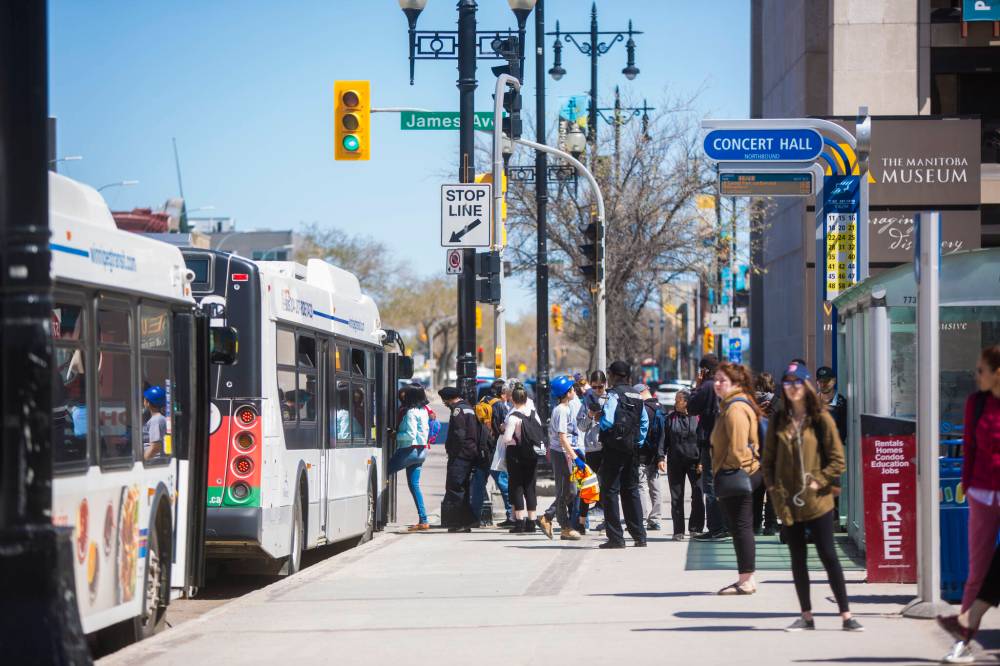
A crackdown on bus riders who don’t pay their fares is getting credit for preventing thousands of free Winnipeg Transit rides.


More than 11,000 bus rides have been denied since a Winnipeg Transit crackdown began on riders who don’t pay fares.

A crackdown on bus riders who don’t pay their fares is getting credit for preventing thousands of free Winnipeg Transit rides.

Passengers who intended to board Winnipeg Transit buses without payment, as assessed by community safety officers and Transit inspectors, were denied rides about 11,700 times through a fare enforcement program since July 2025, a city report notes.

Coun. Janice Lukes, chairwoman of public works, says the enforcement program is being welcomed by drivers and riders, while those who can’t pay are not simply turned away.

“We’ve just had spectacular feedback from the transit drivers, spectacular feedback from the public. (Passengers know) you have to pay to ride the bus. We’ve got so many subsidized programs. If people can’t pay, we’ll help them figure out what program … that they can afford,” said Lukes (Waverley West). “There’s a lot of support being offered, it’s really not just kicking people off the bus.”

Those conducting enforcement may refer vulnerable people to the Downtown Community Safety Partnership for support, or even provide rides to help them seek services at nearby clinics, she said.

Winnipeg Transit inspectors recorded 2,878 denied bus rides, plus 1,083 instances where individuals chose to walk away instead of boarding, between July 2025 and April 20.

The city’s community safety team, a key security presence on buses, recorded another 8,816 denied rides and 6,313 “walkaways” between Jan. 1 and April 20. Results of that team’s 2025 enforcement were not included in the report.

The city has said it loses between $7 million and $10 million in revenue each year due to Transit fare evasion.

Officials stressed the crackdown on skipped payments is also meant to make buses safer.

The head of the union that represents Winnipeg bus drivers said that’s a key reason many drivers support fare enforcement.

“For one thing, 90 per cent of our assaults (on drivers) are caused by people who did not pay the fare … It needs to be done,” said James Van Gerwen, president of the Amalgamated Transit Union Local 1505.

Van Gerwen said the union counted 265 security incidents on buses in 2025 and 112 more this year so far. That figure counts a variety of issues, including all types of assault, attempted assault and verbal threats, as well as steering wheel grabs, shield punches, spitting, attempted robbery, theft, property damage, open liquor, drinks being poured on drivers and use of bear repellent spray.

Drivers are also concerned about the money Winnipeg Transit loses due to fare evasion, which could otherwise by spent on enhancing bus service, he said.

“A lot of the budget relies upon the fares … If we want a transit system that’s running efficiently, (those millions of dollars) would go a long way in supplying extra buses, better buses and the operators to (drive them),” said Van Gerwen.

The report also shows Transit inspectors issued just 35 bylaw tickets for fare evasion since July 2025.

Lukes said penalties are not the focus of the program.

“They’re really trying to educate people and talk them through it. This isn’t about issuing tickets. If they can’t pay for the bus fare, they’re not going to be able to pay for that ticket,” she said.

The councillor said enforcement appears to have happened smoothly for the most part.

“There weren’t a lot of altercations. What they tell us is that people, when they see that there’s fare enforcement … they either pay or they don’t take the bus. It acts as a real deterrent to negative situations,” said Lukes.

Winnipeg Transit did not grant an interview request Thursday.

In an email, spokeswoman Megan Benedictson said it’s not yet clear how much fare enforcement has reduced Transit revenue losses.

“Our fare revenue is also influenced by multiple other factors. We simple can’t say with confidence how many people who are denied rides are returning next time to pay willingly, and what this means for our bottom line,” wrote Benedictson.

Anecdotally, it appears bus drivers are reporting fewer people not paying since enforcement began, she added.

Meanwhile, Lukes said the city is seeking funding from the provincial and federal governments to equip buses with full driver shields, replacing partial ones the city installed in 2019.

“We’re closer than we’ve ever been to determining who’s coming to the table with funding,” she said.

Lukes said the new shields are expected to cost about $15 million and the city will consider its portion of the funding in the 2027 budget.

She believes city councillors support that change, which would allow polycarbonate (shatter resistant) driver enclosures to be added to the bus fleet.

“We work very closely with the union and … they want full enclosures, so that’s what we’re going to be looking at,” said Lukes.

Van Gerwen said the change is needed as soon as possible.

“We found that (the) shields that are there right now are inadequate. (People can) still can reach around the shield, they still can grab the steering wheels, they can throw things at the operators. It’s a hazard,” he said. “Full enclosures (do) reduce the assaults on the driver and make it a safer environment.”
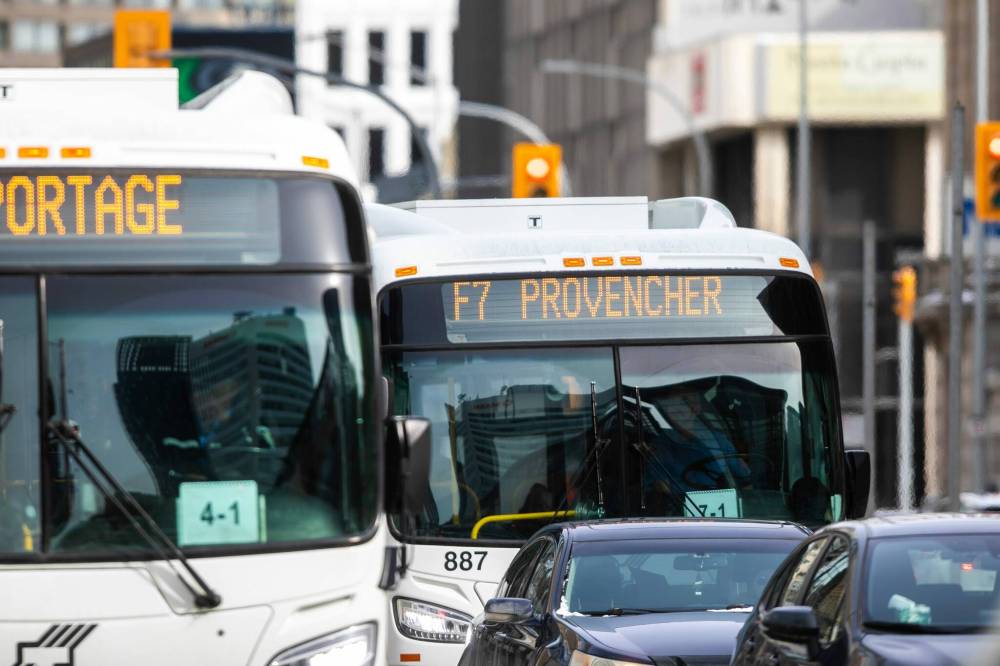

MIKAELA MACKENZIE / FREE PRESS FILES

More than 11,000 bus rides have been denied since a Winnipeg Transit crackdown began on riders who don’t pay fares.
Winnipeg Free Press
__________________
Winnipeg Act II - April 2024

Winnipeg Developments

In The Future Every Building Will Be World-Famous For Fifteen Minutes.
Reply With Quote
     
     
  #13213  
Old Posted Jun 11, 2026, 7:25 AM
Wpg_Guy's Avatar
Wpg_Guy Wpg_Guy is offline
Moderator
 
Join Date: Aug 2002
Location: Winnipeg, Manitoba
Posts: 7,337
Quote:
Fewer taking bus after system overhaul; city hall needs to fix issues — quickly
Tom Brodbeck
Tuesday, Jun. 9, 2026

One year after Winnipeg Transit launched the most ambitious overhaul of its bus network in decades, the verdict is becoming increasingly difficult for city hall to avoid.

The relaunch is not delivering the results that were promised.

City councillors and Transit officials can try to sugar-coat it any way they want. They can point to positive feedback from some riders, blame federal immigration changes and cite fare evasion.

But the numbers don’t lie.

Winnipeg Transit is now forecasting it will collect $18.4 million less in fare revenue this year than budgeted. That is a staggering shortfall for a system that was supposed to be attracting more riders under its redesigned network.

Transit originally projected $97 million in fare revenue for 2026. It already warned earlier this year that revenues could fall by $11.1 million because of declining ridership. Now the situation appears significantly worse.

Even more concerning is the ridership data itself.

Average weekday boardings during the winter of 2025-26 were estimated at 164,482. That’s down more than 11 per cent from the previous winter and far below the nearly 196,400 weekday boardings recorded before the pandemic in 2018-19.

If the new network was supposed to make public transit more attractive and convenient, the evidence so far suggests the opposite is happening for many riders.

Perhaps the most telling admission came from Coun. Jeff Browaty, who chairs city council’s finance committee, who acknowledged that some regular riders have found the new system less useful than the old one and have switched to other forms of transportation.

That should set off alarm bells throughout city hall.

Public transit succeeds when people choose it over driving, ride-booking services or other alternatives. If existing customers are abandoning the system, that’s a serious problem.

To be fair, the network redesign is not solely responsible for declining ridership.

Transit officials are correct that federal immigration policy changes have reduced the number of international students and temporary foreign workers in Winnipeg. Those groups traditionally rely heavily on public transit and their numbers have fallen across Canada.

That undoubtedly explains part of the decline.

But it doesn’t explain all of it.

For months, riders have complained about routes that are less convenient, including longer travel times, reduced evening and weekend service, missed connections and confusing transfers.

Many Winnipeggers continue to experience late buses, overcrowded vehicles that pass stops without allowing passengers to board and, in some cases, buses that simply don’t show up. That problem existed long before last year’s network redesign.

Nothing destroys confidence in public transit faster than uncertainty.

If someone cannot depend on a bus to get to work, school or an appointment on time, they will eventually find another way to travel.

That’s what appears to be happening.

Safety and security remain another major obstacle.

While the city has added community safety officers and recently announced a greater police presence on buses, many riders still do not feel comfortable using the system.

Reports of assaults on drivers, harassment of passengers and disorderly behaviour — including in bus shacks — continue to damage public confidence. Riders who feel unsafe are far less likely to use the system regularly, particularly during evenings and weekends.

Attracting riders requires more than route maps and marketing campaigns. People need service that is reliable, convenient, frequent and safe.

At the same time, Winnipeg Transit is being asked to accomplish all of this with inadequate funding.

The previous Progressive Conservative government severely reduced provincial support for municipal transit systems, ending the long-standing principle of equal provincial-municipal cost sharing.

That was a mistake.

Public transit is not simply a municipal service. It is critical infrastructure that supports economic growth, reduces congestion, lowers emissions and connects people to jobs, education and health care.

The Manitoba government should restore the traditional 50-50 funding partnership and provide Winnipeg Transit with the stable resources it needs to improve service.

Still, more funding alone won’t solve every problem. Transit management must continue making adjustments to routes that are clearly not working and be willing to admit when changes have produced unintended consequences.

But better service requires investment. Transit needs more buses, more frequent and reliable service and up-to-date technology, including better fare-payment options that include credit and bank cards, as is the case in most other Canadian cities.

One year after the relaunch, the evidence is mounting that Winnipeg Transit’s overhaul has failed to attract the ridership gains that were expected and may have driven some existing customers away.

That’s not a reason to abandon the network redesign altogether. Large-scale transformations often require adjustments and fine-tuning.

It is, however, a reason for honesty.

The city should stop pretending the numbers are merely a temporary bump in the road. A projected $18.4-million fare revenue shortfall and double-digit ridership declines are not signs of success.

They’re warning signs.

The sooner city hall acknowledges that reality, the sooner it can focus on fixing the problems that are keeping riders off Winnipeg’s buses.
Free Press
__________________
Winnipeg Act II - April 2024

Winnipeg Developments

In The Future Every Building Will Be World-Famous For Fifteen Minutes.
Reply With Quote
     
     
  #13214  
Old Posted Jun 11, 2026, 7:32 AM
Wpg_Guy's Avatar
Wpg_Guy Wpg_Guy is offline
Moderator
 
Join Date: Aug 2002
Location: Winnipeg, Manitoba
Posts: 7,337
Quote:
Transit system overhaul, immigration policy reducing Winnipeg bus ridership
Revenue drop projected to be significantly worse than predicted in 2026 budget

By: Joyanne Pursaga
Monday, Jun. 8, 2026


Winnipeg Transit warns it may earn $18.4 million less from rider fares this year than its budget calls for.

When the city’s 2026 budget was released, Transit estimated it would earn $97 million in fare revenue throughout this year. However, it also listed an “outstanding risk” that fares could fall $11.1 million lower due to a drop in ridership.

A finance update, based on figures up to the end of March, notes that risk has since increased.

“As of the first quarter, Transit is forecasting a reduction in revenues of $18.4 million,” the report notes.

City council’s finance chairman said the system overhaul last June, which changed virtually every Winnipeg Transit route, appears to have led some Winnipeggers to switch to other forms of transportation.

“For some who were regular bus riders, the new system is not as ideal as the (old one.) For a lot of people that the new system is better for, (many) haven’t necessarily tried Transit yet,” said Coun. Jeff Browaty (North Kildonan).

Browaty said old technology doesn’t help, which is why he’s seeking newer payment options on buses.

“I’m trying to push that to be replaced as soon as possible. Most cities now, you are able to use an Interac card or a credit card to pay for your fares,” he said.

A city press release notes people who board buses without paying, as well as fewer international students and foreign workers (who tend to be frequent riders), are also key factors in the reduced-fare forecast.

Winnipeg Transit did not grant an interview request Monday.

In an email, the service noted ridership actually began to decline in late 2024 following federal immigration policy changes.

“This resulted in a drop in international students and temporary foreign workers living in Winnipeg. We know these demographics rely heavily on public transit. Transit systems across Canada have since experienced a decline in ridership,” spokesman Brandon Logan wrote.

Winnipeg Transit buses had an estimated 164,482 average weekday boardings on fixed routes throughout winter 2025-26, down 11.1 per cent from 185,038 the previous winter.

In winter 2018-19, the average was 196,352.

The numbers are estimates based on automatic passenger counters in a portion of the overall fleet and don’t count on-request rides.

Logan noted Transit has also made several scheduling changes since its new network was added, based on customer feedback. That includes extending some night-time service and adding trips on some main routes as well as some smaller community routes.

Still, the union representing Winnipeg Transit drivers blamed the network overhaul as a key reason why some former riders stopped taking the bus.

“We’re noticing it at the fare box. There’s a lot more people that are not riding the bus,” said Derek Hanley, vice-president of the Amalgamated Transit Union Local 1505.

Hanley said many routes actually remain well-used, though on-request service sees less demand. Drivers have also spotted online complaints from people who said they waited 20 minutes for a bus, only to give up and book a ride-hailing service.

“They… cut the weekend and night services back so drastically that they’re forcing people to use other modes of transportation,” he said.

Hanley said community safety officers and a recently announced increased police presence on buses should help ensure more fares are paid, though efforts so far are just starting to make a difference.

“It’s making a dent but we need it to make a much bigger impact,” he said.

He said safety improvements are also desperately needed, as riders who witness driver assaults, or are harassed themselves, are more likely to switch to a different form of transportation.

Browaty said a new “Try Transit” ad campaign aims to help raise awareness of improvements to the city’s bus routes and, hopefully, attract more riders.

“The new primary transit network was a very ambitious relaunch of Transit services in Winnipeg. Basically, every route was touched. We’re getting a lot of positive feedback…. But there are some trips, some certain instances that are not as good in the new system. We’ve identified some of those shortcomings and we continue to make changes,” he said.

Overall, Winnipeg Transit expects to end 2026 with a $17.8-million shortfall, which also factors in rising fuel costs and higher Workers Compensation Board claims, offset by savings from vacant positions.
Winnipeg Free Press
__________________
Winnipeg Act II - April 2024

Winnipeg Developments

In The Future Every Building Will Be World-Famous For Fifteen Minutes.
Reply With Quote
     
     
  #13215  
Old Posted Jun 12, 2026, 10:08 PM
bon_vivant bon_vivant is offline
Registered User
 
Join Date: Apr 2024
Posts: 453
How much worse does it have to get before it gets better? Our transit system is embarrassingly behind the times.
Reply With Quote
     
     
  #13216  
Old Posted Jun 13, 2026, 5:25 AM
FactaNV FactaNV is offline
Registered User
 
Join Date: Sep 2023
Posts: 2,277
Quote:
Originally Posted by bon_vivant View Post
How much worse does it have to get before it gets better? Our transit system is embarrassingly behind the times.
When the province reinstitutes the funding model that was cut, maybe then.
Reply With Quote
     
     
  #13217  
Old Posted Jun 24, 2026, 1:30 PM
Wpg_Guy's Avatar
Wpg_Guy Wpg_Guy is offline
Moderator
 
Join Date: Aug 2002
Location: Winnipeg, Manitoba
Posts: 7,337
Standing Policy Committee on Public Works – June 29, 2026
Report: State of the System


Quote:
Overhauled Transit system rollout ‘a nightmare,’ public works chair says
Report details first-year problems leading to drop in ridership, expected revenue

By: Joyanne Pursaga
Tuesday, Jun. 23, 2026


The introduction of Winnipeg Transit’s long-awaited network overhaul last June — designed to provide faster, more reliable service and increase ridership — got off to a rocky start.

“Honestly, it was a nightmare…. A lot of people couldn’t connect, they couldn’t get the (bus) times (right), we couldn’t get data,” Coun. Janice Lukes, chairwoman of public works, said Tuesday after the city released a “state of the system” report on the new network’s first year.

“That was a big hump to start and I think it was very unfortunate because I think it set a very bad tone.”

Instead of convincing more Winnipeggers to leave their vehicles at home and take the bus, the changes led to a sharp decline in ridership and revenue, among other things, and has the people behind the redesign proposing improvements.

Almost immediately after the new system’s rollout on June 29, 2025 — which changed almost every bus route — the companion GPS system failed, leading Transit to post incorrect arrival times. At the peak of the problem, almost a quarter of bus location reports were incorrect.

The problem was fixed by November, Transit reported.

Riders complained that buses stopped running too early for them to return home from work or school, involved too many transfers and made their commute times much longer.

Improvements tied to that feedback followed, including adding additional night-time service and increasing frequency, the report says.

“I think the state of the transit system has dramatically improved since we launched it and I do think it’s still got a ways to go,” said Lukes.

The report looks at how the system fared over the winter and spring, though the GPS issue prevented some information from being properly tracked last summer and fall.

“Overall, I’d say it’s working pretty well… but there’s a lot of small details we still need to work on,” said Bjorn Radstrom, Winnipeg Transit’s manager of service development.

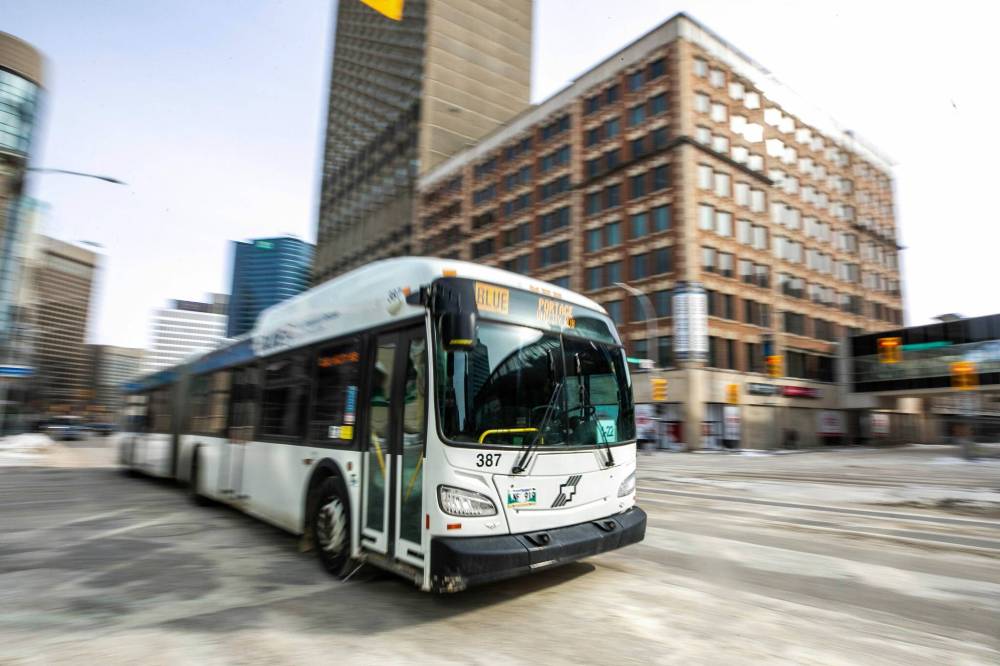
For example, the rapid transit Blue Line was on time only 66.6 per cent on weekdays last winter, falling below a 75 per cent target.

To be considered on time, a bus must arrive from one minute before to five minutes after its scheduled time.

Radstrom said that target will be tough to meet until downtown rapid transit infrastructure is built.

Meanwhile, the key crosstown D12 route — which connects The Forks to the airport, was on time 72.3 per cent on weekdays, but plummeted to 28.8 per cent on Saturdays during the winter.

Radstrom said it appears that route became much more punctual after scheduling changes took effect in April, although data is still being gathered.

The report found much better on-time winter results for the F7 St. Anne’s-Provencher on Saturdays (78.9 per cent), D10 Panet-Adsum on Saturdays (76 per cent) and 31 Waterfront-North Main on Sundays (75.8 per cent).

Transit did not provide an overall on-time average for its routes, as improving the system requires a more detailed look at specific trips, said Radstrom.

The latest report proposes another round of updates to the network, pending city council and 2027 budget approvals.

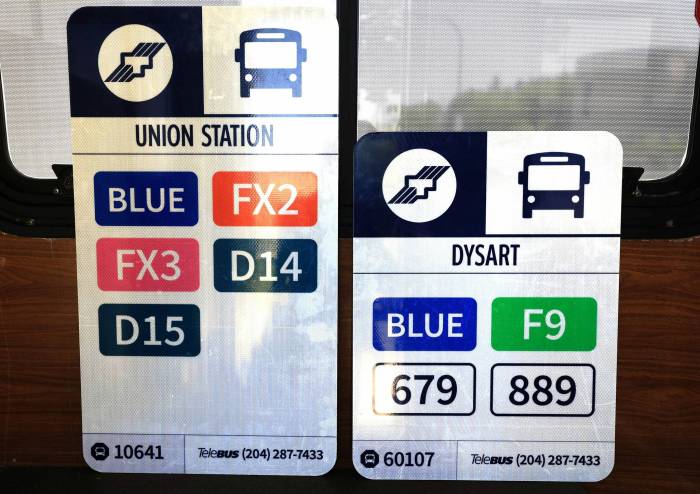
The proposals would: change connector route 22 Portage to pass through the Grace Hospital site; add three extra half-trips per evening to community route 671 Dalhousie; add two extra half-trips to community route 672 Killarney; shift some early morning trips on the 672 Killarney to the peak afternoon period; add an extra bus at afternoon peak hours for community route 677 Wilkes; and shift some trips on limited-span Route 889 Sherbrook-Pembina Express from the morning peak period to midday.

Winnipeg Transit is also making a second request for city council to fund additional service from Linden Woods to Oak Park and Shaftesbury high schools, extend service to Festival Drive and extend service to Highland Pointe.

Implementing all of the proposed changes would require 16.5 more full-time staff positions and cost the city $1.15 million in 2027 (when changes would take effect between June and September) and about $2.5 million in each of the following four years.

“We’re listening to all the complaints and the feedback that people have, we’re verifying that through the data we’re collecting…. We really are working all the time at improving (the service),” said Radstrom.

While Lukes said she’d like to implement all proposed changes, she noted the city could have to “pick what we can afford.”

A group that lobbies for more frequent transit wants all of the proposed changes in place sooner.

“The city should expedite that spending immediately,” said Kyle Owens, president of Functional Transit Winnipeg.

“We can’t afford to wait another year of declining ridership. We need to get that service immediately to address people’s frustrations.”

Winnipeg Transit expects to earn $18.4 million less from rider fares this year than the 2026 budget predicted, owing to issues with the new network, fare-evaders and a decline in the numbers of international students and foreign workers (who tend to be frequent riders).

Owens said the new network brought some huge improvements by ramping up frequency on main bus routes, and he credited Transit for expanding night-time service following complaints.

However, a lack of other investments means too many people are left dissatisfied, he said.

“For people taking that (D12) route (on Saturday), there was a 70 per cent chance of their route not being on time,” he said.


RUTH BONNEVILLE / FREE PRESS FILES
Last year's Winnipeg Transit network overhaul led to a sharp decline in ridership and revenue.
Winnipeg Free Press
__________________
Winnipeg Act II - April 2024

Winnipeg Developments

In The Future Every Building Will Be World-Famous For Fifteen Minutes.
Reply With Quote
     
     
  #13218  
Old Posted Jun 24, 2026, 2:20 PM
bomberjet bomberjet is offline
Registered User
 
Join Date: Nov 2012
Location: Winnipeg
Posts: 16,175
I just can't get myself to use the bus again. At this point in my life where I need to be picking up kids on certain days, or dropping off kids on other days, the service is not reliable enough and takes too long compared to previous days. Before I could drop my kid off at school, and catch the bus ASAP to get myself to work. New system I waited sometimes for 30 mins before the bus would come, then I needed to transfer. Same coming home. Overall not workable for me.
Reply With Quote
     
     
  #13219  
Old Posted Jun 24, 2026, 2:33 PM
kjmz kjmz is offline
Registered User
 
Join Date: Aug 2021
Posts: 33
Quote:
Originally Posted by bomberjet View Post
I just can't get myself to use the bus again. At this point in my life where I need to be picking up kids on certain days, or dropping off kids on other days, the service is not reliable enough and takes too long compared to previous days. Before I could drop my kid off at school, and catch the bus ASAP to get myself to work. New system I waited sometimes for 30 mins before the bus would come, then I needed to transfer. Same coming home. Overall not workable for me.
I completely agree, and that quote from the transit manager is particularly aggravating.

Claiming the system is "working pretty well" completely ignores the reality of the people relying on it. Implementing major, unrequested disruptions requires a deep understanding of the core user base. Unfortunately, Winnipeg Transit clearly failed to understand its riders, and the execution completely missed the mark.
Reply With Quote
     
     
  #13220  
Old Posted Jun 24, 2026, 2:58 PM
FactaNV FactaNV is offline
Registered User
 
Join Date: Sep 2023
Posts: 2,277
Quote:
Originally Posted by kjmz View Post
I completely agree, and that quote from the transit manager is particularly aggravating.

Claiming the system is "working pretty well" completely ignores the reality of the people relying on it. Implementing major, unrequested disruptions requires a deep understanding of the core user base. Unfortunately, Winnipeg Transit clearly failed to understand its riders, and the execution completely missed the mark.
It wouldnt have been bad if they didnt put the cart before the horse. No infrastructure to enable the high turnaround that is needed. If they had built even queue jumps and demarcated bus only lanes I think it could have been successful, even before the big infrastructure was built. But as usual, do it on the cheap, another gorillion dollars to the cops.
Reply With Quote
     
     
This discussion thread continues

Use the page links to the lower-right to go to the next page for additional posts
 
 
Reply

Go Back   SkyscraperPage Forum > Regional Sections > Canada > Manitoba & Saskatchewan
Forum Jump


Forum Jump


All times are GMT. The time now is 9:26 AM.

     
SkyscraperPage.com - Privacy Statement - Top

Powered by vBulletin® Version 3.8.7
Copyright ©2000 - 2026, vBulletin Solutions, Inc.