HomeDiagramsDatabaseMapsForum About
     

Go Back   SkyscraperPage Forum > Regional Sections > Canada > Ontario > Ottawa-Gatineau > Business, Politics & the Economy


Reply

 
Thread Tools Display Modes
     
     
  #41  
Old Posted Oct 10, 2023, 5:27 PM
J.OT13's Avatar
J.OT13 J.OT13 is offline
Moderator
 
Join Date: Mar 2012
Location: Ottawa
Posts: 28,479
Visit the link to see some neat archival photos.

Quote:
How Kanata North grew to become Canada’s largest tech park

The Globe and Mail
October 9, 2023


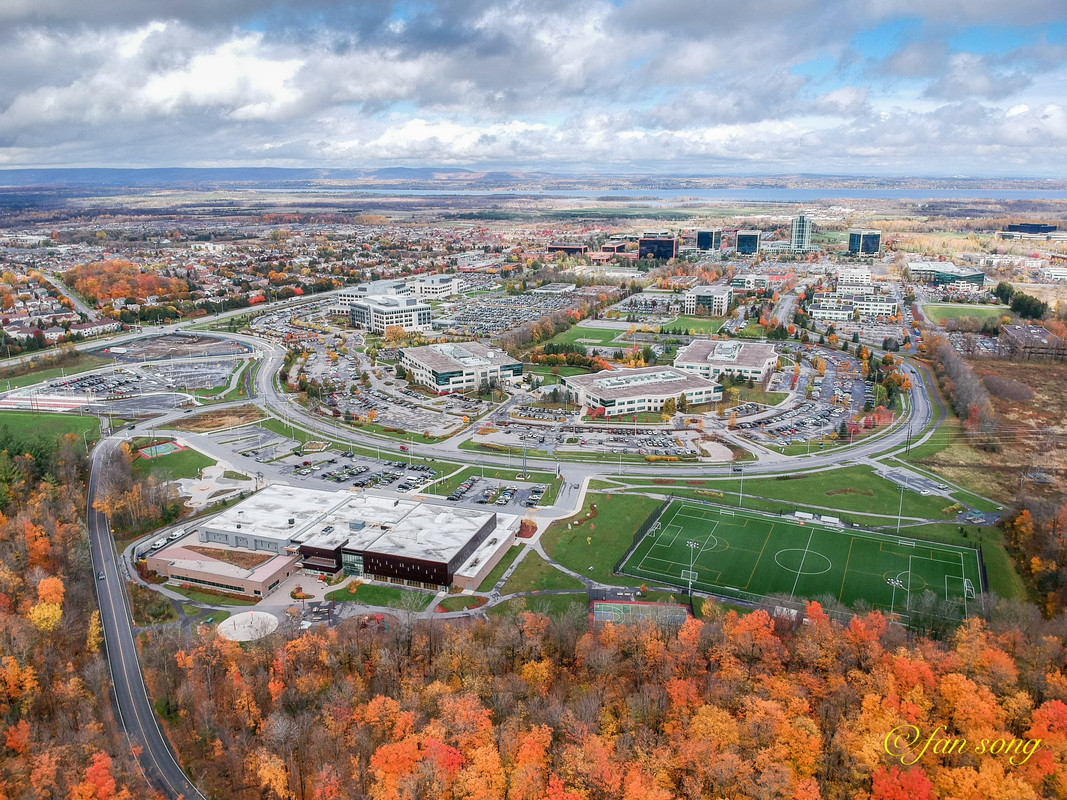
In west Ottawa, just 26 kilometres from the downtown core, Kanata North is a robust and vital business ecosystem that has housed some of Canada’s most influential tech companies – and it is hiring.


For more than fifty years, Kanata North, represented by the Kanata North Business Association (KNBA), has been fostering an environment where local businesses create success by attracting and retaining the best talent in the world.

Ottawa’s reputation as a hub of innovation owes much to Kanata North. But to really understand where the tech industry is going, and the pivotal role this global high-tech hub has played, one has to look to the past.

The legacy of Canada’s largest technology park

Kanata North’s story of innovation can be traced back three-quarters of a century. After the founding of global defence contractor Computing Devices Canada in 1948, and later Microsystems International Ltd. (MIL) in 1968, the Canadian government funded Northern Electric and Bell-Northern Research – later Nortel Networks – to reduce its dependency on foreign companies for tech parts. A small rural town outside of Ottawa became home to some of the country’s earliest tech talents, and a place for them to live, work, play, learn, and innovate.

In the early 1970s when Denzil Doyle, CEO and founder of Digital Equipment Canada (1962), purchased 56 acres of farmland in Kanata, he had a dream to one day build a technology park. Considered by some as the “godfather” of the Kanata tech scene, the pioneering entrepreneur led the region’s move to technology manufacturing. This, in addition to the attractive living conditions created by affordable housing and top schools, drew more talent to the region, like Mitel founders Michael Cowpland and Sir Terry Matthews, who opened their office in Kanata in 1972.

Over the next four decades, Doyle led the investment of millions of dollars in software and telecommunications.

Computing Devices and MIL may be ancient history, but the Ottawa area continues to reap the benefits of those who blazed this tech trail. By the 1990s, it boasted more than 90 companies founded or co-founded by former MIL employees, worth over an estimated $3-billion. The demise of Nortel in 2009 flooded the region with unrivaled tech talent, many of whom remain.

Today, Kanata North is home to 540+ companies, primarily in the tech sector, that have become the backbone for the economic development of west Ottawa. An analysis of the park found it contributes more than $13-billion annually to Canada’s GDP. Kanata workers are four times more productive than the national average, and the park houses tech companies with global impact and reach.

Mitel is among the many companies that remain on-site. It’s “the original global multinational,” says Kanata North tech executive Amy MacLeod, and she would know, having spent most of her professional life in Kanata North with “the formative years” of her career at Mitel. It wasn’t only the innovative business models that made the emerging company a success; its early leadership played a vital role in shaping the organization.

“It’s a shared experience in the profound sense of growing a company [while] conquering a global market.”

Today, Ms. MacLeod – VP of corporate communications for MDA, Canada’s largest space technology company – remarks on the unique history and values that drive the success of the park.

“It’s still global. It’s still feeding innovation. It’s created an entire ecosystem,” she says.

The business model of shared equity and re-investing in innovation were cornerstones of the technology leadership that inspired other early KNBA companies, such as Newbridge Networks. This growth model funded and nurtured by Sir Terry Matthews is “the really magical part of Kanata North,” Ms. MacLeod says. The park has become a “feeder system” that helps its companies mature and evolve. Rather than searching far and wide for qualified talent, organizations can capitalize on the area’s high percentage of young, highly-educated individuals for whom Kanata North’s work opportunities, along with its business and retail services, are very appealing.

This feeder system can also be seen in action through Sylvain Charbonneau, VP of research and innovation at the University of Ottawa. Like Ms. MacLeod, he spent much of his career in the park, and Mr. Charbonneau is both a champion of its vibrant ecosystem and a key player in expanding Kanata North’s talent pool.

Mr. Charbonneau has been a leader in photonics and nanotechnology for decades, conducting research in collaboration with Kanata North companies through the 1990s and into the early 2000s. He went on to co-found Optenia Inc. within the park, and in his role as chief technology officer, he witnessed the benefits of Kanata North first-hand.

“Kanata North is long in the making,” he says. “That ecosystem is very unique, and you have all the supply chain supporting the tech sector there.”

A future-thinking community

The KNBA, formed in 2013, represents, advocates for, and supports the best interests of its local member companies while promoting the region to new businesses. For example, in 2021 KNBA introduced Hub350, which serves as a central collaboration space where students, talent, investors, companies, and creatives collide.

KNBA’s efforts are changing the way companies think about how they operate, who they partner with, and what kind of lifestyle might appeal to their talent. As a result, the Kanata North community’s “live, work, play, learn, and innovate” mantra has become an integral part of these companies’ cultures.

By combining post-secondary R&D and diverse talent pipelines with startups, funders, and enterprise-level companies, KNBA is building on its past to propel the tech park into a promising future. In its Annual Report on Tech, commercial real estate services and investments company CBRE reveals that Canada’s tech talent workforce grew by 15.7 per cent from 2020 to 2022, outpacing the U.S. growth rate of about 11 per cent. The Ottawa region led all North American markets, with tech talent comprising 13.3 per cent of total employment, more than double the Top-50 market average. The San Francisco Bay Area ranked second at 11.6 per cent.

Mr. Charbonneau puts it simply: “Great things happen in Kanata North.”

From a decades-old dream to incubate innovation in a cornfield, to today’s recognition as a groundbreaking business community, exploring the art of the possible is what’s fueling the park’s future.

KNBA is doing an amazing job of evolving and keeping that community connected,” Ms. MacLeod says. “You can’t disconnect community innovation from technology innovation. It’s why the park is still whole and powerful, and the largest in Canada.

To learn more about Hub350 and the tech ecosystem, visit Hub350.com. To learn more about careers in Canada’s largest technology park, visit DiscoverTechnata.com.
https://www.theglobeandmail.com/life/adv...rew-to-become-canadas-largest-tech-park/
Reply With Quote
     
     
  #42  
Old Posted Oct 11, 2023, 12:53 AM
rocketphish's Avatar
rocketphish rocketphish is offline
Planet Ottawa and beyond
 
Join Date: Feb 2009
Location: Greater Ottawa
Posts: 14,489
‘Nobody’s thinking about Ottawa’: Startup Canada’s Kayla Isabelle on what’s missing in the local tech scene

Mia Jensen, OBJ
October 10, 2023 4:32 PM ET


Startup Canada CEO Kayla Isabelle says Ottawa's tech sector lacks of a specific brand identity, and needs more leadership and a coherent growth strategy.

Ottawa’s tech industry is, once again, at a crossroads.

In July, Sacha Gera, CEO of JSI Telecom, wrote in an op-ed for OBJ about how the region has lost dozens of public tech companies and is struggling to attract and retain talent.

“As the tech scene seemed to gain momentum pre-pandemic, the post-pandemic era now brings uncertainty, urging us to examine the issues that have led to this concerning situation,” he wrote. “A continuous loss of companies can lead to a lack of innovation and competitiveness in the local tech ecosystem. It is crucial for a healthy tech sector to have a balance of mature, established companies that can mentor and support startups, fostering an environment of growth and learning.” In a conversation with OBJ last week, Kayla Isabelle, CEO of the Ottawa-based entrepreneurship organization Startup Canada, weighed in on the health of Canada's tech sector post-pandemic. According to Isabelle, the tech industry in Ottawa must contend with a multitude of challenges, including a lack of brand identity to attract companies and talent, and a need for leadership and a coherent growth strategy.

Here is part of that conversation. This transcript has been edited for length and clarity.

Q: What can you tell me about the health of the Canadian tech industry as we’re coming out of the pandemic? There has been a lot of turbulence in the last couple of years. We've seen tremendous growth and then we've also seen major dips: losing staff, retention, losing talent to different countries even. Folks aren’t even looking at Canada the same way that they may have been, even a year ago. But I will say that there's been a lot of movement, to collaborate, to reinspire, to find additional leadership and really seize this moment that Canada has to be a leader in the tech and innovation space. There's so much buy-in from governments, from the private sector, from incubators, accelerators and all the folks in the ecosystem. They see this as a great moment for entrepreneurs. But I think we're coming from a position of a lot of uncertainty and a lot of exhaustion.

Q: What are some of the things the industry might be able to leverage going forward to help growth? There's so much that we can learn from Waterloo, because they have a very similar structure and story to Ottawa. They had this brand that was an incredible startup turned behemoth and, when it fell apart, the consequence of that was this huge entrepreneurial movement. Folks started new businesses, taking all of that incredible talent and recycling it back into new ideas with brilliant focus behind these businesses. We saw the ecosystem really show up with new incubators and accelerators, really being that soft landing. Waterloo became this huge pool for talent and still to this day is one of the highest-ranked Canadian cities when it comes to tech.

In Ottawa, we see a similar pattern with, for example, Shopify moving the headquarters and laying off workers. All of the talent that was pulled to Ottawa, to shape that moment, could be recycled back into incredible entrepreneurs. We’re already seeing people laid off from these massive corporations that were doing so much hiring in the last couple of years. Ottawa could have this moment of really providing support to those entrepreneurs with great early stage incubators and formal programs that get started on the right foot. That could really create ripple effects of more entrepreneurial thinking, bringing more talent and bringing more investments.

Then, on the back of that, probably the biggest challenge for Ottawa is that nobody’s thinking about Ottawa. If you look at the amount of talent and the number of companies we have, we should be punching so much more above our weight. But we’re not perceived as a competitive player in Canada when it comes to housing tech startups. So how do we really shift that brand perception to demonstrate the great success stories, to showcase more than just the Shopifys and put Ottawa on the map?

Q: What are the challenges and potential directions that we can take to maintain the presence of mature companies in Ottawa? Ottawa has so many perceived and real barriers for entrepreneurship, but there’s also a hierarchy of needs: housing, transit, vibrancy in a city and feeling connected with people around you, all those essential ingredients. If we don't have those elements, people will not come. So I think investing in all of those scaffolding elements around Ottawa. We can look to so many other incredible cities that have been able to demonstrate the impact of that in creating entrepreneurial thinking and creativity. Ottawa still has a long way to go in that space. That’s where you attract larger companies, as well. But we also need to think about the entire ecosystem as a continuum and not spending too much on larger players. If you have a really competitive early stage startup ecosystem and you invest early into it, those will become the Shopifys of tomorrow. I think it's a balance of investing in spaces where people can connect and share their entrepreneurial ideas. We need more of that in Ottawa and less of the bureaucracy and perceived risk aversion.

Q: How do you make sure there's that competitiveness within the industry in a local area? What you see in places like Whitehorse, Halifax and Calgary is radical collaboration. Every stakeholder in entrepreneurship — that’s the investors, incubators, accelerators, government players at the municipal, provincial and federal level — all of these folks are sitting in the same room and advocating for the same sentiment and growth and looking to a positive future.

What I see in Ottawa right now is too many conversations running in circles and a lack of leadership saying, “Hey, here's the concrete direction that we're all rallying towards. Here are our specific roles and responsibilities in that ecosystem.” There's really a missing accountability. In other cities, we see these champions who are relentlessly pushing that agenda forward and it's paid off. In Ottawa, we often get stuck needing the answer to every single detail and planning meticulously. Yes, we need that basic collaboration, but we need a commitment to action and that’s what is holding us back at this moment. People want to see this leadership, but nobody’s really seizing it.

Q: How have other cities gone about formalizing that process to make that happen? It’s formal and informal, with a lot of government support, bringing in all of the players that want to see a healthy city. A healthy city benefits the large corporates, the early stage startups, local governments and citizens that have nothing to do with the tech ecosystem. We need to think of it as a true ecosystem and what makes the health of that is a collective responsibility, not just making it one person’s problem.

A perfect example is Calgary. They had a sort of blank slate space, a parking garage, and decided they could create a really cool coworking space for incubators, for new entrepreneurs, different office spaces, and that has symbolically become this area of collaboration in the tech ecosystem.

What is the equivalent in Ottawa? Who is creatively trying to create spaces where ideas and people are naturally bumping into each other? We have a fragmented city. Ultimately, it’s almost spiritual, practical in some ways, rallying around an idea and an energy; Ottawa doesn’t have that energy right now.

Q: How optimistic are you about what the industry in Ottawa can do moving forward? Ottawa has all the ingredients: so many great companies and great leaders. We have the appetite and interest in making it very competitive across Canada and across the world. The disconnect between that and where we can go shouldn't be too far. We just need the commitment to action and really moving that dial. That's really a shift that needs to happen, which is arguably one of the easiest things to do. And that's also what it is to be an entrepreneur. People don't want to sit around and wait five years for something to happen. Startups, their natural, competitive advantage is speed. If we want to be competitive, we also need to move quickly.

https://obj.ca/startup-canadas-kayla-isabelle-ottawa-tech-scene/

Reply With Quote
     
     
  #43  
Old Posted Oct 21, 2023, 1:59 AM
LeadingEdgeBoomer LeadingEdgeBoomer is offline
Registered User
 
Join Date: Mar 2010
Posts: 1,309
A media release from uOttawa:

The unique academia / industry partnership will offer immersive cybersecurity response training through highly realistic, simulated cyberattack and cyber threat simulations.

The University of Ottawa and IBM Canada (NYSE: IBM) today announced the official opening of the new uOttawa-IBM Cyber Range. IBM’s first Cyber Range partnership on a Canadian university campus offers highly realistic cyber response training exercises to help businesses and government organizations across the country better prepare for and strengthen defences against real-world cyber threats, including how to plan, respond, manage, contain, and remediate cyberattacks.

The Cyber Range training will also be integrated into undergraduate and graduate courses, while new microprograms and micro-credentials will be offered to private and public sector professionals, including industry certifications (e.g., NSE, IBM, CompTIA, and more). Bringing together some of the university’s top experts from numerous fields – engineering, law, social sciences, and business – the uOttawa-IBM Cyber Range will allow for interdisciplinary research and collaboration.

Canadian companies are paying nearly $7 million on average in data breach costs – the third highest in the world, according to IBM’s 2023 Cost of a Data Breach Reportnorth_eastexternal link. Incident response (IR) training such as that to be delivered through the uOttawa-IBM Cyber Range is one of the most effective ways to reduce breach costs. In fact, as set out in the report, globally, organizations saved $ 1.49 million on average in breach costs when they had a trained IR team and regularly tested plans.

“Globally cyberattacks are on the rise. The new uOttawa-IBM Cyber Range will help the university enrich its curriculum and train cyber security experts with the skills and knowledge to debunk serious security breaches,” said Jacques Frémont, President and Vice Chancellor at the University of Ottawa. “Our partnership with IBM Canada will also help fund innovative research in cyber safety, which will help keep governments, organizations and Canadians one step ahead of cyber threats.”

The uOttawa-IBM Cyber Range is the result of a multi-year partnership announced in 2021 with the goal of developing a more resilient cyber landscape for Canada. IBM pledged more than $21 million in-kind contributions to the University over five years to support the development and operation of the Cyber Range, while uOttawa committed to invest nearly $7 million over the same period.

“The uOttawa-IBM Cyber Range will deliver an extraordinary level of training and experience for Canadian business and government leaders as they face increasingly sophisticated security threats posed by cybercriminals,” said Dave McCann, president of IBM Canada. “This partnership between IBM and the University of Ottawa is a momentous step forward in empowering organizations with the essential skills they need to defend and respond effectively to cyberattacks. In a digital landscape as vast as Canada, the uOttawa-IBM Cyber Range has the potential to be a game-changer, offering businesses across the country the experience, knowledge and expertise they need to protect and safeguard their operations."

This is just the third IBM Cyber Range in the world, and IBM Canada’s first university-based range. IBM operates two other Cyber Ranges located in Cambridge, Massachusetts and Bangalore, India.
Reply With Quote
     
     
  #44  
Old Posted Sep 18, 2024, 1:26 PM
J.OT13's Avatar
J.OT13 J.OT13 is offline
Moderator
 
Join Date: Mar 2012
Location: Ottawa
Posts: 28,479
Investissement de 475 millions: Télésat choisit Gatineau pour son centre d’exploitation

Par La Presse Canadienne
13 septembre 2024 à 15h56


Le déploiement des 198 satellites du futur réseau Télésat Lightspeed pourra finalement prendre son envol. L’entreprise prévoit notamment implanter à Gatineau un centre de contrôle et d’exploitation des satellites.

Annoncé en grande pompe en 2021 puis reporté à quelques reprises, le projet a fait l’objet d’une nouvelle annonce vendredi en présence des premiers ministres François Legault et Justin Trudeau.

Québec investira 475 millions $, dont 400 millions à Télésat pour soutenir le développement, la fabrication, la commercialisation et l’opération des satellites et 75 millions $ à MDA, de Sainte-Anne-de-Bellevue, qui agira comme maître d’œuvre du projet.

Le projet prévoit maintenant la création de 967 emplois, soit 317 de plus de que ce qui était prévu lors de l’annonce initiale de 2021.

Le projet représente des investissements totalisant plus de 6,1 milliards, dont plus de 2,6 milliards au Québec.

Ottawa avait déjà annoncé, de son côté, des investissements de 2,14 milliards dans le projet.

https://www.ledroit.com/affaires/affaire...exploitation-IY5DBDSJOVCNDFMIM4L7Z743T4/
Reply With Quote
     
     
  #45  
Old Posted Jun 1, 2025, 2:29 PM
LeadingEdgeBoomer LeadingEdgeBoomer is offline
Registered User
 
Join Date: Mar 2010
Posts: 1,309
uOttawa will expand its presence in the Kanata North Tech Park. This invitation to attend the reopening went out to the media. This will be one of the last events for President Fremont. He is retiring in June.

Quote:
Jacques Frémont, President and Vice-Chancellor of the University of Ottawa, Julie St-Pierre, Interim Vice-President, Research and Innovation, and Muralee Murugesu, Associate Vice-President, Innovation, Partnerships and Entrepreneurship, are pleased to invite you to the grand reopening of the Kanata North campus.

Following six years of unprecedented growth in Canada’s largest technology park, the uOttawa Kanata North campus has moved to a larger location with more room for students, more labs, and more space for faculties to be housed together under one roof.

June 2 also marks the launch of the provincially funded large-scale research project, known as SITE-CAV (Secure, Intelligent, and Trustworthy Ecosystem for Connected and Autonomous Vehicles), at the Smart Connected Vehicle Innovation Centre led by Faculty of Engineering professor Burak Kantarci.

Join us to mark this important milestone, together with our Kanata North industrial and community partners, and explore the impact of our growing partnerships and expansion as the Park’s leading hub for cutting-edge research, innovation, and talent development.

Please RSVP by May 23.
Reply With Quote
     
     
  #46  
Old Posted Jan 20, 2026, 9:43 PM
LeadingEdgeBoomer LeadingEdgeBoomer is offline
Registered User
 
Join Date: Mar 2010
Posts: 1,309
Dominion Dynamics lands $21M in funding and plans to expand operations in Ottawa
OBJ staff
OBJ staff
January 19, 2026


Backed by $26 million in pre-seed and seed funding, Dominion Dynamics plans to advance its technology aimed at defending the Canadian Arctic, hire hundreds more engineers, and open a 25,000-square-foot factory in Kanata.

On Monday, the Ottawa-based defence-tech startup announced that it had raised $21 million in seed funding, which it will use to accelerate the deployment of “Auranet,” a network of sensors and autonomous systems designed to monitor Canada’s northern frontier, as well as a drone designed to pair with fifth-generation fighter jets.

The seed round was led by Georgian, with participation from Bessemer Venture Partners and British Columbia Investment Management Corporation (BCI), and is one of the largest early-stage investments in the defence sector, according to a news release from Dominion, which has raised $26 million in total since launching last year.

The company was founded by Eliot Pence, a general partner at Washington, D.C.-based Tofino Capital who previously spearheaded U.S. defence firm Anduril Industries’ international expansion from 2018 to 2022.

Since its launch, Dominion has produced a network of sensors that allow Canadian Rangers to transit data from regions that lack communications infrastructure such as cellphone towers. The firm specializes in small devices similar to Apple AirTags that can be attached to cellphones and cameras. The sensors capture data such as videos and voice notes and send it to armed forces members at nearby bases, where software can then create a 3D map of rangers’ movements in real time.

“We are building systems that can scale, talk to each other, and be risked in combat,” said Pence in Monday’s release. “Future deterrence will depend on speed of fielding, economic advantage, and the ability to operate across domains.”

The company has completed successful field trials in northern Ontario and is currently deployed in the Yukon, validating its systems for use by Canada and NATO partners.

“Defence is no longer just about hardware; it is about software, data, and speed,” said Margaret Wu, lead investor at Georgian, in Monday’s release. “In our view, Dominion Dynamics represents the future of the Canadian ecosystem: deep tech, dual-use, and mission-critical. We are backing a team that is fundamentally reimagining how Canada and its allies protect their interests.”

Last October, Pence told OBJ that his company has been taking a “different approach to the market” by proactively identifying problems and solving them in the hope that customers will buy in, versus waiting for the defence establishment to come to it with requests for proposals.

“It doesn’t get us involved in long, bureaucratic processes and requirements writing,” Pence explained at the time. “We just want to show things and have the government say, ‘Yeah, we like this or we don’t like this.’ And we’re willing to take that risk. If we wait for an RFP, we’ll die. We’re venture-backed. We have to land and expand rapidly.”

Dominion has brought some heavy-hitting advisers on board, including former Conservative Party leader Erin O’Toole, former chief of defence staff Wayne Eyre and former CEO of Public Sector Pension Investments Board Neil Cunningham.

With the funding in place, Dominion says it is “actively hiring engineering and operational talent in Ottawa and Toronto as it ramps up nationwide recruitment, aiming to bring on five times more engineers across Canada.”

The company plans to open a new development office in Toronto and a 25,000-square-foot factory in Kanata, while expanding its XLabs programs to additional universities.

https://obj.ca/dominion-dynamics-21m-funding-expand-operations-in-ottawa/

Last edited by rocketphish; Jan 21, 2026 at 12:11 AM. Reason: Added missing required link to source article
Reply With Quote
     
     
  #47  
Old Posted Mar 3, 2026, 1:59 AM
rocketphish's Avatar
rocketphish rocketphish is offline
Planet Ottawa and beyond
 
Join Date: Feb 2009
Location: Greater Ottawa
Posts: 14,489
Corel separating into two new companies and other tech news from around Ottawa

David Sali, OBJ
March 2, 2026


The company behind one of the most iconic brands in Ottawa tech history is splitting up. Corel Corp. announced last week it has agreed to separate into two independent companies. As part of the agreement, San Francisco-based private equity firm Vector Capital Management, which previously owned Corel, is acquiring Corel’s portfolio of creativity and productivity software and related brands. That company will operate under the Corel name, offering products such as CorelDRAW, MindManager and WindZip.

Meanwhile, Corel’s Parallels suite of products, which includes software that allows Mac users to run Windows applications on their devices, will be spun off into a separate business called Parallels. The company will continue to be owned by global investment firm KKR, which acquired Corel from Vector Capital for a reported $1 billion in 2019. Financial terms of the transaction, which is expected to close in May, were not disclosed. Under the deal, current Corel CEO Christa Quarles will serve as chief executive of Parallels and Prasannaa Ganesan, former chief operating officer of Corel, will become Corel’s CEO. Corel said splitting into two separate organizations will allow the businesses to better serve their specific markets and customer bases. “Becoming an independent company will allow Parallels to sharpen our focus while continuing to deliver even greater value to our customers,” Quarles said in a news release. “We are excited to reunite with the Corel team and look forward to leveraging our deep familiarity with Corel’s business to drive growth through strategic M&A, product innovation and operational enhancement,” Vector Capital founding partner Alex Slusky said in a release. “We are pleased to welcome Prasannaa back to the helm and are eager to work with him and Corel leadership to focus on disciplined execution and long-term value creation opportunities.” Founded in 1985 by flamboyant entrepreneur Michael Cowpland, Corel was among the city’s leading software enterprises over the next two decades, with a name that adorned Ottawa’s NHL arena and its prominent Carling Avenue office building. The firm made headlines for buying WordPerfect in 1996 in an ill-fated bid to take on Microsoft. Over the years, Corel went public twice before being taken private again, both times in acquisitions by Vector Capital. Corel’s products, such as CorelDRAW and WinZip, fall largely into the creativity and business utilities space. But over the years the company expanded its offerings through a series of acquisitions, including the purchase of Seattle-based Parallels in 2018. In 2022, the company rebranded to Alludo in a move it said was meant to reflect its evolution into a more broad-based software provider. But the firm recently abandoned the Alludo moniker and reverted to its familiar Corel branding.

<snip>

https://obj.ca/corel-separating-into-two-new-companies/
Reply With Quote
     
     
  #48  
Old Posted Jun 15, 2026, 5:43 PM
rocketphish's Avatar
rocketphish rocketphish is offline
Planet Ottawa and beyond
 
Join Date: Feb 2009
Location: Greater Ottawa
Posts: 14,489
Ottawa’s surprising new tech clusters are nowhere near March Road

By Nathan Drescher, OBJ
June 15, 2026


Tech workers fill Little Italy’s patios and the park benches around Dow’s Lake every sunny afternoon, sipping coffee and enjoying gelatos. It’s not the type of thing they could easily find in the Kanata North tech park, the suburban hub that once defined the city’s technology sector. Instead, companies including Autocorp.ai, Rewind, Qlik, bitHeads and Adobe operate from buildings on Preston Street. Over at Lansdowne Park, another technology cluster has quietly formed around TD Place, where firms such as Robotics Centre and seoplus+ have established their headquarters in one of the city’s busiest entertainment districts. Invest Ottawa’s vice-president of ventures Nick Quain said the shift reflects a maturing city that has seen tech clusters rise and fall before. “There was a period where, right beside St. Laurent Shopping Centre, you had Assent, MindBridge and Lixar,” Quain said. “They all moved or were bought out. There was probably more money raised on Industrial (Avenue) than March Road for a couple of years.” Quain said Ottawa’s tech ecosystem has become increasingly decentralized as newer firms prioritize flexibility, hybrid work models and urban amenities over large suburban campuses. “I think that speaks to the present day,” he said. “It shows where our startup ecosystem really is.”

The Preston Street corridor

The most established of the new clusters runs along Preston Street in Little Italy. It is concentrated in office towers at 333 and 343 Preston St. The tenant list in these buildings is a major cluster of Ottawa software companies: Autocorp.ai, Rewind, bitHeads, Commvault, Adobe, Corel, Qlik and Freebalance, along with several smaller solo-preneur ventures. Andrew Lemoine, co-founder and CEO of Autocorp.ai, said the company landed at 343 Preston almost by accident, thanks to a meeting with its benefits provider, Sun Life. “We met with Sun Life at their Preston Street office and realized it’s central, it’s not directly downtown,” Lemoine told OBJ. “So you’re not dealing with that direct cluster of downtown traffic, and it’s a little more easy to access.” Autocorp builds fintech software for Canadian car dealerships, with more than 800 dealerships now using the platform. Lemoine said Preston Street suits the company’s remote-first model because the building functions like a co-working space, available when needed but without the full commercial commitment that Kanata North properties typically require. “The KRP properties are a little bit more difficult to get into as a startup,” he explained. “They really vet the companies a lot harder, and sometimes when you’re a startup and you’re in growth mode and maybe in between a seed or Series A round, it depends on really what they’re looking for.” Lemoine said the neighbourhood itself is a selling point for client meetings and team outings. “There’s no shortage of good food within a five-minute walking distance,” he said. “Who doesn’t like Little Italy? Especially in summertime.” He pointed out that there isn’t a deliberate tech community along Preston Street, and said if Autocorp continues to grow it could potentially end up in Kanata North. “I think the companies here are coincidental,” he said. “We don’t see other tech companies as much as we would maybe in Kanata.”

The ghost of St. Laurent

Long before Preston Street emerged as a destination for technology companies, the city’s most explosive tech boom formed along Belfast Road, St. Laurent Boulevard and Industrial Avenue during the late 1990s telecom bubble. Mitel was there, Nortel had offices nearby and several smaller startups set up shop in the area. At the centre stood JDS Fitel (later JDS Uniphase), an optical networking giant founded by former Bell-Northern Research engineers. The company specialized in fibre-optic components. In 1999, JDS merged with California-based Uniphase in a US$6.1-billion deal that briefly turned Ottawa’s east end into one of the hottest technology markets in the world. At its peak, JDS Uniphase reached a market valuation of US$64.2 billion, equal at the time to the combined value of Canada’s three largest banks. The company even announced plans for a massive one-million-square-foot campus to support up to 10,000 employees. For a brief moment, the money flowing into Ottawa’s east end eclipsed activity in Kanata’s traditional telecom hub. But then the dot-com bubble burst. JDS Uniphase shut its Ottawa headquarters in 2003 and shed thousands of jobs. The land became the Ottawa Train Yards retail complex and O-Train’s Line 1 maintenance facility. The cluster completely vanished. “I think it also just naturally speaks to the funnel or the pipeline,” Quain said. “It’s a cautionary tale for all startup founders to be realistic.”

Lansdowne Park

Lansdowne Park is one of the more surprising tech clusters to emerge recently. “I actually said there was more money raised at Lansdowne Park than at the Kanata Business Park one year,” Quain said. “You’ve got Field Effect, CIRA, seoplus+ and a bunch of others.” Amanda Stephens, vice-president at seoplus+, told OBJ the digital marketing agency moved to 825 Exhibition Way, a class A building at Landsdowne, two years ago after trying different locations around the city, including the Byward Market. “There’s really not a single person for whom it will be a negative to work in this area,” Stephens said. “I start my day with a walk on the canal every morning. We literally have people who will skate to work on the canal in the winter.” The amenity ecosystem around Lansdowne is a genuine tool for encouraging office attendance, she said. “There is this idea to be like, ‘I want to hang out after work,’” she explained. “Coming into the office early or going out for lunch to do those types of things creates attraction and reasons to come here.” She acknowledges the Lansdowne tech community is still finding its identity. She notices most of the tech companies in the area don’t interact with each other. “This is something I wish we could engage in more,” she said. “There’s certainly a vibe that you’re among peers, but I wouldn’t say it’s been like where we have coffee together or anything.” However, she believes the cluster will grow as more companies make the jump. With a handful of companies it is just an outlier, she said, but as more companies set up shop, a cluster could begin to really form.

Bayview Yards

A few kilometres from Lansdowne is yet another cluster of tech firms at Bayview Yards, which is built around accelerating companies, with many tenants being fresh startups. The facility itself is a repurposed municipal works building that hosts roughly 60 to 70 companies. “We do see a lot of companies are in this area,” Quain said. “And some in Mechanicsville as well. They pop into our building, use our meeting rooms and sometimes augment what they’re doing here.” The cluster at Bayview Yards includes tenants spanning clean-tech, robotics and defence-tech. Among them are BluWave-ai, InDro Robotics and AirShare. The facility integrates directly with Area X.O, Canada’s advanced autonomous vehicle and smart mobility testing ground. Lemoine of Autocorp, just up the road on Preston Street, acknowledges Bayview Yards occupies a category of its own. “It’s a nice, central area right outside of the cluster of downtown,” he said. “They have a lot of unique companies there.”

Hunt Club and Riverside

A less defined cluster is beginning to take shape in the city’s south end around Hunt Club Road and Riverside Drive. PureColo and Knak both operate there, while the former IBM building anchored a technology presence in the area for years. Lemoine knows the area well. Autocorp launched with office space on Hunt Club before going remote during the pandemic. But he said there’s a different force shaping where these clusters grow now. “As a city, we’re all anxiously waiting for the LRT to be completed, because as of lately, the Queensway feels more like the Don Valley Parkway,” he said. “Traffic has become so heavy in Ottawa that you plan meetings around traffic jams. A lot of founders are looking at the most optimal locations to deal with traffic.” Quain said the emergence of multiple technology clusters across the city is a reflection of how the local economy has evolved since the Nortel era. “You’ve got Preston. You’ve got some really interesting startups right there in Little Italy,” he said. “You’ve got some different ones mixed into Lansdowne and Westboro as well. It really reflects the city’s transformation from a telecom city to a more diverse startup ecosystem.” For Stephens at seoplus+, Kanata North isn’t even an option, despite the fact that she herself lives in Kanata. She believes companies that don’t consider other locations in the city may be missing out on many benefits. “For those companies that are a couple of hundred employees or less, there are certainly some pretty appealing options here,” she said. “To eat lunch and look out at the Glebe or the football field or the canal is a pretty cool thing you can’t get in too many other places.”

https://obj.ca/ottawas-tech-clusters-are-nowhere-near-march-road/
Reply With Quote
     
     
End
 
 
Reply

Go Back   SkyscraperPage Forum > Regional Sections > Canada > Ontario > Ottawa-Gatineau > Business, Politics & the Economy
Forum Jump


Forum Jump


All times are GMT. The time now is 5:13 AM.

     
SkyscraperPage.com - Privacy Statement - Top

Powered by vBulletin® Version 3.8.7
Copyright ©2000 - 2026, vBulletin Solutions, Inc.